Blog

  • Day 14: Amsterdam to Bruges (Monday, April 1, 2013)

    Day 14: Amsterdam to Bruges (Monday, April 1, 2013)

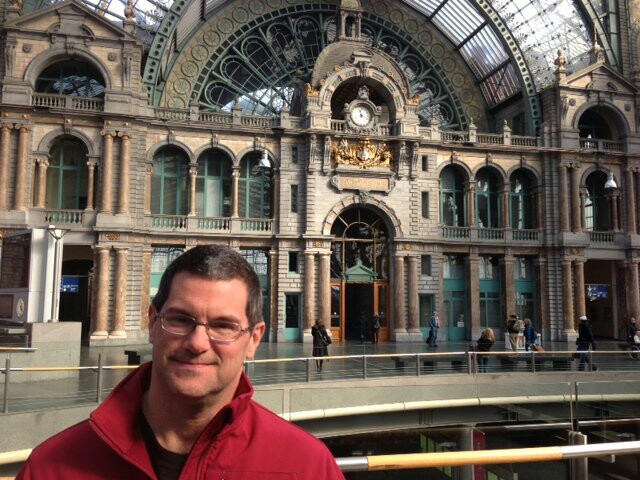
    We left the Amsterdam apartment about 7:30 this morning, and got to our Bruges hotel around 2:30. We were scheduled to leave at 7:55 but that train was cancelled. The reroute would get us here 1.5 hours later than planned. The good news: just two transfers instead of three, with time enough in between the last one for a sandwich at the Antwerp train station.

    The Antwerp station looked pretty cool!


    I had never heard of Bruges until a party we had last May. Instead of name tags, Dan asked people to share a place they really enjoyed visiting. Through that process, our friends Greg & Robert from Sacramento had a lively conversation with our Davis neighbors, Jo and Kay, because they had all been to Bruges before. (Later, I met people who knew of the town only because of  a Colin Farrell movie called “In Bruges” which we saw a few months ago; it’s worth seeing.)

    Greg was also who I learned about UNESCO from: United Nations Educational, Scientific and  Cultural Organization. They certify places to be on their World Heritage list based on  their outstanding value to humanity. On this trip so far we have visited four World Heritage Sites (if you count Anne Frank museum):

    • Upper Middle Rhine Valley
    • Cologne Cathedral
    • The Canal District of Amsterdam
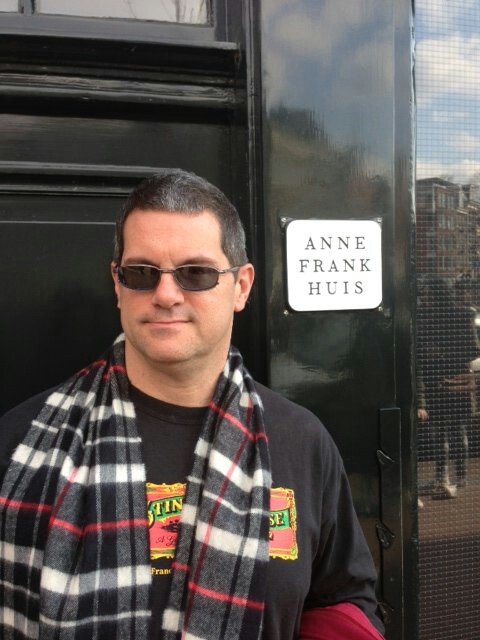
    • At the Anne Frank house, we learned her diaries are listed in UNESCO’S Memory of the World Register

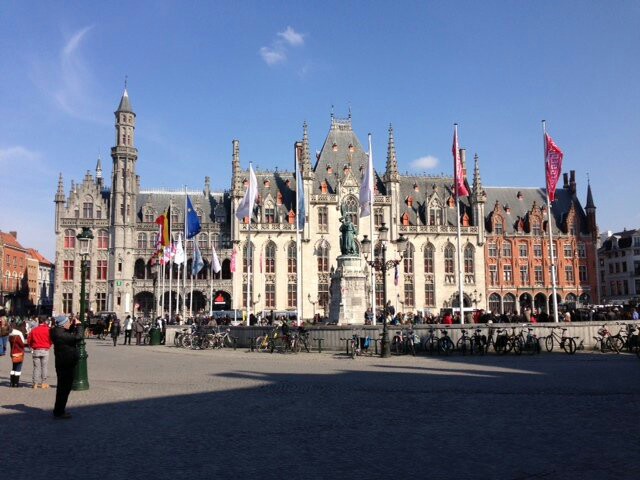
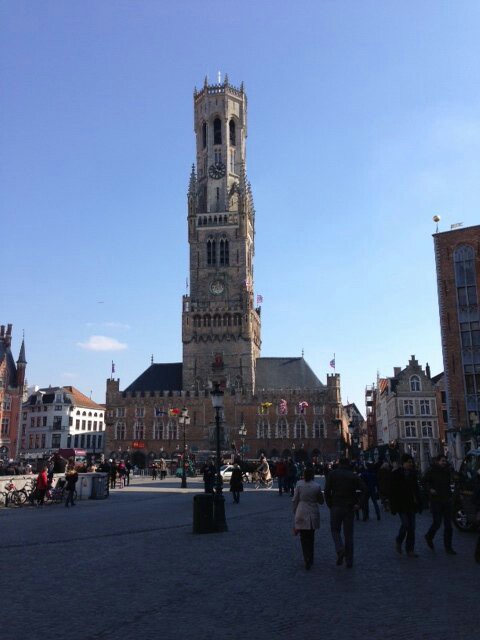
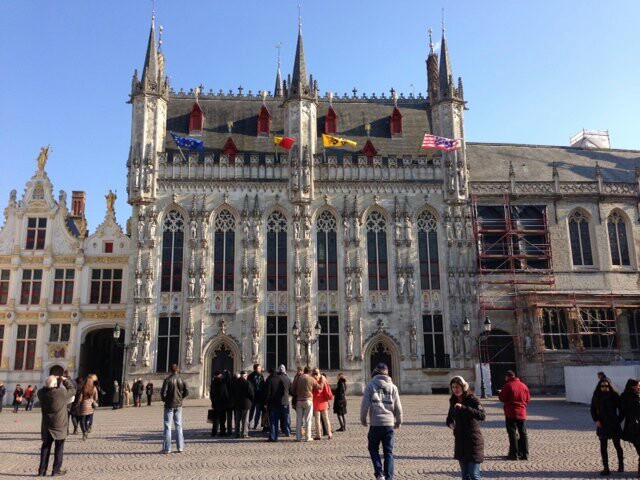
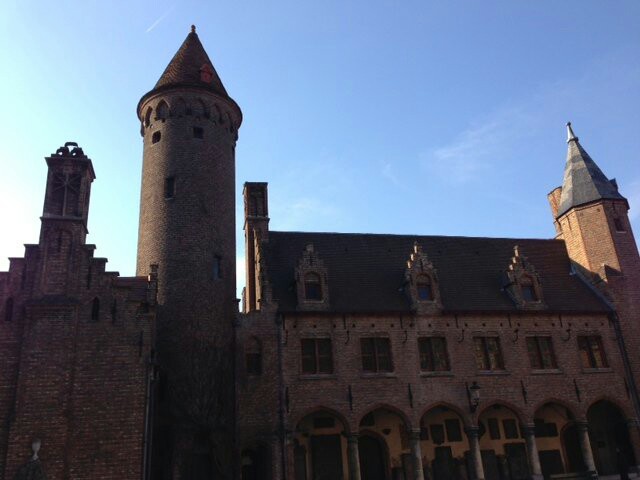
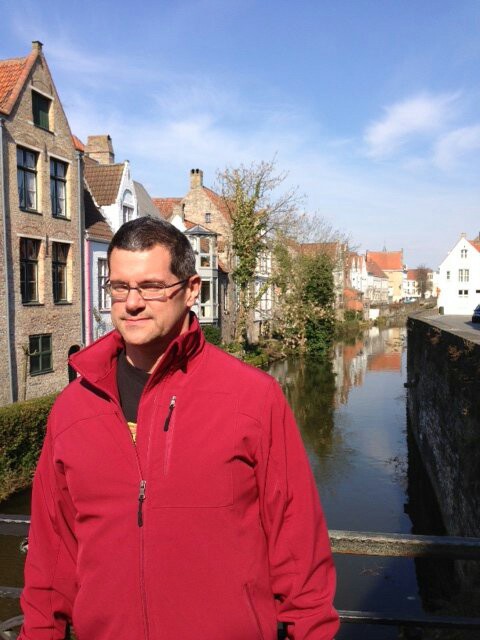
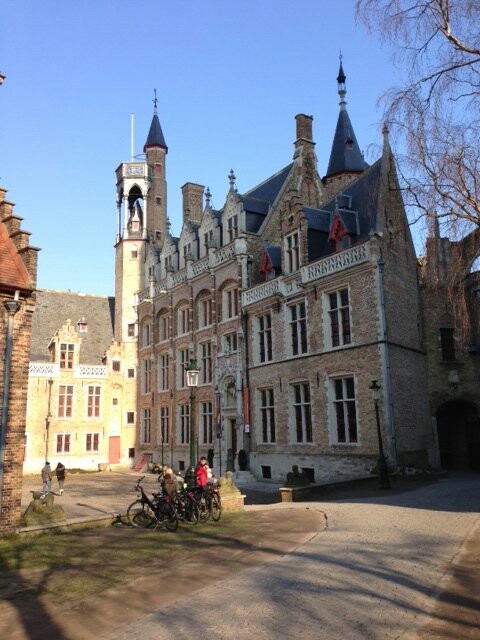
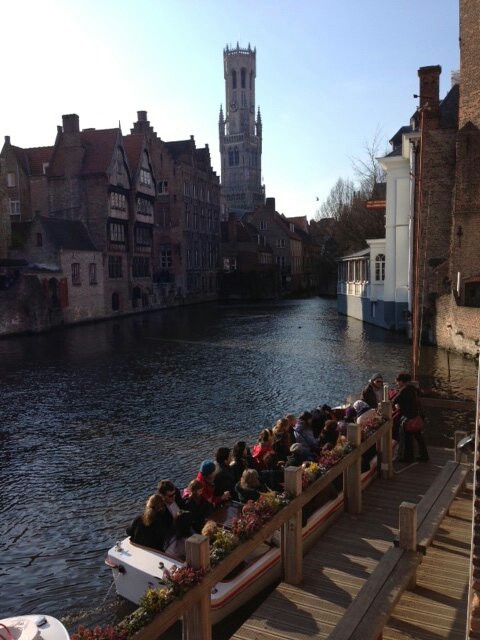
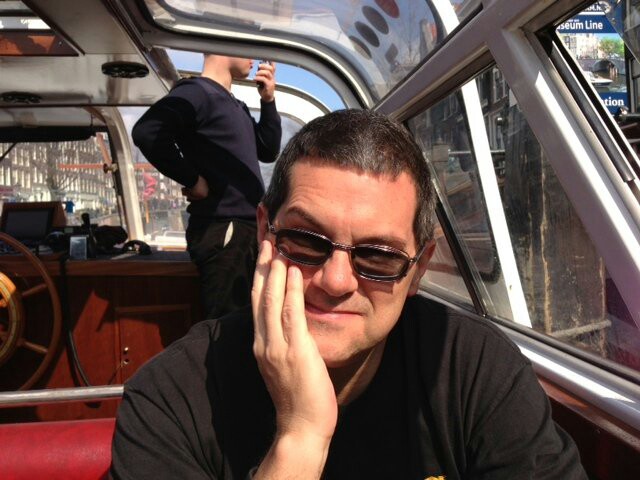
    And today makes 5: the Historic Center of Bruges makes the list “as an outstanding example of a medieval historic settlement”. Today we just walked around to get oriented, and will have two full days here. A few pictures below from our walk. More about what’s what as we actually visit places.


    Some observations about similarities and differences of the three countries so far, in no particular order:

    • OMG the smokers! All three. At least they can’t smoke indoors, but seems like you see many times the number of smokers than we’re used to in the US – on the streets, in doorways, and at outside eating areas.
    • Bicycles everywhere, especially Netherlands, and Amsterdam was off the hook: 40% of all traffic is on 2 wheels. In the Centrum (European equivalent-ish to downtown, or central area) many streets are bikes only, no cars. And bikers in Amsterdam are aggressive, they definitely rule there.
    • Germans were all about bakeries, especially sweets. Amsterdam was all about “coffeeshops” and Argentinean restaurants (we never did figure out that connection). So far, Belgium is all about chocolate, waffles, and french fries. Although waffles are a dessert or snack item, not breakfast.
    • Trains: In Germany, getting asked for the ticket was the exception. In Netherlands, we were asked more than half the time. Today, in a 4.5 hour ride between Amsterdam and Bruges, we were asked 4x, twice on the same Belgian train.
    • Only the American hotel, the Hilton in Mainz, provided little soaps, shampoos, lotions.  All the European hotels provided “wash” type products (which I like) in hand dispensers at the sink and shower. No lotion. And all of the showers are the hand-held kind, even the Hilton.
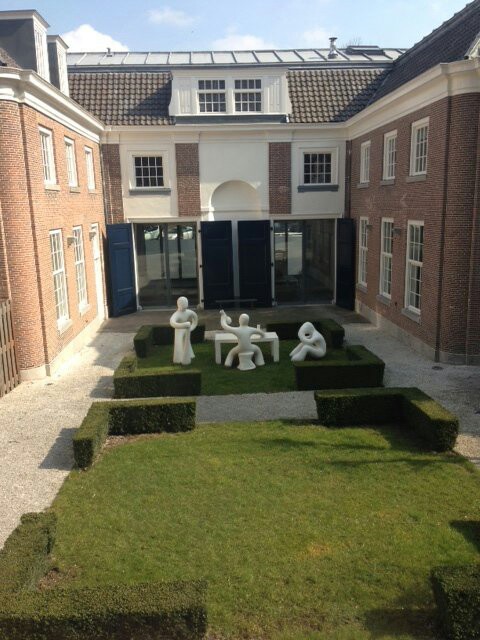
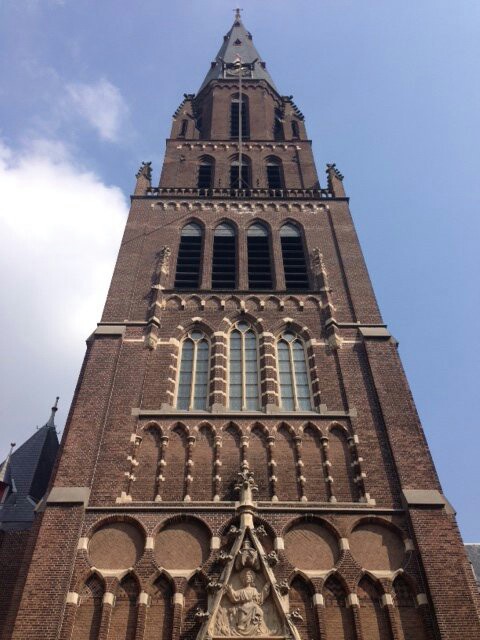
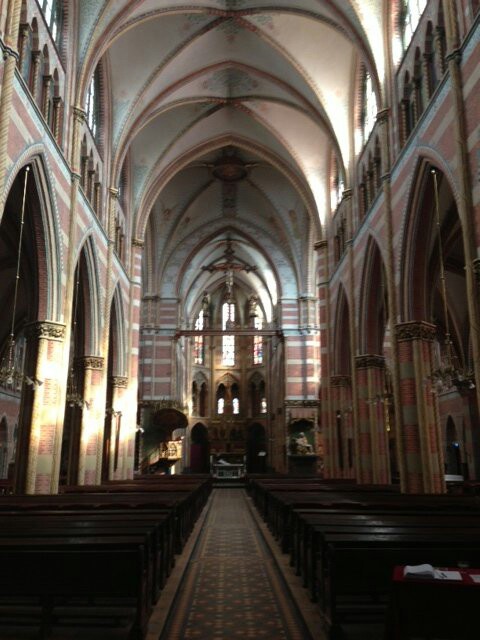
    A few more Bruges pictures. It’s still cold, dang it.


  • Day 13: Amsterdam, Part 4 (Sunday, April 1, 2013)

    Day 13: Amsterdam, Part 4 (Sunday, April 1, 2013)

    We are still in “take it easy” mode. That’s allowed on vacation, right? It was nearly 10 by the time we decided to get up and Dan announced, “no, it’s really 11 – look at my phone, the time changed last night.” I’d forgotten he told me yesterday Europe was on a different schedule and that was happening. Oh well!

    Our first meal was essentially lunch then, these pot pies we bought at the outside market in Haarlem yesterday, along with some coleslaw and bread.

    We finally left around 1pm but didn’t have much on the agenda: a canal boat ride (cuz you kinda have to), and some meandering through some less touristy neighborhoods, specifically Jordaan.

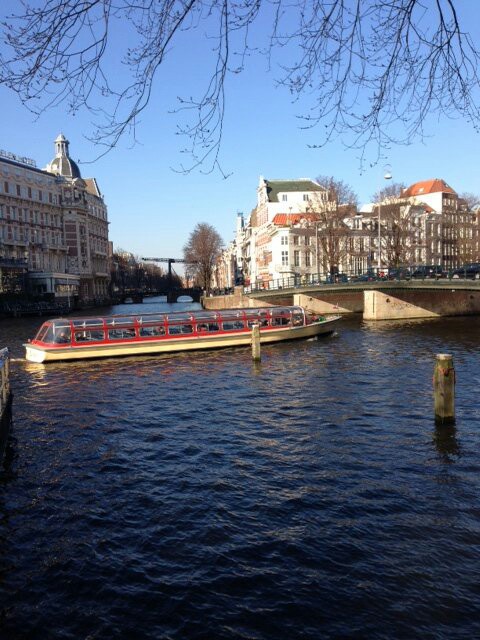
    We saw and learned a few things we hadn’t known on the canal ride, but mostly it was pretty and relaxing. I’ve included a few pictures at the end. Jordaan was very pleasant, with nice neighborhood shops and children’s playgrounds. It convinced me Amsterdam might be more livable day-to-day than I had thought. We came across a little Japanese pastry shop (“taiyaki”) and got a fresh warm snack for the rest of the walk home. Did I mention it was snowing again when we woke up? By this time it had warmed up to about 40. The news said it was colder in Europe on Easter (which today was) this year than it was last Christmas.

    We had accepted a tea invitation with our hosts and met them around 4:30. They live in the same building on a lower floor. A delightful couple who have lived here 35 years together, him before that as it was his father’s place: Karla, a dental hygienist, and Ben, an architect. Their two daughters are in college, one in Vancouver BC, the other in Kobe Japan – so a 16 hour time zone spread with the parents in the middle.

    Karla and Ben are well traveled, she has lived in the US at times, they have both visited quite a bit. Each have an interesting WW II connection. She is part Indonesian. Her father was a POW of the Japanese in the Pacific. He survived and lived to be 94. We’ve learned since we’ve been here that prior to the war, Indonesia was a Dutch Colony because of the trading there by the Dutch East India Company. Children of Dutch men and Indonesian women were called Indo-Europeans. After the war, Indonesia became independent and they had/got to pick which country they wanted to be a citizen of. It explains why there is such a large Indonesian population here. (And why so many Indonesian restaurants. We were going to eat again at that first one today but it was closed. We experienced the same thing in Germany last week: lots of stuff is closed on Sunday.)

    Ben’s father was one of the Dutch non-Jews who went into hiding to escape the German labor camps. All men aged 18-45 were essentially ordered to be slave labor. He managed to escape that and survived the war as well.

    We had a lovely visit for over an hour over tea and pastry (surprise!).

    And speaking of locals, we met a young woman a few nights ago in the checkout of the grocery store. She overheard us asking the cashier questions about credit cards (which I could do a whole thing about but won’t – just ask us about it before you come to Netherlands!) and figured out we were American. Either by the content of the conversation, or our accents, which I was amused to learn we had from the Portugese waiter a few nights ago.

    Anyway, she was an interesting gal named Mariela: 27, born in Italy with the accent to prove it, but has lived all over with her family and speaks 7 languages. She has been in Amsterdam for 5 years while studying to be a sexologist. She talked to us non-stop on a freezing sidewalk about all kinds of things for 30 minutes, including her issues with Dutch culture and how phony it is, prostitution, and various lovers she had. Mostly to get her to quit talking, Dan said we had to go (we did, he actually had a Pacific Time work call that night) and we should have dinner one night while we’re here. They’ve been texting since. He texted her about dinner around 1:30 today. We hadn’t heard from her by 6pm so went on with our evening. She was a character. I was both a little disappointed and a lot relieved.

    We needed to pack and start planning the details of our stay in Bruges so just went to – ready? – a bakery around the corner and got some savory pastries, and some bread to eat with the remaining cheese we had in the refrigerator from our first trip to the grocery on Monday. We also had an interesting fruit salad – mayo based of course, did you forget where you were? – from the Haarlem market yesterday. Dan normally doesn’t eat bread but he has been crazed about the baked goods here.

    And that was pretty much our day. We leave early tomorrow for the 4.5 hour train ride to Bruges.

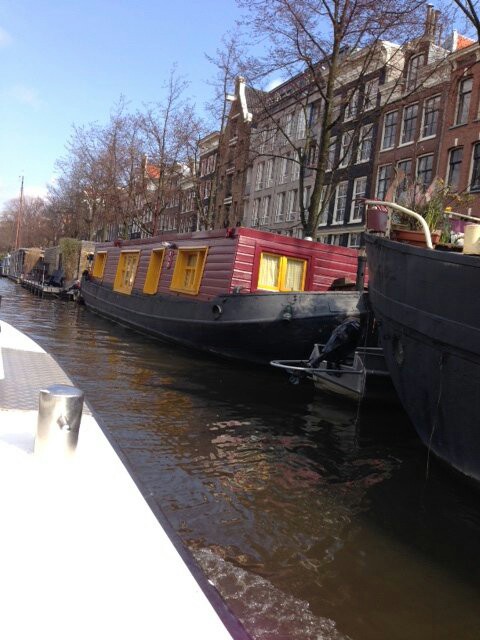
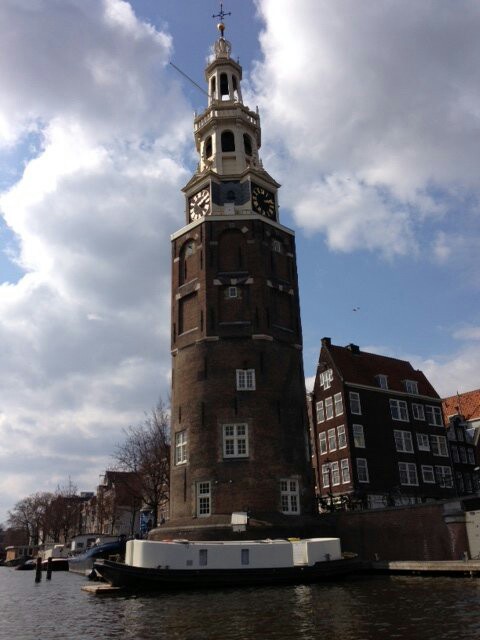
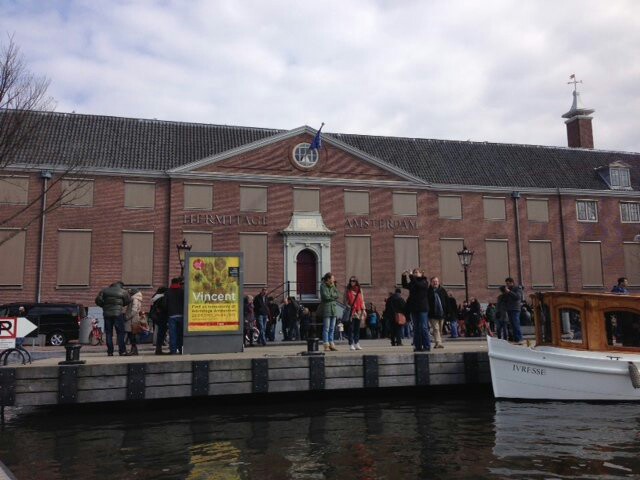
    Here are some pictures from the canal boat ride.


    There are a fair number of houseboats. Would be a trip to live in one, eh?

    A defense tower from the 1500’s


    The Hermitage Museum, where we saw the Van Gogh collection the other day. The boat guide pronounced it “van hoghhh”. The line was much longer today!


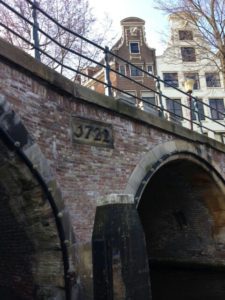
    A fancily designed bridge, which Paris copied for one over the Seine.

    Yes, that says 1722.

    Where the tour started and stopped.
  • Day 12:  Haarlem – Saturday, March 30, 2013

    Day 12: Haarlem – Saturday, March 30, 2013

    Another light-ish day. I think we’re both feeling the pace a little bit. Not that I’m complaining! We come home a week from today and the rest of the trip should be pretty relaxing.

    We left about 10am and took a 20-minute train ride to Haarlem. Because we still had time on the 24 hour pass from yesterday, we took a bus the mile to the station. Normally we would have walked, and did walk back when we returned.
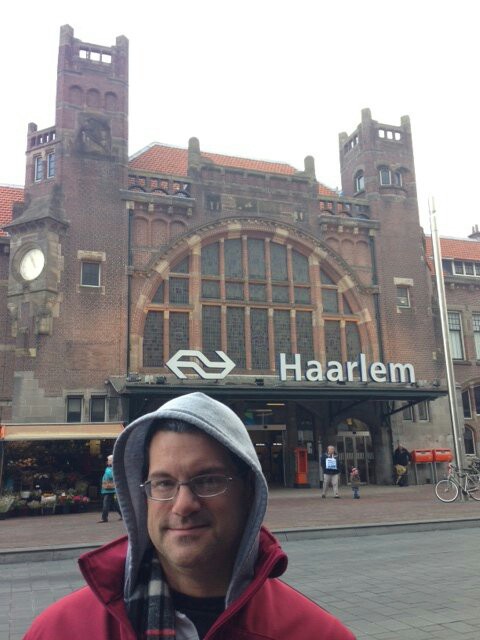
    Haarlem. If that sounds familiar it should. Remember from your junior high American History class that New York City at one time was a Dutch colony called New Amsterdam. The burrough called Harlem has the same roots.
    Only this little town is much more charming than the burrough. Population about 150k, we decided it may be the most livable city we’ve seen yet.


    Note in the picture above it’s still definitely The Netherlands. But not as crazy as Amsterdam for sure. We didn’t see one pot shop!
    We walked towards the city center and saw this at the end of a curved, narrow street. This look, I’m discovering, is quintessential European.
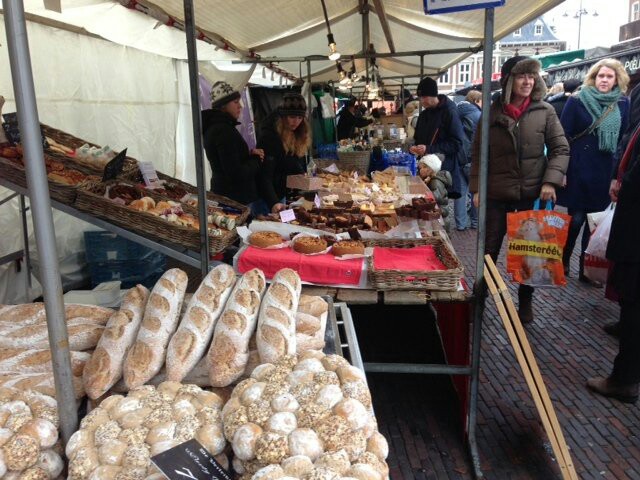
    Grote Kerk, or Great Church. More on that later. We took a right at the end of this street and walked straight into the reason we came here on a Saturday: an outdoor market that took up the town square. Not exactly a farmer’s market although there was fresh fruit and vegetables for sure. But also baked goods, meats, fish, fresh deli items, and other miscellaneous things. Dan finally bought a pair of gloves here.


    We left the market and wound our way through another pedestrian mall (with another The Body Shop!) to our first stop: the Frans Hals Museum. He was a local artist whose contemporaries were Rubens and Rembrandt, and he was arguably as good or better. There was a special exhibit of his work going on in addition to the permanent collection, and I have to admit it was pretty interesting. Two things he excelled at that even the best painters struggled with made him a master:
    1. Painting laughter
    2. Completing a portrait in one sitting, directly on the canvas without preliminary sketches, and without waiting for paint to dry
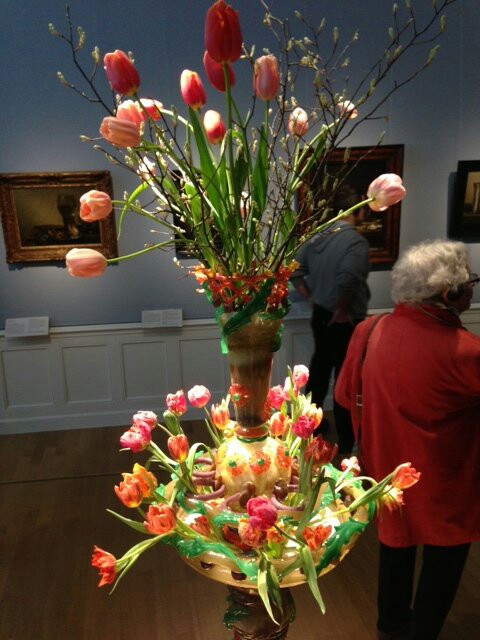
    We weren’t supposed to take pictures but Dan managed to sneak a few, including this tulip vase, a concept we were introduced to at the museum in The Hague, and which I really like.
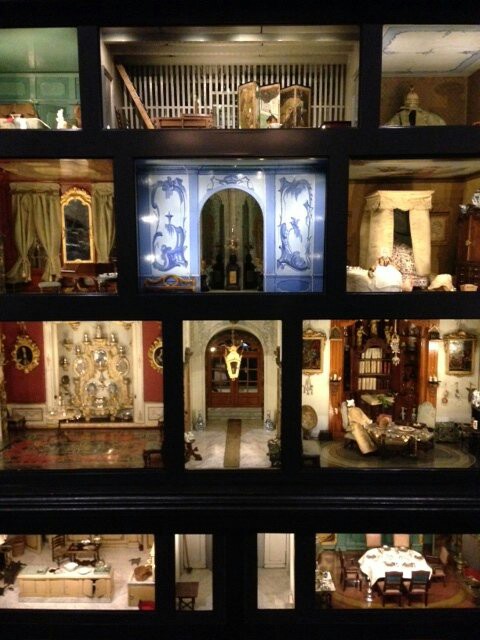
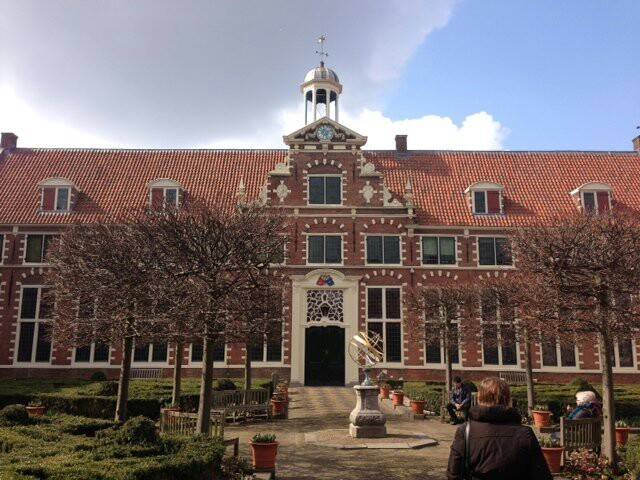
    There was a huge (like 7×7), amazing dollhouse with incredibly minute detail. This picture doesn’t begin to do it justice. The one below it is of the gardens in the museum courtyard.


    For lunch we went back to the outdoor market and had what Dan declared to be the best fried fish he had ever had. For dessert we went to the booth next door and got this very tasty item whose name we didn’t catch: like a sandwich, where the bread was two crispy, wafer thin warm waffles, held together by a thin film of honey in between. Yum.
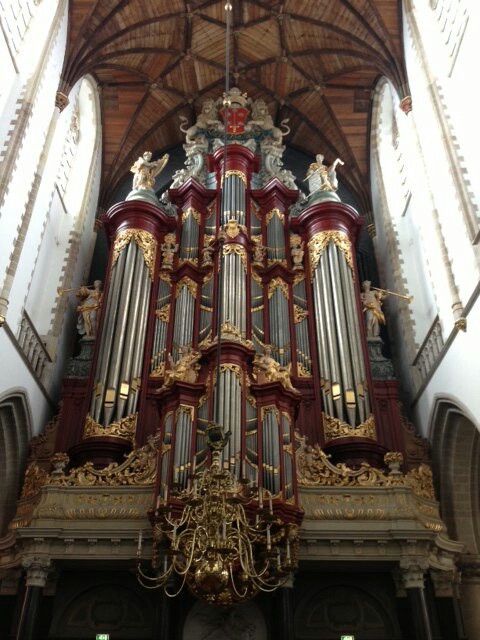
    The Grote Kerk at that point was right behind us so we checked it out. About 600 years old, it houses the largest organ in Holland, which was played by Mozart (when he was 10) and Handel. The organ has over 5000 pipes.


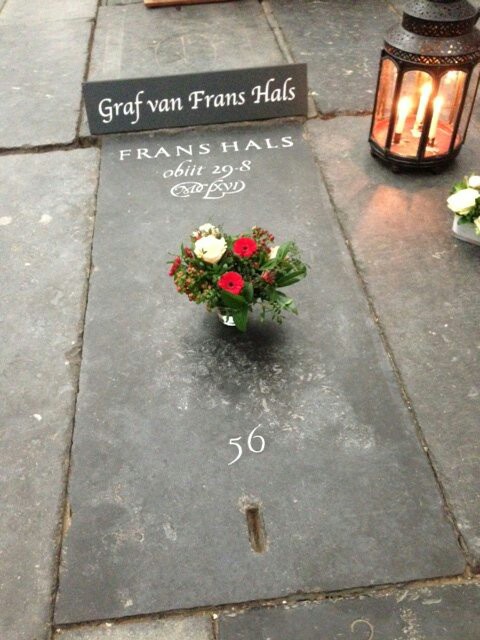
    The large floor tiles are actually tomb covers, and Frans Hals is buried there.

    Next we stopped into Teyler’s museum, the oldest in the country. It had a varied collection of fossils, science instruments, paintings, and an exhibition of an artist – Retoude – whose specialty was botany, especially flowers, which Dan really liked.
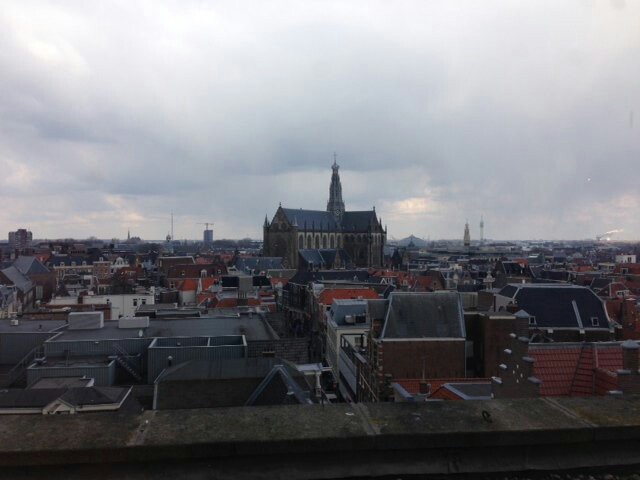
    After was coffee and round two of dessert at a cafeteria on the 6th floor of a department store. Dan got this picture of Grote Church from our table.


    We did one final trip to the outdoor market to pick up some things for dinner tonight and lunch tomorrow, then back to the train station to come home. Well, our home for 7 days anyway.

    Curiosity Item:
    I can’t say for sure that I could have told you what country Amsterdam was in before we started planning this trip. I probably would have said Holland. And even folks from Netherlands will refer to it Holland. But I learned that Holland is not a country, but provinces – two of them in fact: North Holland and South Holland. And they make up a majority of the country Netherlands, but not all of it.

    • So my question became: where did Dutch come from? Germans come from Germany, Italians from Italy, but you’re Dutch if you’re from Netherlands or Holland. We asked a volunteer at the church who we had a fun conversation with. Her response? “You’re right, I never thought about it. But I do believe it comes from Deutch.” We even looked up the entomology of it and got a long, unsatisfying answer. I was hoping for something “ah-ha” like but no such luck.

    And under the “You’re on Candid Camera” category:
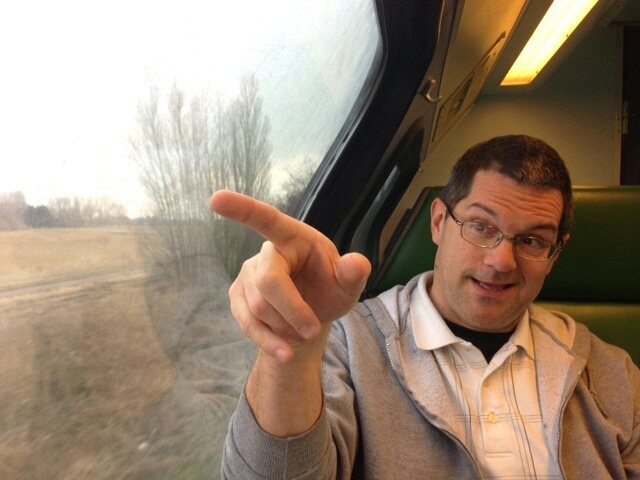
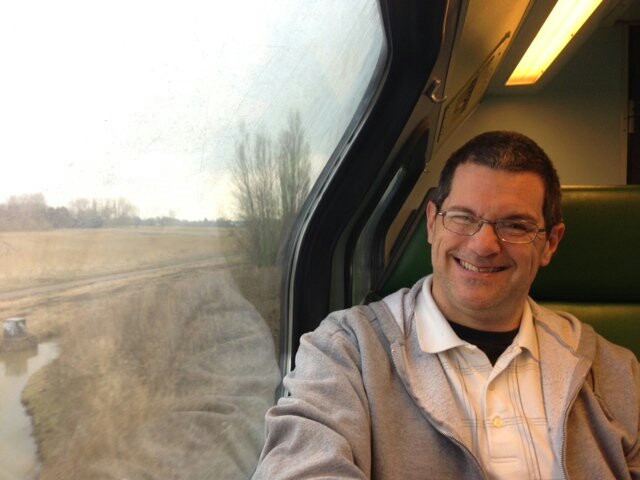
    Dan has this habit of taking rapid successive pictures on his iPhone so he’ll have plenty to pick from. He took about 20 of me on the train this morning in about 10 seconds. These are the only ones I didn’t make him delete.


    Pretty sure I’m pointing out an Ikea.

  • Day 11: Amsterdam, Part 3 (Friday, March 29, 2013)

    Day 11: Amsterdam, Part 3 (Friday, March 29, 2013)

    We were both so tired last night from a week or more of 7 miles a day on foot on average we decided to take it easy today.

    We slept in and finally got going around 10:30am. To be nice to our feet, see other parts of the city, and live like a local for a day, we bought a 24-hour public transportation pass. We used it on the tram (streetcar), but you can use it on the bus or metro (subway), too. We used it for most of our transportation today, and at the end took some extra rides just to see areas we hadn’t been in yet.

    We discovered they were very comfortable and the windows were huge! This was taken from the rear:


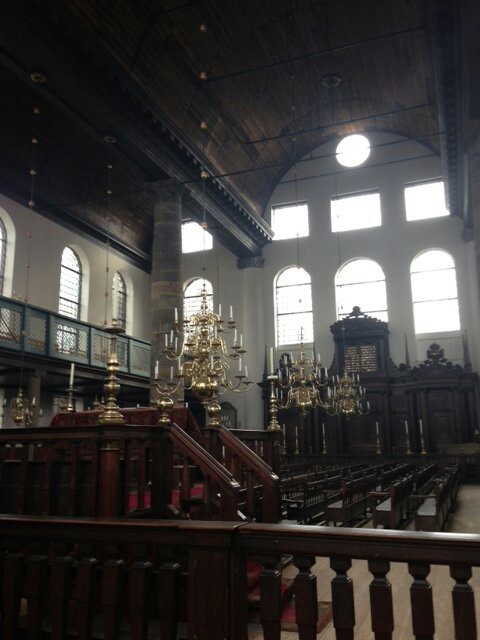
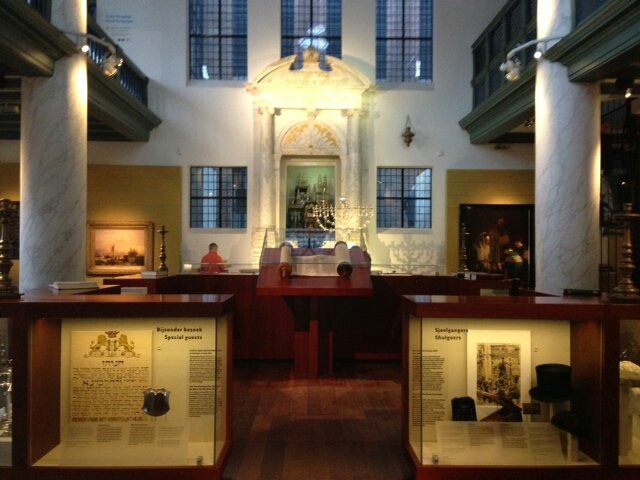
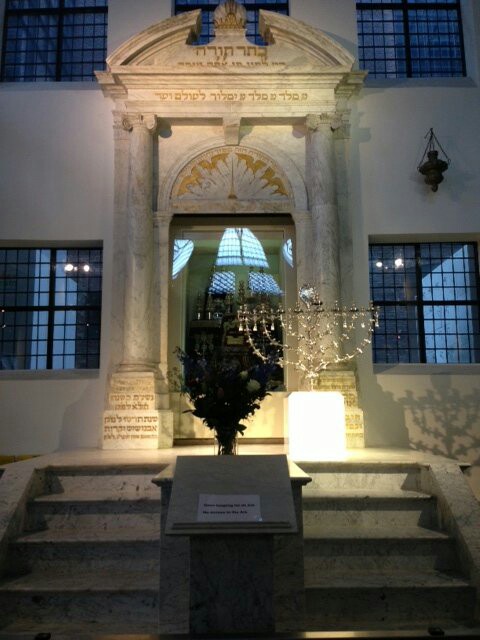
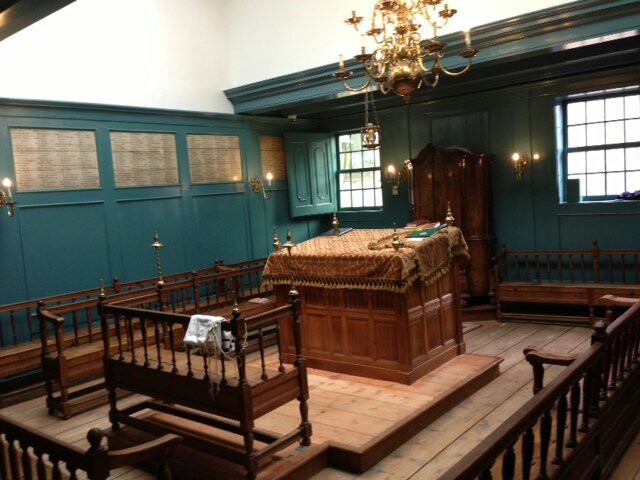
    We got off to go to the Jewish Historical Museum. We didn’t know until we got there it included a Portuguese Synagogue from 1675, still in use.

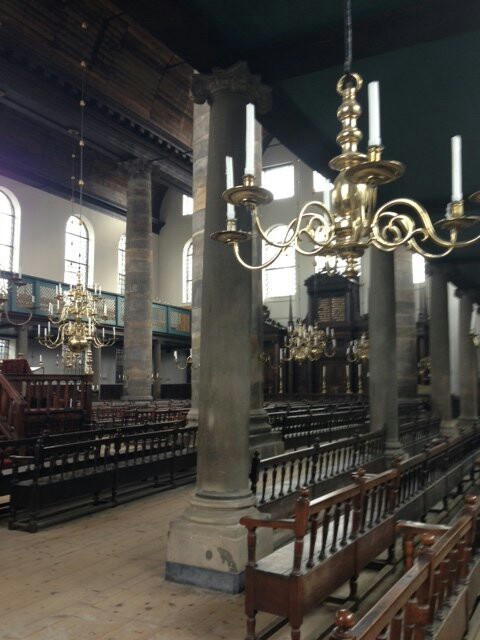
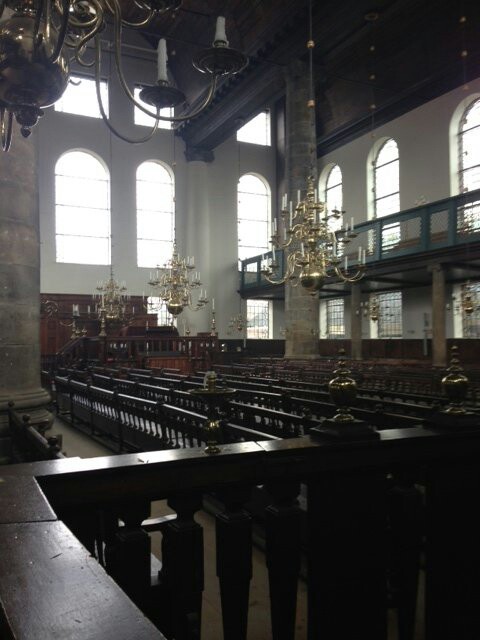
    The synagogue itself (as opposed to the annexes where kitchens and office are) has no electricity. Notice the candle chandeliers, which provide the only light source.


    The women’s gallery was upstairs. We learned a lot about Jewish tradition today!

    This room was originally only used as a seminary. After World War II, the congregation was so small they used this as the synagogue for many years.

    There were a lot of smaller rooms where we learned about kosher food and preparation, mikveh, shofars, and mourning rituals.

    The small room where the candles and candlesticks are stored. It takes 2 hours for one person to light the candles on the first floor, and 3 hours if doing the ladies gallery, too.

    Next was the Jewish Historical Museum across the street. It was housed in a synagogue built in 1671 and used continuously until after WW II when the community was decimated and the building eventually boarded up. In the 80s, the relatively few Jews who were still in Amsterdam were concerned about the developing white supremacy groups at the time. The synagogue was restored and turned into a museum in 1987 in part in response to that, to help remind the world what happened so it wouldn’t happen again.

    There were over 100,000 Dutch Jews before the war. While Anne Frank’s story of hiding is the most famous, over 25,000 Dutch Jews went into hiding. About 18,000 of those survived. Only 22% of all Dutch Jews survived the war.

    There were about 80,000 Jews in Amsterdam before the war, and less than 5000 after. Today, there are about 45,000.

    This museum went into a lot of detail about what brought Jews to Amsterdam during the Golden Age of 1650-1750, with the ups and downs leading up to the war, and the after effects. It took the personal foundation we got at the Anne Frank House and expanded it.


    After lunch, we went to the Dutch Resistance Museum. We found this as absorbing as the WW II museum in New Orleans last year. This was similar in the level of detail, variety of perspectives, and mix of media used. Our understanding was expanded yet again. You really got a sense of how everyone in the Netherlands was impacted by German occupation, not just the Jewish perspective, although that was the most horrific.

    Some things I did not know:

    • The Dutch had created a German refugee camp, Westerbork, for Jews escaping persecution from the Nazis. Shortly after the German occupation it was turned into a transit camp, a holding space for Jews waiting to be shipped to concentration camps. (Now that’s ironic – not a black fly in your Chardonnay…)
    • Jews weren’t the only ones who went into hiding.  Thousands of non-Jews ignoring orders to work in German labor camps also hid, as well as hundreds who were part of the Resistance, working secretly with the Dutch monarchy who had been based in England since the Occupation, and, among other things, arranged secret financing networks for those in hiding. It takes a lot of money to hide 30,000 people.
    • At the beginning of the Occupation in 1940, many of the Dutch saw it as just the next step in the way things were going across Europe. So little changed, they initially thought it wouldn’t be that bad. The Nazis were subtle in their approach at first in the hopes of bringing the people along. Orders were followed without much question, including registration and ID carrying requirements. It wasn’t until they started rounding up the Jews in 1942 that the reality started to take hold and the Resistance movement grew stronger.

    While many American families were significantly impacted by this war, today’s visits made it abundantly clear that what was happening in Europe was a completely different kind of terror.  I’d always known that intellectually; it was beneficial to get closer to it.

    It was a good day of learning and reflection.

  • Day 10: The Hague (Den Haag), Thursday March 28

    Day 10: The Hague (Den Haag), Thursday March 28

    The Hague is the 3rd largest city in Netherlands, about 37 miles southeast of Amsterdam on the North Sea. It is home to the International Court of Justice, the judicial function of the United Nations. One of the streets is named for JFK.

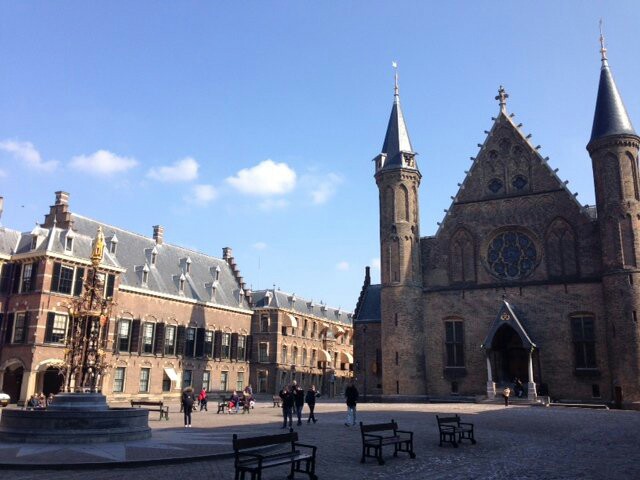
    It is much different from Amsterdam. Skyscrapers for one, with of course still lots of old stuff mixed in, including Parliamentary buildings from the Middle Ages (see below). While Amsterdam is the capital constitutionally, much of the country’s business gets conducted here. But they, too, ride a lot of bikes here – look at these in front of the train station.


    The energy here is much less frenetic than Amsterdam, definitely less congested, and first impression is it’s much more livable.
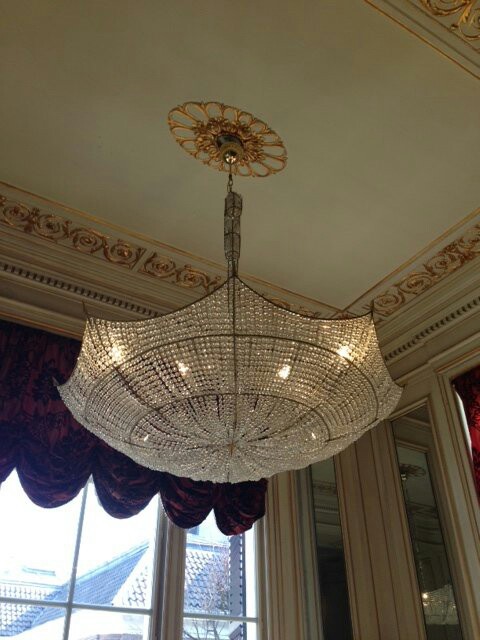
    Our first stop was the Escher museum. Since the exhibit is housed in the royal palace (different from the one in Amsterdam), it’s a two-fer. We both really enjoyed the Escher stuff. The chandeliers in the palace were all very whimsical; I’m not sure the pics do them justice.


    The last picture above is of the walk in front of you as you leave the palace. We took that to a business district where we had Turkish sandwiches for lunch.
    We went by a requisite old church on the way to the next museum. It was very pretty, we couldn’t determine how old it was.


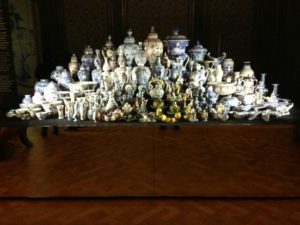
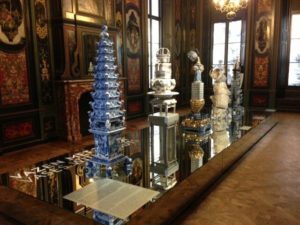
    We went to the municipal museum next. We decided it was schizophrenic – an almost bizarrely varied collection: Dutch Old Masters from the Golden Age to why-is-this-in-a-museum modern, a huge porcelain collection from Delft artists and lots of other obscure stuff. There were pieces by Van Gogh, Cezanne, Rubens, Rembrandt, Monet; and then this huge room filled with plastic wrap – yes, like Saran – twisted and woven to make a curtain of chain links and hung in a circle from the ceiling. The Entire Room.
    Anyway, here are a few pics before the museum guard told us we couldn’t. (We sincerely thought we just couldn’t use a flash.)


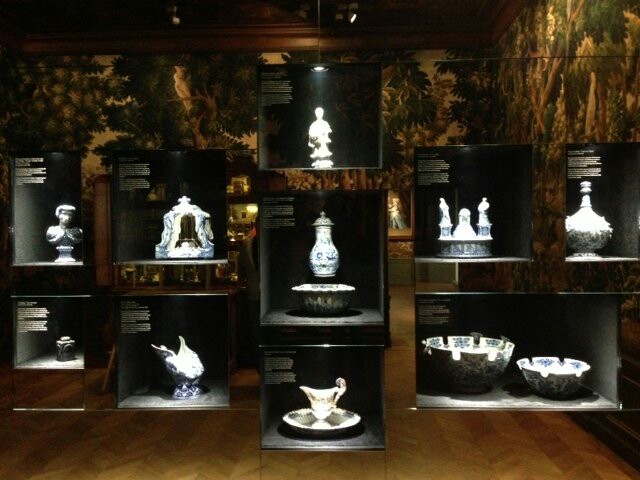
    A mountain of porcelain!
    These are “tulip vases”, there are multiple holes in each to drop single flowers in.


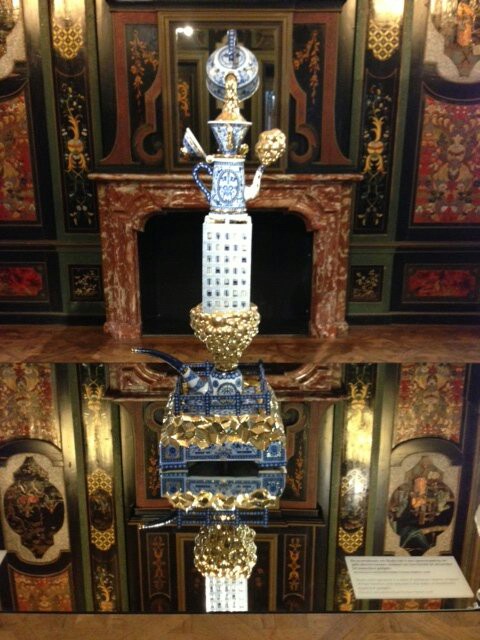
    This one was totally whimsical – must’ve been the theme for the day. A kettle pouring into  teacup, teapot under that, then a building sitting on smoke from a pipe. Wild but fun.


    These two were Dan’s favorites.

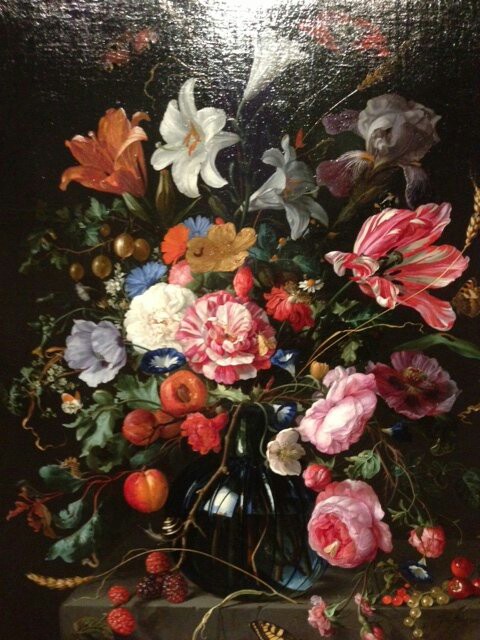
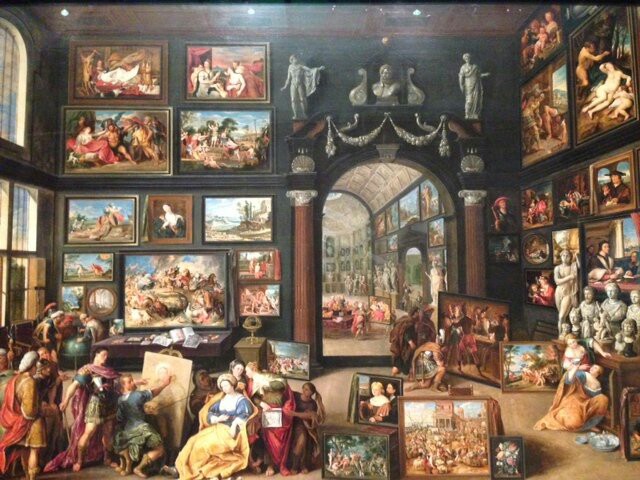
    And this was just amazing: many paintings in a painting. Incredible detail.

    Just as we were walking back to the train station it started snowing a bit. Europe hasn’t figured out it’s Spring. A weather report was just on TV discussing how usual this is.
    We took a different path back to the train station, and came across the pedestrian mall downtown – we’ve now come to expect it. Interesting collection of shops, along with something we think is odd: The Body Shop. Fast food aside, this is probably the American store we see the most often. I am pretty sure we’ve seen one in every city, even the smaller ones (Koblenz and Mainz).
    We had a 50 minute train ride back to Amsterdam, then had dinner at that Portugese place we found last night. Dan had a very unusual cod dish that was excellent. I got the most interesting thing on the menu on principle: a pork stew with clams, potatoes, olives, cilantro, goat cheese. And we liked it!
    One final observation for the day re: public restrooms. I mentioned early on you sometimes have to pay and how very clean they are. But even the free ones are incredibly clean. And the piece I just distinguished today: there are no stalls. Every toilet is in its own enclosed room, albeit small of course, even when there are many of them like in train stations. They must be appalled at American restrooms when they visit us!
  • Day 9: Amsterdam, Part 2 (Wednesday, March 27, 2013)

    Day 9: Amsterdam, Part 2 (Wednesday, March 27, 2013)

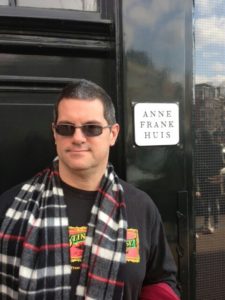
    We had breakfast in the apartment, got an earlier start because we wanted to get to Anne Frank close to when it opened at 9am, and we did. There was already a line, but not nearly as bad as the first one we saw yesterday afternoon. It moved pretty fast.

    Brochures and audio guides all came in 3-12 languages depending on the content and medium and we were happy to see how predominant English was used so we didn’t miss anything.

    Most of you know the story: a very personal experience of Nazi occupation as told by a teenage girl who went into hiding with her family. Lots of things moved me as soon as I walked in – I was teary pretty much the whole time – so I will stick to highlights:

    1. Anne Frank was born in the same year as my mother, 1929.
    2. The bookcase that hid the entryway to the secret annex is still there for you to walk behind; those first steps up the steep staircase set the tone for where you’re headed.
    3. The rooms are probably bigger than you imagined if you read the book, but you also get how they got smaller each day while 8 people hid in them for 2 years. Three of them were in their teens. Can you imagine being perfectly quiet and under threat everyday when you were 16? Or any age for that matter?
    4. No one knows who betrayed them and tipped off the SS.
    5. The father, Otto Frank, was the only one who came out of the concentration camps alive. That’s a whole different kind of survivors guilt. He was surprised at the content of Anne’s diary. He thought he knew her but hadn’t known about her feelings, opinions and perspectives until he read it after she was gone. He committed to getting it published as a reminder for the world. The first Dutch printing was in 1947 and it’s been translated into 78 languages.
    6. Her dream was to become a famous writer.
    This was the thing I was most looking forward to in Amsterdam. I wasn’t disappointed.
    Short version of the rest of the day: 2 big exhibits at the Hermitage museum.
    1. Van Gogh – the reason we went. The Van Gogh museum is closed until May but much of the collection was moved here during the renovation. It was about what we expected but were glad we went. I knew he had killed himself but didn’t know he was so young when he died – 37 – and had only painted for 10 years.
    2. Peter the Great, Russian Tsar from 1682-1725 – we went since we were there and it was covered by the Kaart. It was very interesting. He was a fascinating character, traveled a lot to learn whatever he could to take back to Russia. He had a high regard for all things Dutch, and in later generations there are some unions of Dutch and Russian royal families.
    The Peter the Great exhibit from above.


    A piece from that exhibit that Dan really liked.
    A nice space between the two galleries.
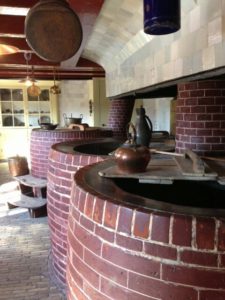
    Before it was a museum, this building was a seniors residence. This was the kitchen, those are pots!
    We took a new route home and happened across the most diverse street yet: within a couple of blocks there was a Chinese, Japanese, Thai, Portugese, Malaysian, Indonesian, German and of course an Argentinian restaurant (because there’s one of those on every street it seems).

    We picked up some things at the market and had dinner in the apartment.

    Random pictures:

    The Amsterdam History Museum yesterday emphasized Amsterdam’s experience in the pursuit of liberty, etc., discussing gay rights, drugs, prostitution, etc. In that, we learned the first pot place was named after the Donovan song “Mellow YellowYellow” and we ran across it today in our travels today.

    Before making plans for this trip, I did not know that in Amsterdam, “coffee shop” is a euphemism for a place to publicly buy and smoke weed. I learned that reading comments on TripAdvisor.com. If you want actual coffee, go to a cafe. (That I didn’t figure out until I got here.)

  • Day 8: Amsterdam, Part 1 (Tuesday, March 26)

    Day 8: Amsterdam, Part 1 (Tuesday, March 26)

    We slept in again and took our time with breakfast in the apartment. We had picked up a few things in the grocery store last night – that’s a whole other story! – and it was nice to not eat out for a change. We were out by 11am and back by 8:30pm so still a full day. We figured we’ve been walking an average of 7 miles a day since Friday (and maybe Wednesday if you’re me) and today was no exception.

    We used the Rick Steves book a lot today (thanks, Greg & Robert!) and started with his City Walk tour. Random things on the way to the first stop:

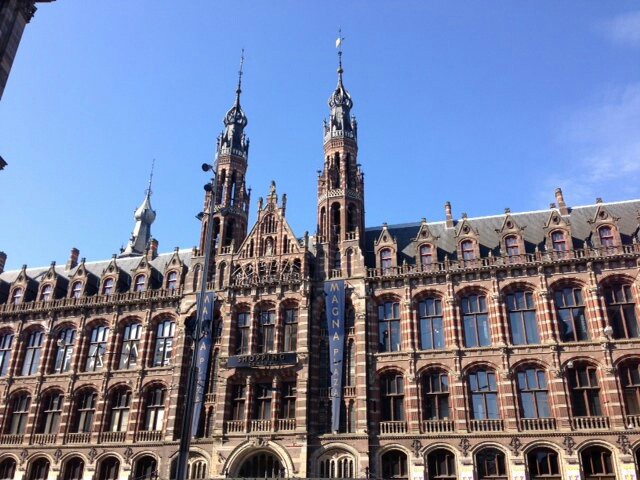
    This is actually a mall, which we thought was a shame for such a cool building. We learned later it was built like 1885 and was originally a post office!


    The first long stop was the Amsterdam History Museum and it was the perfect way to start out. We also purchased the Museumkaart there which will get us in to museums all over Netherlands so we’re set for the week on that front.

    Big takeaways from this museum:
    1. Flashbacks to Junior year World History class (Debbie: what was his name? I can still see his face!) – with reminders of what an economic powerhouse Amsterdam was in the 16/1700’s, plus multiple fights for independence after being controlled, depending on the century, by Spain, France, and Germany.
    2. Remember my comment yesterday about diversity? There are immigrants from 178 countries here.
    3. “Netherlands” = “low country” because about half of it is below sea level. The entire city is built on pilings.
    4. Topical given today’s Supreme Court hearings: In 2001, Netherlands became the first country to legalize same-sex marriage. Belgium was next in 2003 (and where we go next week).
    We ate lunch in a very local sandwich place, mostly just counter space. But the food and coffee were great. Our counter looked out onto the street at an intersection and we played “ID the Tourists” as people passed.

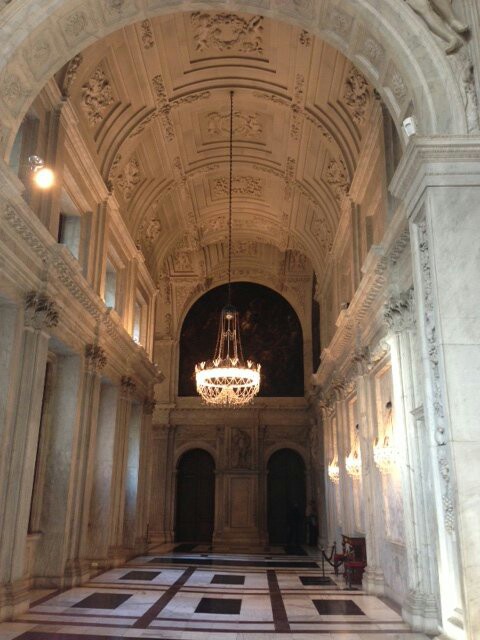
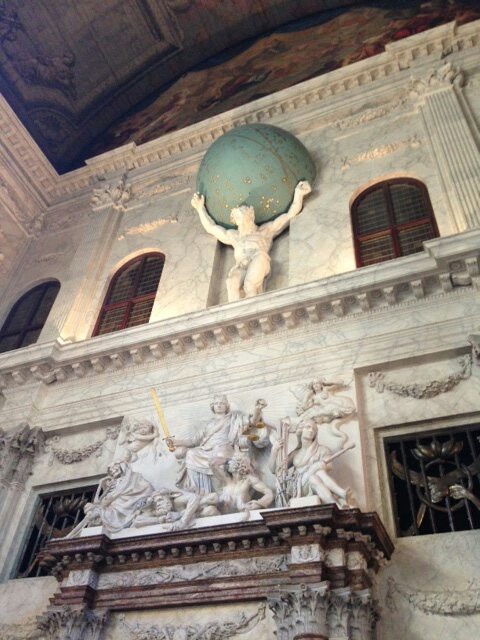
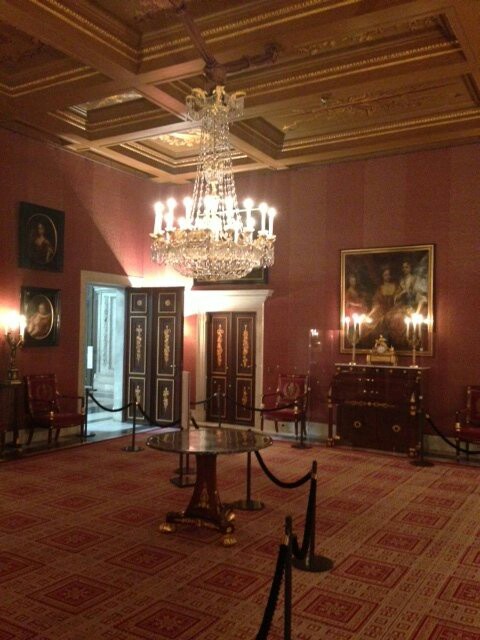
    We went to the Anne Frank House and the line was crazy long, so we went back to the City Walk tour. Next stop was the Royal Palace off of Dam Square, originally built as a Town Hall 1650ish at the height of The Golden Age, before being occupied by various French and Dutch royalty. A story better told in photos, as the whole thing is a stunning work of art. We didn’t get a photo of the front because there was a carnival in the square right in front of it – so wrong and distracting!


    The Walk next took us through a shopping district – again all pedestrians, no cars or bikes allowed even though it’s a street, as we saw in every German town we were in. Where the Germans had their bakeries, the Dutch have cheese shops, although not as many as German bakeries. And like the Germans, they apparently like Starbucks, McDonalds, Pizza Hut and especially Subway.
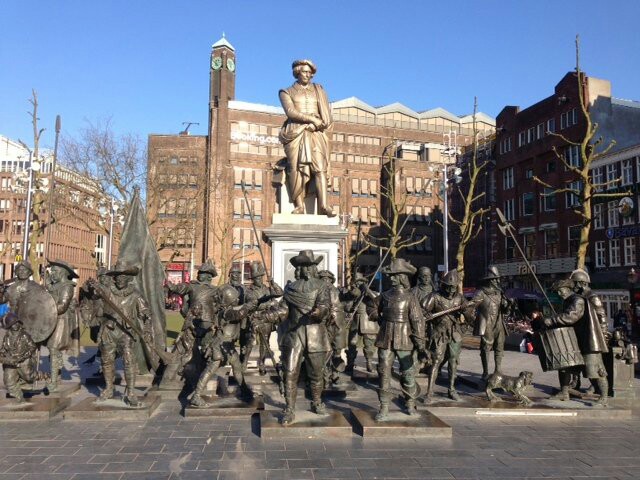
    We went past a Rembrandt memorial of fun bronze statues, then back up to Dam Square and over to the Red Light District. It was entertaining in an odd sort of way but honestly not very interesting. Maybe straight men react differently :) Or maybe because we were there before 6pm and understand it doesn’t get really wild until after 9.


    I had heard that the prostitutes beckoned you from their at-the-sidewalk glass doors so that didn’t surprise me. (I’m assuming you know prostitution is legal here.) I was surprised a bit at how unattractive most of them were. (And I’m being nice!) We only saw two, whose windows were right next to each other, that we thought were really pretty. We saw one from across the canal who looked so fake we weren’t sure at first that she was even real.
    We passed on the Erotic Museum and Museum of Marijuana, Hemp and Hash since they are not part of the Museumkaart program and they looked too kitschy to spend money on.
    Went by Anne Frank again and the line was still long, although about 1/2 what it had been earlier. Will go first thing in the morning and see what that’s like.
    Dinner was Indonesian again but completely different from last night:
    • Last night was a mom & pop place, most orders to go, food prepared and served almost cafeteria style. There was only one table which sat 6 and we shared with two others. Cost: €17.
    • Tonight was more fine dining, lots of dishes served tapas style. Definitely tried more things, and got your own table. Cost: €57.
    • We liked last night’s better and will go back before we leave.


  • Day 7: Cologne to Amsterdam (Monday, March 25,2013)

    Day 7: Cologne to Amsterdam (Monday, March 25,2013)

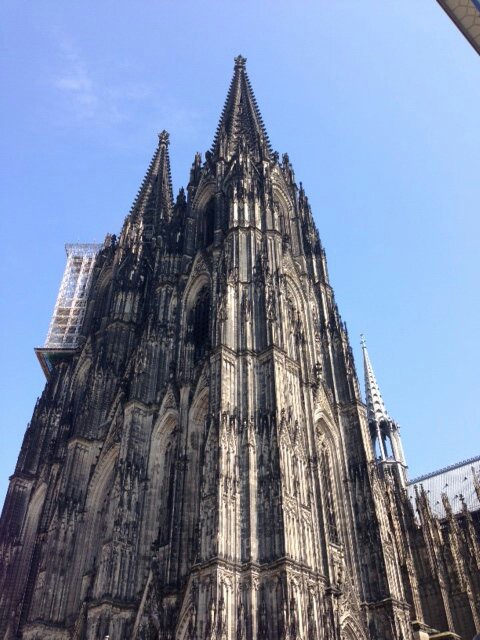
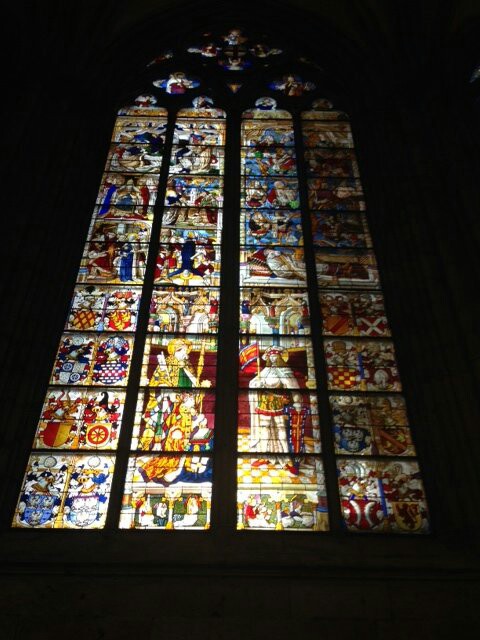
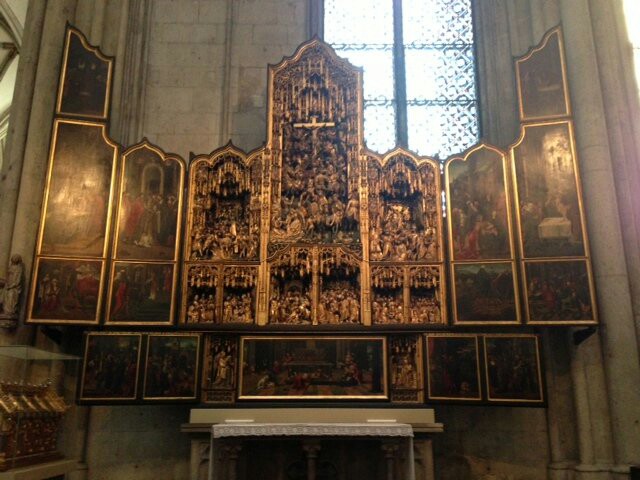
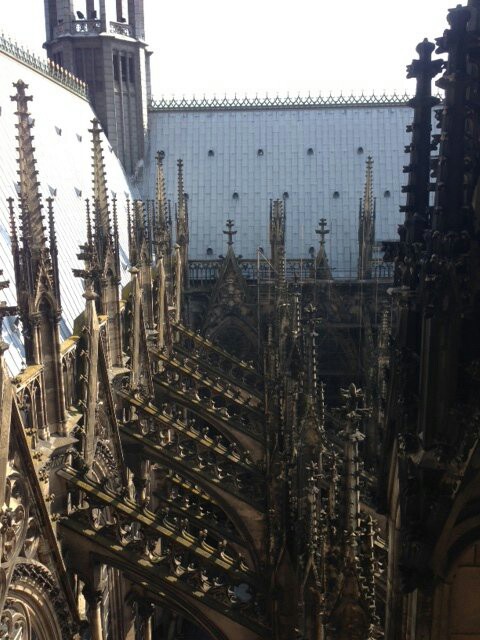
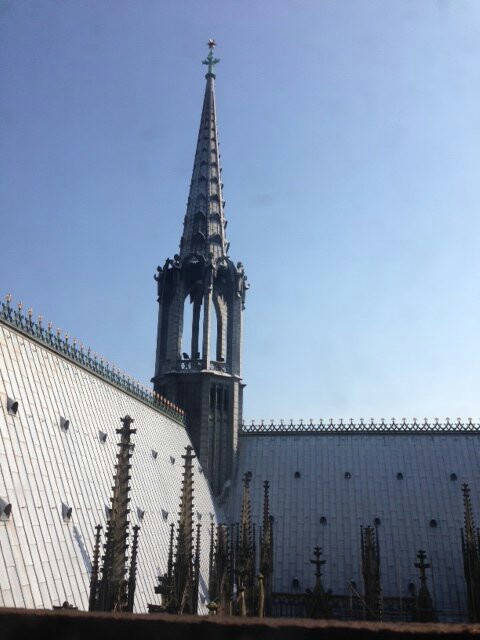
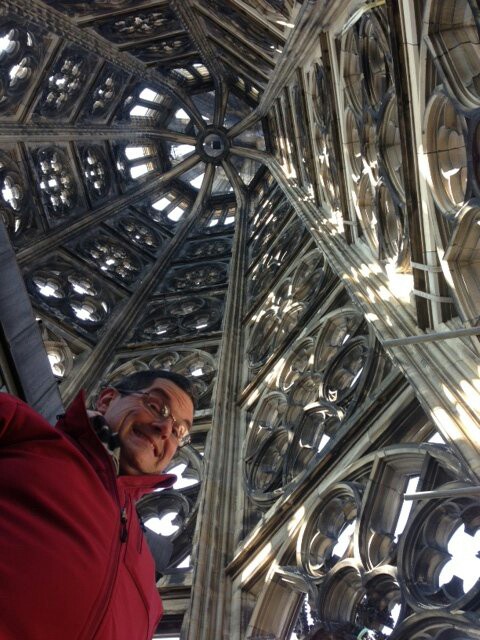
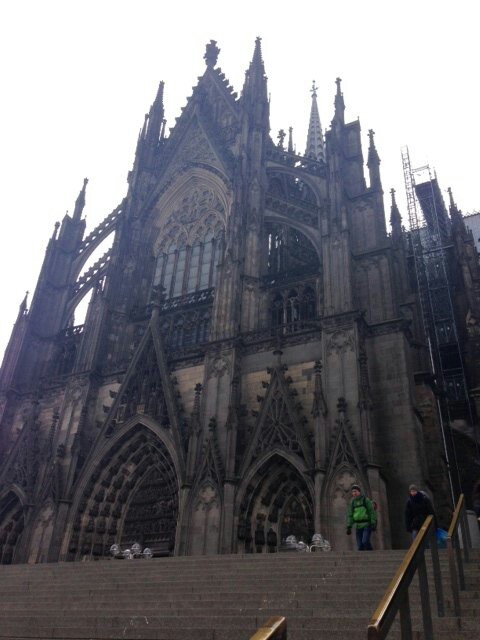
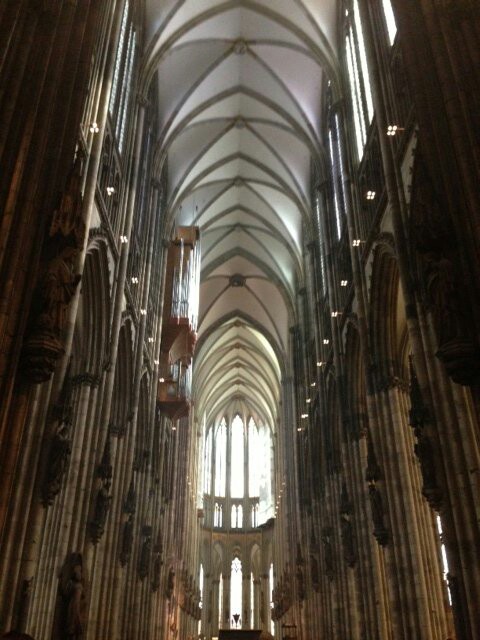
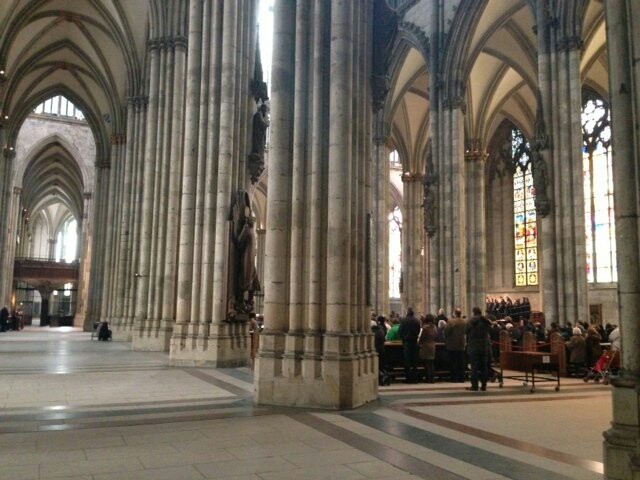
    It was a slow day in Europe today :)  We spent a couple of hours at the Cologne Cathedral this morning. The photos (in yesterday’s and today’s entry) tell the story much better than I can. It’s old, much of it built between 1250-1350. It’s sort of the definition of Gothic architecture. If you like that sort of thing (we do), it’s nothing less than spectacular. I have never seen this amount of intricate details in one spot before.


    There were bunch of these, every one different, each telling multiple stories – one story on the top half, another on the bottom half.


    One of many side altars, the one courtesy of a church in Antwerp, Belgium.

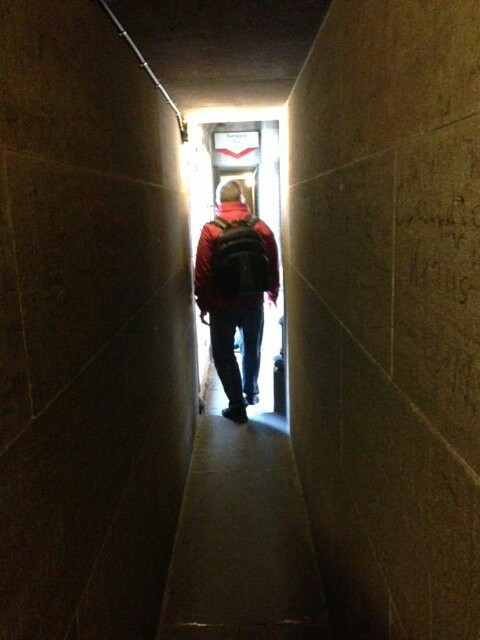
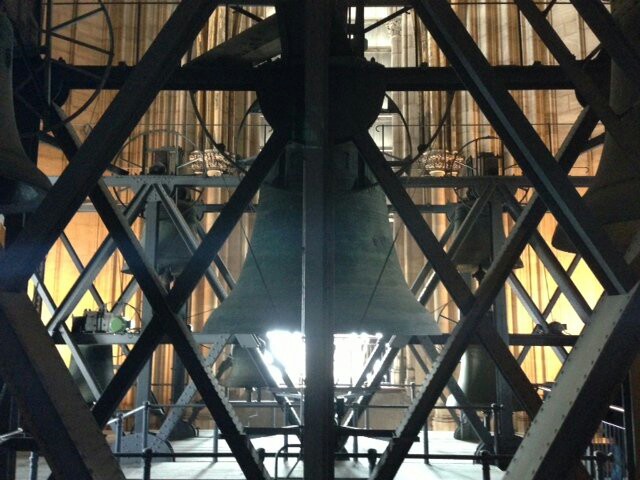
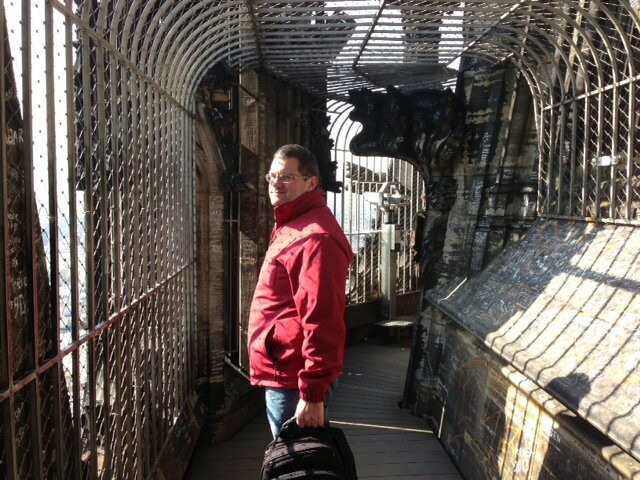
    The highlight of our visit was the climb up the bell tower: 533 steps in a very narrow, steep spiral staircase, that got even narrower at the very top. We were standing right next to the bells at the strike of 11am. Can you say “loud”? I wasn’t expecting it and nearly jumped out of my skin when the first one struck.


    The majority of this climb was in a tight spiral staircase. The last part was about 3 stories up an open air metal staircase, no spiral, just typical landings and 90′ turns. The spiral one was a bit claustrophobic for me. This one gave us both a decent case of vertigo because for the first time you could tell how high you were.


    We also toured the cathedral’s Treasury, it’s collection of artifacts, relics, garments, vessels, etc. Lots more very intricate things, mostly in gold, most several hundred years old. Some of them are still used in appropriate occasions by the Archbishop.

    Dan was having Asian food withdrawal so we went to a Vietnamese place for lunch. It was pretty good! For dessert, ice cream and people watching in another square we came across. Then we picked up our bags from the hotel and headed back to the train station for the 2h 45m ride to Amsterdam.


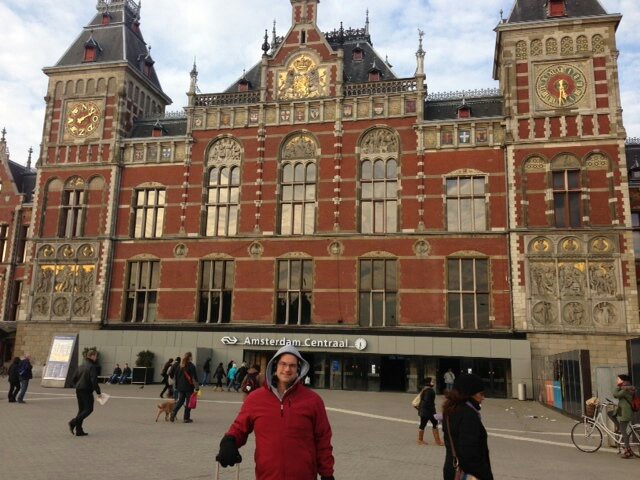
    Amsterdam! We are renting a small apartment for 7 nights and will use this as home base to see more of Netherlands outside of Amsterdam. Just walking out of the train station, 3 things hit you right away to let you know you’re not in Kansas anymore:

    1. Diversity – if you didn’t know where you were, you couldn’t tell just by looking at the people around the train station – perhaps not even what continent you are in.
    2. Bicycles – holy cow, everywhere! In like 30 degree weather!
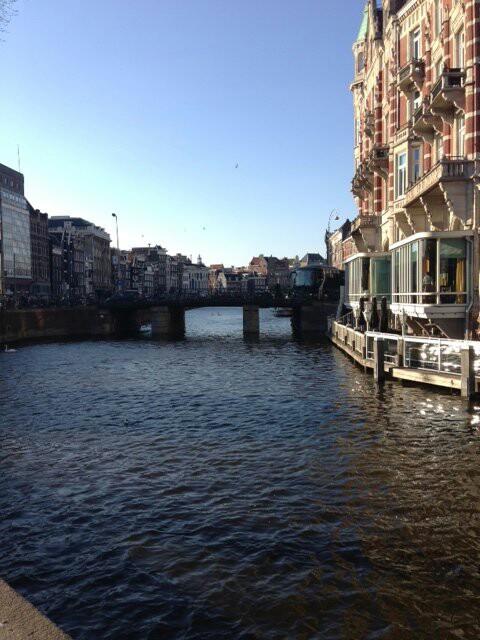
    3. Canals – duh, you’re in Amsterdam!, but it really is charming
    Apparently the Dutch don’t really have their own cuisine – they rely on everyone else’s. With that in mind, we had an excellent Indonesian dinner.

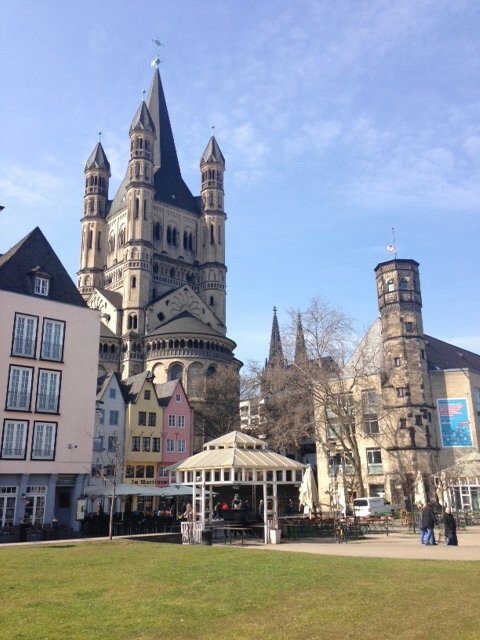
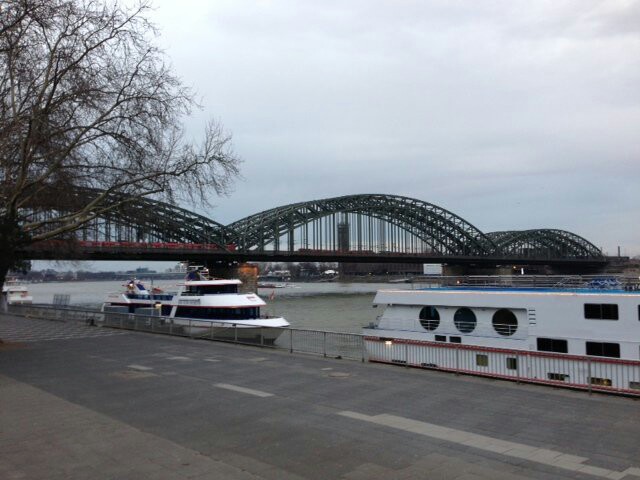
    Here are a couple of random Cologne pics: the first of some cool buildings on the river’s promenade, the second of  railroad bridge going over the Rhine. It’s the busiest in the world, with 30 trains crossing every hour.


  • Day 6: Cologne (Sunday, March 24, 2013)

    Day 6: Cologne (Sunday, March 24, 2013)

    A normal early morning, we went down for breakfast around 7:30. The scrambled eggs were cooked in bacon grease, a specific taste I haven’t had in awhile, subtle enough that I hadn’t noticed it the prior morning. More smokey than bacony. We bundled up to prepare for the 1.5 mile walk to the train station in 1C weather, or about 34F with a wind chill of 27F. Cold no matter how you measure it! And to think I almost didn’t pack my scarf and gloves because it would be Spring.

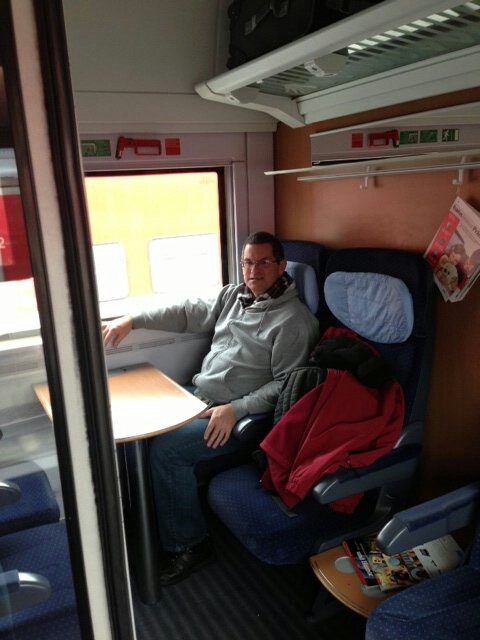
    So about the trains. I really am enjoying this aspect of the trip. We need these in the US! It’s an easy way to get around and I wouldn’t want to drive here as a visitor. While I have learned since that it is not really necessary to pay extra to reserve a specific seat, especially for shorter trips, I didn’t understand that when I booked this 5-6 weeks ago. So we had reservations for this 45 minute trip. We were both surprised at what that meant. Unreserved Second Class is already pretty decent, better than coach on an airplane that’s for sure. This time we were in a compartment of just 3 seats on each side, facing each other, with a little table in between the window seats. And we had the whole thing to ourselves! I said to Dan it reminded me of Harry Potter and wondered if someone would come by to sell treats. Sure enough, about a minute later a woman slid the compartment door open and offered coffee. (We declined.)


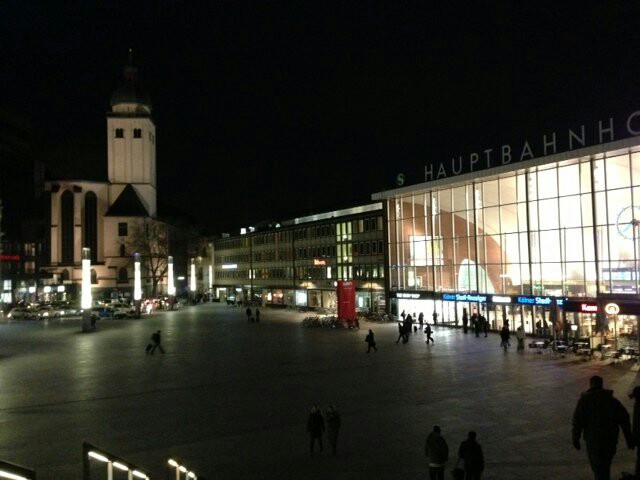
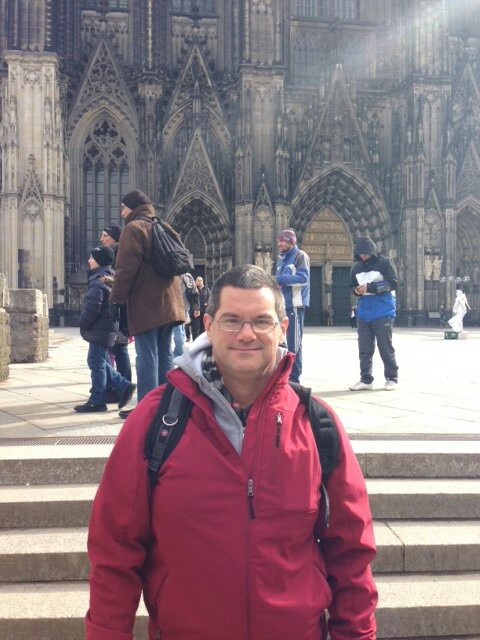
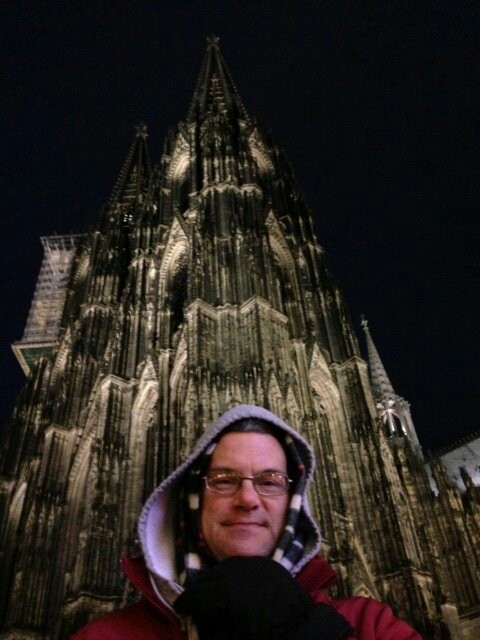
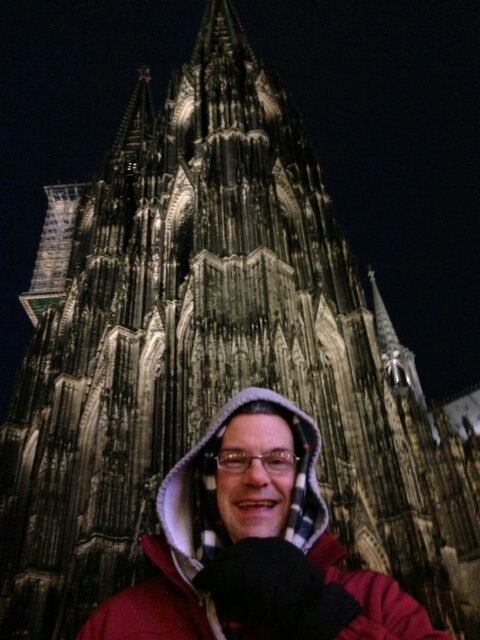
    The train stations themselves are a trip. All have eateries of some kind, multiple bakeries and coffee shops for sure. Those in larger cities add more variety. Koblenz, about 100k people, was mostly food. Mainz, about 200k people, had a place to get a haircut. Frankfurt, about 700k, is a decent sized shopping center. Wide variety of food plus some retail stuff. Cologne, Germany’s 4th largest city with over 1 million people, has a full on mall as it’s train station. This is it at night, the back entrance from the cathedral whose steps we’re standing on. Too bad the sign isn’t lit or you could more clearly see Dan’s favorite German word: hauptbahnhof. It means “central station”.


    We are staying at a very nice but reasonably priced gay-owned boutique hotel about a  1/4 mile from the train station. If that. We booked this and our stays in Belguim through PurpleRoofs.com, which sponsors gay-owned and gay-friendly lodging throughout the world. It’s just nice to know you’re going someplace where you won’t encounter any weirdness about sharing a bed.

    Although Cologne has a decent collection of museums, we’ve somewhat given up on them since so little is in English. We figure we’ll have better luck in Amsterdam, where English is much more common. We noticed when we were putting this trip together, for example, that when you go to many German websites, they are, well, in German only and you need Google Translate to figure things out. Just about every website we visited that was based in Belgium or Netherlands starts with a “select your language” page, and English is always an option.

    So the only absolute “to do” for us is The Cologne Cathedral, another World Heritage Site because of its testament to German Catholicism and gothic architecture. It is right next to the train station and impossible to miss due to its massive size and distinct look.


    But today is Sunday, it’s a functioning church, so the touristy stuff isn’t available until tomorrow. Even though a mass was going on at the time, they do let visitors in but only so far before you encounter ropes. A high mass was in full swing, including incense (a smell I used to gag on but learned to love as an altar boy), choir and organ, and a gaggle of priests in red robes singing the mass in Latin. In this amazing structure that is literally spell-binding as soon as you walk in. Chills, and I’ll admit a little choked up. No one does pomp and ritual like Catholics.


    We had 4 hours to kill before we could actually check in (we’d just dropped off our bags at the hotel), so we just started walking to see what we could see. We came across another pedestrian mall, where there are lots of stores but the streets are closed to vehicles. These are popular here – there’s been one in every city so far. We’ve seen more American stores in Cologne than any place yet, and a much larger variety of people and restaurants, although Frankfurt was pretty diverse.

    We browsed an antique flea market in a downtown park, very similar to what we have in Sacramento “under the freeway” on Sundays – only it was free and the quality of stuff didn’t feel quite as junky – although still nothing we would have bought!

    We stumbled into a gay neighborhood, first evidenced by discrete rainbow stickers on the doors of businesses, although the German Bistro we lunched at had the rainbow incorporated into it’s logo. We noticed same-sex couples holding hands as they walked and hadn’t noticed it before.

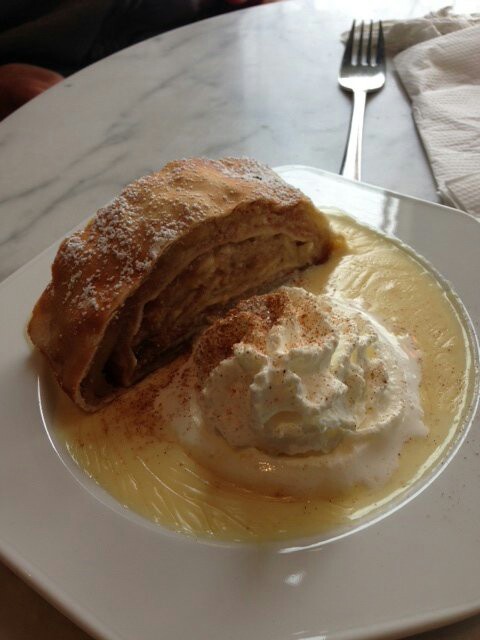
    We had a classic German lunch of currywurst, a white sausage in a sort of BBQ sauce with curry powder sprinkled on top. It was very tasty, with roasted veggies and thinly sliced potatoes cooked in – wait for it – bacon grease. But the best thing we had was the apple strudel: very little crust baked around many layers of thinly sliced apples served with this amazing vanilla sauce. Foodwise it might be the best thing so far all trip, or a tie with that warm chocolate souffle I had the first night.


    Dan took a nap after we checked in and I pretty much wrote this. Later we went out for dessert first at the bakeries in the train station, then bought fingernail clippers at the drugstore. After dinner, we perused the bookstore there. I’m amazed at the variety of things you can do/get at the train station.

    We walked some more in a new direction and stopped at a hole-in-the-wall place for what can only be described as Turkish burritos: thin pita bread tortilla filled with shaved rotisserie chicken, spicy red sauce, yogurt sauce, cucumbers, cabbage, onions, tomatoes. Great!

    Walked a bit more but came back early because it was just too dang cold.


    Tomorrow we will tour the Cathedral then take a train to Amsterdam in the afternoon.
  • Day 5: Koblenz, Part 2 (Saturday, March 23, 2013)

    Day 5: Koblenz, Part 2 (Saturday, March 23, 2013)

    We slept in until 8:45am which is really late for us. Dan has been working so much, so hard, for so many months, I was glad to see him still snoring at 7:30. Then I fell asleep again, too.

    We had breakfast at the hotel, a little 15 room place that’s charming, off-the-beaten-path, personal, owned by a nice, short, round guy named Claus. Enough said about that. We bundled up – it was in the 30s all day and much worse when the wind picked up, which was often – and set out for our trek to the castle, about 4 miles each way. Google maps had us backtracking about a 1/3 of a mile to cross a bridge, which seemed crazy to us since there was another way across the river in about a 1/3 of a mile the direction we needed to go. We assumed the map was wrong. It wasn’t. We got there to discover it was a freeway with no access for pedestrians. Within minutes of Dan saying “maybe we’ll get lucky and a cab will come by”, one did. In a nowhere neighborhood on the wrong side of the river on a Saturday morning. Good cab karma I guess.

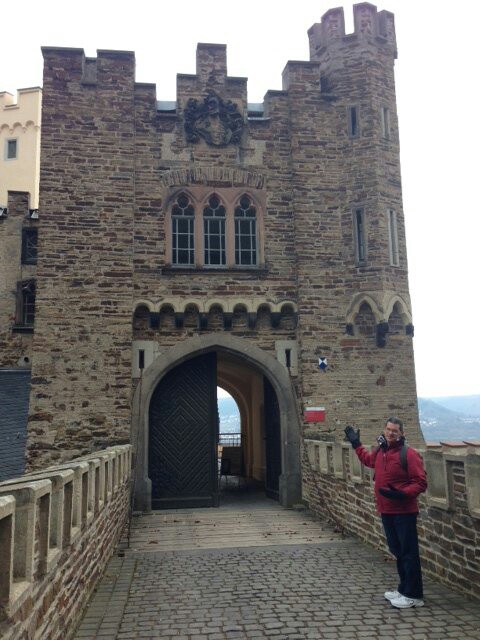
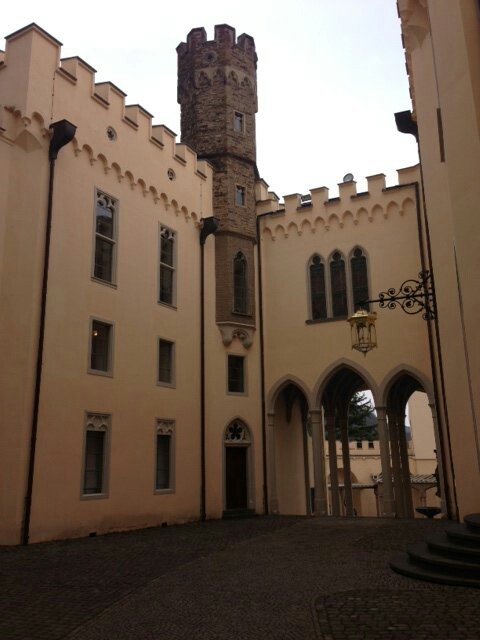
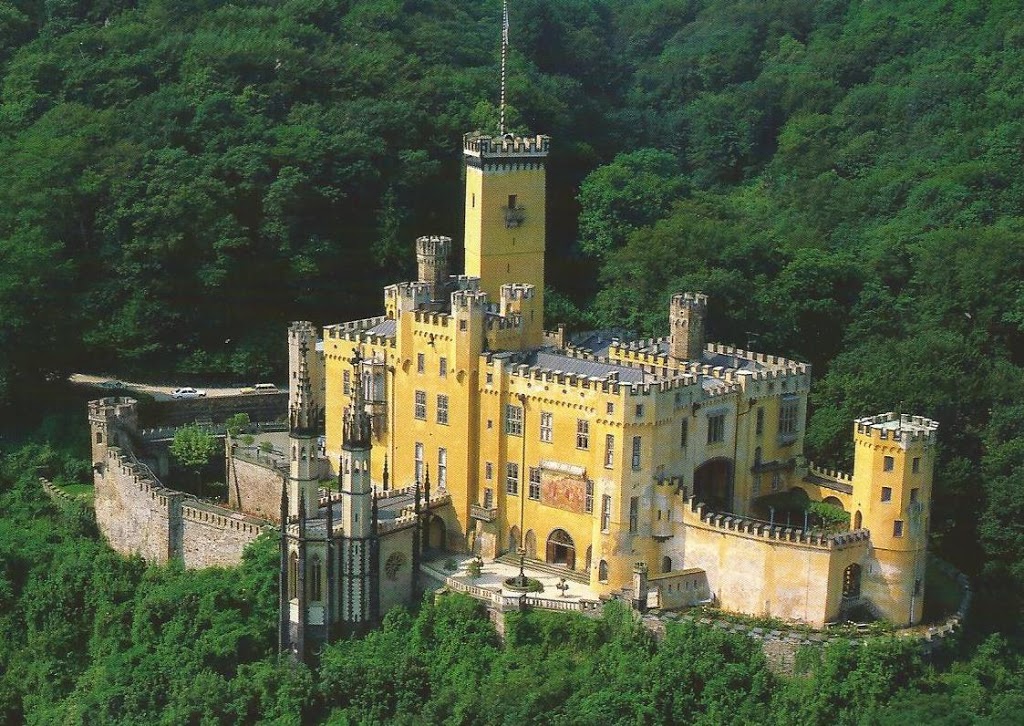
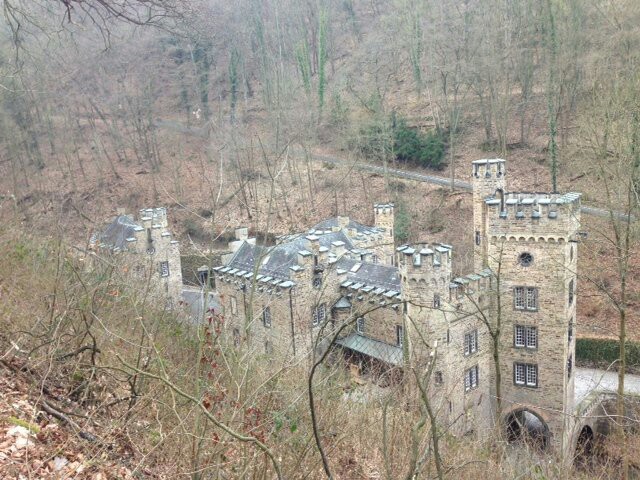
    So we took a cab to the castle! Stolzenfels. Originally built in 1259, it had several different occupants until the French destroyed much of it during a war in 1689. The city of Koblenz made a gift of it to Frederick William IV of Prussia in 1815. He fully restored it to reflect medieval times. Some of his furnishings are still in it.


    I don’t know why I’ve always had a fascination with castles. I remember drawing them as a kid for reasons I know longer remember, but when I did I even used the same “rook in chess” motif that this one had. Maybe it’s the legend we grew up with about Oma being the illegitimate daughter of an Austrian prince. (Did that ever get confirmed or denied?) Maybe it’s the – embarrassing admission approaching – ridiculous number of Victoria Holt novels I read as a tween. One of them was even titled “The King of the Castle”! Whatever is behind the fascination, this castle, This Castle, was extremely satisfying.


    While the moat was largely gone it was easy to imagine. There was the first entrance beyond the moat at the castle wall, which is now where you pay for admission and use the toilet. This lead to a front walled yard and the front door, which today might be described as a built in garage when you remember horse and carriage went through that, and then finally to the main courtyard, where residents and guests would get out of their carriages and off their horses and into the residence.
    There was something about this courtyard that I just loved. I could envision a horse pulled carriage pulling in and letting people out to get into the fortified residence…
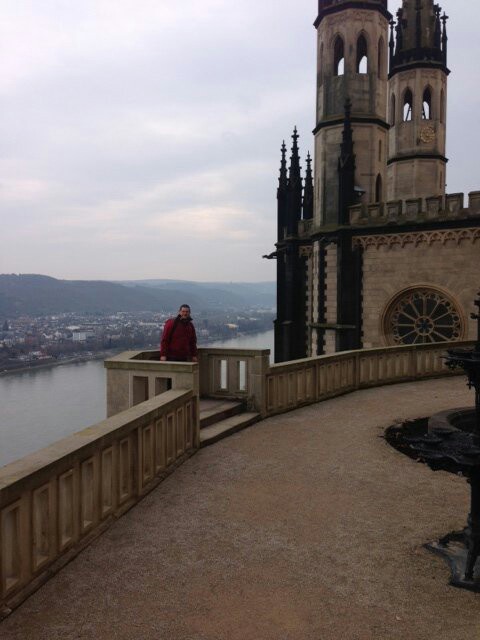
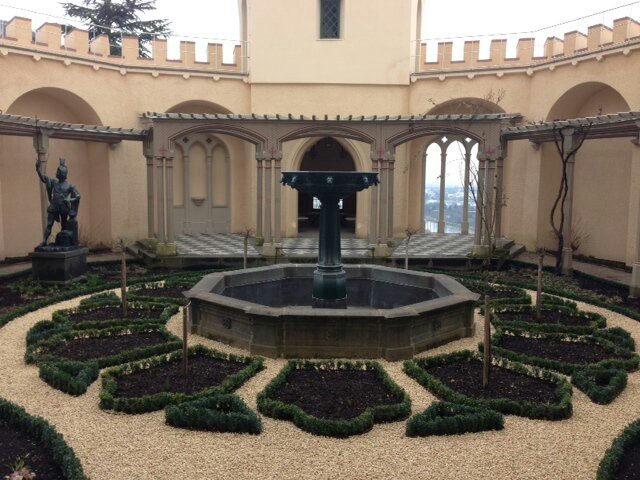
    This was a gardened courtyard within the walls of the castle. The little open room behind the fountain was chapel-like, with windows that peered out onto the Rhine River. I could imagine this being a great place to start your morning over a nice coffee!


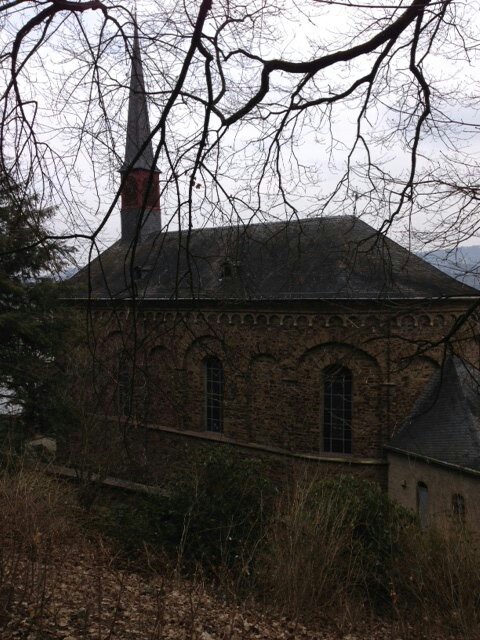
    Anyway, I loved this castle. It even had a little church on the grounds, which is classic  if Victoria Holt is a reliable resource: nobility doesn’t worship with commoners. So there. And it is still being used – the mass schedule is posted, there are burials in the cemetery as recent as 2010.


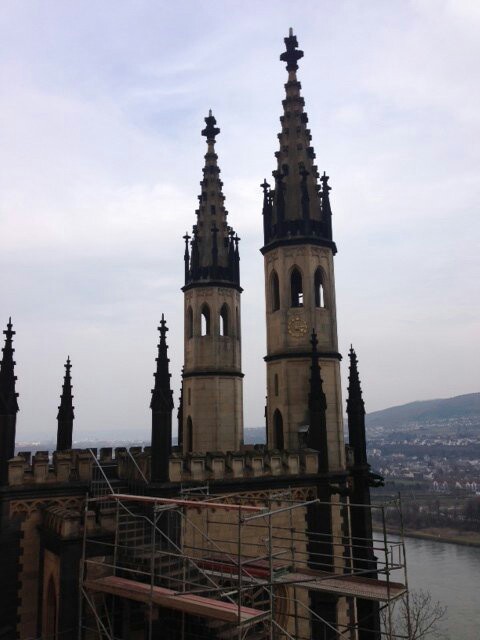
    There was a ton of scaffolding up in several parts of the castle, including the big tower, so we didn’t take a picture of that. We did get a postcard though; here’s a nice shot of the whole thing (although it’s not this color anymore).


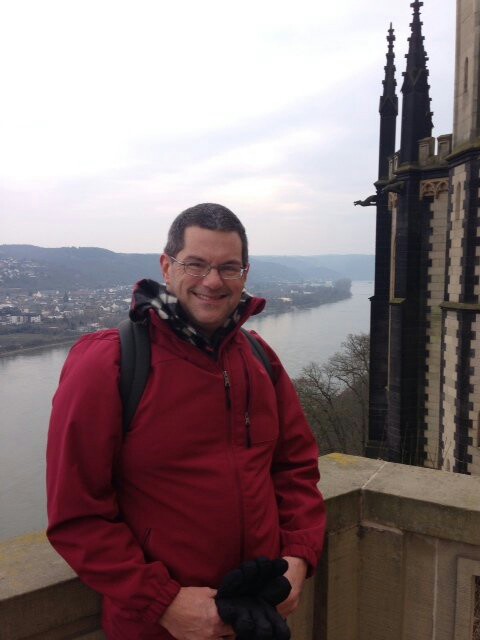
    We were there about 2 hours and walked the 4 miles back to town along the river. You can see from some of the pictures how cold it was from my red face. We were tired and hungry by the time we made it back into the heart of Koblenz, and had lunch at a great Spanish place. Tapas of course, a sampling of 8 served in these small bowls wedged in two rows on a long wooden platter. A mixture of fish, sausage, meatballs, and cheese, it was smart, tasty and just what we needed.


    We had dessert in two courses continuing our walk around town: German ice cream – Wow! – and German pastries. Which is a good time to segue to general observations:

    • In addition to bakeries, covered yesterday, there’s also an abundance of coffee shops, ice cream/gelato places, and pharmacies, or “apotheke” as they are called here.
    • You can take your dog with you most anywhere. There was a big one sitting on the floor at the table next to us at the tapas place. We saw another being pushed in a cart by his owner in a kitchen store we were perusing.
    • Restaurants will not bring you water unless you ask for it, and then expect to pay for it after answering this question: gas or no gas? (Referring to carbonation if you’re new :) It’s considered tacky to ask for tap water.
    • We saw a middle-aged gay male couple walking down a residential street unapologetically holding hands. It was surprising and sweet.
    And a PS from yesterday’s deal on pork fat: after all that late lunch grazing, we went down to the hotel restaurant again for a light dinner. When they brought the bread basket and left the pork fat with it, Dan asked Claus “could we have butter instead?” Claus of course was accommodating. Dan then looks at me and says “I can’t believe I said that.” If you know Dan well – Jon in particular – you’ll get how amusing that is. And then he took a picture of it before Claus took it away :)


    Tomorrow we’re off to Cologne.

    Additional castle and Koblenz pictures:

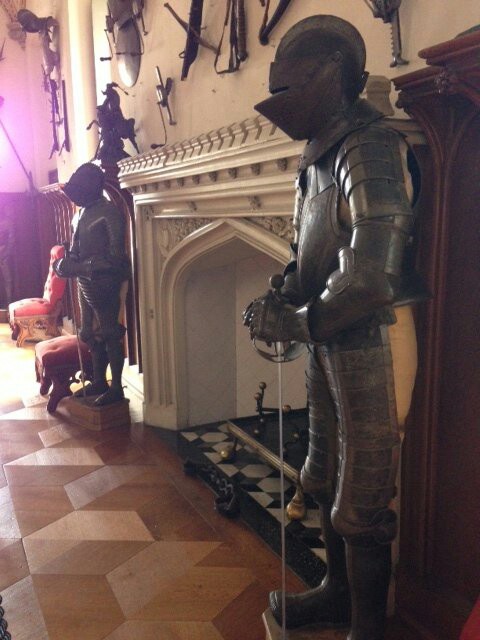
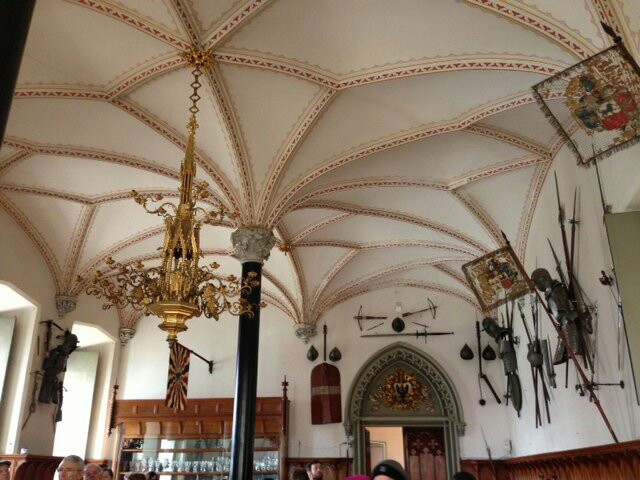
    The armor room.

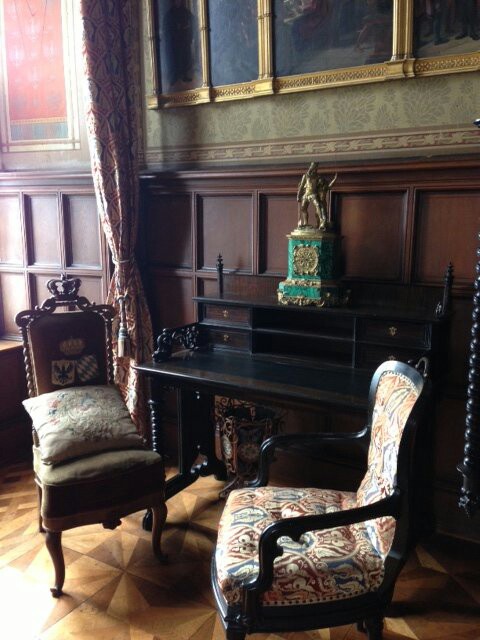
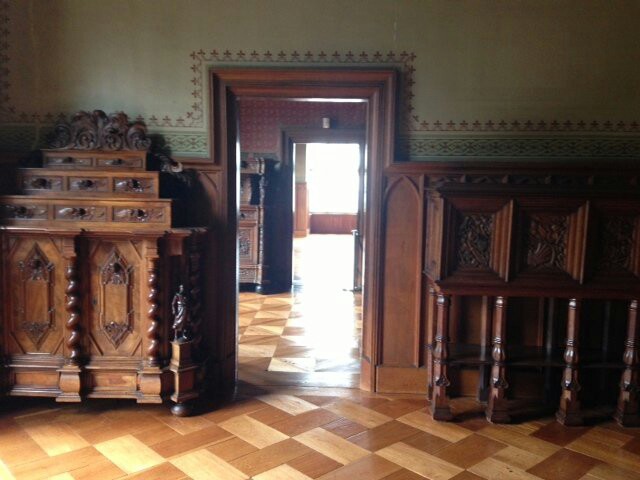
    Some big, heavy furniture!

    This cool other building you passed walking up to the castle. Since the tour was in German, we never did find out what it was for; we assumed servants quarters.

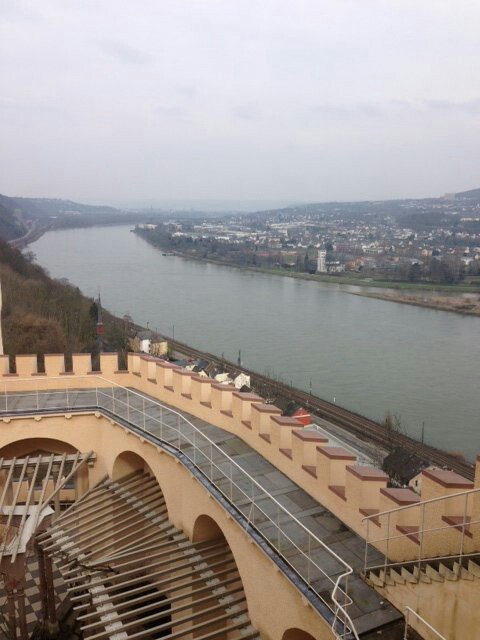
    The Rhine from the castle. Nice view, huh?

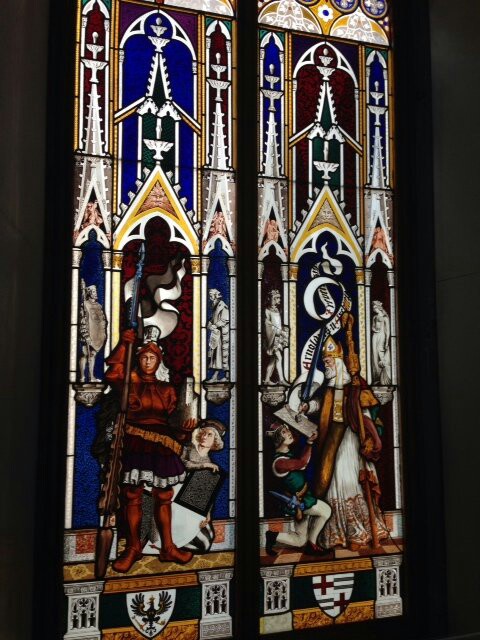
    Stained glass in one of the rooms.


    The Electoral Palace – view from the Rhine, inside, fountain in back by the river.


    Government administration building, as seen from the river. This was taken the day before which is why the sky is blue!