Blog

  • Day 13: London, Part 1: City of Westminster

    Day 13: London, Part 1: City of Westminster

    Ya didn’t know it was a city, did ya? It isn’t – despite what all the street signs say – that’s apparently just how London refers to its boroughs. On Thursday we’ll hit the City of London in London. Very confusing. And yes, it’s boroughs with only 2 syllables, just like we say it.

    So for our first official full day in London we decided to go classic and hit the iconic stuff. We both went to bed relatively early last night and both slept well. We had a simple breakfast in and made our way to the bus stop around 9:45. We’re taking buses more than subways because you can see more, and because one of our travel cards is not working right in the subways and there isn’t always an attendant to let you in the turnstile manually. So the bus has become easier because you just flash the card at the driver.

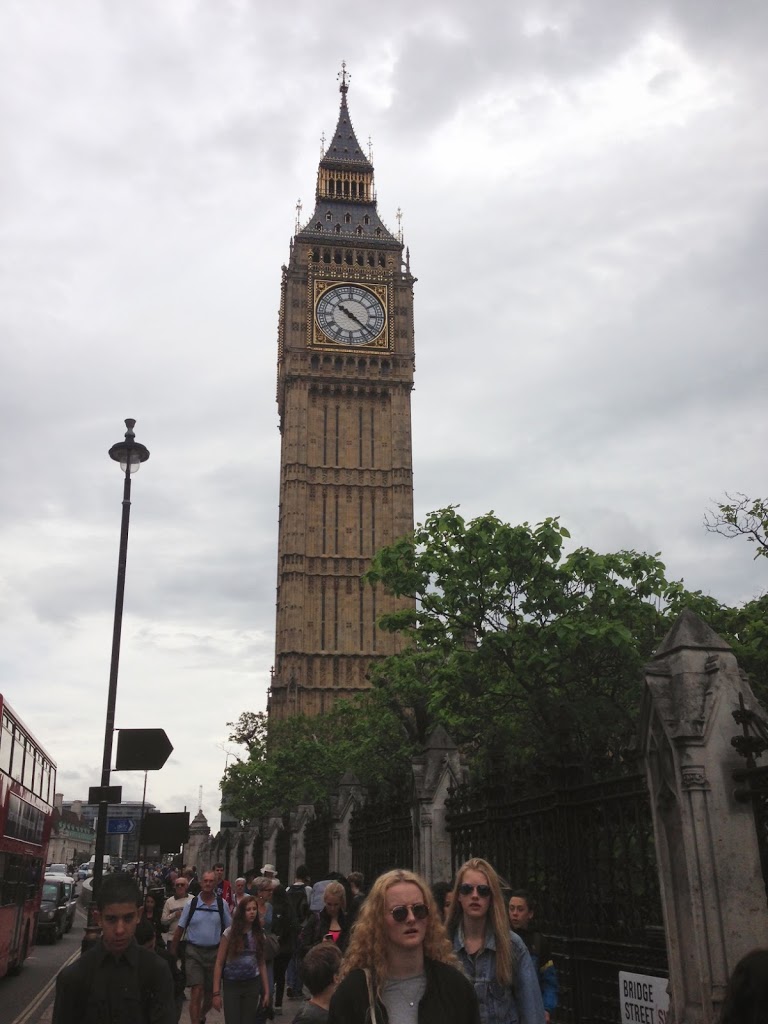
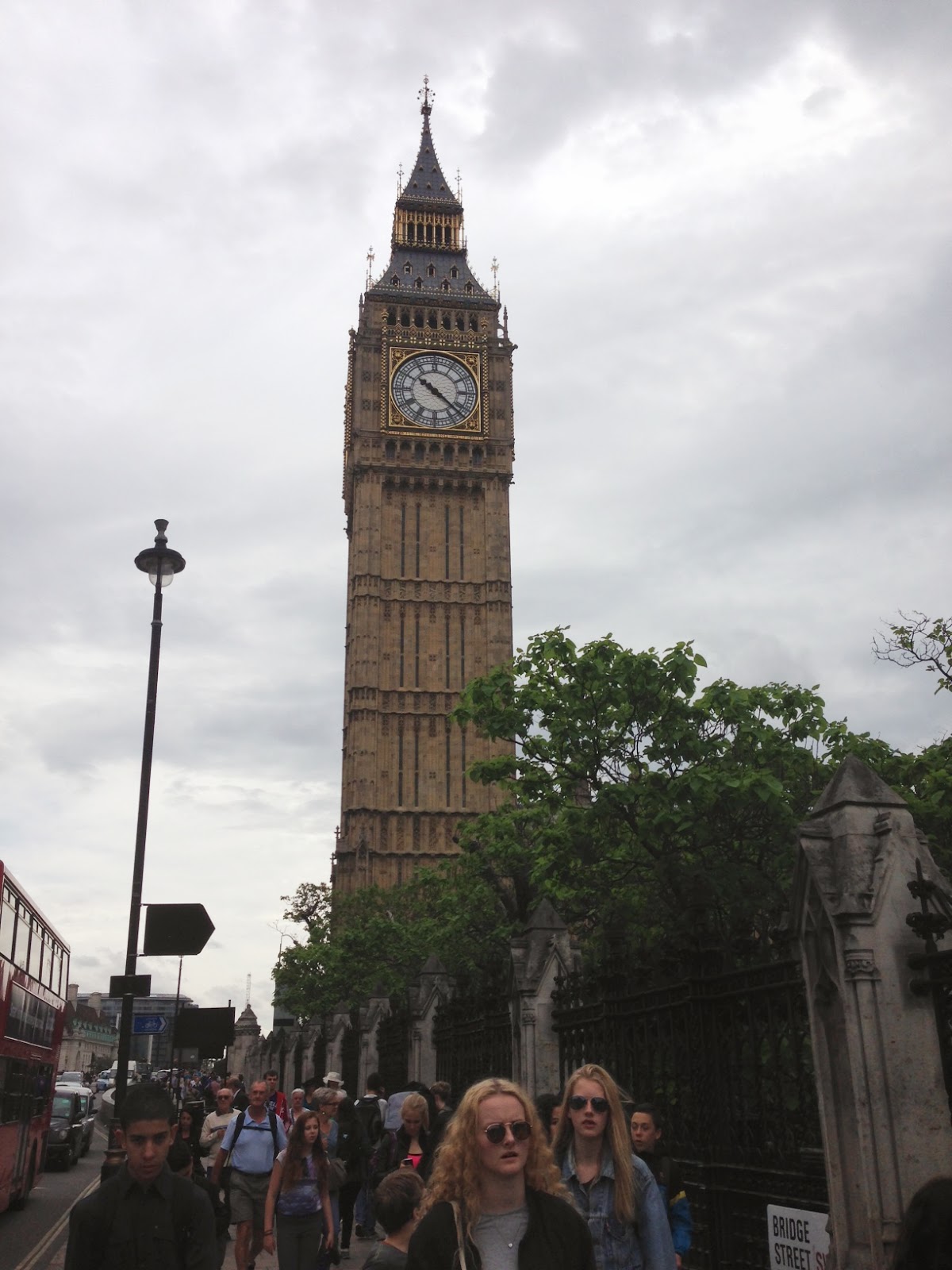
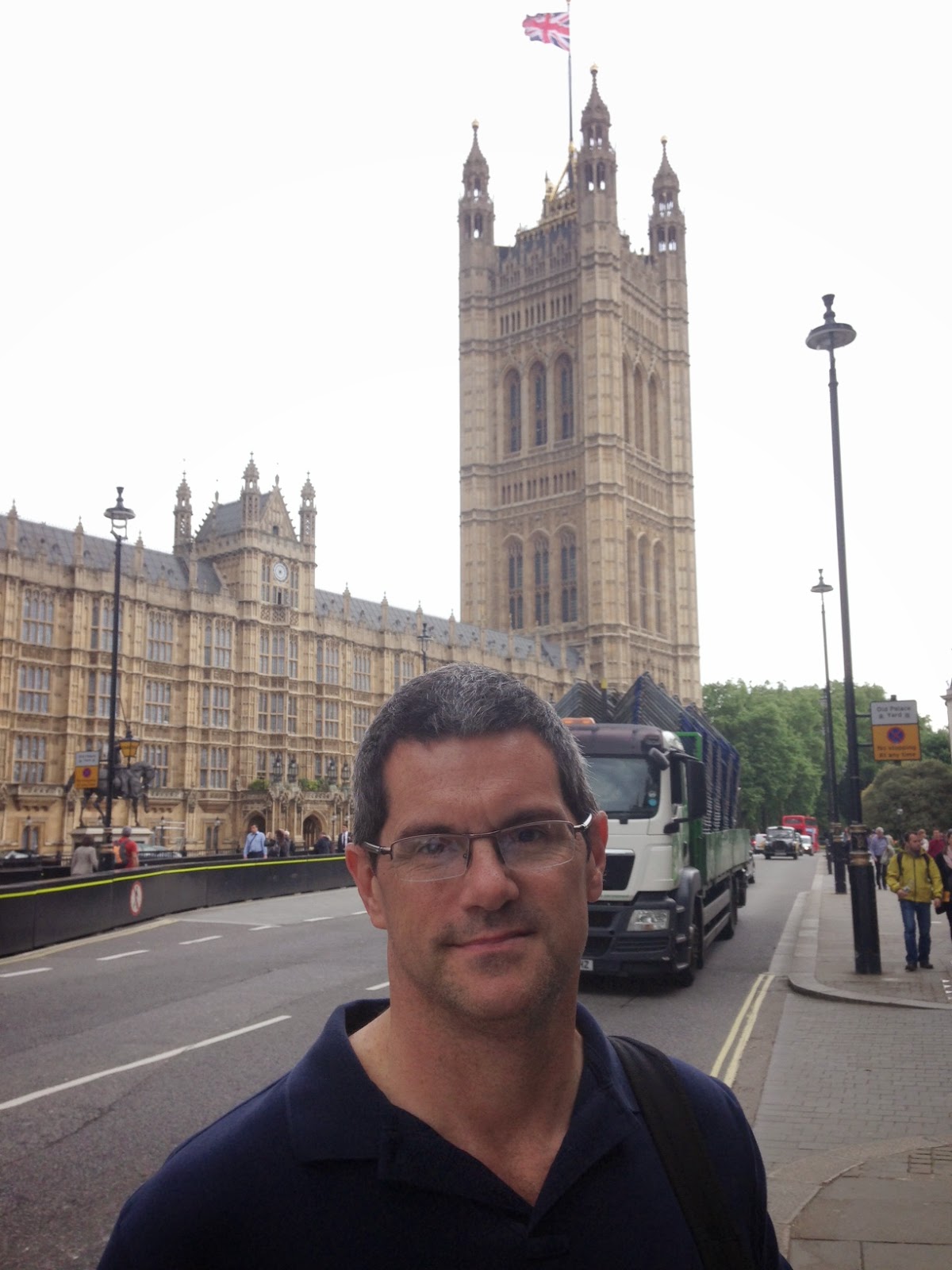
    We did not go in here but it seemed fitting to start with a photo of Big Ben since it’s arguably the most iconic building in London, and was the first thing we saw when we got off the bus. “Big Ben” actually refers to the bell inside, not the clock, although the clock is the largest four-faced chiming clock in the world. The tower used to be just the clock tower, now called the Elizabeth Tower, renamed for the Queen’s Jubilee. It sits at one end of the Parliament building where the House of Lords and House of Commons meet. The official name of the building is the Palace of Westminster; it was the residence of Kings & Queens in the Middle Ages. The original and even the 2nd one were both destroyed in fires; this version was built around 1835.

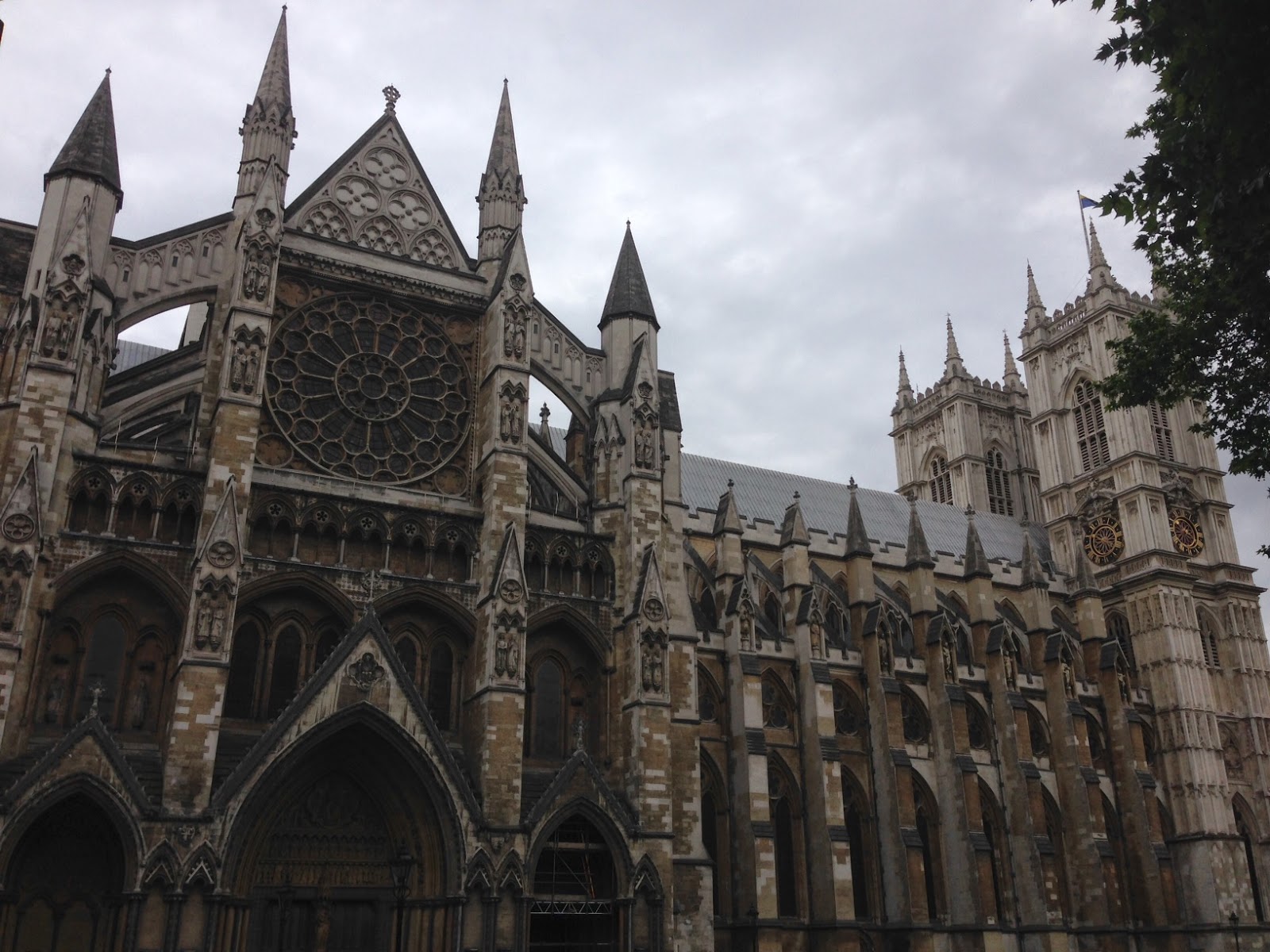
    Side view of Westminster Abbey. We couldn’t get in this morning because it was closed to the public until 12:30. This apparently happens when there are special services going on.
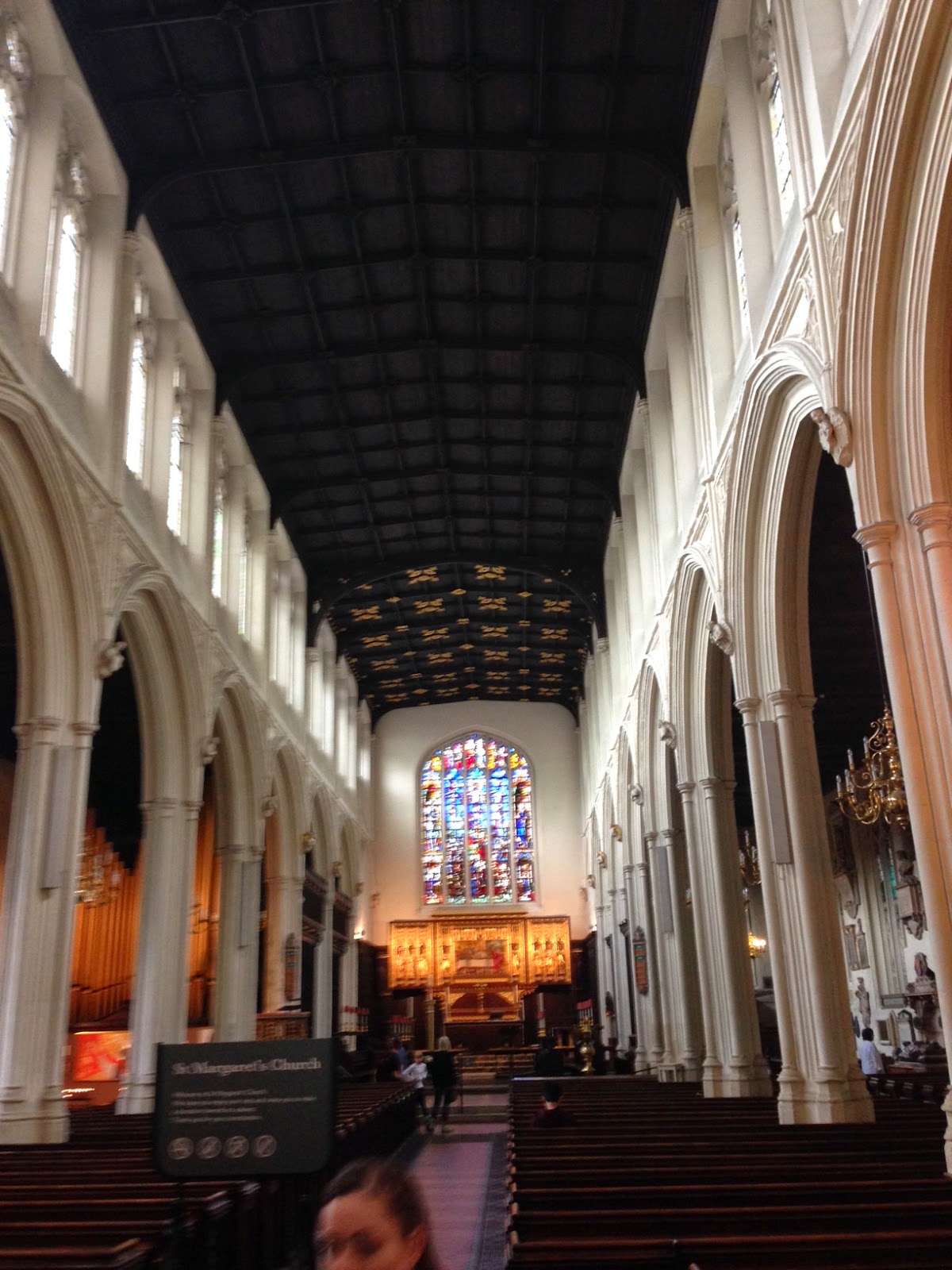
    St. Margaret’s Church, on the Abbey grounds, the official church of the House of Commons.
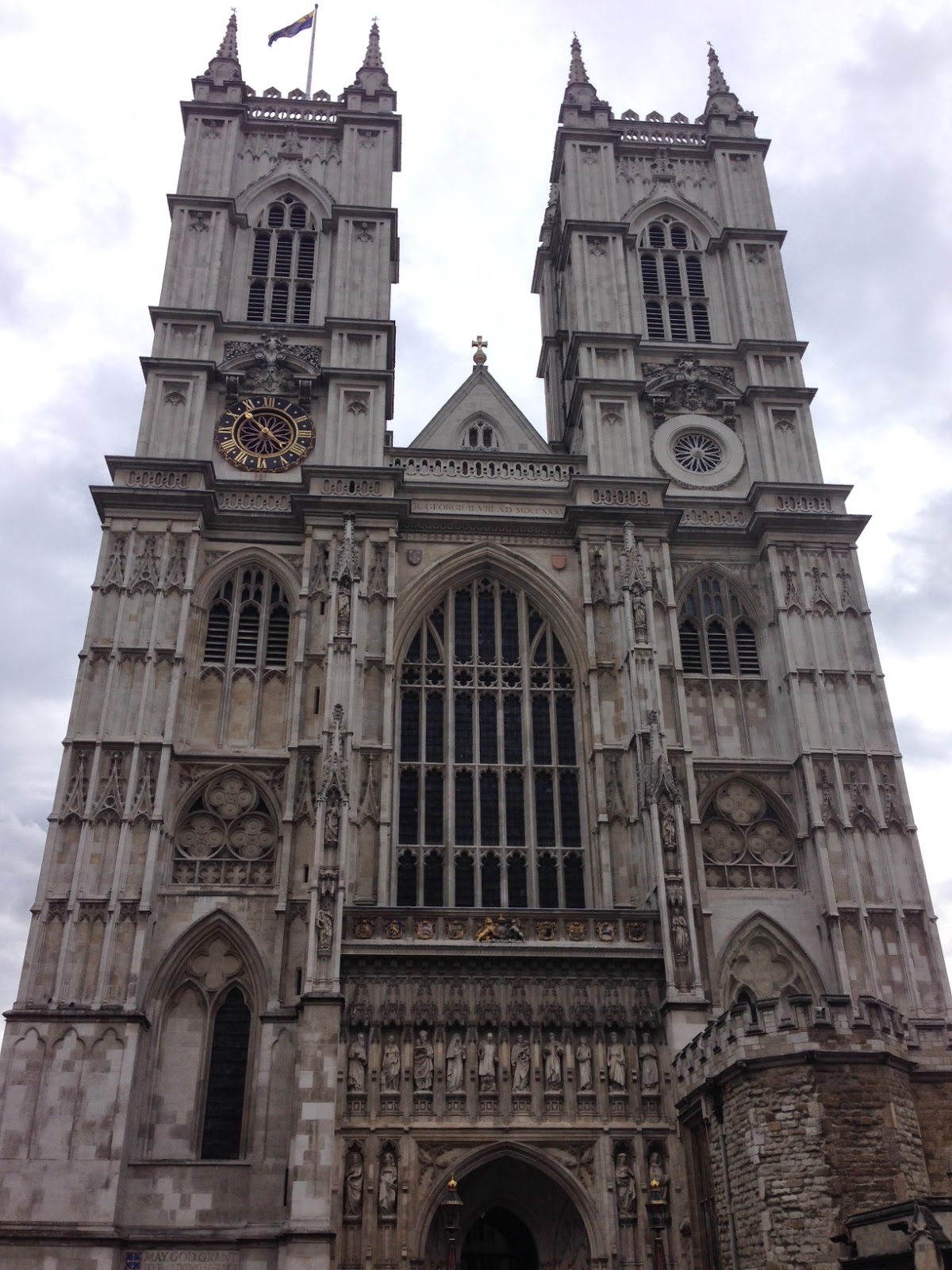
    The front, typically called the West Entrance. The towers are “new” – added in the mid 1700’s, as opposed to the rest of the church which dates aback to the 1250’s. Kings and Queens have been crowned at this site since 1066.
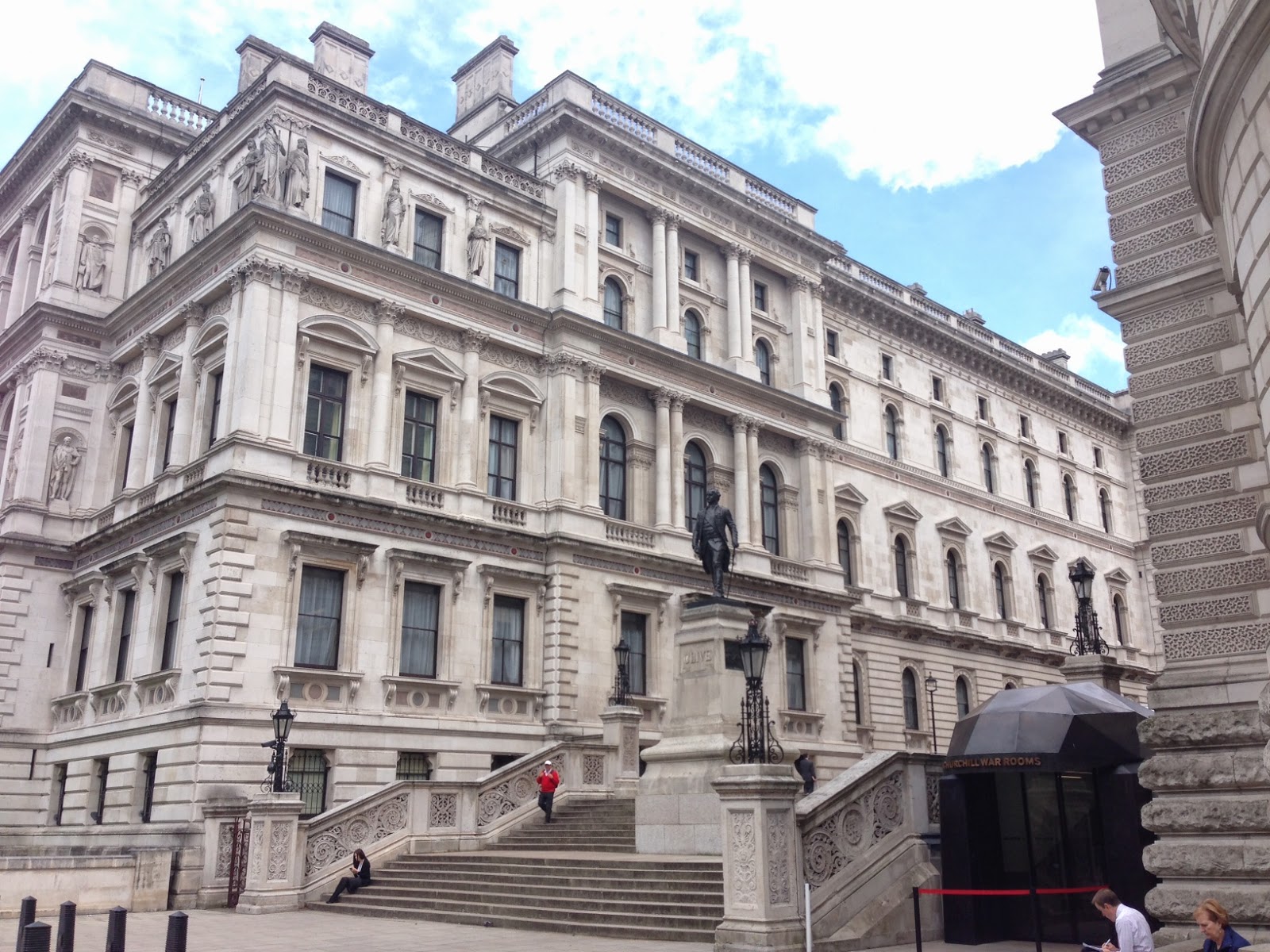
    That black door is the entrance to the Churchill War Rooms. They were located under the Treasury building, in the Whitehall complex – which is at least both of the buildings in the photo on either side of a plaza – where Cabinet offices and other government administrators are located. Downing Street is at the end of the plaza and just to your left.

    I started reading the Churchill biography “The Last Lion” as a way to continue my study of WWII. It’s quite dense and in 3 volumes, so I’ve put it down at times and read other books in between for variety. I’m just about at the end of Volume 2, which appears to end towards the beginning of WWII. Some of the detail I just skim over but for the most part I’ve been very interested. He was born in 1874 and his father was the Duke of Marlborough; his generation witnessed the passing of English rule by nobility so there is an interesting Downton Abbey sort of thing going on in the background. He was a mix of contradiction on the surface at times, but there was always consistency in his motives: what he thought was best for the British people. Two large examples of that are his switch from the Conservative party to Liberal then back to Conservative. He was not an ideologue – he moved with the party he thought was headed in the right direction. He was also fiercely anti-Communist and loud about it in the 20’s and 30’s, so people’s head spun when the war storm was gathering and he suggested they strike an alliance with Russia. It’s because he was one of the first in Britain to clearly understand what Hitler was and knew that’s where the greater evil lied, and that they couldn’t do it alone.

    Several things I learned from the books which were interesting to have as background going into this museum:

    • His mother was an American, and he’s always had great admiration for the USA and traveled here quite a bit long before WWII. But his loyalty was always to Britain. He has been called “50% American and 100% Briton”.
    • Especially during the 30’s when he was just a Member of Parliament and not in the cabinet, he made his living as a writer, both books and articles. His articles were syndicated and he was read all over the world. He got his start in his 20’s when he went looking for military action and turned himself into a war reporter for wars he couldn’t participate in. The strategy of war thrilled him like few other things.
    • He was in the Cabinet before the age of 40 and at the start of WWI was First Lord of the Admiralty. He was always interested in science and technology and their applications to war and was behind the creation of tanks during that war.
    • He was one of the first to speak loudly and often about the terrors that would be coming out of Germany, as early as 1934. But the rest of the UK was fanatically attached to appeasement and thought him to be a warmonger.
    • I have been the most surprised to learn that there were 3 distinct times that some combination of Britain, France and/or Russia could have stopped WWII from happening had they acted differently prior to the invasion of Poland, including just days before that. Each time his recommendations were ignored. The Prime Minister at the time, Neville Chamberlain, truly believed that he could put the right deal together to appease Hitler and attain “peace for our time.” Chamberlain didn’t want war and was willing to do anything to stay out of it; he figured Hitler would be reasonable if his some of his demands could be met because certainly he couldn’t want war, could he? Churchill was one of the few to understand that war was exactly what Hitler wanted, period.
    • There are many who believe that Churchill and Hitler were opposite sides of the same coin and that they were destined to fight each other. Hitler was actually afraid of Churchill and would campaign against him when he was just an MP, giving speeches about the crazy man in Britain who wanted war with him at any cost. The only other man Hitler was reported to be afraid of was FDR. FDR had read Churchill’s books on war and believed he was the only man who could stop Hitler. When it was clear war was unavoidable at the time of the invasion of Poland, Chamberlain finally caved to public pressure – which had shifted in favor of Churchill as his predictions started to come true – and put him back on the Cabinet in his old job heading the navy. FDR reached out to Churchill directly to offer his support in whatever back channel ways he could. This was a serious protocol breach because he by-passed the Prime Minister and was also campaigning as anti-war so he could win a 3rd election. FDR and Churchill both understood at the time Poland was invaded in 1939 that they would be allies. It is what gave Churchill confidence they would win, and he believed they couldn’t win without the US, especially since they had blown the alliance with Russia just days before. (I was the most shocked the learn that at the time of the invasion of Poland, Germany and Russia had agreed to a non-aggression treaty. Hitler changed his mind in 1941 and invaded Russia, and that’s when Russia joined the Allies.) FDR’s outreach was the start of what Churchill described as one of the most rewarding friendships of his life.

    The Churchill War Rooms enshrine the bunker that was used to run the war in Europe from September 1939 to August 1945. After the war the lights were turned off and everything was left exactly as it was. It was several years later the the historical significance was understood and steps to preserve and remember it were initiated, yet it wasn’t made an actual museum until Margaret Thatcher opened it in 1984.

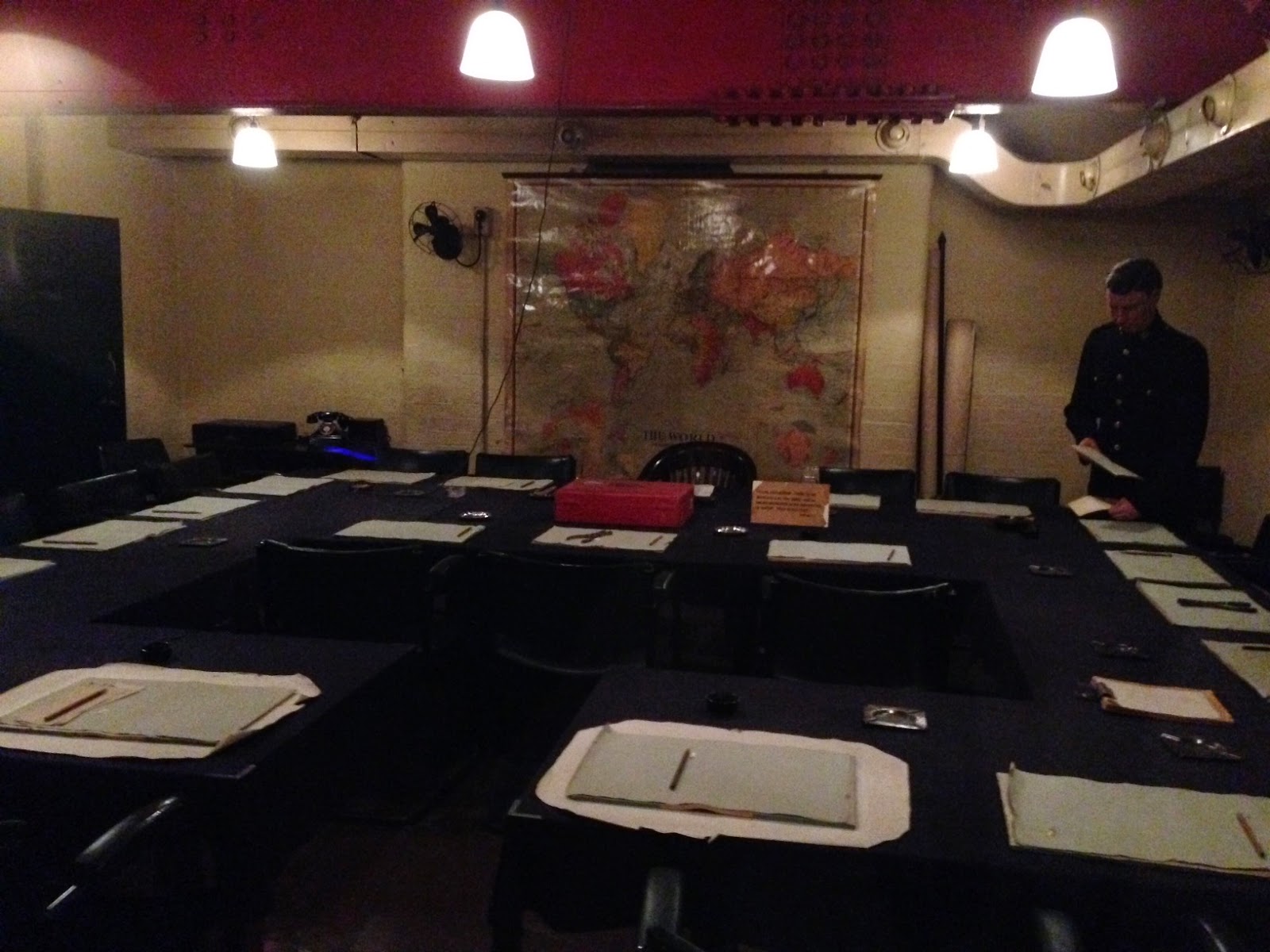
    One of the first rooms you see: the Cabinet Room. The wood chair in the middle was Churchill’s. He was made Prime Minister in 1940.
    The room of Brendan Bracken, a close friend of Churchill’s much of his life and his information officer during the war.
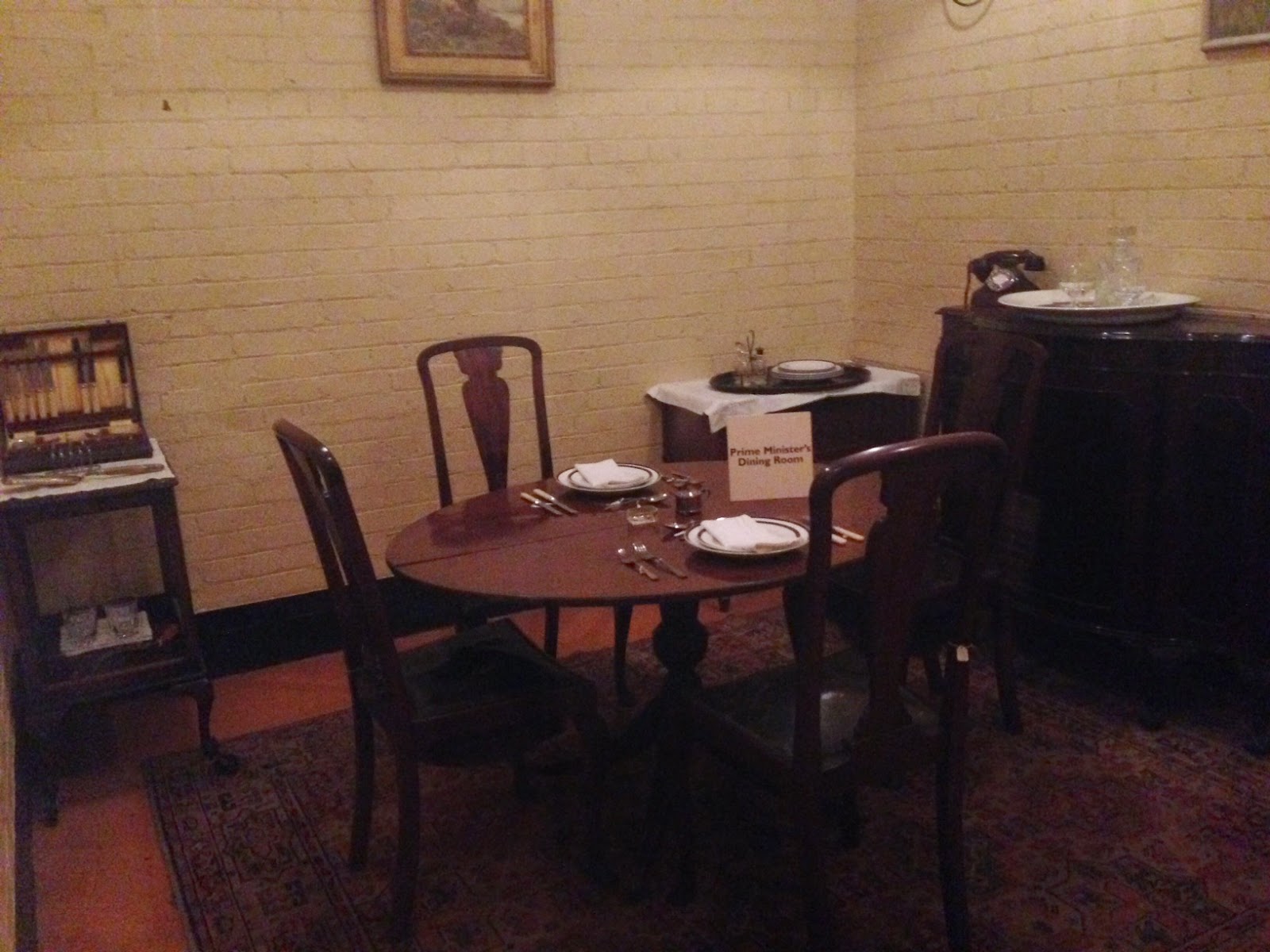
    Churchill’s dining room.
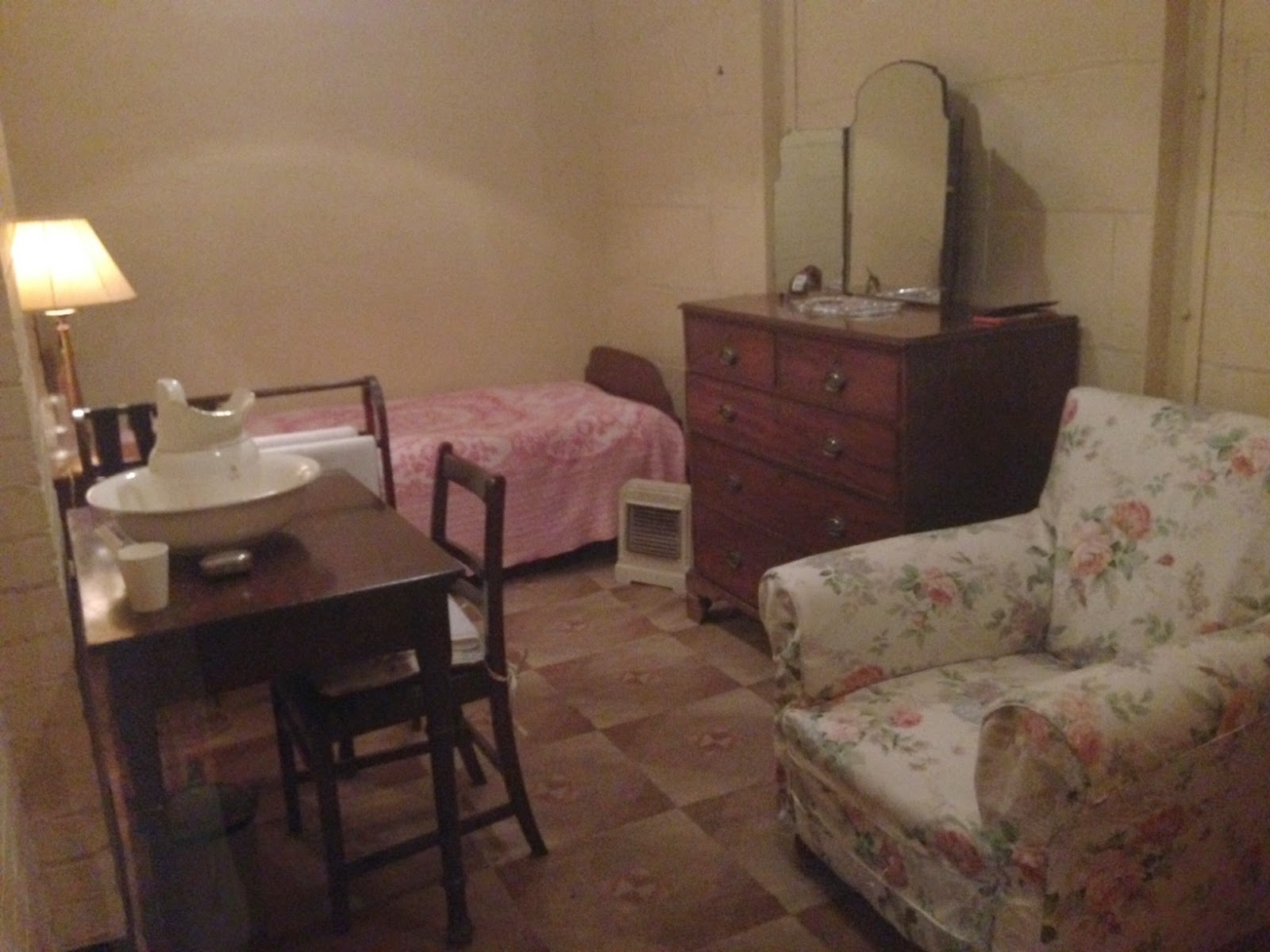
    The bedroom of Clementine, Churchill’s wife. He worked 18 hour days and essentially lived down here so by 1940 a room was created for her as well.
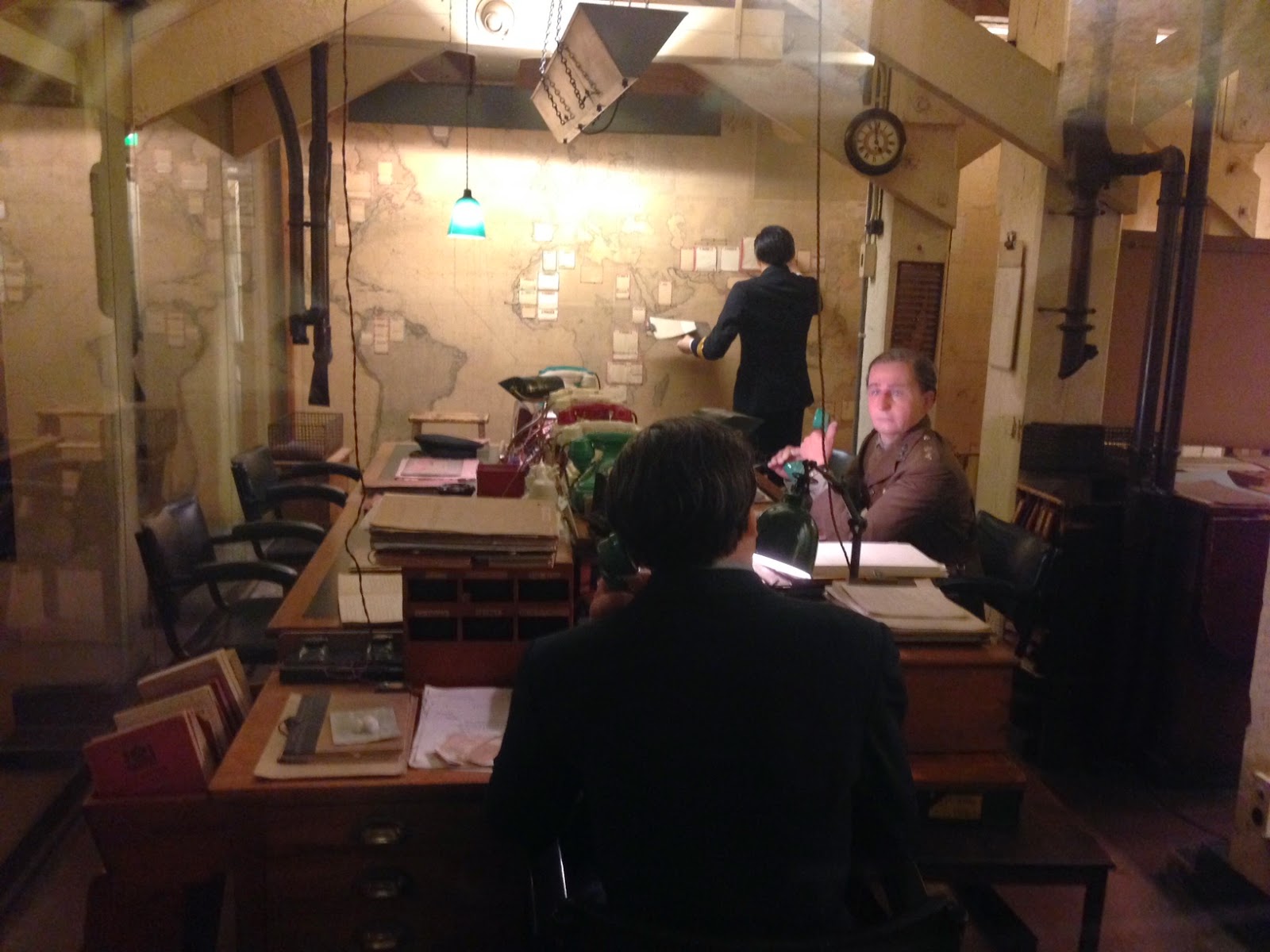
    The famous map room. Churchill loved maps and had all kinds of things plotted daily – where troops where, ship locations, supply chains, etc.
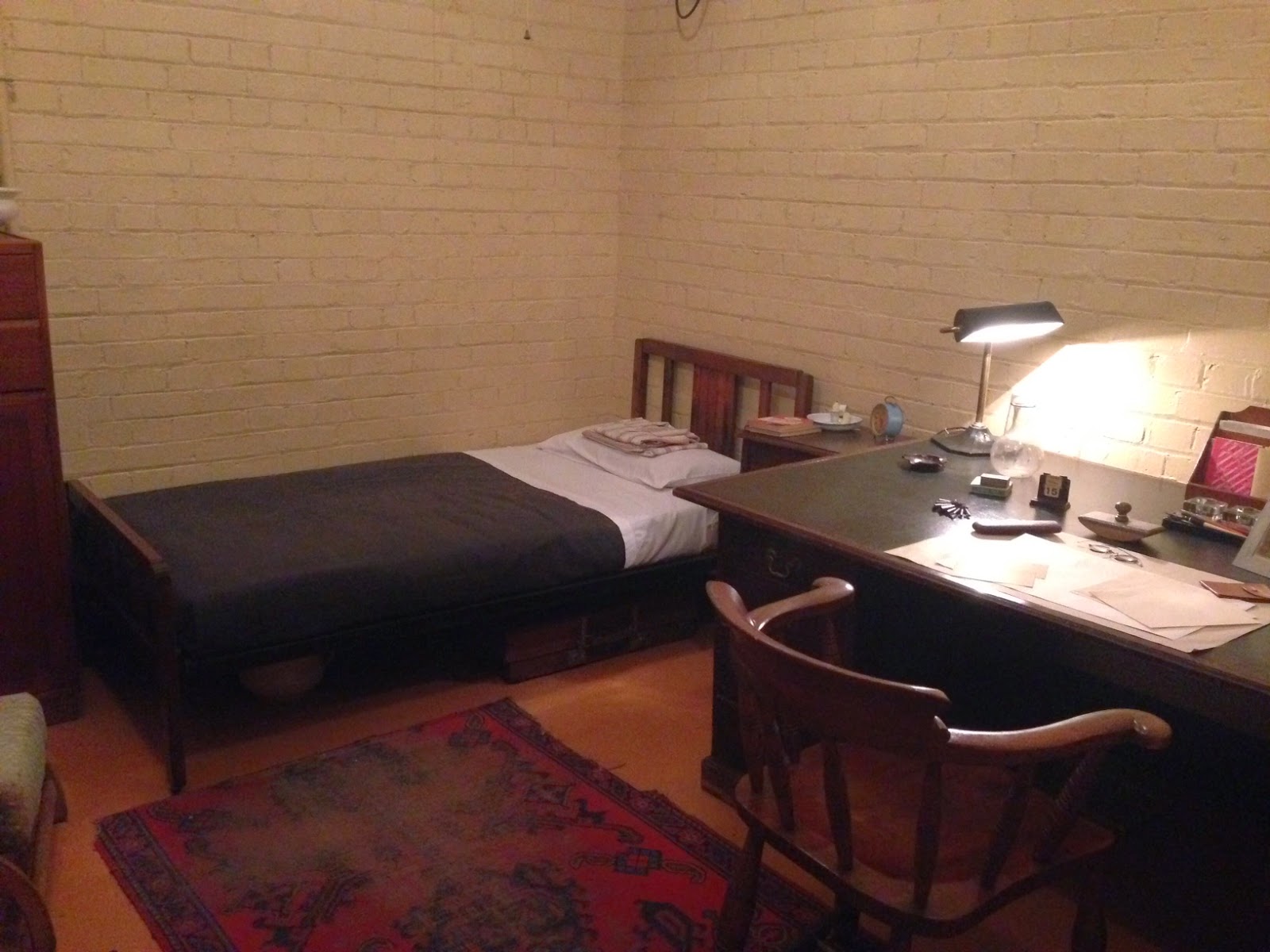
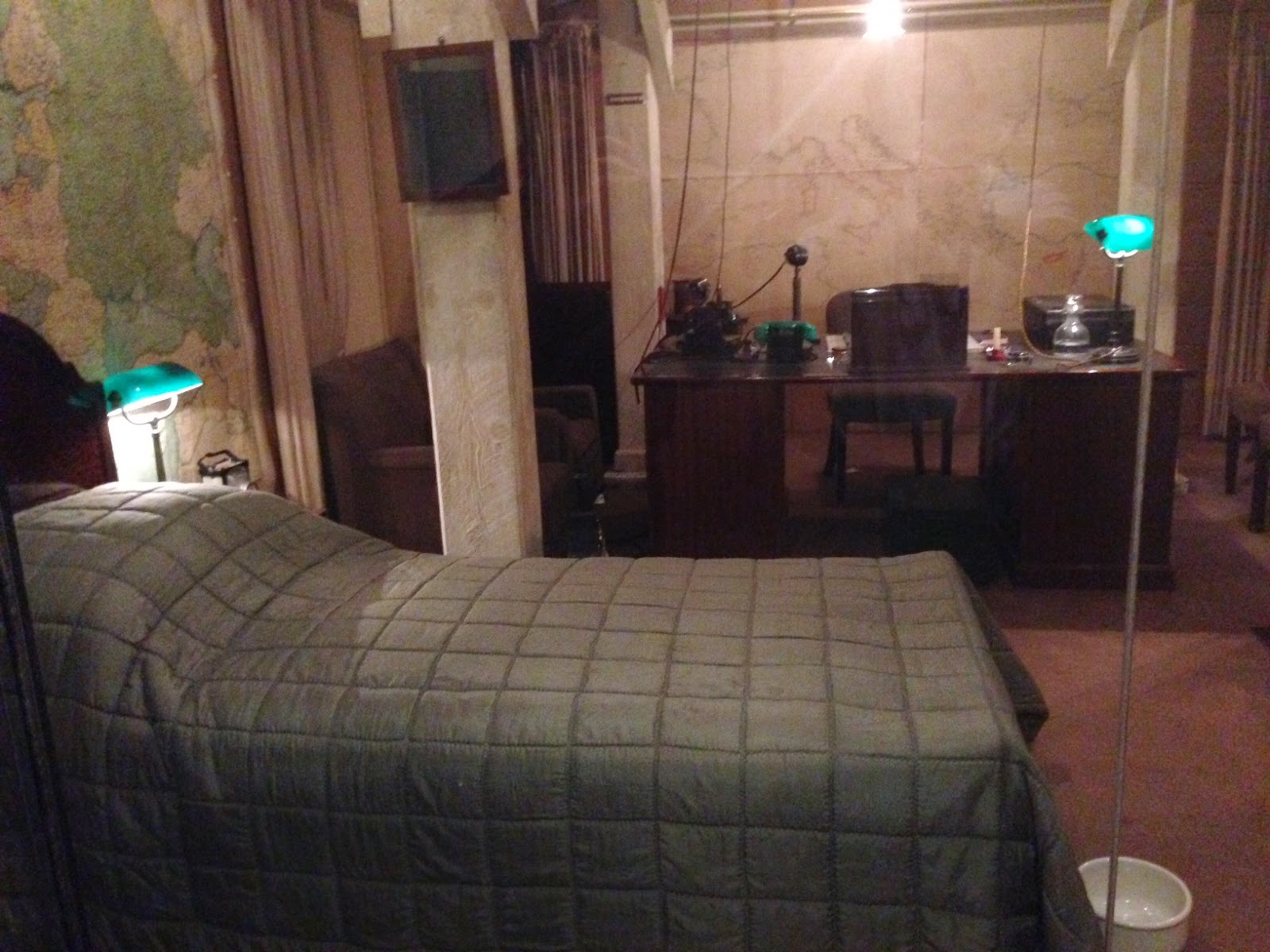
    Churchill’s bedroom. He also had a separate office there as Prime Minister. This room is next door to the map room. Notice the maps on the walls.

    We were here for 2 hours and enjoyed it immensely. One of the most moving things was a video of interviews of civilians, some men but mostly women, who worked here during the time as clerks and secretaries. Very intimate insight into

    • the danger – although a bunker it was never as fortified as it should have been
    • the secrecy – no one in their personal lives knew what they did, just that they worked in a government office; one woman didn’t talk about it for 10 years after the war
    • the lack of sun – there were of course no windows, days were long and if they didn’t spend the night it was dark when they arrived and when they left
    • I was also very surprised to learn that the UK was on food rations all the way into 1954

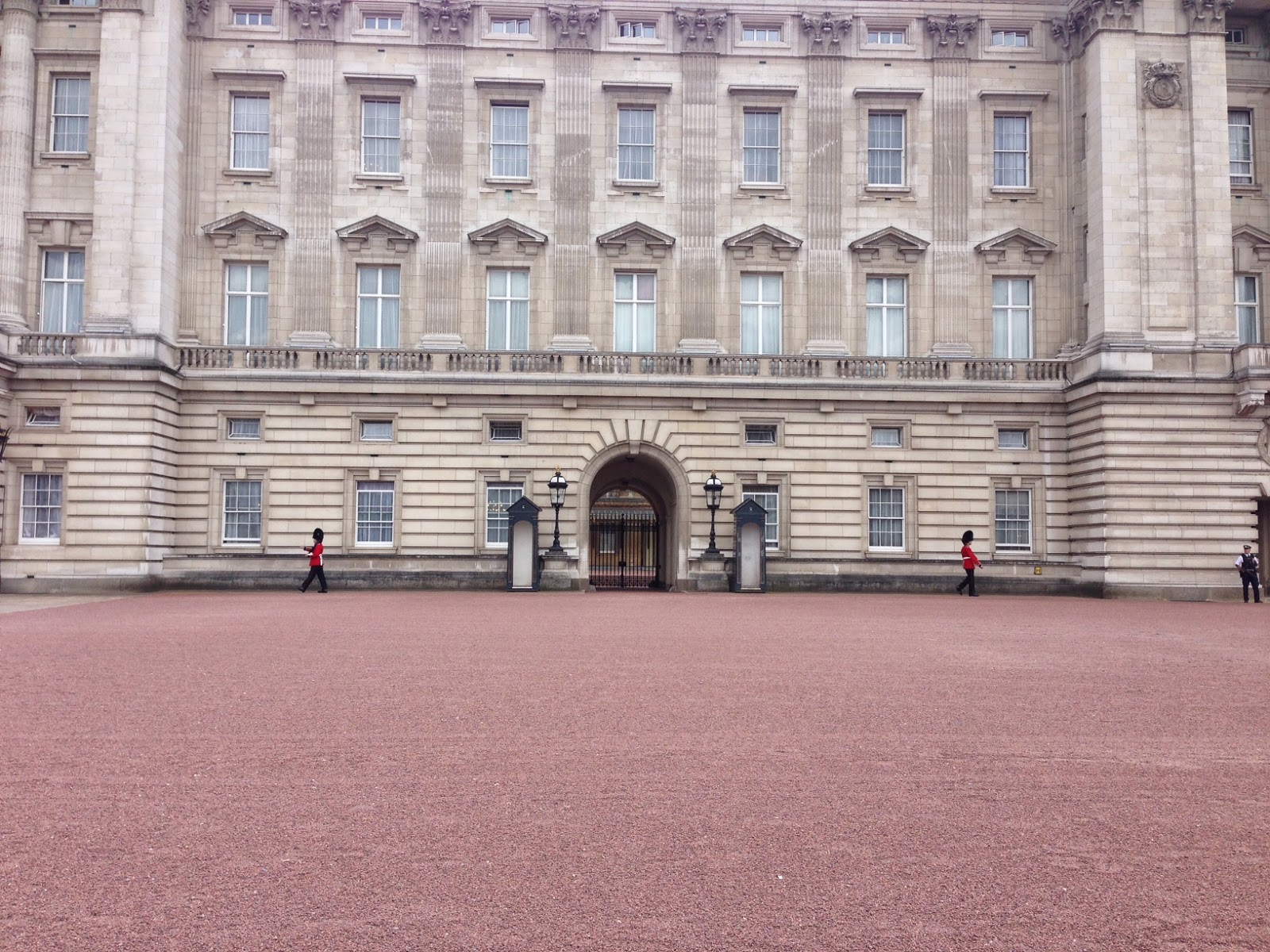
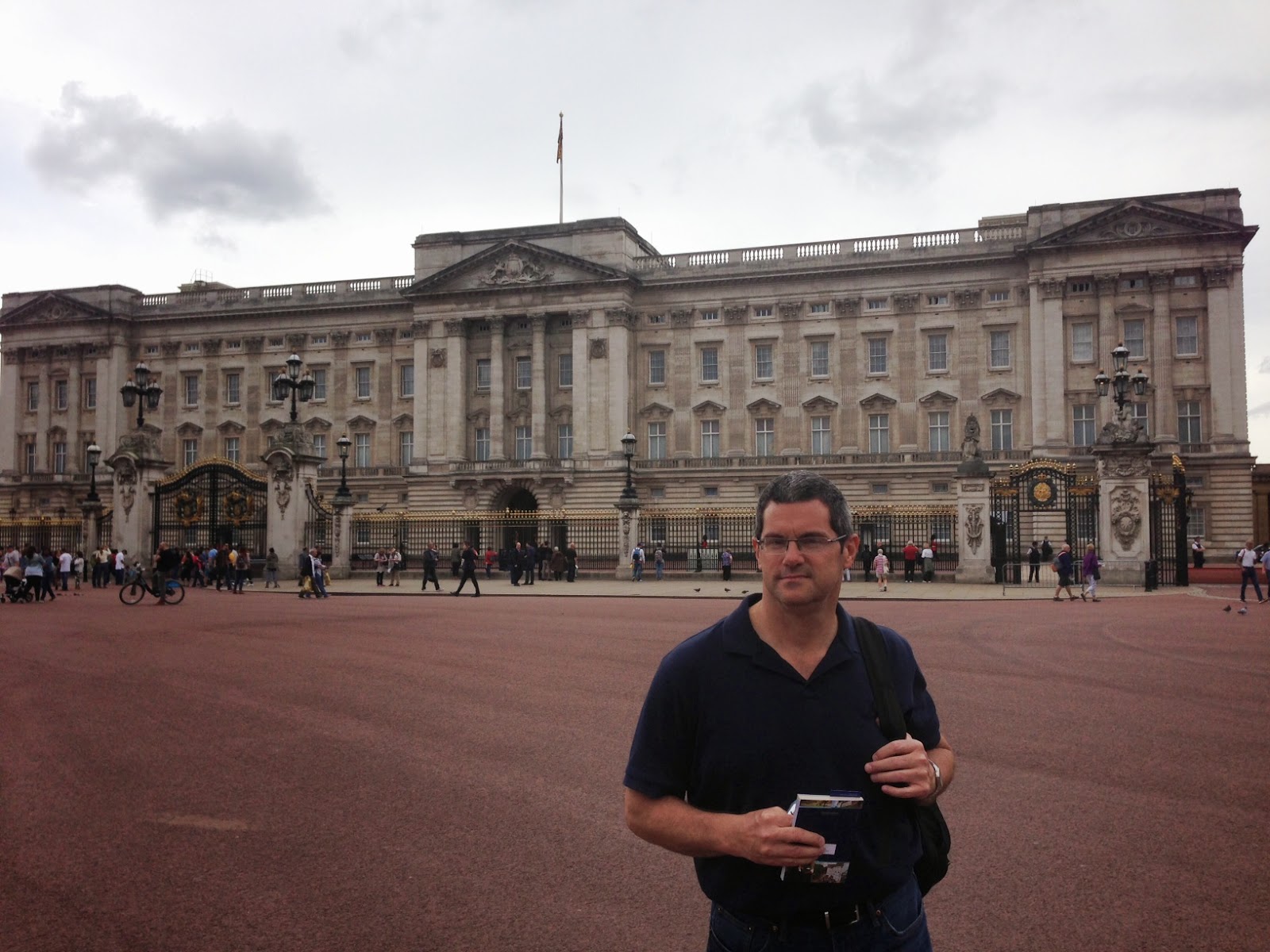
    After this we walked along St. James Park. We found a place a couple of blocks from Buckingham Palace and got panini sandwiches to eat on the lawn across from it. This has been the official royal residence since Victoria moved in in 1837. The building has been around since the mid 1700’s. It is not open for tours at this time, but will be later in the summer.

    The changing of the guards ceremony occurs around 11:30 every morning; we were there about 1pm.
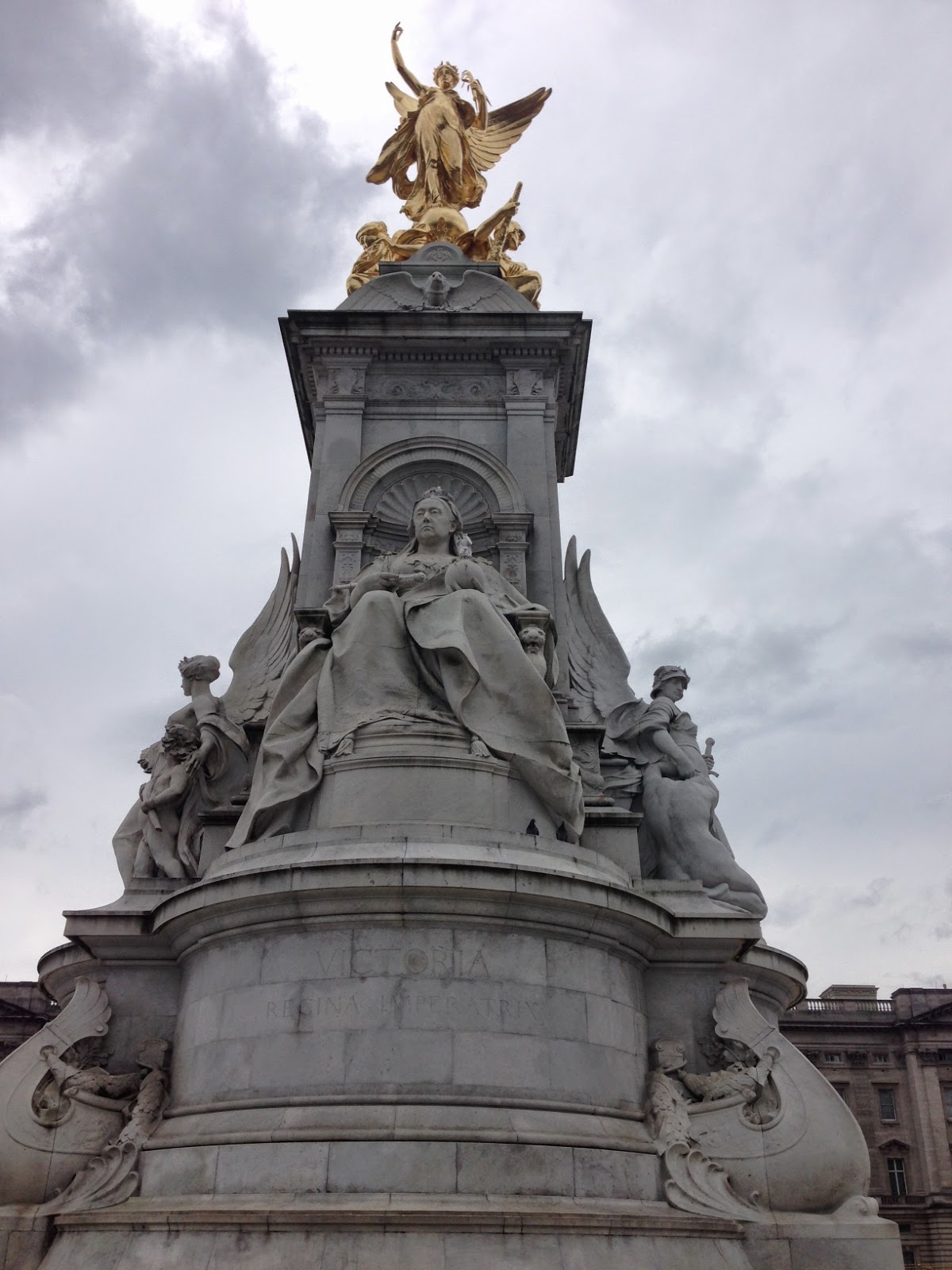
    Really beautiful statue of Queen Victoria in the circle in front of the palace.
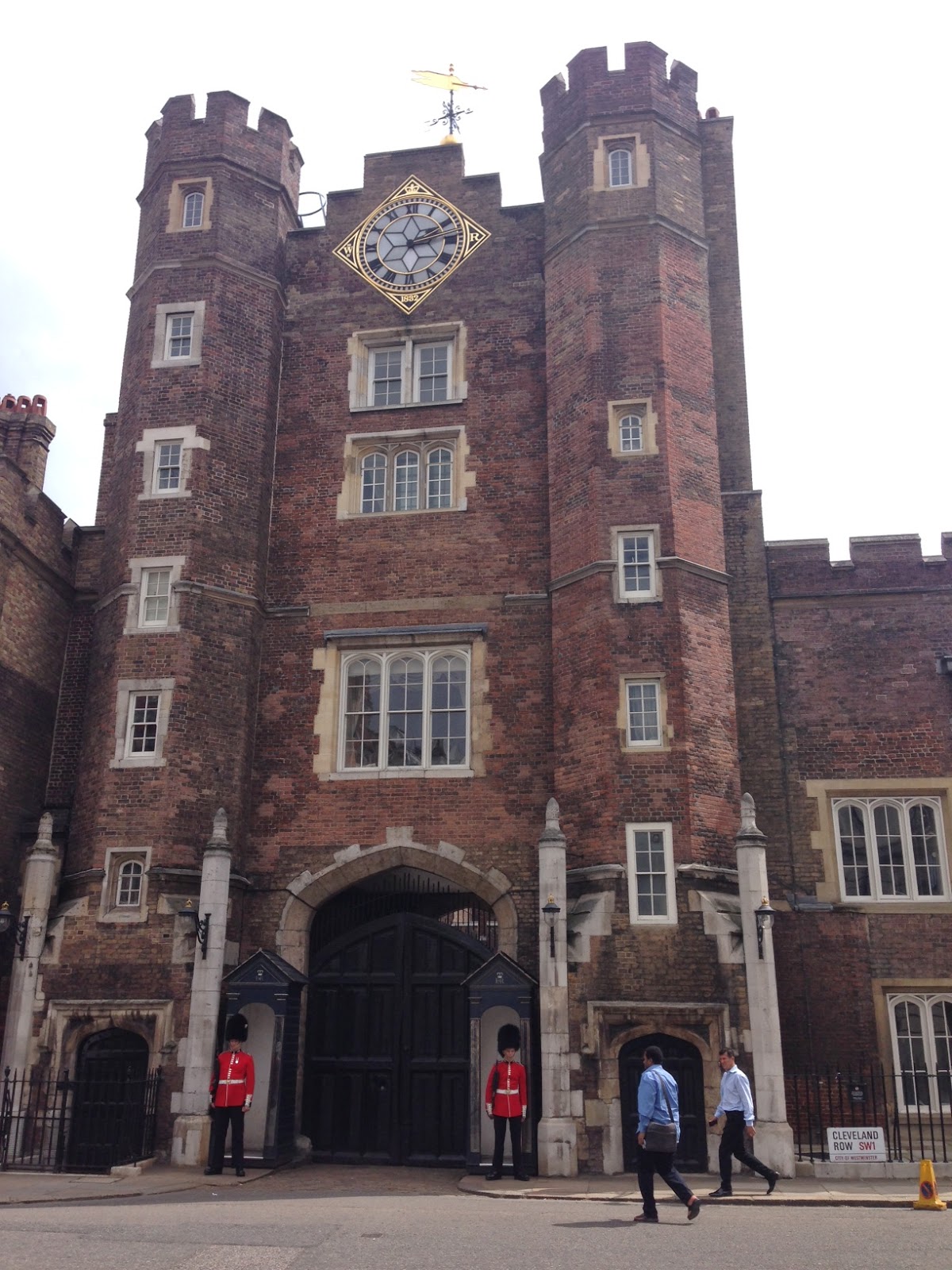
    St. James Palace, sort around the bend from Buckingham. It was the royal residence prior to that; and prior to that it was St. James Hospital.
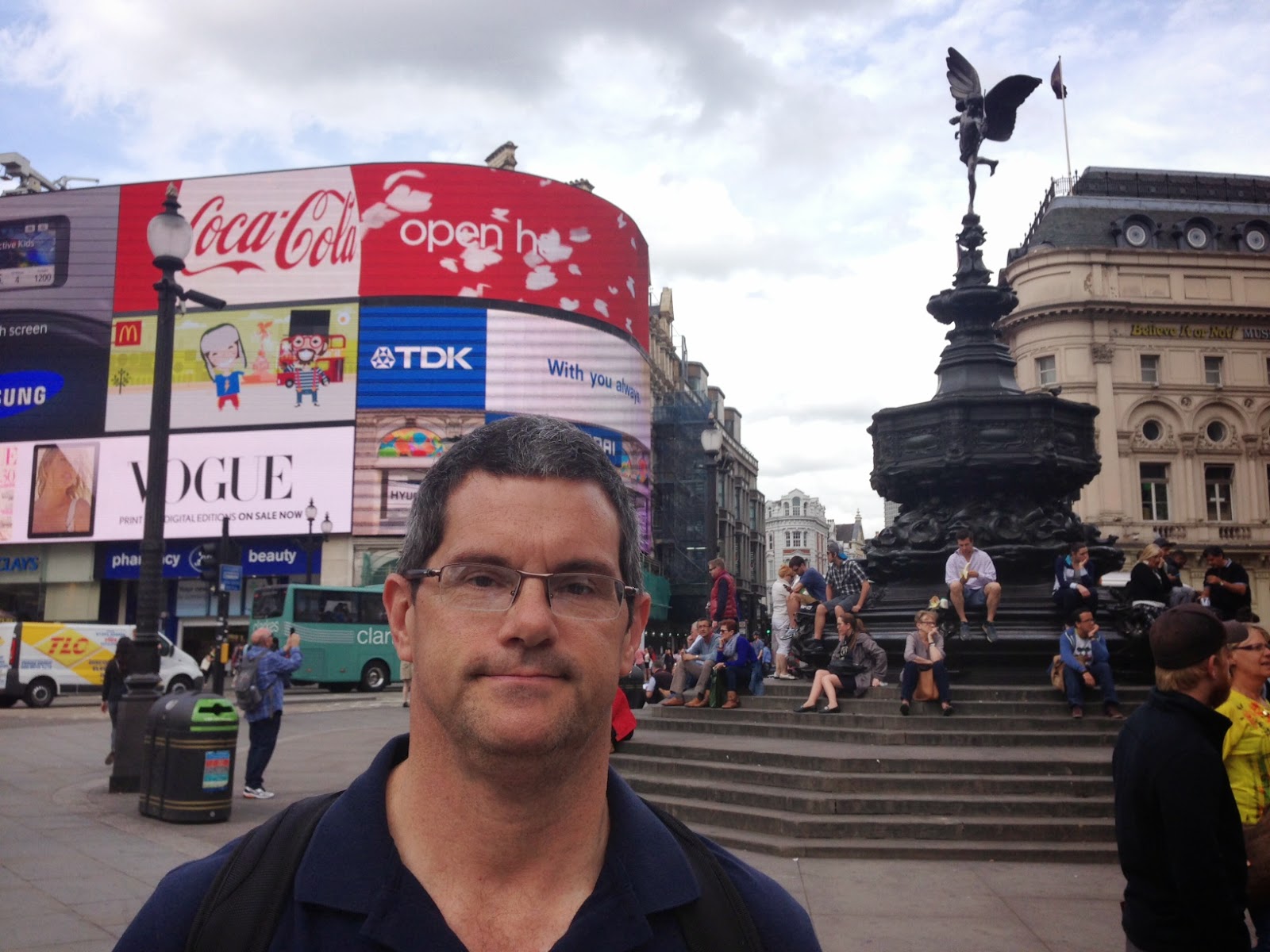
    Picadilly Circus, London’s version of Times Square, but not nearly as big.
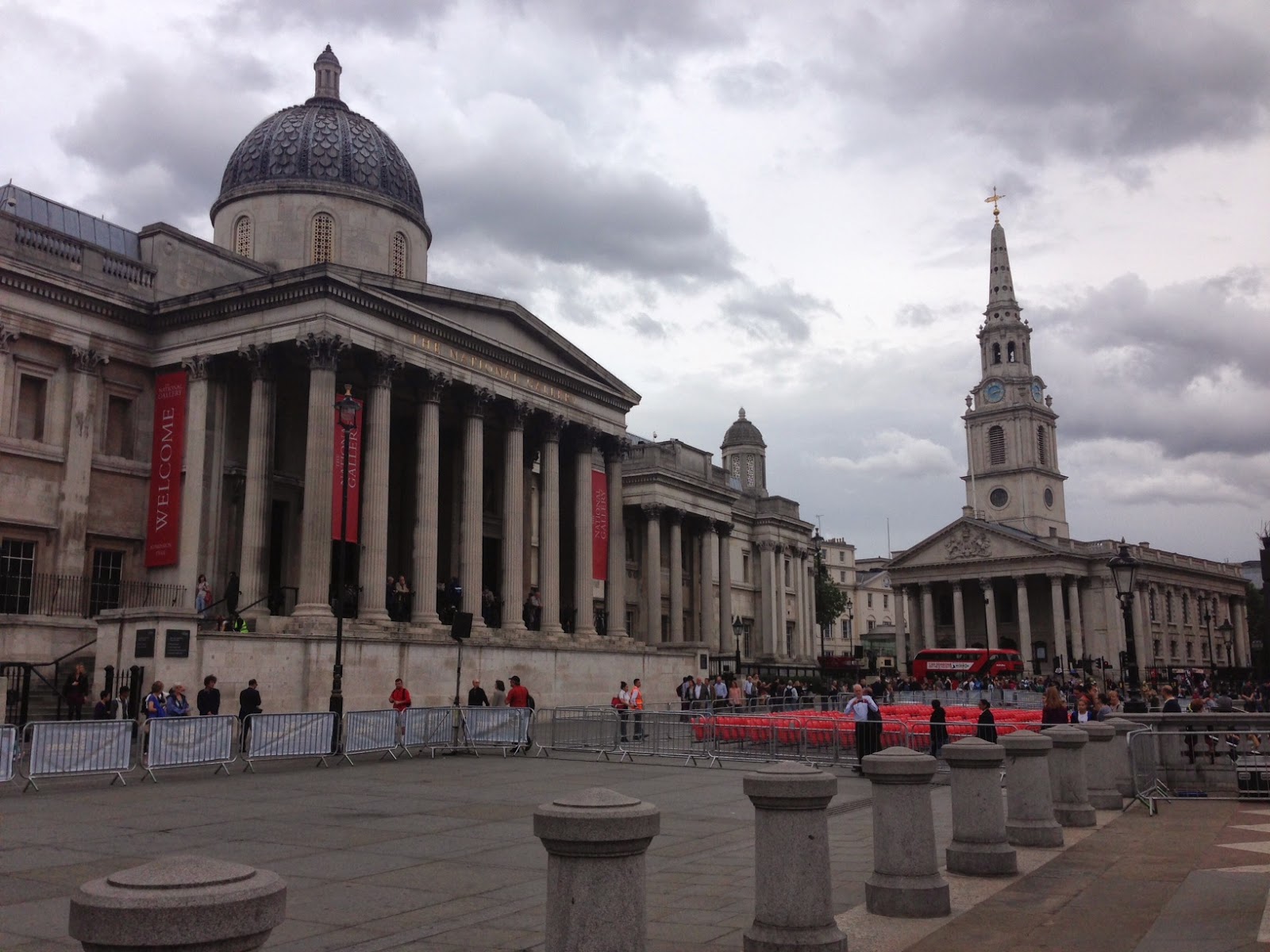
    That National Gallery in Trafalgar Square. We didn’t have time to go in today but will be back!
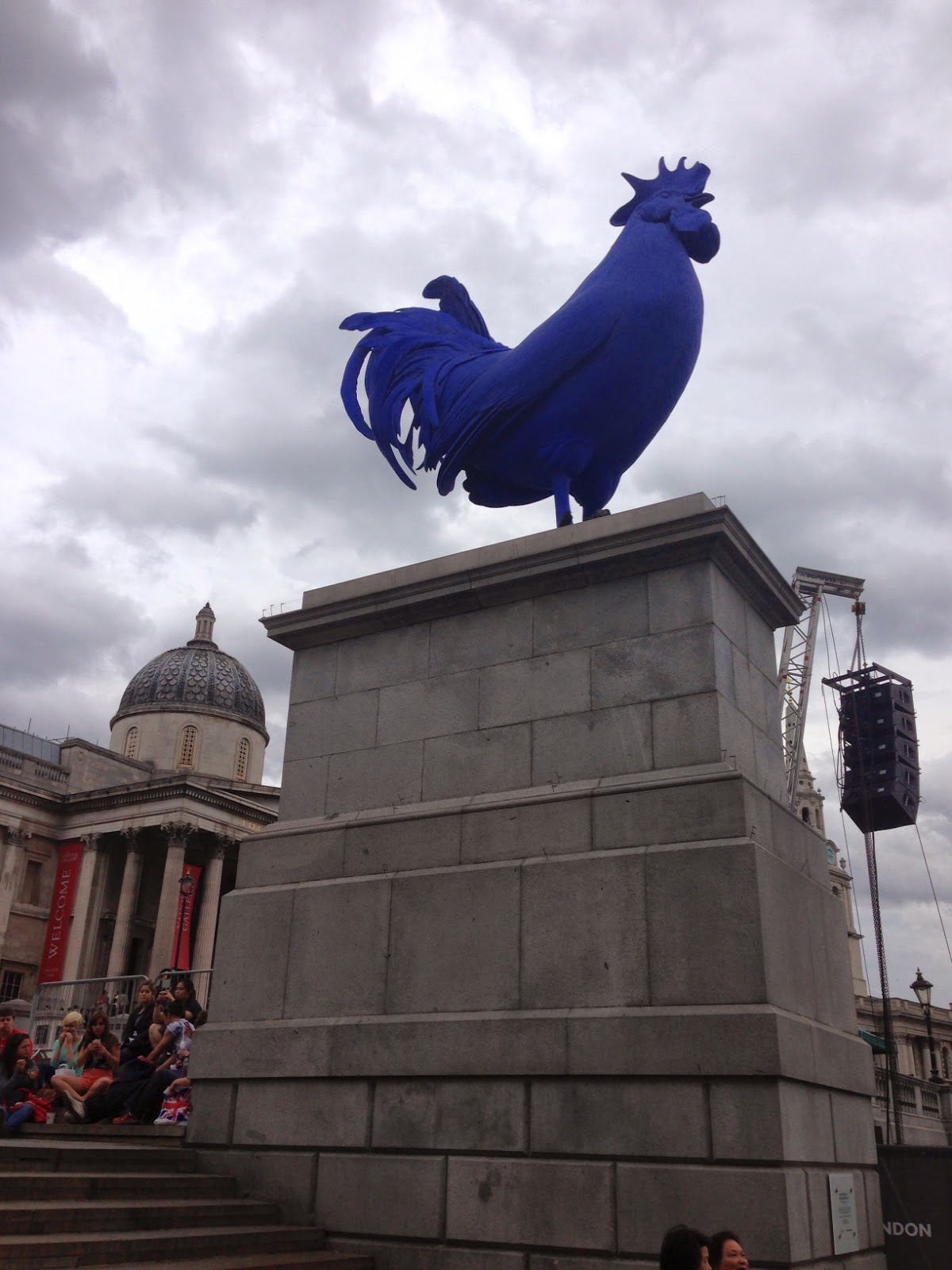
    This blue rooster is bizarrely huge. Called Hahn/Cock, it was unveiled in 2013.
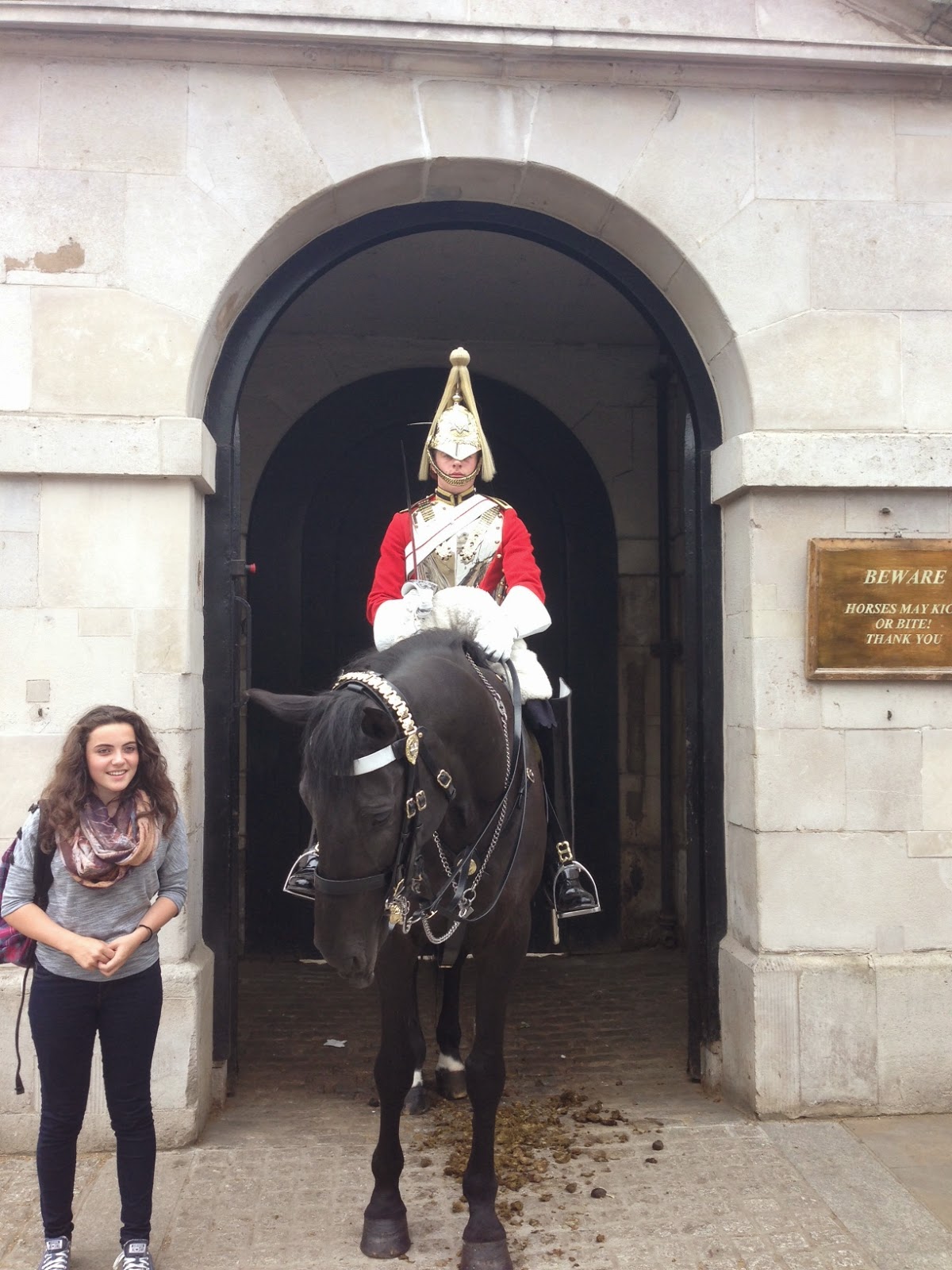
    Horse guards on Whitehall.
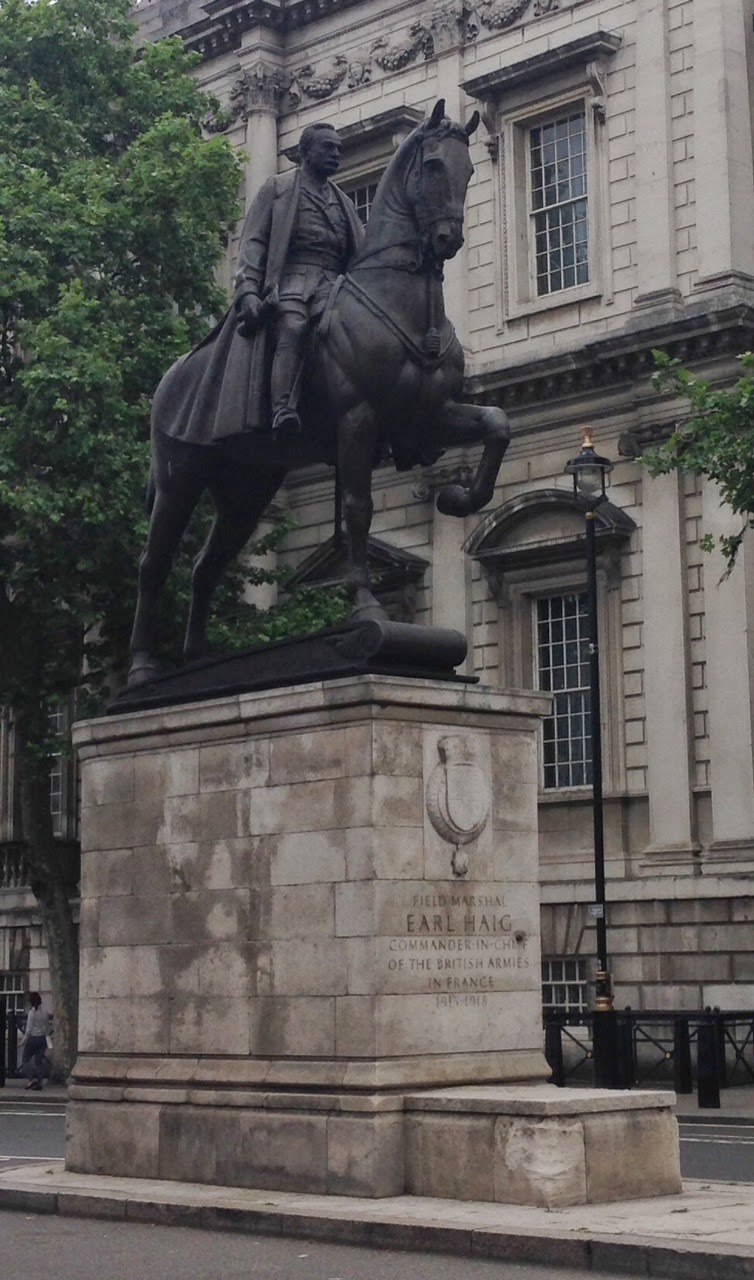
    Earl Douglas Haig statue in the middle of Whitehall. We first met this guy in Edinburgh; he was the Scot who was British Commander of the army in WWI.
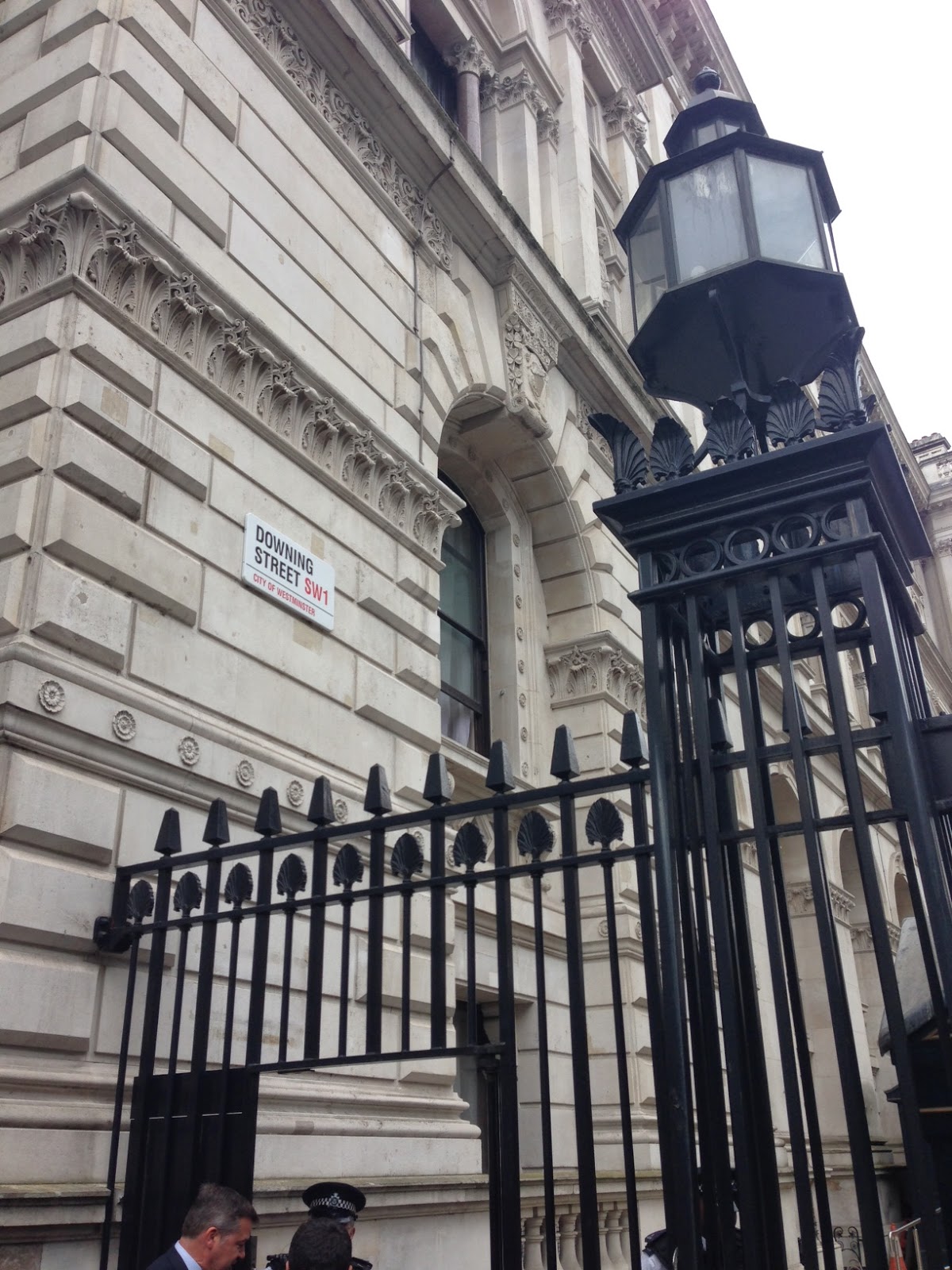
    Entrance to Downing Street; Prime Minister at 10. Public not allowed.

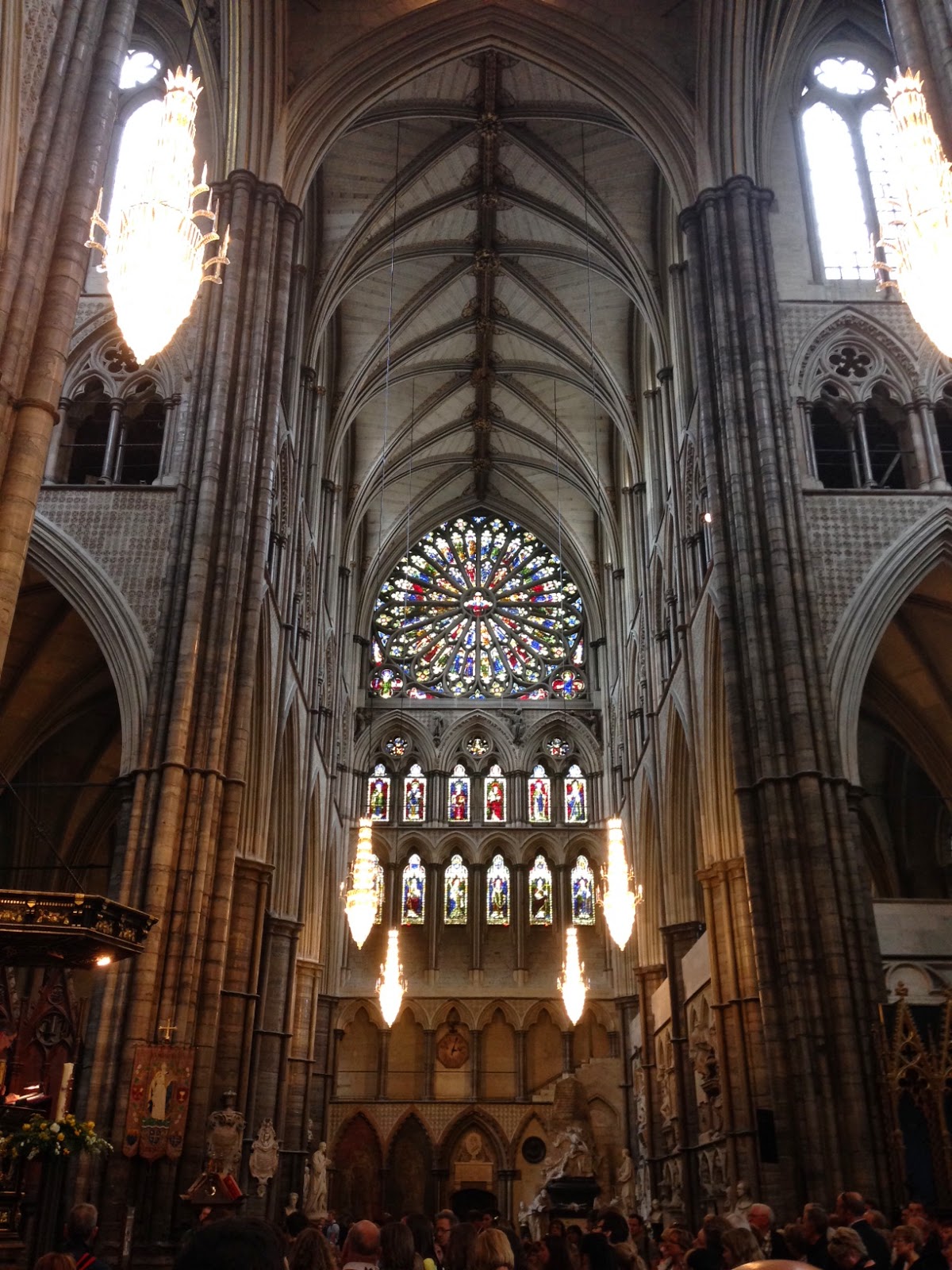
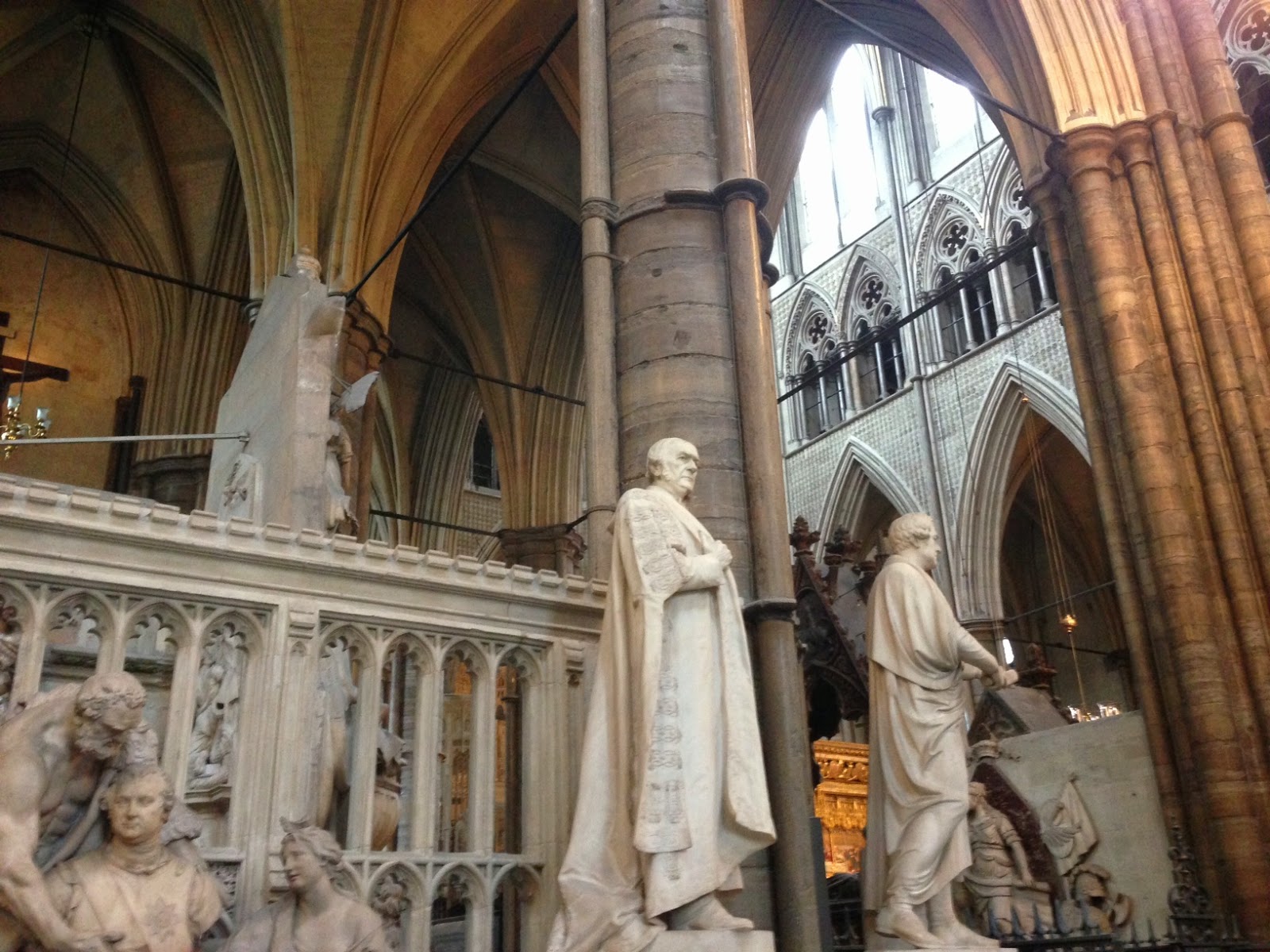
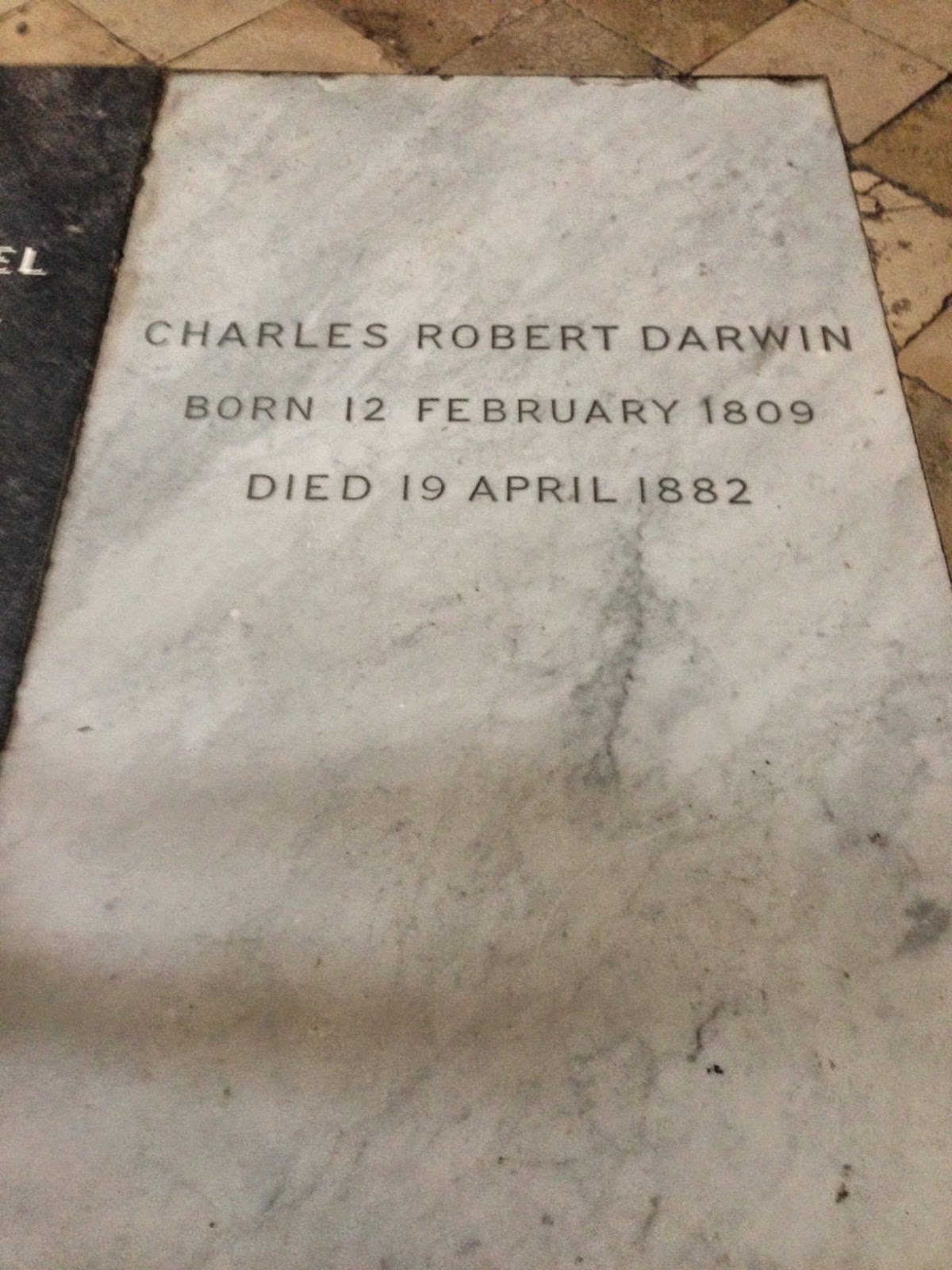
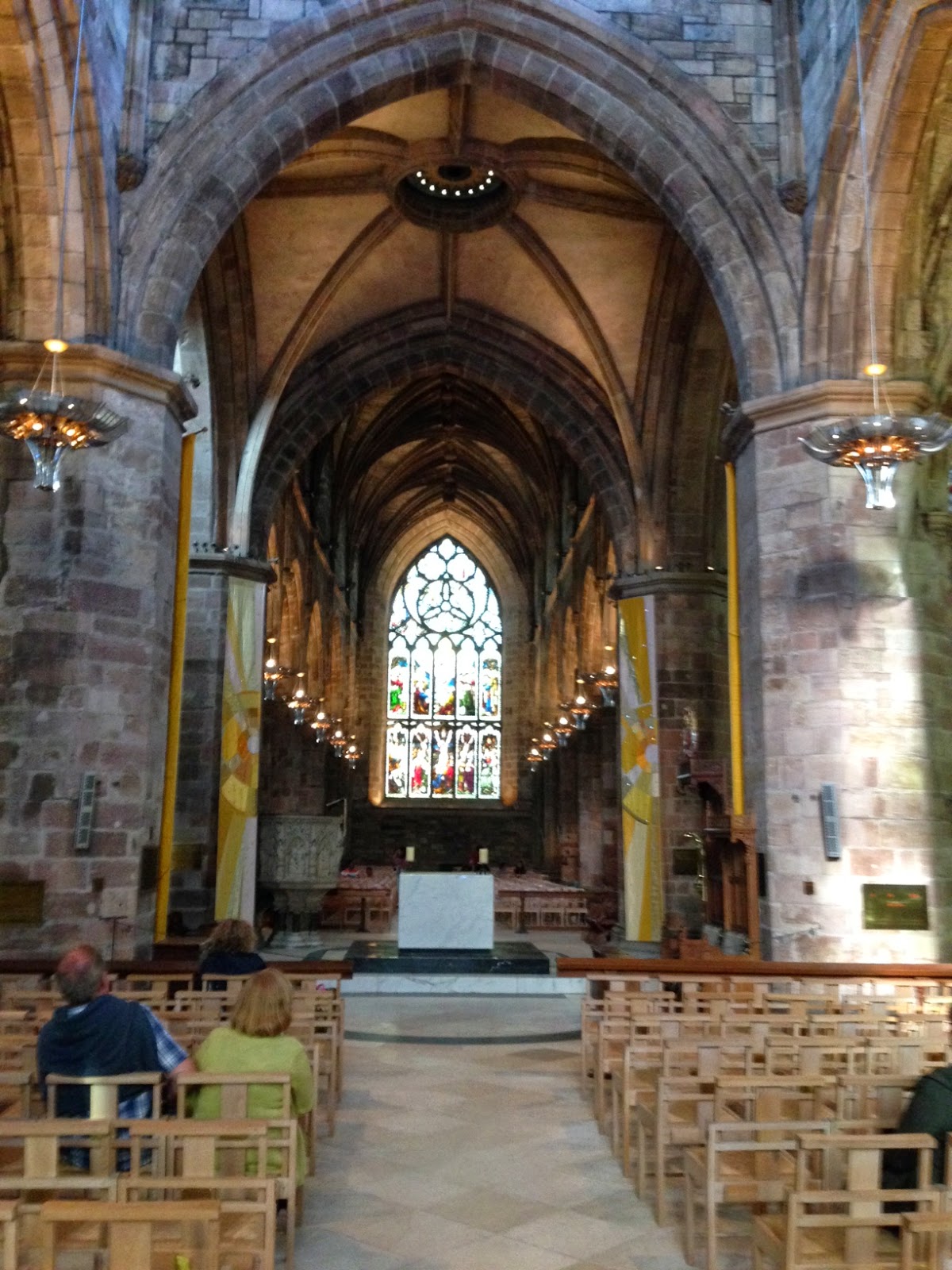
    We’d made our way back around to Westminster Abbey by 3pm. As I said in an earlier entry – around our nonplussed reaction to Notre Dame – we’ve seen a lot of European churches and it takes a lot to impress us. This might go to the top of the list. It’s old – much of it around 800 years – beautiful, architecturally interesting, and steeped in more history than any we’ve seen. It’s still a functioning church with regular services, and the site for many royal ceremonies, including the funeral of Princess Diana and the recent-ish wedding of William and Kate. And lots and lots of famous people are buried here, I really had no idea. Lots of names anyone would recognize (Charles Darwin, Isaac Newton, Lord Byron, Alfred Lord Tennyson), many you wouldn’t, and of course lots of royalty. Elaborate tombs of famous royals were the most interesting, including rivals Elizabeth I and Mary Queen of Scots. You can see the full list here.

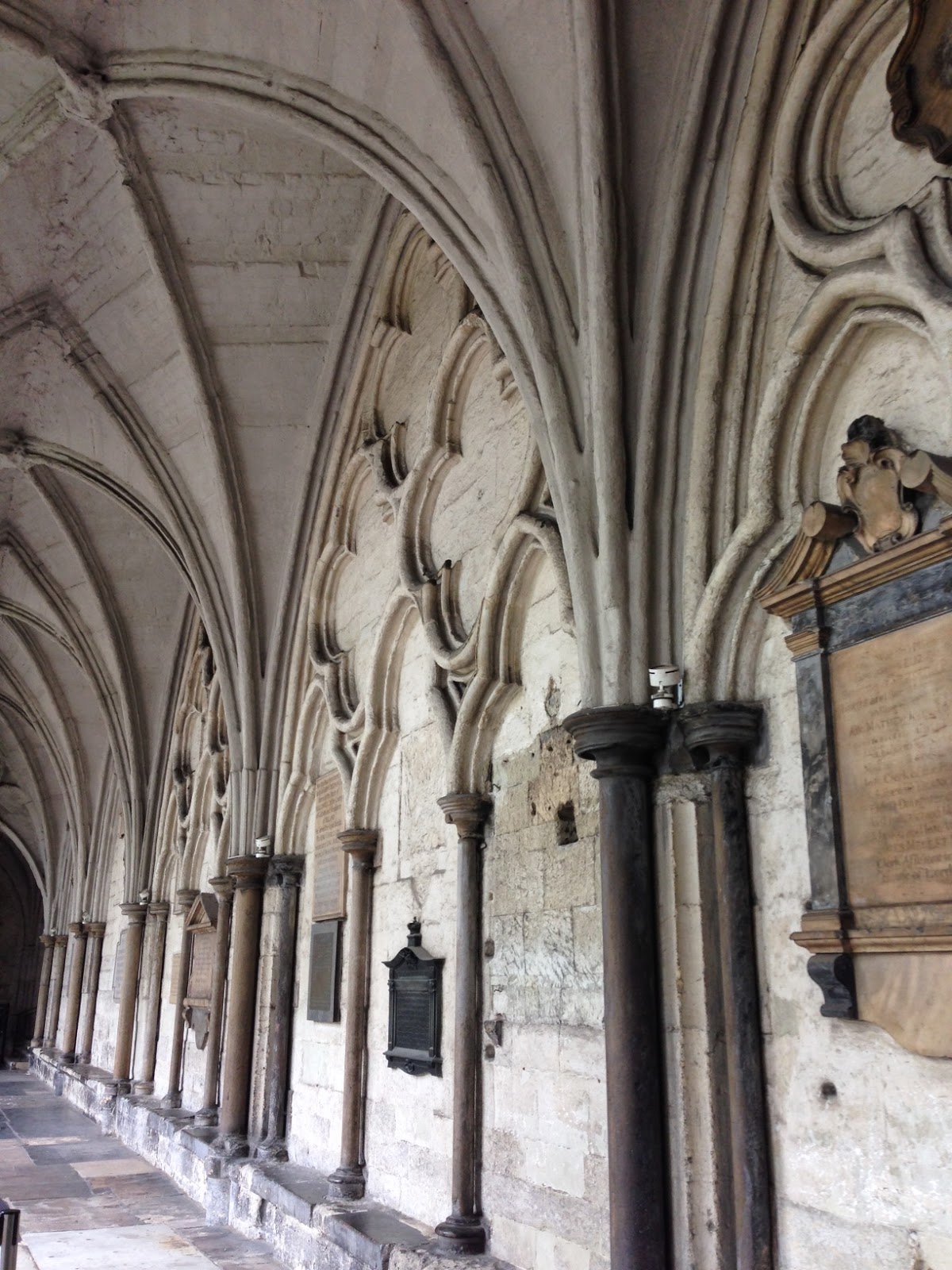
    Photography is not allowed but Dan snuck a few in.

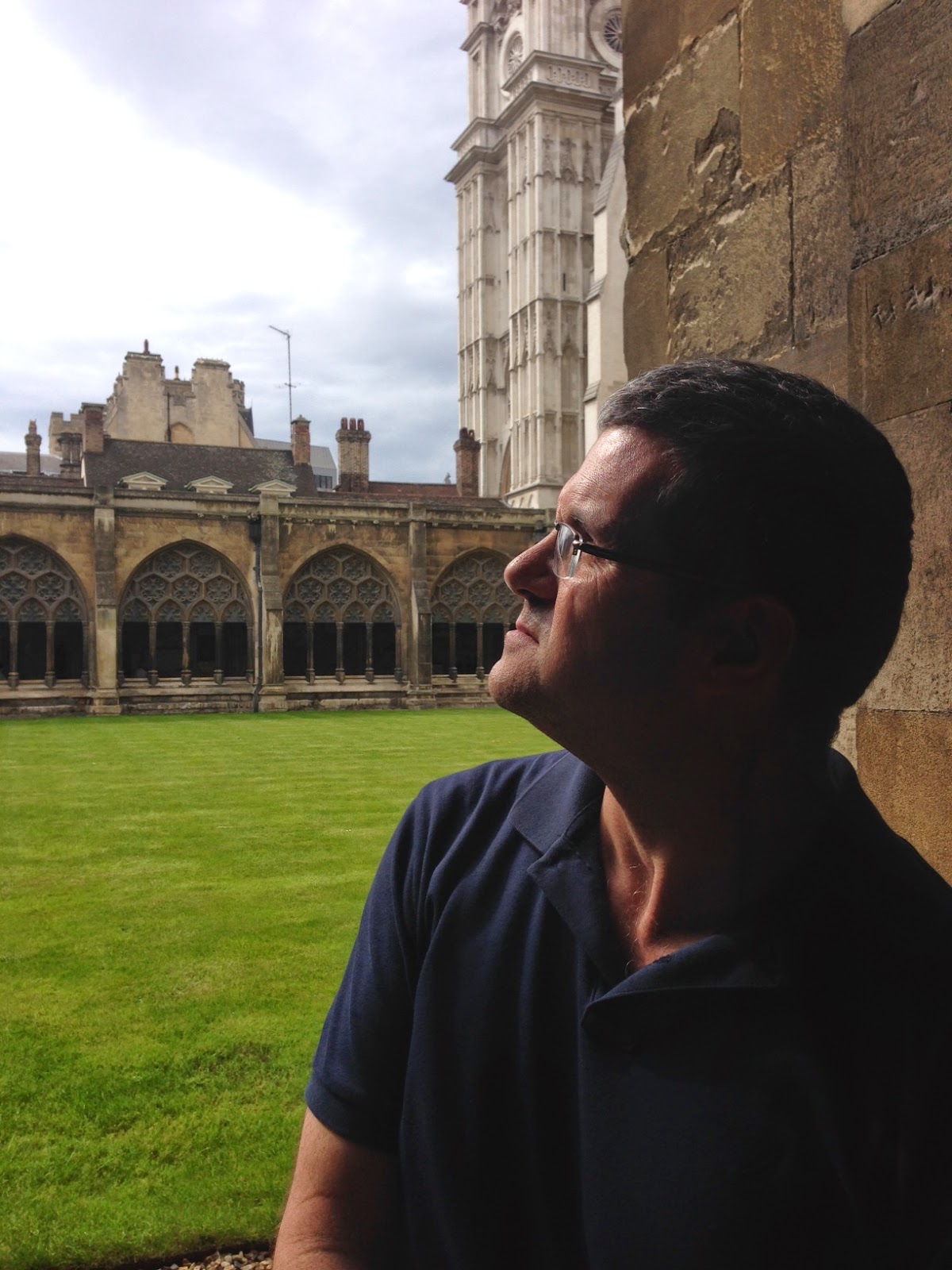
    A courtyard in the middle. You can see the west towers on the right.
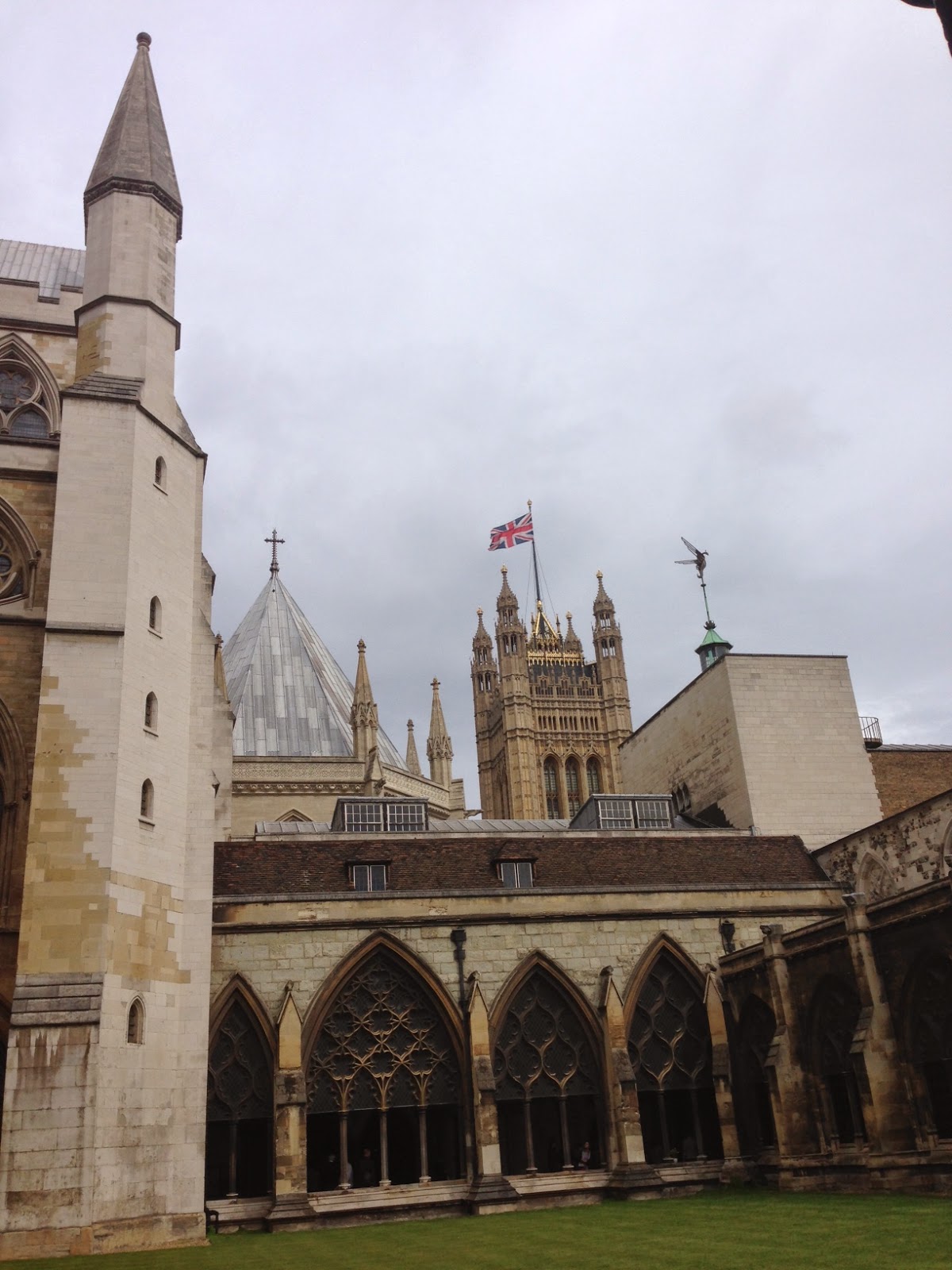
    Taken from the opposite side of the courtyard above, with the other Parliament tower in the background.
    Complete view of the tower on the opposite side of Parliament from Big Ben.
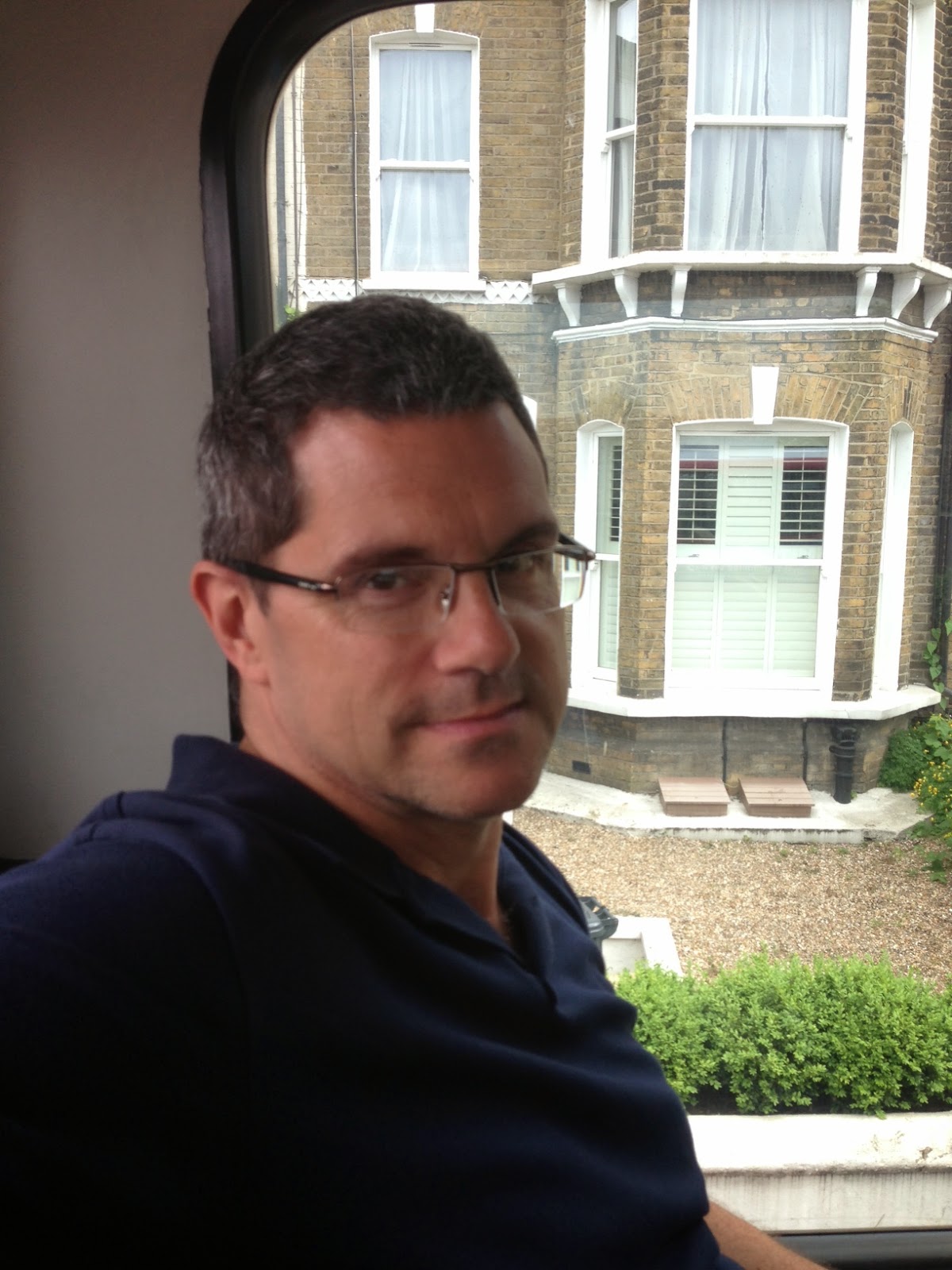
    Bus ride home.

    We went back to Lavender Hill and picked up Portugese BBQ for dinner and brought it back to the flat. It was a tremendous amount of food – we each got the special for 8 pounds; leftovers will be used at breakfast the next 3 mornings! We left again around 6:30pm for our first evening in the West End.

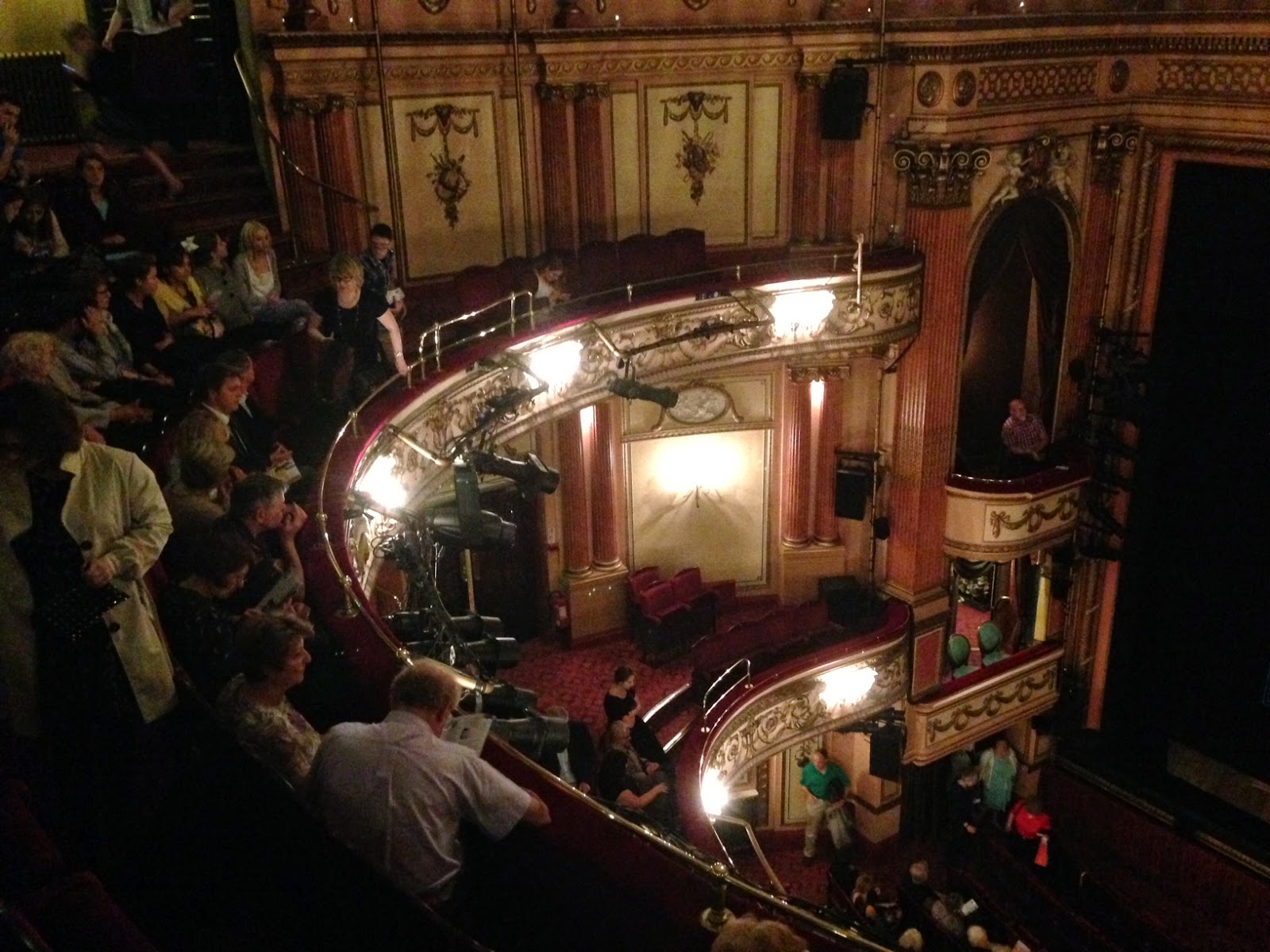
    I had done a Broadway trip with Jon in 2011 an loved everything about that trip. In particular, I “got” that seeing something on Broadway has a different feel and quality to it unless you happen to see an original cast tour. So I didn’t want to miss the opportunity to be this close to London theater and not take advantage of it. When I looked around for what was playing, I decided I couldn’t miss the chance to see a Noel Coward play with Angela Lansbury in the John Gielgud theater – all big names for theater people. The play was Blithe Spirit, an “improbable farce” with Lansbury playing a medium who brings back the dead first wife of a man in the home he shares with his current wife. It was very entertaining and wonderful to see 88 year old Lansbury in person and still working and doing very well. When she first came on stage the theater erupted in applause. At the intermission Dan commented he thought that was strange – why did they do that? I just said “because it’s Angela Lansbury.” He’s not as into that stuff as I am so the experience was a little lost on him. But he enjoyed it more than he thought he would and I was thrilled to be there.


    We made our way home by bus and were back by about 10:30pm. It was a great first day in London.

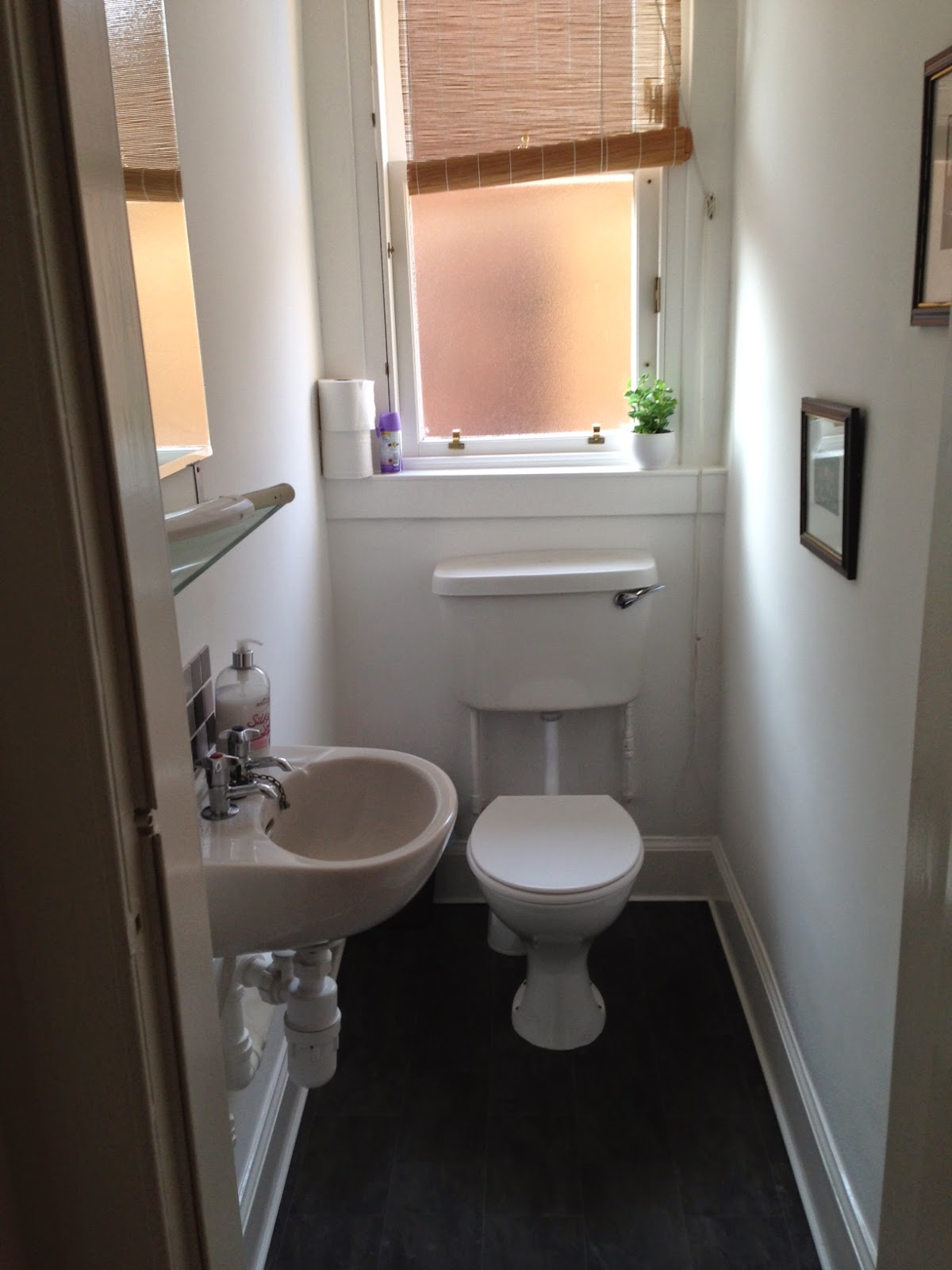
    Side note to Meher – re: the separate hot/cold faucets, the only one I had noticed before you asked was in the Edinburgh flat – the bathroom and kitchen sinks were like that and I thought it was odd only because the flat was so updated otherwise. The flat we’re in now isn’t like that, although it took me probably longer than it should have to figure out that in the kitchen the hot water was on the left, not the right. I just figured it was backwards like the roads :) Most of the public spaces we’ve used are automatic single. Of course, tonight at the theater I noticed it – probably because you pointed it out! – but it didn’t really seem weird since we were in one of the older theaters in the West End. Now it’ll be on the brain and I will notice it more.
    In the mean time, I found this.

    And while we’re here: on the bus trip back from the castle to Edinburgh, the driver, Barney, entertained all kinds of questions and was quite good at answering a wide range of things. Dan asked about the driving thing and he said he didn’t know for sure, but it make sense to him that it had to do with riding horses – most people were right handed and you needed to be on the left side to joust and defend yourself with your right! It almost sounded like something he made up on the spot but he was quite satisfied with his answer. Here are some other thoughts on the topic, some which agree with him.

  • Day 12: Edinburgh to London

    I woke up and saw how bright it was outside and was sure I had overslept, but didn’t remember the alarm going off. But no, official sunrise time in Edinburgh was 4:53 this morning; I’d woke up about 4:30 and it was already really light. I tried to go back to sleep but never really did. Finally got up when Dan’s alarm went off at 6:15. We had to be out of the flat by 7:30 to catch an 8am train.

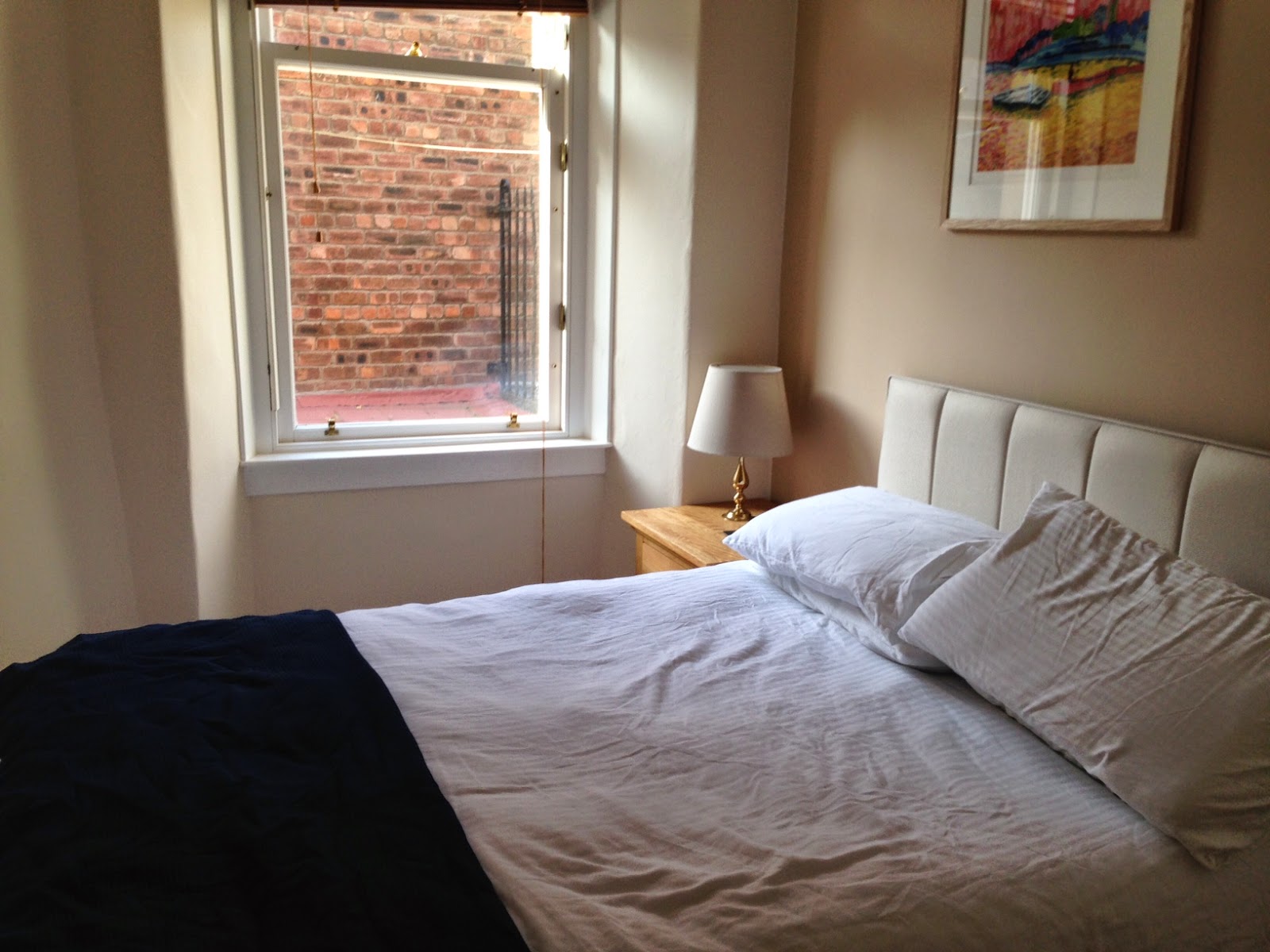
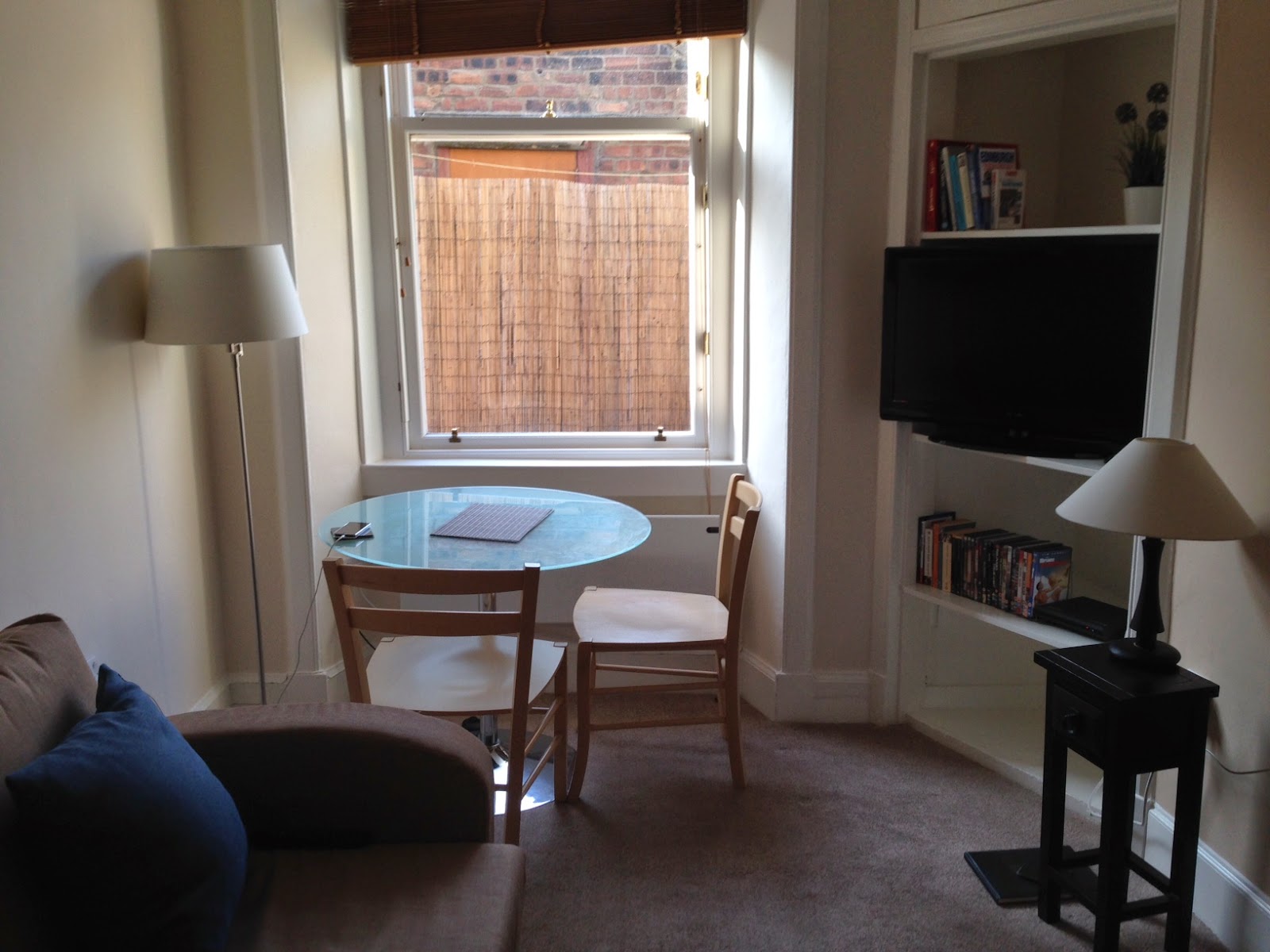
    So today was another travel day, not much to write about. Here are some pictures of the flat in Edinburgh which I took right before we left.

    The shower was in  a separate room – practically a closet really, with the smallest sink we’d ever seen. Good water pressure though.
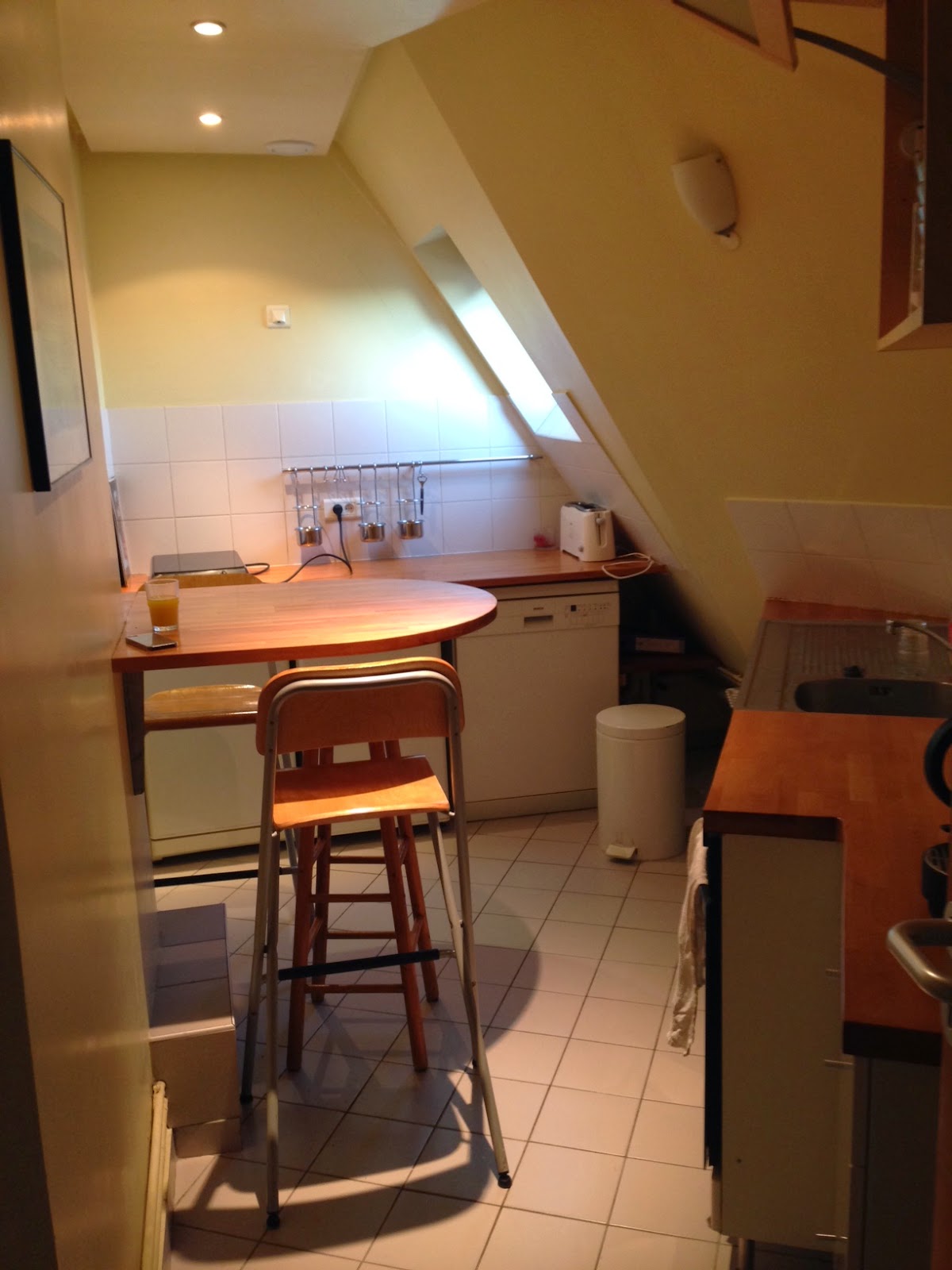
    Teeny tiny kitchen but pretty functional. The clothes washer is in the corner lower cabinet on the right. When the spin cycle was on the whole apartment would shake it seemed like. And it would get very loud because the cabinet door would rattle. Eventually I figured out to take the trashcan out of the other side and let it hold the cabinet door open and that made it much more quiet!

    The train ride was long – almost 5 hours – but very relaxing. Dan had booked early and got very good rates on first class, so we had breakfast on the train, and as much coffee, tea, juice or water as we wanted. He did some work and I read my Churchill book.

    We got off at Kings Cross then took “the tube” and a bus to the flat we’re staying at.

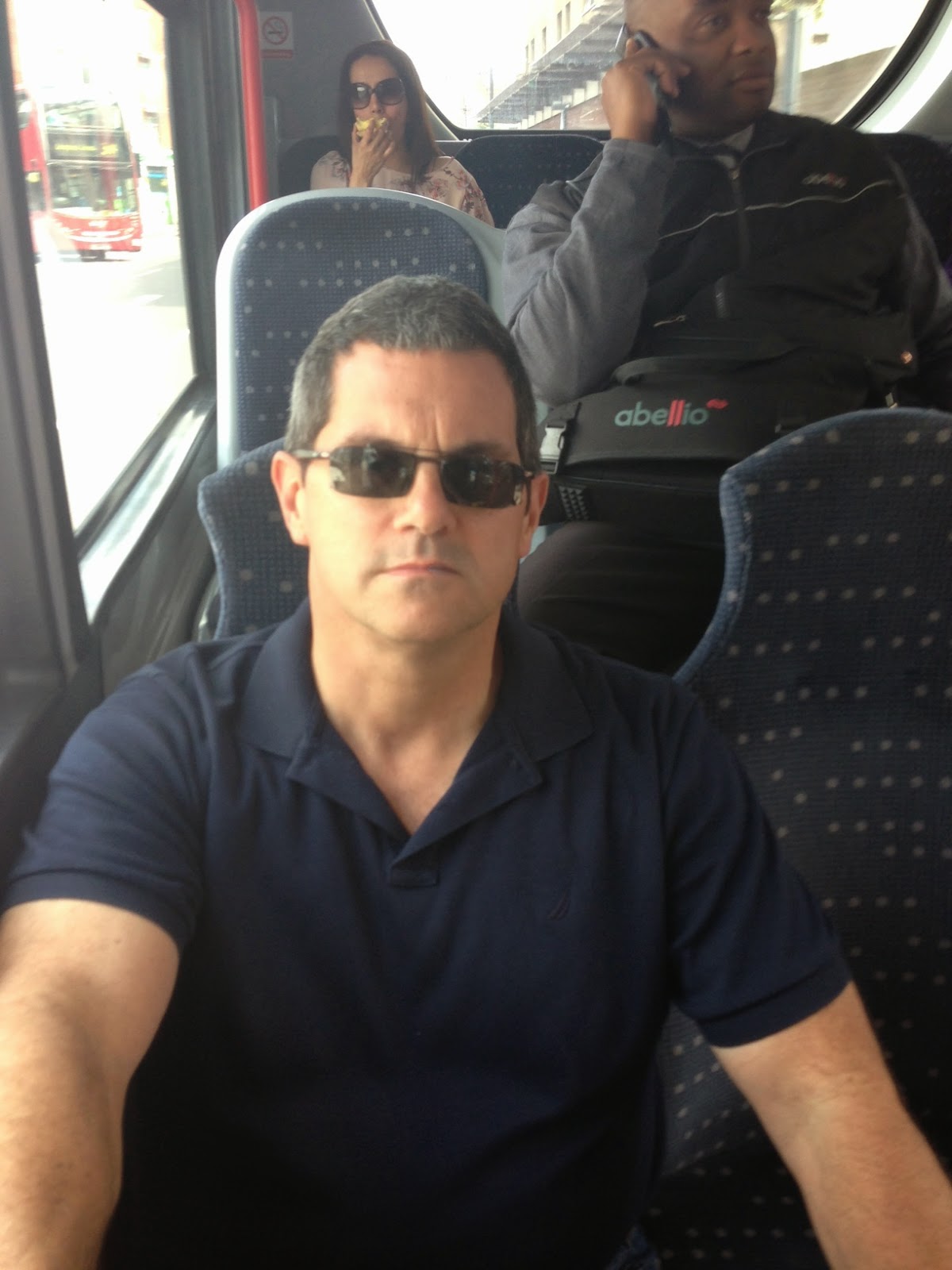
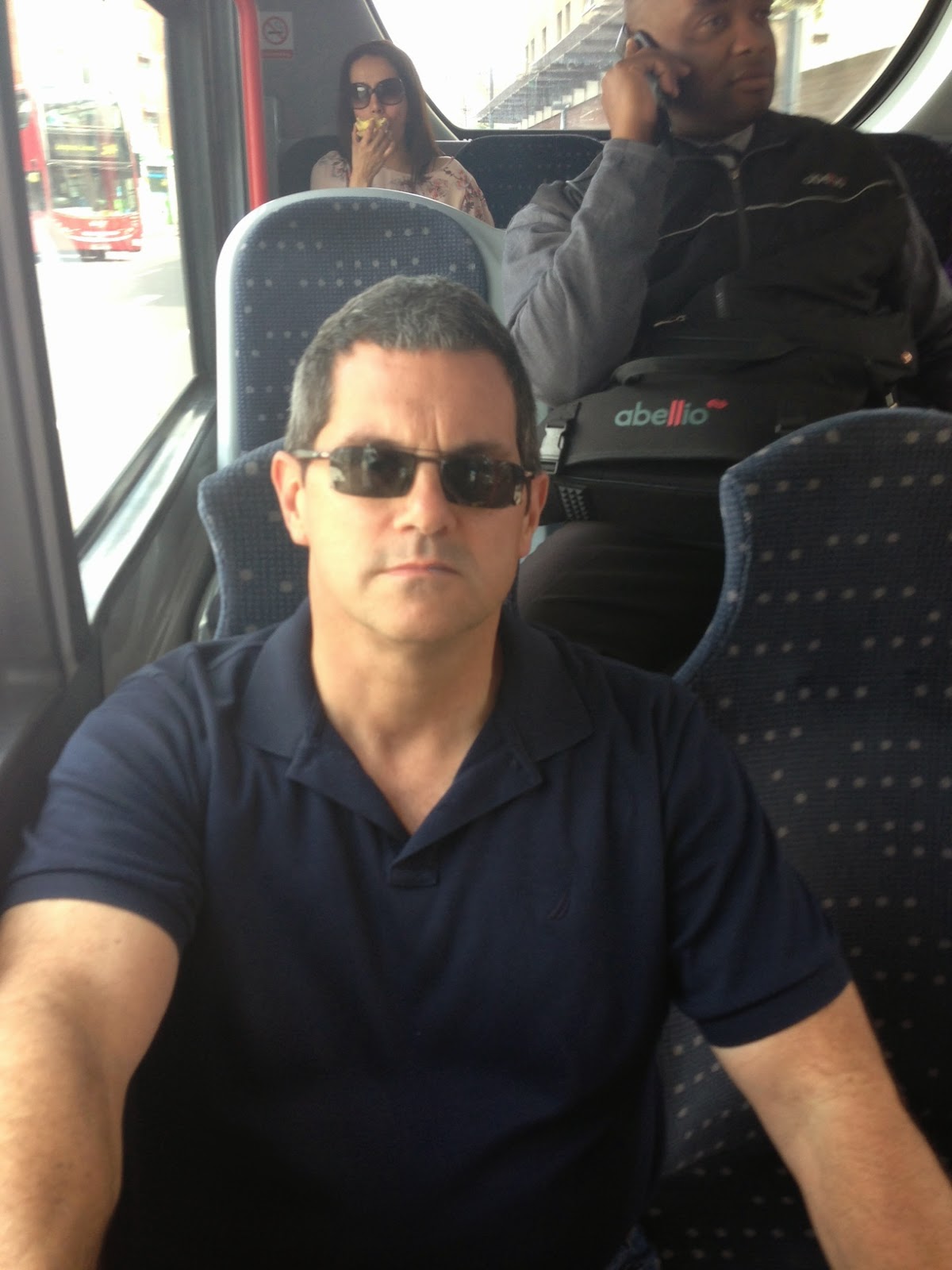
    Me on the bus.

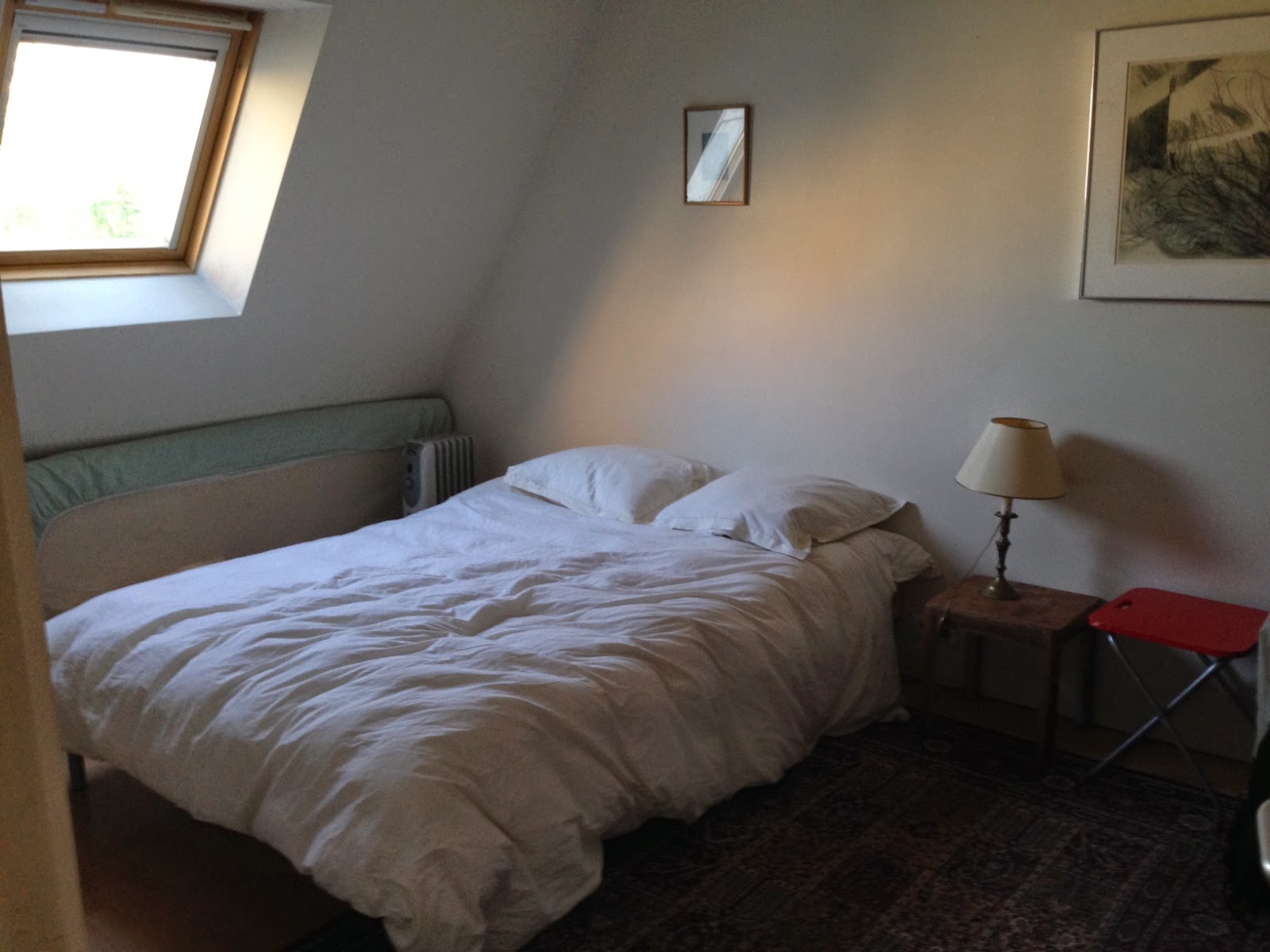
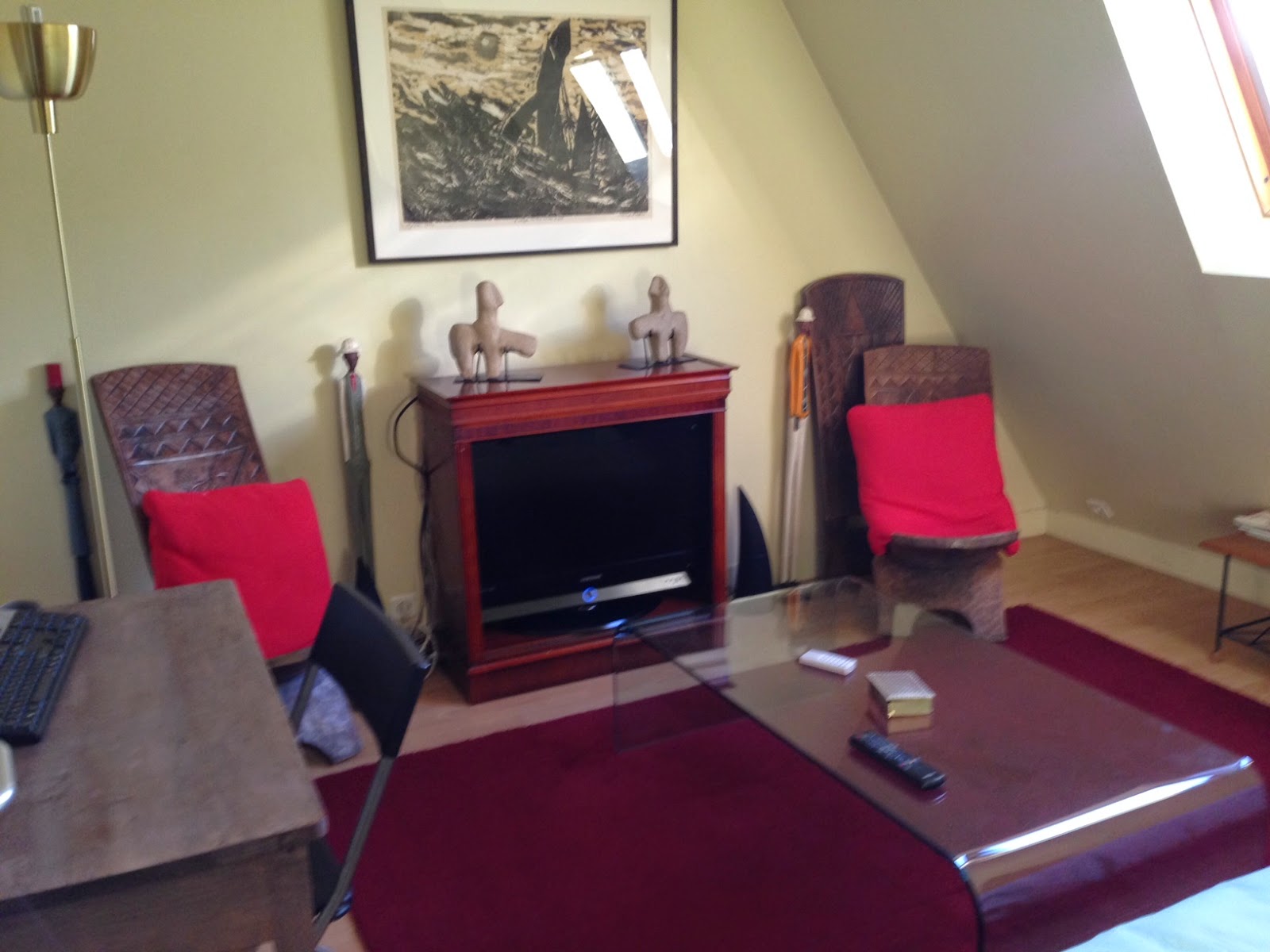
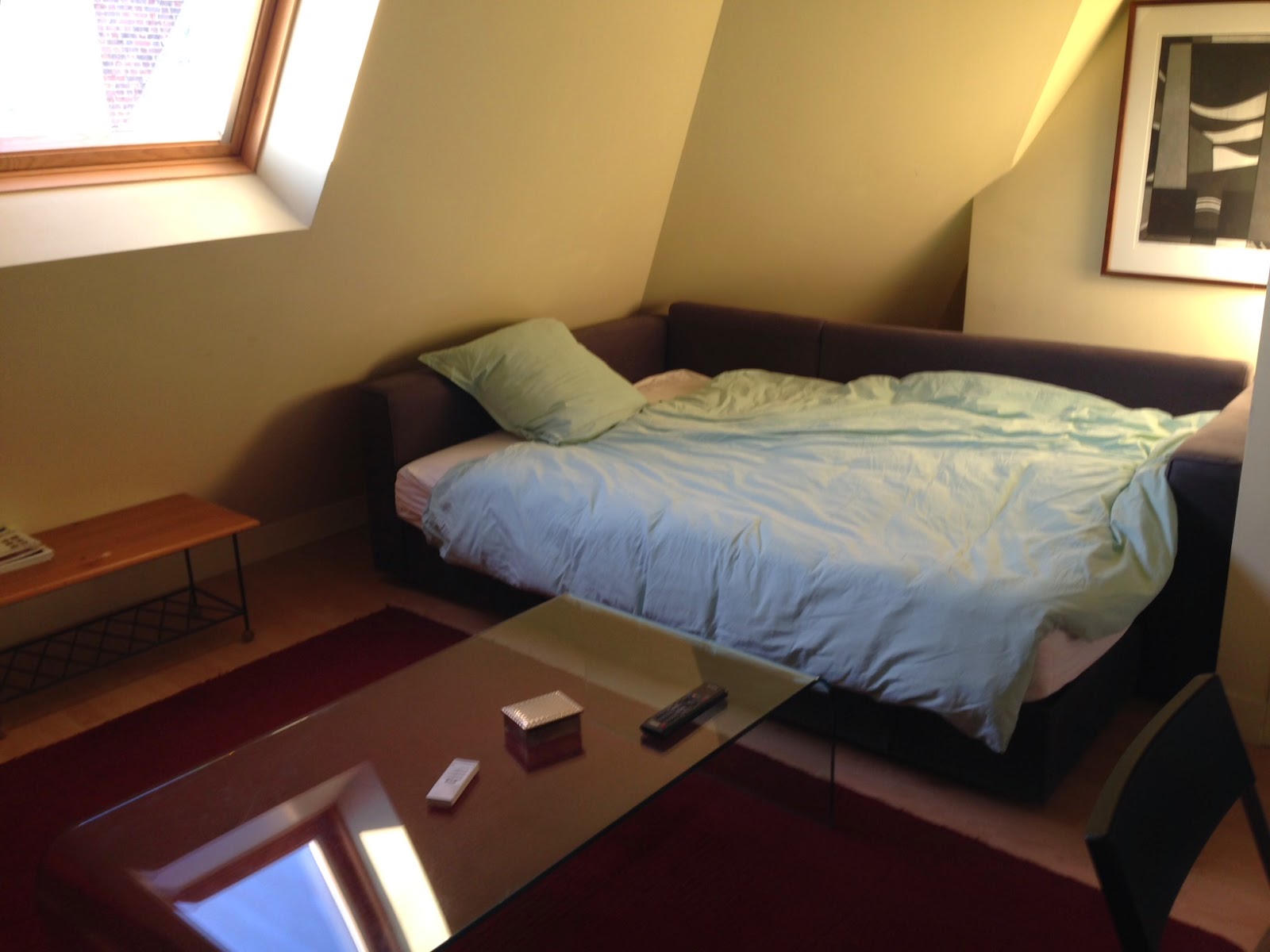
    The flat we’re in is OK. The host actually lives here, it’s a full unit downstairs and a smaller unit upstairs; she stays in whatever one is not being rented. Since we wanted the full apartment, she’s upstairs. There are several things about it we don’t like – least of which is the tremendous amount of furniture she has in such a small space. To each his own I guess. We won’t be spending too much time here.

    We are not in the center of everything, but the rate was good and we are close to public transportation. We bought the London Pass with the travel option, which will get us into museums and other attractions and includes most trains, buses and subways.

    We got to the flat about 2pm and headed out about 3pm. The closest neighborhood worth seeing as a tourist it seemed was the South Bank, as in of the Thames River, so we moved in that direction. It was a few blocks to a train station, then we got off at Waterloo.

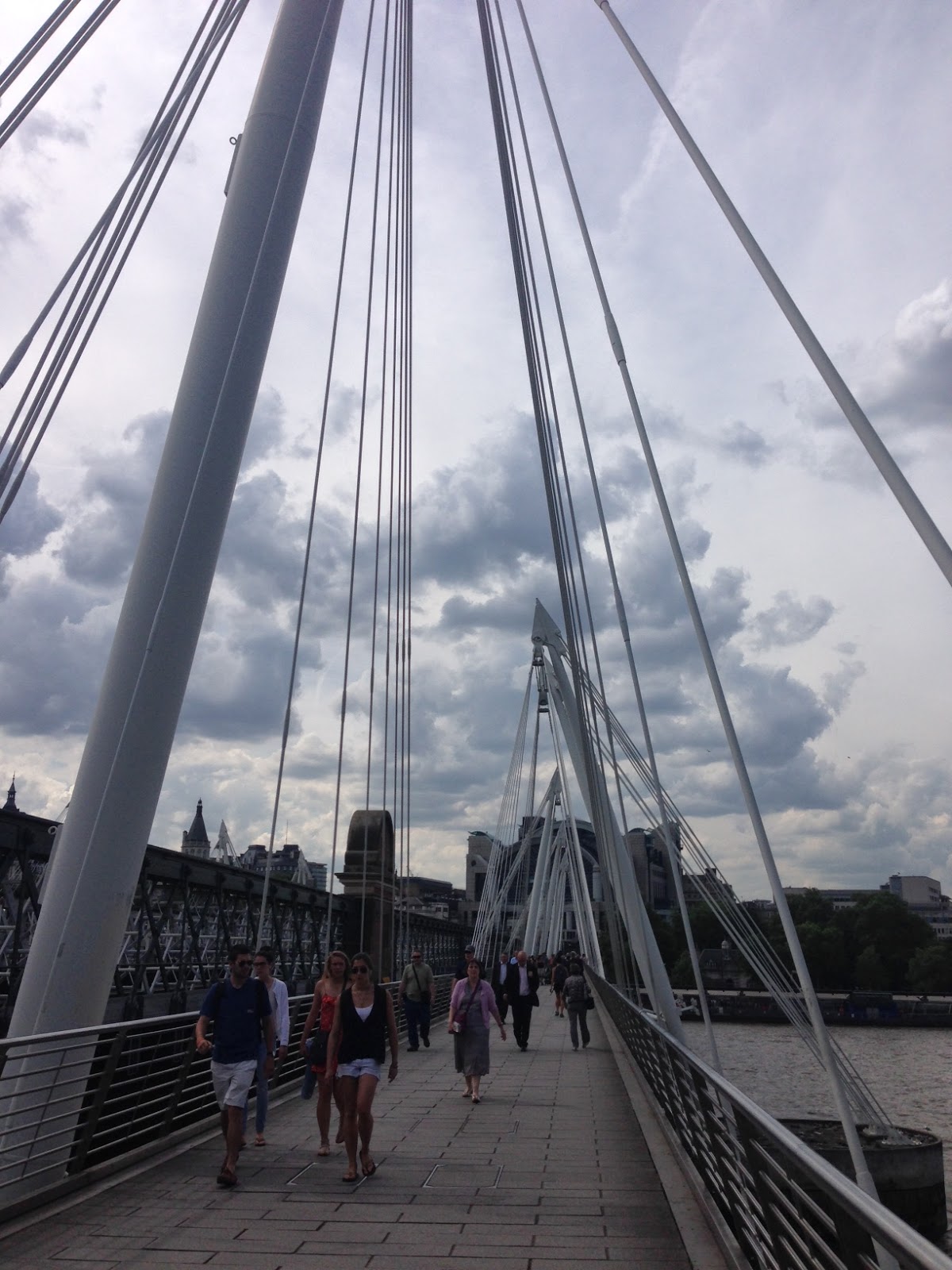
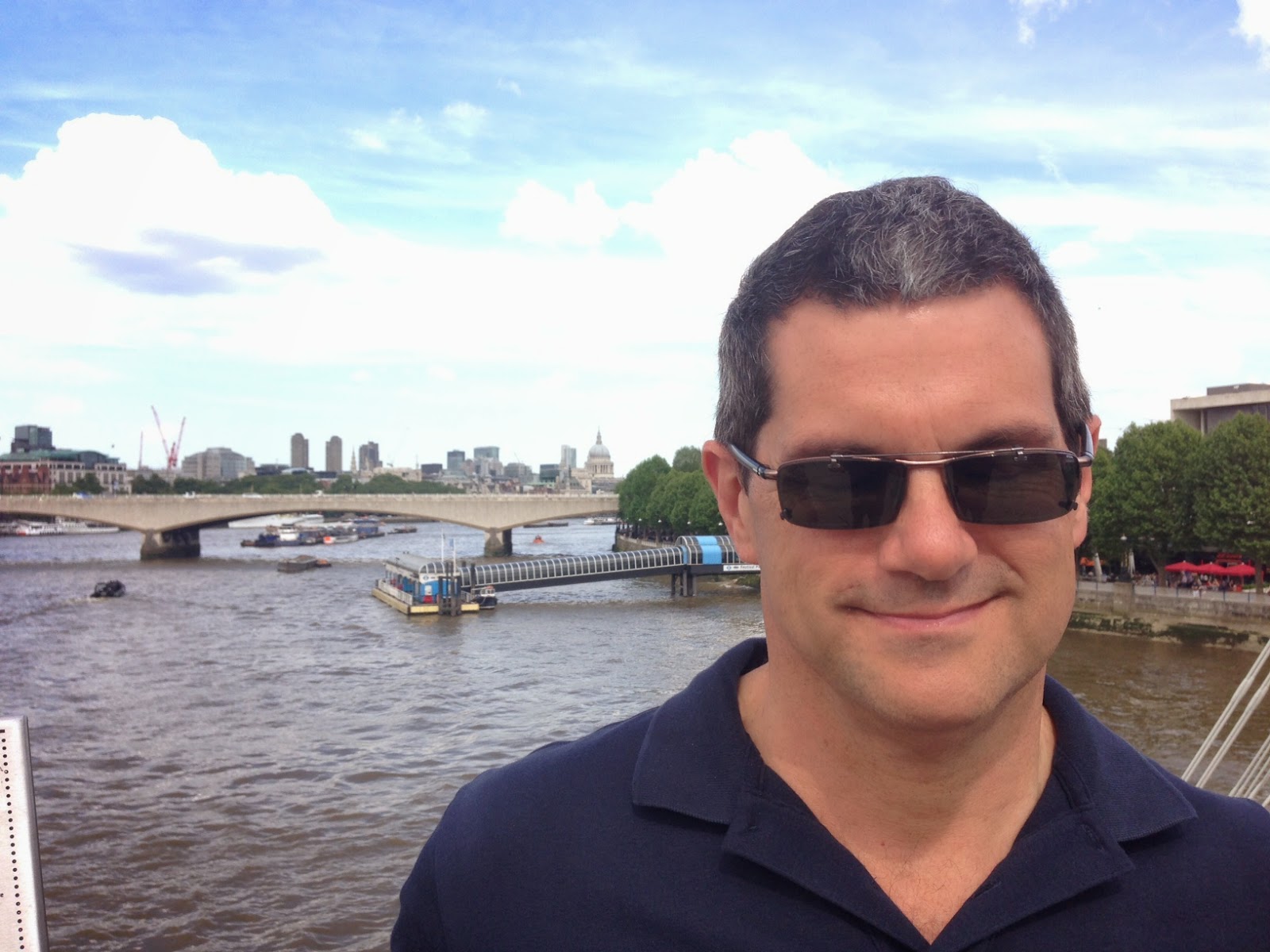
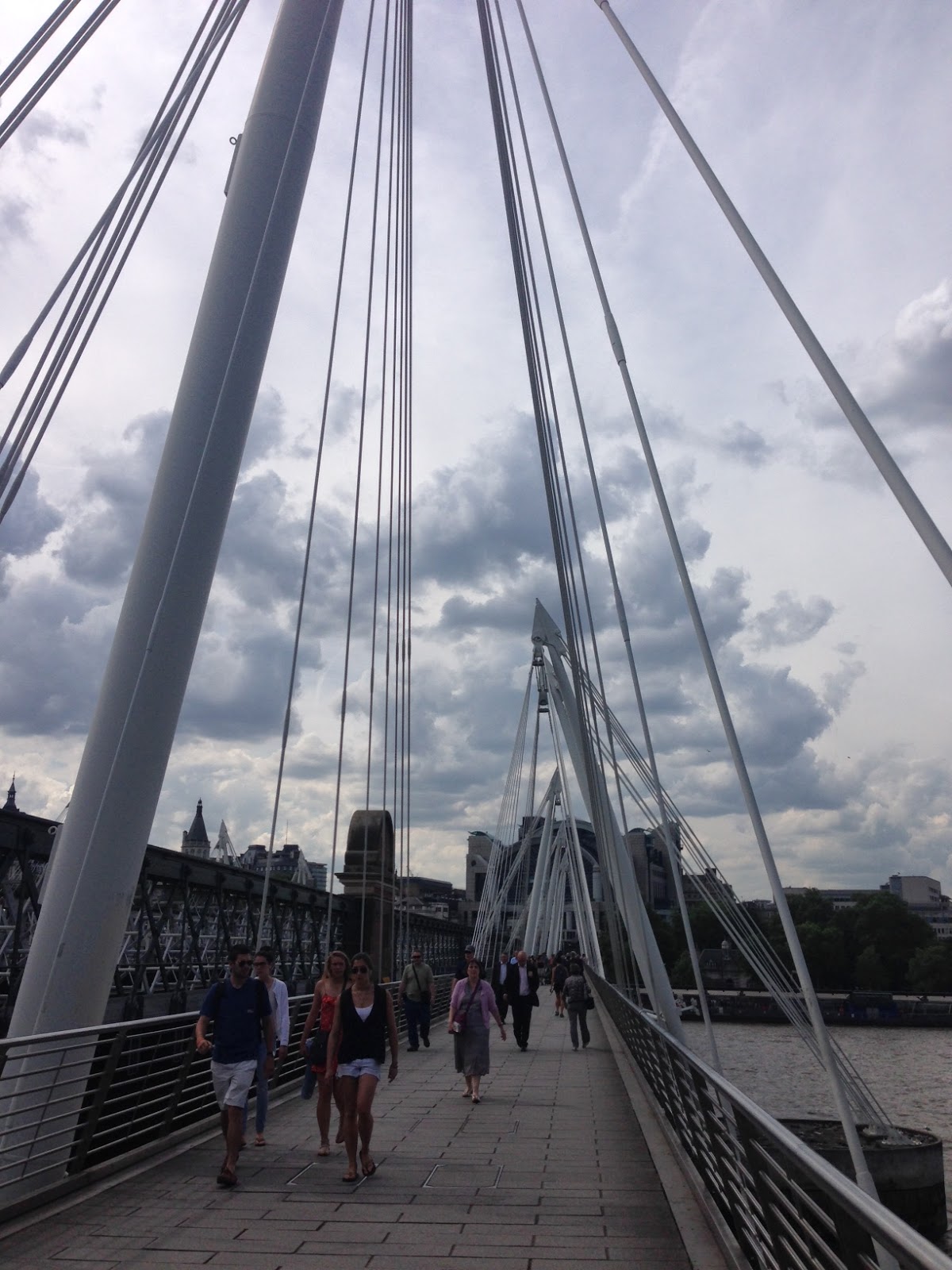
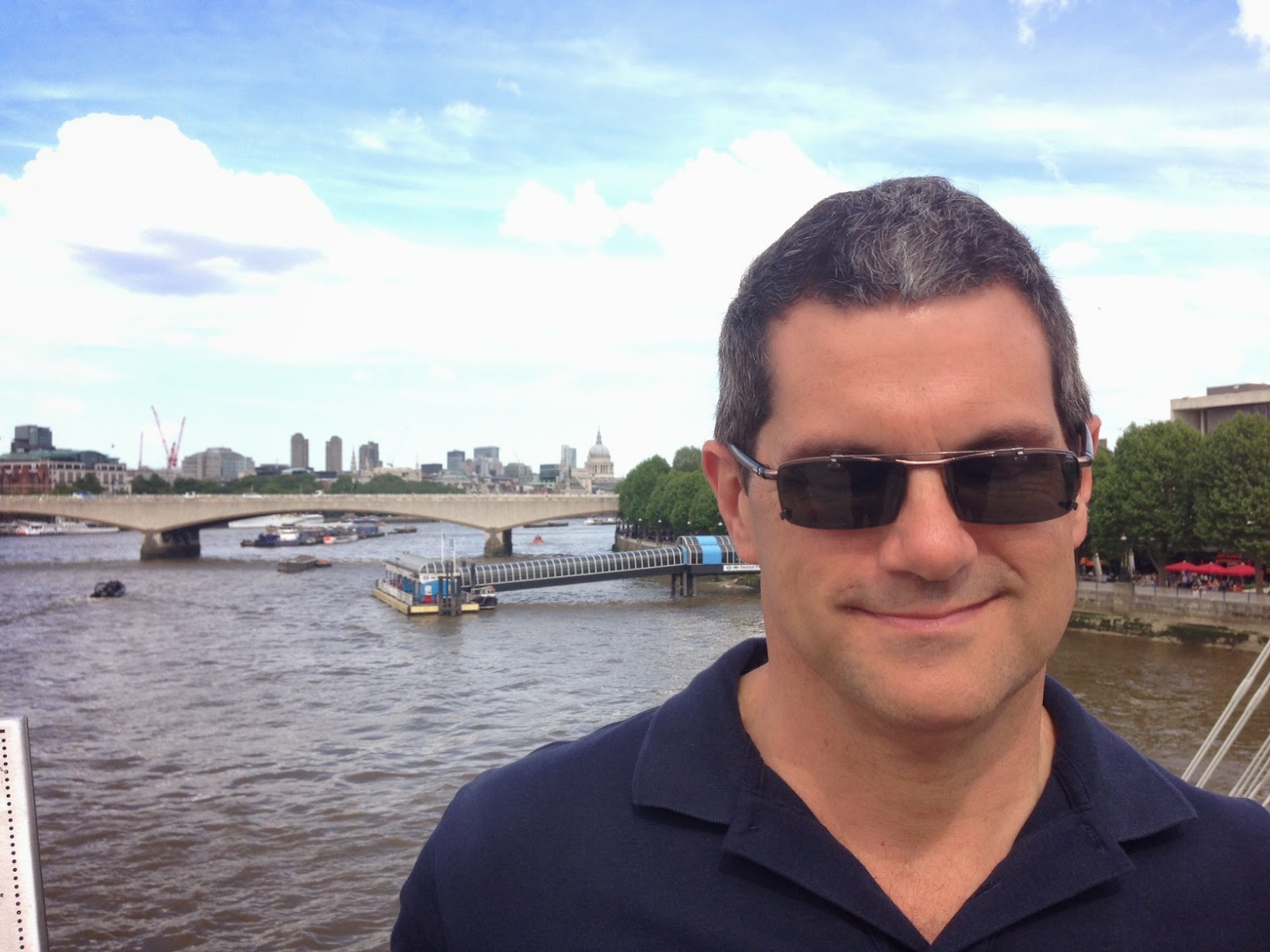
    Hungerford pedestrian bridge just off of Waterloo.
    Still the Hungerford.

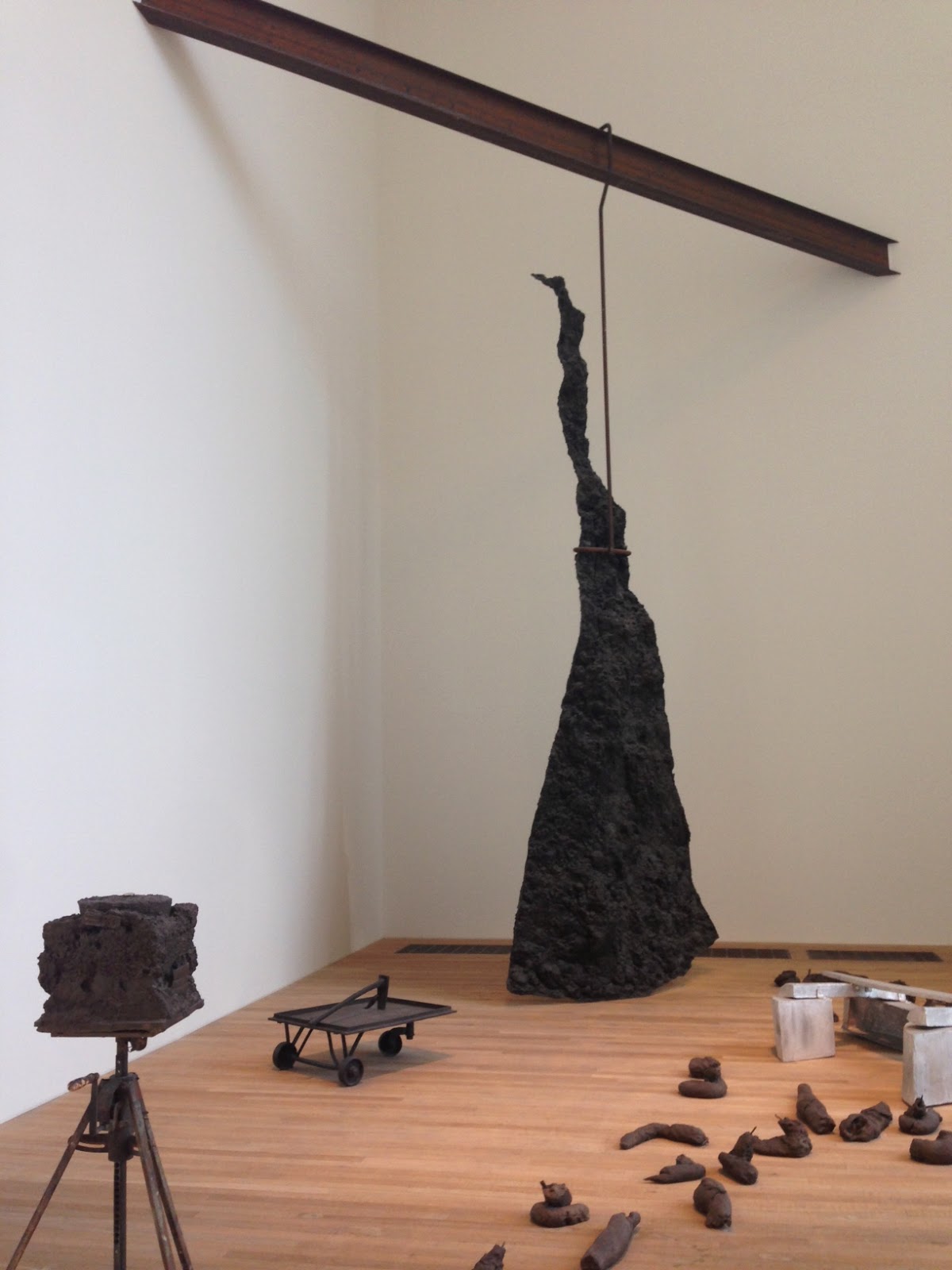
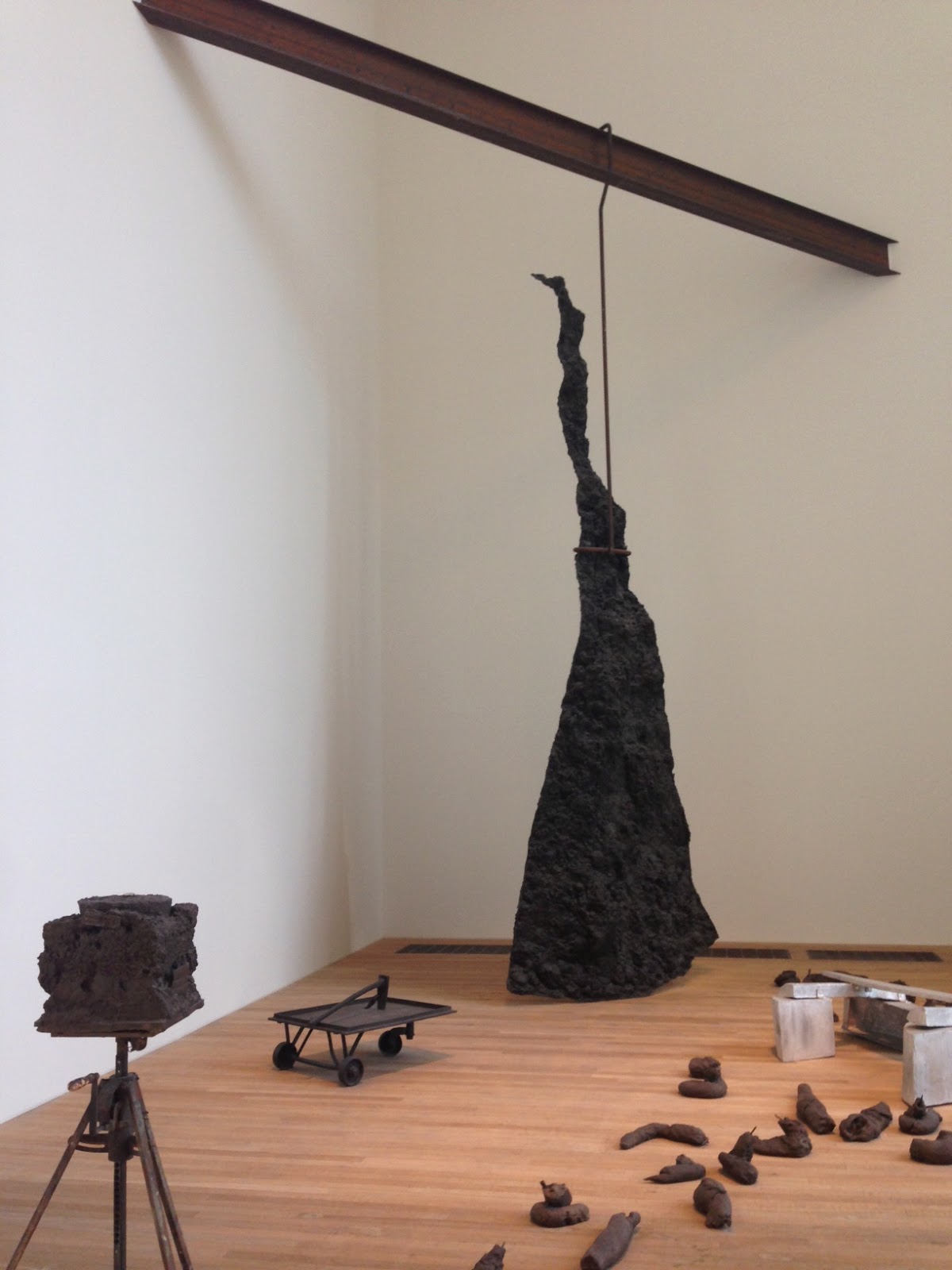
    The Tate Modern museum happens to be in the South Bank area, it was on the London Pass, so we thought – why not? Maybe this will be the one that changes our minds about modern art!

    It wasn’t.

    We stayed only about 20 minutes. The museum was free to all anyway; our pass gave us the audio tour for free which was otherwise 4 pounds. Dan took a few pictures, I just included the one below because it was the most “really?” one.


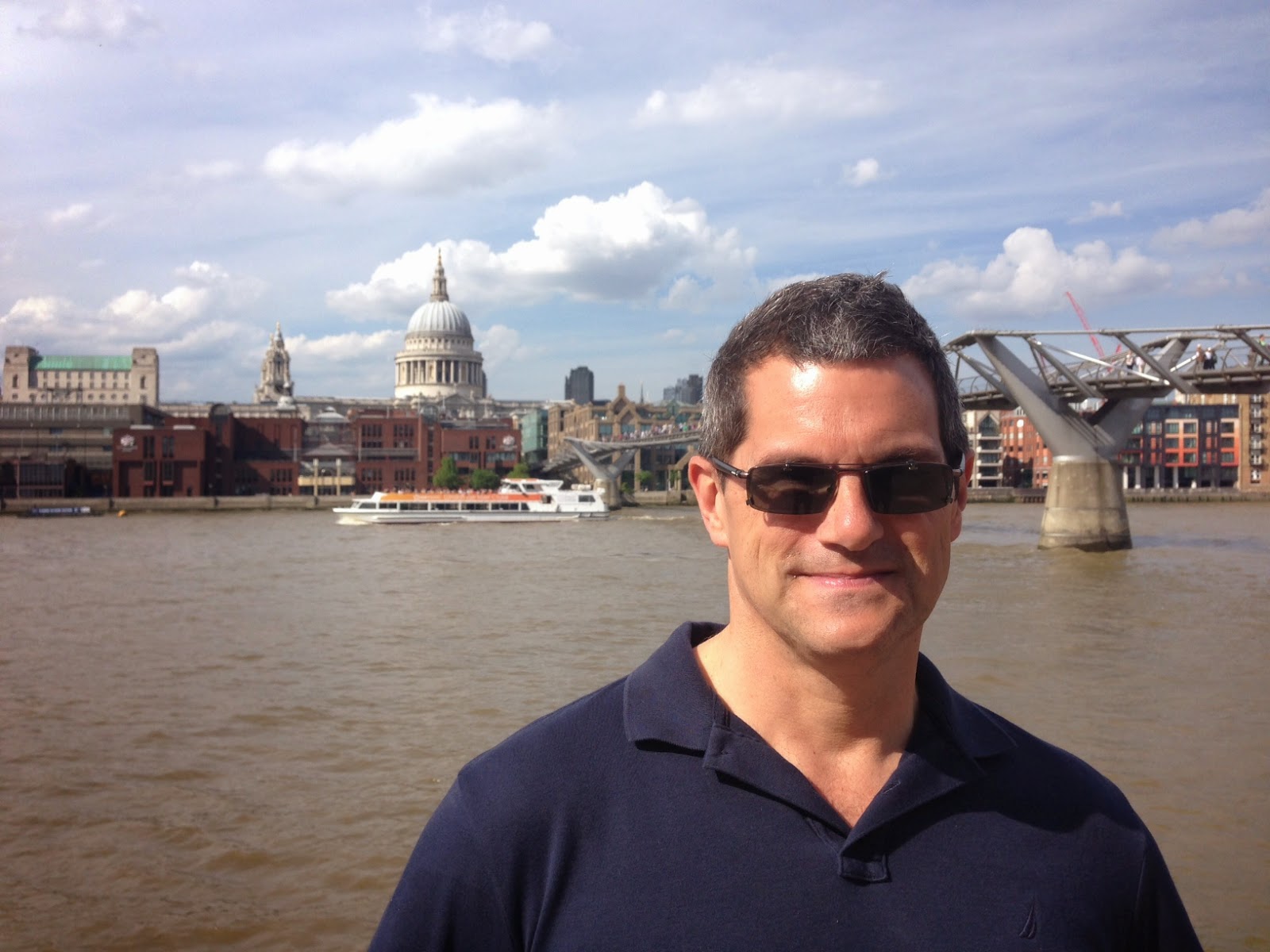
    There was a balcony in the theater that gave us a decent view of St. Paul’s Cathedral across the Thames.
    After the Tate, we went to the next thing our pass provided in the neighborhood, a tour of the National Theater. We had no idea what it was but I really enjoyed it (and Dan only a little). The National Theater was started under the guidance of Laurence Olivier over 50 years ago. They have been in their current location since 1976, which has 3 different auditoriums, seating around 1100, 800 and 250 respectively, each designed very differently to be suitable for different kinds of productions. The tour is about the different auditoriums, their features, what kinds of productions are best suited for them, and how the repertoire theater works. The unique design of the stages allow for sets that are easy to move and each theater can stage more than one productions in a single week, different from most theaters in the West End and Broadway which can only do one show at a time.
    At any rate, since we’re seeing two shows this week – both in the West End – it was appropriate that we randomly ended up here this afternoon. We got coffee and split a sandwich after – we’d had some fruit, cheese and crackers when we got to the apartment and so that was kind of lunch  – then walked into South Bank away from the touristy areas.
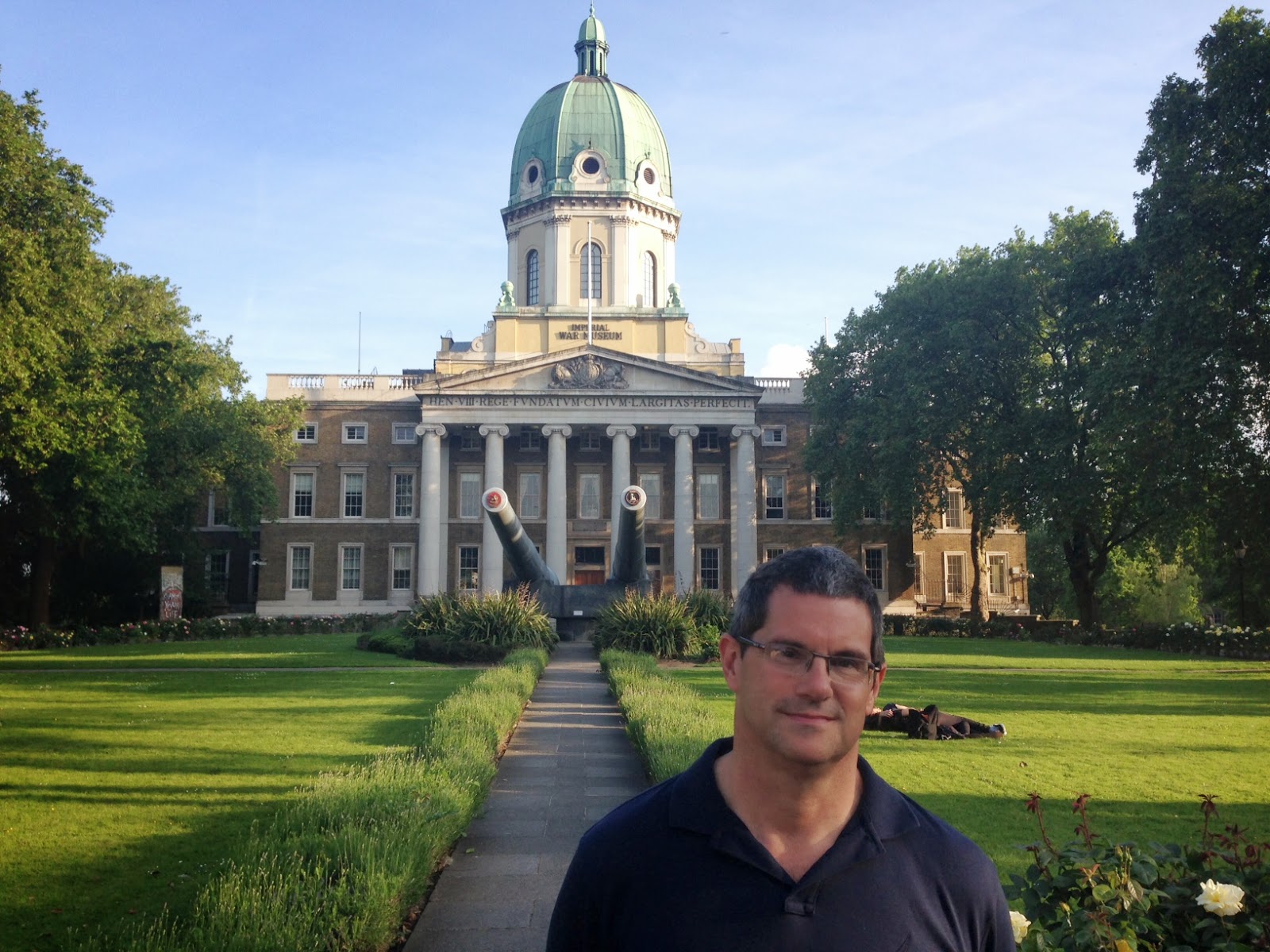
    This was the Imperial War Museum. It’s closed through July but it had a nice park around it and that was open.

    We took a bus back to our neighborhood, which is very close to another called Lavender Hill, and explored that a bit. Lots of different ethnic restaurants we made mental notes about for future use. Like Amsterdam, London doesn’t seem to have its own cuisine – beyond fish and chips – so they import it from everywhere else. In just a few blocks we saw Tapas (Spanish), Italian, French, Lebanese, Chinese, Thai, Indian of course, Greek and Persian. We decided we weren’t really all that hungry after the sandwich at the theater so just went to the grocery store to pick up breakfast items for our stay. And ice cream.

    And that was pretty much our day. Having some ice cream and going to bed early!


  • Day 11: UK Countryside, Alnwick Castle

    Day 11: UK Countryside, Alnwick Castle

    I was up by 6am this morning and did the writing part of the blog from yesterday. I was unusually tired last night so just didn’t fight it. It was much easier to do it fresh over coffee. I am definitely a morning person. We were back from our day today earlier than ever, about 7:30pm, on purpose. We have to leave by 8am tomorrow to catch our train to London and just wanted an easy evening. We picked up some breaded fried fish and mushrooms at a “take away” place on our block and brought that back for dinner. As I type Dan is watching TV, flipping back and forth between X-Men and Star Wars as commercials come on!

    We needed to pack again, too. Although we were only here 3 nights, the laundry process sort of required that we unpack everything. Glad that’s done though, we should be good with clean clothes until we get home.

    Dan was up by 8am or so. For breakfast we had scrambled eggs and his steak pie from last night that he had barely touched. We packed what food was left in the flat – yogurt, the granola cookies, and a bag of chips – and headed to the meeting place for our last minute adventure.

    When we were walking the Royal Mile Friday evening we came across several tour companies offering day trips into the countryside. We picked up one of the brochures and discussed some options at length over dinner. Do we or don’t we first of all? There was plenty to do in Edinburgh, we had 2 pretty full days planned, but the idea of a country drive was appealing and the pricing extremely reasonable. (Especially considering what we paid for Normandy – and we had gone with one of the less expensive options in that case…) When we got back from dinner Dan did some further research and found one on TripAdvisor that had rave reviews and that only did “small group” tours – no more than 16 people. For the same pricing as the larger tours. So we looked at the options and booked one. And redid our plans for Saturday to carefully pick what we were going to do since we suddenly had only 1 day to do it in.

    The tour met at a coffee shop in New Town, about a 15 minute walk from us. We were there at the required time, 9:15, and boarded as scheduled right at 9:30. There were only 9 people on the tour – another American, Carissa the vet from Maine, 2 men from Germany, 2 girls originally from China and Taiwan but living in London as students, a guy from Spain, and 2 employees of the touring company – Rabbie’s – in training. The guide’s name was Barney (and the county across the firth is the county of Fife – go figure), he grew up in the south area of Scotland but went to school at U of E, majored in history. He was funny, articulate, full of knowledge, well traveled, and well read. It made all the difference in the world. He shared all kinds of things – both historical and current events – throughout the day and only once did someone ask a question he couldn’t answer. (It was Dan of course!)

    It was about an hour’s drive to our first stop and he told in elaborate detail the real story of Braveheart, which actually had little to do with William Wallace. The historical perspective in the movie was “rubbish” although they did get a few things right. But not much according to Barney. Here’s what I remember but don’t quote me:

    • William Wallace would likely never have worn a kilt, because that was the dress of the highlanders and he was a lowlander.
    • The big battle he won depicted in the film was the battle of Stirling Bridge; the use of the bridge was a critical part of the strategy that lead to the Scots victory, but the movie never even mentioned it.
    • I can’t repeat all of the details of the history, but the Scots believe that the legend of Robin Hood is actually based on the story of William Wallace, who was hiding in the woods from the English, his wife’s name was actually Marion, not Mirren as in the movie, and who was turned in by a local sheriff.
    • Robert the Bruce got to be King of Scotland by agreeing to meet with the other contender to the throne in a church, which was supposed to be a sanctuary for all and understood that no violence could occur there. An argument ensued and Robert killed the other guy in the church, and then became King. The pope in Rome was appalled that such a thing happened and excommunicated not only Robert, but the entire country he now led as King. The pope finally reversed that and recognized Scotland as an independent country some 10-15 years later. Shortly before his death Robert decided he would go on a crusade against the Moors – this was some 25 years into his reign, close to 30 years after the death of William Wallace. He died before the crusades could begin, but he’d asked if that happened that his heart go anyway. So his heart was removed and put in small silver casket, and the Scottish crusaders carried it as far as Spain, where they fought Moors. His heart was brought back to Scotland and buried in Melrose Abbey, our first stop this morning. Robert the Bruce is considered one of the greatest and courageous of Scottish Kings – and his is the real “brave heart”.
    Melrose Abbey. We didn’t go in, took a walk through the town and countryside instead.
    The Abbeys were founded during the Middle Ages, prior to 1200; they were destroyed during the Reformation because Protestants believed they were corrupt communities.
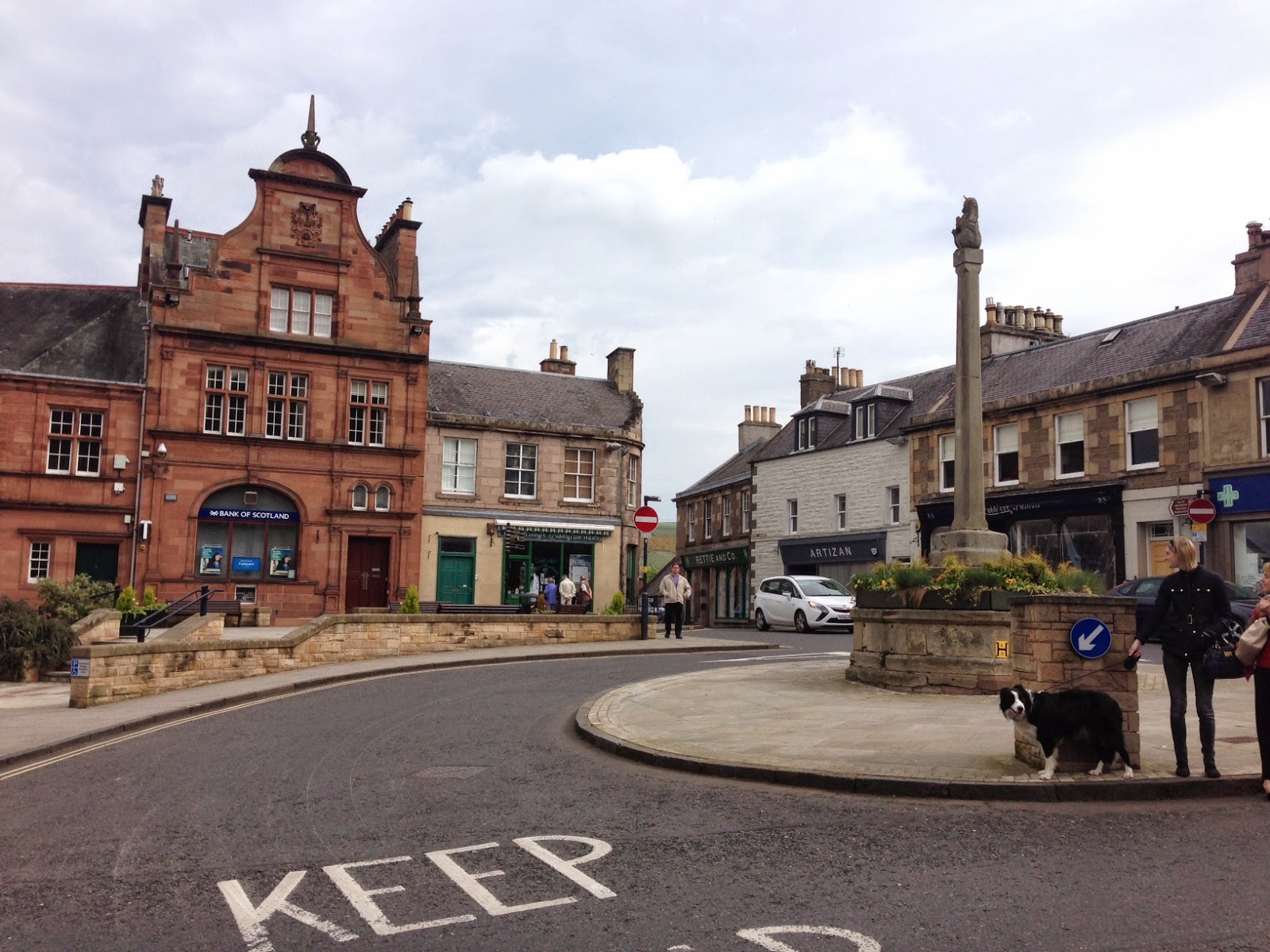
    Cute little town of Melrose.
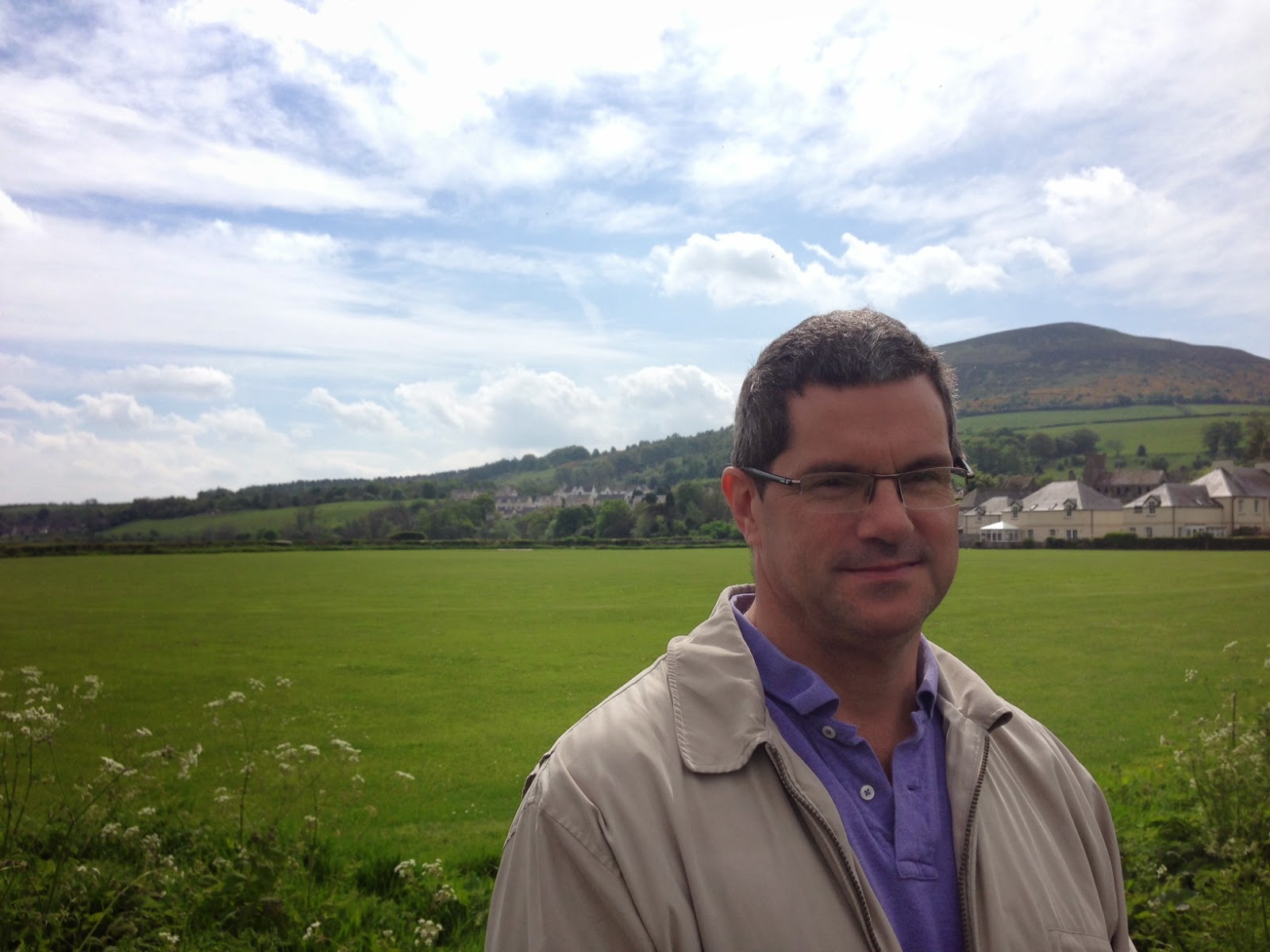
    All day long we traded descriptions like pastoral and bucolic. This was one.
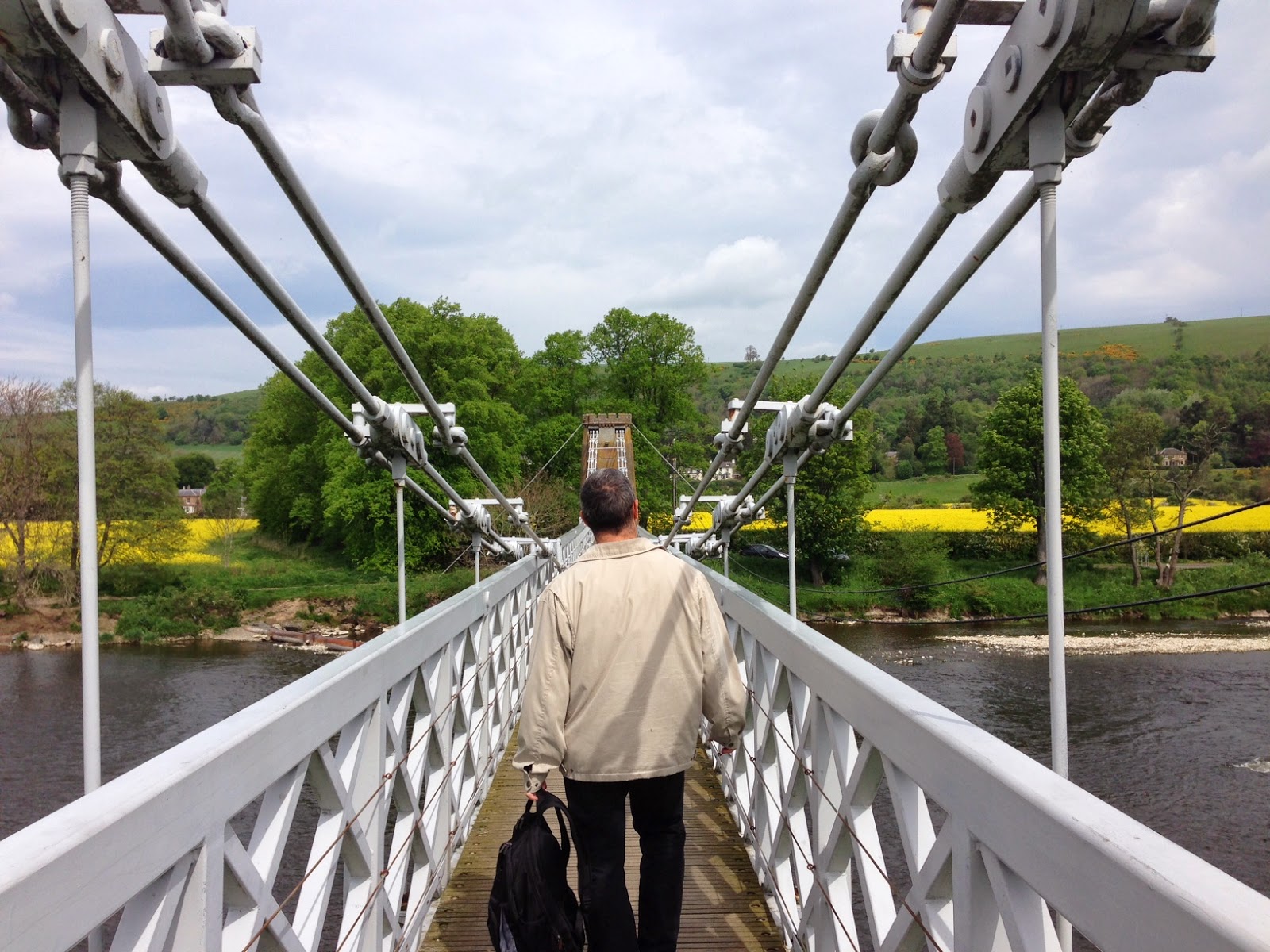
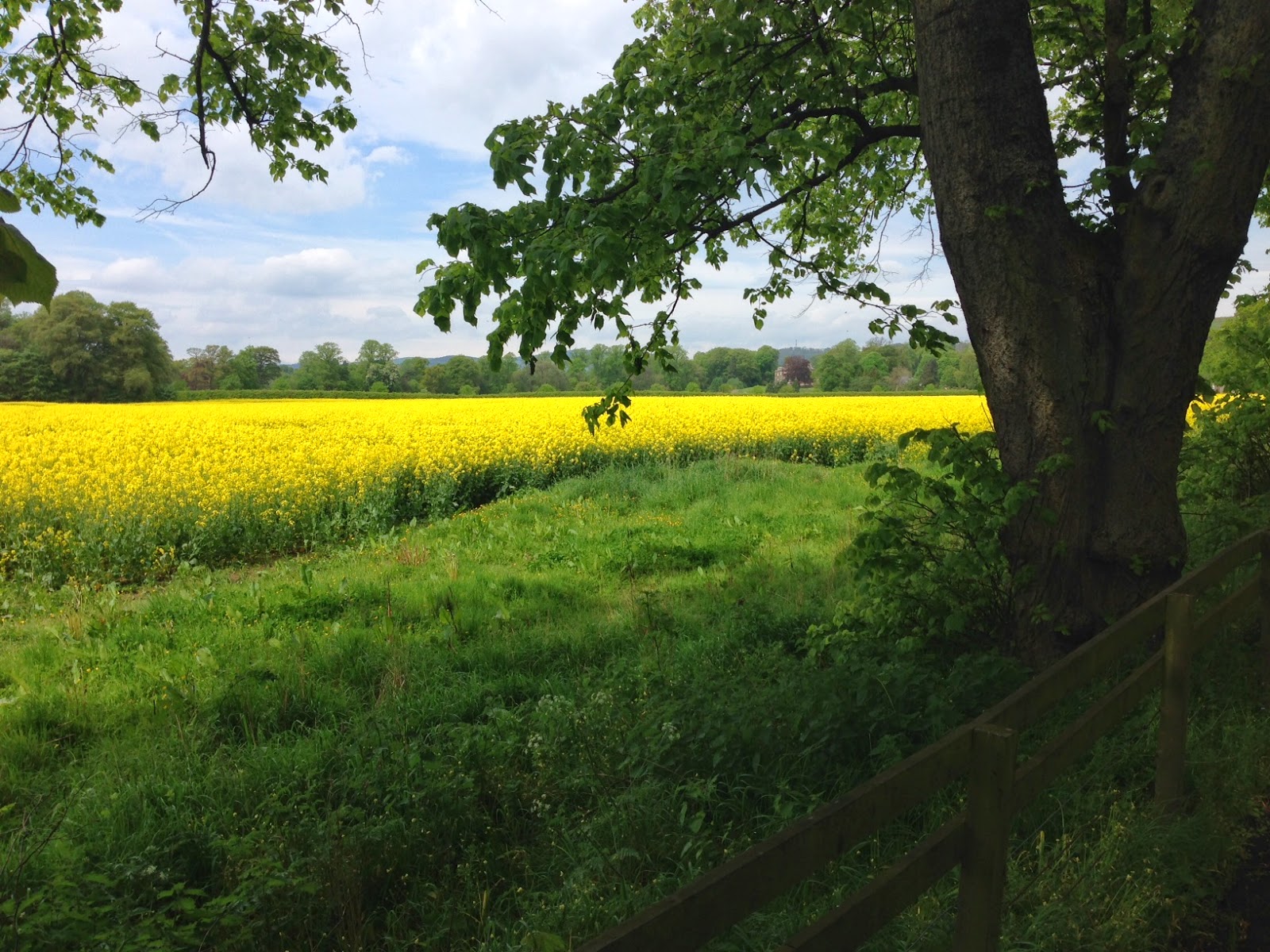
    This was called Chain Bridge, suspension type. Build in 1826, no more than 8 people allowed on it at one time. The bright yellow in the background? Canola. We saw it everywhere today.
    The body of water is the River Tweed, which we encountered much of the day.
    Canola field on the other side of the bridge.
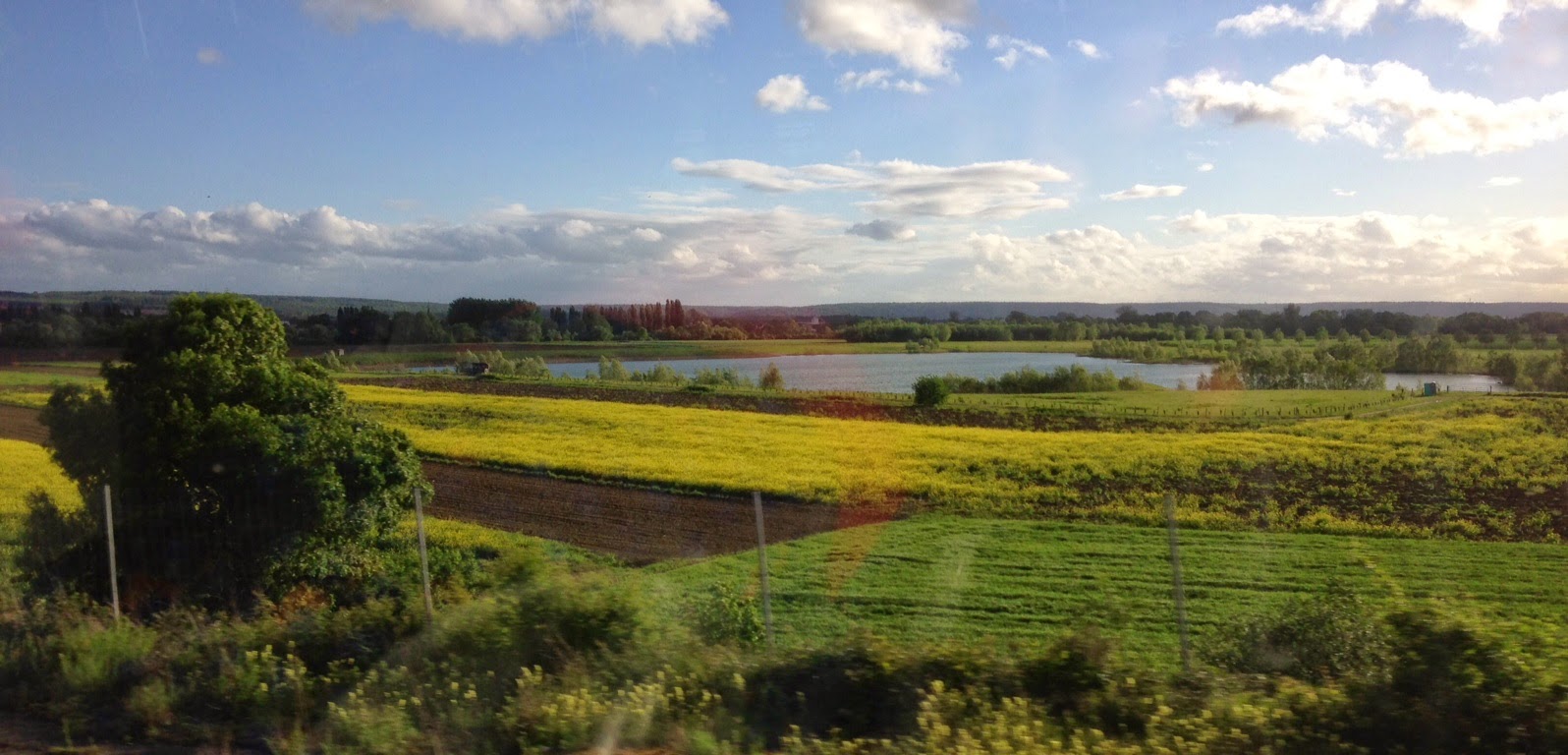
    Pretty countryside from the bus.
    More pretty countryside from the bus.
    Crossing into England. Carissa the vet took the picture (and others you’ll see later…)

    On the way home, Barney finally clarified what has always been so confusing to me, come to find out because their nomenclature is the reverse of ours. Great Britain, AKA United Kingdom, they refer to as a state which includes the countries of England, Scotland, Northern Ireland and Wales. England and Scotland have been a unified country – United Kingdom of Great Britain – since 1707. When Queen Elizabeth I died in 1603 without an heir, she had named a distant cousin as her successor – James VI, King of Scots, became James I of England. This is the same James of King James Bible fame. For the next hundred years, the monarchy ruled both countries, until Queen Anne got both Parliaments to unite them formally in 1707. They’ve been together ever since.

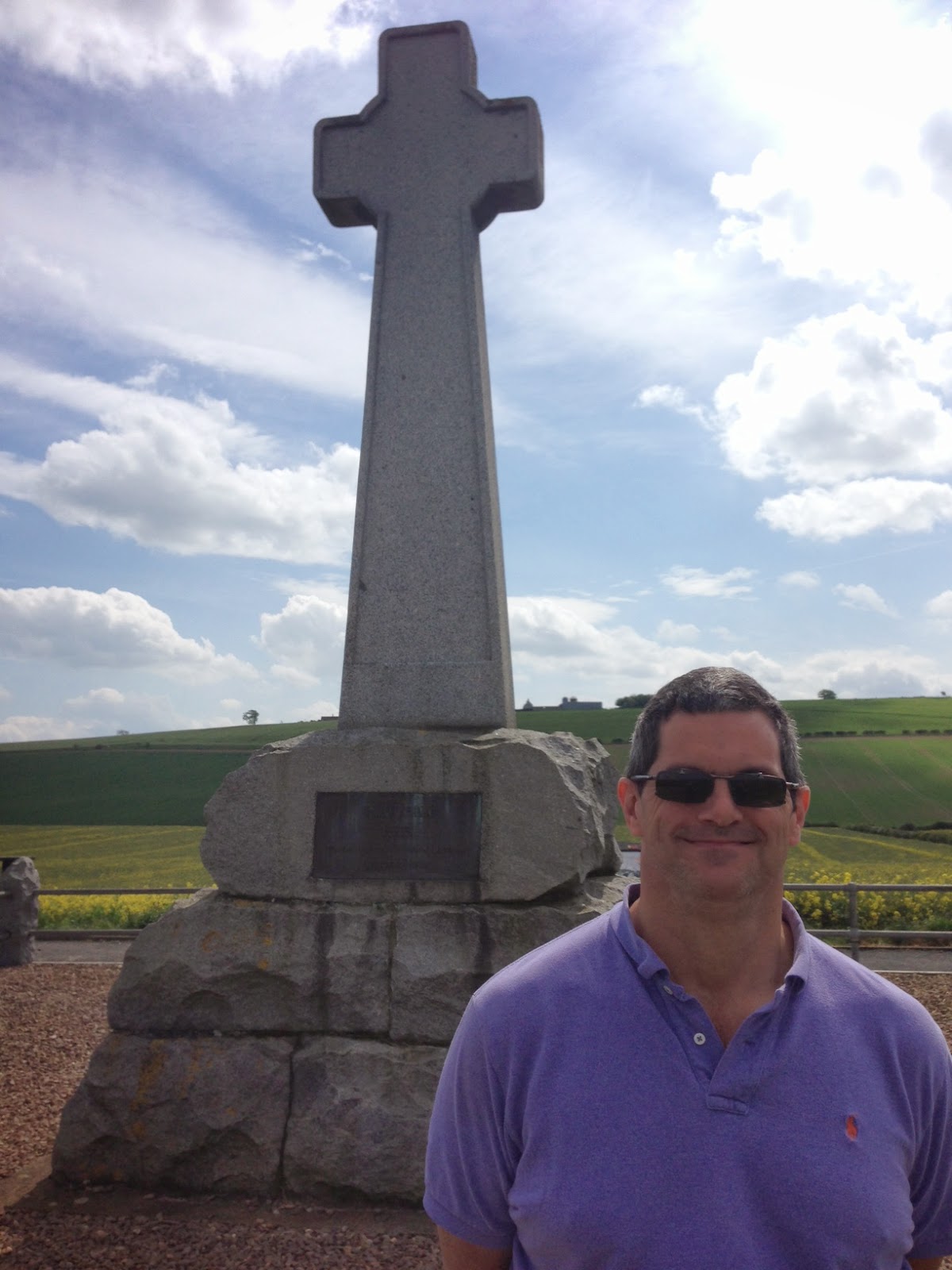
    Flodden Field, sight of a big battle between England and Scotland in the early 1500’s. This was not part of the original tour but an extra stop at Carissa’s request.
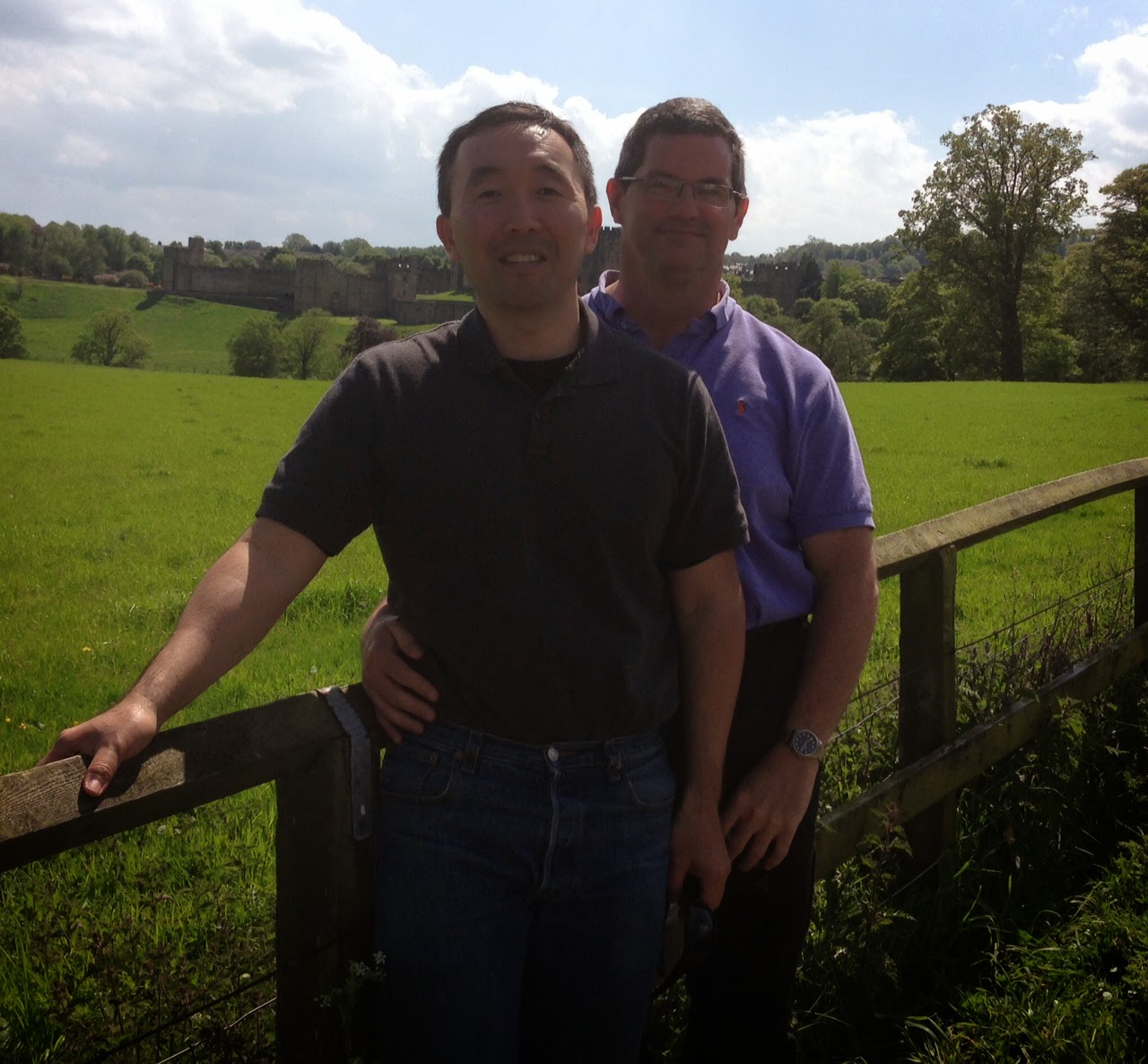
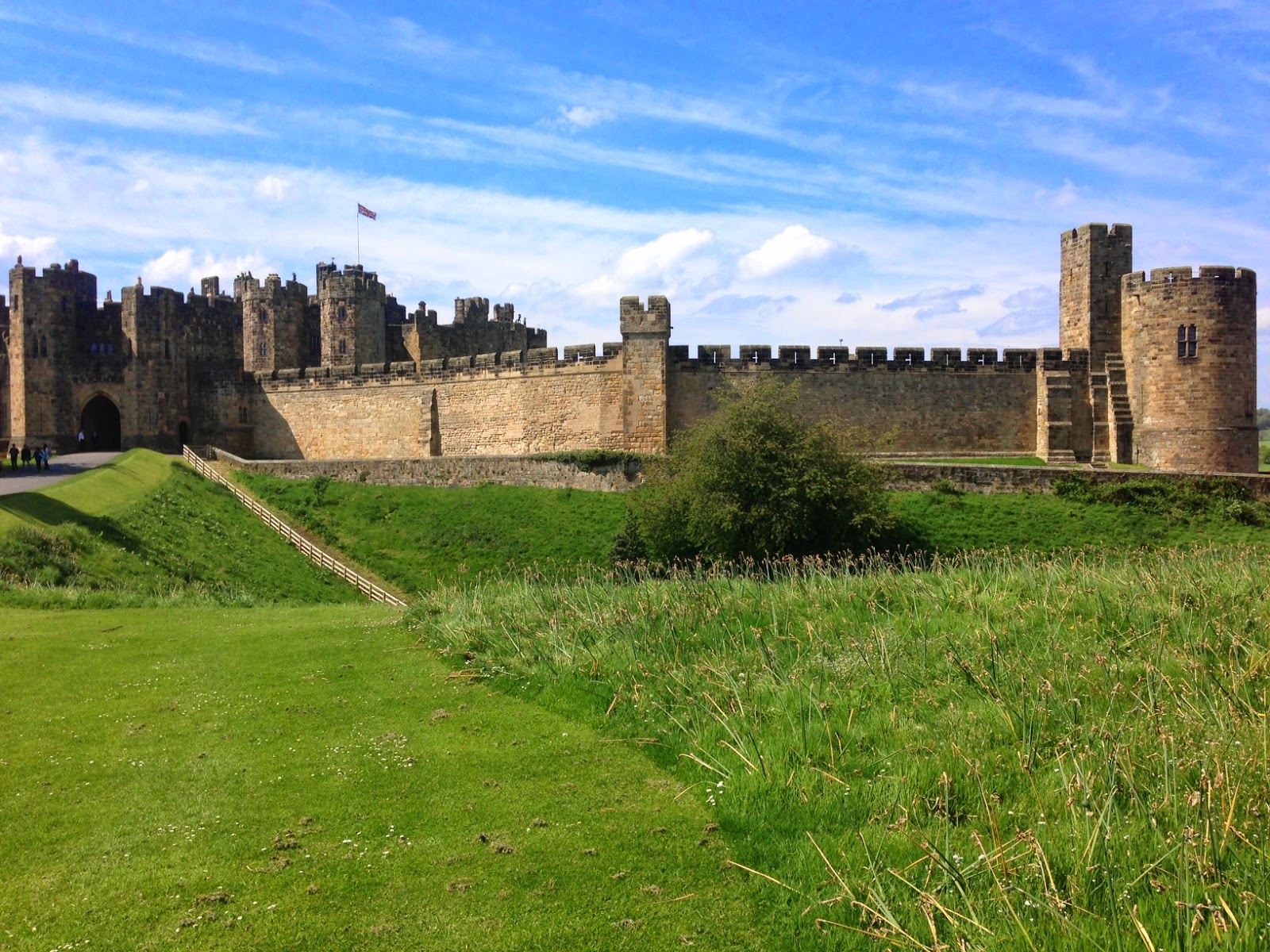
    That’s Alnwick Castle in the background.

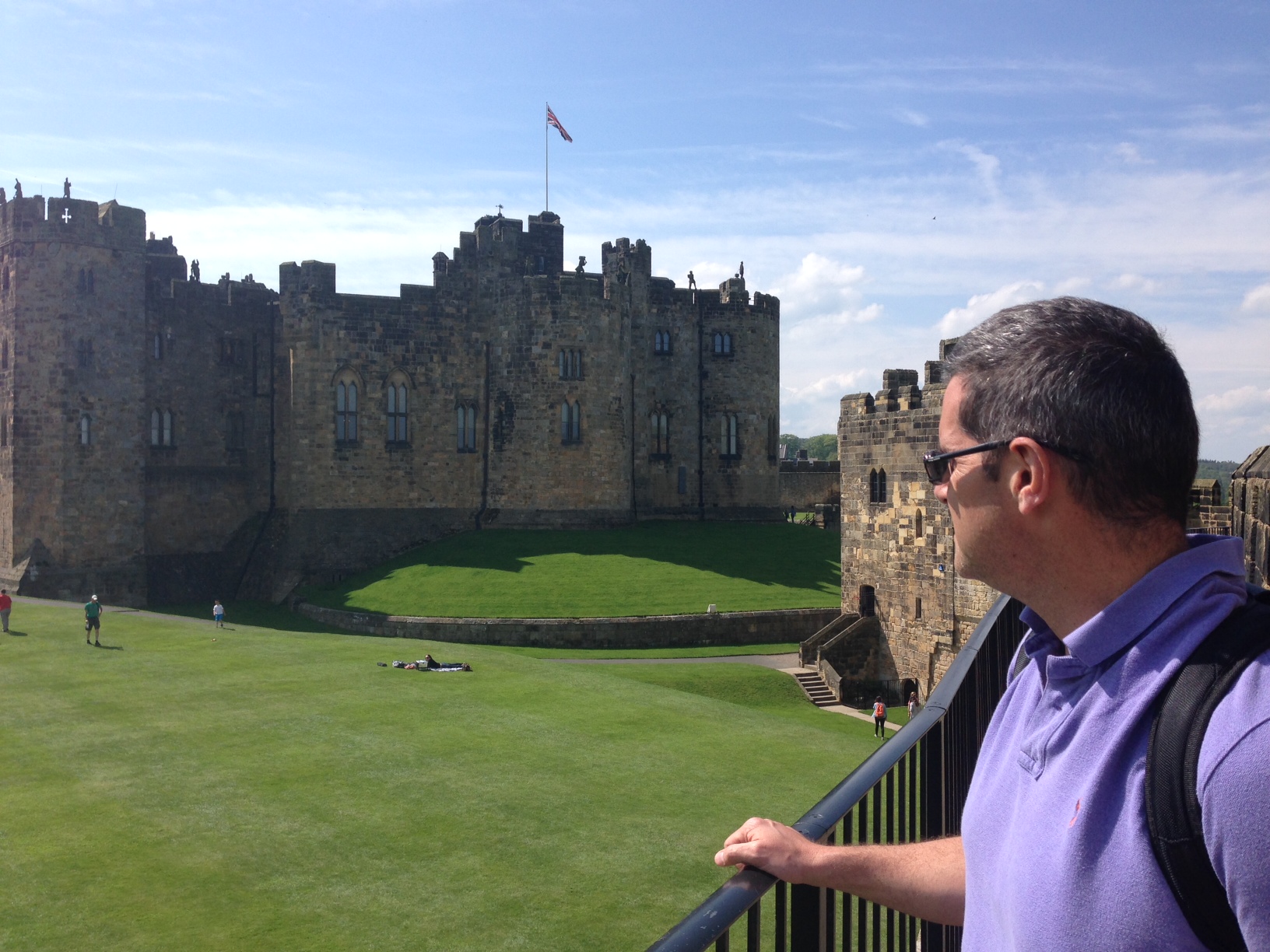
    Alnwick Castle is one of only two castles in England that are both occupied and at times open the public. The other one is Windsor Castle outside of London, home of the monarchy. Alnwick Castle is the ancestral home of the Perry family of Northumberland County where they have lived without a break in heritage for over 700 years. The first heads of the estate were Earls. In 1766, the Earl at that time had great political influence and was made the 1st Duke of Northumberland. The current residents are the 12th Duke of Northumberland, Ralph Percy, and his wife Jane. I guess that makes her Duchess. They raised 4 children here, currently aged 24-30. Their two daughters were both married in the castle.  They own several other castles in northern England and Southern Scotland. They live here for 6 months a year, and open it to the public while away as revenue for its hefty upkeep.

    Before we went in, we ate the picnic items we’d packed on a picnic table on the lawn in front of the castle.

    This was inside the castle wall. Or more to the point, ON the castle wall.
    “Backyard” view over the castle wall.
    Cannons still in place from its use as a fortress. Prior to becoming a castle, is was a primary northern defense station against the Scots.
    A huge lawn inside the castle walls. This is where the “learn how to fly a broomstick” scene was filmed in the first Harry Potter movie. The expanse in the background was used as the Quidditch field, with the arena added later via CGI.
    The courtyard from the gate leading to the State Rooms. No pictures were allowed.

    The inside was at times just as elaborate as Versailles, although perhaps more tastefully done. There were two large chests in one room that had actually been in Versailles and were purchased by the Duke at the time. That Duchess – I believe it was the first one – had actually attended the wedding of Marie-Antoinette and Louis XVI. The first Duke was actually a Smithson – he married the daughter of the prior Earl who was a Percy and he took the Percy name to preserve the heritage. He had an illegitimate son who achieved success without any help from his wealthy father as a chemist and mineralogist. The soon took the name James Smithson. When he died, his will stipulated that his estate be donated to the founding of an educational institution in Washington DC, even though he had never been to the US. This became the Smithsonian Institution.

    The docents in the castle – there was one in each room – were extremely friendly and knowledgeable, and loved talking about the castle, its furnishings and the family history.

    There was also something about the interior that was more intimate, despite the lavish art and furnishings: an HDTV in the library; family photographs, some very recent, throughout. It was clear someone lived there.

    The state carriage. Used by the daughters for their wedding of course. Also used by the 4th Duke as a representative of the King at the coronation of King Charles X of France in the ealry 1800’s.

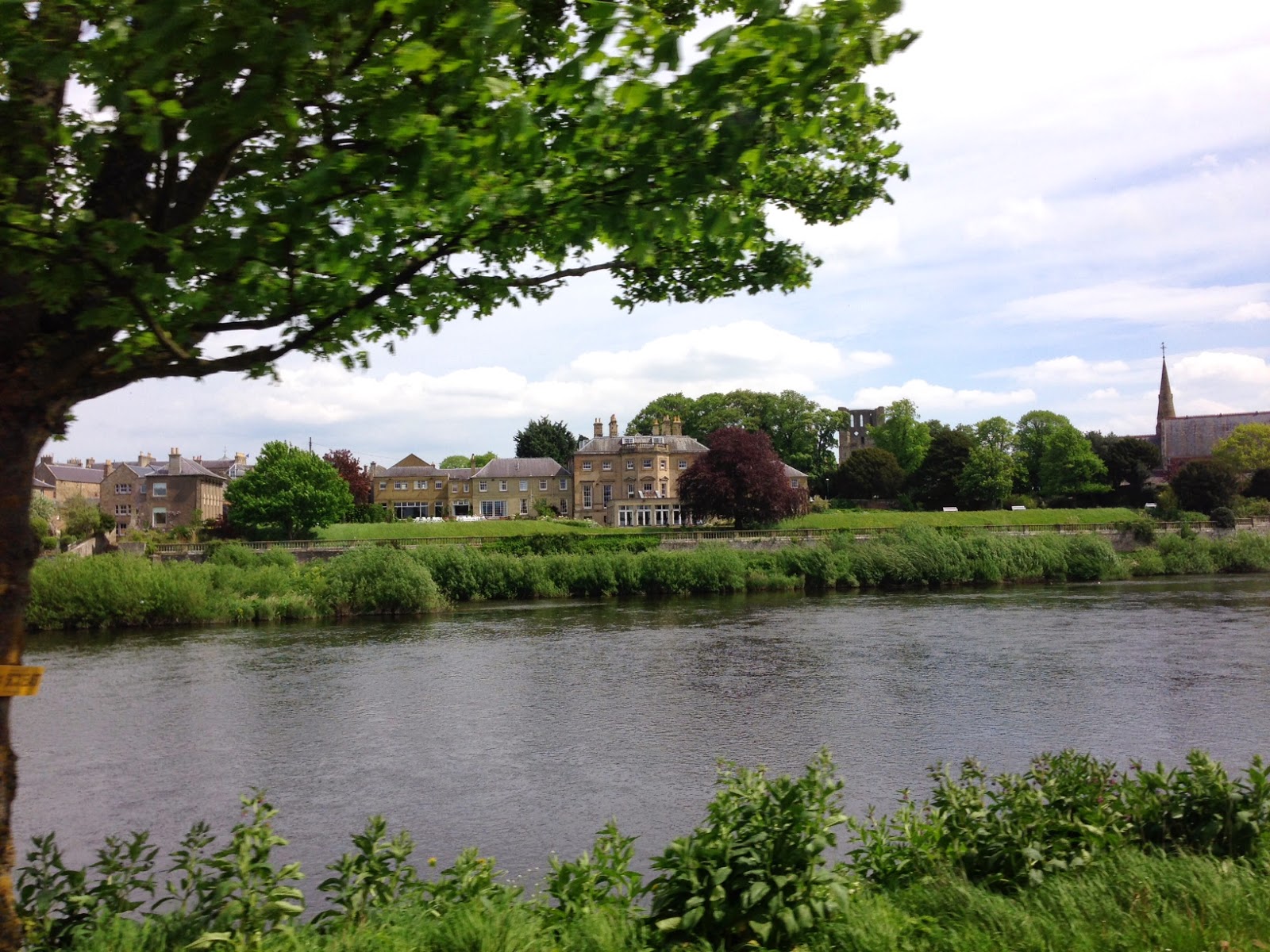
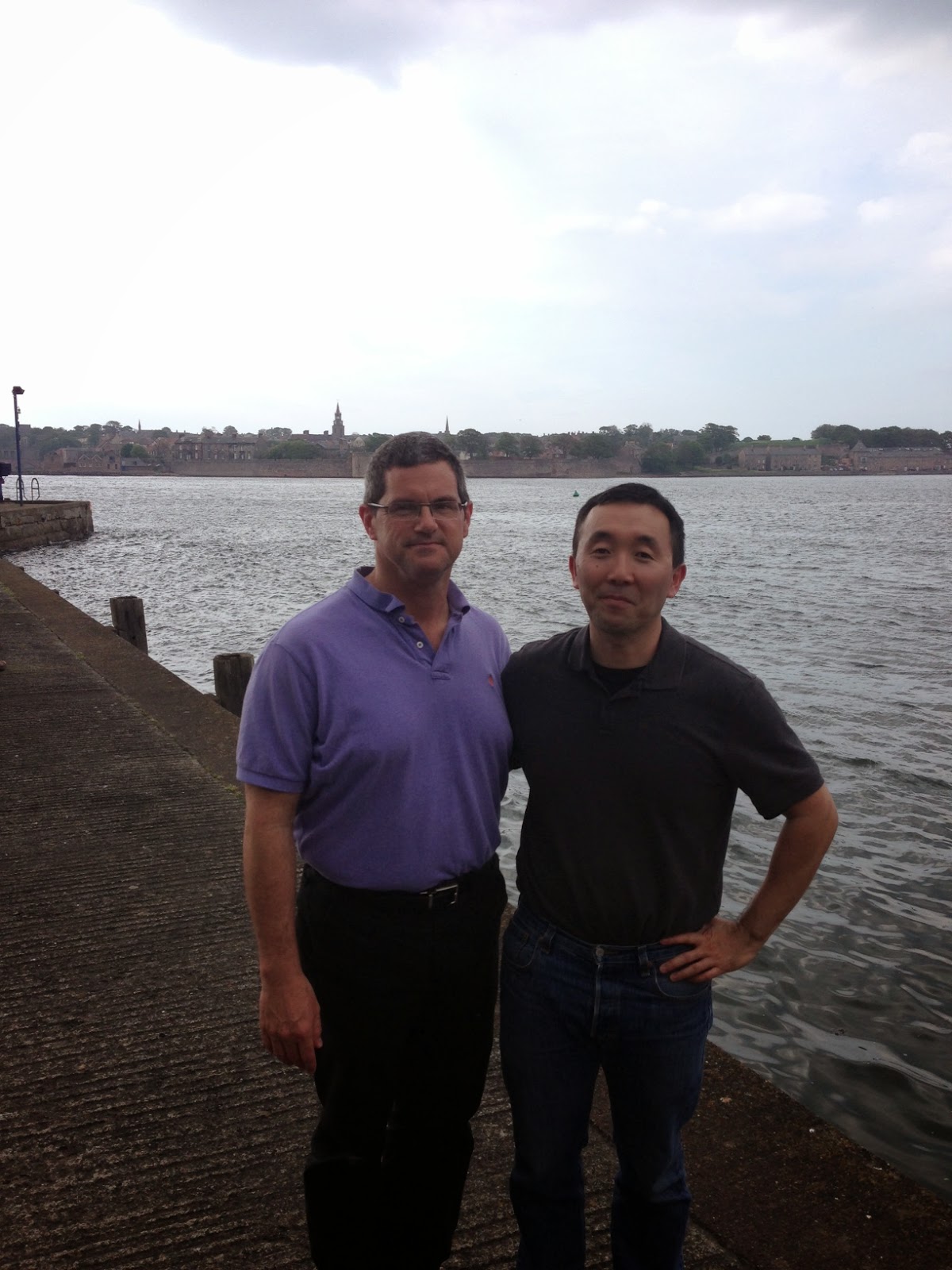
    We had time for a quick walk through the town of Alnwick after we left the castle and picked up a snack to eat on the bus. We made a stop on the way home in the little town Barney grew up in, Berwick-upon-Tweed. It is the northernmost town in England. The water in the background is the River Tweed as it flows into the North Sea.


    It was a really lovely day, we both enjoyed it a lot.

  • Day 10: Old Town Edinburgh

    Day 10: Old Town Edinburgh

    I got up about 7am, got the 2nd load of laundry in the wash and figured out what we would do today. Dan was up by about 8:30 or 9. We had a simple breakfast of eggs, yogurt, and granola cookies from the grocery store the night before and headed out about 10am.

    On the same block on our flat towards the center is the Museum of Edinburgh. It wasn’t on the official “to do” list but it was free, so we stopped in. We do like getting historical backdrops to whatever town we’re visiting and this provided it. Old Town, where we are staying, had medieval roots, most of dating back from 1100’s to 1500’s. New Town, across the bridge from this neighborhood, was built in the 1700’s to address the crowding here and at the time was considered a model of “modern” urban planning. Both areas are protected as UNESCO World Heritage Sites. Meaning their look won’t change. They are modernized today – Edinburgh, like every European town we’ve visited, can’t live without Starbucks or Subway either, apparently – but the buildings themselves look like they did then. Our flat has been completely refurbished – in fact from the inside looks brand new – but the building we’re in is definitely old. The museum had a more original look to it – with lots of creaky wooden floors.

    A few pictures from this museum.

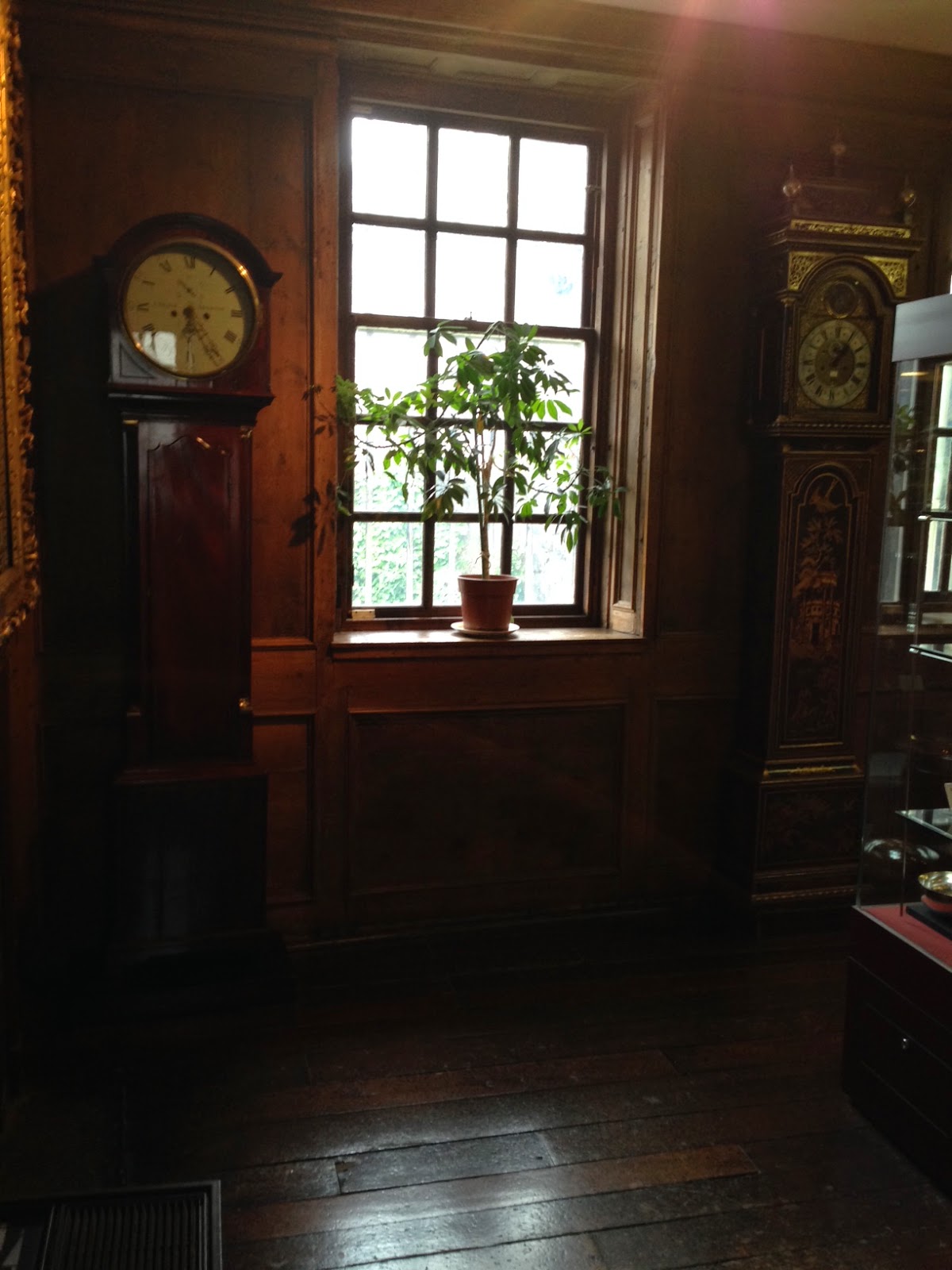
    Really pretty grandfather clocks made in Edinburgh, here in and in the next museum we went to.
    I just liked the look of this room.
    Douglas Haig from Edinburgh was Commander of the British Army during WWI. He was made an Earl after the War for his accomplishments and got to wear these.

    We were there about an hour and continued up the hill.

    As opposed to “just a little Scottish”?
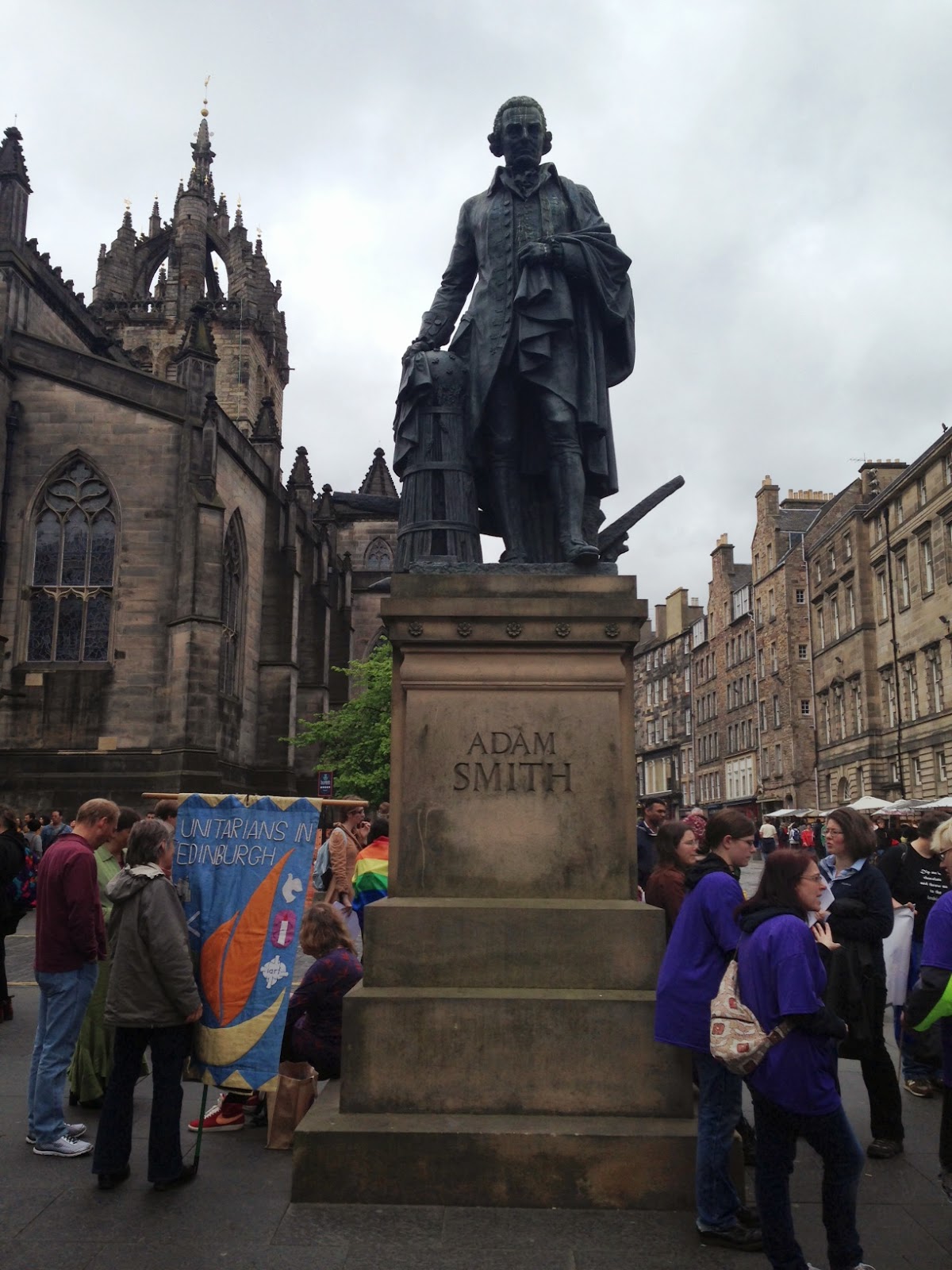
    Adam Smith, of Wealth of Nations/Invisible Hand fame. He taught at Glasgow University (about an hour from here) and gave public lectures in Edinburgh on logic and philosophy.
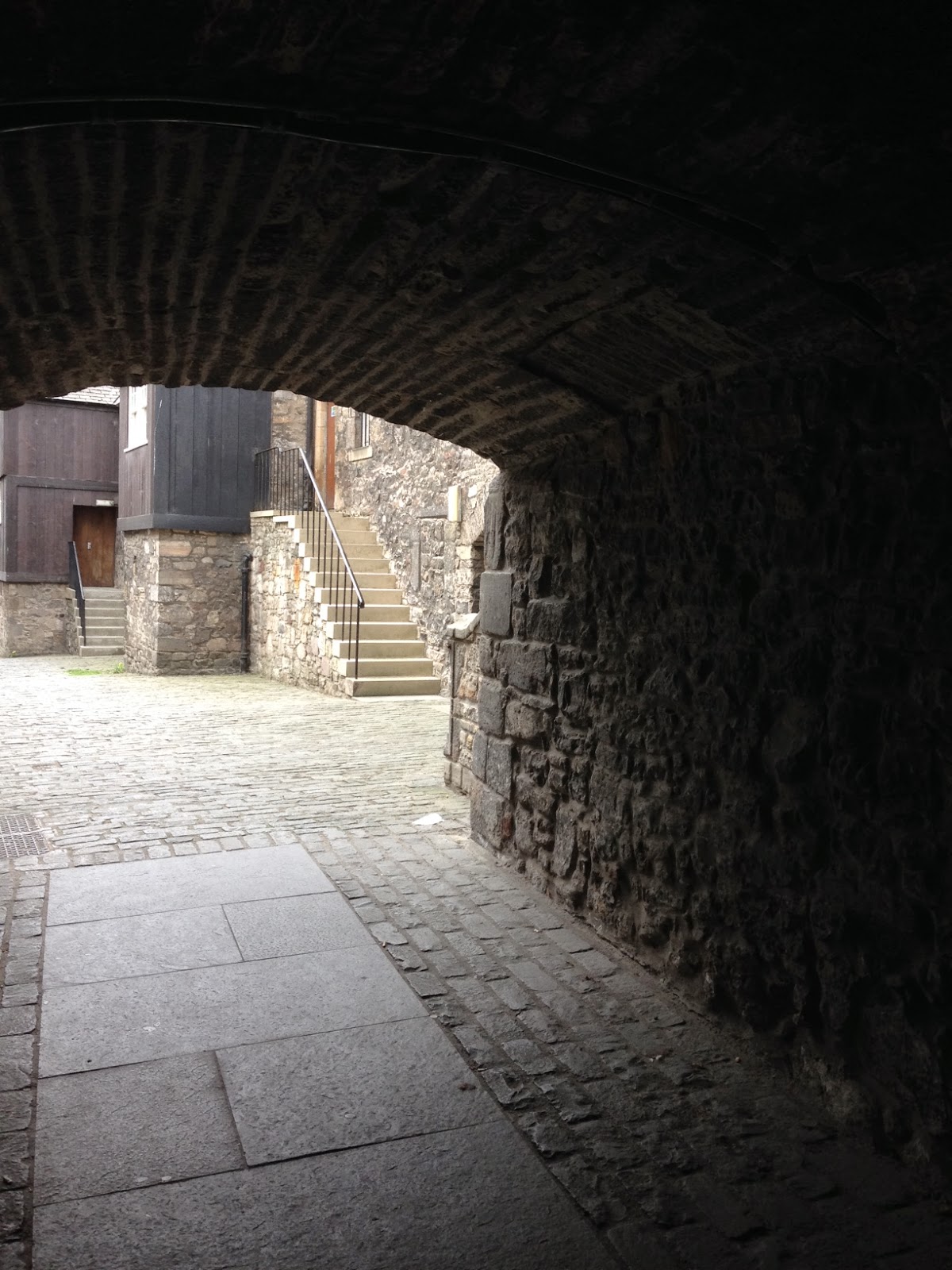
    Dan thought this looked like something Jack the Ripper might have liked! It’s called a “close” – and along with “wynds” they are all over this town – little nooks and crannies between buildings that may or may not lead somewhere else. There are often cute little restaurants in them though.
    Nothing in particular we just liked the look of this side street.
    Same as above.
    A cafe where JK Rowling wrote the first Harry Potter book. Her sister lived in Edinburgh and she came to stay with her after her divorce in the early 90’s.

    The one museum that was on our list was the National Museum of Scotland. It was also free, and huge. Five floors and a wide range of exhibits:

    • Natural World
    • World Cultures
    • Art & Design
    • Science & Technology
    • Scotland

    We only focused on the Scotland sections, from about 500 AD to 1800 AD and still spent about 2 hours there! We’re both interested in Middle Ages and Renaissance periods of any culture, and the backdrop of the Stewart dynasty here was pretty interesting. Most of those Kings – plus Mary – were children when they got the job – babies in some cases – where regents ruled for them until they were of age. Then died young either in battle or killed by some kind of court or family intrigue. As I recall, most were dead by 30! Crazy times.

    Dan liked these torture implements. Think I should be worried?
    Guillotine
    It was a pretty impressive modern building.

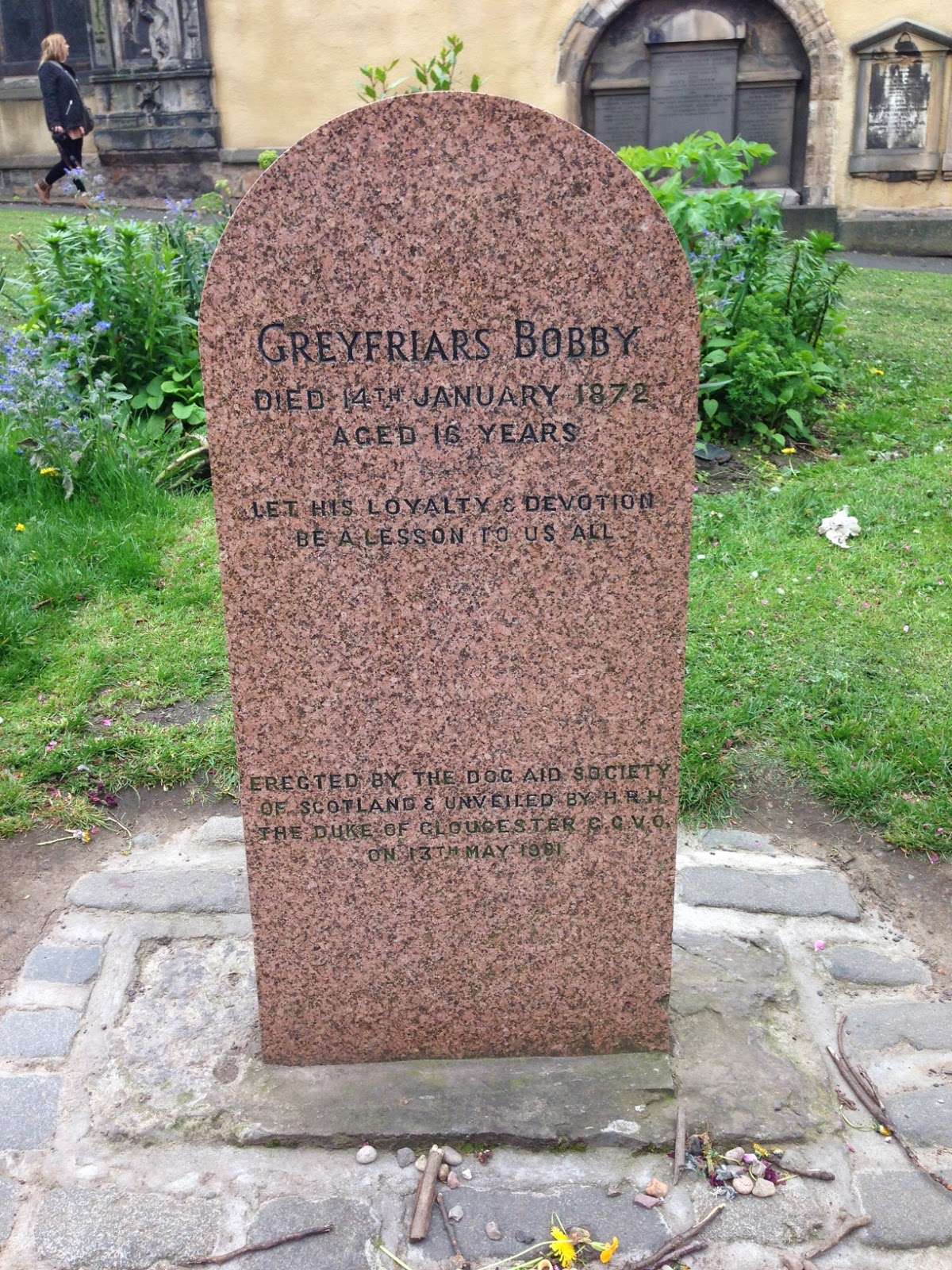
    Across the street from the museum was Greyfriars Kirk, or church. I hadn’t seen that reference used – kirk – for a church since we were in the Netherlands last year. But it’s definitely Scottish. In 1638, “The Covenant” was signed there, a couple of hundred Scottish folk now under English rule refusing to give up the Catholic Church. There’s also a cemetery where, among other people of course, a dog referred to as Greyfriars Bobby is buried. This town is full of lore about this little dog, who sat at his masters grave in this cemetery for 14 years after his death. There was a pub next door and the owner trained the dog to come to lunch at a 1pm bell, so that dog got to be well known in town. Apparently there was a Disney movie about it that we missed! Anyway, that pub is now called Greyfriars Bobby, and there’s a statue of the dog in front of it. We didn’t get a picture of it because there were too many people standing around it getting their pictures taken with it.

    “Let his loyalty and devotion be a lesson to us all.” It’s a sweet story.
    You can’t tell in this photos, but those people to the far left are each gathered with their Scottish Terriers – most of them black like Bobby. There were about 6 of them.
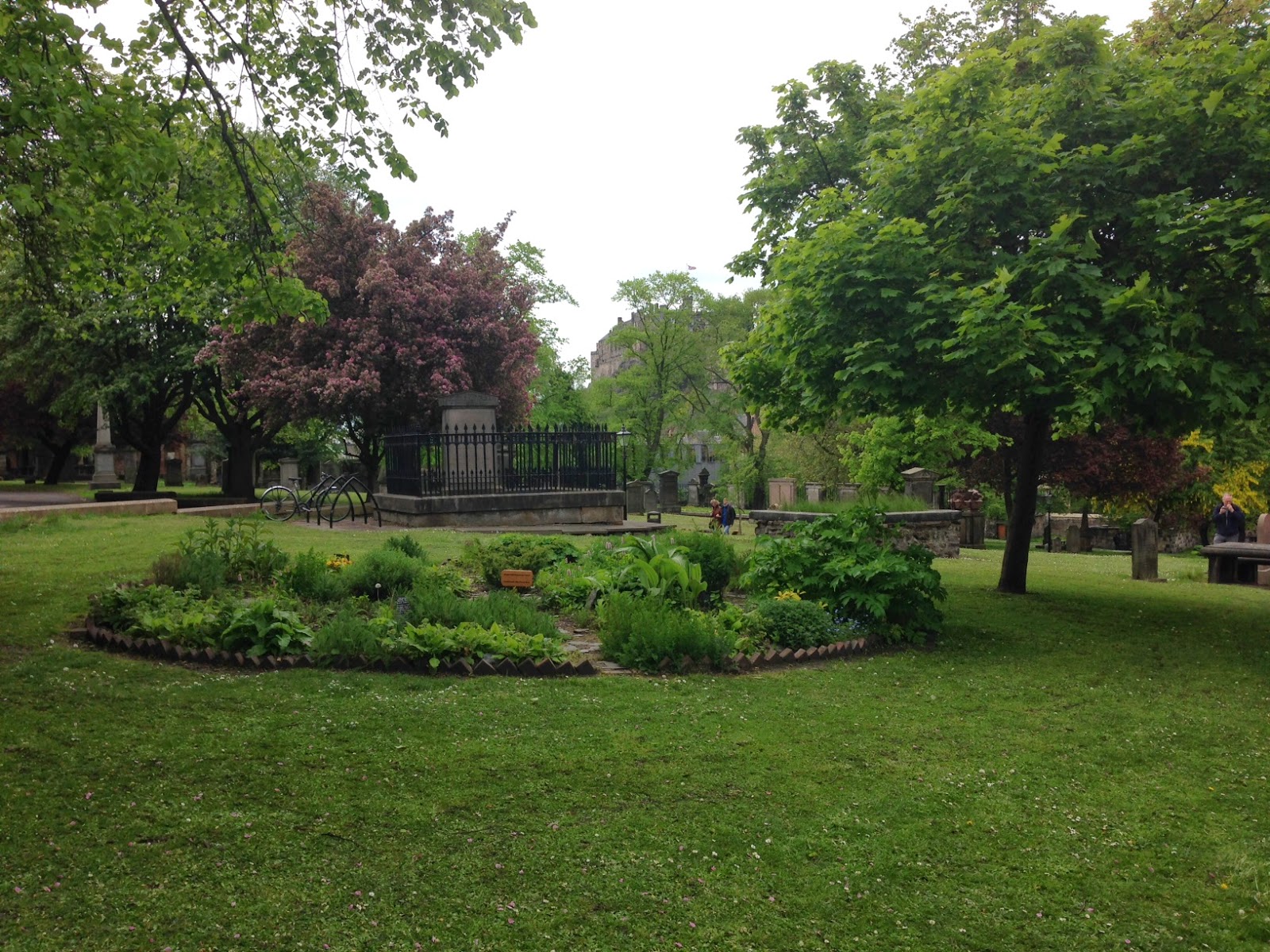
    More cemetery.
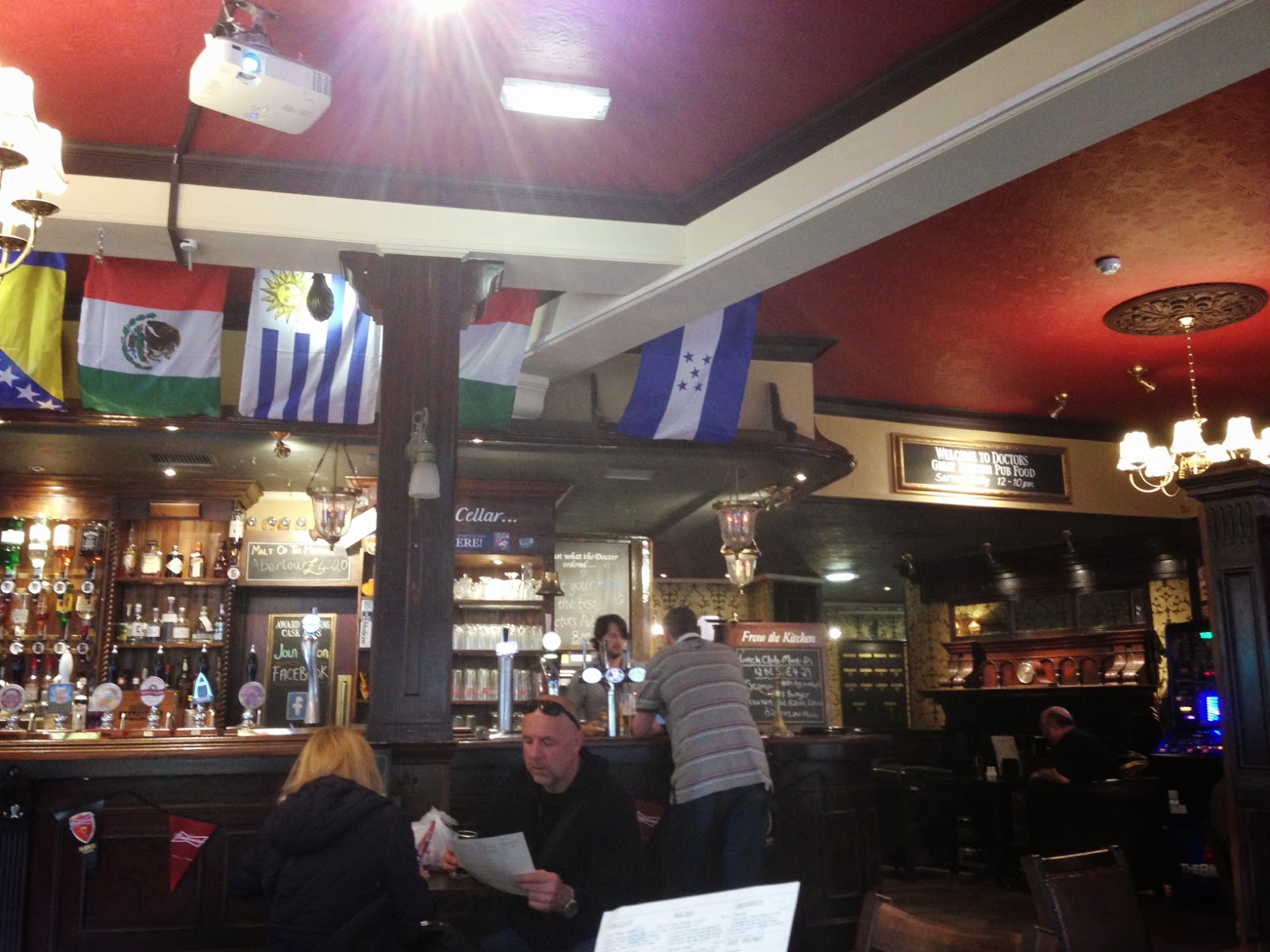
    Lunchtime. It was called Doctors I think, and was off the tourist path closer to the University of Edinburgh, which has a good medical school.
    The top one was mine: ox cheek pie. It was delicious and in the most puffed up pastry I’d ever seen. Dan had fish & chips below and it was also a huge piece of cod. With curry sauce!


    Looking back down the Royal Mile from Castle Hill. The building on the left with the white cap is the Camera Obscura and World of Illusions. More on that to come.
    The outside of the castle – Edinburgh Castle, that is. It’s a massive complex, more like a small village behind walls really. We didn’t go in. It was a pricey ticket, the reviews on TripAdvisor were mixed and we had other things on our list. Cool looking from the outside though.

    Next we went to the Camera Obscura and World of Illusions. Camera Obscura has roots dating back to Aristotle. In today’s language we’d call it a skycam. With a pinhole and arrangement of lens and mirrors, it projects what’s going on outside inside. They were big during the Renaissance, artists used them to draw from. There are only 10 left in the world. One of them is in San Francisco, by Cliff House, and I’ve been to it many times. Dan had not. The one there is simple – just the obscura and a few holograms. This one here had 5 floors of “illusion” stuff leading up to the camera. It was very hands on and lots of fun. Great for kids, or the kid in all of us. We were there for 2 hours!

    One of the first things we encountered was a maze of mirrors. For the most part you could find your way around – just look for the space with no fingerprints! – but it was still trippy to look at.
    This was a walkway with mirrors and one set of lights in constant reflection.
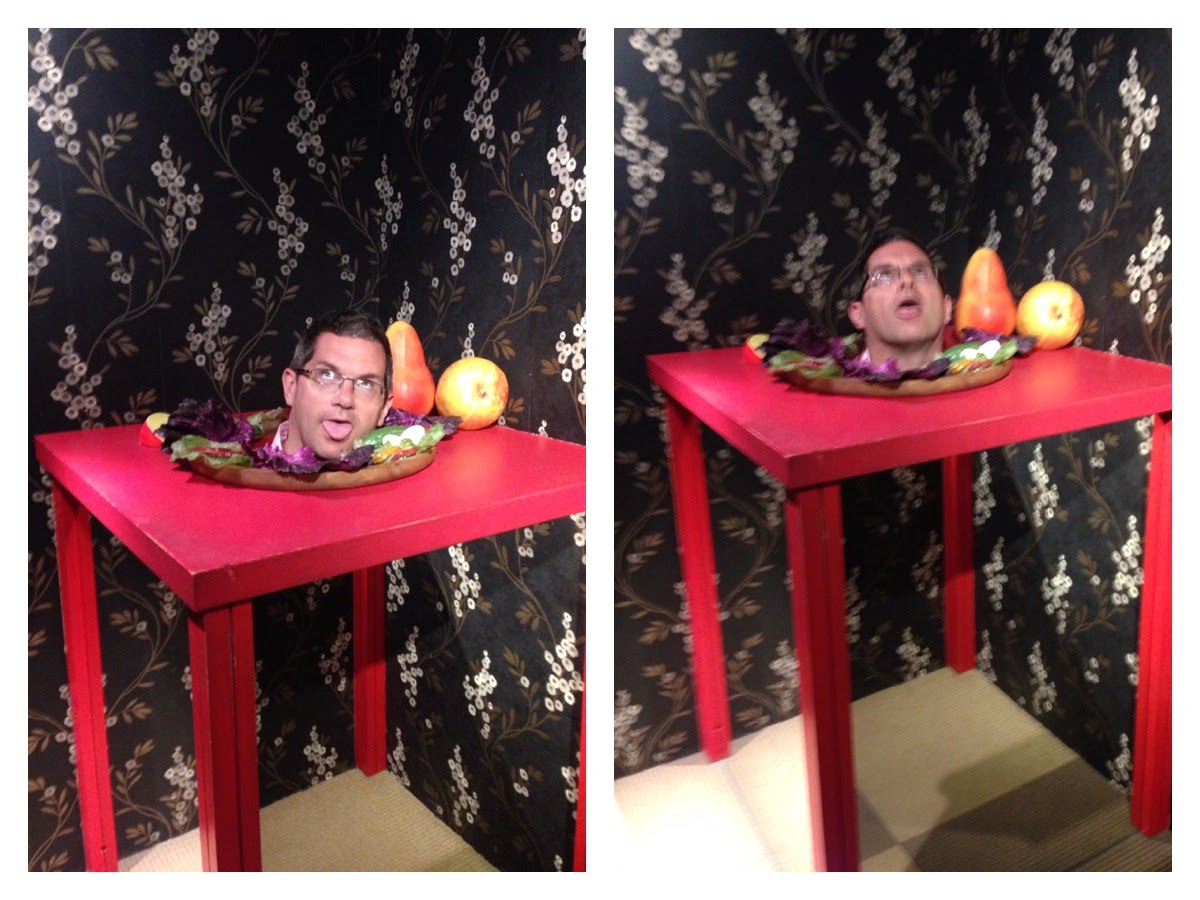
    My turn to be goofy. You walked under this table from behind. There are mirrors aligned with it that create the illusion there’s nothing beneath them.
    This was a strange little station where two people sat on either side of like a two-way mirror, and with a knob you could blend the images of both parties.
    The face in the cylinder in the middle is being reflected from the landscape drawing.
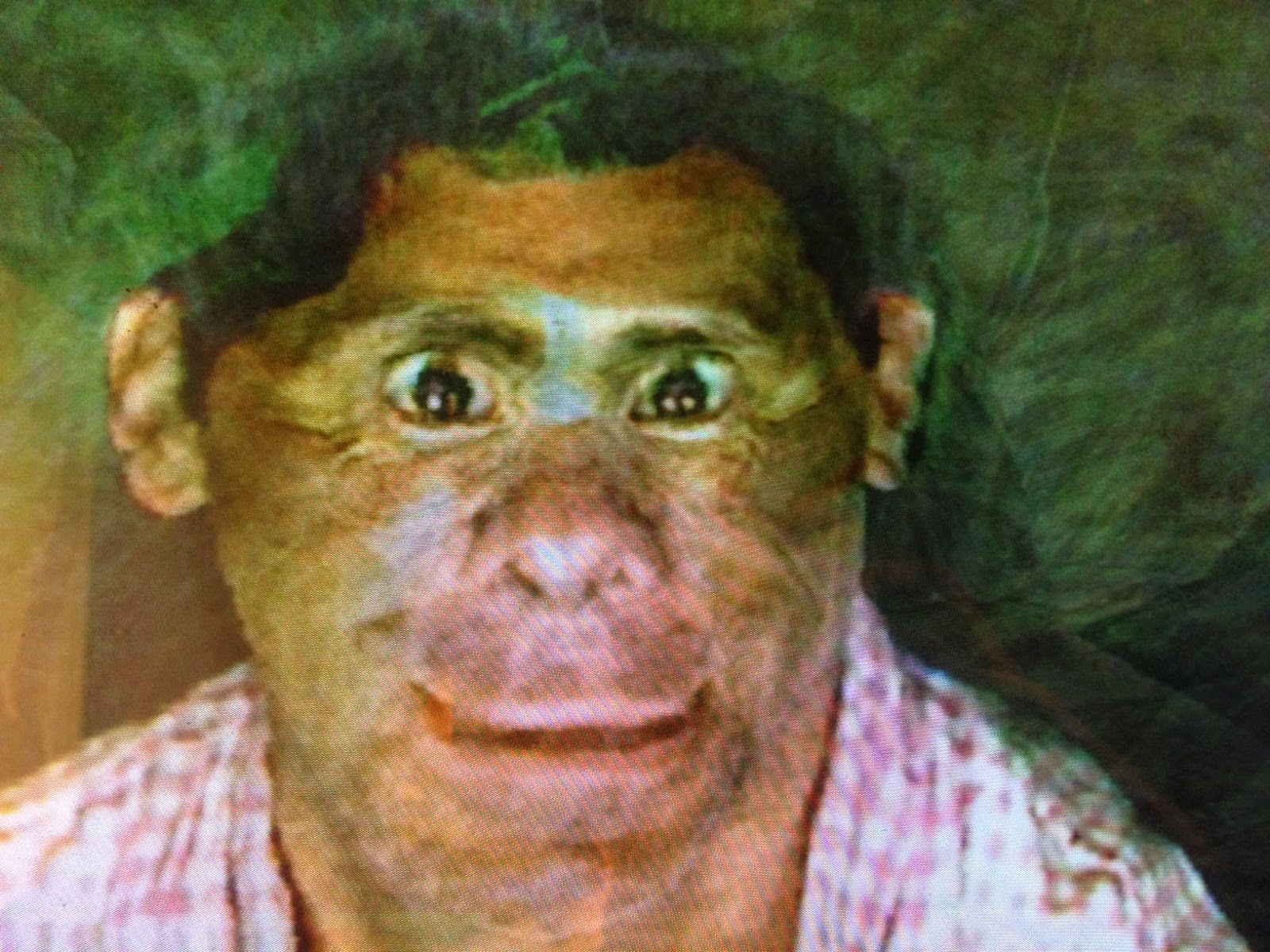
    If I were a monkey. This contraption took your photo and asked for basic stats – race, age. Then you could select different versions of yourself to transform into. Monkey was one. Another was baby; I don’t remember the others.
    This was my favorite. That cylinder of lights is spinning around you. It looks tame enough standing outside, but as soon as you walk in you COMPLETELY lose your balance and it becomes an E ticket ride. It was mind boggling.
    There were several Escher references here that reminded us of “Escher and the Palace” which we did in The Hague last year. They had this, too – only there you had to pay to have your photo taken. Here you could get another tourist to do it for free, so we took turns with the two women who were in front of us.
    More goofy time. But I loved Dan’s instinct to drop down, and his expression!
    Views from the outside platform on the 6th floor.
    Looking back down The Royal Mile.

    Next we took the long way around to Holyrood Park, which is at the very bottom of the Royal Mile and very close to our flat. We crossed over and walked along the edge of New Town to get there to see different things. Really pretty parks and buildings, and the terrain of this town creates a lot of beauty. We really like Edinburgh!

    The national Church of Scotland.
    They make great use of the valleys.
    The trains tracks and station run in the valley between Old Town and New Town.
    I loved this relief map, which gives you a better idea of the terrain. That’s the castle top right, Old Town and the Royal Mile is that hill leading up to it. Everything on the left is New Town. The hill in the distance on the left is Holyrood Park, our next stop.


    Monument to Sir Walter Scott. Looks a lot like Cologne Cathedral! 287 steps up to the top. We passed.
    A random cemetery along the way. This tombstone honored Scottish-Americans who died in our Civil War. Yes, that’s Abraham Lincoln.


    This was a path leading down to the train tracks.


    Holyrood Palace, home of Mary Queen of Scots before she was shipped off to the Tower of London. The current Q of E stays here several weeks a year. We hadn’t planned on going in, and it was closed when we got there, so this was as close as we could get. If you look Really Carefully you can see Scottish guards standing on either side of the door. One of the things we loved about Edinburgh is there’s always some guy in Scottish uniform playing bagpipes really well. It creates a great ambiance to the visit.
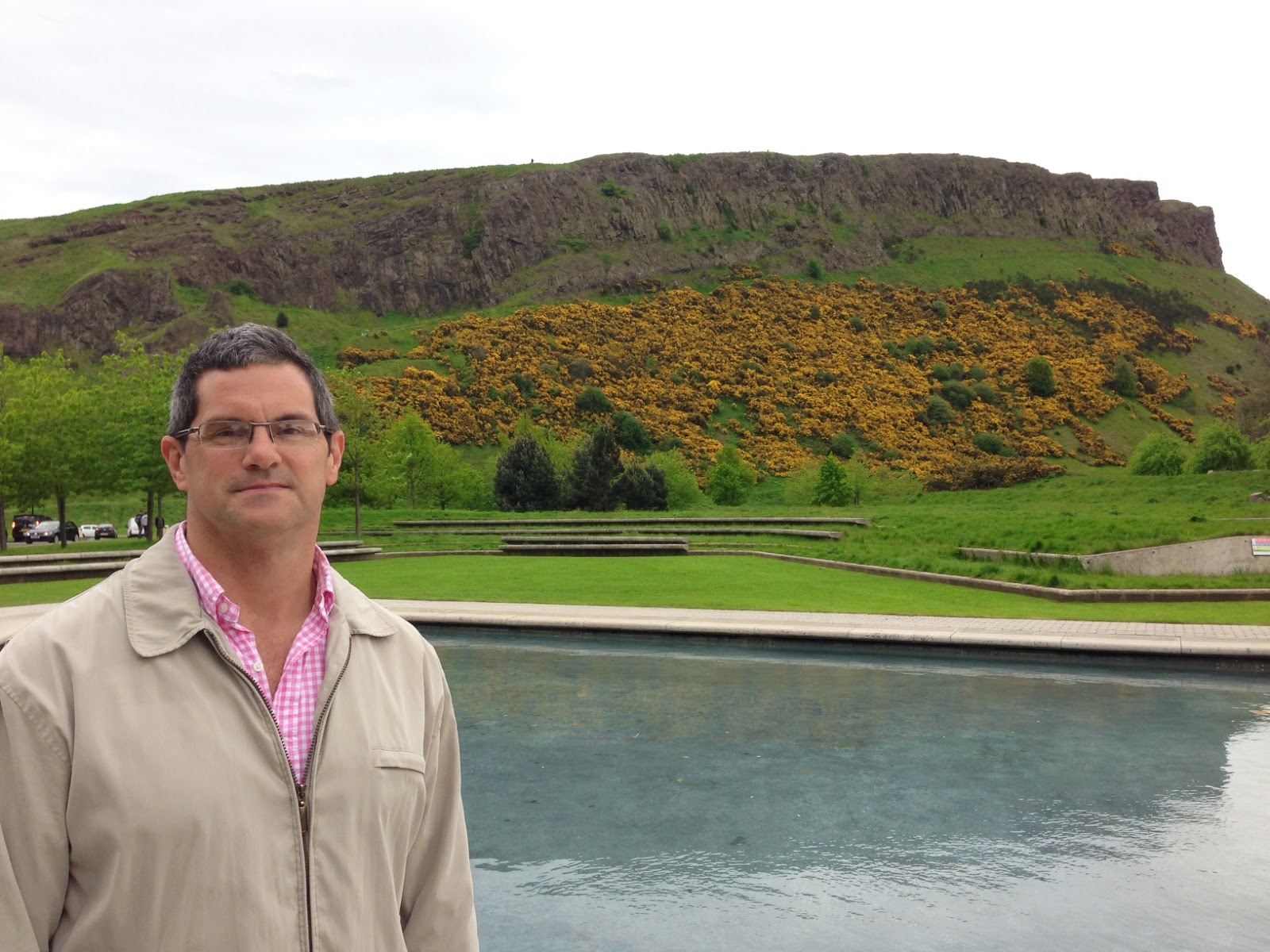
    Across from the Palace with Holyrood Park in the background. The summit of that hill is called Arthur’s Seat, at 824 feet. We chose one of the lesser peaks due to time (and energy!) but were very satisfied with the views.
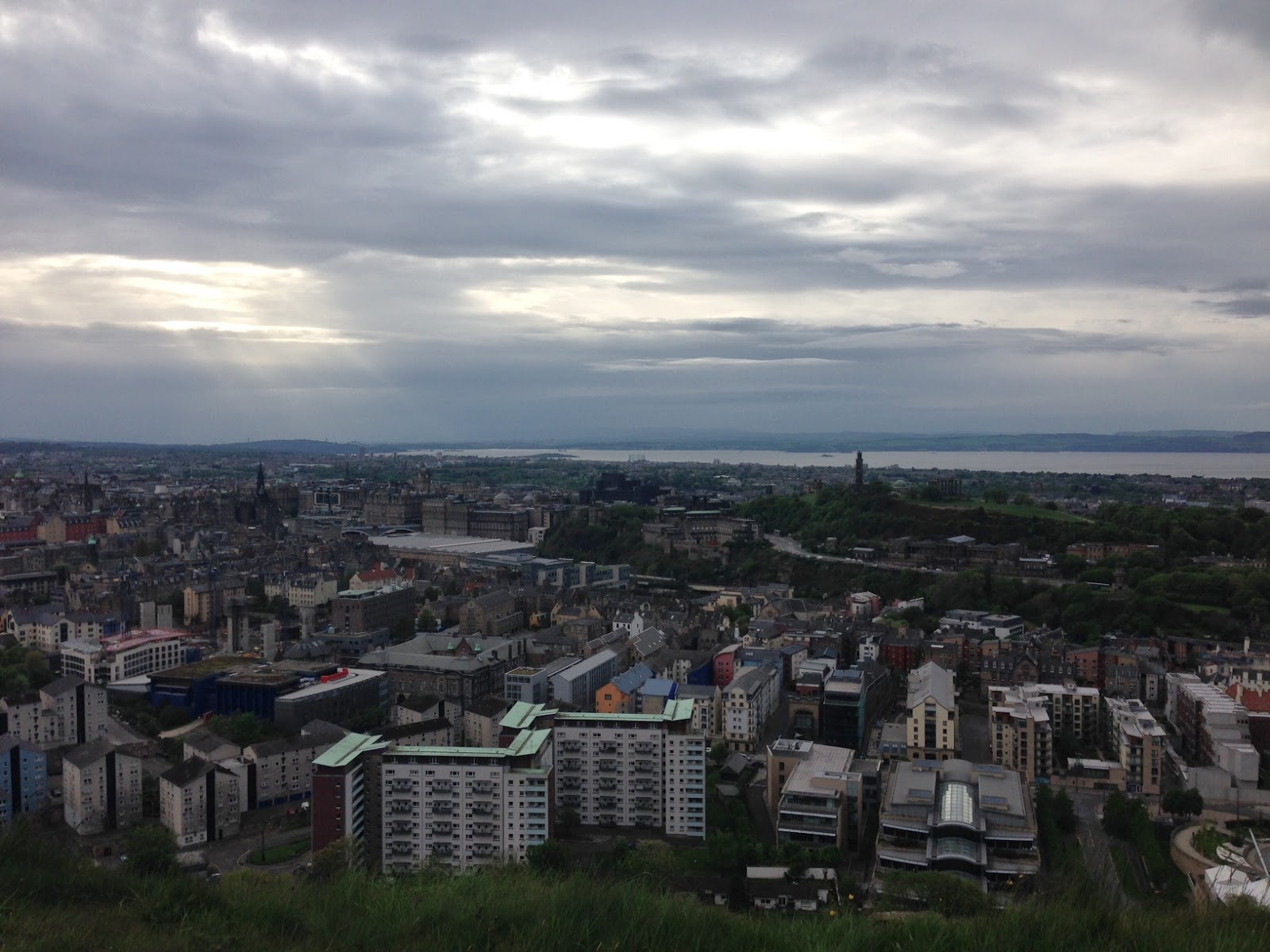
    That body of water in the background is the Firth of Forth. A firth is an estuary, and Forth is a river; water flows through from the river to the North Sea.
    That look down was such a straight edged drop. Instant vertigo!
    Holyrood Palace left of center.
    The white thing middle left is the train station between Old Town and New Town.

    We had dinner at a place called Canon’s Gait just up the block from our flat. The specific area we’re in is called Canongate, which was its own little burgh before it was annexed. Dan had a steak and ale pie, which was good but he wasn’t very hungry for some reason so we’ll have those leftovers for breakfast this morning! (Yes, I’m writing this the next morning because I was horribly tired for some reason by the time we got in and settled. All I did was prep and upload the photos to the blog, then did all the writing over coffee this morning. Feeling much better!) I had chicken breast stuffed with haggis, so I could say I tried it but if I didn’t like it I didn’t have to deal with a whole meal of it. It was OK. I did eat all of it! The mash of turnips and potatoes was actually quite good.

    We were back pretty early in comparison to some days – about 8:30 – but having started out about 10am it was definitely a full day. I was in bed by 11pm; Dan stayed up watching X-men First Class, a show called Grand Designs – British remodels! – and who knows what else. He’s still asleep. It’s about 7:30am here. Today is a day trip by bus to the countryside.

    One final comment about pronunciation. “Edinburgh” is more like “bread-n-butter” without the first B or final R. Our belief is that New York’s use of “borough” is a more phonetic spelling of how it’s pronounced, but comes from the same source. Just a guess.

  • Day 9: Paris to Edinburgh

    We woke up before 6am naturally; the alarm was set for 7 just in case. We were ready to go. We get like that. When we’re done we’re done and we want to move on. And we were done with Paris sometime yesterday. As amazing as it is, 5 days was definitely enough at one time. We didn’t get to do everything we wanted to do, but are still ready to move on. We will be back! Some final musings:

    • We both agreed our favorite thing was The Louvre. People had prepared us to not like it I think. Many, many times we heard that d’Orsay was better, that Louvre was overrated. Not for us. Some day we will go back and do the other 3.5 hours (at least) that we had to nix out of our Louvre plans on this trip. The building itself was worth studying, and the vast collection is impressive even if Egyptian Antiquities is not your thing!
    • Scarves: we decided this is the easiest tell to determine if the passer-by is local or a tourist. If they’re wearing a scarf – man or woman – they’re likely local. The French love their scarves.
    • We still want to know what all those people who live in the center of Paris do for a living. Holy cow is it expensive. We stopped at every real estate office we passed to look at houses – or in this case flats – for sale (we do this everywhere we go, domestic or foreign), and rarely saw anything for less than the American equivalent of $1000 per square foot.
    • We thought the metro/train system was impressive. With the exception of to/from Versailles, we never waited more than 3-4 minutes for the next train, and never “had” to walk more than 3 blocks or so to get to a station. We often chose to walk more than we had to – either because we just prefer it, or to avoid a transfer, but you rarely have to walk very far if you don’t want to. It very much reminded me of NYC subways, although possibly with even more connections. I wish more cities in the US would do this.

    I remembered to take pictures of the flat before we walked out.

    Where we had breakfast every morning; where I wrote the blog every night.
    This had a closet out of view on the right; we ended up moving the bedding to the other room and used this whole room as a closet / staging area.
    Sink and shower, the toilet was across the hall in a small enclosure (can’t call it a room!) by itself.
    Living space, which we ended up using as the bedroom (see next photo), although Dan used the desk for work.


    The hallway from the entry; the room we used as bedroom is to your right out of view. Based on the MANY we looked at on AirBnB, this was a decent sized if not large apartment by Paris standards. We’re pretty sure the host lives here. He’s been in Spain on business this entire time – comes home late next week he said – but has been extremely responsive and accommodating. We will write a nice review for him and the flat on the website.

    It took us about an hour to get to Charles de Gaulle airport by train, just one transfer. We made it through customs and security pretty easily. BTW, a few comments on the practicality of packing light:

    • Like last year’s trip, we are both getting by on 1 roller carry-on and 1 backpack each. Since my arrival at the train station in Cologne last year and having to haul them through turnstiles to use a pay toilet and I thanked Dan for requiring that I go light, I will never travel internationally any other way.
    • I thought about it several times again today – going down 6 flights of stairs in the flat, or up and down stairs in train stations, or the many narrow passages in airports where there are bars of various kinds to get through, I’m thankful I don’t have, for example, the big suitcase I take on my Columbus trips. It’s somewhat necessary there because of the kinds of clothes I’m packing – combination of work and play for typically 5 days/nights. But we made conscious choices to just not pack that way on these trips. There were restaurants in Paris we couldn’t get into because we didn’t have the right clothes. Oh well. We don’t feel like we missed much.
    • Like the apartment in Amsterdam last year, we made sure each stay this year had a washing machine available. We didn’t use it in Paris (that’s the small unit to the right of the shower), but we definitely will in Edinburgh. So for an 18 day trip, we each just packed 5-6 shirts, 2 pairs of pants, etc.. We wear each at least 2 days before washing, it totally works. As long as you don’t sweat too much – and I don’t sweat anything like I used to before I dropped 50 pounds – it works great.

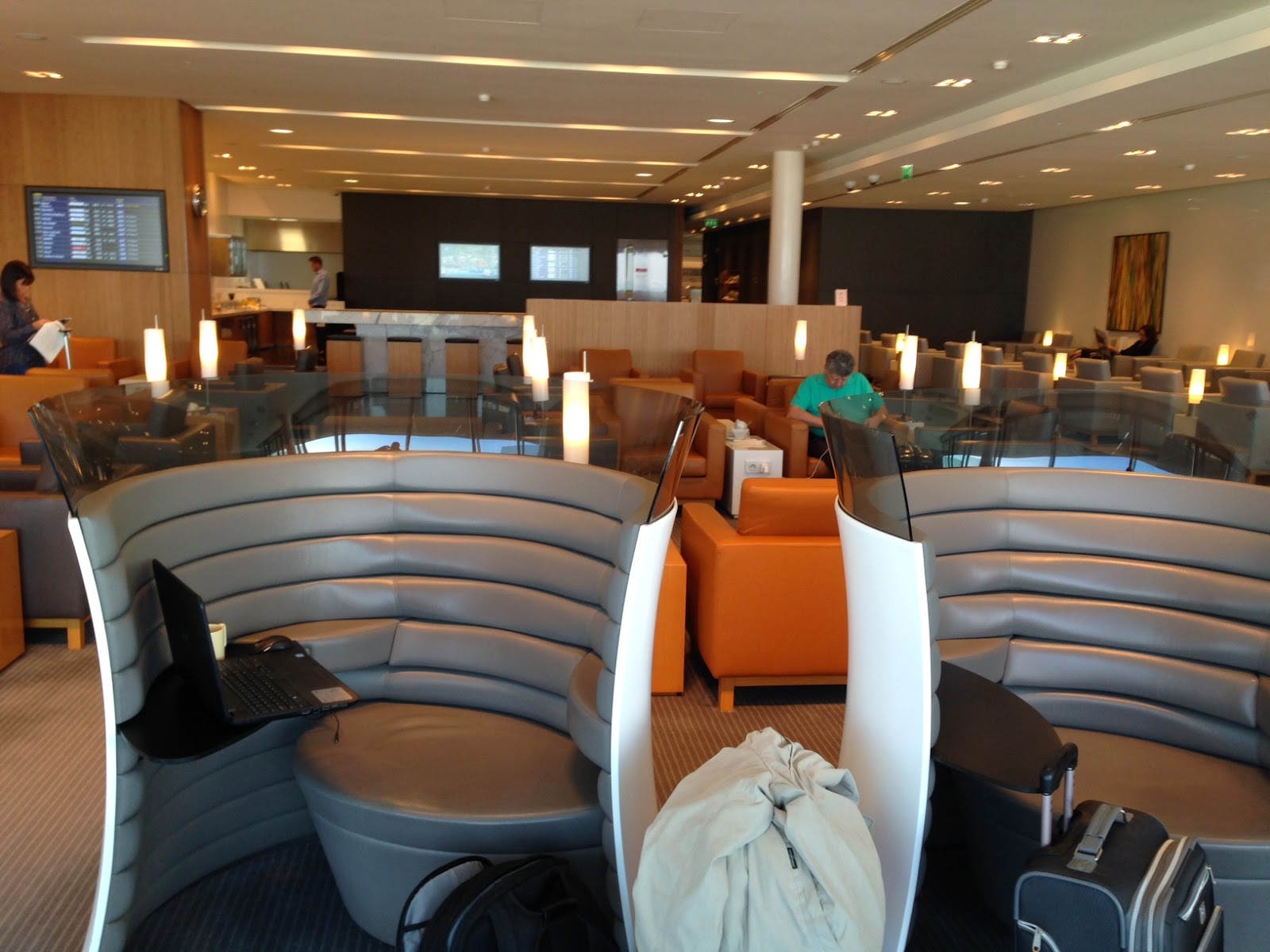
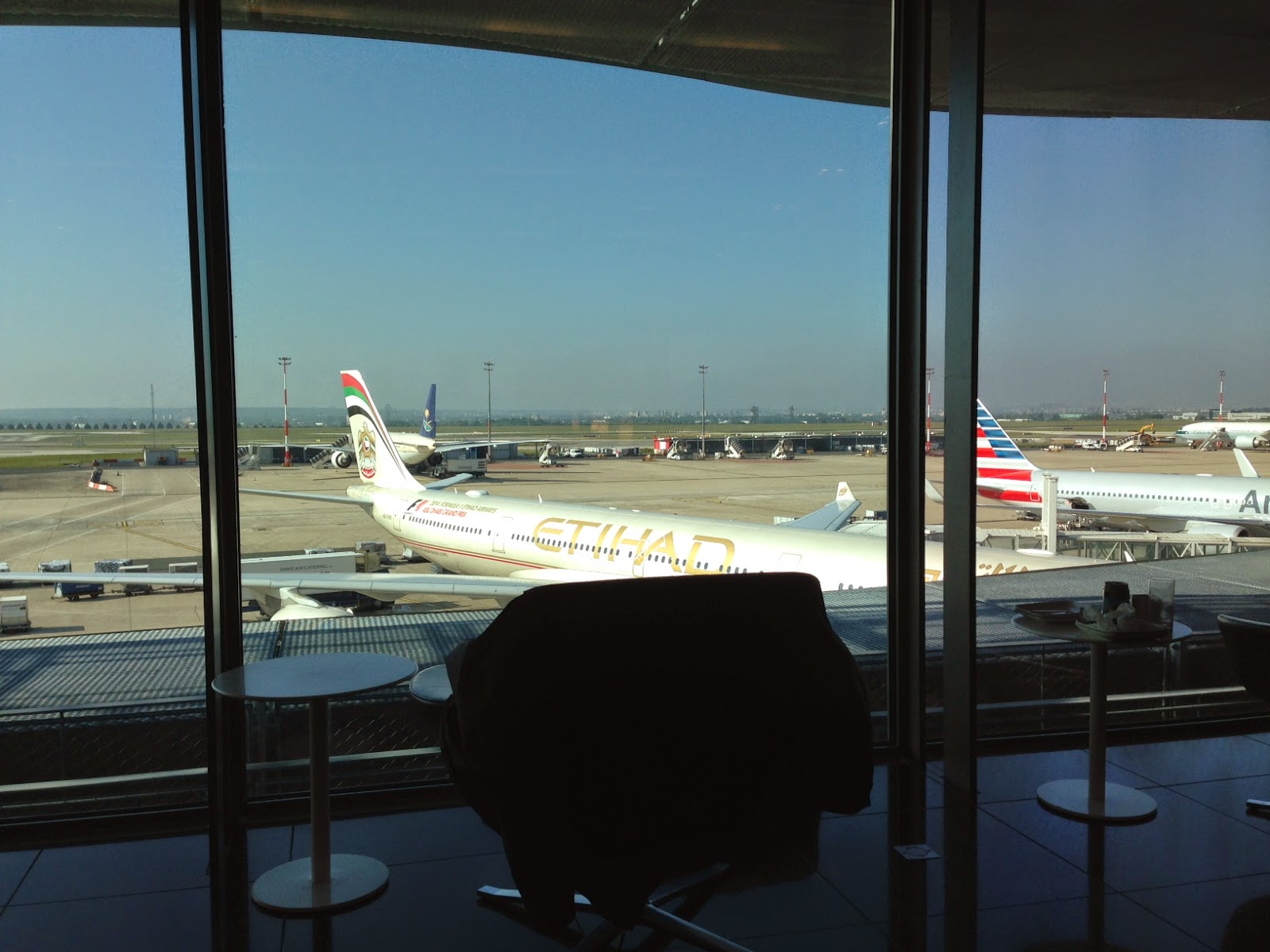
    I’m writing all of this from the Cathay Pacific lounge at CDG airport. Dan’s British Airways status gets him into lounges of any airline that are part of the OneWorld alliance and he wanted to check this one out.

    We sat in these little cubicles, each with its own electrical outlet for recharging devices. That’s my laptop there where I wrote up to this point this morning. Dan is missing because he was taking a shower.
    The view from where I was sitting.
    The chow line, all included. We didn’t eat much when we left the flat because we knew we could eat here.

    We boarded shortly after I took those pictures. London Heathrow was a blur of customs and security – again – and we made it to the British Airways lounge there just in time to eat lunch quickly and get to the gate. Theoretically it was a 2 hour layover but it sure didn’t feel like it.

    We landed in Edinburgh about 2:30pm and took a bus from the airport to the historic center where we are staying. Here it is pronounced in 4 syllables, not 3 (ed-in-bur-uh), it’s the capital of Scotland and someplace I would likely never have thought of visiting if Dan hadn’t brought it up. He had heard about it when he was at Penn because of some exchange students and it sounded interesting to him. We have a flat tucked away on the Royal Mile, the main drag that runs through Old Town, which is listed as a World Heritage Site by UNESCO. (BTW, we hit several UNESCO sites in Paris, including Notre Dame, I just didn’t bother to list them like I did last year. If you don’t know about UNESCO – and I didn’t until last year’s trip, thanks Greg & Robert!, follow the link to check it out.

    Here are a couple of shots Dan took from the bus. We had front seats on the second level so a great view.

    Notice the cars are driving on the left.

    We found the flat without any problems. It is very cute, nicely laid out, pictures to come later. We’re doing laundry now so it’s a little trashed :) We identified a small problem when we first arrived: we do not have the right electrical adapter. The Europe adapters we’d been using (Germany, Belguim, Netherlands, France, last 2 trips) also worked at Heathrow so we assumed we didn’t need anything different for UK. Apparently not. I got in touch with our host and he directed us to an interesting store up the road that we were able to get one from. That in and of itself is a whole other story I won’t get into here :) Let’s just say that the way the store was set up, “browsing” wasn’t possible, and every time they brought out something to see if it’s what we needed, it was UK to US; we needed US to UK. But we ‘re all plugged in now. We got one (as opposed to 3 of the others we have!) and will just charge one device at at time. I believe that’s called a first world problem.

    We also now have 3 currencies on us: dollars, euros, pounds. It’s odd.

    We went walking around for a bit to see some of the town and figure out what we wanted to eat. We figured while we’re here we’d do fish and chips at some point, something meat pie like, and something Indian. Knowing we get more of all that in London! That’s so far was Scottish folk seem to like. And something call haggis. I can’t believe Dan actually told me what was in it; he had it in San Fransisco once. He usually doesn’t do that. I’m thinking I’ll pass.

    Here are some other things Edinburghers seem to be into just based on the shops we saw many multiples of:

    • Cashmere
    • Whiskey
    • Fudge
    • Kilts (duh)

    Here are some of the pics we took as we meandered. We weren’t always sure what we were looking at; we’ll get to know the town better tomorrow.

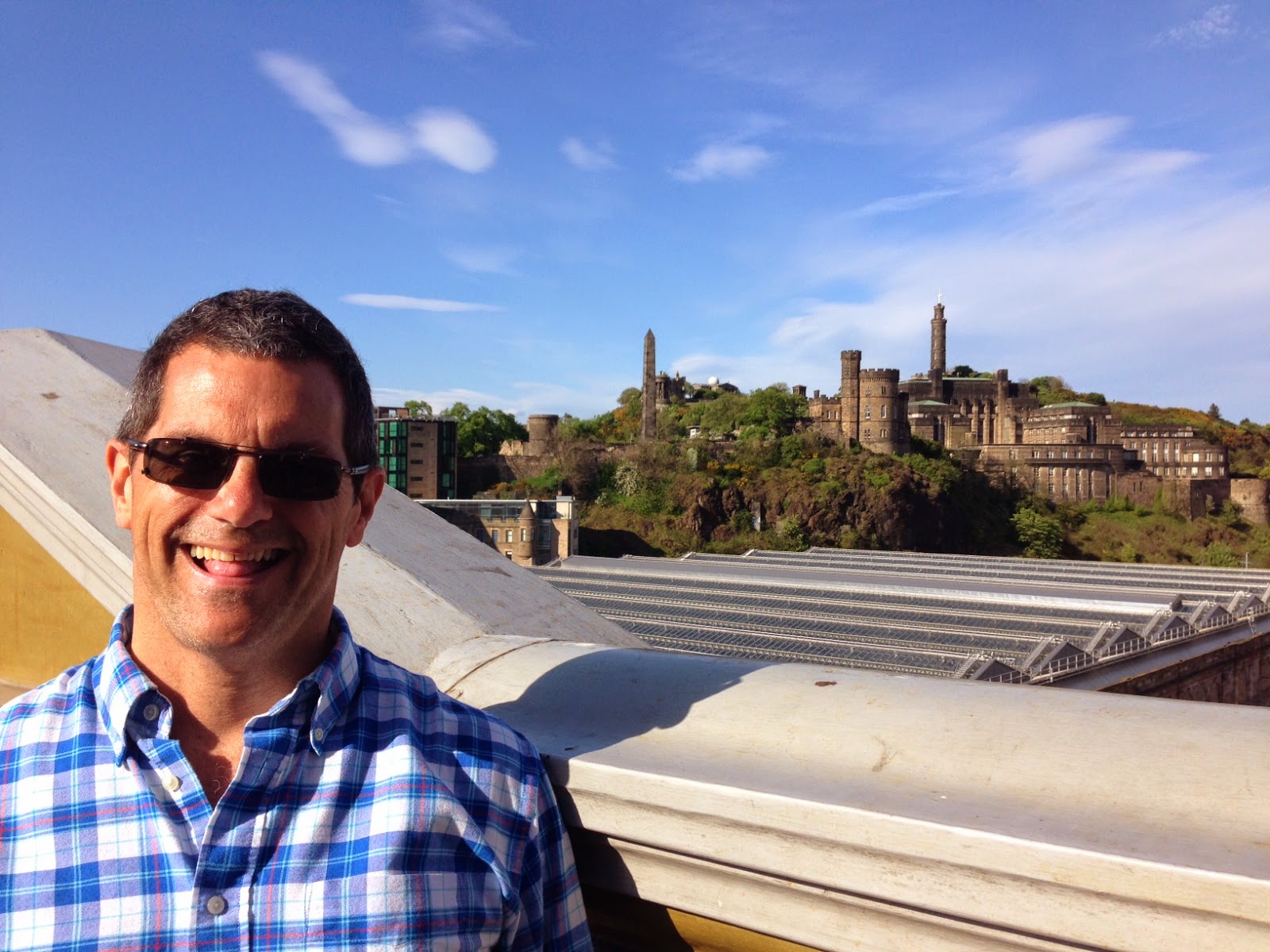
    This was taken from New Bridge. In the foreground is the train station; we don’t know what that is in the back, just looked cool on a hill!
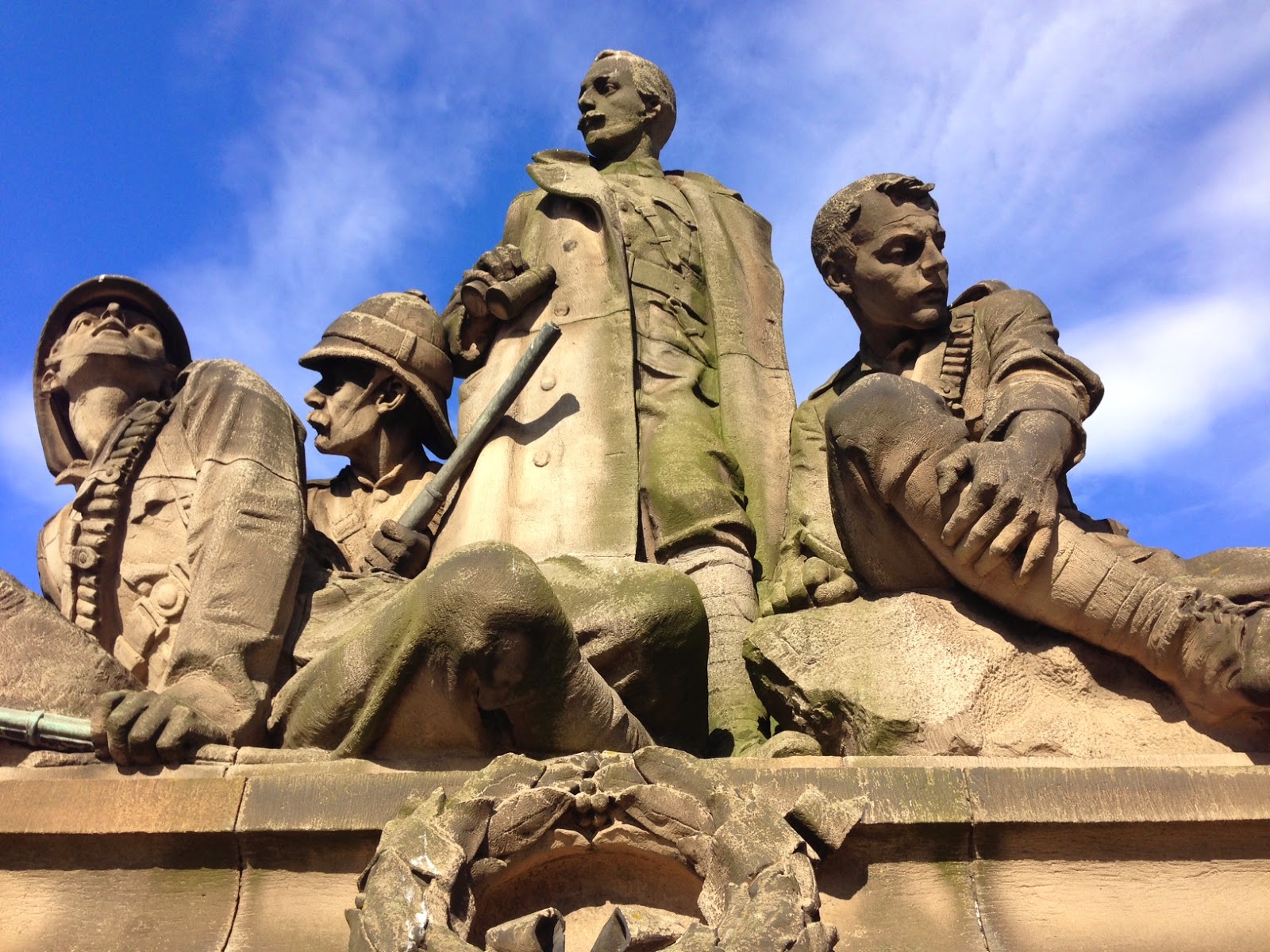
    War memorial (all pre-WWI) on New Bridge.
    We were very surprised how hilly this place is. This is a pathway through town.
    Granted, not like San Francisco hills, we just weren’t expecting it.
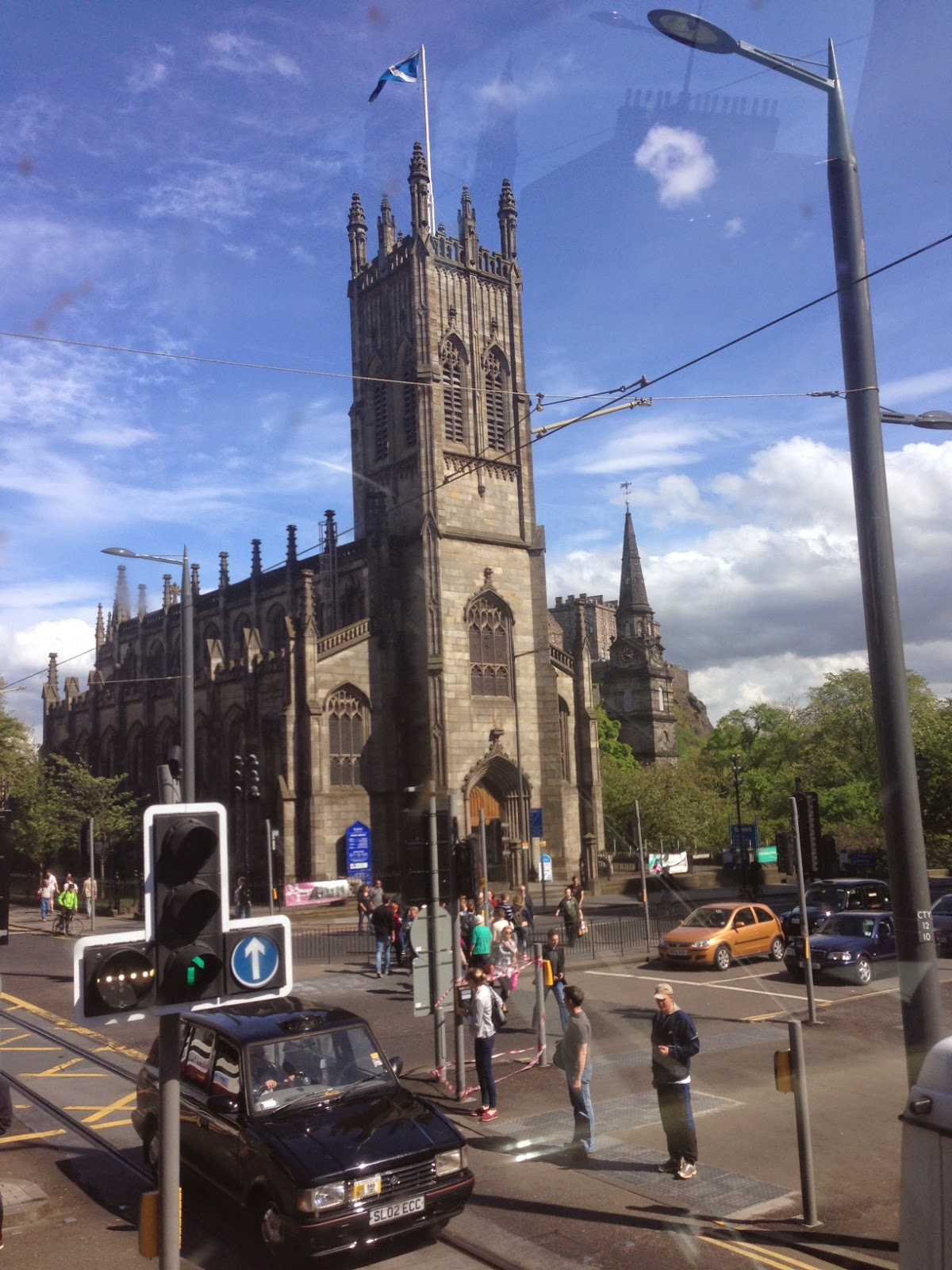
    St. Giles Cathedral, circa 1500’s; St. Giles is patron saint of Edinburgh.


    We found a great little Indian place off of tourist row as we were looking for a grocery store. It was excellent. After dinner, we picked up a few things at the store for breakfast for the next few mornings and came back to plan the rest of the weekend.

    Tomorrow we will do what there is to do here!

  • Day 8: Paris, Part 5: Notre Dame, Musee Rodin, Strike!

    Day 8: Paris, Part 5: Notre Dame, Musee Rodin, Strike!

    It’s hard to believe this was our 5th day in Paris. It went by Really Fast. Dan and I were saying earlier that Normandy seems like FOREVER ago. That was just Sunday; this is Thursday; hard to believe!

    Same routine this morning with breakfast. Dan’s feeling mostly better, we got a reasonable start out, leaving about 9:30am. We had a pretty loose day planned, there was nothing we “had” to do on any particular schedule. We still had some things we wanted to use the museum pass for. As of yesterday we’d gotten our money’s worth – an even score on entrance fees plus quicker entry where available – so anything today would be gravy. But we didn’t want to overdo it with museums because we still had neighborhoods to check out.

    We took the metro over to the Bastille neighborhood, only about a 3 mile trip but farther east than we’d gone before. We wandered around that neighborhood and the one just west of it closer to the center, Le Marais. They were both much more livable than what we’d seen so far; like this is where the “normal” people in Paris lived. We took an early side street and came across a Boulangerie & Patisserie – like we’ve seen on almost every block in any part of Paris so far – but this one was cheaper than any we’d seen. When we’d planned this trip we’d said we were going to eat lunch like a local every day and get something fresh and eat in a park. That hasn’t worked out because we haven’t really eaten lunch – late breakfasts in, early dinners out, and that’s it. Today was the day. We picked up some pasta salad, couscous salad, a fruit flan and apple tart. The lady threw in some bread unrequested! It was less than 9 Euros. (say $12)

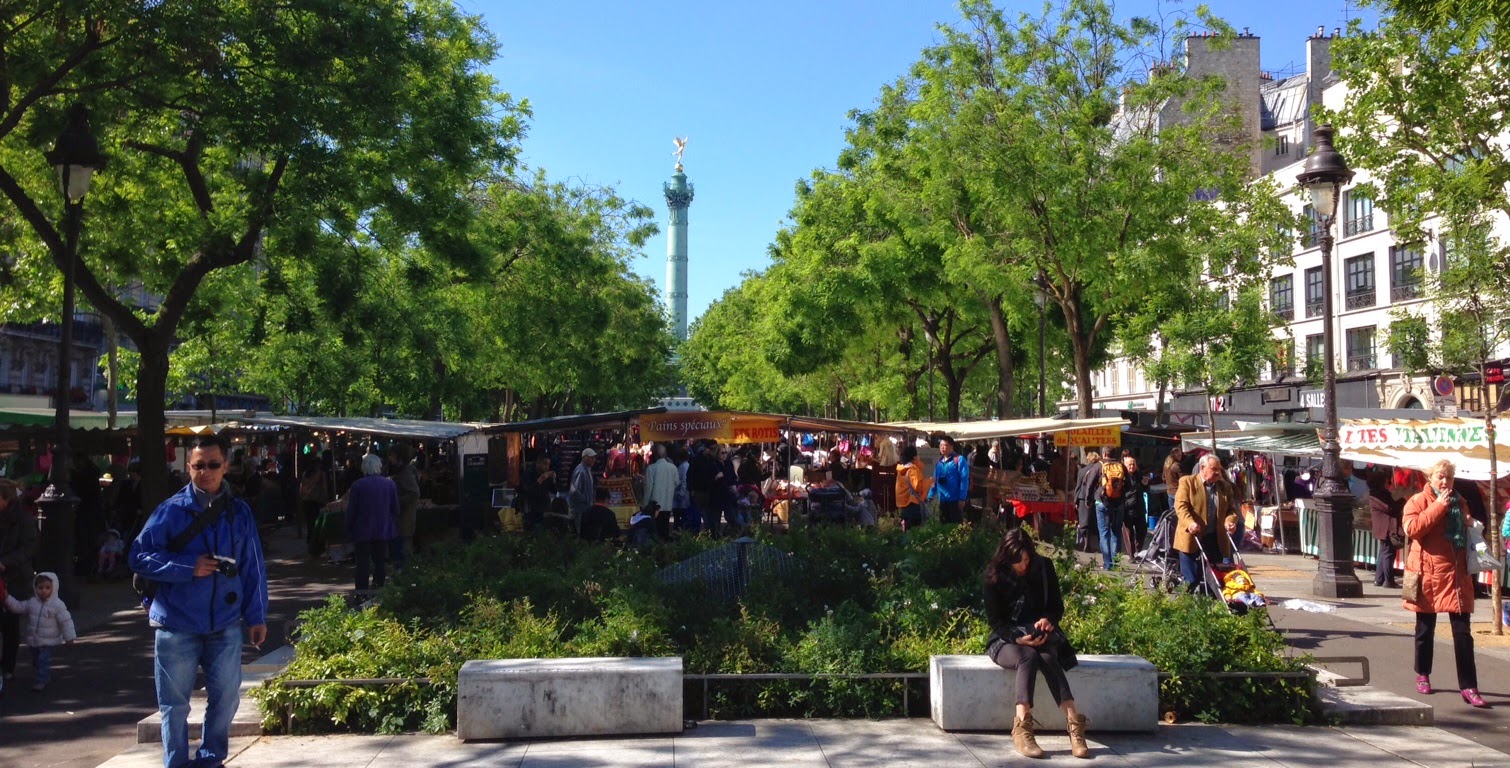
    A block or two away we came across another open market. Few things more dangerous than Dan in an open market. He wants to get everything! He got 4 nectarines for 1 Euro; the guy threw in 2 more peaches. Then 2 .5 liters of fresh squeezed juice. He got a Nutella crepe with coconut. Street vendor crepes are everywhere, it is fascinating to watch them make. Apparently the French love Nutella because that seems to be what all the street vendors use as the base on their crepes. Hazelnut is not really my thing so I just had a bite or two and he had the rest. Seems like we bought something else but mostly I just remember saying “no”! We were already going to have trouble finishing everything before we leave tomorrow.

    The open market with the Bastille monument in the background. That’s where the prison was before the people stormed it during the Revolution.
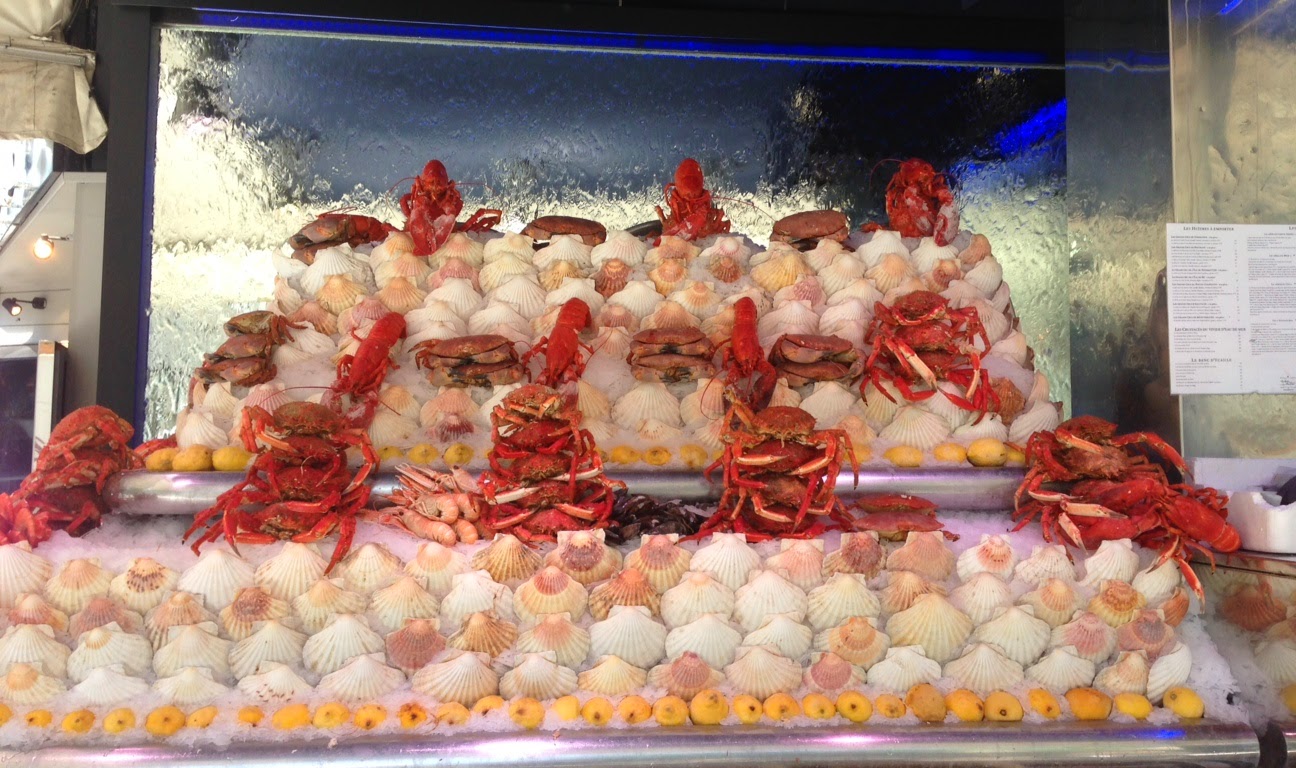
    We meandered over to The Marais and came across this in front of a seafood restaurant that serves as a fish market as well.
    Probably still in the Marais but heading towards the center; this was a building Dan liked across from a cute park; see below.
    King Louis XIII Square. The parks here, even the small ones like this, are spectacular.
    Google maps had us walking into the corner of this curved street where there didn’t seem to be an opening. There was – the doorway of a hotel that lead to its courtyard that lead to the next street. It was, again, adorable. And Google was right! Dan had been saying “it says go through but I don’t see how.”

    Shortly after this we took another random side street that looked cute and came across – surprise! – another bakery. This one had palmiers in the window, and I had just said to Dan earlier in the morning that I wanted to have one before we leave. So I did while I was thinking about it. He took a bite first and said “all I taste is butter” to which I replied: “Exactly.”

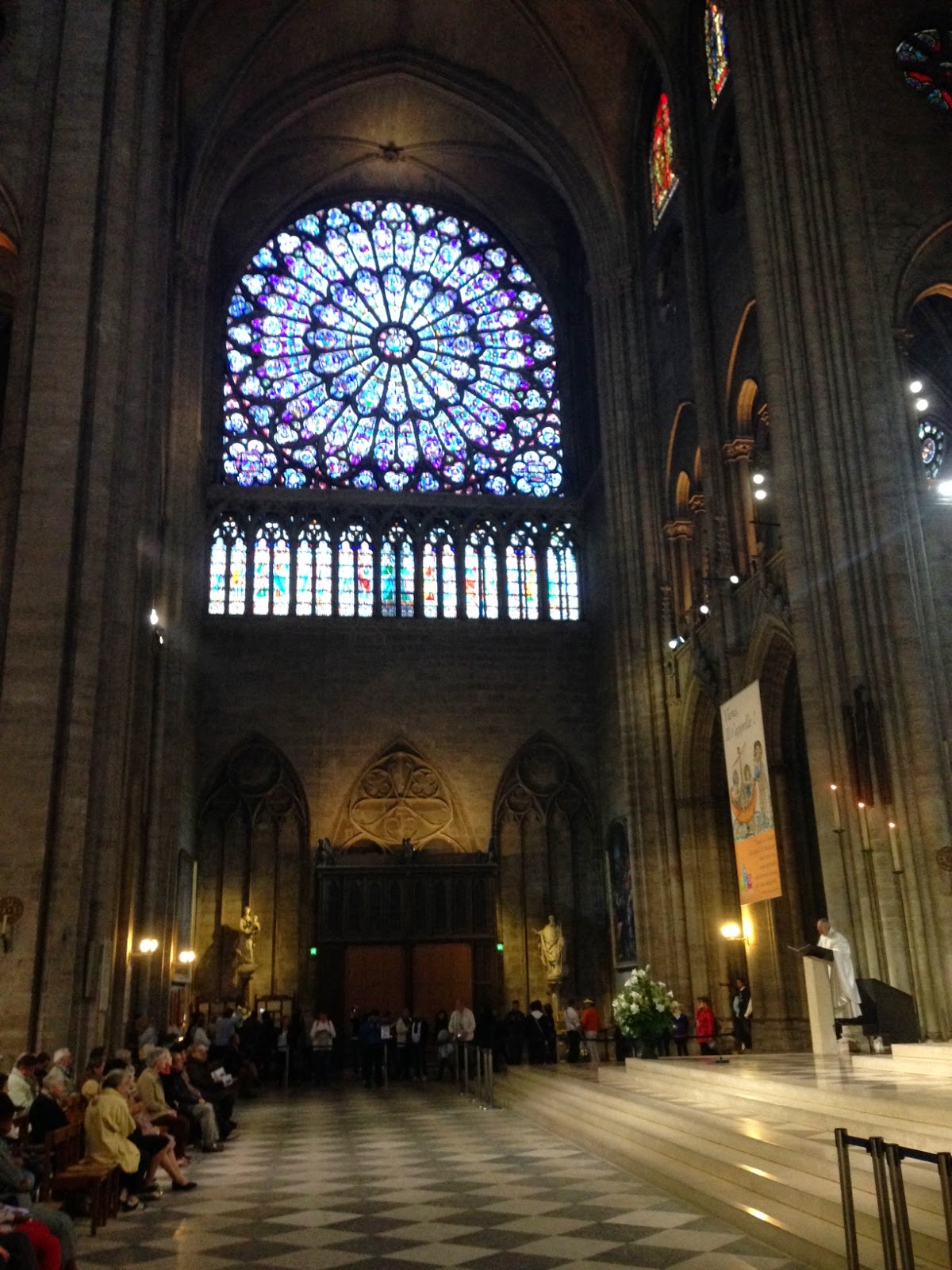
    Our destination was Notre Dame. We’d walked by it on Saturday but didn’t have the museum pass yet so didn’t stop for the tour. Well, today, there were no tours because of a strike. This didn’t really surprise us; the Versailles website had indicated it might be closed today because of a strike, which was why we went yesterday once we started re-arranging things. Oh well. You could still get in and walk around for free; there was quite a line but it was moving fast. This is the #1 tourist attraction in the #1 tourist destination on the planet, and it was free, so might as well.

    It was about 11am at this point; there was a mass going on. It was so interesting watching the small number of parishioners attending mass up front, the priest was giving the sermon at the time we walked in, with literally Hundreds of tourists wandering all around outside the ropes. I guess if this is your parish you’re just used to it.

    For what it’s worth – we think the cathedral in Cologne is much grander, in size and complexity, both both architecturally and artistically. For that matter, so is St. Bavo’s in Ghent. Dan has been to one in Strasbourg that he says matches or surpasses Cologne. But if this is the only cathedral from the Middle Ages you’ll ever see, it ain’t half bad.  That said, it is the oldest – dates back to 1160 – so perhaps the others learned from it.


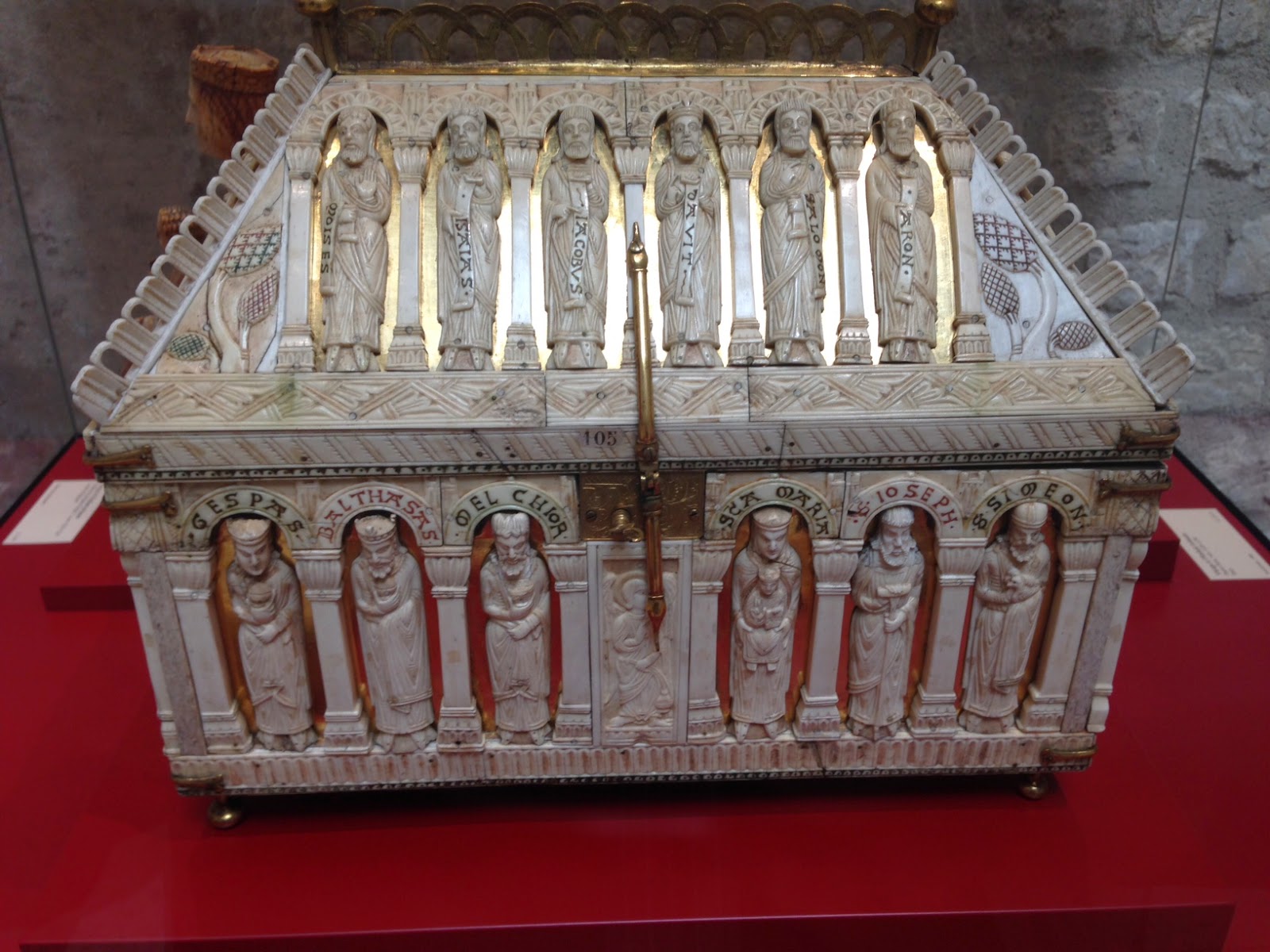
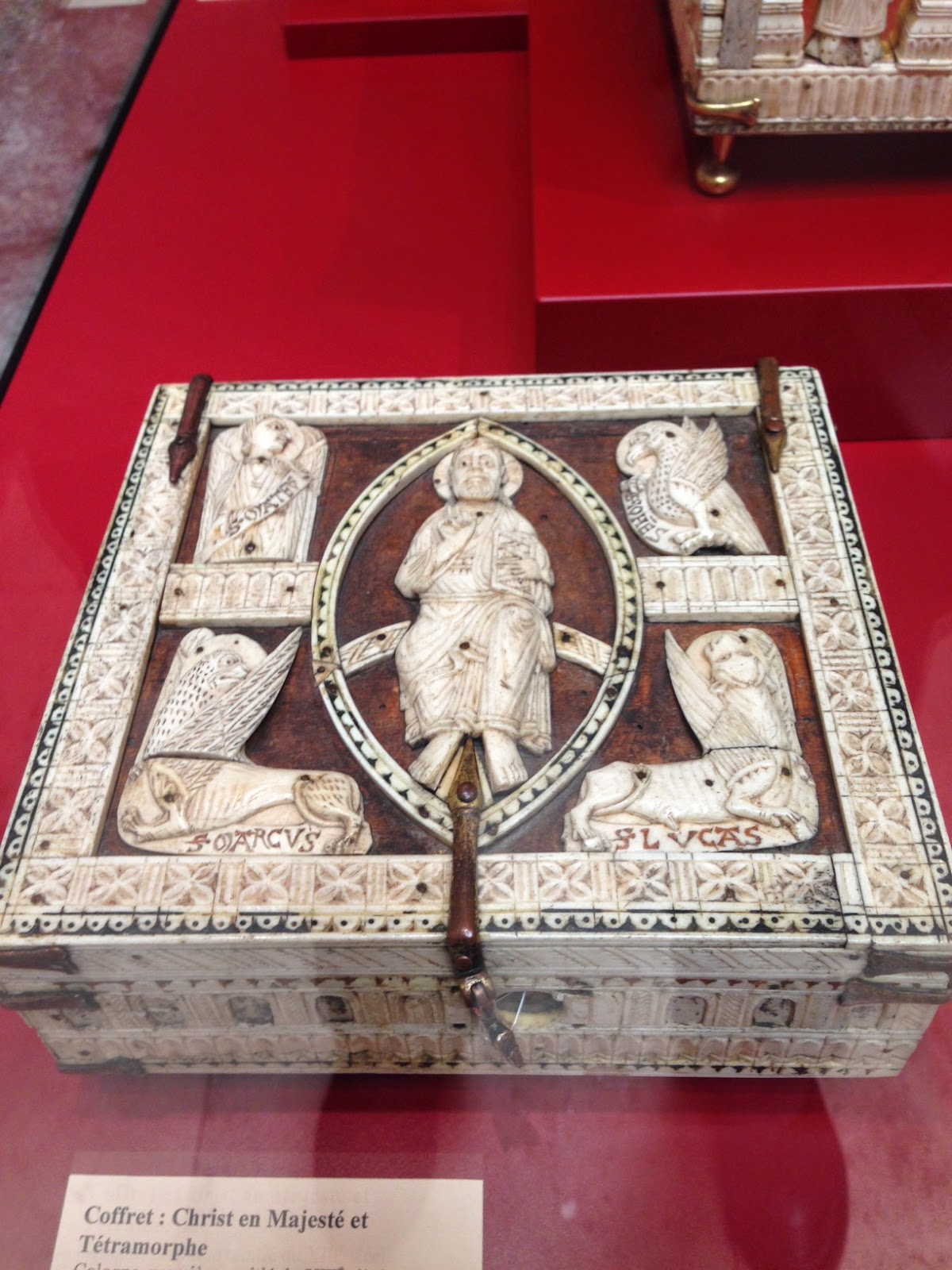
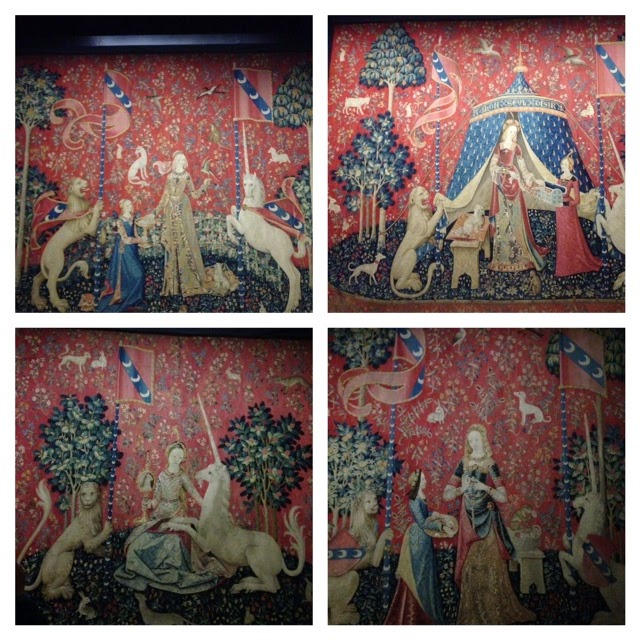
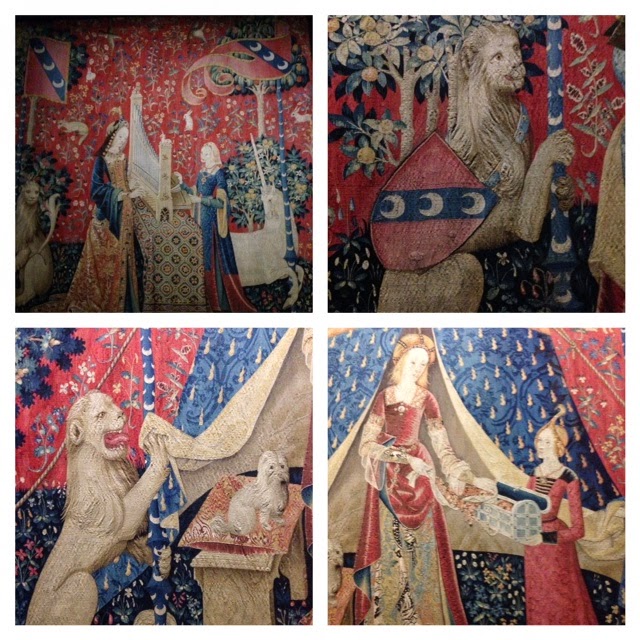
    We had planned to eat our picnic lunch in Luxembourg Gardens in the Latin Quarter, but it was too early for that. Now what? Google to the rescue – we found a museum on the pass that was open and happened to be on the way. Musee Cluny focused on art from the middles ages, most of it religious.


    These were huge – each took up and entire wall. There were 6 total; one represented each of the 5 senses, the other open to interpretation. They are not all shown here. Top Right is the one that’s interpretive. The Latin over her head translates to “my own desire”. One theory is that heart/soul/inspiration is the 6th sense.
    I loved these lion lookin’ creatures!

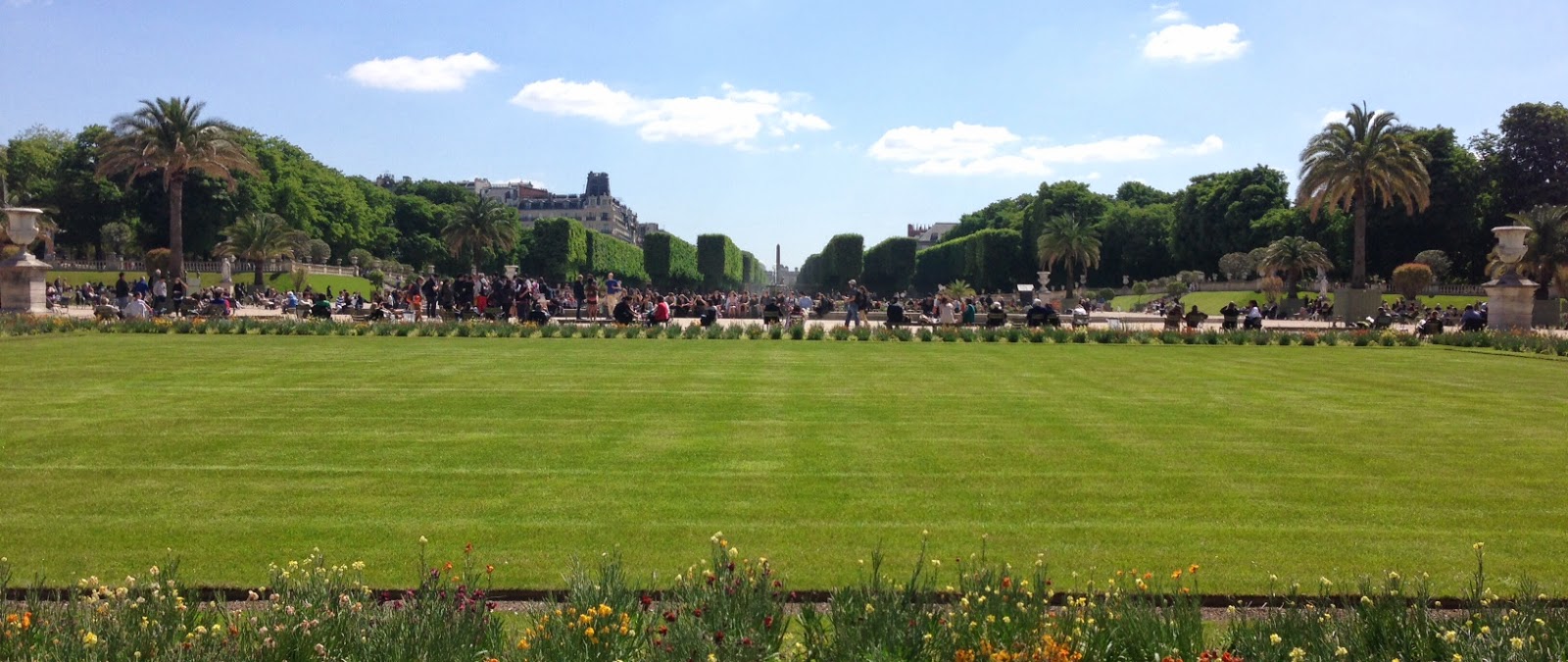
    We were there over an hour. We made it over to Luxembourg park by about 2pm. It was beautiful. We’d tried to come on Saturday but the entries were blocked off by police, we never did figure out what was going on; it was Armistice Day here that day (WWII over in Europe) and there were all kinds of activities here and there. But today it was open and lovely. We unpacked our lunch from the backpack and ate under a shady lane. It was actually very cool in the shade. After we ate, we walked through the park some and discovered how big it was.


    We found two empty chairs in the sun and sat for a bit and warmed up while people watching.

    16.5 lux Dan


    Next stop was Musee Rodin. About the time we got to this major intersection, we noticed the traffic getting worse and worse, louder and louder, lots of horns blaring. Just a few blocks before this we passed a long line of what we would call SWAT vehicles, full of Paris police looking like they were resting, waiting, eating lunch or something. Dan took this picture because he really liked the building!, but you can sort of see the traffic at the bottom.

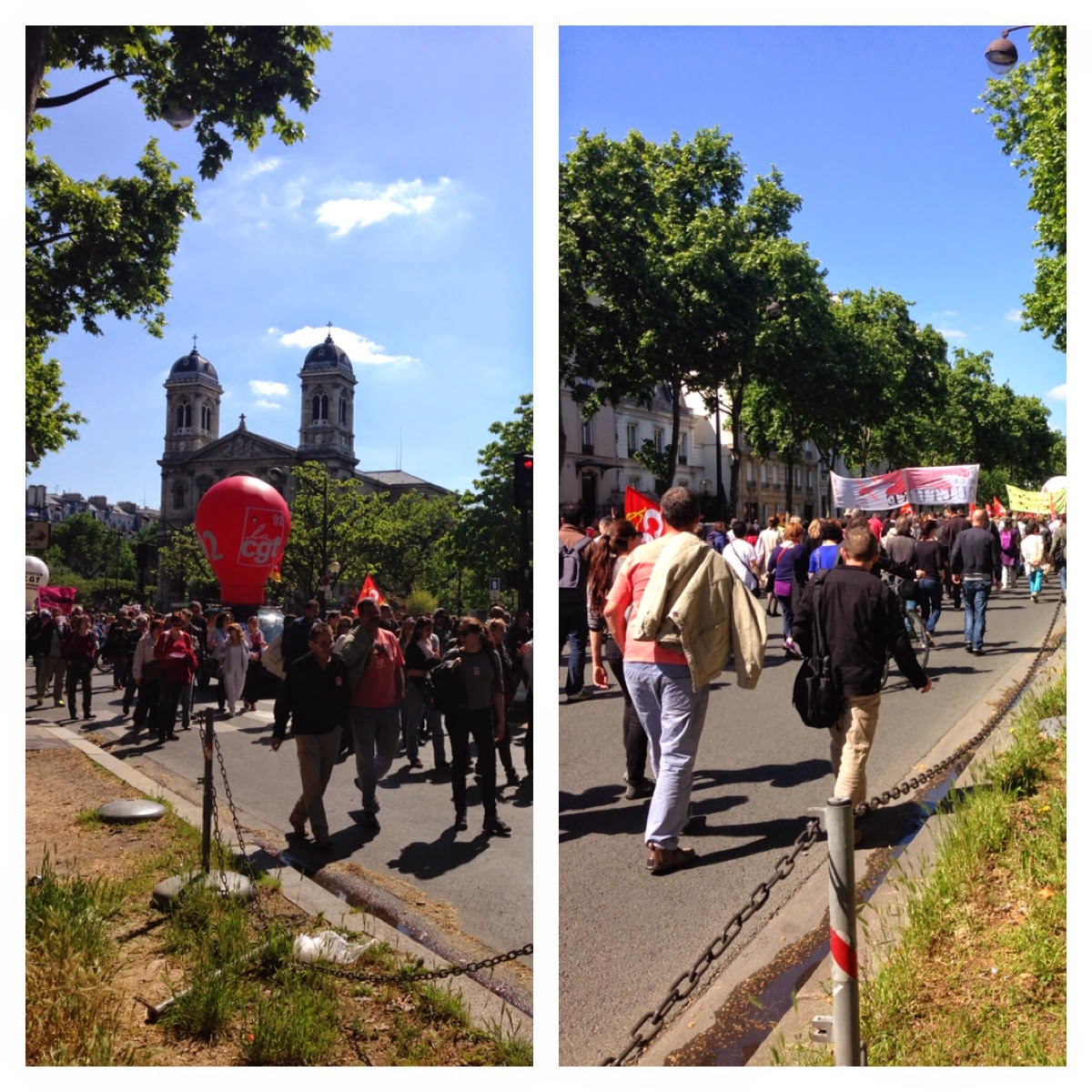
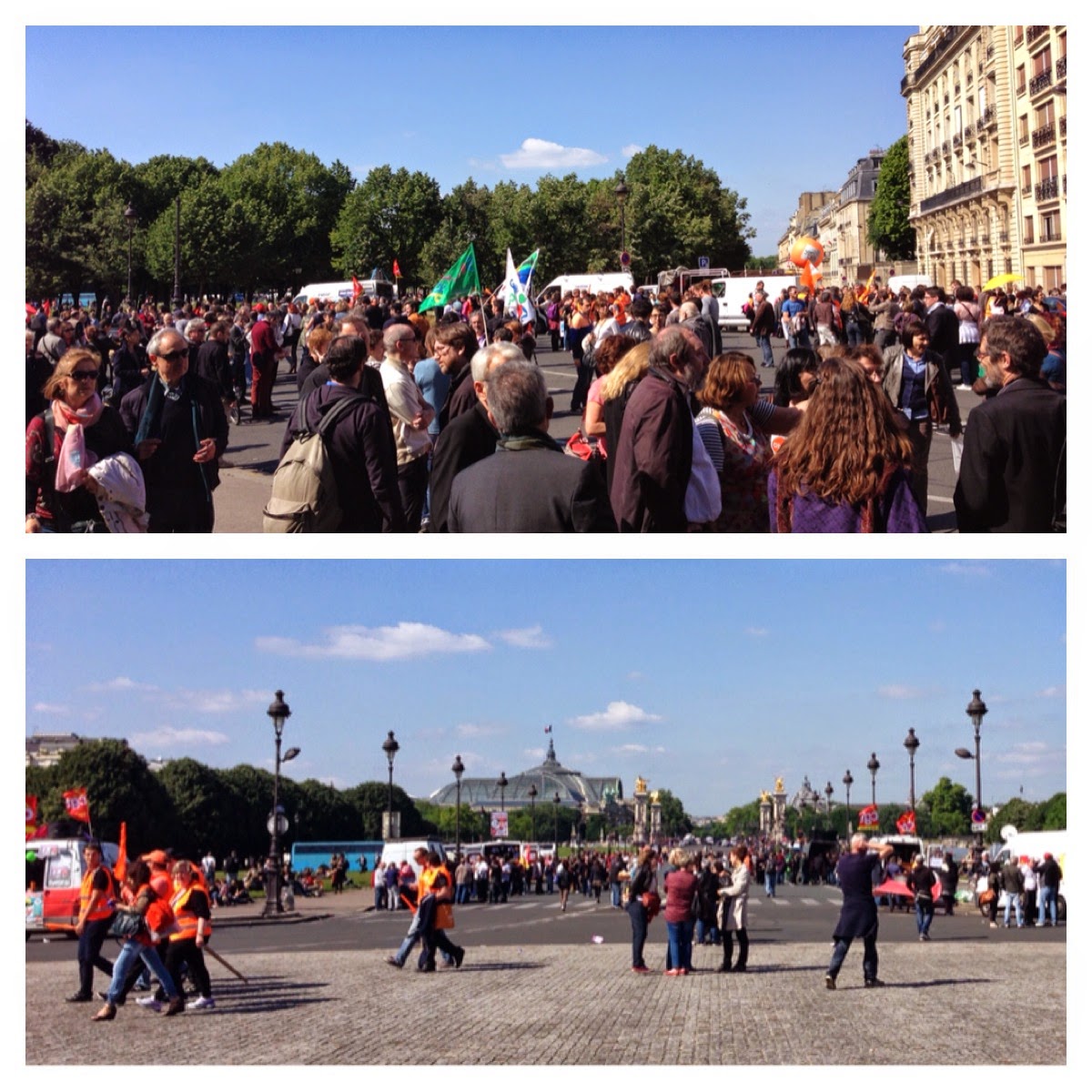
    The traffic got worse and louder along Rue Babylone as we headed to Boulevard Invalides. A few blocks away I was like “oh, it’s a parade”. Scratch that. Strike March!

    There were a lot of people, they didn’t all seem to be workers marching. Seems like everyone joins in. When we got to the street that had the entrance to the Rodin, we were stopped by a wall a police. We said we just wanted to get into the museum. They said you can’t go through, it’s closed anyway. We knew it wasn’t because we’d already seen people in the gardens. (Funny – a guy at Notre Dame said there was no tour because it was a French Holiday; we’d already seen the signs posted on the gate that it was closed due to a strike. Maybe in France they’re one and the same?!)

    So we walked around a very large block to finally get to the museum entrance – open – not 30 feet behind the wall of police who wouldn’t let us through.

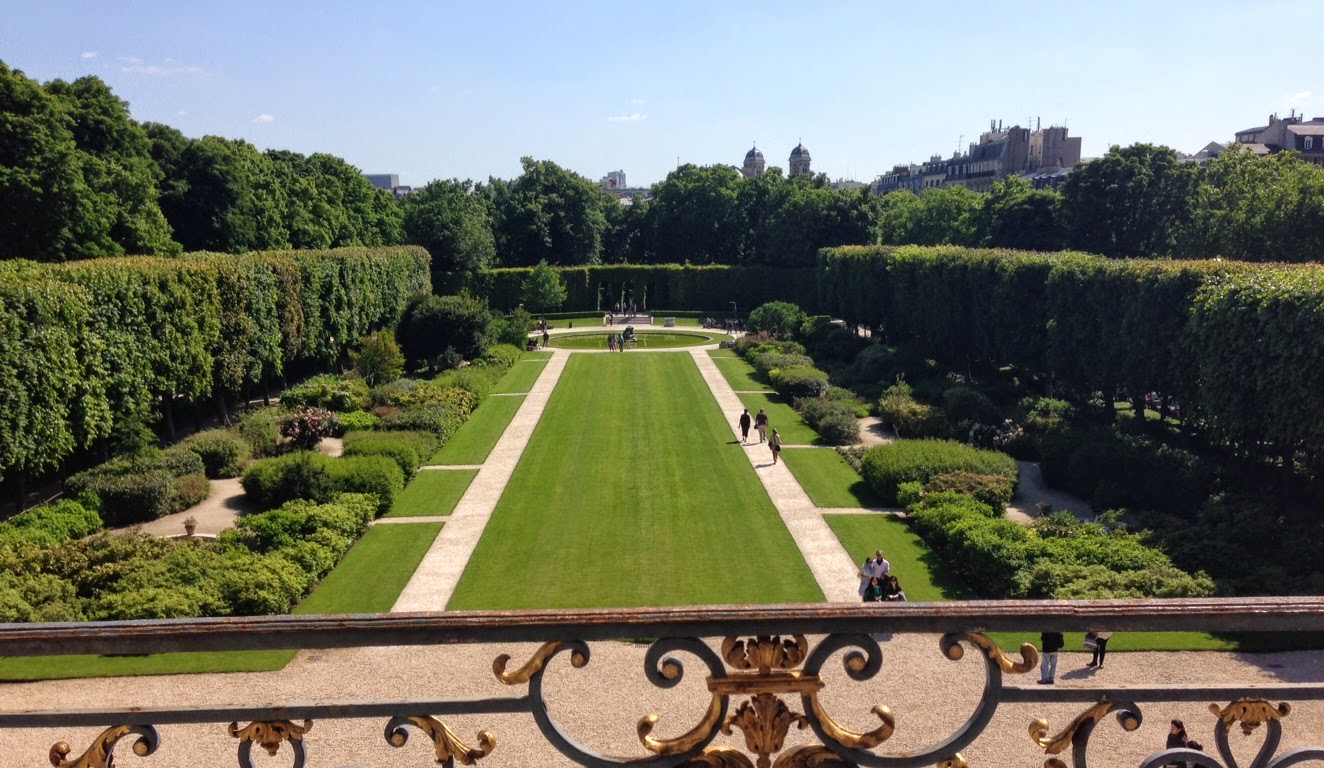
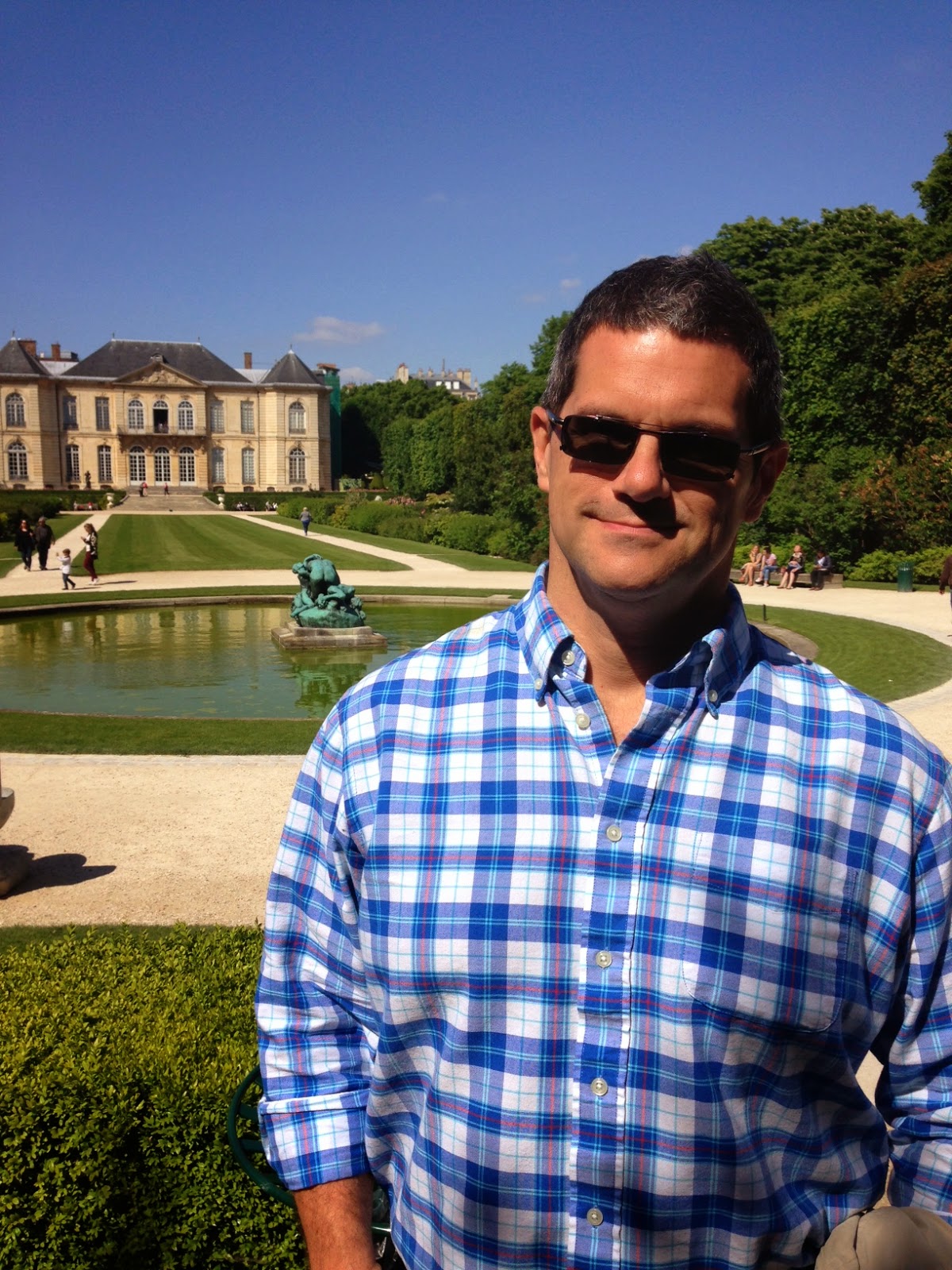
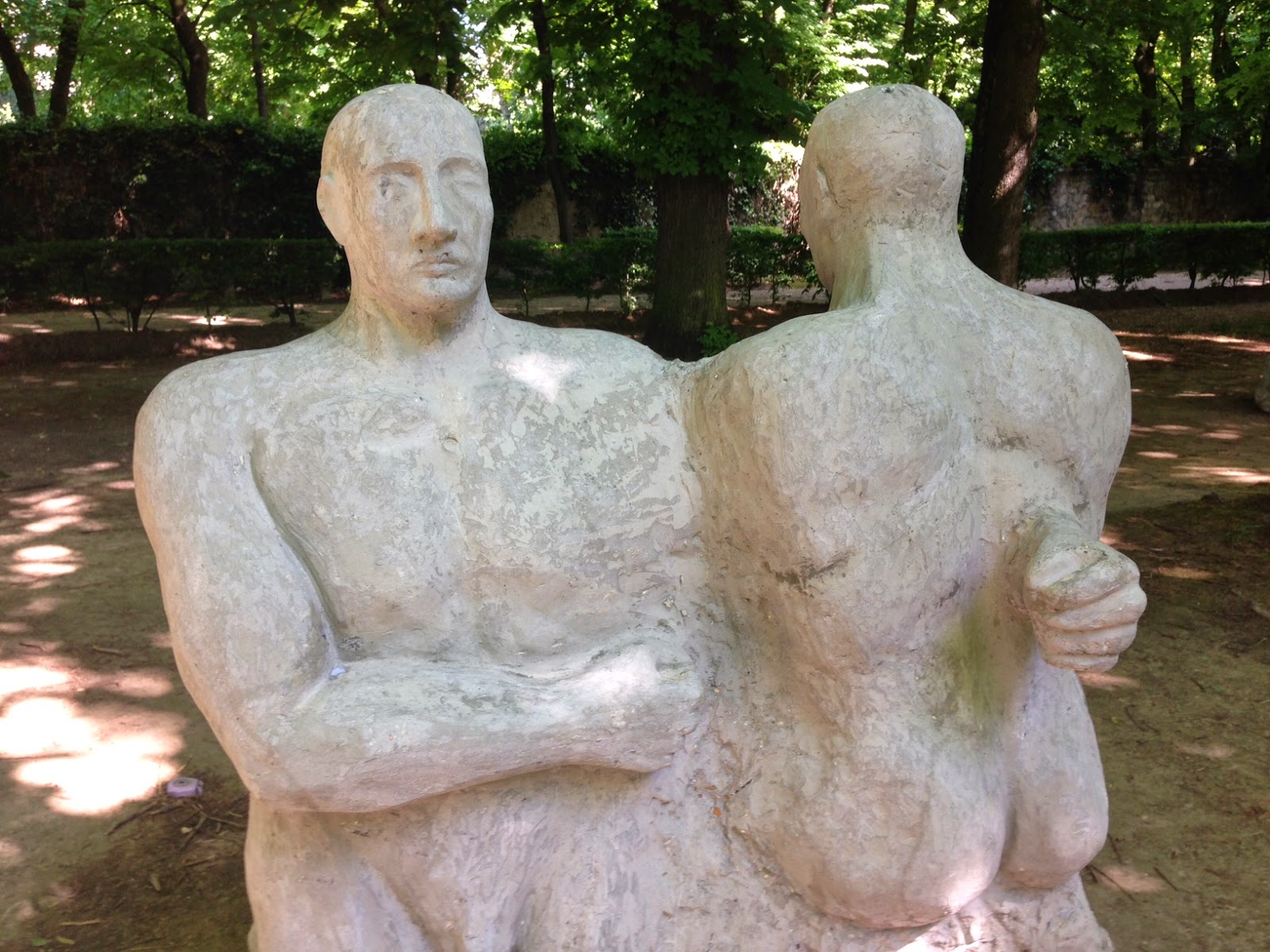
    Musee Rodin has beautiful gardens, which was the primary reason I wanted to go. It used to be a hotel, and he lived and worked here. Many of the sculptures here he made here.
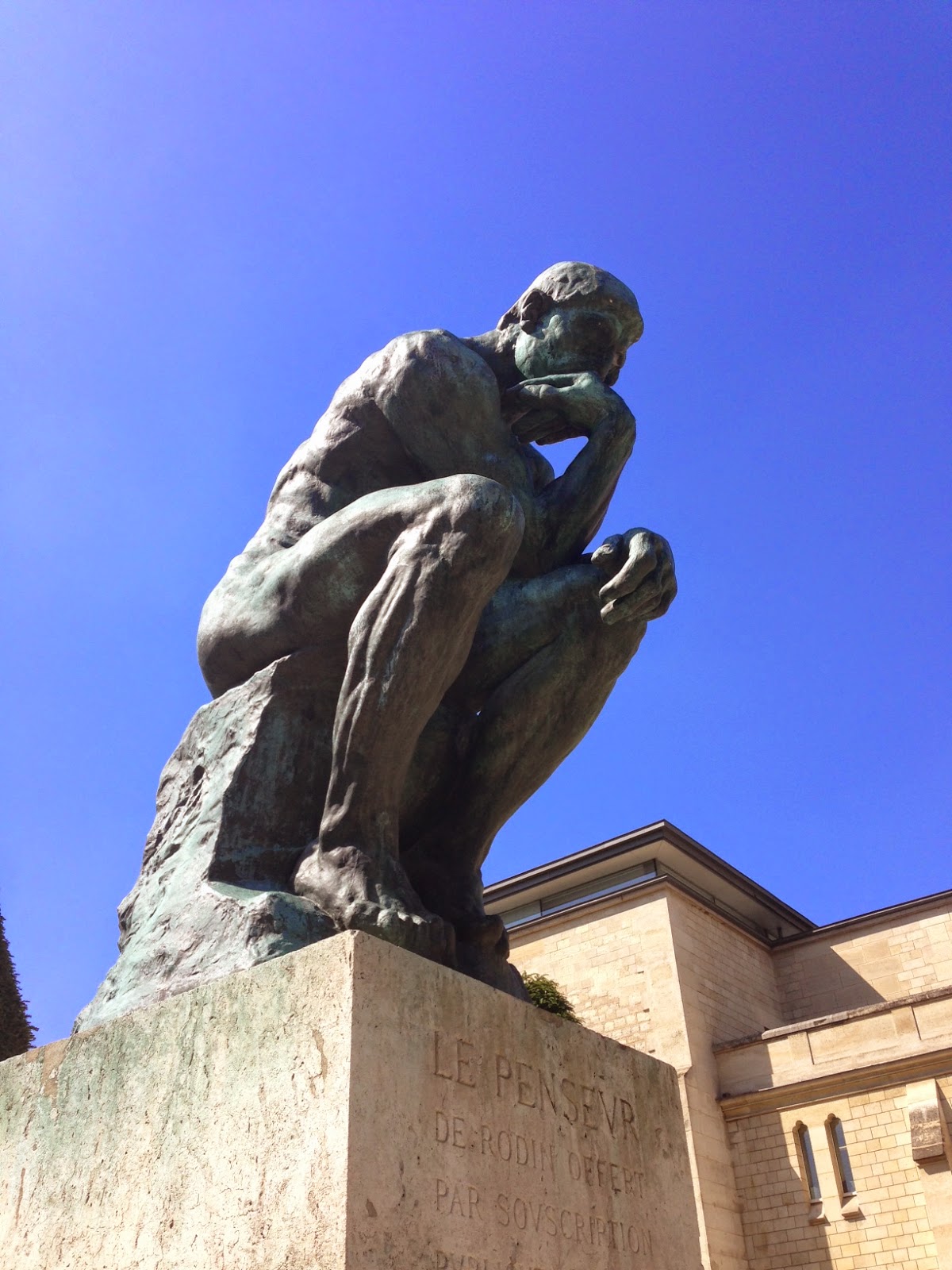
    Bet you know what this is.


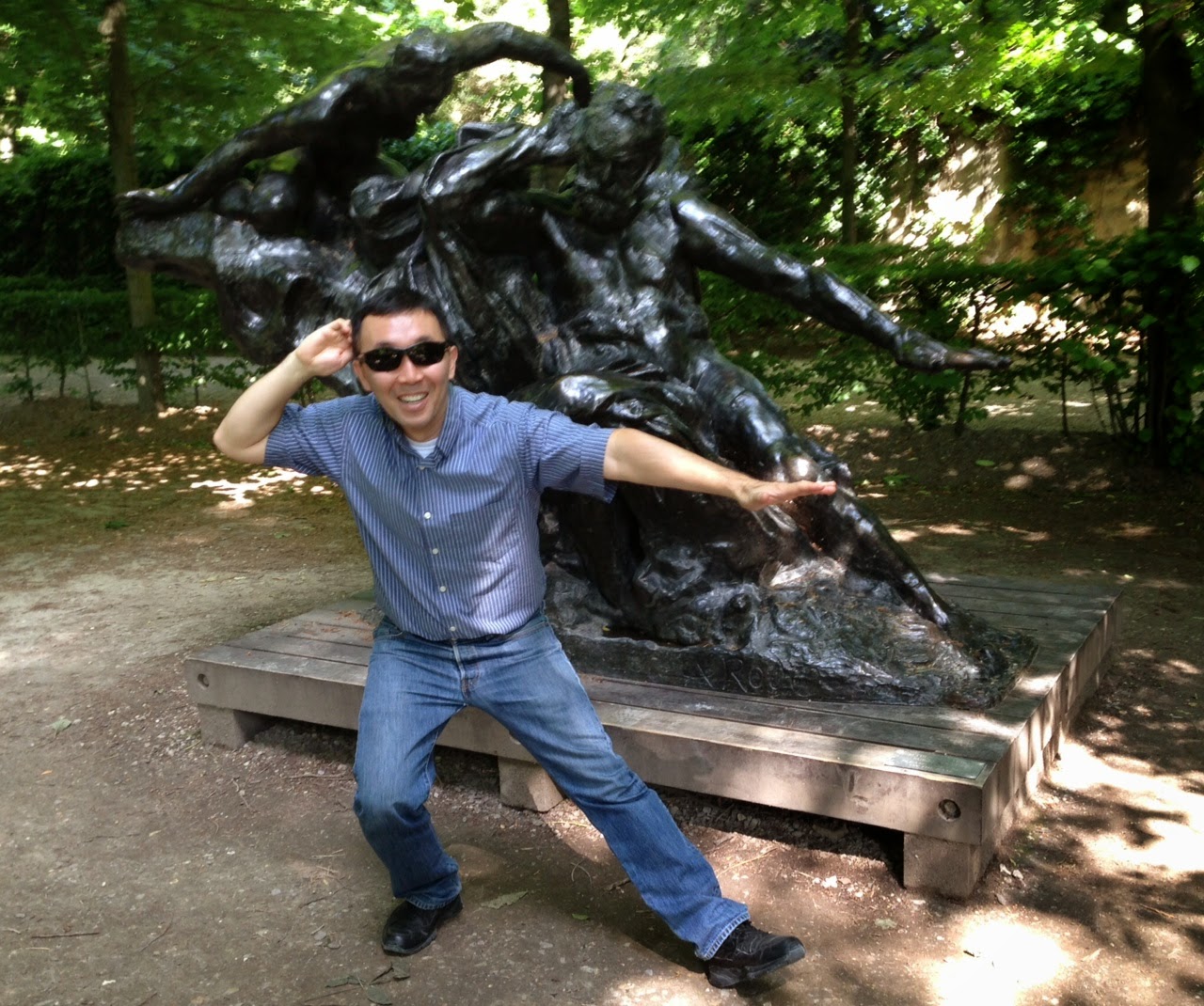
    The weirdness of this one did not quite translate in the photo.

    We left the museum – this time through the wall of police – and the marchers were still going. They were headed to the park area in front of Invalides – the Military Museum where we were on Monday. It was an all out party – lots of music, people dancing, all kinds of street vendors selling food. Maybe a strike IS a French holiday.

    There was more than one union on strike we figured out, but one of them was national public works employees, which is why museums were impacted.


    We got back to the room about 5:15, theoretically to rest before going out again. Dan was on a work call from 6-7pm. We went back out one more time for our last museum in Paris, one just a few blocks away from the flat that focused on architectural design, from the middle ages to the present.


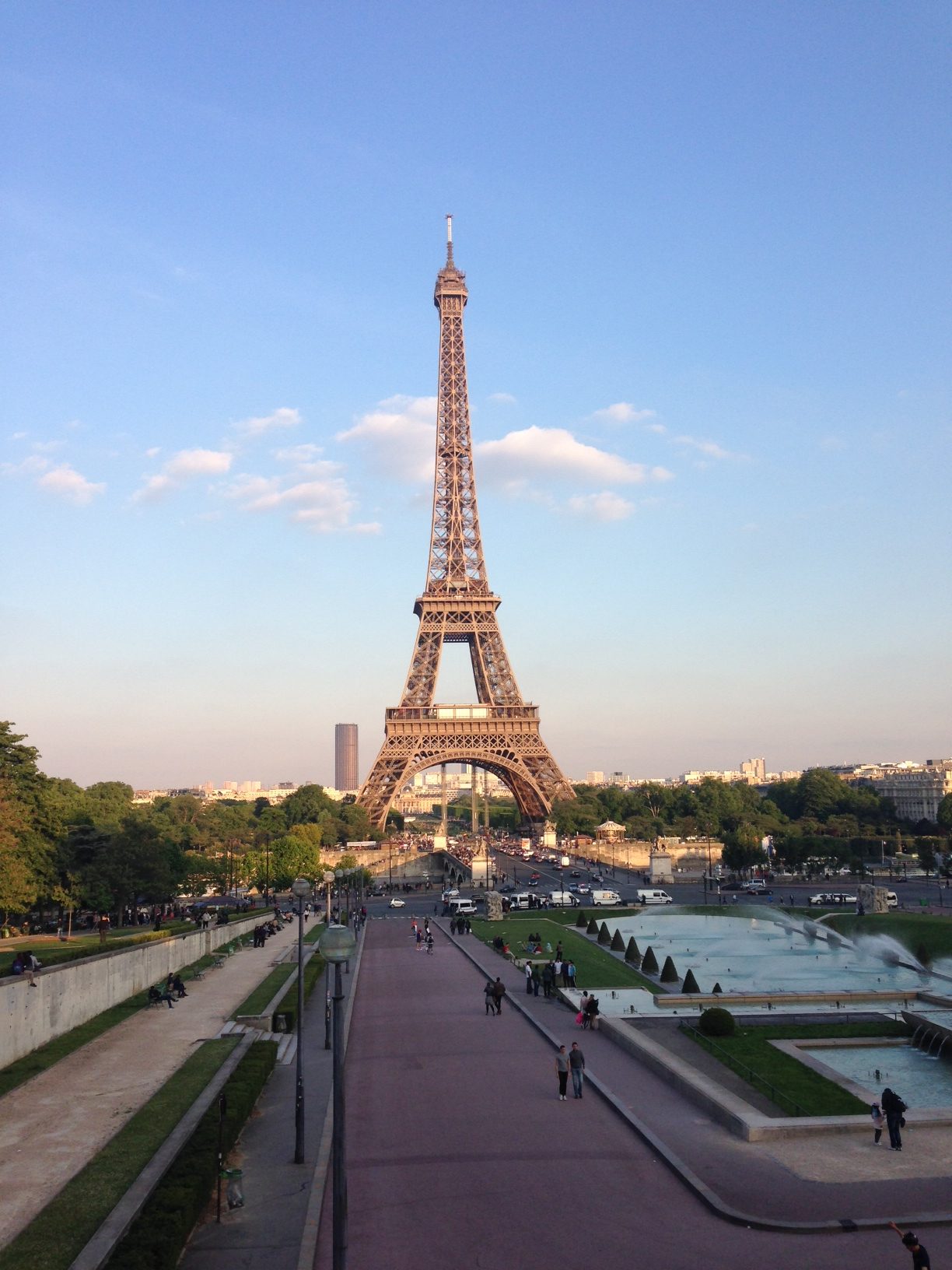
    It was also right by the Eiffel Tower so Dan couldn’t resist some more shots.
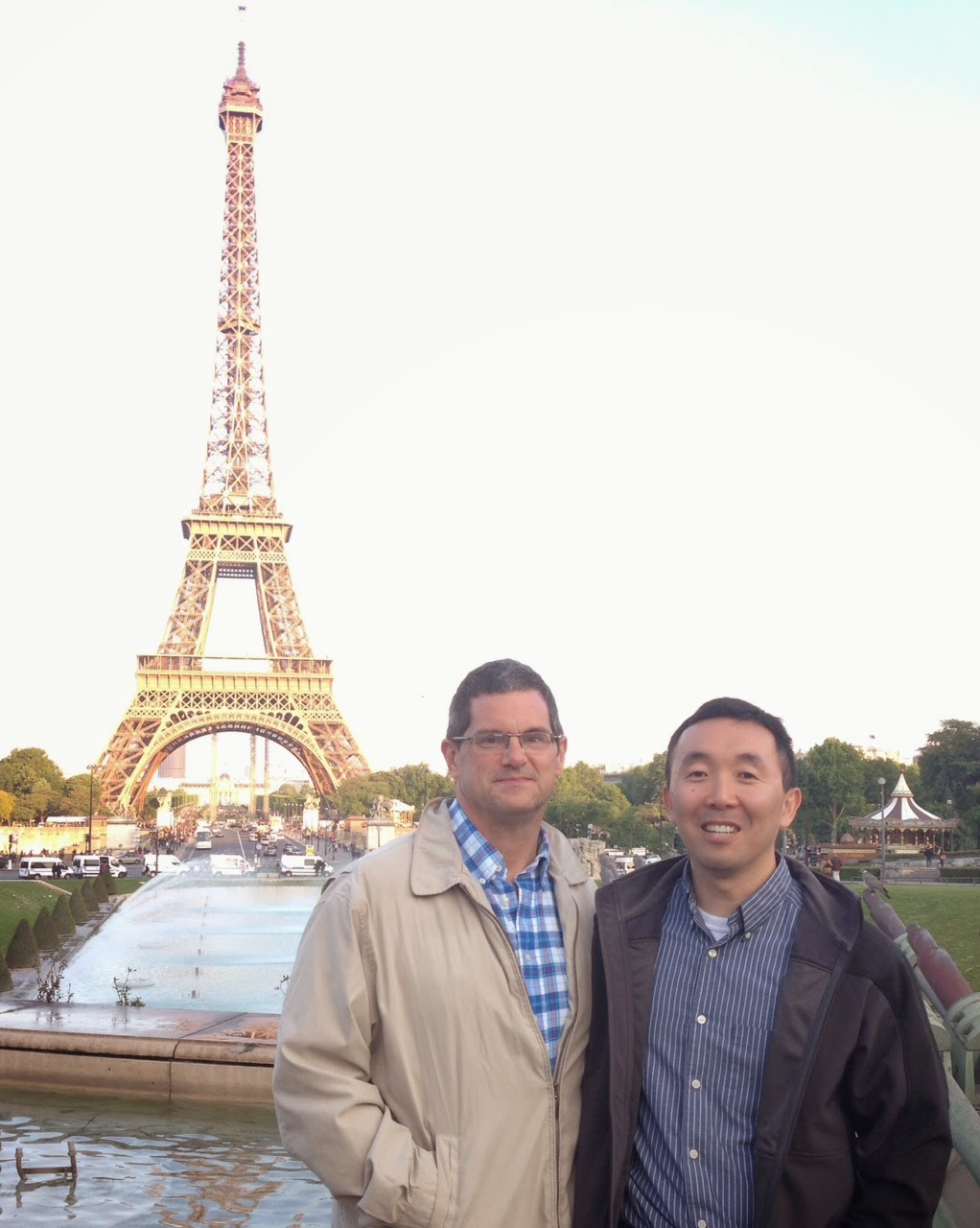
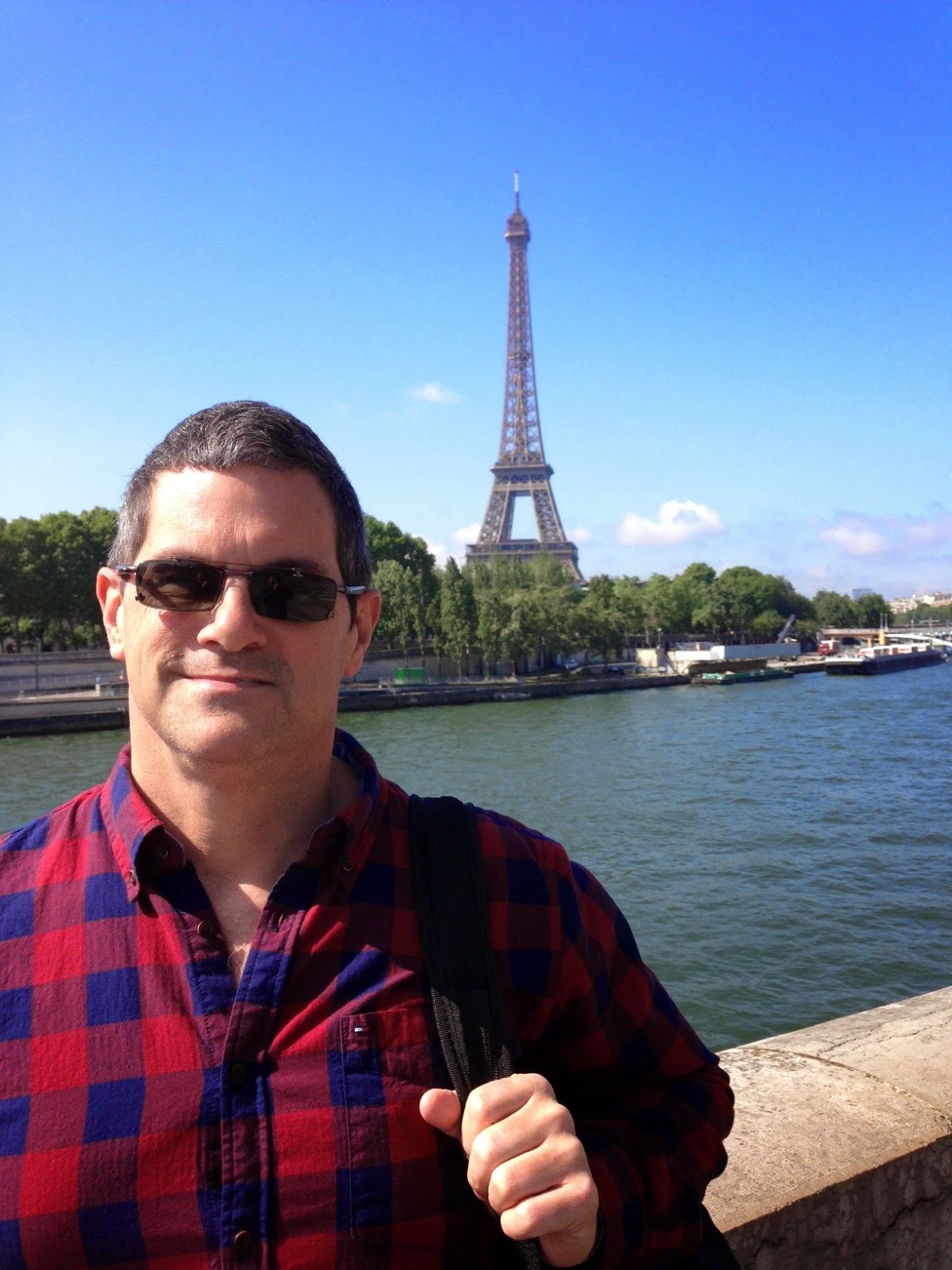
    And we finally got one of us together. This was about 8:15pm; the sun was lowering just in front of us so it cast that golden hue onto the Tower. Pretty cool!
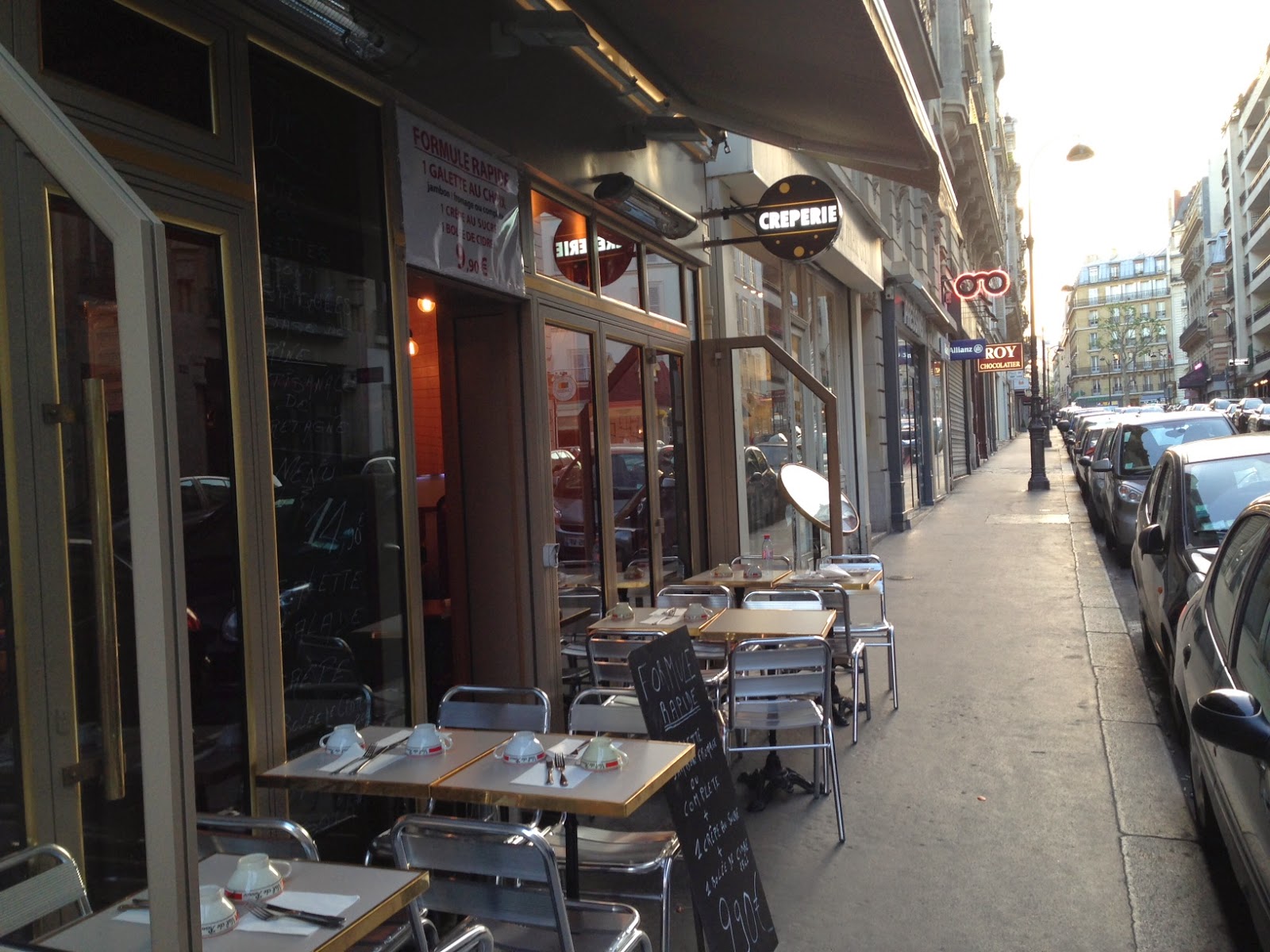
    We’d made plans to have dinner at a creperie across the street from our flat. Dan had been craving them for days so we decided yesterday this would be our last meal since it was so close to where we were staying. And the food was excellent – might be my favorite meal in Paris.
    To take this photo, I’m standing in the same spot I was when I took the one above, just turned around. The black door off center is the entrance to our building.

    And that’s a wrap for Paris. Tomorrow we leave for Edinburgh, Scotland.

  • Day 7: Paris, Part 4 – Versailles and The Louvre

    Day 7: Paris, Part 4 – Versailles and The Louvre

    We both got good sleep last night –  7 hours for me, 10.5 for Dan. He’s still not quite 100% but getting decent sleep helped a lot. I was up for 2.5 hours before him so did my thing with coffee, Churchill, and a stroll through the neighborhood. I took this opportunity to grab some photos before I forgot.

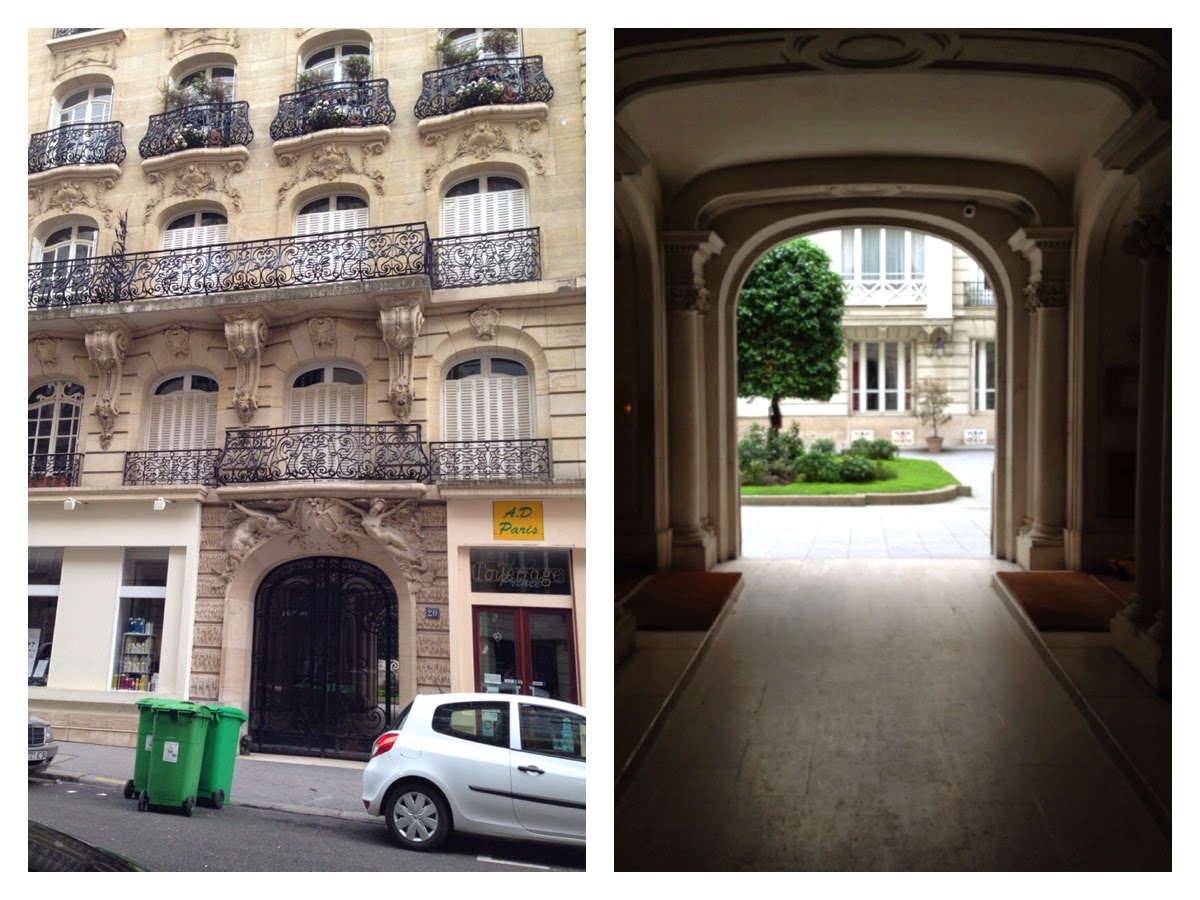
    The outside entrance to our building, and the inside entry way.
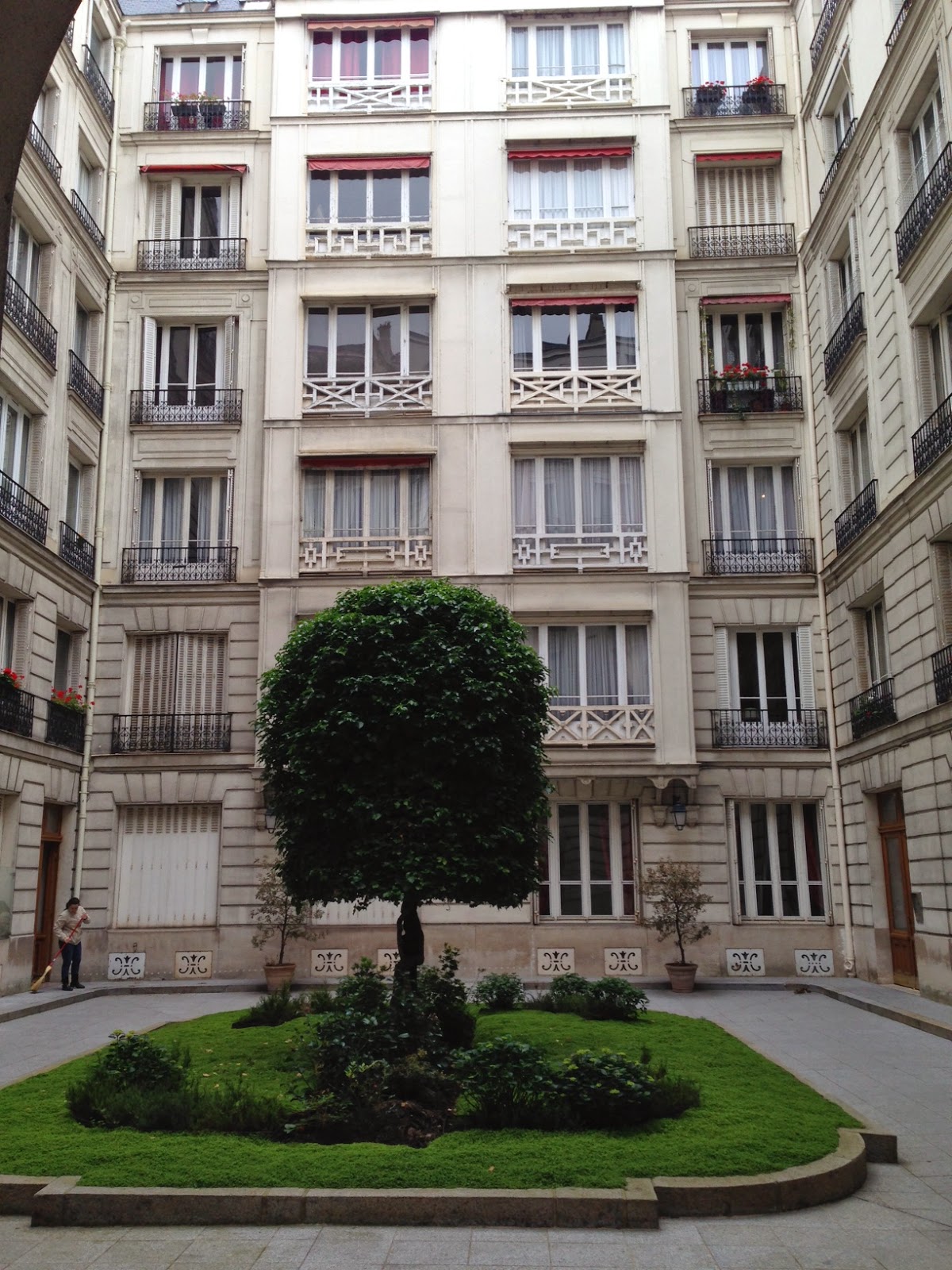
    Pretty little courtyard; our flat is to the immediate right and faces the outside, not the courtyard.
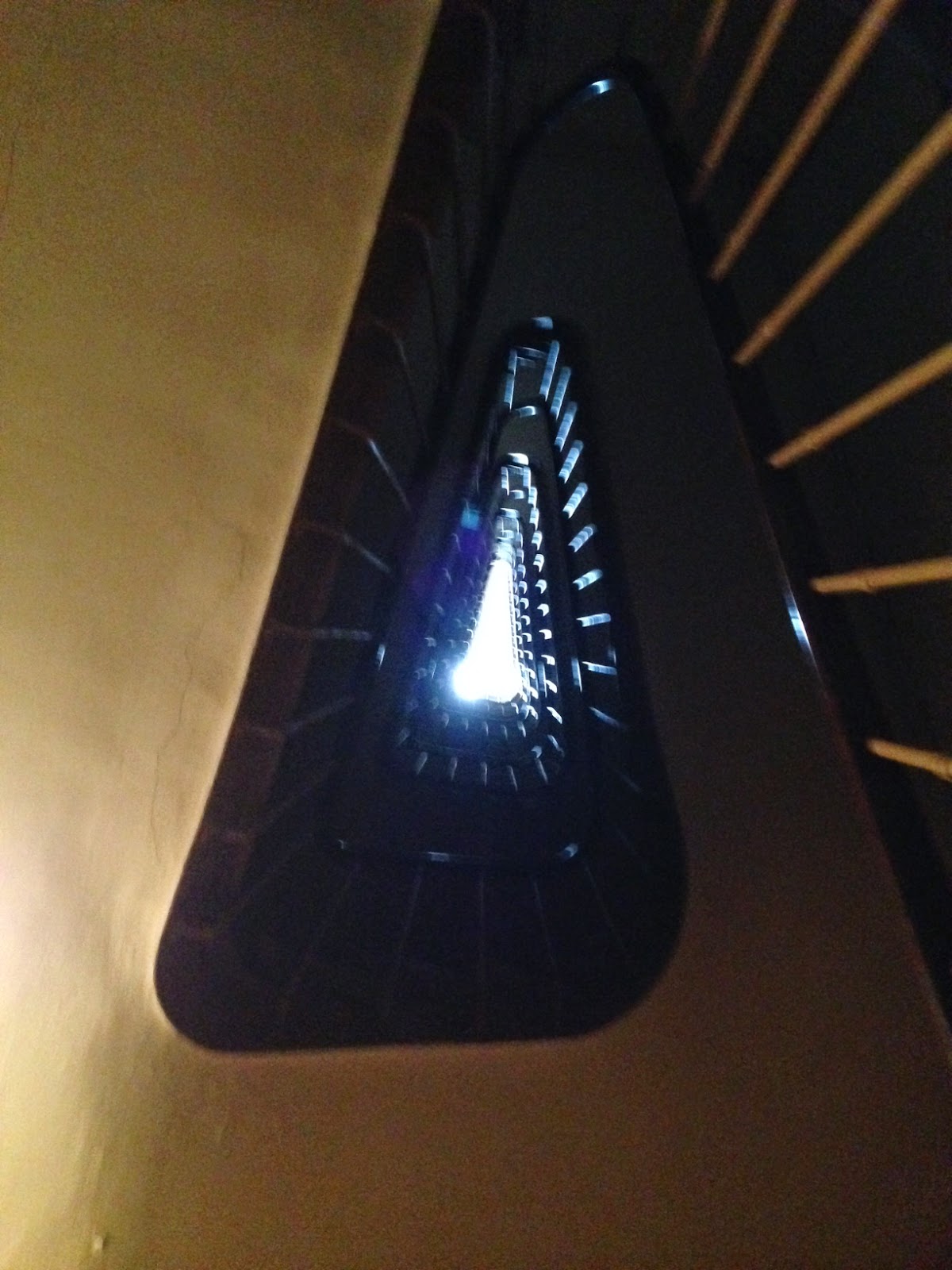
    6 flights up! Yes, we knew that when we rented it. Figured it was all part of the Paris experience.
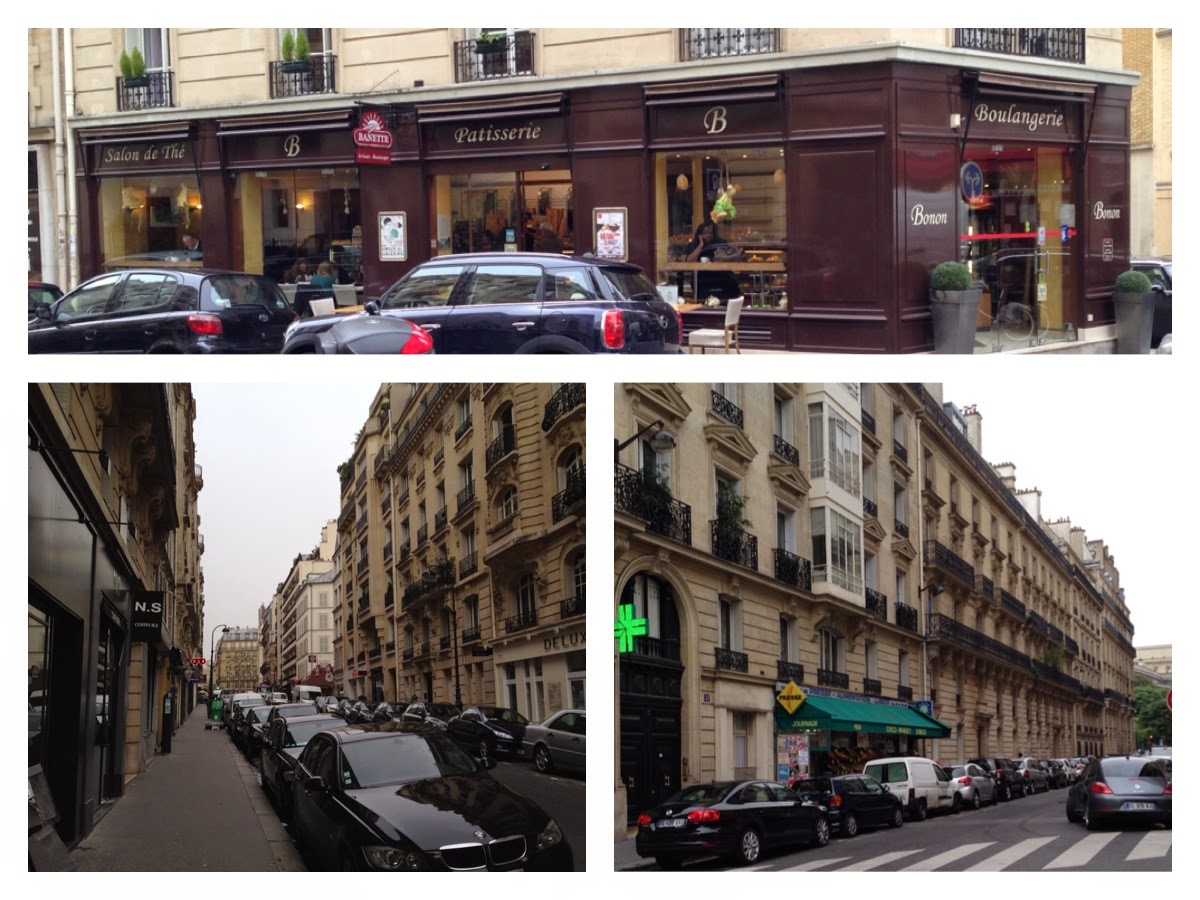
    Top: the bakery on the corner for our daily bread; Bottom left: the block we’re on; right: across the intersection from the bakery. The green awning is a little grocery we’ve stopped in several times, mostly for bottled water.

    Dan was up after 9:30 sometime. We had breakfast in again and headed out about 10:45. Here are some random musings we’ve had since we’ve been here:

    • OMG – the smokers. We thought Germany was bad; people smoke a LOT here. Thankfully, you can’t in buildings, but everyone outside seems to have a cigarette in their hands. All those adorable sidewalk cafes are ruined by it (for those of us with no tolerance anyway!).
    • The most popular cars seem to be Smart cars – we counted 12 of them parked on one block in our neighborhood – and Mini-Coopers, which of course Dan loves since that’s what he drives. They totally make sense in this very crowded city with narrow streets. Motorcycles are also very popular. And it took us a couple of days to figure out that just about all parking other than street parking is underground. You don’t see parking lots or garages, because all of these buildings at least in this part of the city were here long before cars were invented.
    • We thought Amsterdam had a very international feel to it, but Paris does as well, perhaps more so. We noticed it as soon as we got off the train from Cologne. We’ve heard so many different languages here just walking around. There are lots of American tourists, too, we’ve been surprised how frequently we hear American English.
    • Parisians have been Very Friendly to us, starting at the train station. Some angel realized we weren’t sure where we were going, starting speaking to us in French, then immediately switched to English and asked where we were headed. She led us to the right path, and was very gracious. We’ve had great service everywhere we’ve been, even in places where no one speaks English – which honestly has been rare – we’ve managed to get buy with pointing, gestures, and our limited French vocabulary of maybe 30 words.

    Just a couple of things we passed on the way to the metro stop.

    Random pretty building on President Wilson Ave. They’re everywhere.
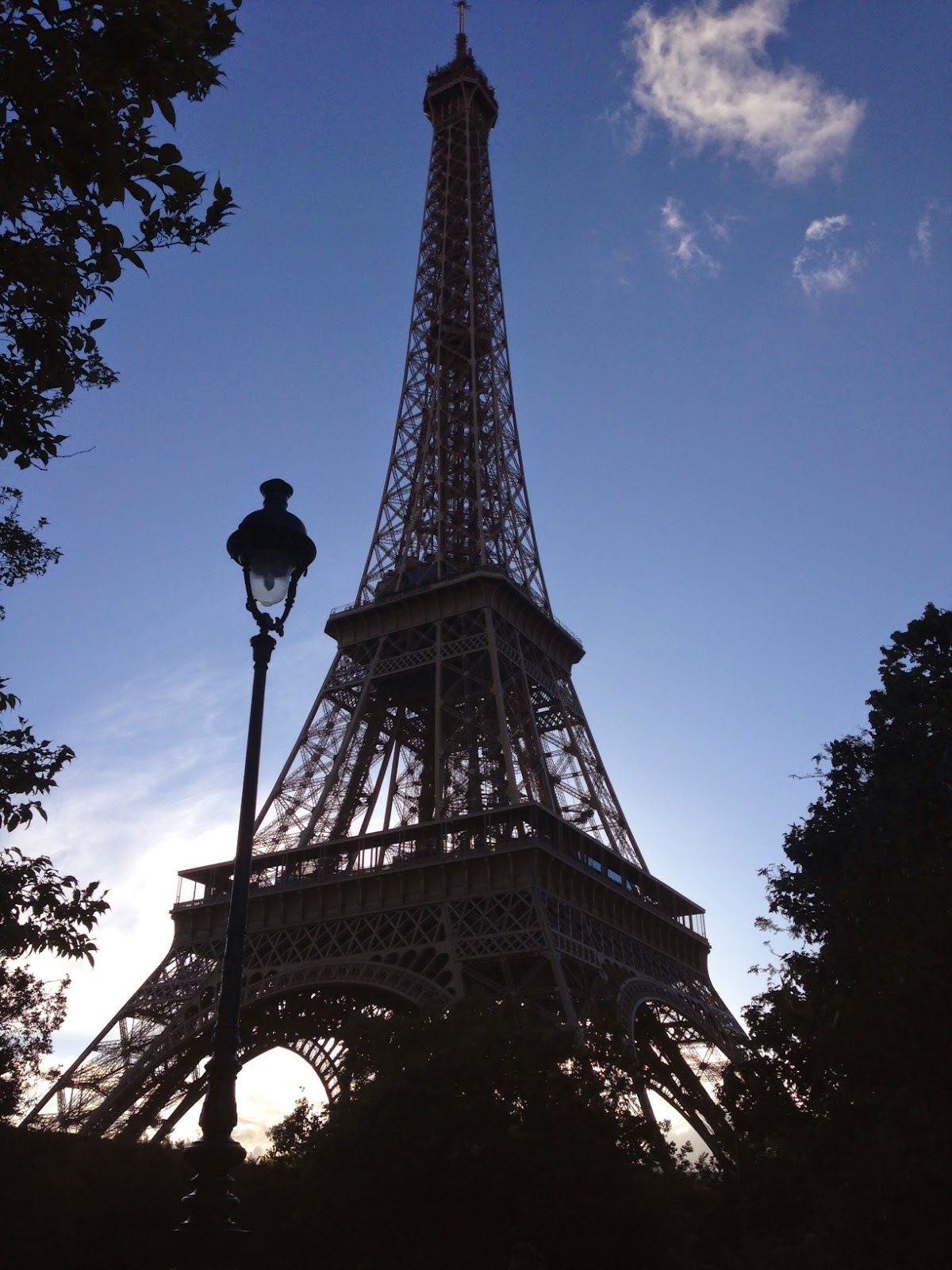
    Dan really likes the Eiffel Tower!
    We took the metro to Versailles, about a 20 minute ride. The line was kinda long but it moved fast. I went in and stood in it while Dan made sure there wasn’t a quicker line for our passes. There wasn’t.
    A bit of history: Louis XIII started this Chateau as his hunting lodge. It was Louis XIV who added on to it significantly, wanting it to the be most beautiful palace in Europe. He made it the royal palace in 1682, and it remained so until XVI and Marie Antoinette were executed in 1789. Napoleon used parts of the estate but it was not the official royal residence under him. In 1833, it became a historical monument and museum dedicated to “all the glories of France.”
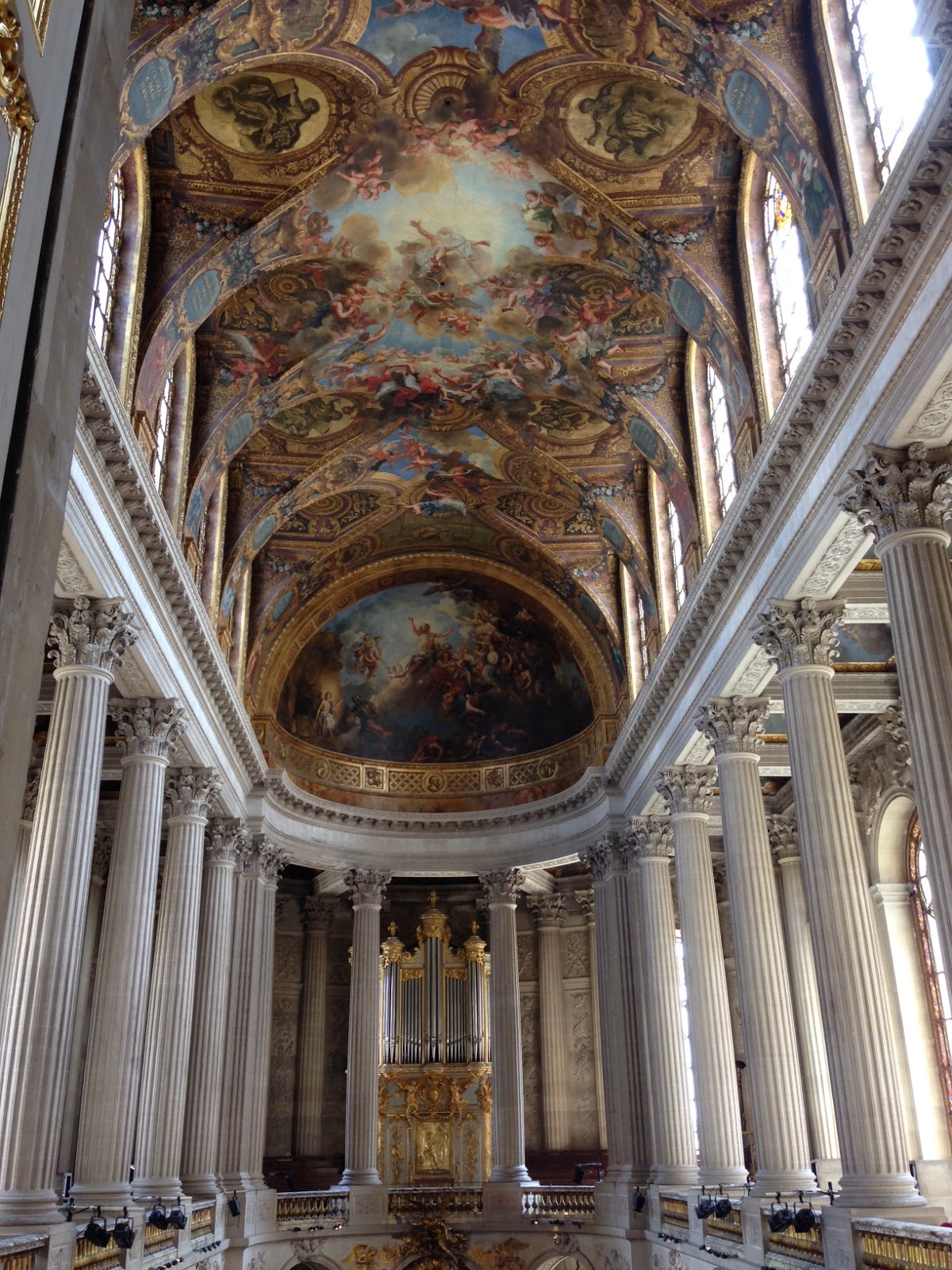
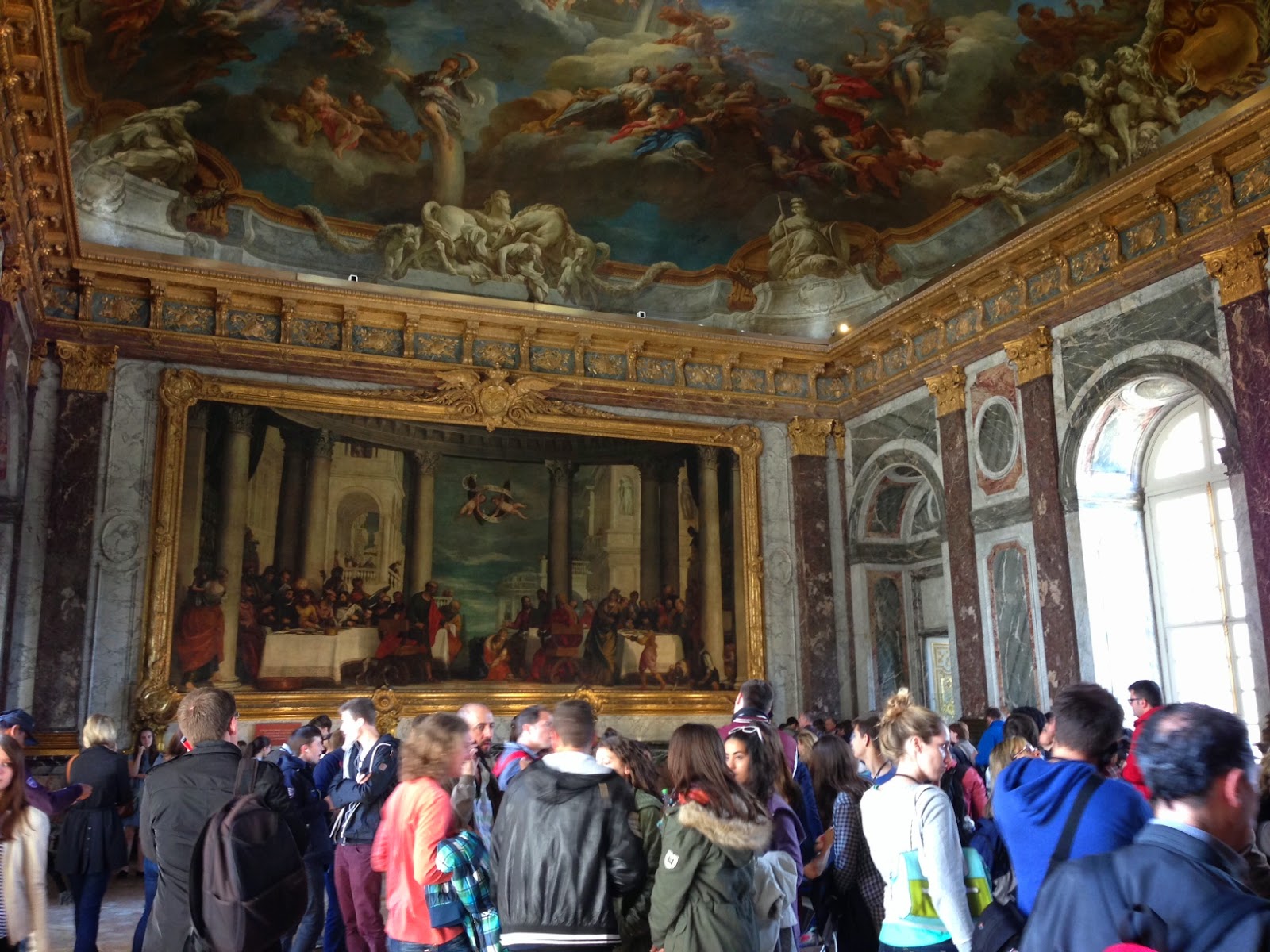
    I read a lot of biographies and history as a kid and had a big fascination with Marie Antoinette, so had read a lot about this estate, albeit not in a long time. After Normandy, this was the #2 thing on the trip I was looking forward to. Not disappointed. The palace, honestly, was almost exactly what I had imagined. The Hall of Mirrors was still pretty spectacular. The gardens, on the other hand, were way beyond what I had imagined.
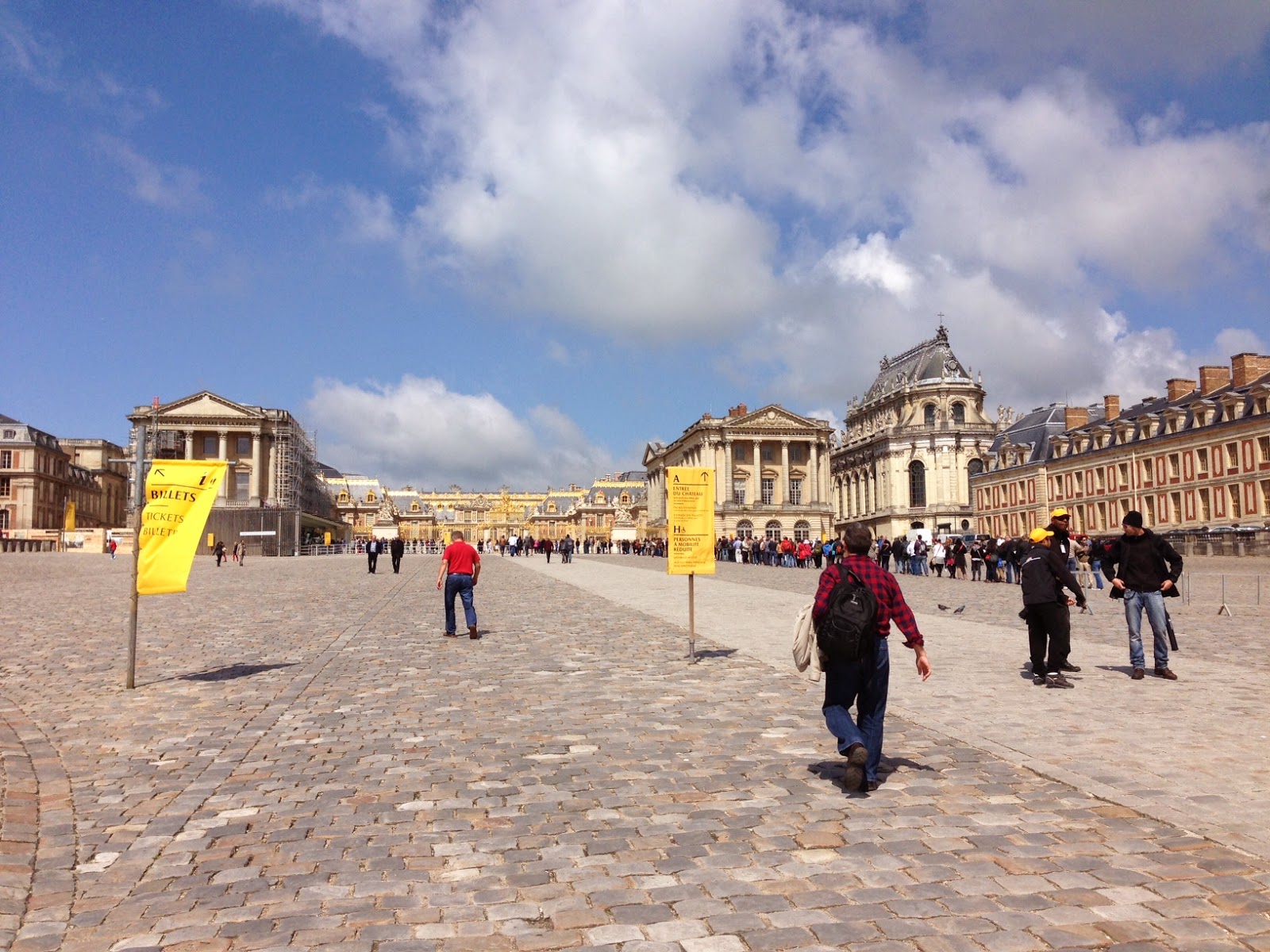
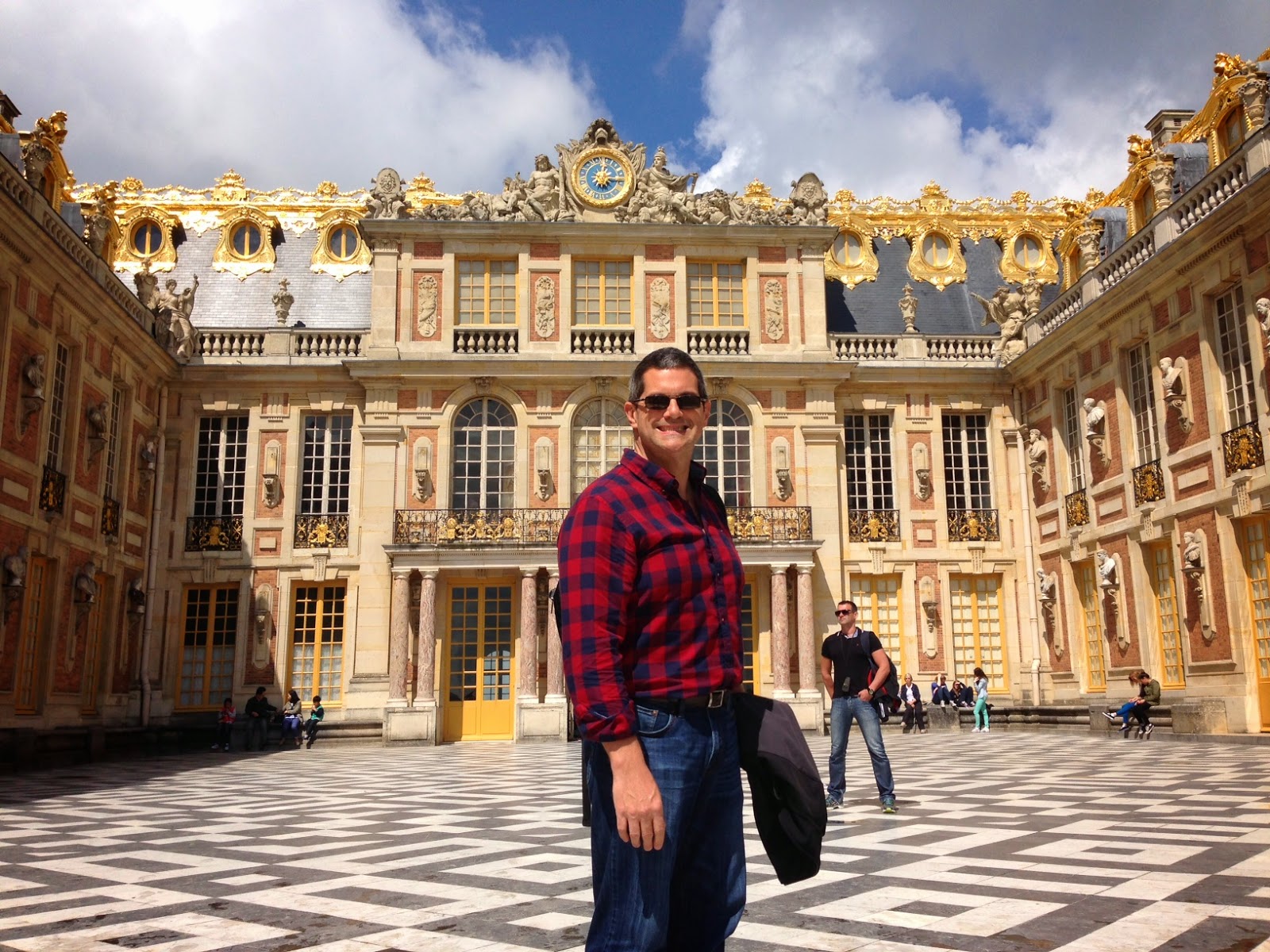
    The front courtyard. The guy in the back would not stop posing – his friend must’ve taken 20 pictures of him, so we quit waiting for him to get out of the shot!


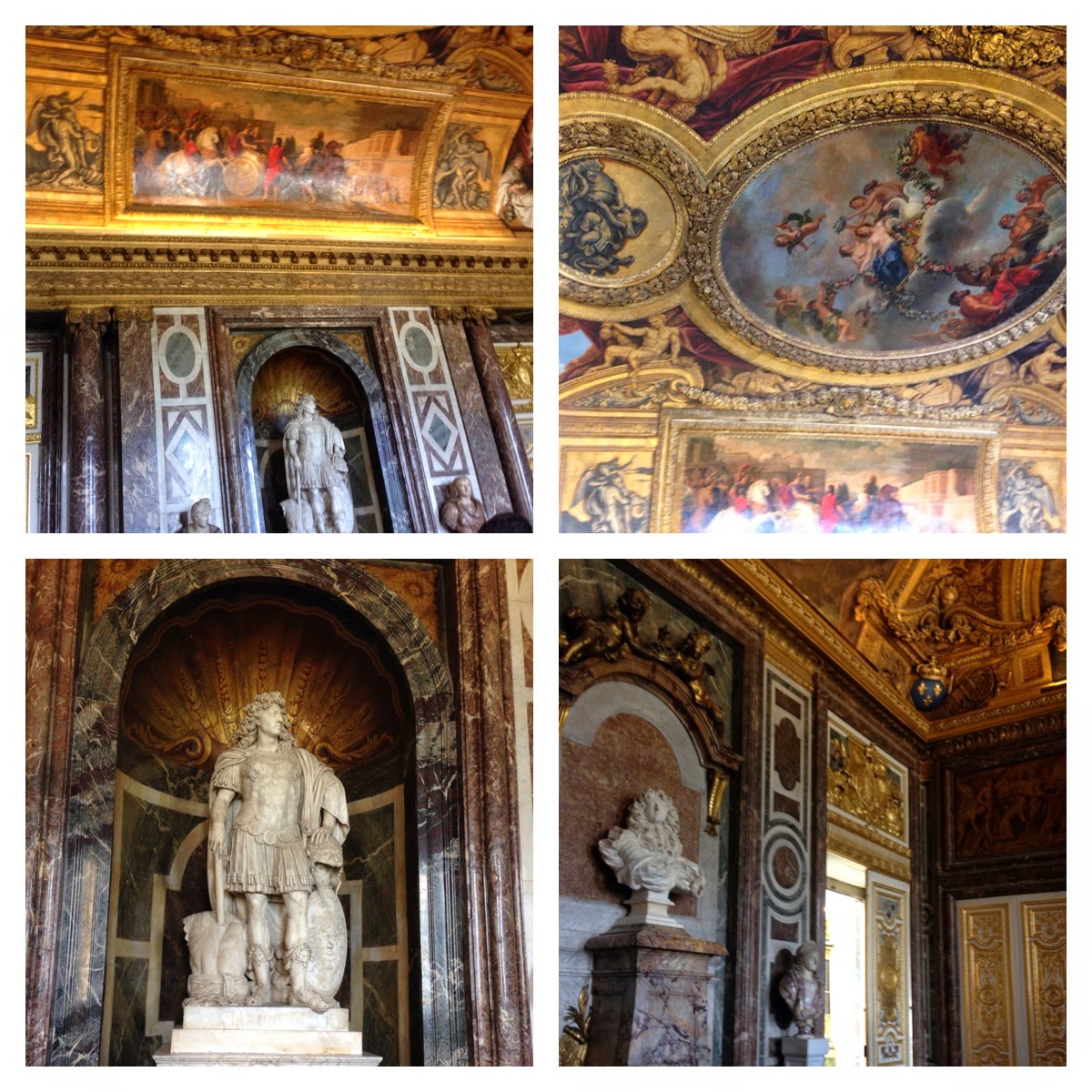
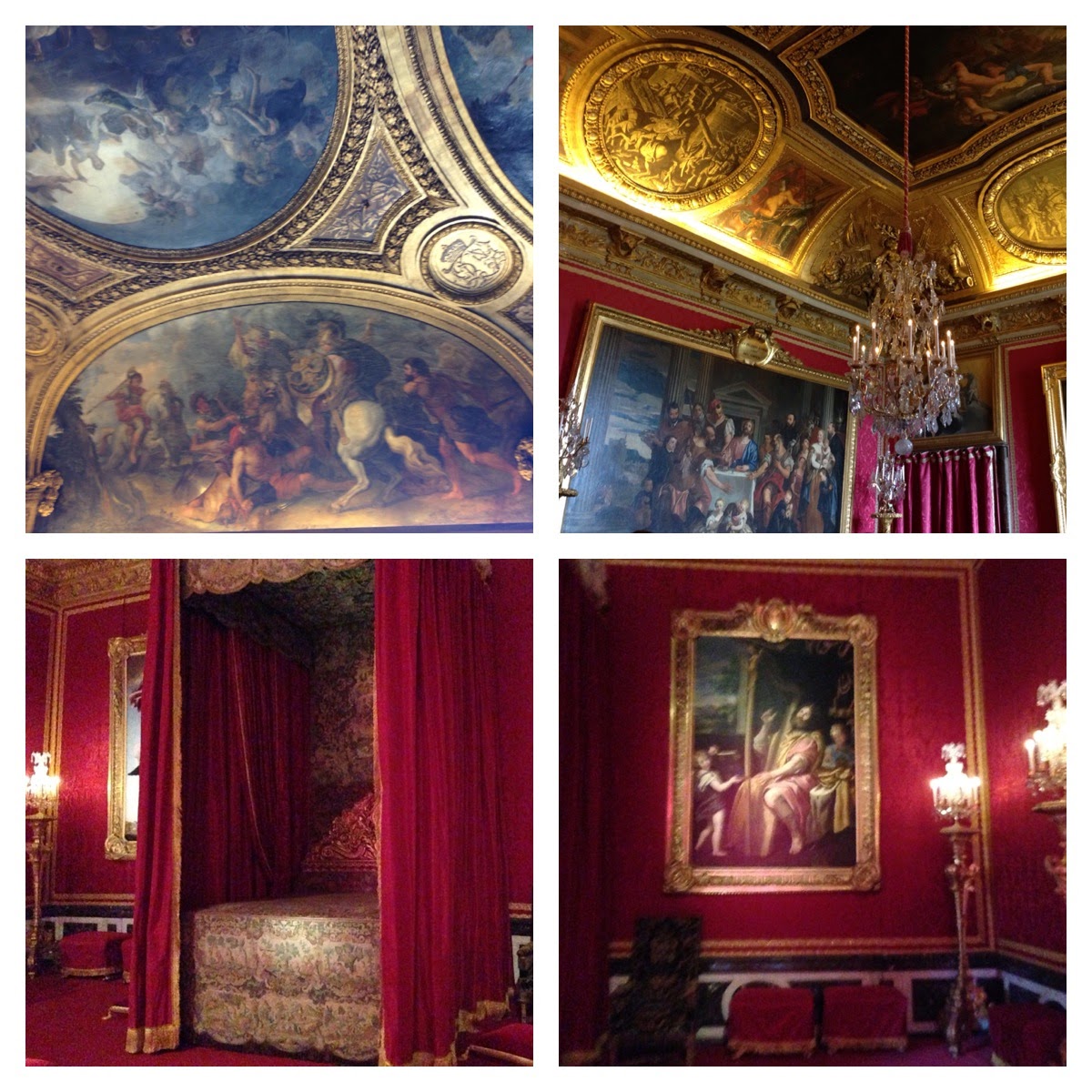
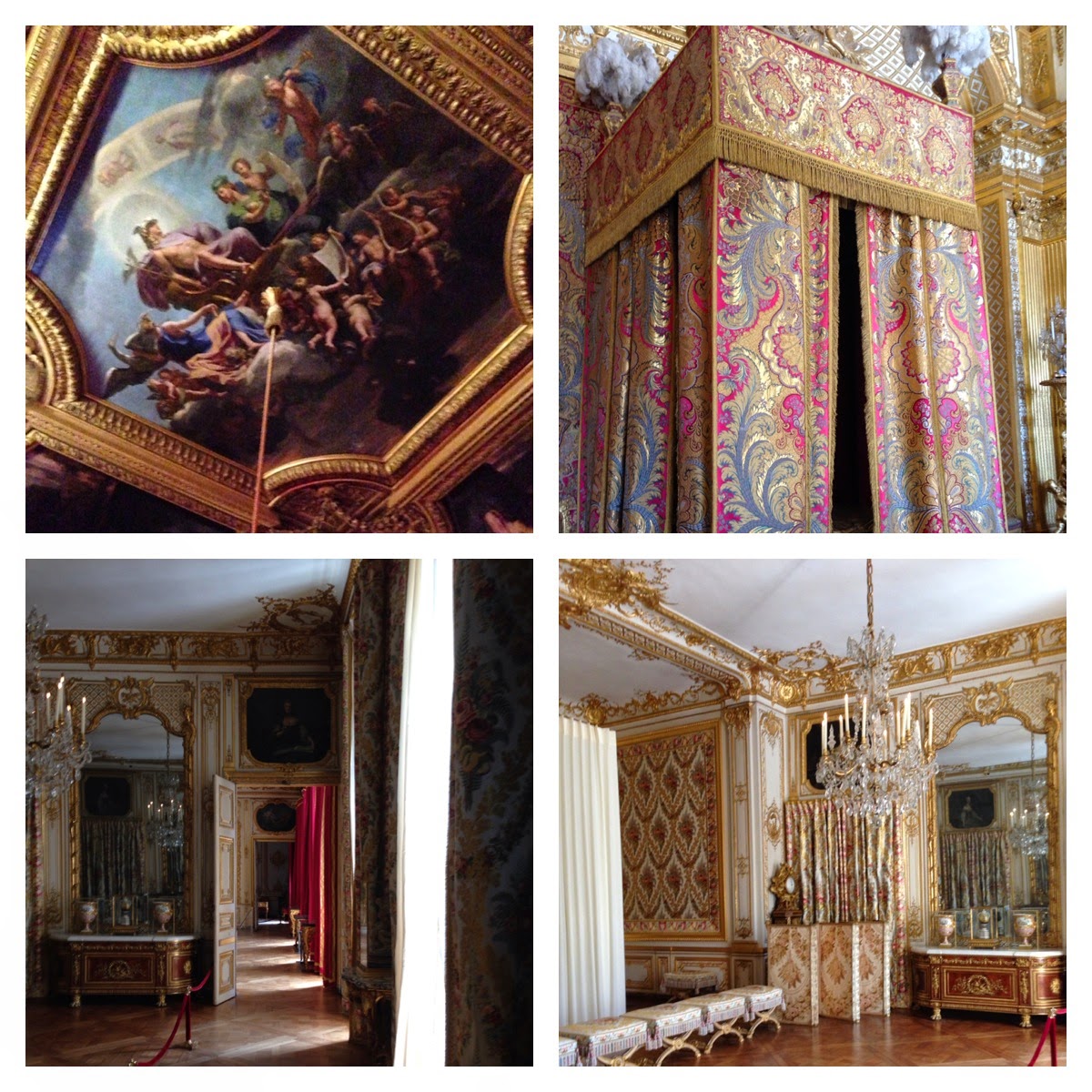
    The bottom pictures are the kings bedroom. They had separate wings!
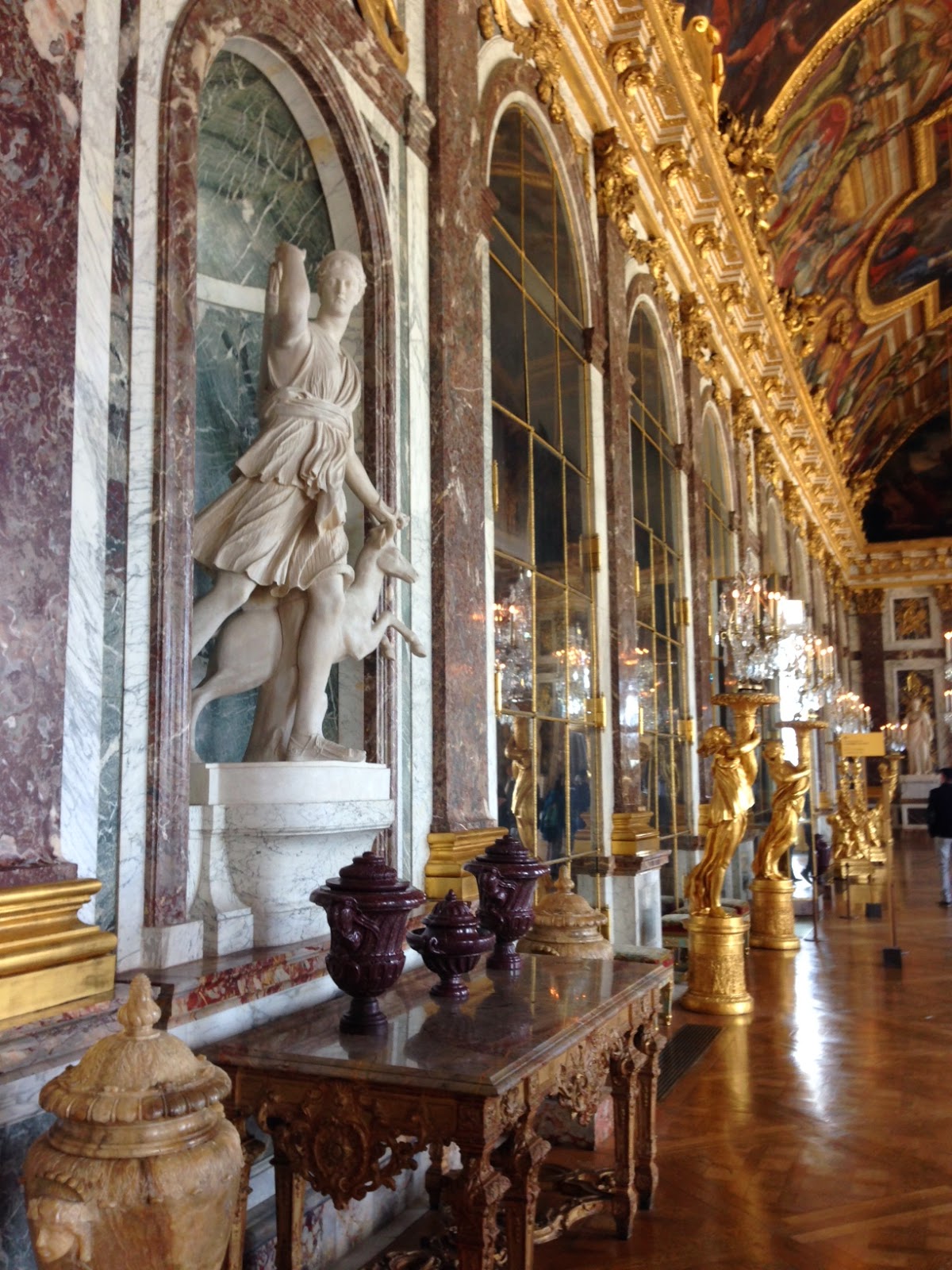
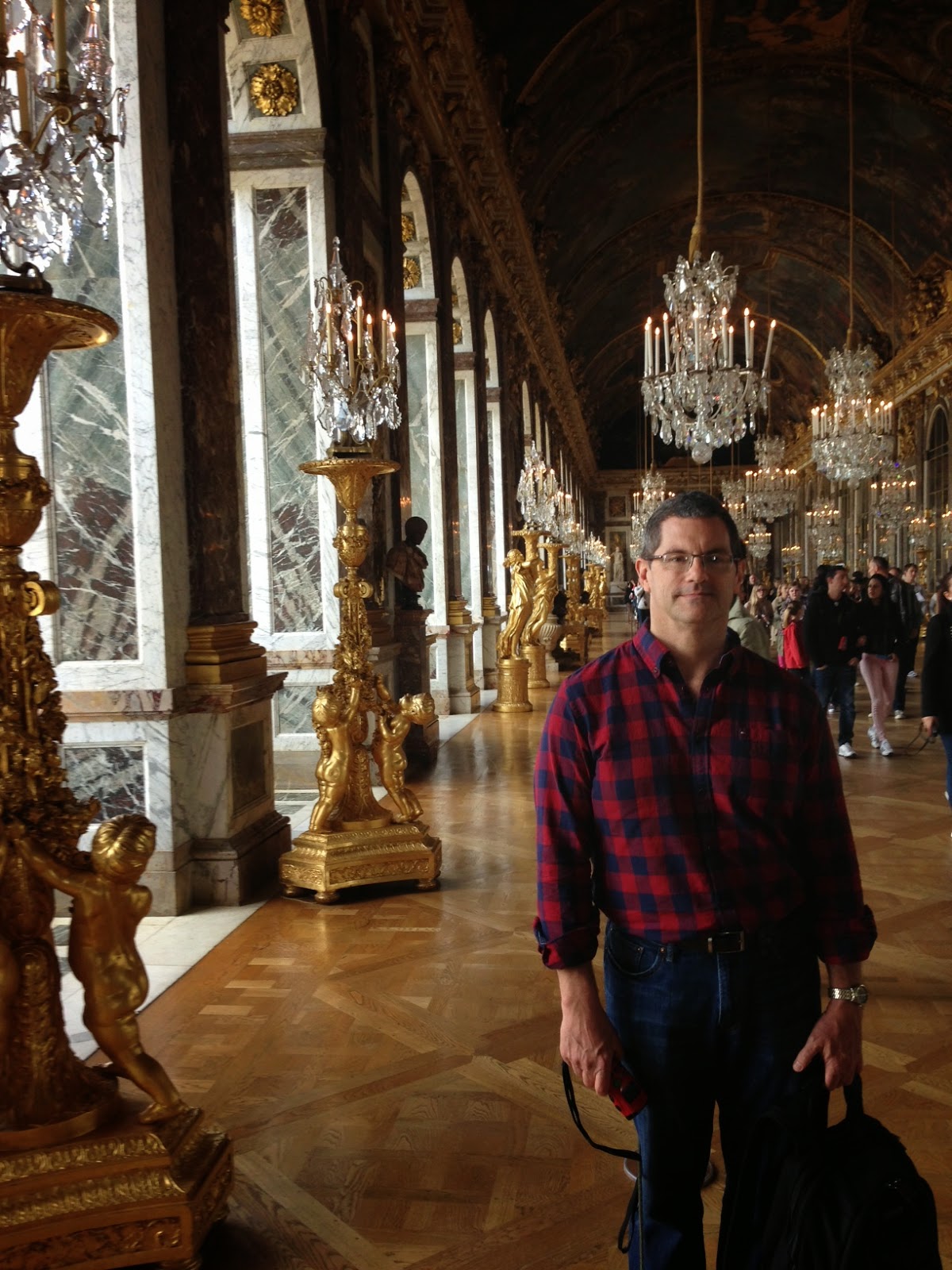
    Hall of mirrors.
    More Hall of Mirrors
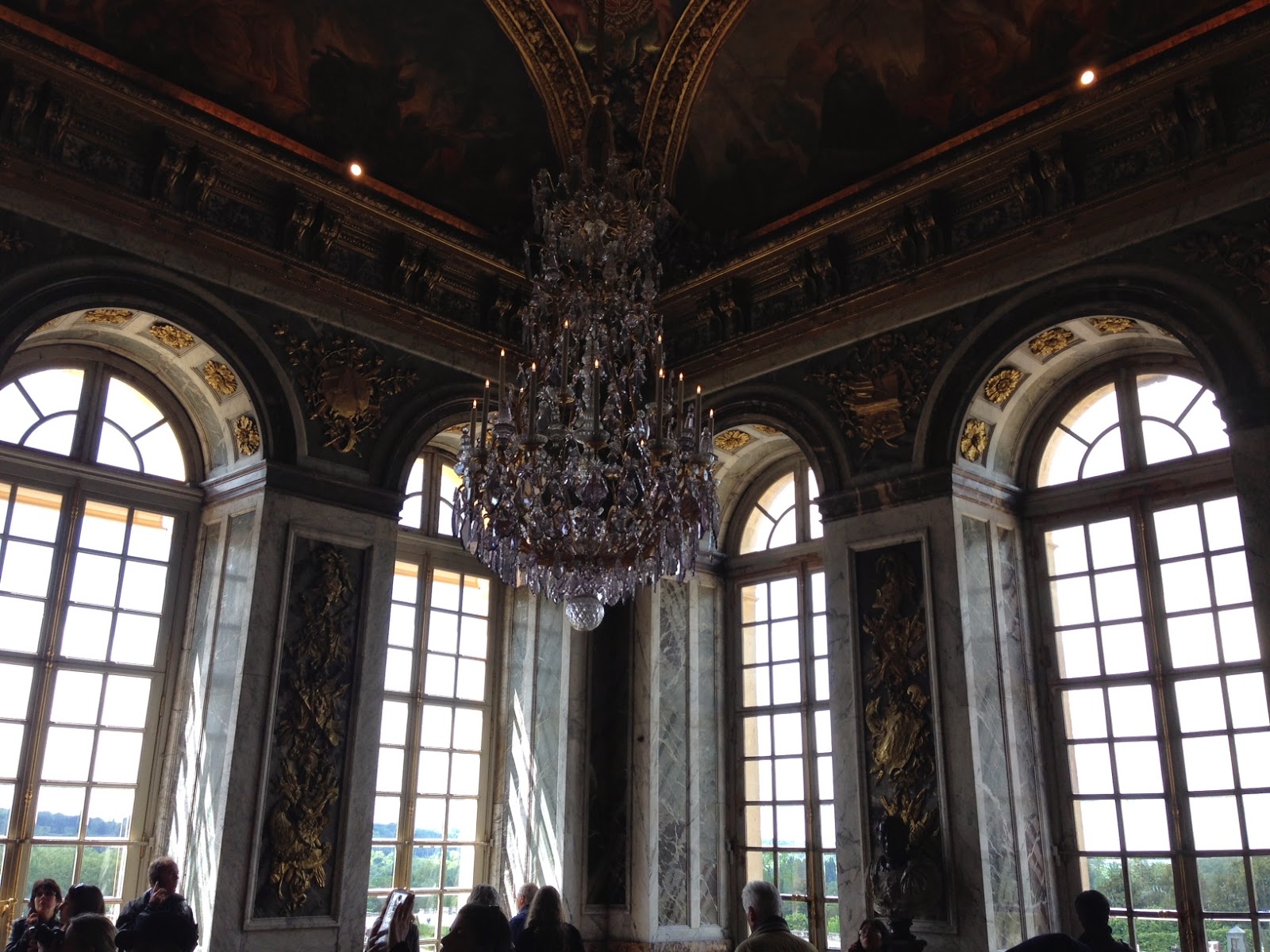
    This was our favorite room, one of the few that had windows on two walls.
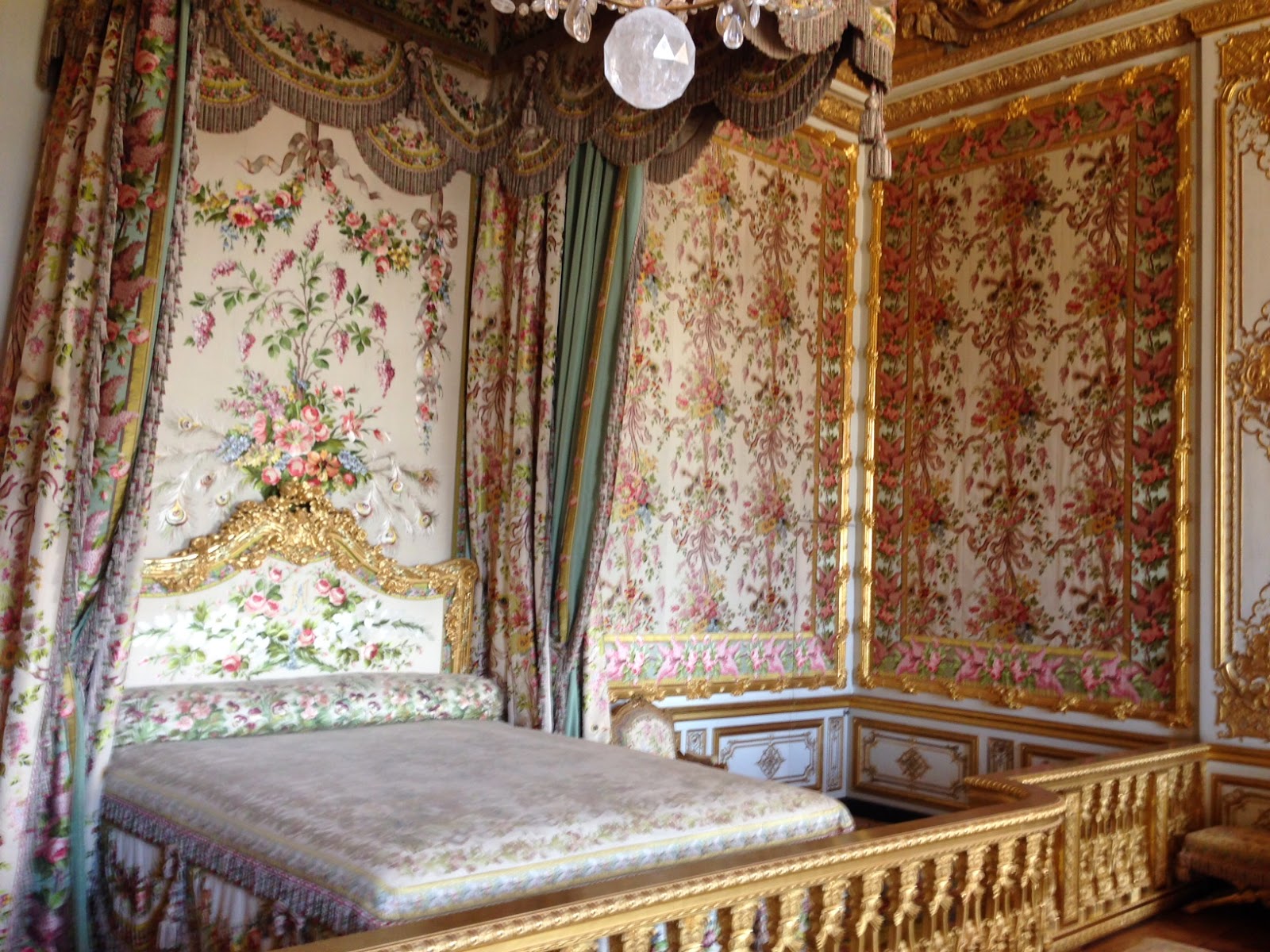
    Queen’s chambers.
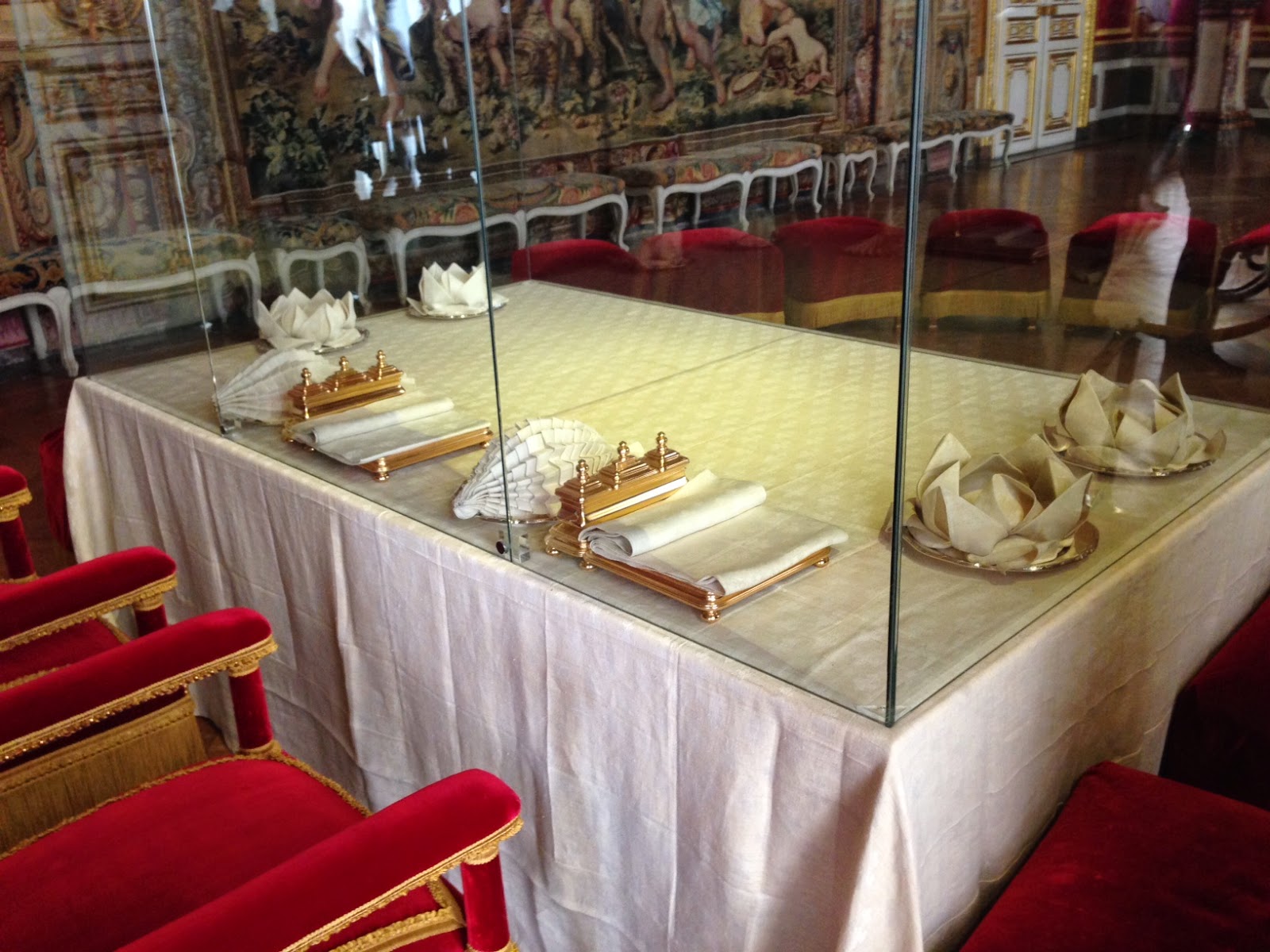
    Dining room
    So: the gardens. You’ve probably seen pictures of them, usually aerial shots. What those angles don’t prepare you for is how tall everything is. I always thought it was well manicured shrubbery, but it’s mostly very high shrubbery and lots of trees. We were really blown away by the gardens. It’s hard to describe how big this area is, but this first picture gives it a good shot. Look how far back that goes. We walked the whole thing! Remember that pool in the background, you’re going to see it again.
    It was practically a maze, although eventually you would get out pretty easily. But there were moments you just weren’t sure.
    We were supposed to do this trip yesterday, but put it off today because the weather was better. Good call!
    This was such a beautiful walk.
    Remember the pool from earlier? Same one. The gardens are managed as a park, open to the public for free.
    In the far right corner of the estate was Grand Trianon. It was a much smaller chateau used to host small parties and intimate guests. There was also a Petit Trianon, preferred by Marie Antoinette, but we ran out of time and didn’t get to see it.
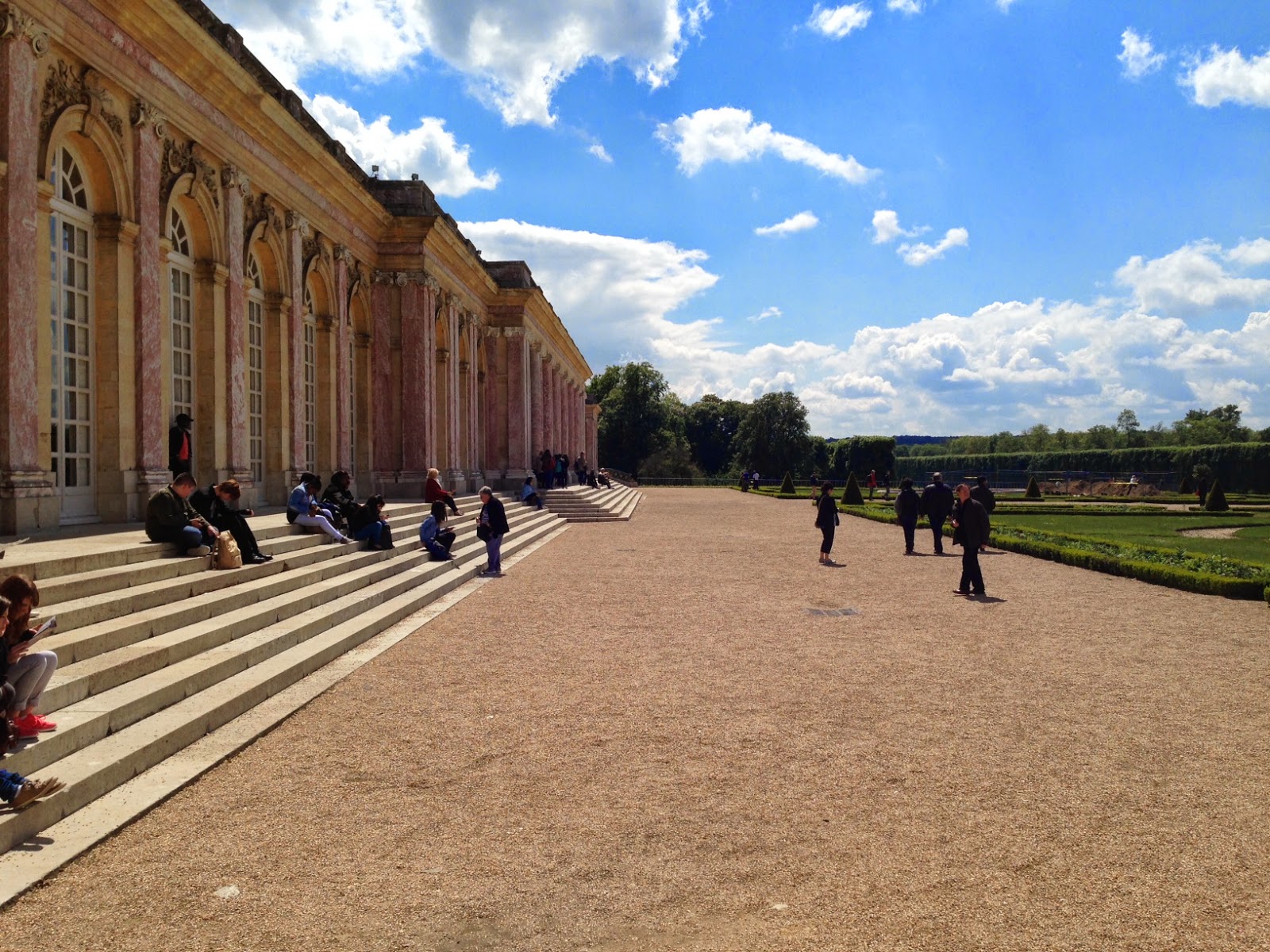
    This is what we might call a porch or breezeway linking the two wings with the gardens to my right.


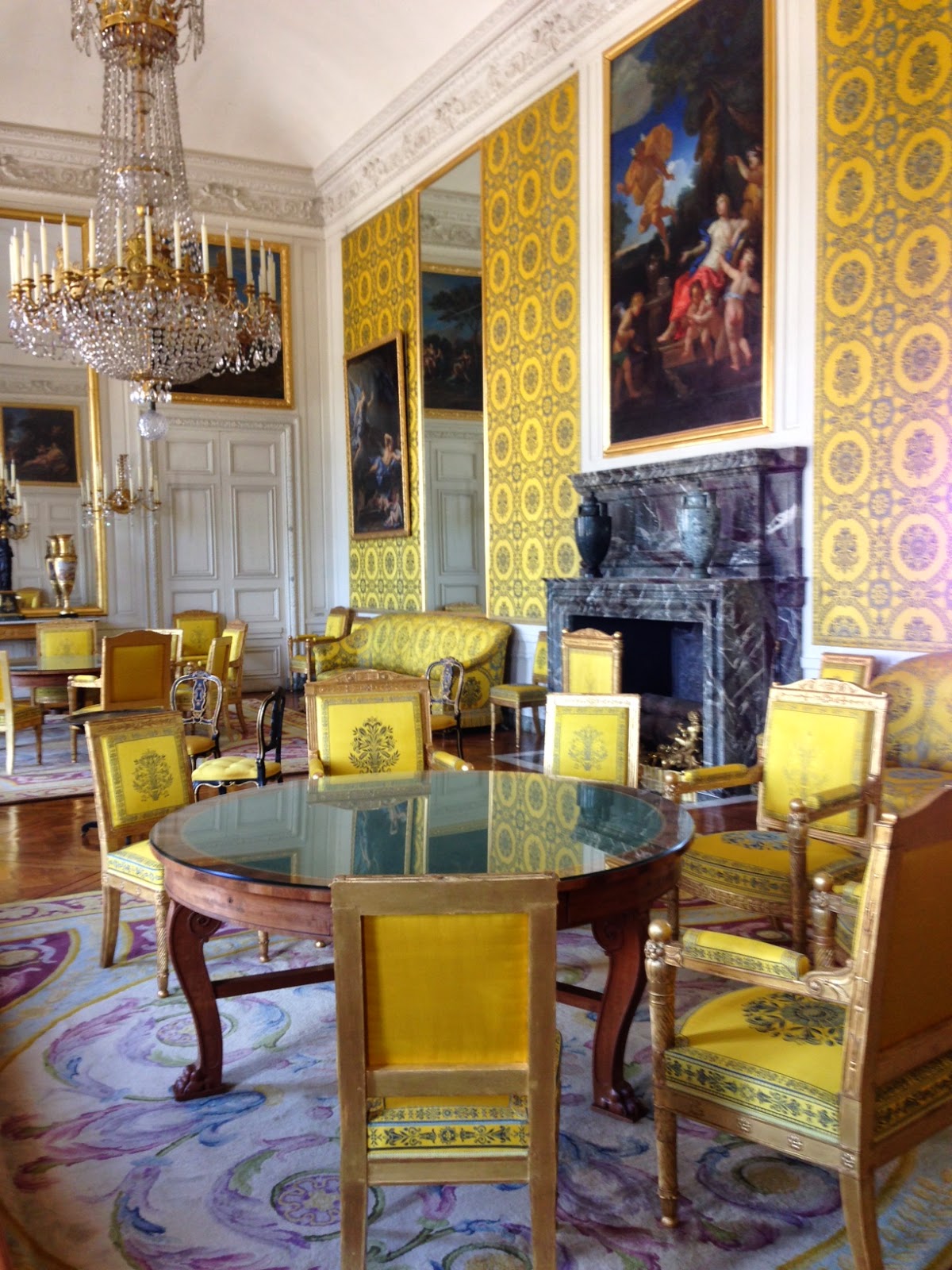
    This room was so yellow!
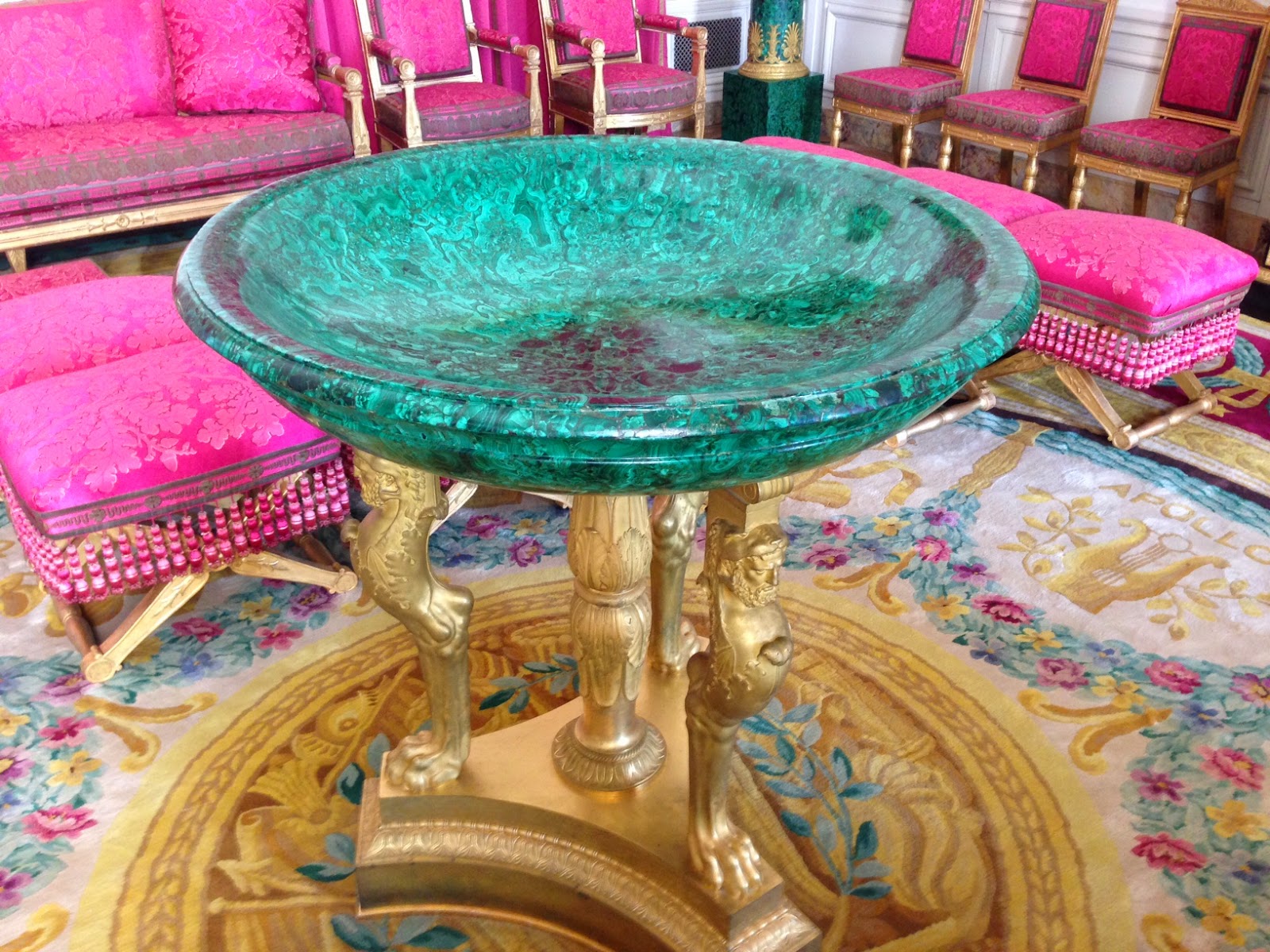
    This room had several bowls, vases, etc., made of this – malachite, a mineral and considered a semi-precious stone. Extremely valuable.
    We sat on the steps of the back porch and rested before moving on.
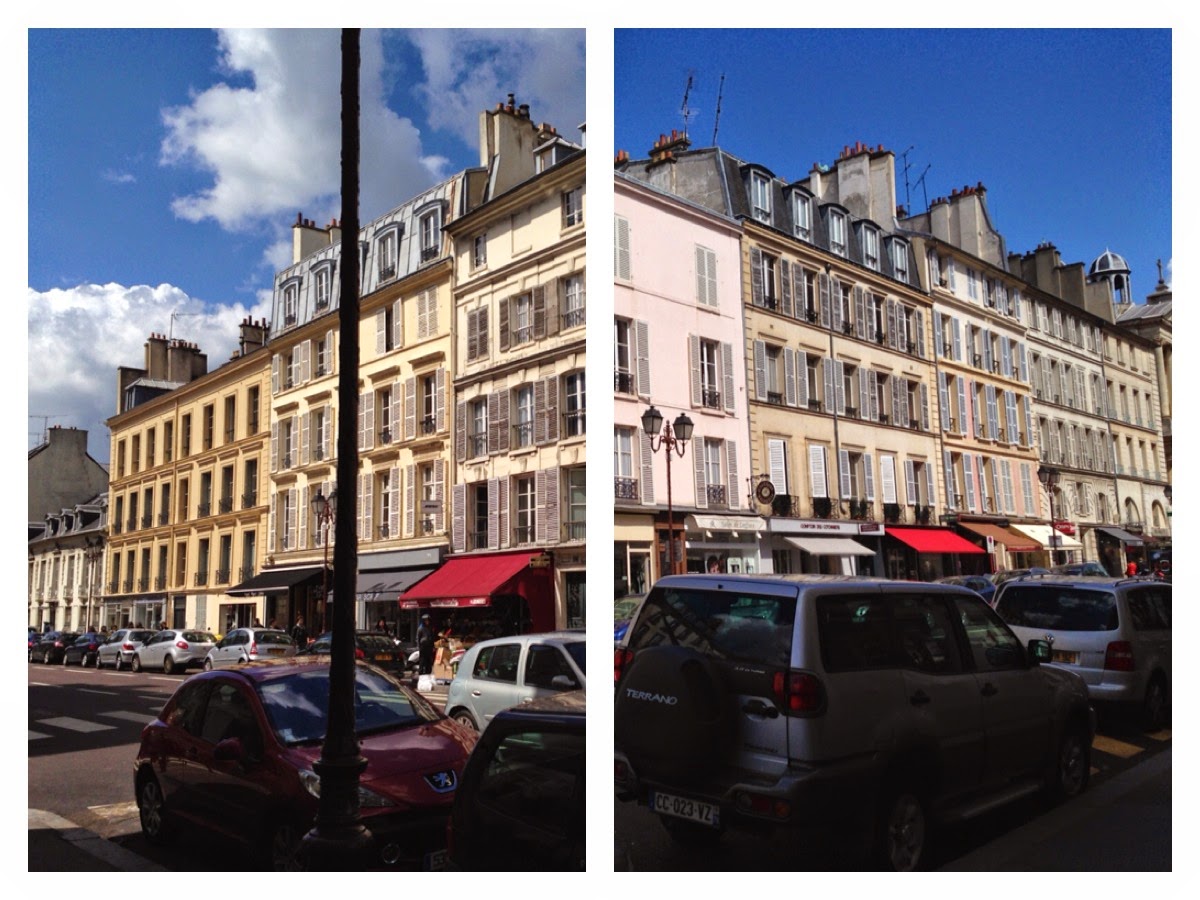
    We left the gardens around 3:15pm walked around the little town of Versailles, current population around 90k, which grew up around the palace. It is currently considered a wealthy suburb of Paris – about 10 miles away – but also has a strong tourist economy because of the palace.
    Adorable French hole-in-the-wall where we had a very late lunch/early dinner. The menu called their specialty “salty pies” – turns out it was quiche!

    Around 5:00pm we went back to the metro station and got our tickets to head back. Because of rush hour, it look much longer to get back than it did to get here – 45 minutes instead of 20, although granted we went 2 stops past where we got on. We headed to The Louvre.

    I did a little reading this morning and discovered something I didn’t know. The original building was constructed in 1190 and was the royal residence for several centuries until Louis XIV moved it to Versailles in 1682. So it was kinda cool to see them both in the same day. But it’s definitely a two-fer visit, because the palace itself is spectacular.

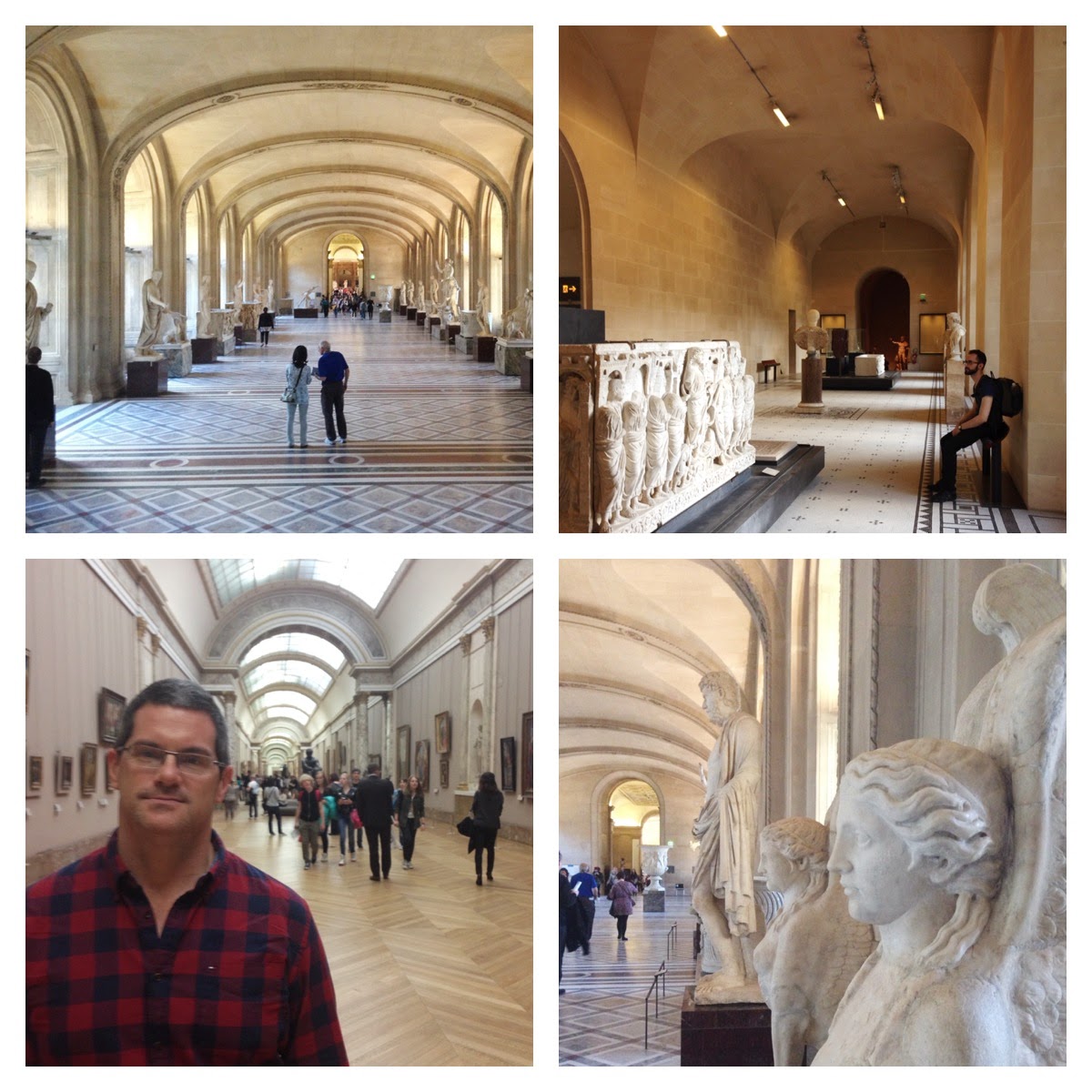
    This is the largest museum in the world, with 35k pieces spread over 73k square meters – or roughly 220k square feet. We had originally planned to spend 6 hours here in two shifts but that just hasn’t worked out. Oh well! We moved through it pretty quickly and saw what we could in 2.5 hours. Dan really loved the design of the place.

    And I was pondering this pyramid monstrosity (see yesterday’s post for a better picture) on the train this morning. Yesterday I referred to it as a juxtaposition; maybe it’s more than that: a symbol of antiquity done in a modern design set against a medieval backdrop. Three periods collide. Or something like that. It’s starting to grow on me. The photo below is taken from inside the pyramid – you go down into it as the main entrance, so that’s looking up at ground level from below.

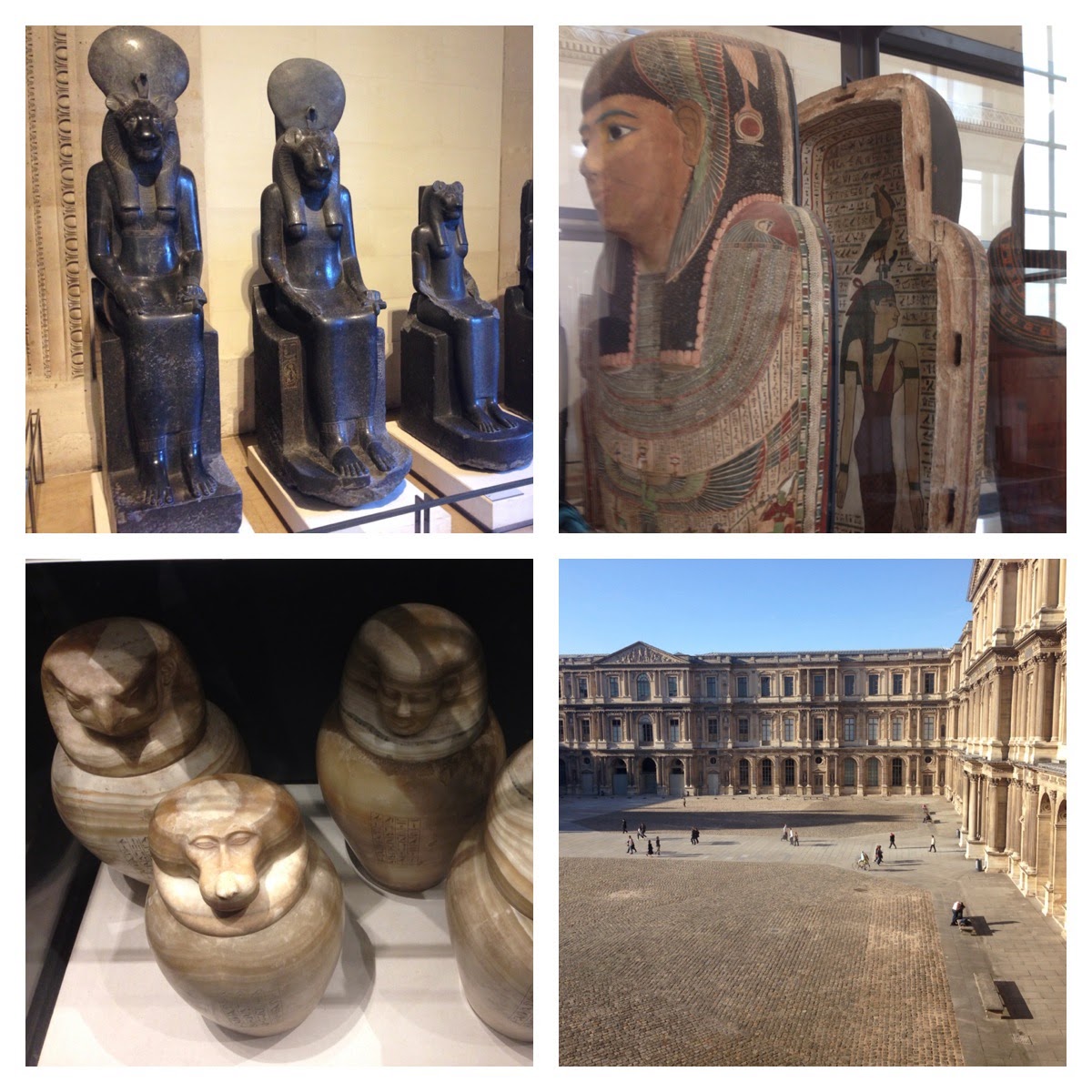
    We really didn’t intend to spend time in Egyptian Antiquities, but somehow got sucked in, and then we couldn’t get out! That really was a maze.
    Luckily, windows to the outside helped you orient yourself to the map so you could get your bearings.
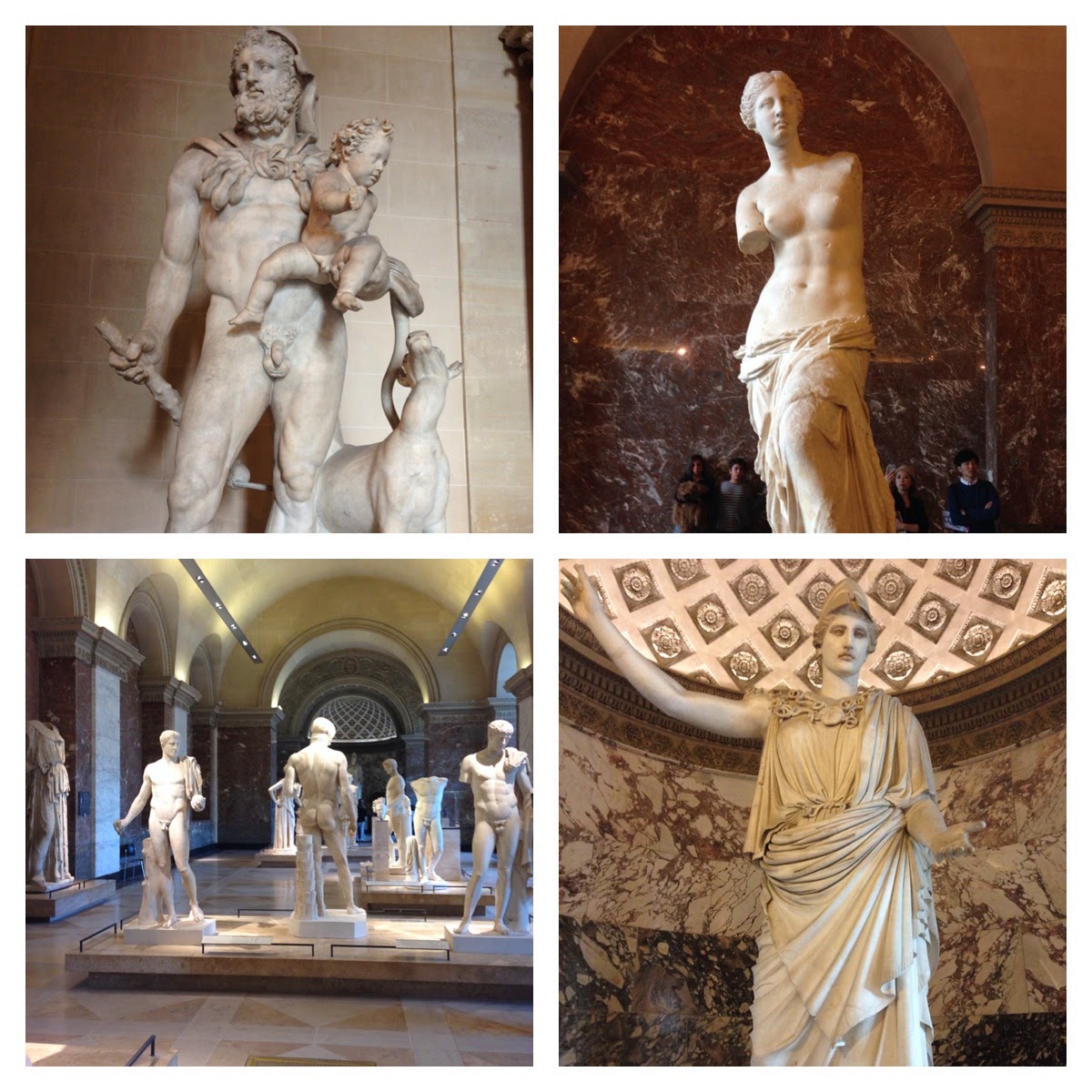
    Greek and Roman Antiquities which I really did want to see. Top left is Hercules; Top right is Venus de Milo
    This Italian Painting section begins in the gallery bottom left. Guess where we’re headed?
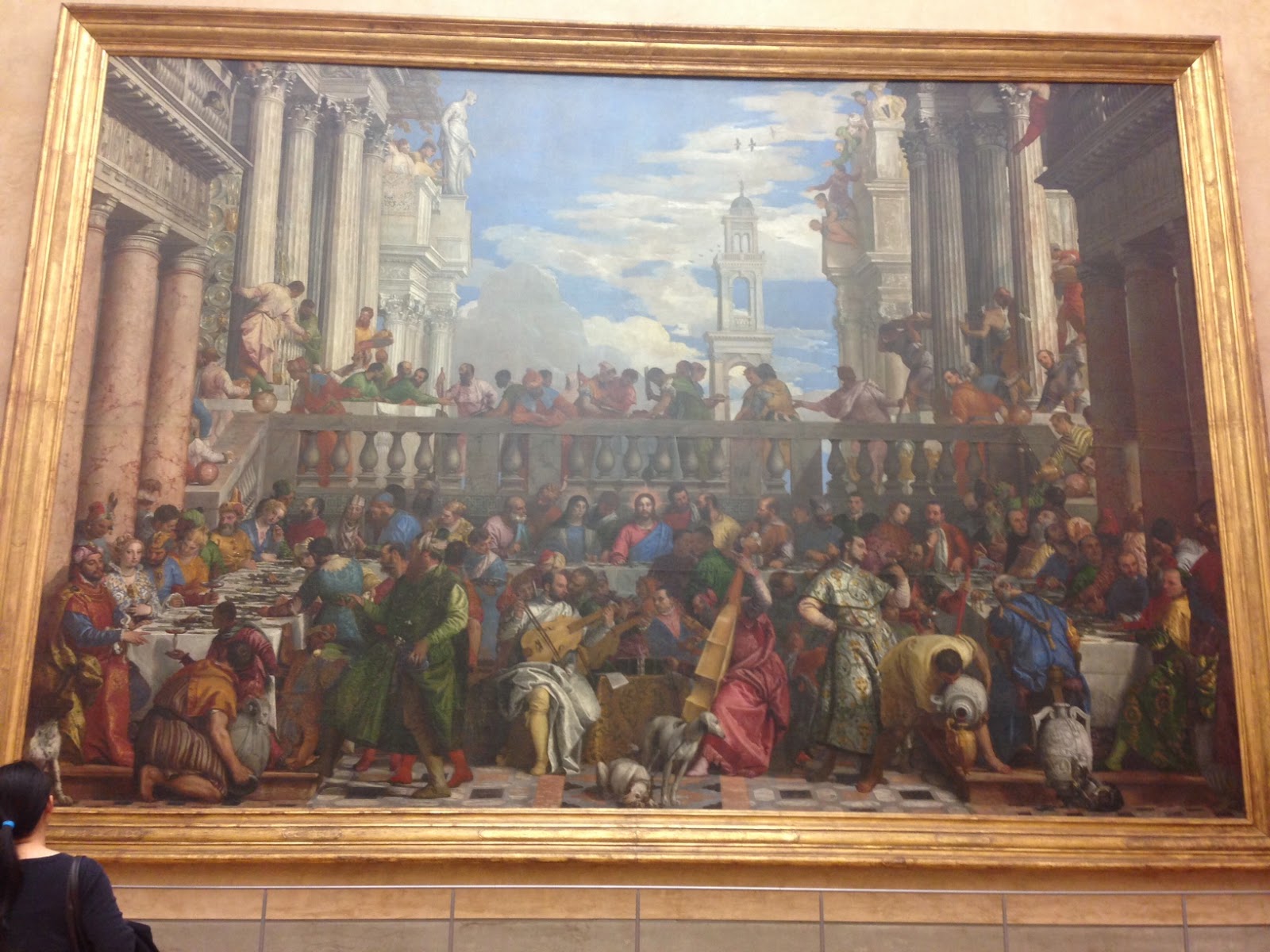
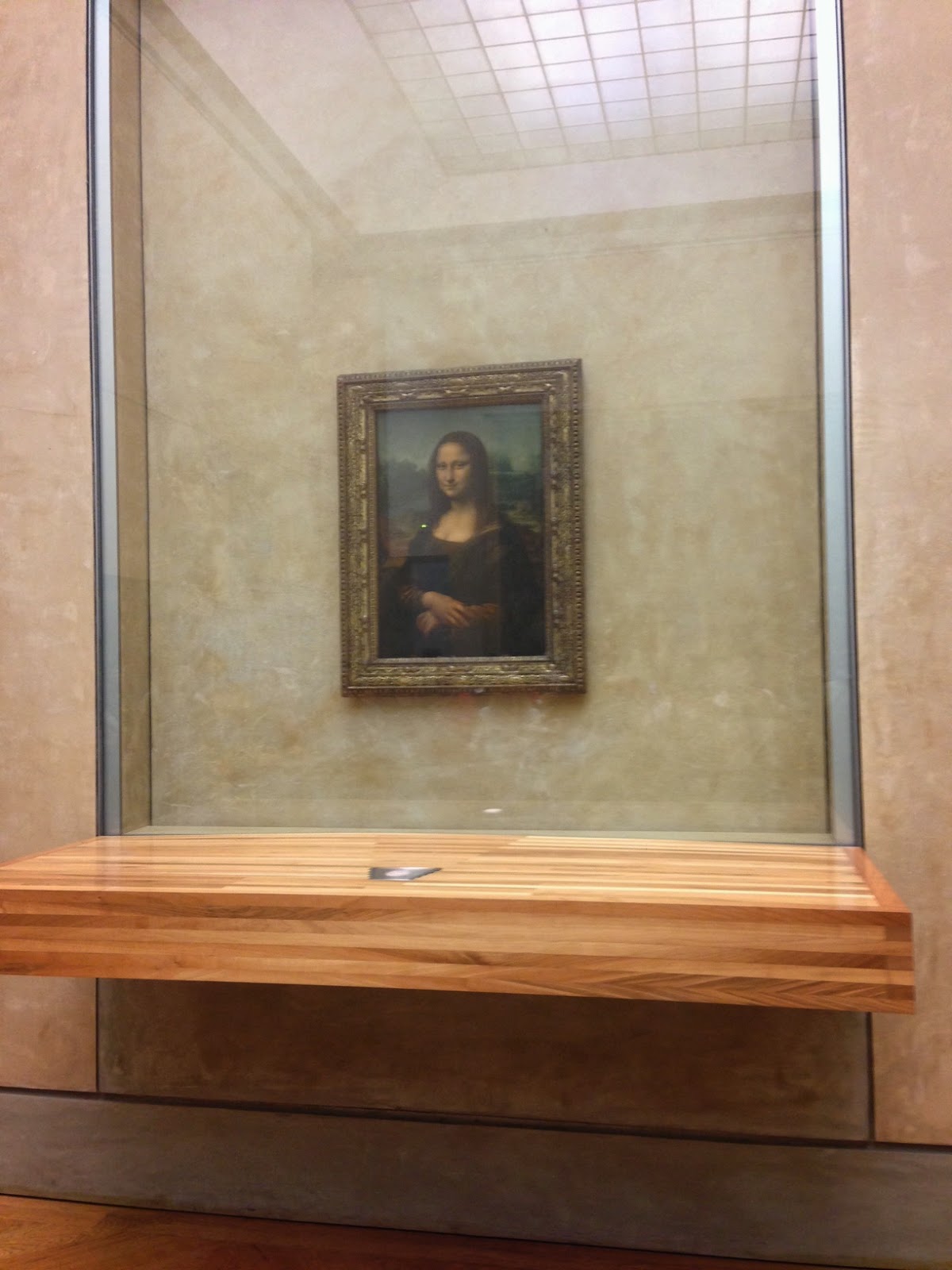
    The Wedding Feast at Cana by Paolo Veronese, 1563. This is massive, in a side gallery off of the very long one above. It is across the room from the one that gets all the attention below, but is seriously more spectacular.
    This is way bigger than I was lead to believe by people who have seen it.
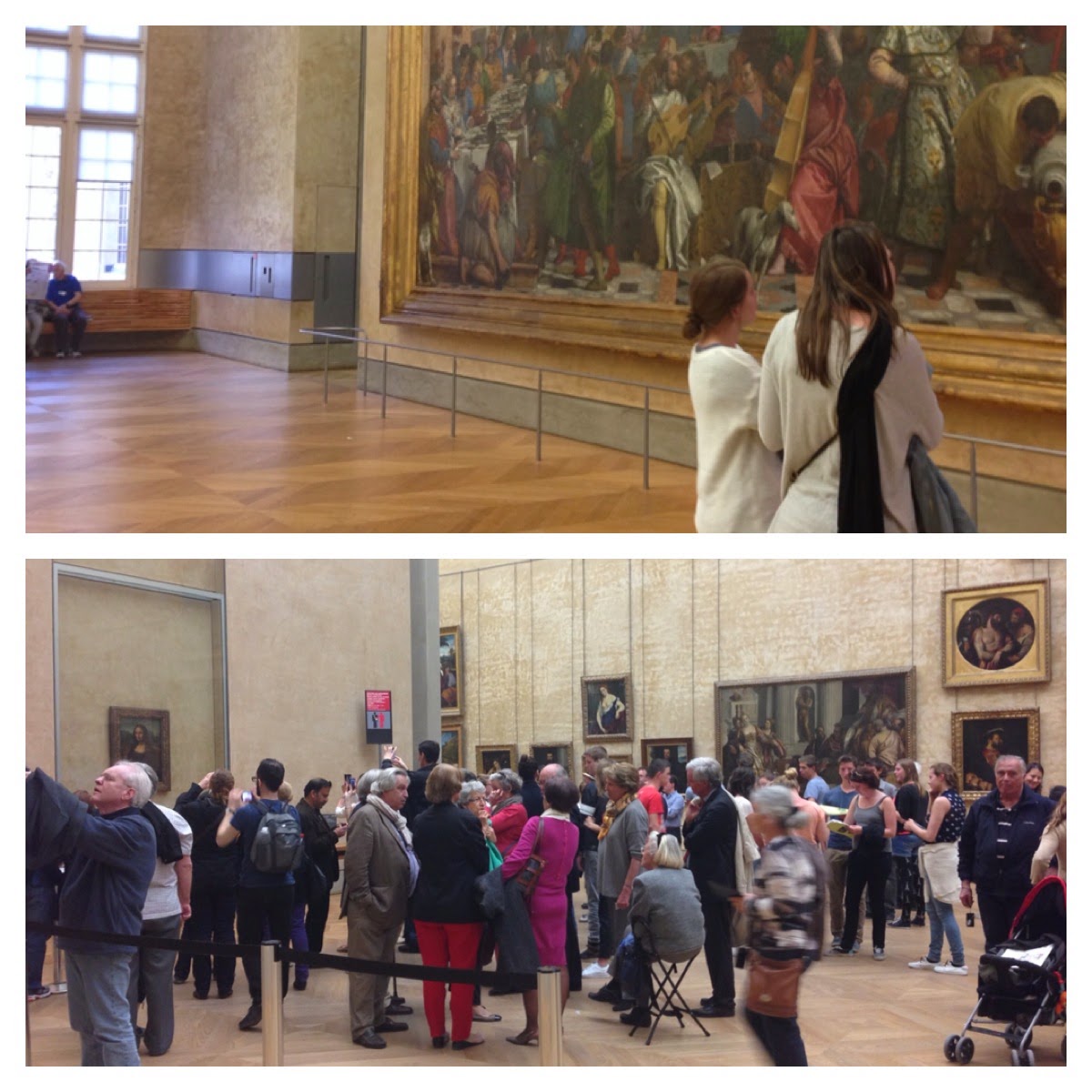
    Top: the lack of attention at the Wedding painting. Bottom: the chaos at the Mona Lisa not 50 feet away. And this was late in the evening, around 8:15pm.
    We were really tired after a long day so cheated and took the metro home.
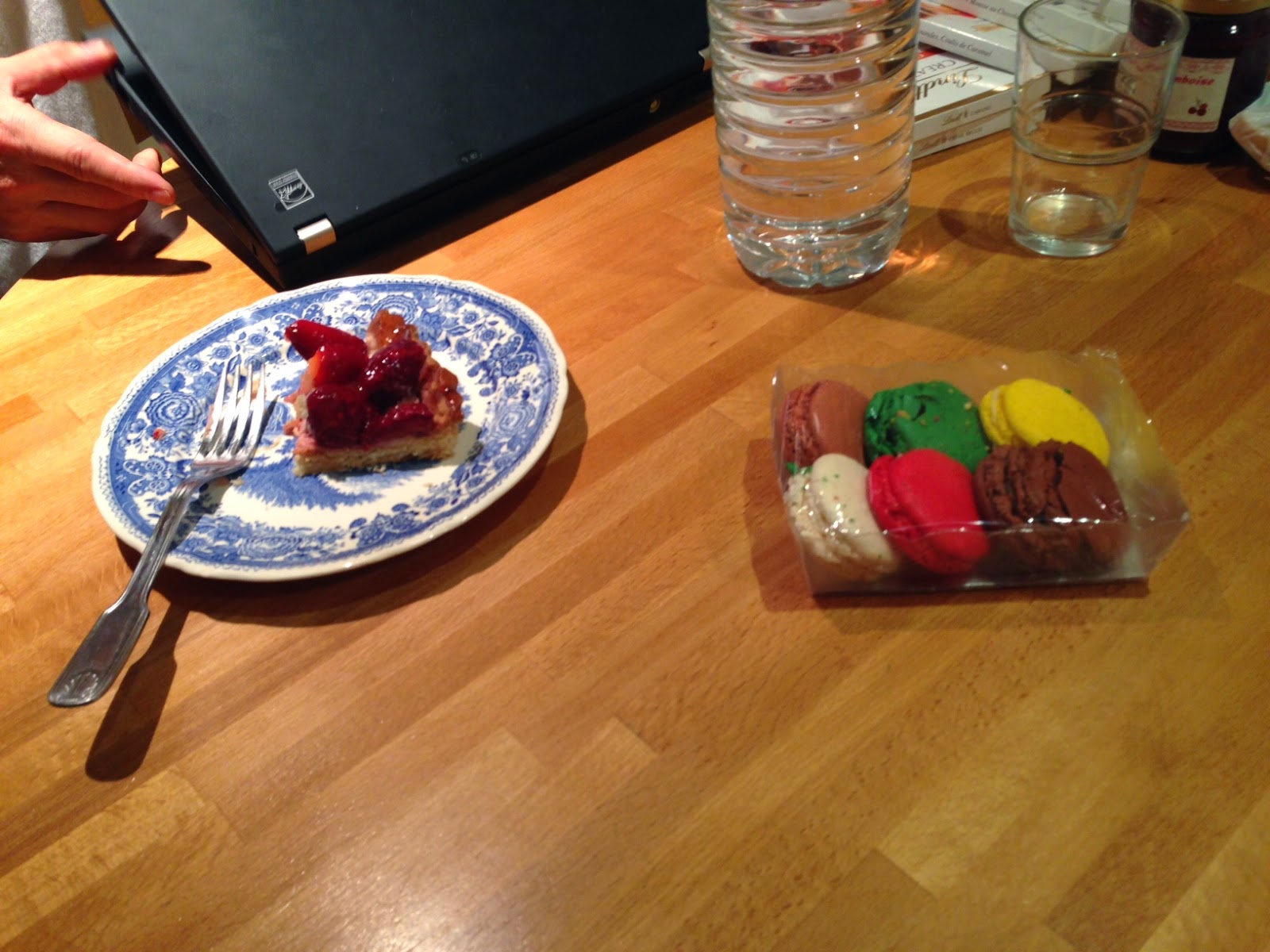
    A late dessert: Dan finished the strawberry tart we bought on Saturday at the open market; I started on some macaroons we bought at an adorable patisserie in Versailles. The French are crazy for macaroons and they are pricey in our opinion. Typically we seem them around 1.50 to 2.00 in Euros; these were a mere 1.10. That’s like $1.50 for 2 bites if you want to make it last. I had the chocolate and the lemon tonight. Worth every penny.
  • Day 6: Paris, Part 3 – Musee d’Orsay

    Day 6: Paris, Part 3 – Musee d’Orsay

    It’s 10:40am, Dan is still asleep. He didn’t sleep well last night so I’m glad he’s getting some rest now. We had plans to leave by 8am; he needs to get to a Bayer office here in Paris to take care of a computer issue he’s having as he still needs to do some work while we’re traveling. That he didn’t budge when I woke up at 8am and let him know what time it was told me a lot about how tired he is. So he sleeps.

    I went downstairs and over to the bakery around the corner – because there’s one around every corner! – and got a different kind of baguette from yesterday and 2 croissants. Dan had said yesterday “I’m surprised you didn’t get croissant” and when he said it so was I. It’s perhaps my favorite baked good – so simple – but yesterday it hadn’t even crossed my mind. The one I had this morning was perhaps the best I’d ever eaten. So much rich buttery flakiness. It’s astounding how much better the breads are here. Not sure what that’s about. But there are TONS of bakeries, bread and pastries are a serious part of the culture. Our first walk out of the flat on Saturday, we nearly ran into a little boy, maybe 6 years old, running up the street with two baguettes in his arms. So cute. So Parisian.

    So I’ve been sitting here drinking coffee and continuing my Churchill reading. I’m just past mid-way of the 2nd of 3 volumes, and am only at 1939. But the background I get from this reading puts so much of everything else I’m seeing into perspective it’s very valuable.

    It also struck me as I was sitting here how little I’ve thought about work since I’ve been here. When we left that first day I was afraid I was going to have trouble disconnecting, but it happened pretty quick, as it did last year. There’s something about being immersed in a foreign culture that forces that I think. There’s no automatic pilot whatsoever, you have to think about everything. Or at least I do. And not that it’s hard or strenuous, there’s just so much to take in and process, it leaves little room for anything else. But I haven’t figured out I’m in a different country yet – I keep saying Danka instead of Merci! We have 3 more days here, maybe I’ll get the hang of it before we leave.
    —————————————————-
    Dan woke up about 11am, we made the same breakfast we had yesterday, still using the groceries from the open market on Saturday: eggs, sausage, 2 kinds of cheese, tomatoes, and of course fresh bread. Yesterday we’d only eaten 2 full meals because we had such a late start, and we did the same today. We left the flat right at Noon. Dan went off to work and we agreed to meet at the Louvre when he was done; he would text me when he was on his way and it would take him about 30 minutes to get there. So, here are a couple of other great advantages to adding the international package to the phone for the trip: we got to text, I had access to GPS when on my own, and Google maps gives great directions on how to use public transportation. At least it has here; we’ve used it a lot and it’s been dead on every time.

    We had only walked up a portion of Champs Elysees yesterday, and I wanted to walk the other end of it to see where it begins, but didn’t want to walk the whole thing. It’s actually kinda boring – lots of retail stuff that you can see at home, some other stuff too of course but touristy. So I took some alternate paths to reach it less than mid-way between the beginning and Arc de Triomphe. I love walking through normal local neighborhoods in any city, but especially foreign ones. More than almost anything else you get a sense of what it might be like to live there.

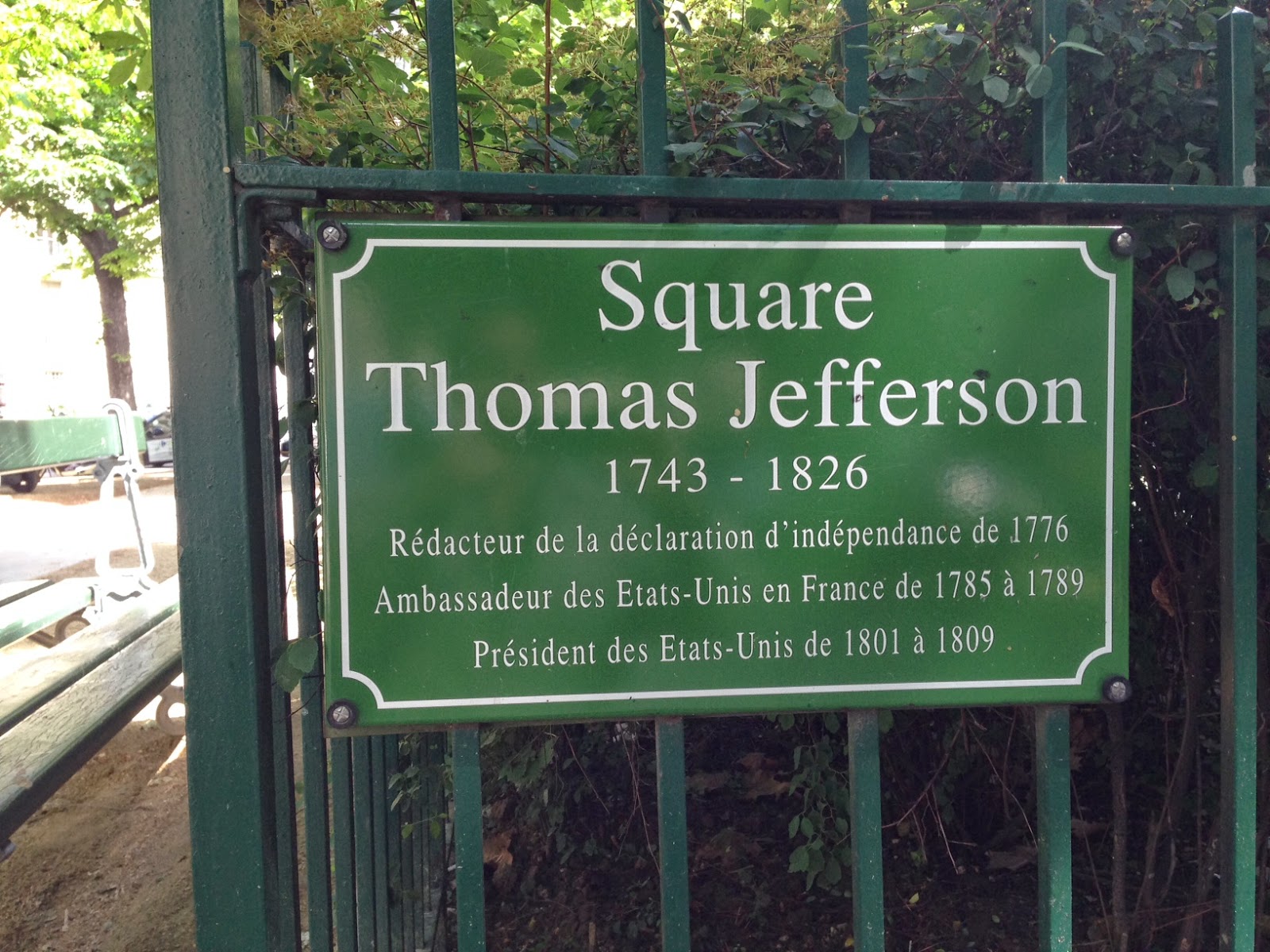
    Parisians must have a thing for American Presidents. We noticed it the first day: one of the first streets we were on was President Wilson Avenue, as in Woodrow. Presumably for sending American Troops into WWI. Britain and France had been in it since 1914 and were close to losing from exhaustion and lack of resources – human and material. It’s conventional wisdom here that the war wouldn’t have been won without USA participation, which wasn’t until 1918.

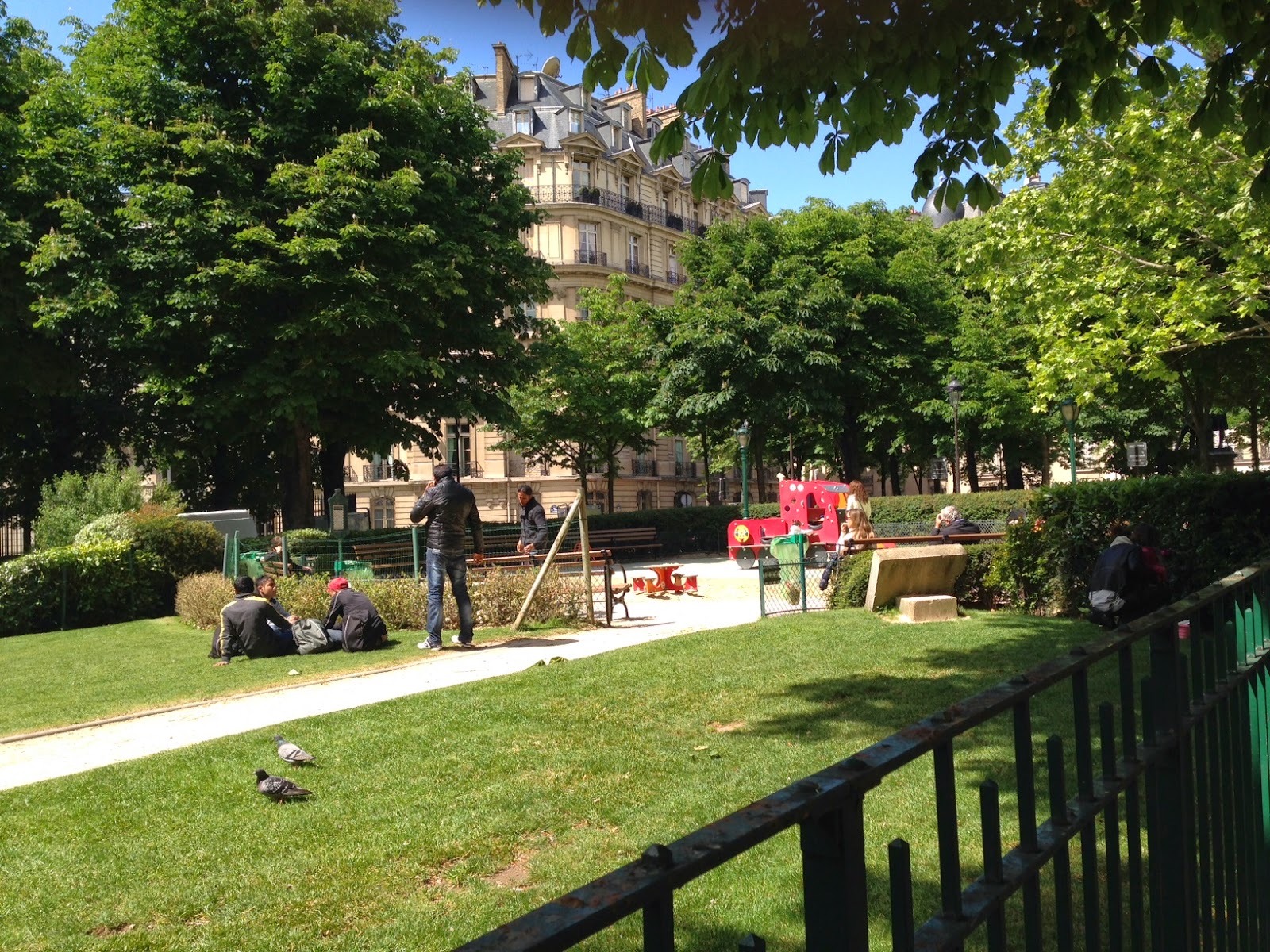
    So this morning I turn a random corner and run into this cute little park.


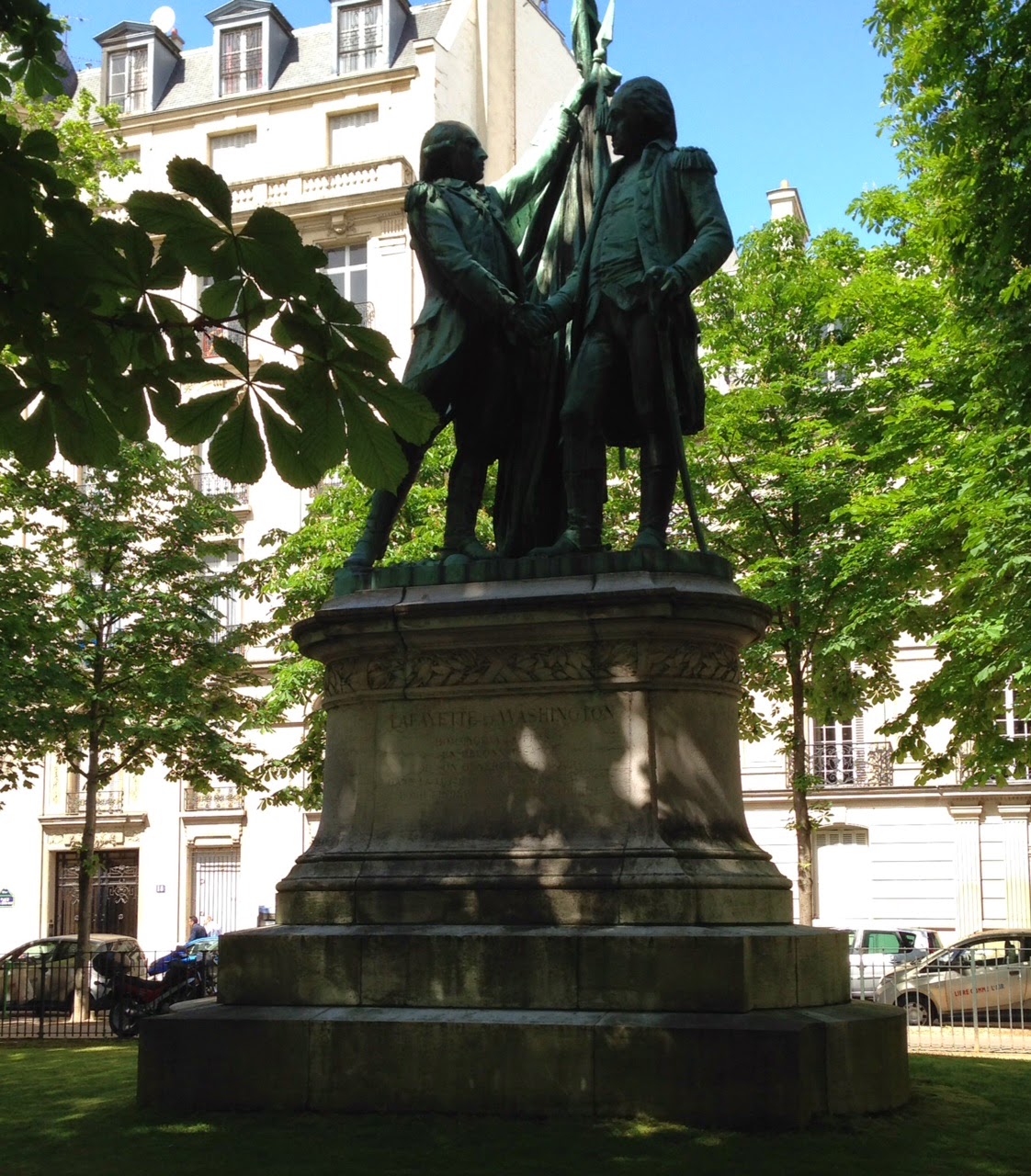
    And across the street from that is this statue of George Washington with Lafayette.

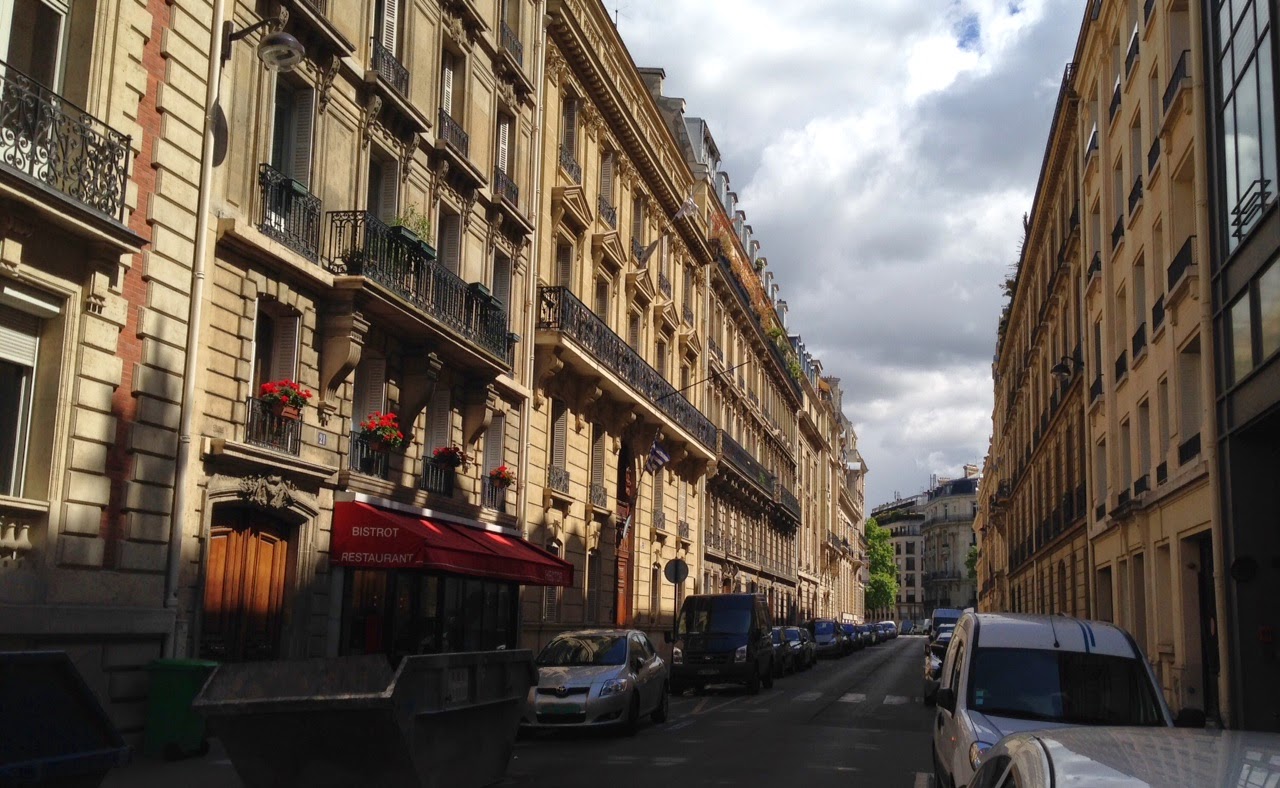
    Below is an example of a random local street, classic Paris: wrought iron fences on the balconies, a little restaurant with red awning and pretty red flowers on top. Street after street of this stuff. And this one is light, there’s often more eateries and stores on the street level, although some of our immediate neighborhood appears to be 100% residential. But it still looks like this.


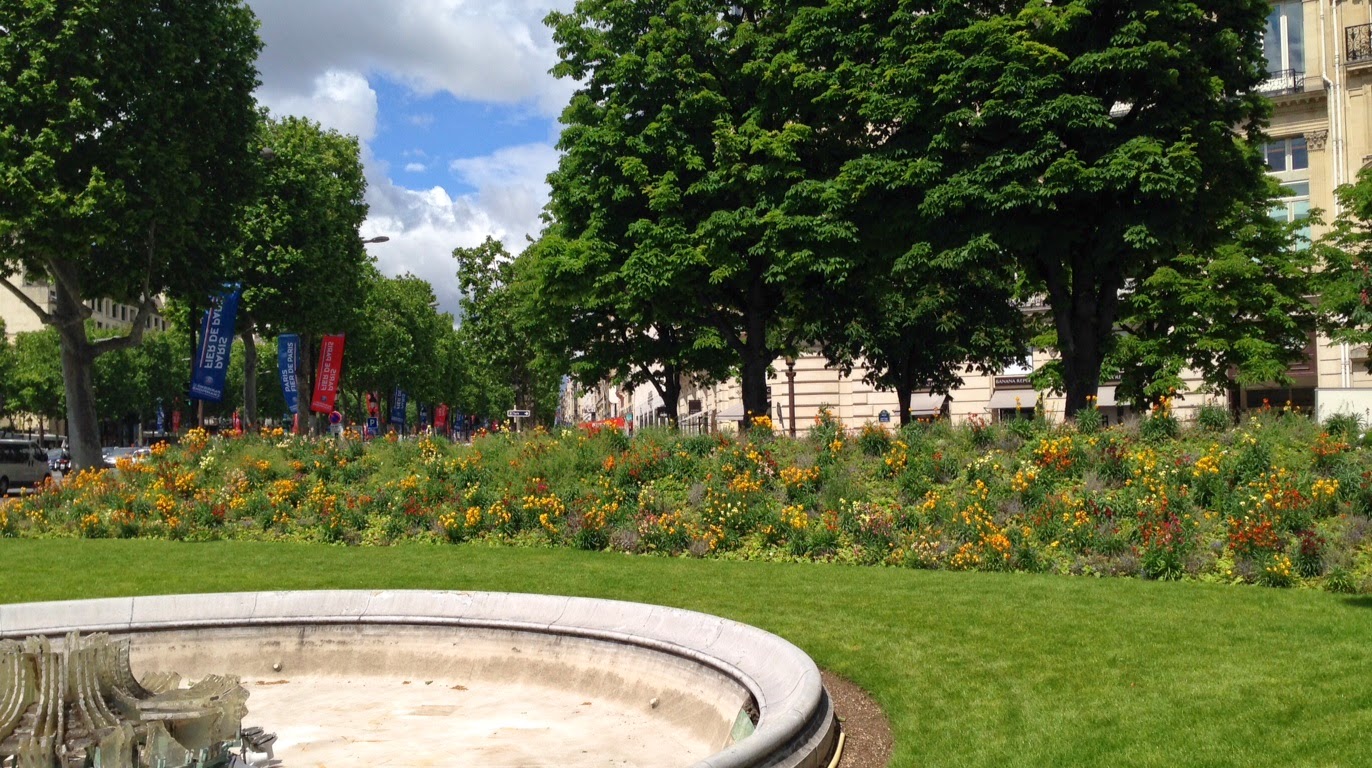
    I get here and recognize the intersection because of the flowers and the fountain, we’d crossed it before from a different direction. You can’t really tell in this picture but the flowers are growing upward, like in a bank. Each corner of this huge intersection looks like this. By this time I’m on Champs Elysees, so I look up to see what the cross street is.

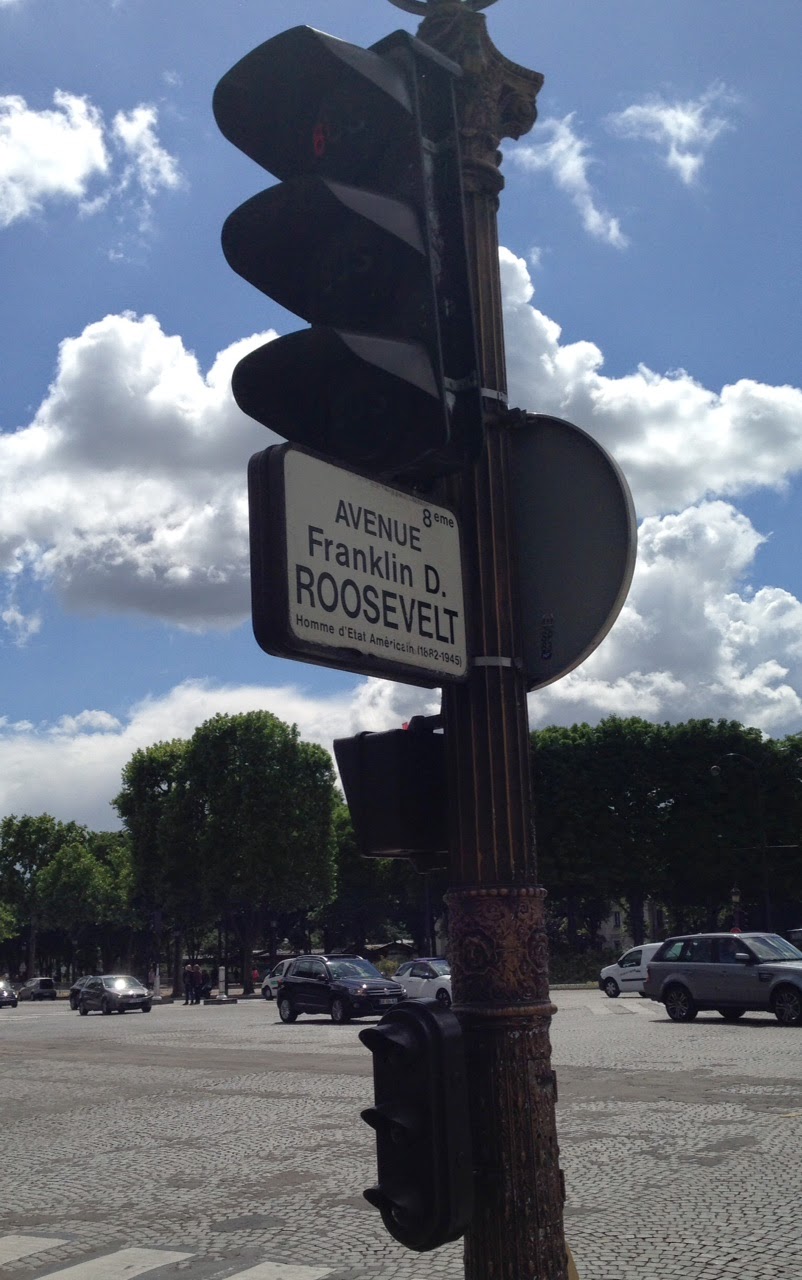
    And there you go: more American Presidents, this one names for FDR. The next street? Avenue Winston Churchill. Both of these for their contributions to the winning of WWII.

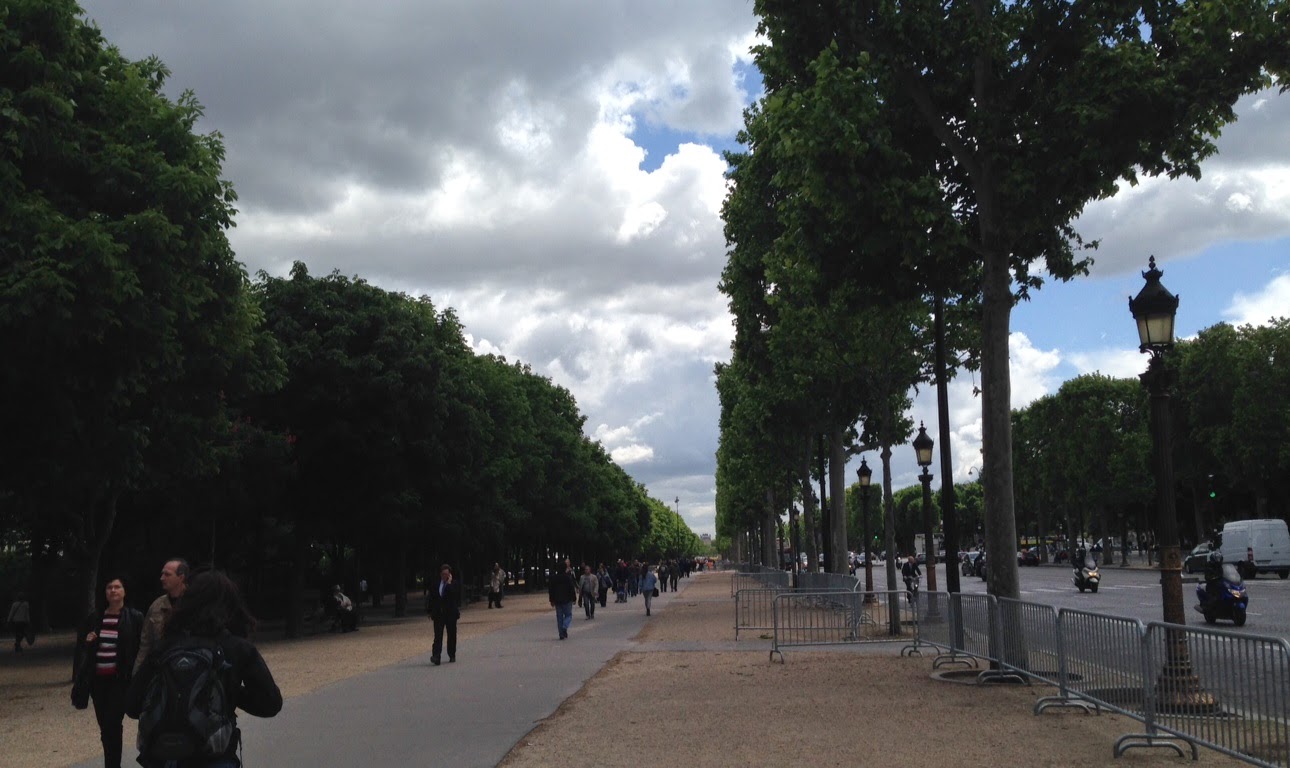
    Bottom quarter or so of Champs Elysees where it’s just street lined walkway.
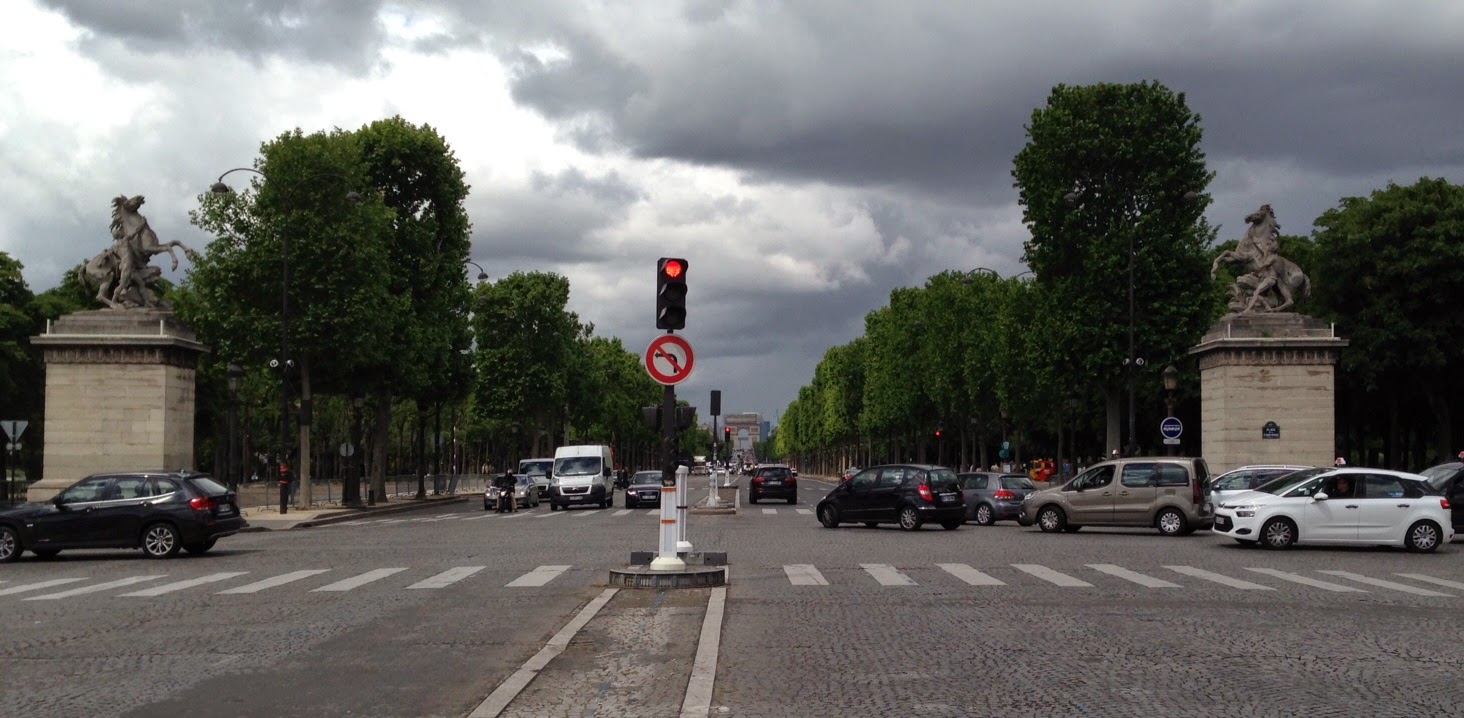
    Beginning of Champs Elysees; if you look carefully you can see the Arc de Triomphe in the middle about a mile away.
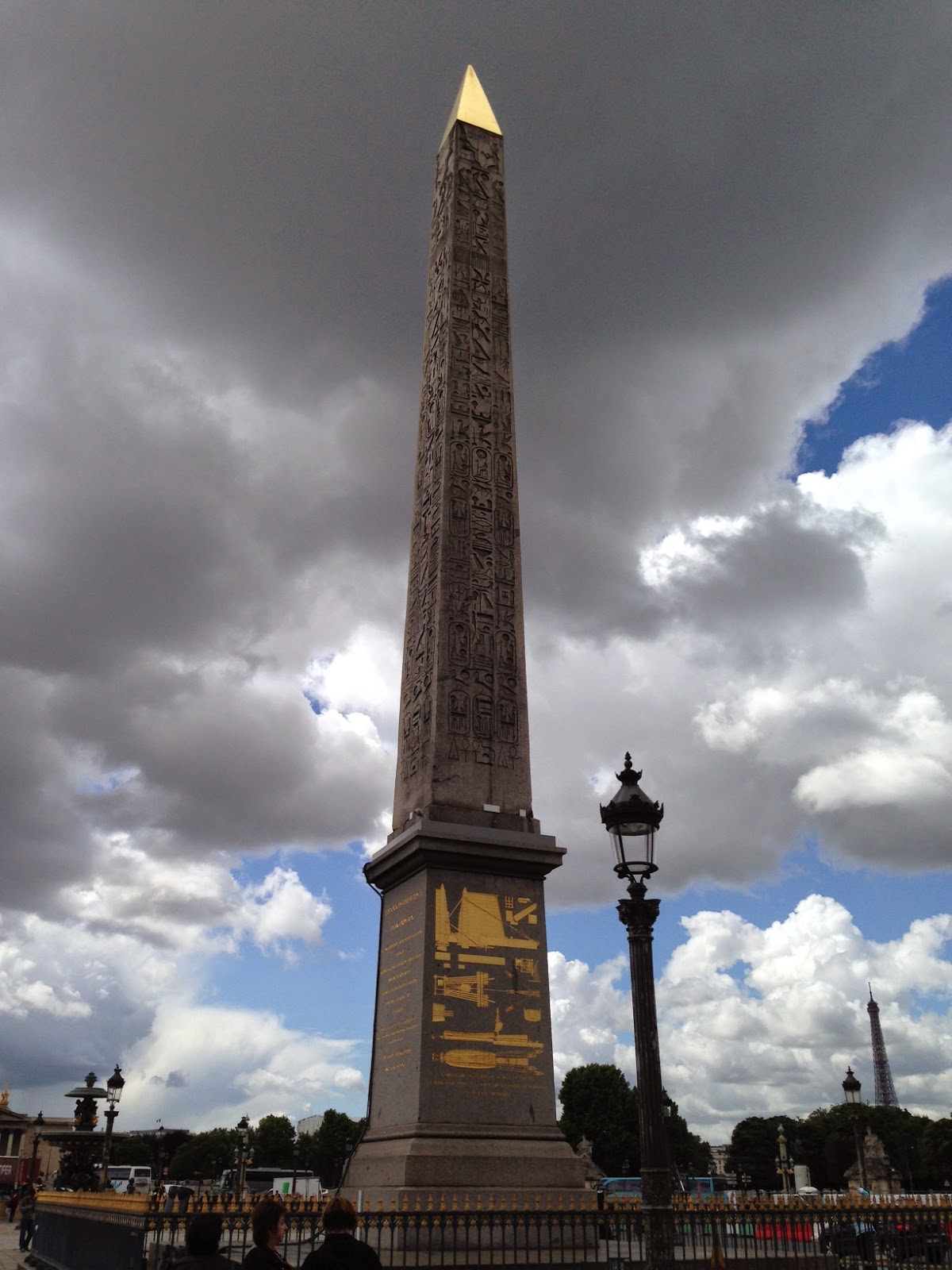
    The obelisk in Place de la Concorde, the largest square in Paris and where the Champs Elysees begins. It is sort of the center of everything. This is where King Louis XVI and Marie Antoinette were executed via guillotine in 1793. The square that is. The obelisk didn’t arrive until 1833 and was a gift from the Ottoman viceroy of Egypt, where it marked the entrance to the Luxor Temple.
    Beyond the obelisk is the start of Tuileries Gardens, where we were on Saturday. I walked through a piece of that but decided I wanted to go in search of a place to get some coffee and sit for a bit. By this time it was about 1:30pm and I figured that would be about the earliest I heard from Dan. It started raining pretty hard so out came the umbrella again – 2nd time that morning – and I went off the main drag a block to get out of tourist town as I was coming up on the Louvre. I wound up on Ave St Honore – that street from Sunday that we thought was very high end, but went in the other direction. I’d passed the Louvre at that point and looked at my phone. Sure enough, a 1:36 text from Dan: “Still here. Go on to the Louvre and I’ll meet you inside.” I never did stop for coffee!
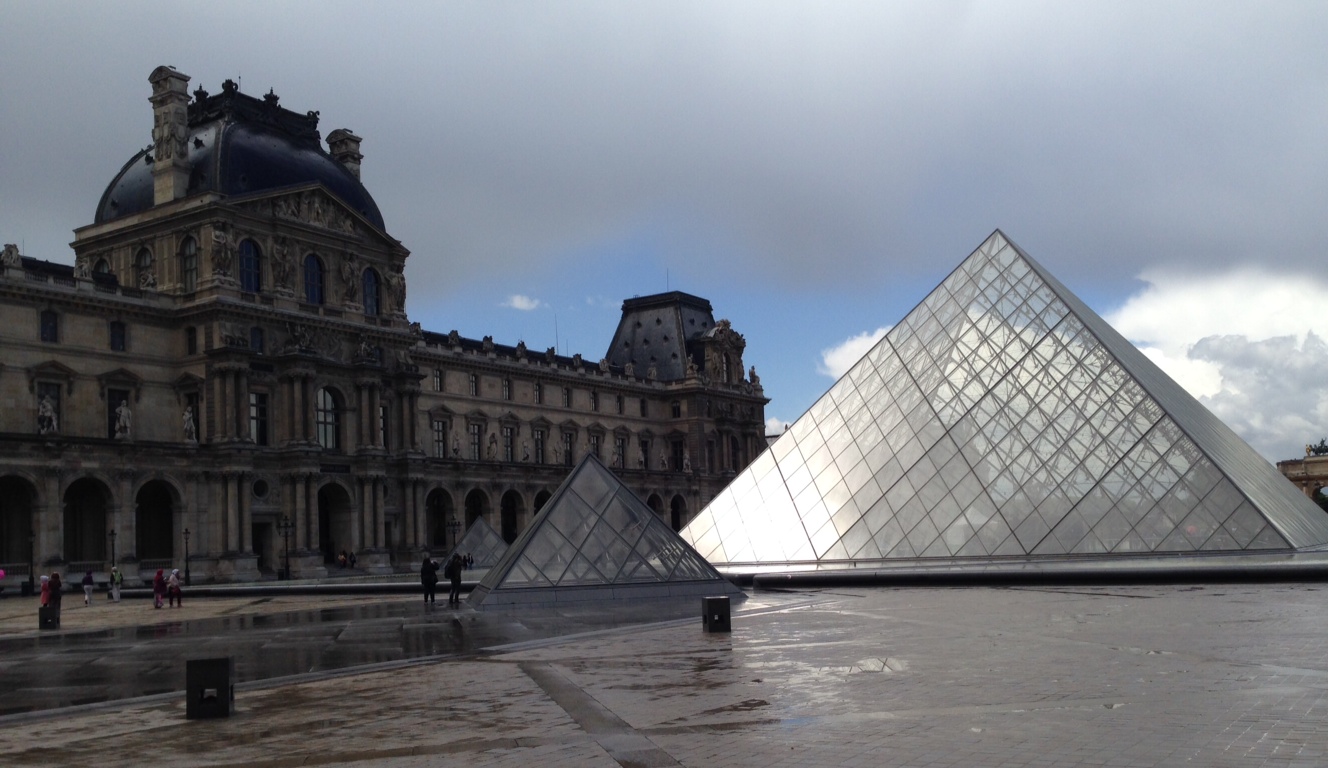
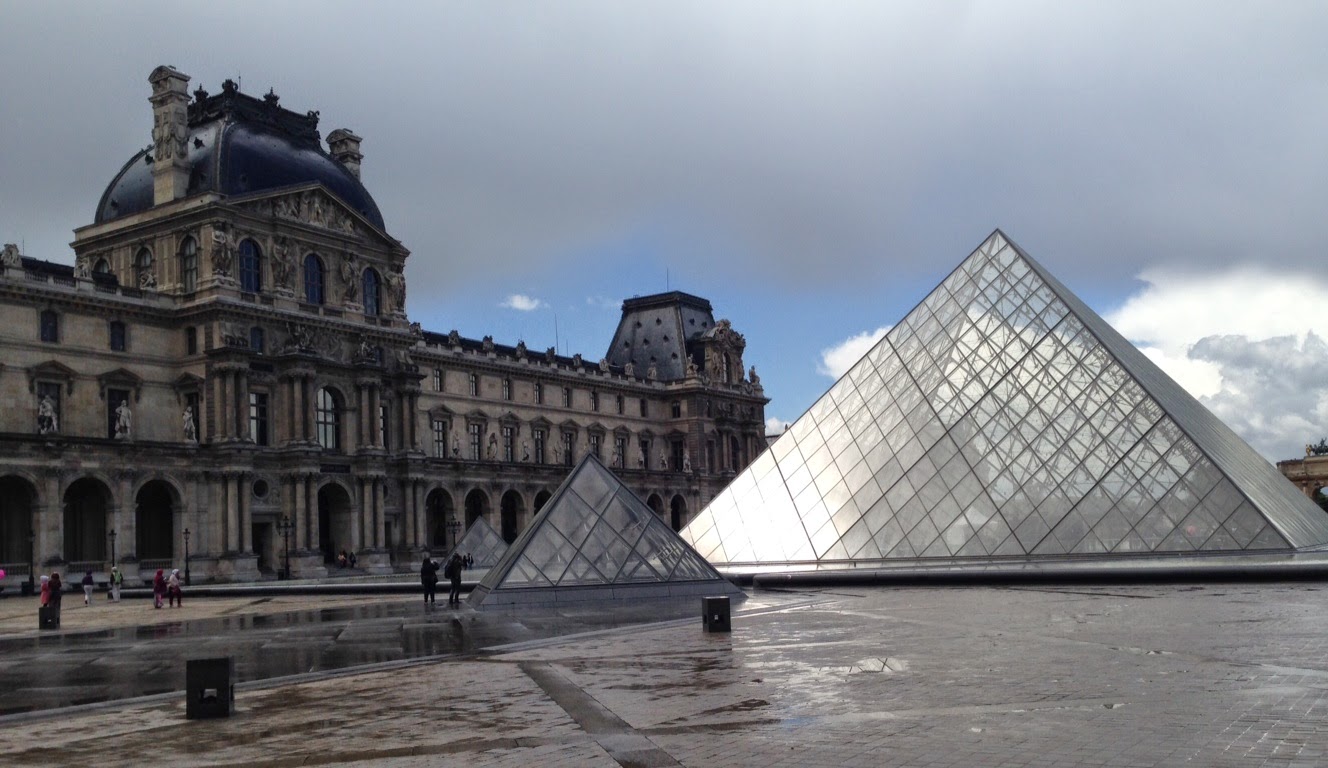
    It’s like the definition of “juxtaposition.” I’m ambivalent about it – mostly I think it’s tacky, but somehow I do like the look of it in this shot…

    Notice the lack of people in the above photo. That should have been my first clue. It’s closed on Tuesdays. What a Rookie Move. Several weeks ago, I’d spent a Sunday afternoon carefully mapping out our days here based on what’s open and closed when, and what has evening hours. I’d forgotten to double check all that when we scrambled our plans once Dan got sick. Oh well. I was already thinking we’d gotten way too late a start to get in 2 museums today, so double checked the status of the d’Orsay: Open. Sweet. Texted Dan that I would meet him there. Luckily, you walk out of the Louvre towards the Gardens, take a left, cross the Seine, take a right, and you’re at the Musee d’Orsay.

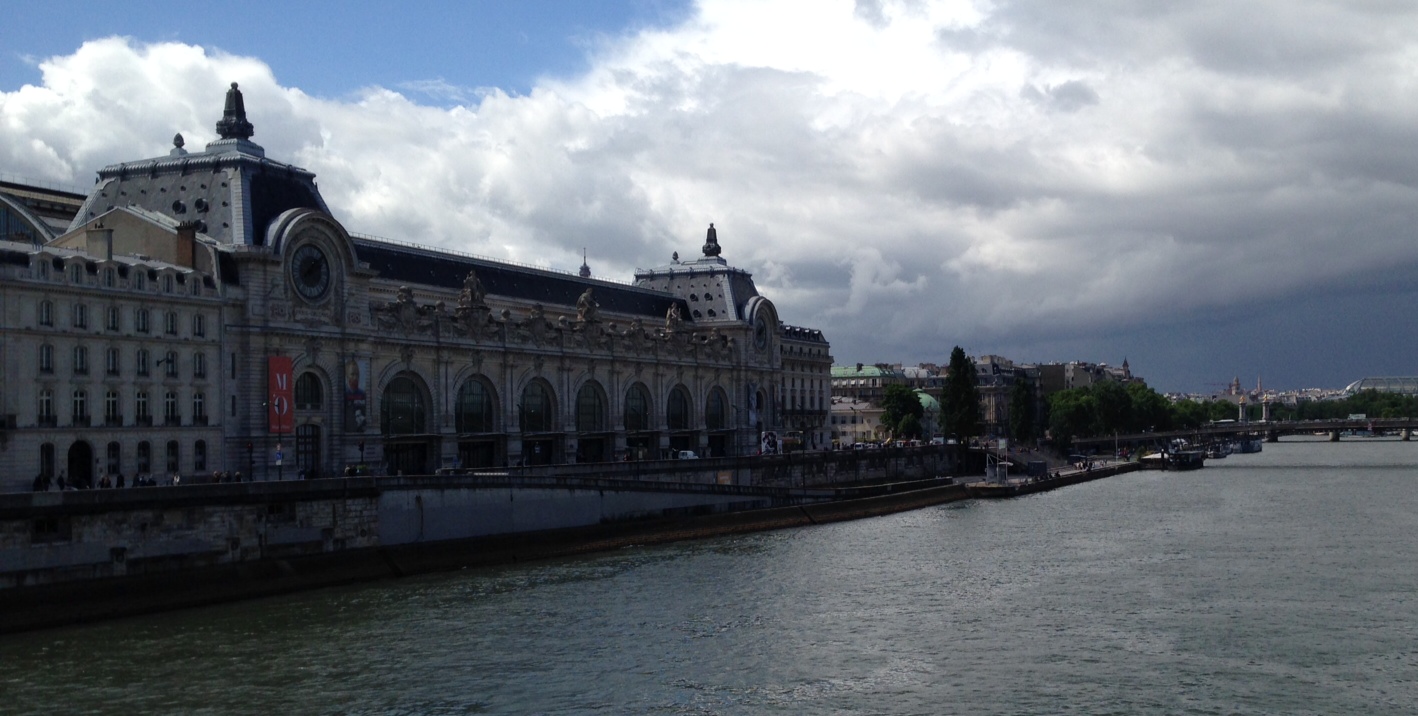
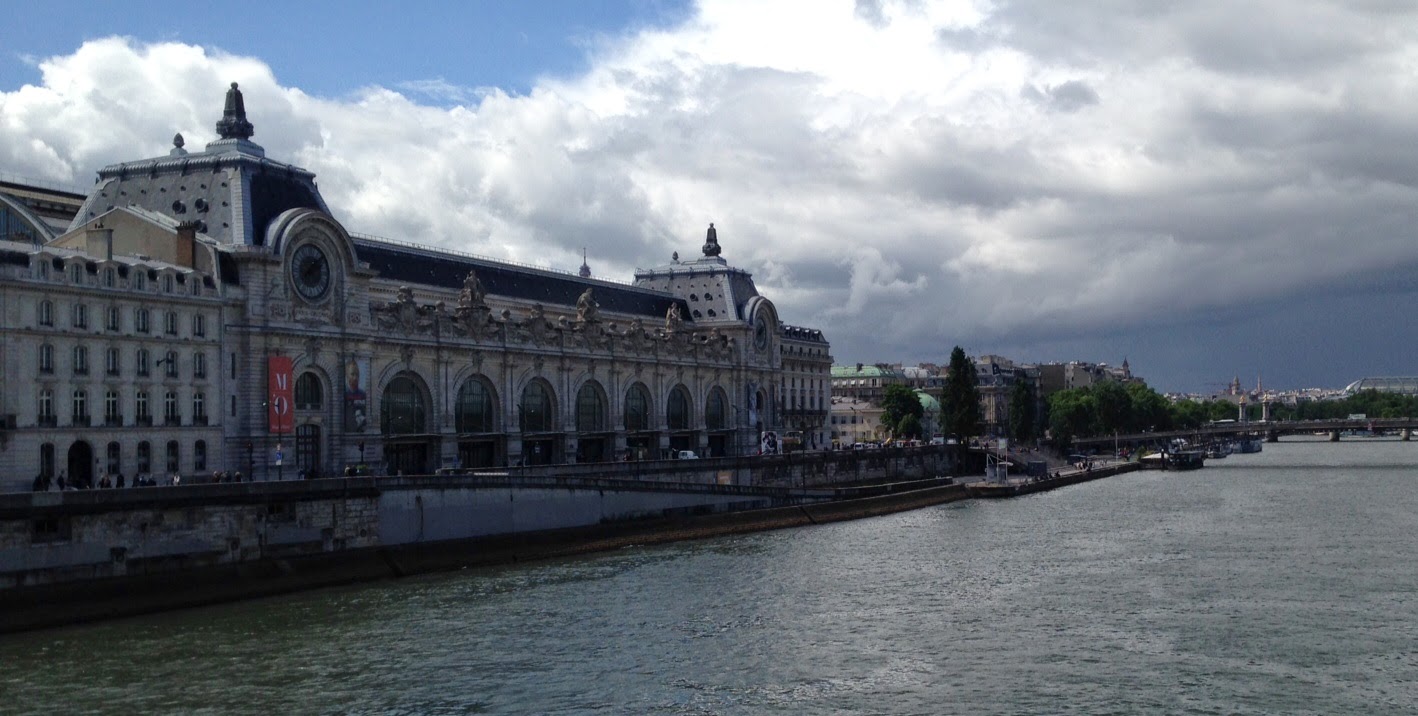
    d’Orsay on the Seine.

    The museum pass we purchased yesterday got us in here, too, and could use the shorter line with it. I was in by 2:20pm. Dan joined me about 3:30. Now THIS is an art museum. Not a single thing in it we could have done ourselves :) I really did enjoy it. It has a huge impressionist collection, which is probably my favorite period. As Dan said, “Monet’s are a dime a dozen here.” There’s that many, most on one floor but some sprinkled all over. Same with Renior, another favorite of fine. Picked up 3 others names here of works I really liked that I’d never heard of before, from the Neo-Impressionist period: Paul Signac, Maximilien Luce, and Alfred Sisley. You weren’t supposed to take pictures so I found some images on the internet.

    This was Dan’s favorite Signac, and it is amazing. Lots and LOTS of dots!
    I couldn’t find an image of my favorite by this guy, but this one is pretty great.
    This was my favorite Luce. The quality of this image is poor so you’ll just have to trust me!
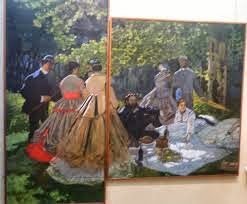
    Believe it or not, this is a Monet. Apologies for the poor quality – that’s the image, not the painting. I liked it because it was unlike anything I’d seen of his before. It was huge – like at least 8×8. The different sized canvases holding a continuous image was also interesting to me. And people, lots of people!
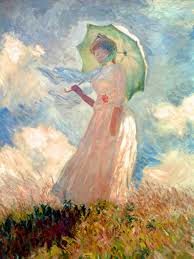
    Also Monet. Loved the colors.
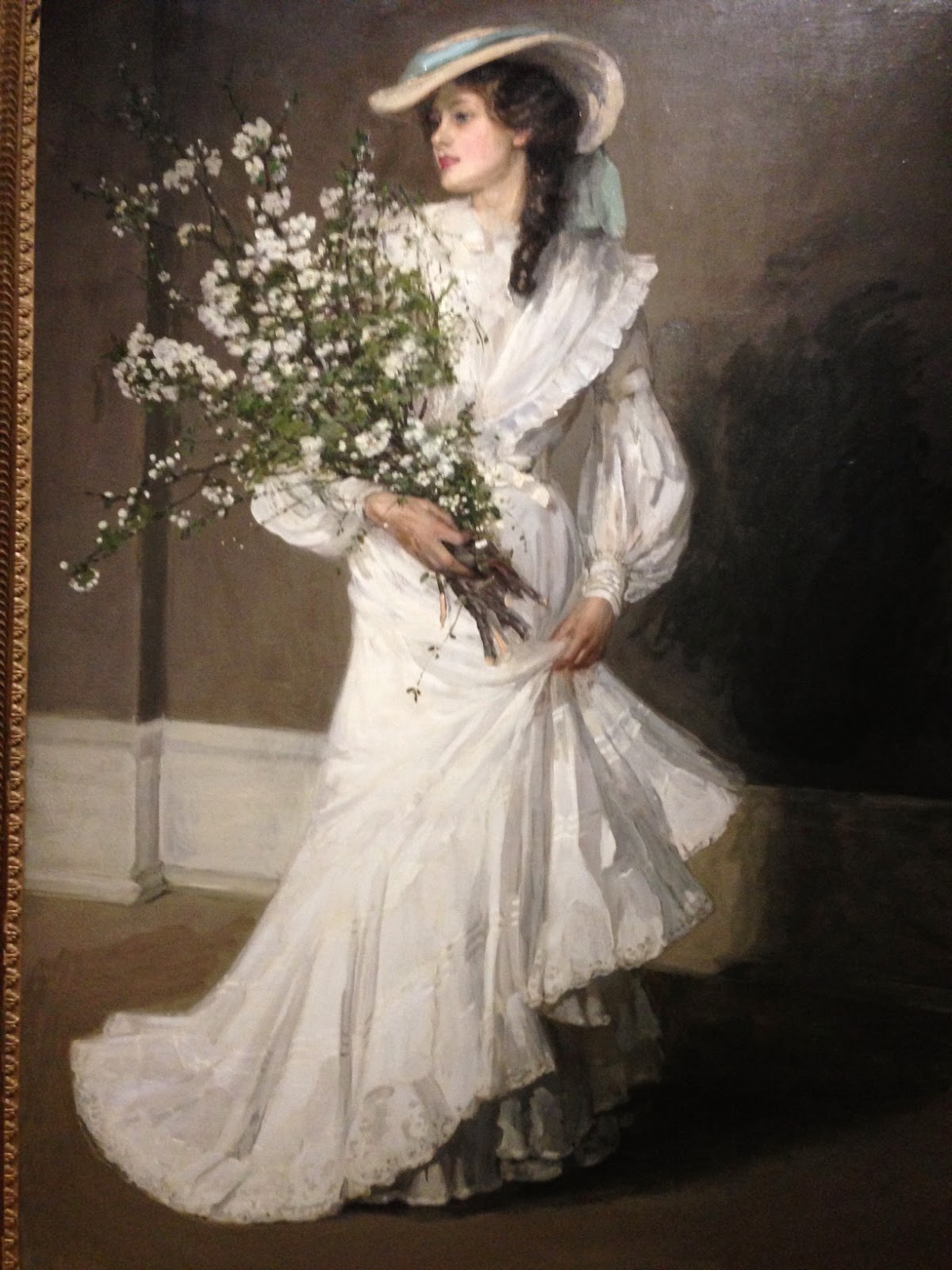
    This was Dan’s favorite piece, by John Lavery. He loves paintings that are very realistic; it’s his definition of “I couldn’t do that.” He snuck a picture of this on his phone.
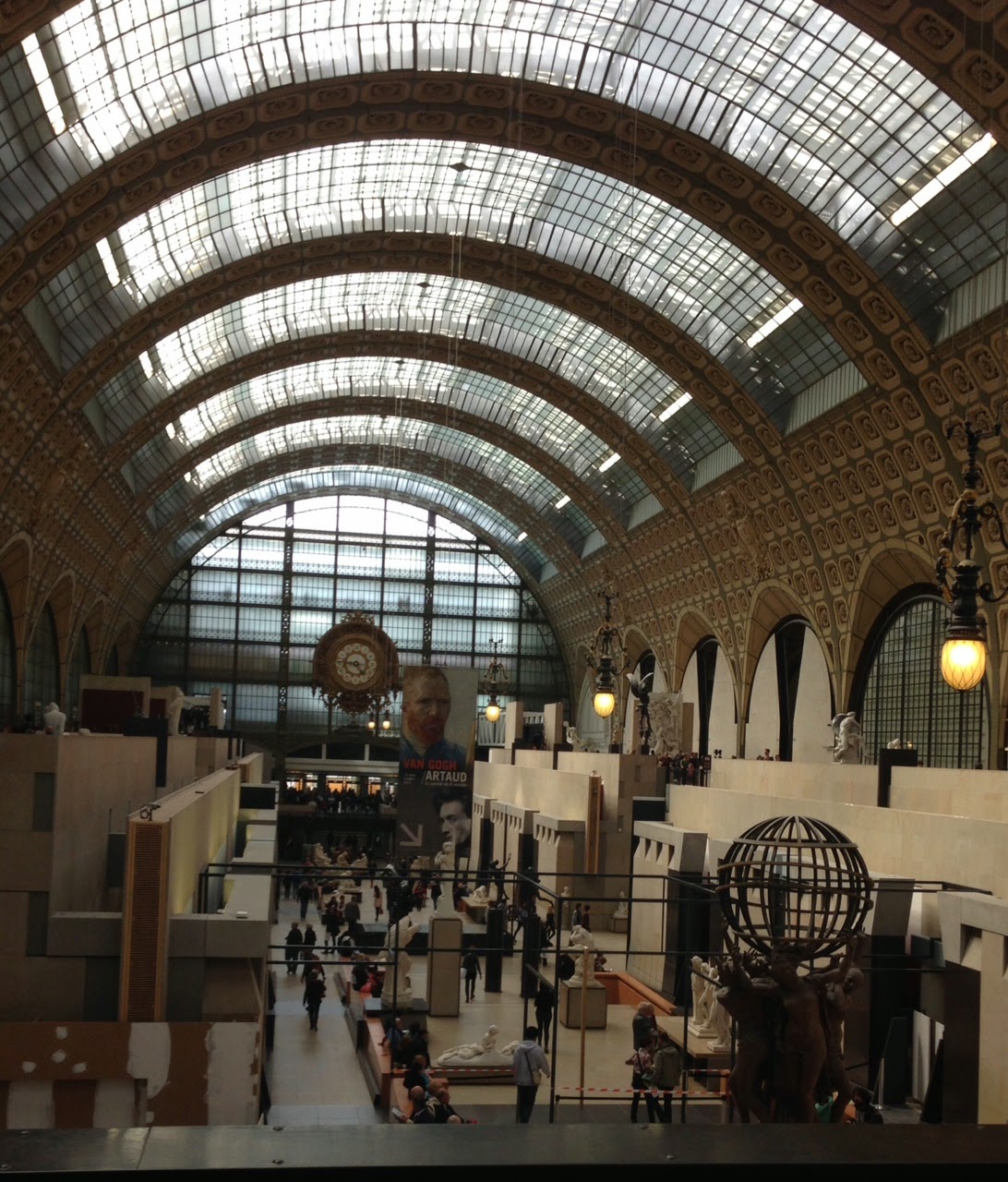
    Dan also snuck in some pictures of the building itself. This is looking back across the entire museum from the end.
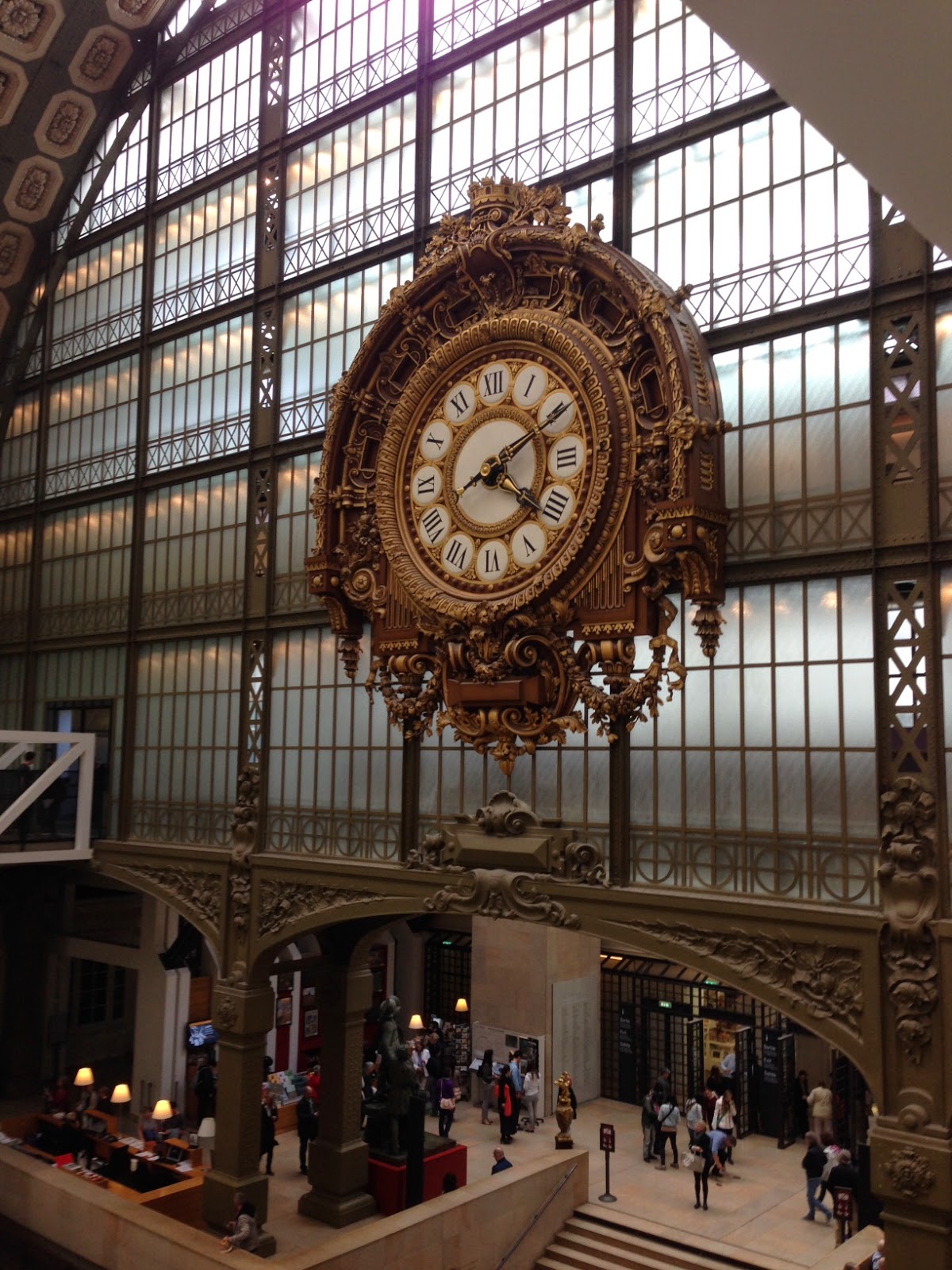
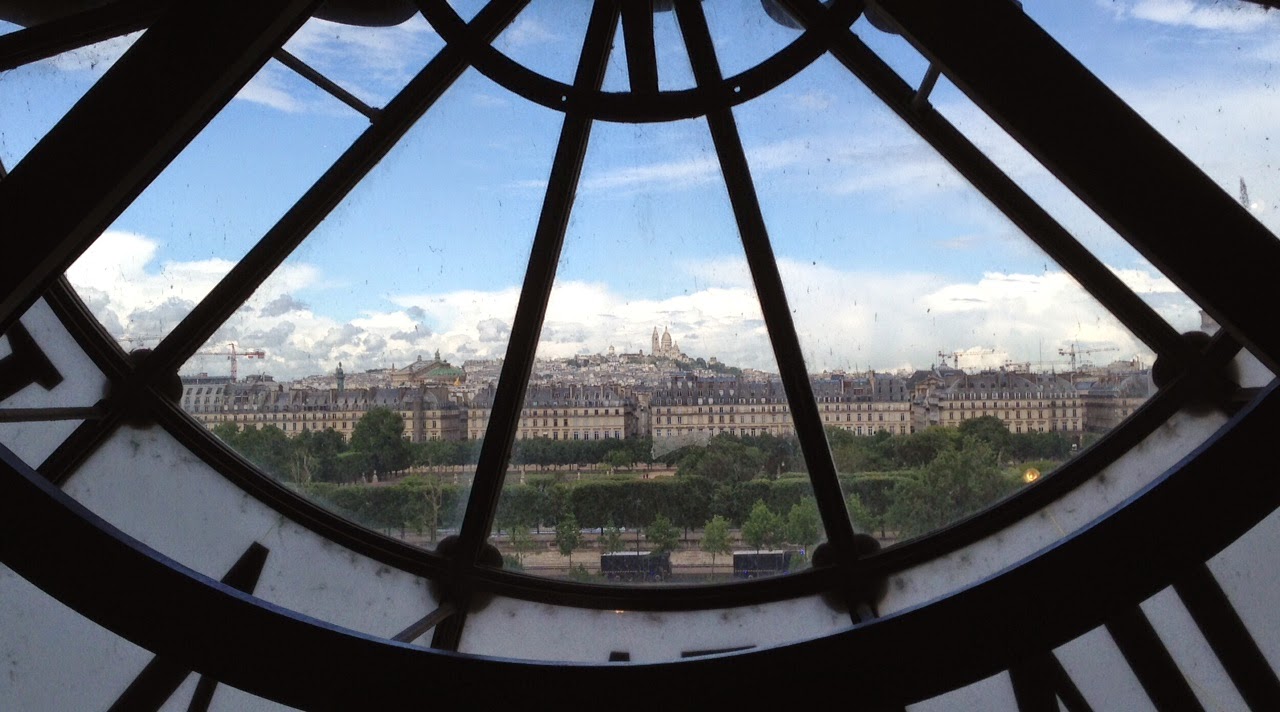
    Looking back at the main entrance from the 2nd floor with a focus on the clock.
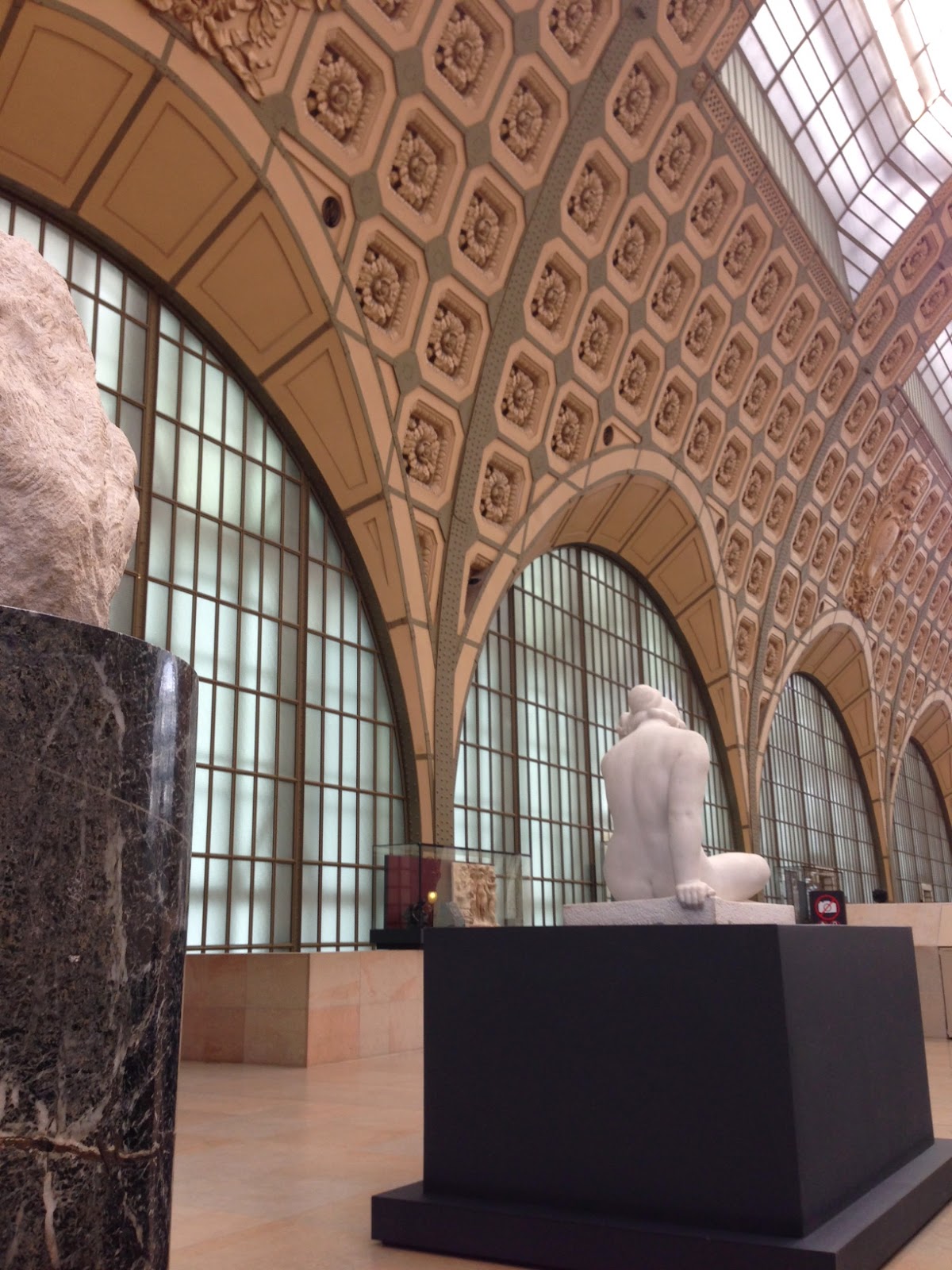
    The bottom floor center had sculptures scattered everywhere as you wandered in and out of rooms on the sides with other displays. Dan liked the ceiling, too.
    A pretty cool shot of Montmartre in the distance from the 5th floor.
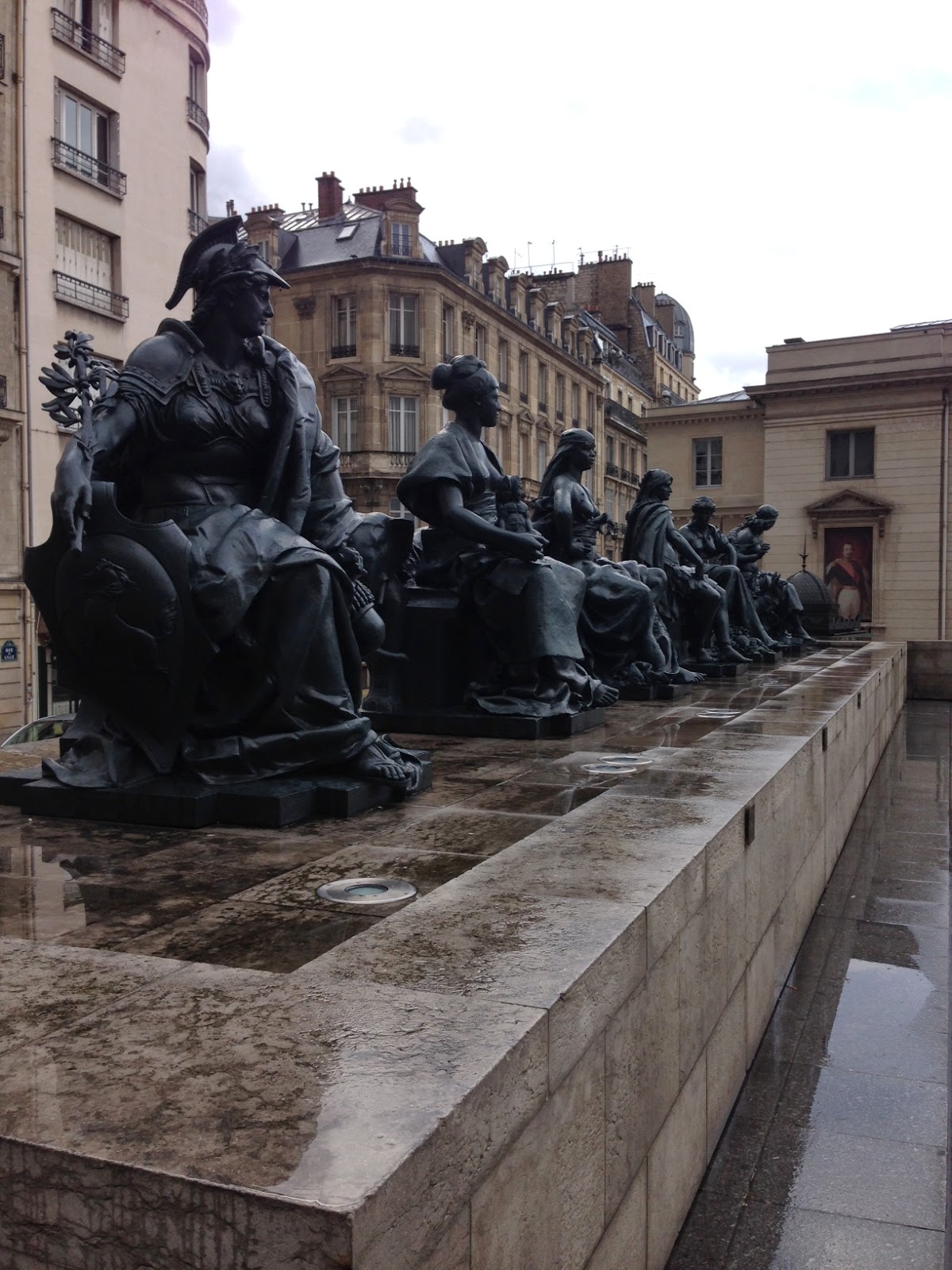
    Sculptures near the entrance.

    We left about 5:20pm. We wandered around new streets we haven’t been on in search of French food for dinner. Found it! Another restaurant that offered a 3 course meal for a single price, like the one yesterday. Very different ambience – this a little more fine dining than yesterday’s – but the food was just as good. In both cases the desserts were arguably the best, although Dan loved the fish course he had yesterday. (It was pretty amazing – probably the best thing we’ve had on the trip so far.) After dinner we stopped at a little market for some things to get us through 2 more mornings of breakfast and of course bottled water – the tap water in the flat is Terrible. We passed this on our walk back.


    Tomorrow’s plan: Versailles during the day, Louvre in the evening. We’ll see how it goes!


  • Day 5: Paris, Part 2 – In the Neighborhood

    Day 5: Paris, Part 2 – In the Neighborhood

    I slept a good 7 hours, got up at 8am. I piddled on the internet over coffee and juice for an hour; Dan was still asleep so I went downstairs to a cafe down the street for some bread. When I got back to the flat, I discovered I had somehow locked myself out even though I had the key! I didn’t want to wake Dan because I knew he really needed the rest so I went back downstairs and just started roaming the neighborhood a bit, breaking off chunks of bread to eat as I walked because by this point I was hungry.

    I went down a couple of blocks and turned left into a plaza and ran into this.

    I knew we were close – you can see the top 1/3 of it from one of the windows in the flat – but didn’t realize how close we were until that moment. When I walked to the end of the plaza, there was a pretty pool in front of it.


    I went back across the plaza and took the long way back to the flat. Came across this WWI memorial. The thing we noticed right away about Paris is this stuff is everywhere. You can’t walk 500 feet it seems without a sculpture, park, something pretty or interesting to look at. By the time I got back up to the flat (do you remember that we’re on the 6th floor? that was 2nd time in an hour…) it was 10am. I knocked but nothing. So I stood outside, still holding the baguette, now 1/3 eaten!, doing emails, etc., on my phone. BTW, this year I signed up for the extra service with Verizon to have access to my phone while I’m here. As long as I manage my time well, it’s not horribly expensive, and it’s well worth it. Especially the 2 days I was alone; I’ve gotten very used to having maps, etc., right there when I travel and, as I discovered last year, it’s a drag going back to paper!

    By 10:30am I decided it was time for Dan to get up no matter what – that would be at least 9.5 hours for him – so knocked pretty loud and that did the trick. Apparently the door self-locks when you close it and locking it again with the key is overkill; somehow you lock yourself out. Dan has always kept the key so I wasn’t paying attention as we exited the flat. Lesson learned.

    He was feeling better – or at least not worse – but we decided to re-arrange our day to stay close to the flat. Hence the sub-title of the post. The thing to know about the rest of our day is we were never farther than 1.5 miles away from our flat.

    We had a decent brunch in and left around 12:30pm. We had decided early on that we wanted to see the Eiffel Tower, but didn’t really have any desire to go up in it. The value just wasn’t there for us, especially when you factor in the time waiting in line. But we did walk under it! The pictures we took at this time didn’t come out because it was so cloudy everything was really dark.

    This picture is the same pool as the one above, just from the opposite end of it, and the fountains are now on. So where you see those tiny people standing is where I was standing in the shot above.


    Our first Paris museum is, appropriately, the Army Museum, or Musee del l’Armee. As history museums go we’d definitely call it above average; New Orleans is still the one to beat. However, the location itself was a knockout, housed in the Hotel National des Invalides.

    Approaching from the front walkway.
    From the inside courtyard. The dome in the back is Napoleon’s Tomb.
    Cannons in the courtyard.
    Dan did a nice job with this angle.

    This museum was focused on the French military over the centuries, including LOTS of details on battles, weapons, and uniforms. It covered ground from the mid-1600’s through WWII and had a nice mix of media. Dan particularly liked the displays that showed detailed battle strategies and outcome blow by blow. I only did a couple of these but he did just about all of them. He walked away from Waterloo saying “Napoleon could have won! Just one little mistake…”

    A few things that struck me:

    • France and England fought against each other during the 7 Years War which ended in 1763. The American Colonies fought the French on American soil supporting England’s side, under George Washington. In 1777, Benjamin Franklin arranged for a treaty with Louis XVI where the French agreed to fight the English under the command of George Washington. I don’t even know what to call that it just struck me as interesting.
    • Europe was a constant battle ground for 200 years, boundaries changing all the time. No wonder these people were suffering from such incredible war fatigue by the time WWI was over. This museum did a nice job of talking about that, which is also addressed at length in the Churchill book I’m reading. Part of the reason it took France and Great Britain so long to get a clue what was going on with Hitler was they wanted desperately to believe him when he would say he had no plans to take on non-German territory. Both countries had literally lost an entire generation of men during WWI and were suffering financial depression as the rest of the world was. They didn’t have the manpower, the money, or the spirit to take on another war, so they allowed themselves essentially to be hoodwinked by Hitler who made grand promises that he never kept.
    • We just skimmed the surface on who Charles de Gaulle was; the exhibit dedicated to him is closed on Mondays so we were disappointed about that. But we got enough to know why they named an airport after him. He was a young commander in WWI, and a general in WWII. After the German Occupation in WWII, he essentially started the military resistance, Free France, and ran an exiled government from England. He recruited, trained and led in secret and they were involved in significant victories which eventually, along with the help of the British and Americans, led to the end of the Occupation. He was President of France from 1959-1969, and died in 1970. Oddly, his commanding officer in WWI was Petain, the guy who was head of the Vichy government which collaborated with the Nazis during the occupation.
    Lots of guns and swords on display in the hallways, with rooms off to the side with art, uniforms, battle scenes, etc.


    An outside hallway. This place was Huge.

    So I’d have to say the only guy the French love more than de Gaulle is Napoleon. Why else would they build such an extravagant tomb for him?

    You saw the outside of the dome in one of the pictures above; this is the inside.


    This is the entire building from a block away. Massive and beautiful.

    We stayed there about 3.5 hours. We did some general walking around after and decided we might as well eat dinner, it was almost 5:00pm. We found a great little French place a few blocks from here and sort of on the way to our next destination so it worked great. After dinner, we went through new streets – and again, shocked at the amount of really high end retail places. So it wasn’t just the street we were on last night. They Are Everywhere. We eventually ended up on Champs Elysees, and did a few blocks there until we got to our destination: Arc de Triomphe. It’s built to honor those who fought and died for France in the Revolutionary and Napoleonic wars, with the names of battle victories and generals carved into it. Construction started in 1806 and took several years.

    We walked up the 284 steps to get this view. This and the next 2 photos were taken in succession from the top, left to right. In the above photo, if you look carefully in the distance, middle-ish, you can see Montmartre on the hill. The Eiffel tower is at the far end of the 3rd picture. That gives you an idea how far we walked on Saturday!

    Champs Elysees
    Our flat is less than a mile mostly straight ahead; say between the middle of this picture and the Eiffel Tower.


    And that was Day 5. We intentionally kept it light-ish so Dan didn’t overdo it while still not feeling 100%. We were back at the flat by about 8pm. We’ve re-arranged plans again, but I believe tomorrow we’ll take on the biggies: Louvre and d’Orsay.

  • Day 4: Normandy

    Day 4: Normandy

    We made breakfast out of our market purchases yesterday: bread, cheese, tomatoes, strawberries, and some sausage that’s really more like a jerky but easier to eat. We were out the door by 6:20am, and walked about a mile to a metro stop that took us the rest of the way to our meeting point about another mile away. The subway ride saved us about 15 minutes and we didn’t feel rushed to get there.

    We went back and forth on whether or not we were going to work Normandy into this trip or save it for another time. It’s not the easiest thing to get to. Your options are 1. tour bus – convenient but you’re not in control, and not exactly cheap; 2. rent a car and drive –  we weren’t crazy about driving in a country where the signs aren’t in English; 3. piece together public transportation – but there was no easy way to do that which didn’t require an overnight stay.

    So in the end, obviously, we decided not only to go but to go with a tour. We have read/watched/visited a lot about WWII in the last 3 years and I didn’t see the sense of being this close to it and skipping it when the topic is so important to us. I’m very happy with the way it went; especially since it turns out Dan woke up fighting off a cold or something, and has all day, it helped immensely that we could turn the driving over to someone else. Every time we were on the bus, he was asleep for the most part.

    The bus took off from a travel agency right in the center of everything, just across from the Louvre. It was very comfortable, double-decker and we sat on top so had nice views of the countryside throughout the trip. There were about 50 people total. We were imagining we might be the youngest on the tour. Certainly more than half were older than us, but there were definitely younger or similar age, especially the two other couples we had lunch with. Just about everyone on the tour was an American.

    The countryside really was beautiful. We had trouble getting good shots from a moving vehicle but these turned out OK.

    Those white dots are cows. Pure white cows everywhere. Made me think of Jack and the Beanstalk!

    We drove for about 3 hours and stopped in Caen, at a war museum, the Memorial Center for History and Peace. As WWII museums go, this was a pretty good one – although not as good as the one in New Orleans. We didn’t feel like we learned a lot because we’re so familiar with much of it, but it is interesting to get it from another country’s perspective – in this case France.

    Allied flags at the entrance to the memorial.

    A few things I did learn:

    1. 25% of the population of Paris fled after the German occupation; that was an astounding number to me, with photos of people getting out any way they could, including covered wagon, taking whatever they could to hide into the countryside.
    2. A better understanding of the Jewish ghettos. This is probably one of those things I shouldn’t admit, but I didn’t know that they were built by the Nazis and the Jews were put into them; somehow I thought they were neighborhoods where they already were.
    3. This whole concept of “collaboration”: In the countries defeated by the Axis Powers and by Japan, collaboration meant helping the victors in various ways. Motivations ranged from self-interest to ideological. In France, it was the Vichy Government made up of Frenchmen who set up concentration camps for French Jews, homosexuals, etc., because they shared the Nazis belief in the need to be rid of undesirables. Just as an example. It was a whole separate government made up of French during the occupation, which crumbled once the French Resistance and the Free France Army, led by Charles De Gaulle, liberated Paris in August, 1944. There was a lot more to it but that’s the short version and I didn’t know any of that. Apparently, collaboration occurred in all of the occupied countries to some degree.

    We had a very nice lunch, French food of course, at the museum, included in the trip. From there we went to Point du Hoc. This was the highest point between the beaches of Omaha and Utah which the Germans had fortified with concrete casements and gun pits. Some of these are still there along with a memorial.

    German barbed wire along the coastline, still in place. That’s Utah Beach.
    That’s a crater hole I’m standing in from the D-Day bombings, about 8 feet down probably. They were everywhere.
    This photo attempts to show how uneven the land is from craters made by bombs.
    Me walking down the steps into one of the concrete bunkers.
    There were 3-4 rooms down here of various sizes, including the front which the Germans used as lookout.
    The view of the beach through the lookout.
    Right out of a scene from Band of Brothers. When you looked through the barbed wire there was a whole narrow room down there.


    Unfortunate design for a memorial, but beautiful view.
    This is the left side of the tablet at the bottom of the obelisk. The right side is the same in French.
    Words from several leaders at the time, including Roosevelt, Churchill, Eisenhower.


    Next was Omaha Beach. I was a little surprised to see that houses have been built on the same slopes the D-Day troops had to climb up. Life goes on I guess. This is just one of many we saw. Better than lots of tacky tourist shops I guess which, I should report, the entire area was mostly free from.

    It was surreal to be on Omaha Beach. I didn’t realize we would actually be ON it, ya know? Dan said it was mystical to be walking in the same place as all the heroes who paid with their lives for our freedom. It was amazing to be there. It was long – 5 miles – and wide. Hopefully these shots provide some perspective.


    The next stop was the American Cemetery. Close to 10,000 American soldiers buried here; death dates we saw ranged from D-Day to January, 1945. Families were given the option of their dead soldier being buried here or flown back home, so those here are by choice of loved ones.


    There’s a memorial for 1500 soldiers missing in action. That dot in the center of the picture is a star, signifying that soldier was found after the memorial was built.


    A map of the European War Theater.
    A map of the D-Day invasion.

    When I would talk about this trip before I left and people would ask me what I was looking forward to most, my immediate answer was always “Normandy.” I had high expectations and they were certainly met; probably exceeded since I didn’t expect to walk on Omaha Beach. The entire day was somber but in a good way. My fascination with WWII began with this random book I got on an Amazon Daily Kindle Deal for $.99. It was the biography of Dietrich Bonhoeffer, a German Lutheran Pastor who eventually became part of the Nazi resistance and was executed as a spy under Hitler’s personal orders, 3 weeks before Hitler killed himself. It was so detailed and, told from the German perspective, gave me my first solid understanding of how it all happened. That was in December, 2011. In April of 2012, Dan and I were in New Orleans and we stumbled across a WWII museum we didn’t know was there. It was Excellent. We would highly recommend it for anyone who’s in the neighborhood. It was very detailed, used a great mix of media, and was told from 3 angles: The European War, The Pacific War, and the War at Home. In a way it was the War At Home that really got to me: told a story of an America I barely recognized, where the entire country was united towards a single cause. It makes the petty politics we witness daily so disgusting. This museum in an odd way gave me an understanding of my parents that I didn’t have before. My mom was a teenager during the war, and had briefly told me stories about what it was like – rations, metal drives, etc. Dad served in the Pacific, Guadal Canal I believe. If he ever talked about it, I wasn’t listening. they were both dead at that point and it made me regret never asking them about it.

    Since then, we’ve watched Ken Burns’ “The War”, a PBS series on Nazis, Band of Brothers, The Pacific. Last year in Amsterdam, we went to the Anne Frank House, The Jewish Museum, and The Dutch Resistance Museum. I’m currently reading a Churchill biography that is breathtaking in scope and detail. I’ve gotten more depth on the German perspective on this trip last week. When we’re in London next week. we’ll go to the Churchill War Room.

    I’m on some kind of mission and don’t know why exactly. Maybe it’s some sort of living amends for missing the opportunity to talk to my parents about it while I could. Whatever it is, today was a big part of it, and I’m incredibly grateful we had the privilege.

    And on a lighter note, this one is for Jon and Vicki :)

    A countryside shot Dan took on the way home.

    We got back to our drop site about 8:45pm. We walked back to the flat along a new route, which turned out to be apparently Paris’s version of Rodeo Drive – every high end designer you could imagine with ridiculously high prices. I’ll never understand fashion. I don’t care if we end up filthy rich somehow, I could never imagine spending $240 for a T-shirt, or $800 for a pair of shoes. Where do these people work, that’s what I want to know?

    Our dinner was essentially the same as breakfast, moving through the groceries we purchased yesterday. Tomorrow is the first day since we got here that we don’t have to wake up to an alarm. Looking forward to a relaxing unscheduled day back in Paris. Eiffel Tower is on the list for sure, we’ll see what else we get to. Hopefully Dan is feeling better!