Blog

  • Day 12, Jul 7: NYC, Part 1 – Lower Manhattan

    Day 12, Jul 7: NYC, Part 1 – Lower Manhattan

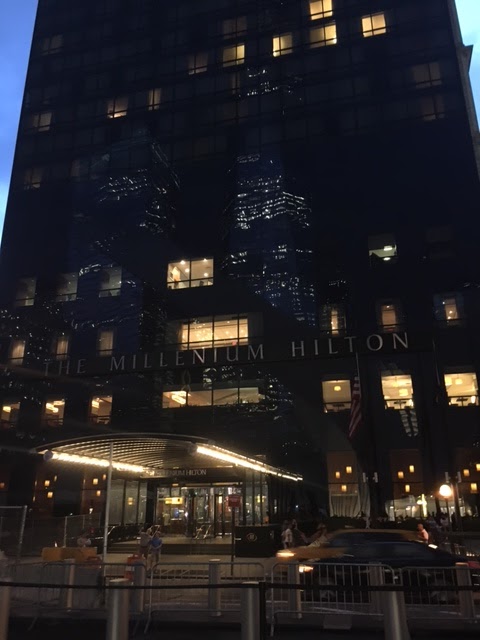
    We had come to NYC in 2014 after returning from 2 weeks in Europe, mostly as part of a strategy for managing jetlag and layovers. We only stayed one afternoon and night, and I got very sick shortly after we landed and we didn’t get to do much. I was very disappointed because I love being in New York. So I loved it when Dan suggested we do a stopover here again this trip. This time we planned on 2 nights so we could make it worth the stop. And because neither of us had spent much time in Lower Manhattan, we decided to focus on that area. Our hotel, Millennium Hilton, is across the street from the World Trade Center complex.

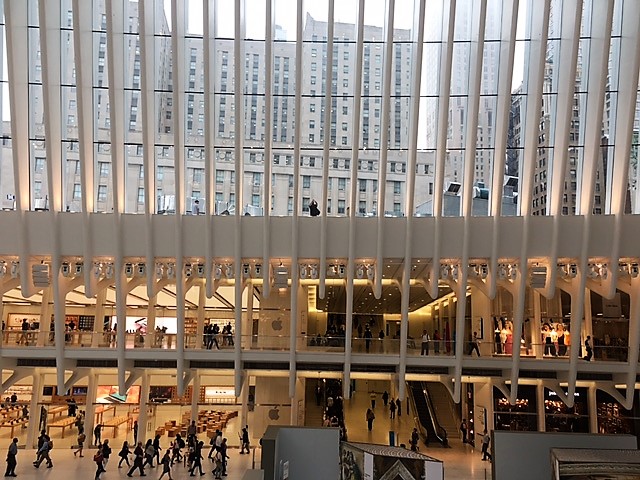
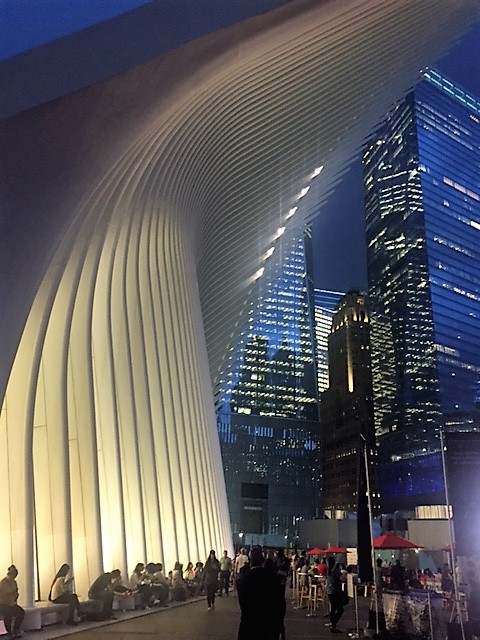
    This is Oculus. It has the Westfield branding on the outside, and I read some reviews on TripAdvisor of the 9/11 Memorial where travelers were offended that a shopping mall would be here, that it was somehow tacky. Clearly, they never went inside. We noticed people were coming and going quite a bit from our window at breakfast around 7:30am. That would be a bit early for a mall, even in NYC I would think. So yes, it has stores and restaurants, but it’s really a transportation hub.
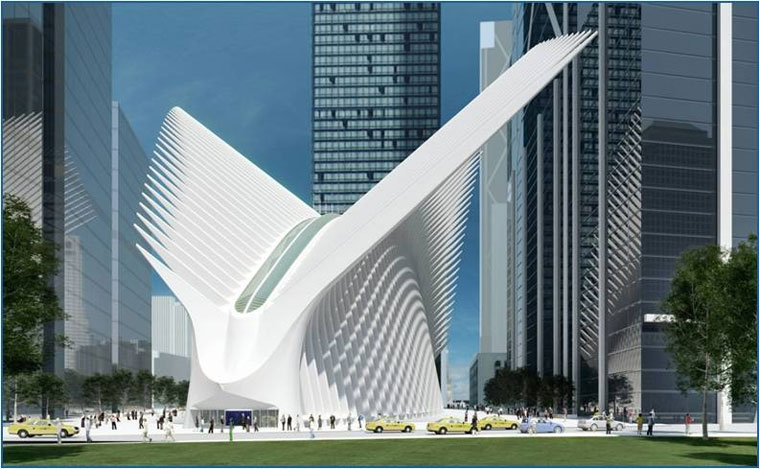
    Here is a much more attractive picture I got from the WTC website. Although now that I look closer I think this is the model. Still, it looks just like that :)


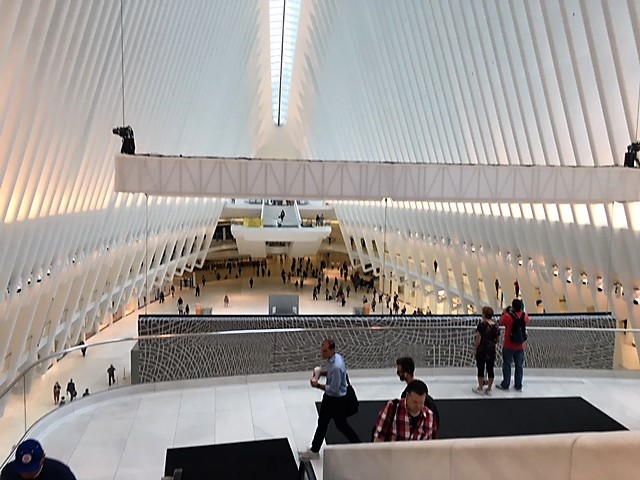
    It was raining a little when we left the hotel about 9:15am so we ducked into this to get to the 9/11 Memorial on the other side of it. And we are so glad we did. As I’ve mentioned in other blogs, we are city boys, and while we didn’t use it on this trip, we love the public transportation system in major European cities. And one of the things they do well is create spaces around transportation hubs that allow people to do other things while they’re getting from one place to another – eat, shop, get a haircut, what have you. This felt like that.
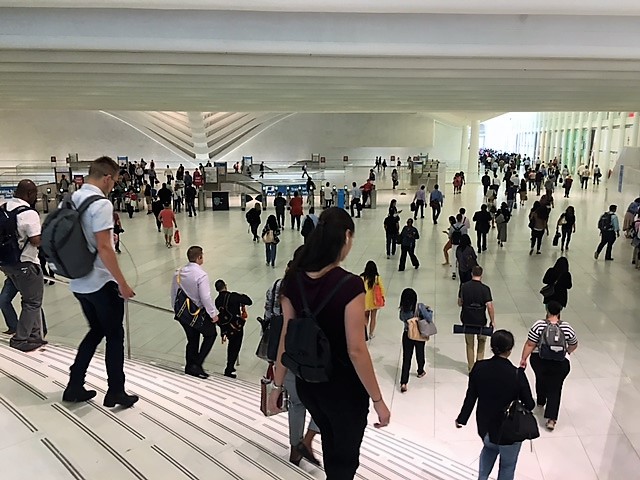
    We loved the modern architecture and the hustle and bustle of a Friday morning commute crowd.


    It connects to 11 subways and walls inside announced more to come. It also connects to PATH trains – the Port Authority for NY & NJ.


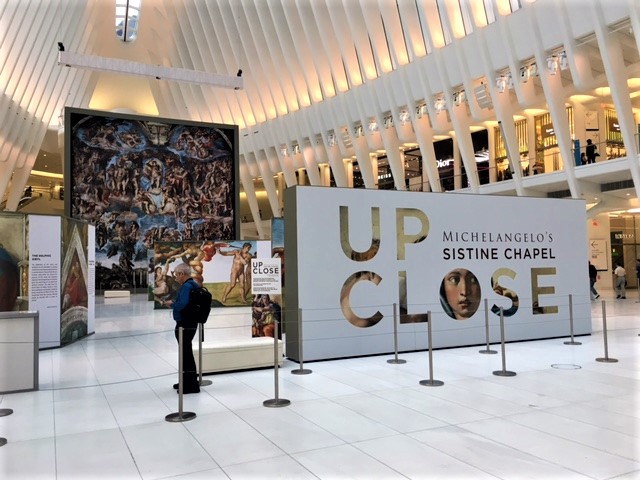
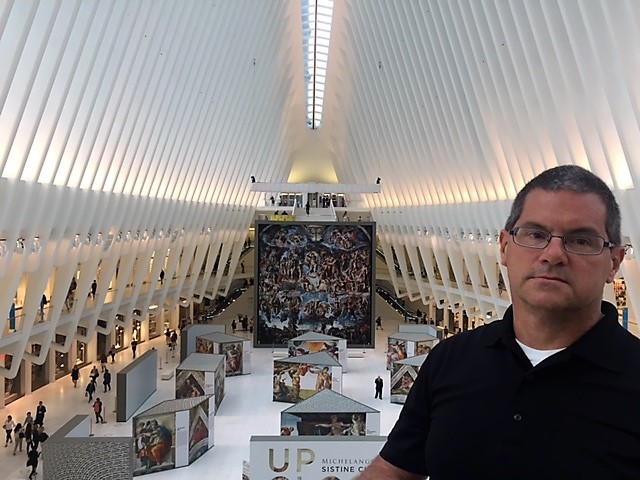
    A huge exhibition space is on the main floor, currently being used for a bit on the Sistine Chapel.

    We walked through this to the other side and upon exit the 9/11 Memorial Museum was to our left. It was $24 each to get in – pretty high as museums go – and worth every penny. We stayed for 3 hours. It’s really well done, a tremendous collection of artifacts and personal stories, especially in audio. Timelines of exactly what happened, what different government agencies knew when, lots of video, a section on the Pentagon, and a beautiful presentation of life for the people in NYC for the first few weeks after. You really got a sense that if you weren’t here, it would be difficult to understand exactly what they went through.

    I forgot to take a photo of the outside; it’s not that interesting a building. And you’d only see a piece of it as most of it is underground. For the majority of the tour inside, photographs were not allowed, which I was really grateful for. That would have disturbed the otherwise solemn atmosphere that’s created by the subject and the presentation.

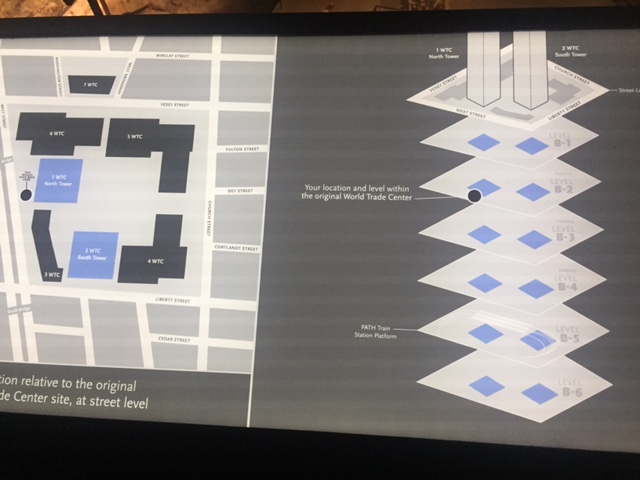
    To the left is a segment of the slurry wall, essentially a retaining wall built in the early stages of construction back in 1966 to keep the Hudson River out. One of the concerns after 9/11 was that this would break and create whole different kind of disaster. To the right is the Last Column, a piece of steel chosen near the end of the recovery to mark the occasion symbolically. Recovery workers, first responders, volunteers, and victims’ relatives signed the column and added memorial messages, photographs and other tributes. It was removed from the site in a ceremony on May 30, 2002. Below: as you went through this first section of the exhibit, these visuals would tell you where you were relative to both the current and the new site.
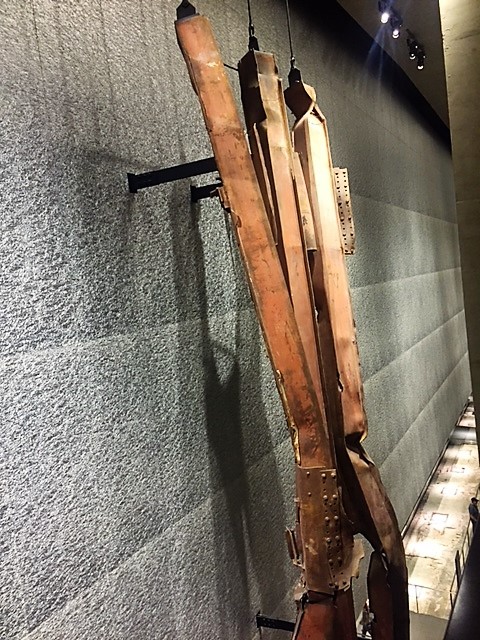


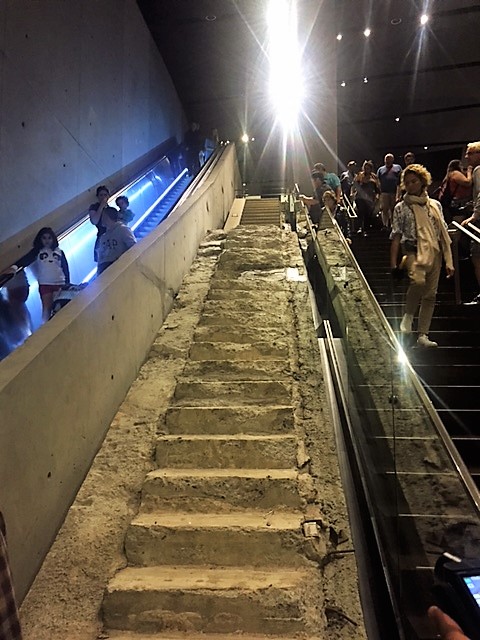
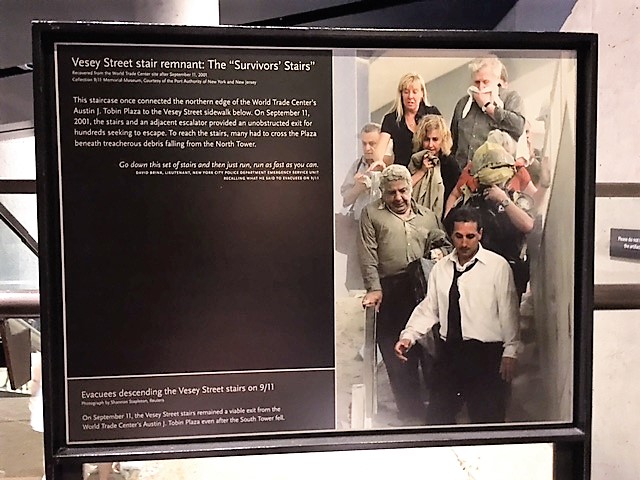
    A remnant of a staircase going up to Vesey Street. These became known as the Survivors Stairs. They …”provided an unobstructed exit for hundreds seeking to escape. To reach the stairs, many had to cross the Plaza beneath treacherous debris falling from the North Tower.”
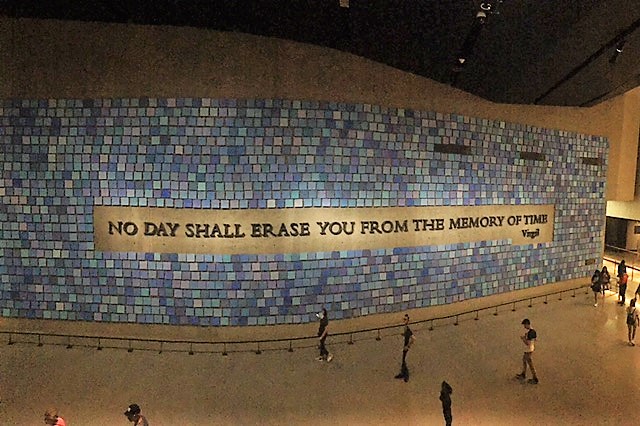
     

    “No day shall erase you from the memory of time.” The mosaic that frames this Virgil quote is called “Trying to Remember the Color of Sky on that September Morning” by Spencer Finch of New Haven, CT. It is composed of 2,983 individual watercolor drawings, each a “distinct attempt by the artist to remember the color of the sky on the morning of September 11, 2001. Commemorating the people killed in the attacks [of 9/11/01 and 2/26/93], every square is a unique shade of blue. Finch’s work centers on the idea of memory. What one person perceives as blue might not be the same as what another person sees. Yet, our memories, just like our perception of color, share a common reference.” Below: the plaque in the far right bottom corner of the mosaic.
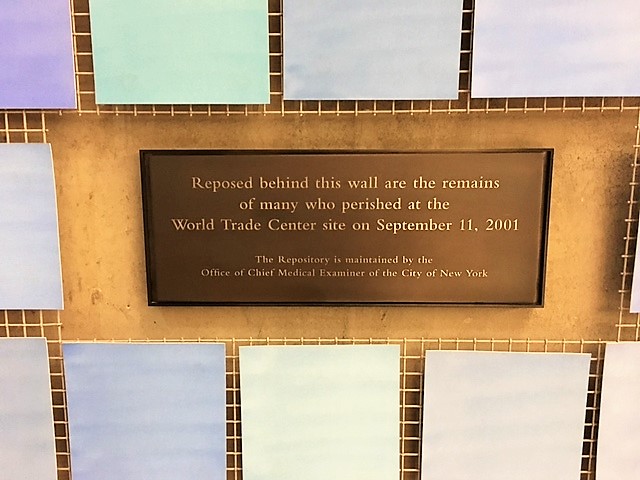
    “Reposed behind this wall are the remains of many who perished at the World Trade Center site on September 11, 2001.”
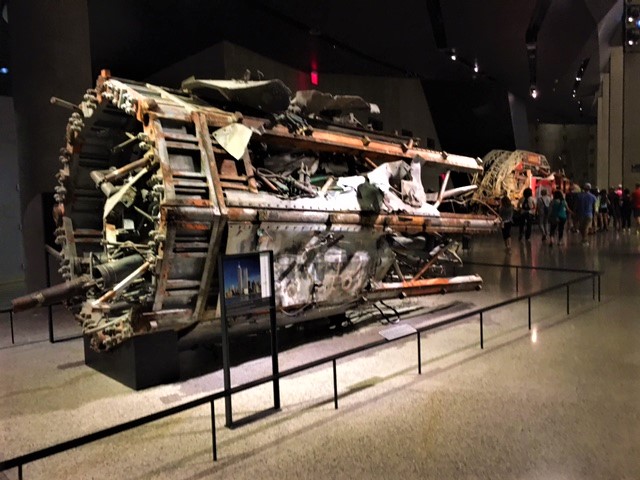
    A 20-foot segment of the 360 foot radio and TV antenna that was at the top of the North Tower.
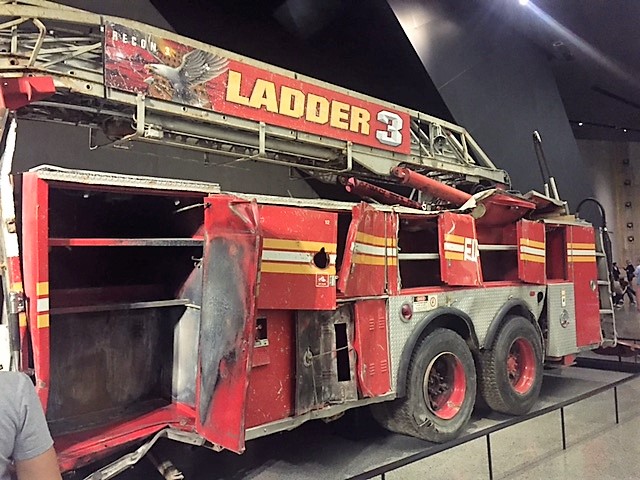
    A photo of Ladder 3. All 11 members of this rescue team were inside the North Tower and killed when it collapsed.
    It was interesting to see that they have several “emergency exits” that they used different labels for, I don’t remember now what. But they weren’t traditional fire exits. The content could be so overwhelming they created paths for people to get out quickly. If you were someone from NYC who was reliving it, I could see the value in that. For the rest of us, it seemed like the least we could do is walk through all of it. and try to understand what happened here. And I’ll admit, it felt pretty overwhelming by the time you got to the end. But some of that for me is just my general museum threshold is typically 2 hours. So as we were approaching 3 hours of pretty heavy content, I was definitely ready to go when we were done.

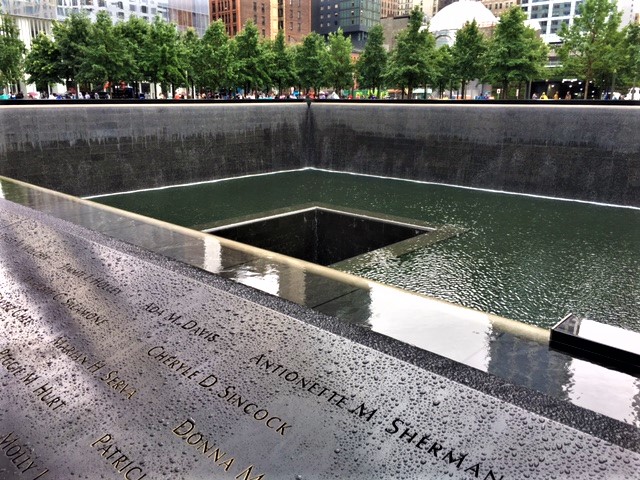
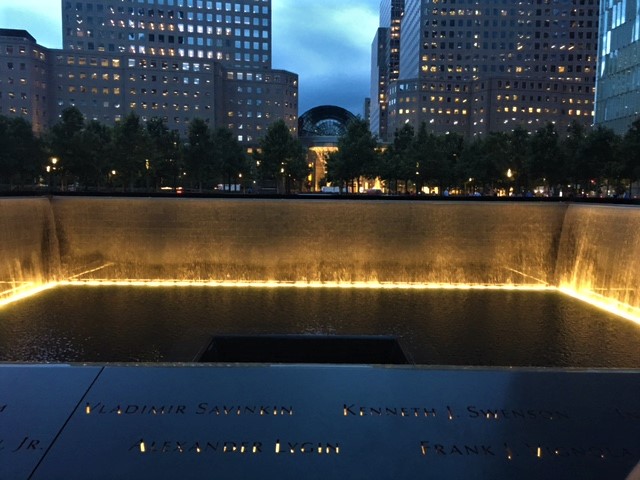
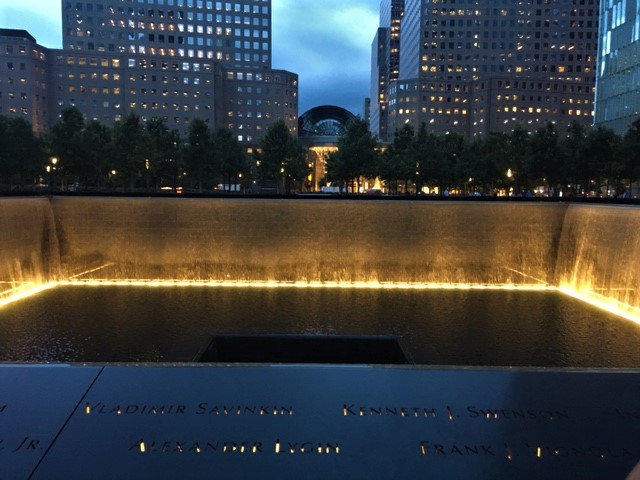
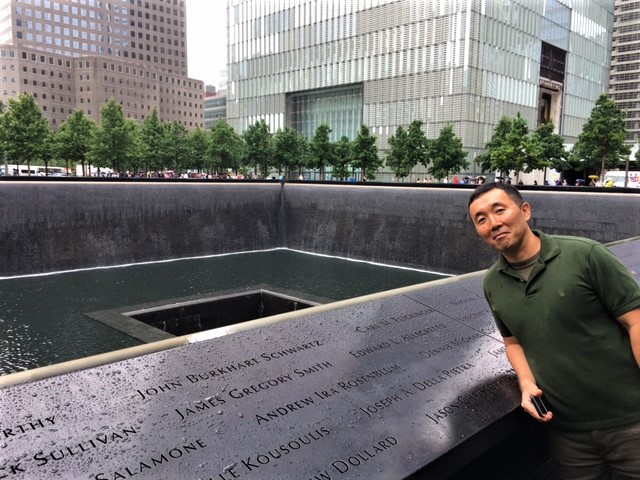
    Memorial pools were created in the holes left from the footprints of the towers. They are beautiful, elegant in their simplicity and the sound of the flowing water is both comforting and moving. The names of each person who perished in the 9/11 attacks are included along the 4 sides of each pool, those in DC and Pennsylvania, passengers and flight crews. Water flows continually from the inside edge of the top of the pool into the basin and then down into a huge drain. Because they are built into the original foundation of each tower, it is perfectly square, the symmetry adding to the beauty. South Pool above, North Pool below.
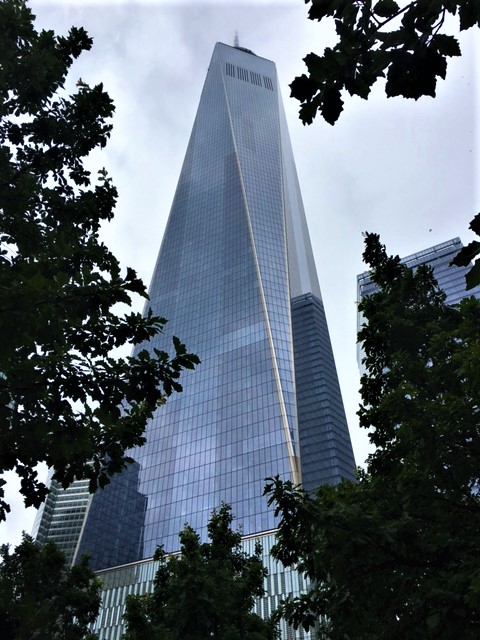
     

    This is the new One World Trade Center building, which is also what you saw from our window in the final photo of Thursday’s post. It opened in October of 2014. It is 104 floors and is 1776 feet high. It is the tallest building in the US and #6 in the world.
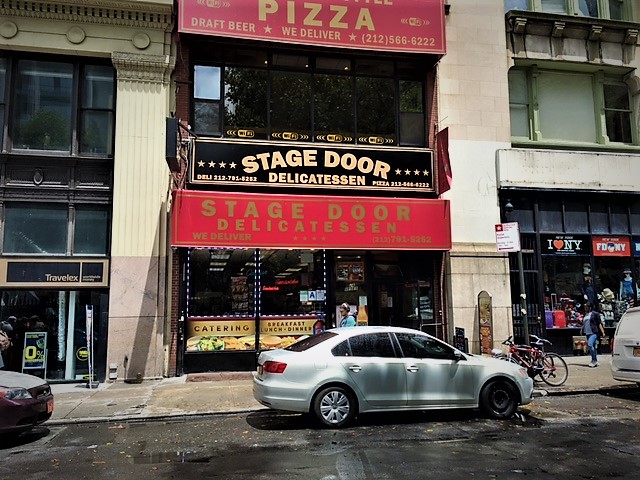
    It was lunch time. We found a deli close by, on Vesey Street actually, Stage Door.


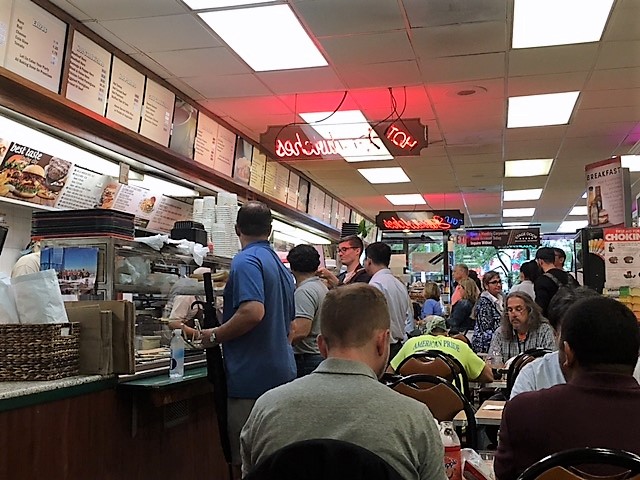
    We got there about 12:30 and got in easy, but soon after it got pretty crowded. We ordered pastrami and roast beef, and they were both amazing. The quality of the meat was superb and made all the difference.

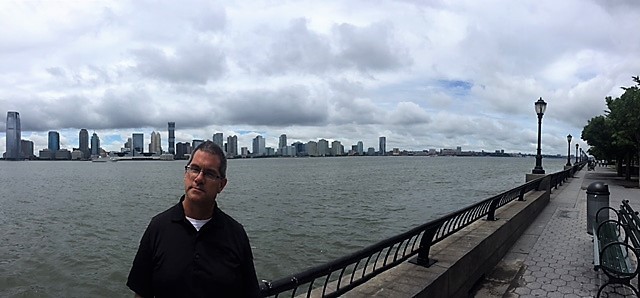
     

    We walked along the Hudson on the Battery Park City Esplanade towards our next destination. That’s Jersey City, NJ, behind me above.
     

    We signed up for a walking tour of SoHo, Little Italy and Chinatown, which was scheduled to take 2 hours, and it did, starting promptly at 2pm. There were about 25 people in the tour, most of them from other countries including Austria and Australia. The tour guide, Dante, has lived in NYC all his life so was able to provide a lot of details and perspective. We didn’t take a lot of photos, but saw filming locations for Sex & the City and Ghost, Heath Ledger’s apartment, learned about the Cast Iron district which I hadn’t heard of, and where all the cutesy neighborhood names originate (SoHo = South of Houston; Tribeca = Triangle Below Canal St, etc.). Mostly we were taking notes about where in Chinatown to eat because we wanted to come back here for dinner.
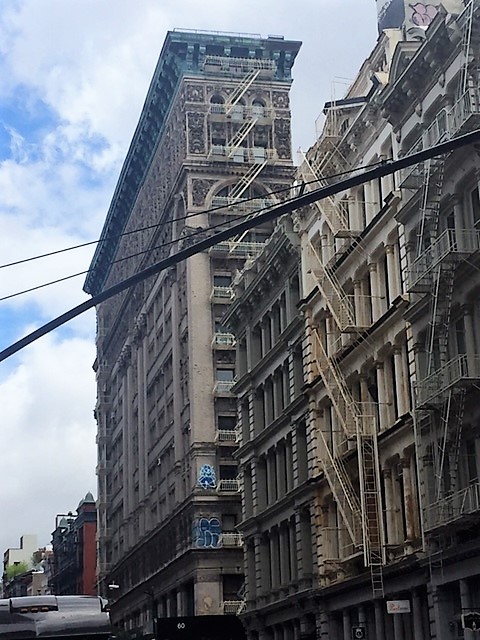
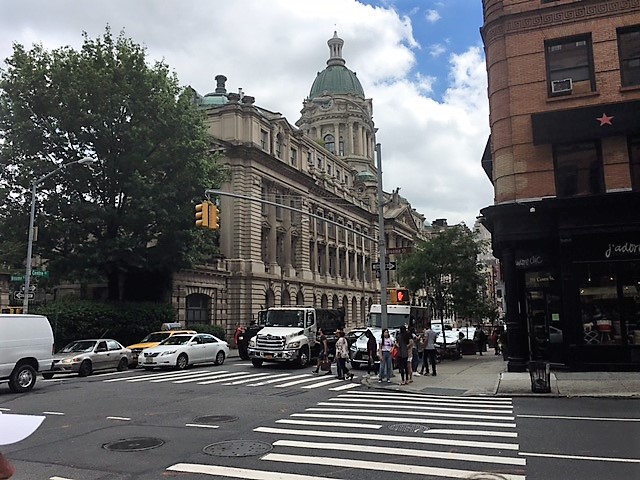
    Above: what he claimed to be the narrowest building in NYC. Below: used to be police headquarters, is now luxury apartments.


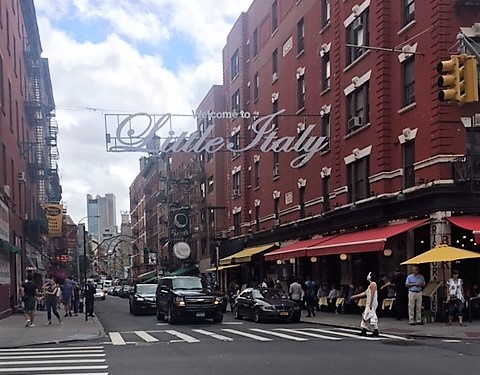
    Little Italy sign over the street.

    We were done with the tour right at 4pm and walked back to the hotel to rest a bit. A few photos along the way.
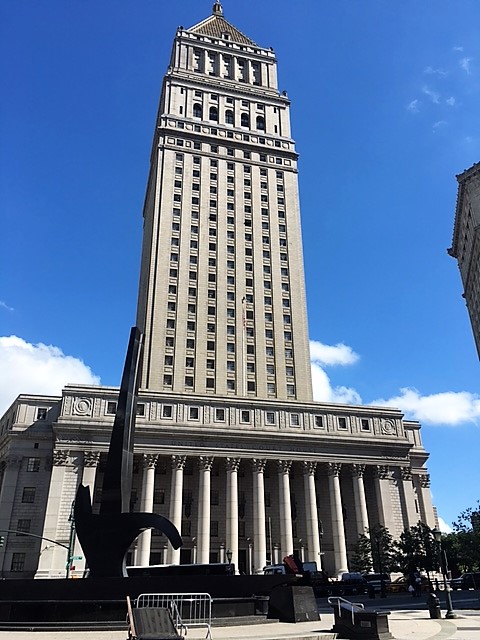
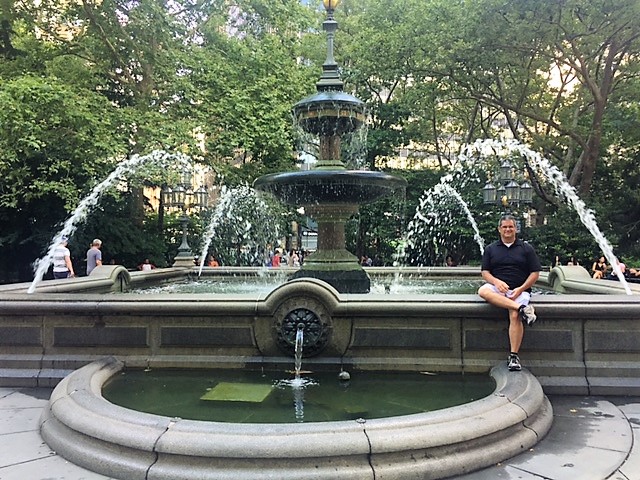
    Above: courthouse. Below: the fountain in City Hall Park, which we kept running into and will again today.


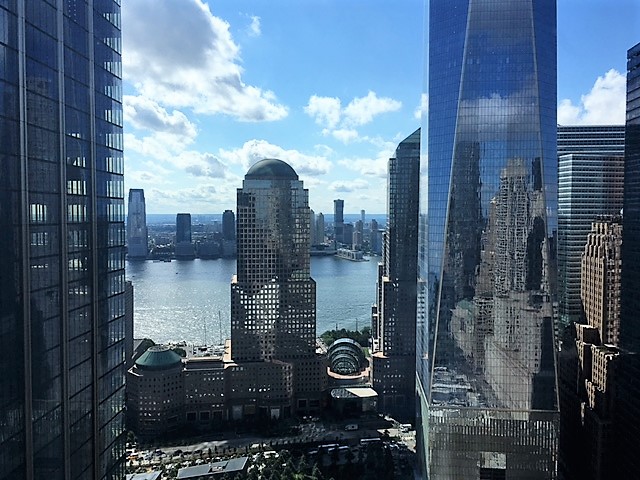
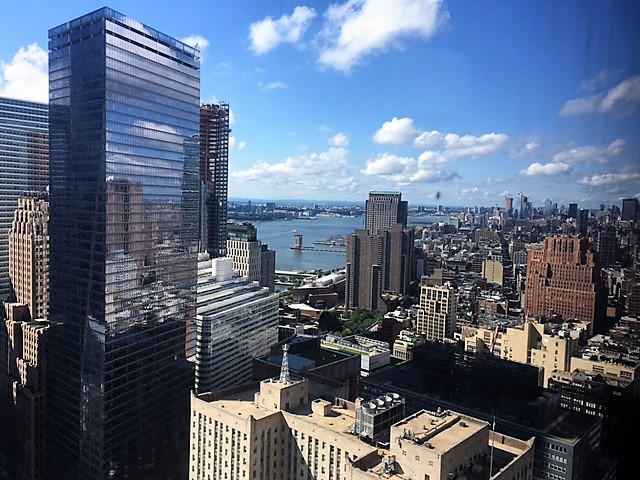
    Above and below: daytime views from our hotel window.

    We went out again about 6:15pm. Above and below are photos of this building that looks better from a distance, but we liked it and kept coming upon it. It’s the David N Dinkins Municipal Building, at one time called Manhattan Municipal Building and home to the Manhattan Borough President’s office and related administration. I loved that it included New Amsterdam in it’s name on the marble entrance below.

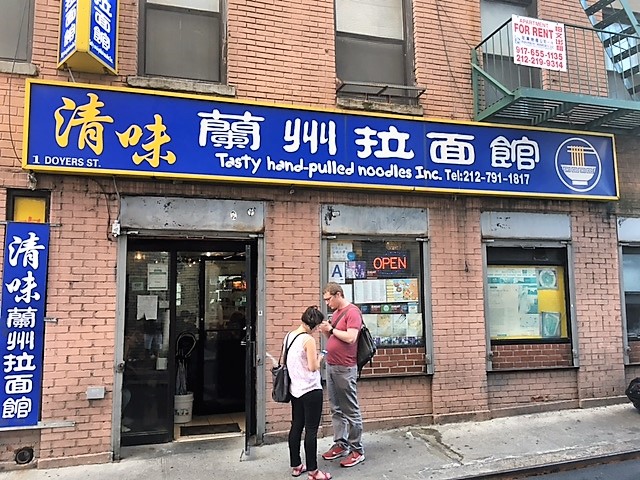
     

    We had dinner at a place in Chinatown called Tasty Hand-Pulled Noodles. It was highly recommended by our tour guide, on a little side street off of Bowery.
    The first floor above was packed when we got there, so they took us to the 2nd floor below. We were the first ones seated there but that didn’t last for long.


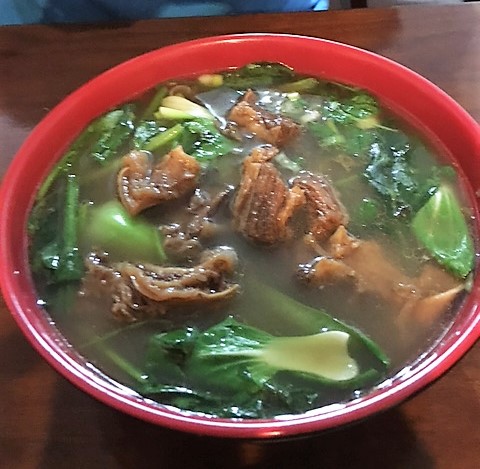
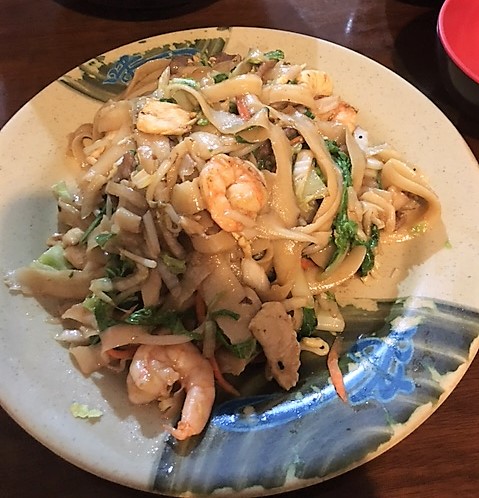
    We split a beef stew and their combination pan fried noodles. The soup was good, the noodles were incredible. You could taste the difference of hand made noodles made shortly before they cooked them.


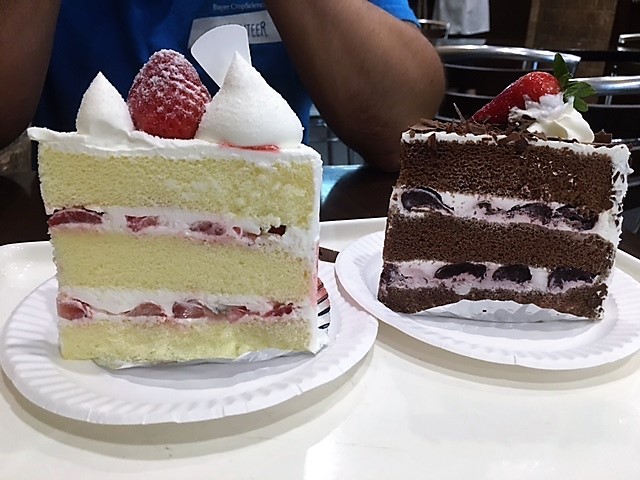
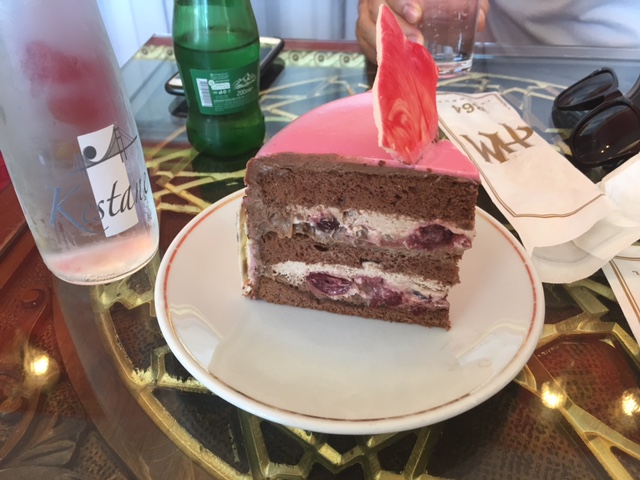
    We went around the corner for dessert, Audrey Bakery. Strawberry shortcake and a Black Forest cake. Pretty good (but not as good as the ones we had in Istanbul :) ). After we went walking around more and realized that the Chinese community here is huge. We went several blocks northeast of the Manhattan Bridge then west and south each several blocks and we never seemed to get out of Chinatown. Seems bigger than the one in SF even.
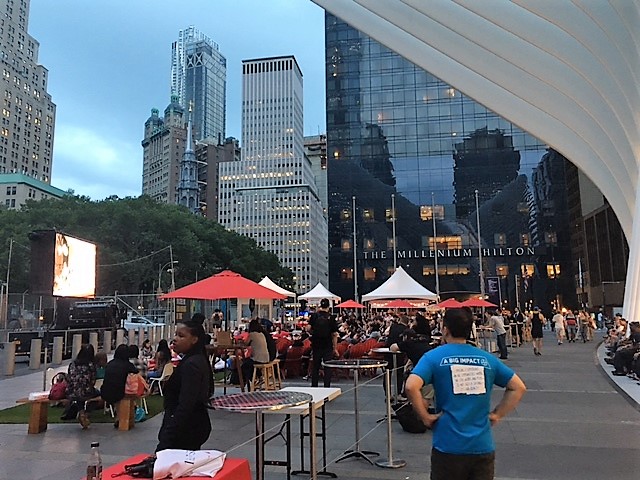
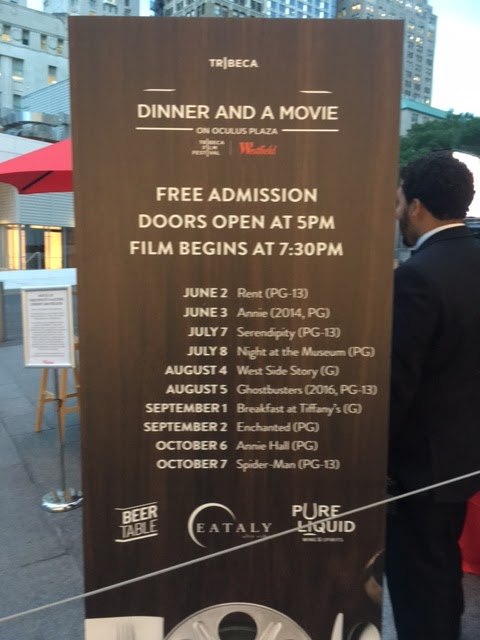
    We made our way back to the WTC because we wanted to see the memorial pools at night. Outside of Occula a nice public and free movie event was happening. What a nice idea! It was great to see it well attended as well. That’s the front of our hotel in the background.


    This map shows the layout of everything that’s planned. The performing arts building is under construction now.
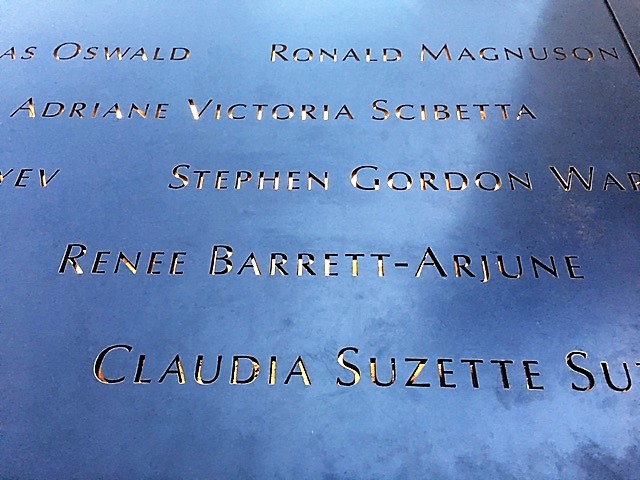
    What is this called when the engraving goes through the material so that light below can be seen through it?


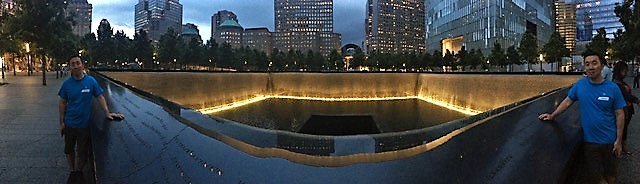
    My first attempt with a panoramic, with Dan getting in on both sides.
    Dan caught Oculus at a nice angle as we returned to our hotel. The photos above and below were essentially taken in the same spot.
    A great first day in NYC. Today includes a walk over the Brooklyn Bridge, and later this afternoon we’ll return to JFK for our respective flights home.
  • Day 11, Jul 6: Abingdon & Windsor

    Day 11, Jul 6: Abingdon & Windsor

    No Oxford Part 2 we decided. Dan was over it by the time we woke up. We thought about all the options of returning and none of them were good. The parking situation was horrible, and even the bus didn’t offer any guarantees; we’d noticed lines of people at bus stops yesterday, having to wait for multiple buses to pass to get on one. So we looked for other things to do between Oxford and Heathrow and came up with a couple of towns that turned into winners. The English Heritage website makes it pretty easy. You can find out what’s near you so that’s what we did.

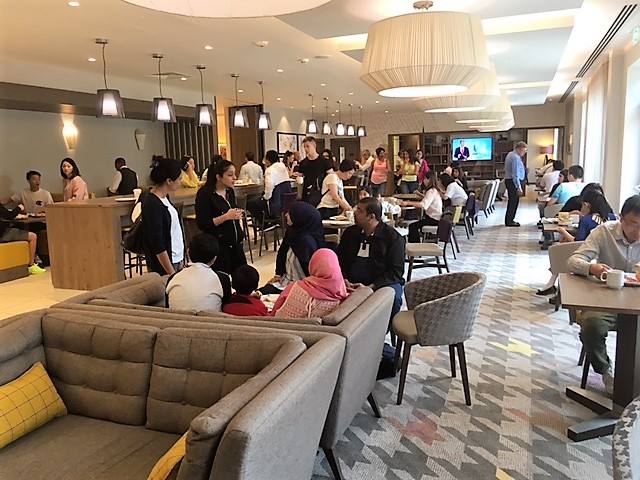
    We stayed at a new Hampton Inn in Oxford, a few miles from the center of everything. It was only about a year old and was quite modern, especially with regards to easy access to electrical and USB outlets both in the room and in the restaurant. The crowd this morning at breakfast was quite diverse and seemed to be mostly travelers.

    [The above was written in the Heathrow lounge. I’m now in NYC. It’s about 10:45pm ET; hoping to get this done before I crash. I’ve been up since 1:30am ET so we’ll see how this goes…]

    We set out about 9am. Our first stop was Abingdon, about 15 minutes away. There was a County Hall from the 1600s there that was associated with English Heritage so we decided we’d check it out along with the town, which turned out to be adorable. And the locals were incredibly friendly and helpful. We were impressed with how proud they were of their little town on the Thames.

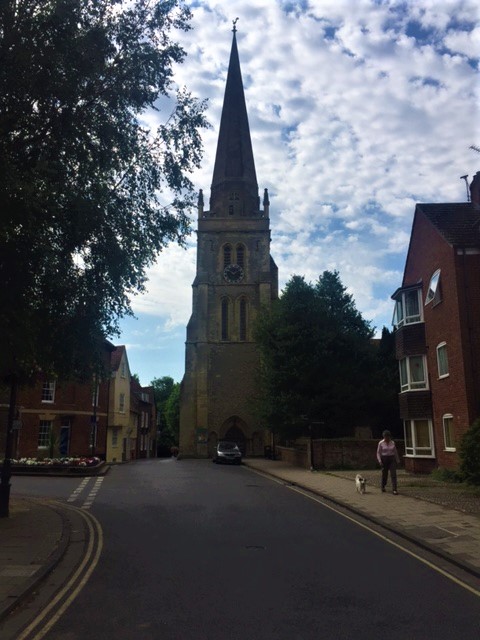
    Above: Trinity Church on the left, we parked down the street to your right, shown below. What we didn’t realize until the gal at the Visitor Center flinched when we told her where we parked was that it was private property. If you look closely in the center of the photo you can see a sign at the corner that pretty much says that as you approach from the other side: don’t park beyond this point. We didn’t notice it until we returned, and were worried then because of her reaction. But we lucked out: the car was there and no ticket.


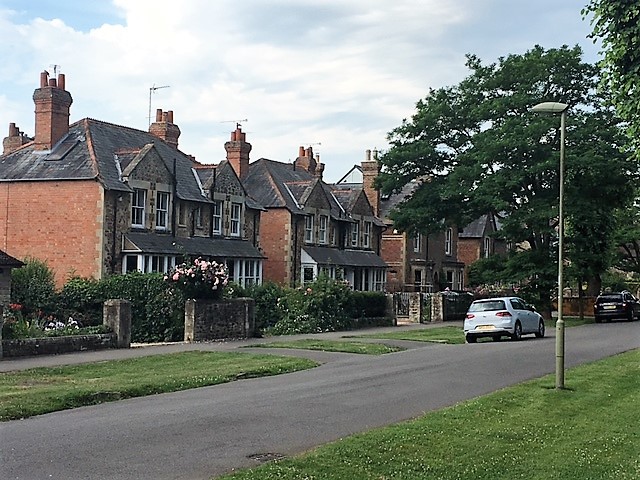
    But the houses in this area were adorable. They called them early Victorian, which probably puts them about 1840’s.

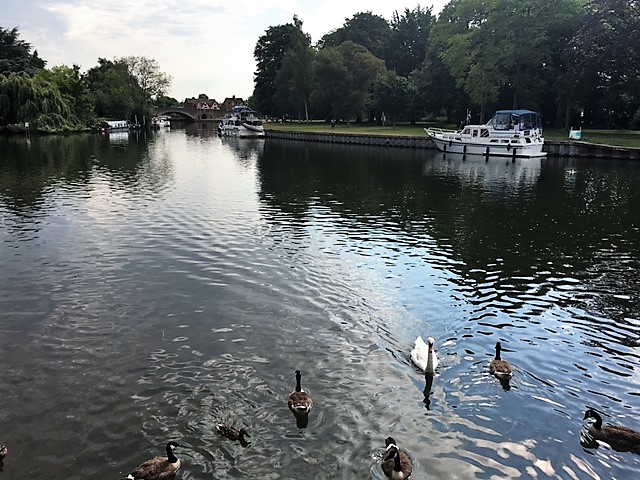
    A local who saw us taking photos directed us St. Helen’s church, and to go a little further and see the river as we were walking around. This is the Thames, above and below; you’ll see it again in the stop we did after Abingdon. It was a Thames kind of day.


    This is St. Helen’s. Dates back to the 1200’s with some updates through the 1600’s. There were some school girls practicing for graduation and someone who was helping them showed us around a little.
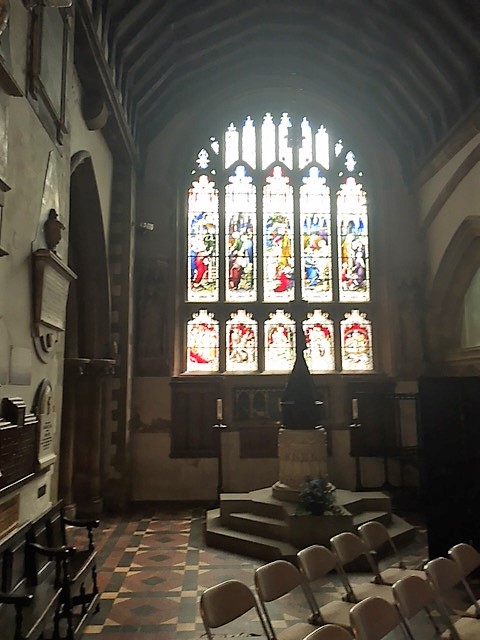
    Above: the side chapel off to the left of the front entrance. Next two photos below are to the right of you as you enter, then what’s in front of you. It’s an odd layout.


    She took us to this chapel which she was very proud of. The ceiling depicts Old Testament prophets in contemporary dress. Contemporary again being relative, and in this case 1300’s. She said it’s the ceiling that got this church into someone’s “1000 greatest churches” book; I didn’t catch the author but I think it’s this. 


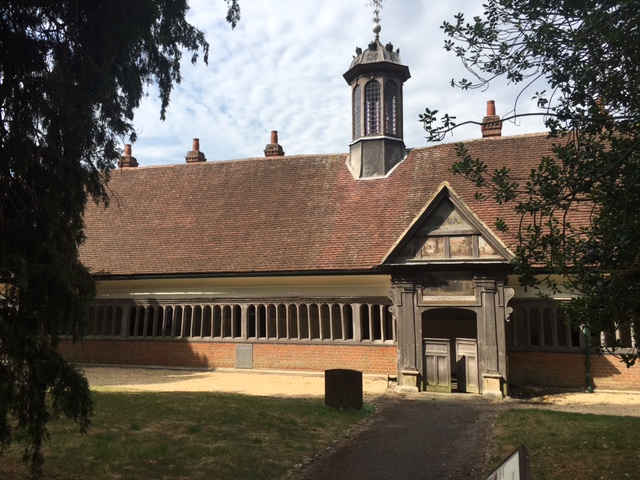
    They were also very proud of their almshouses, of which this church had three. The one above dates back to 1446. We’d never heard of them before, but almshouses are community based charitable housing that allows those who can’t afford regular rents to pay what they can afford and stay in the community.

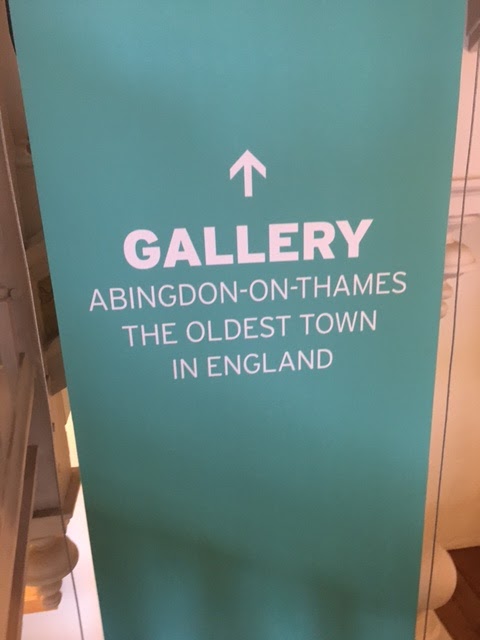
    This is the County Hall, dating back to the 1600’s. It’s been restored and is still in pretty good shape. It’s where the council still meets and the top floors function as a museum. The sign below is proudly displayed as you enter. “The oldest town in England.” Sounded suspicious to us. I found this article which lists Abingdon as one of the 10 oldest in the UK, and verified their claim to finding evidence of settlements back to 4000 BC.


    Most of the MGs in the world were made at a factory in Abindgon.

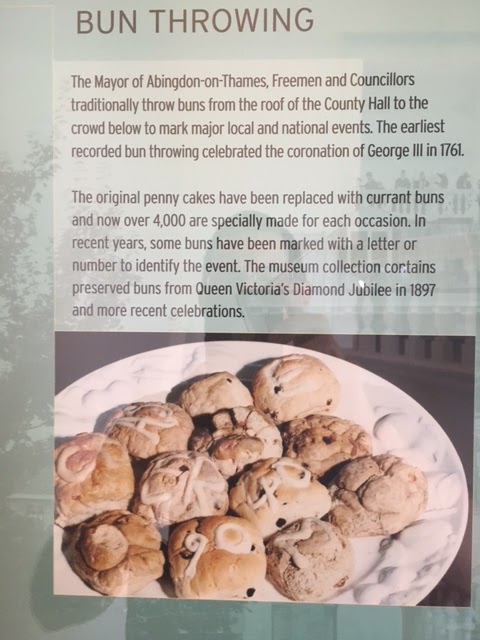
    We went up to the roof with Shirley (named after Shirley Temple!) and she had lots of details to share. One of the traditions in this town is for buns to be thrown from this roof by royalty when they come to visit, into the people gathered in the square to the left of this photo. Queen Elizabeth had the honors in the 1950s. Seriously. To the right in this photo are the remains of an old Abbey where we went next.


    There are a few remnants of buildings from the Abbey, but mostly all that’s left is the gardens. The statue of Queen Victoria below used to be in the square across from the County Hall, but they moved it to keep it from getting damaged (by the bun crazy crowds maybe?).


    A few walls of the Abbey left here and there. It was destroyed in the 1500’s by Henry VIII.
    We left there about 11:20 and had an hour drive to Windsor. Windsor Castle had been an option on this trip from the earliest stages of planning, if nothing else because it’s like 15 minutes from Heathrow. But it was pricey to get in – 20 pounds per person – and the reviews were mixed. Still, how often do you get a chance to see where the current Queen lives? We compromised and decided on the town, and would just see the castle from the outside.
    The town itself was actually not great. Very touristy as you can imagine. It’s got a lot of history; Windsor Castle itself dates back to the 1100’s and has been the royal home on and off over the centuries. And this is the Windsor of Shakespeare’s Merry Wives of Windsor. We stayed about an hour and a half and that was enough.
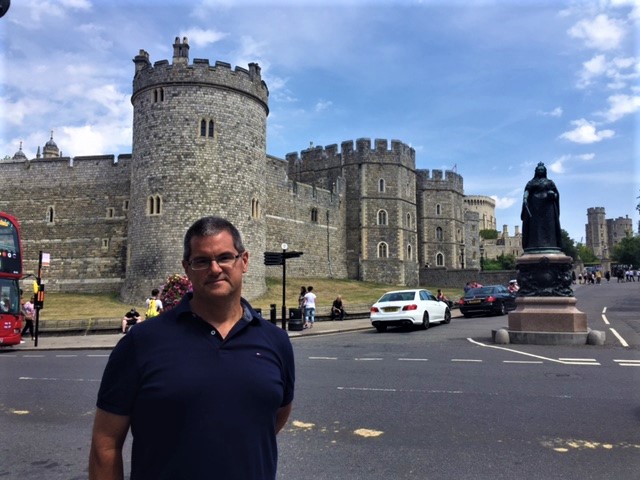
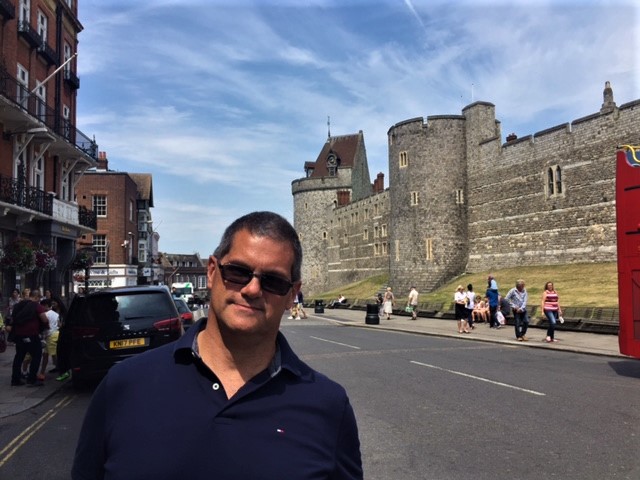
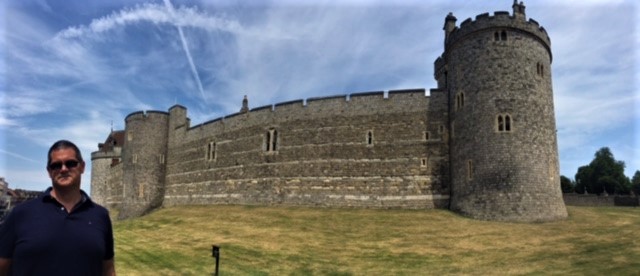
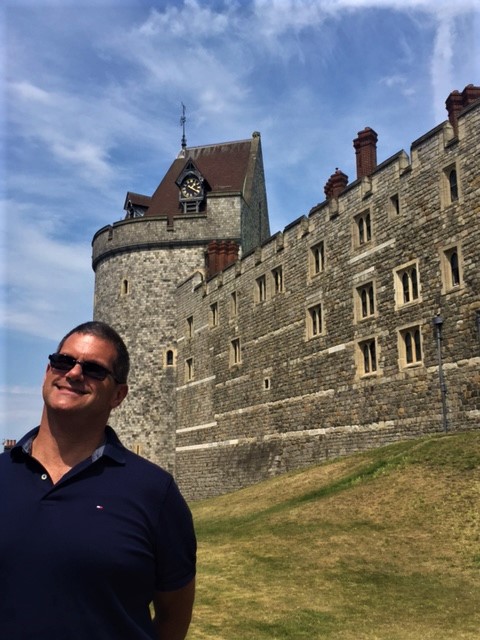
    But the castle is amazing. It’s by far the biggest we’ve ever seen. It goes on for blocks as you walk up High Street. And there’s Victoria again. She lived here as well. And if you’re wondering where Buckingham Palace fits into all of this: Buckingham is their London home, and the place of official business. Windsor is for weekends.
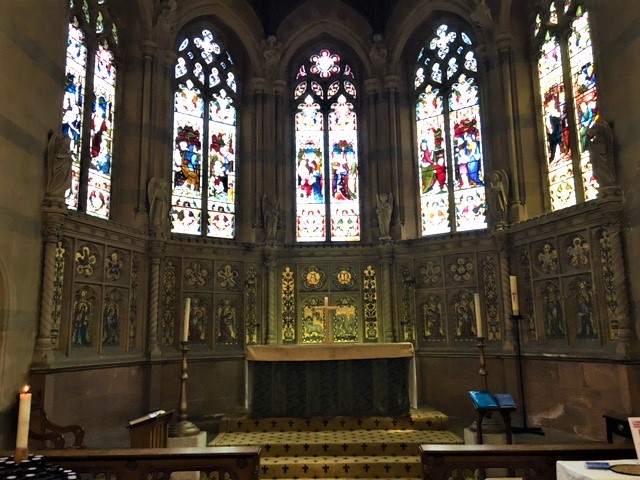
     

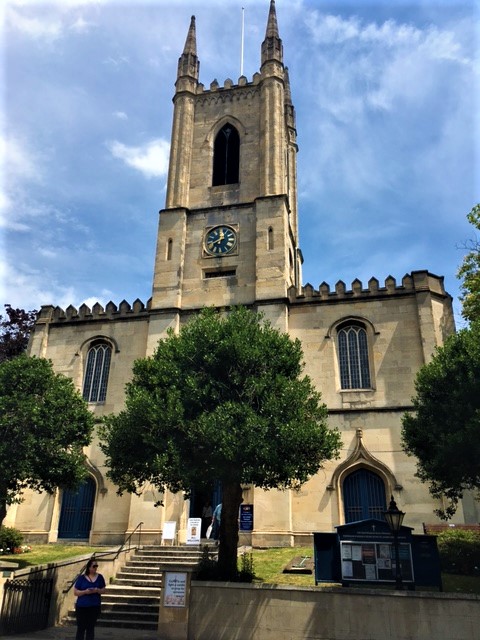
    Also on High Street is St. John the Baptist. There’s been a church here since the days of Henry I when he moved the royal castle from “Old Windsor” to this one around 1100. This version is pretty new – 1880’s. But I loved the welcome sign they had on the sidewalk and at the top of the steps, below. “This church welcome people of all faiths and people of none; all races, all genders, all sexualities, all disabilities, all nationalities. All are welcome in this place of prayer.”
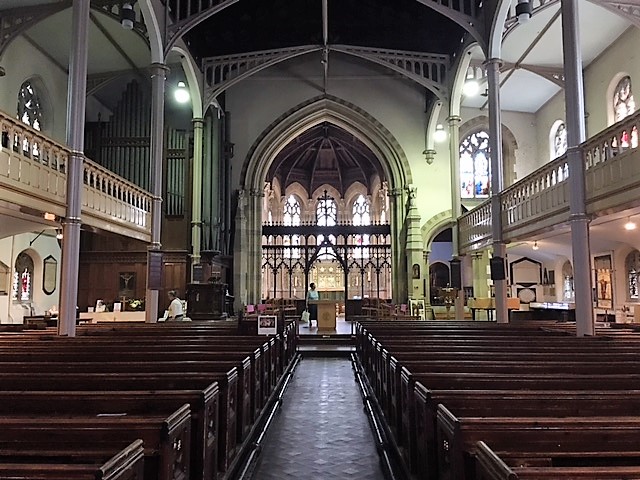
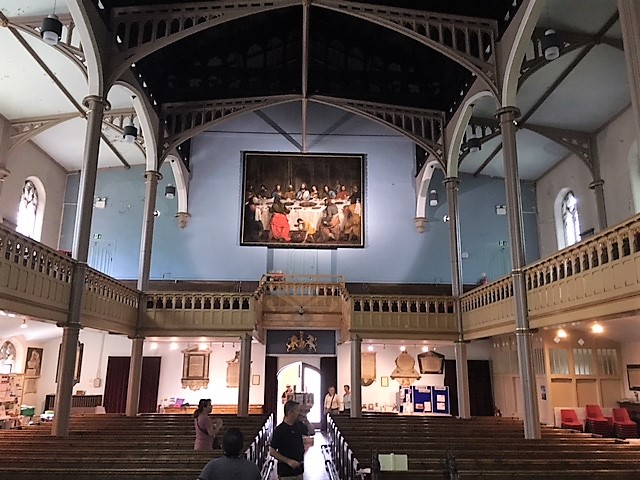
    The nave as you enter above, and looking back below. I wanted to get the painting of the Last Supper in context first.


    They are very proud of this. Painted in 1660 by Francis de Cleyn. It used to hang in St. George’s Chapel, which is the chapel within walls of Windsor Castle. It’s been restored and repaired from damage several times but still manages to look pretty good.
    Close-up of the altar at St. John’s.
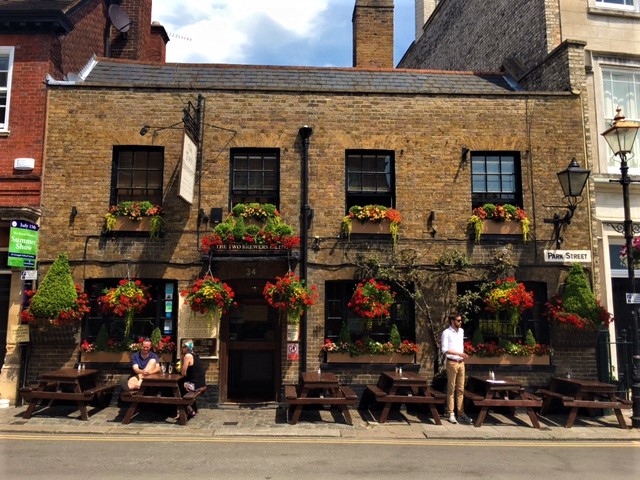
    This tavern – The Two Brewers – has been here since 1791. We passed it on the way to the Windsor Great Park.

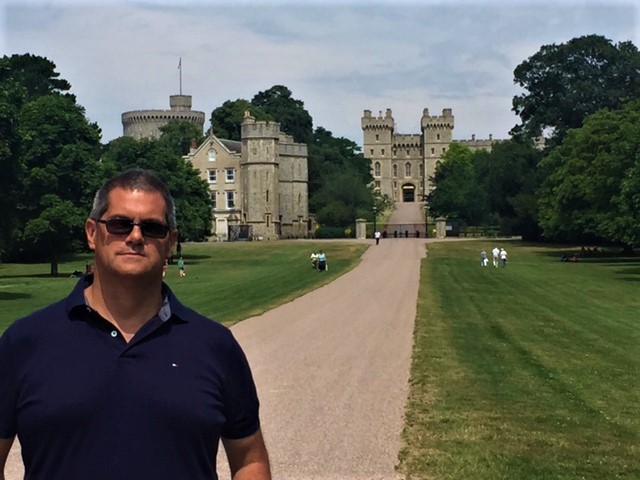
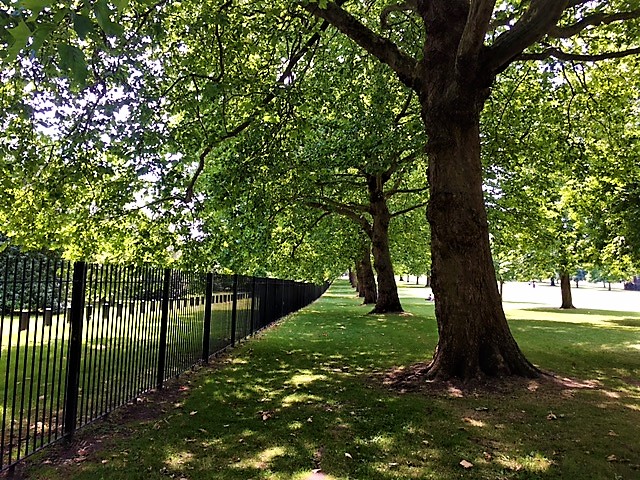
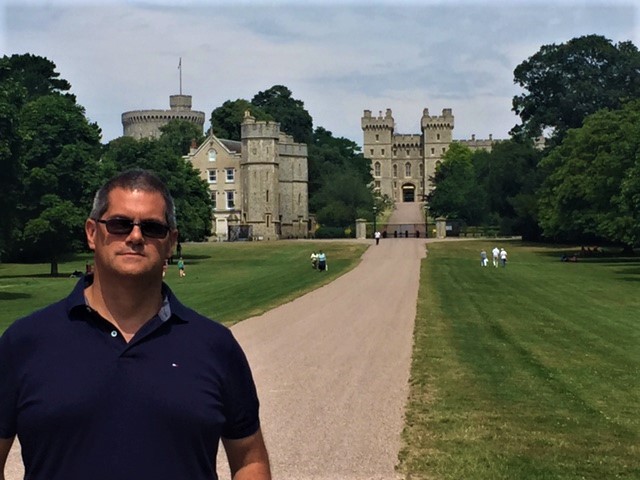
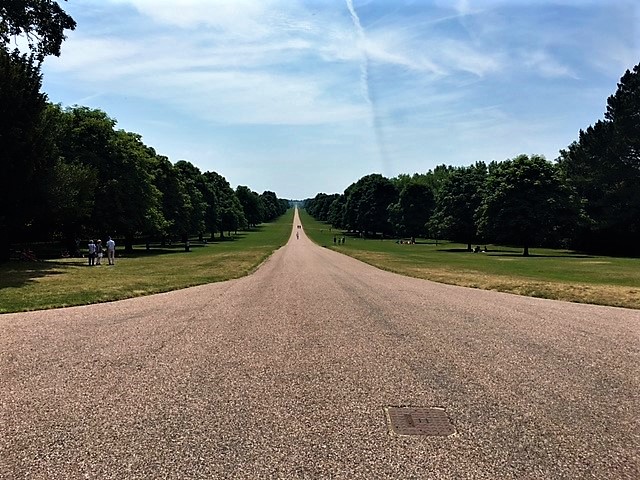
    And there was really only one thing I wanted to see in the Great Park: The Long Walk. That’s what this is called. I couldn’t find a reference for just now long it is but you get a good idea from the above. Windsor Great Park covers 2020 hectares, or about 5000 acres.

    We were never this close. I put my hands through the gates and zoomed the shot from my phone. And below is Dan taking a photo of me taking these photos.

    The weather was warm so we walked some in the shade, then went back to the Long Walk.
    I love this photo.
    From there we went back into the town. But everywhere you look, you see the castle. It’s unavoidable.

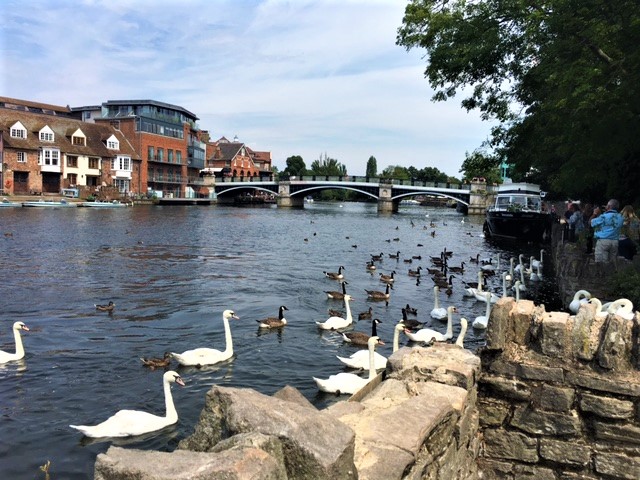
    Finally, no castle. We walked along the Thames for a bit before heading back to the car.


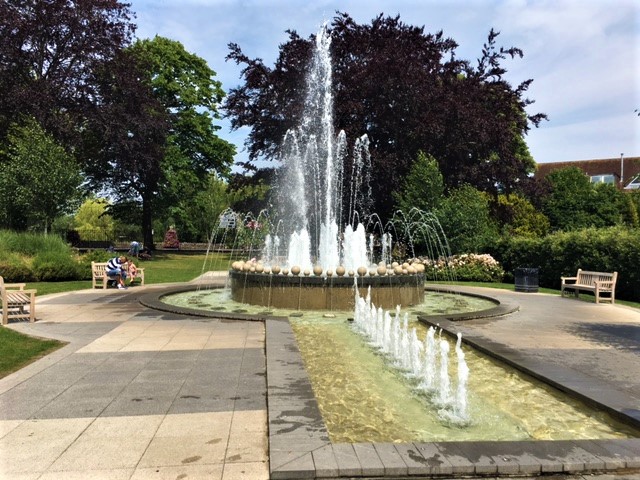
    This is the Diamond Jubilee Fountain, celebrating Queen Elizabeth II’s 75th.


    We found a restroom in a shopping center and I decided to take a photo of the famous English sinks. So wrong. You can tell how modern a building is by the faucets. This one, not so much. Can you tell what’s wrong with it?
    Our strategy of making our last stop close to Heathrow worked. We made it from the parking lot in Windsor to the lounge in about 45 minutes. And that included dropping off the car. British Airways started a special security line for First Class passengers (which we were not) and Gold Members (which Dan is) that literally dumps you right into the lounge. It was pretty sweet I have to admit.


    Dan ate a variety of things from the buffet line; I had a chicken cauliflower curry dish off the menu that was pretty tasty.

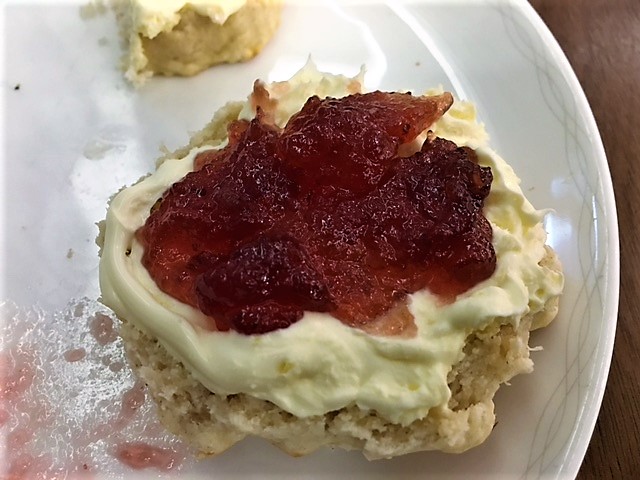
    And finally in the lounge, I was able to check off the final food item I’d been wanting since we got to Canterbury now a full week ago. A nice plain scone, with a healthy layer of clotted cream, and a dollop of strawberry jam on top. If you’ve never had clotted cream, it’s like a cross between whipped cream and butter. It may be the best bite I had the entire trip. It was so good I had another.

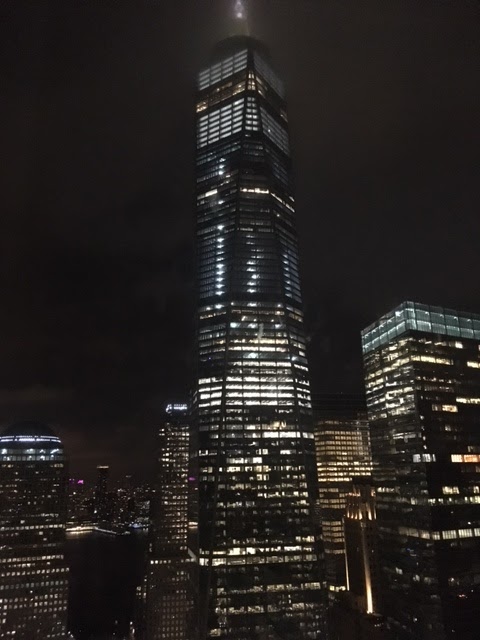
    Our flight was on time, we had an easy subway ride to downtown Manhattan. We are staying at the Millennium Hilton. Below is the view from our 48th floor room. We are glad to be back in the USA and looking forward to a fun couple of days here before we head home.


  • Day 10, Jul 5: Goodrich Castle, Oxford Part 1

    Day 10, Jul 5: Goodrich Castle, Oxford Part 1

    Turned out to be a frustrating travel day. I suppose you have to have them sometime. If so, it’s nice to have them in great weather, which we had. In a word: traffic. We had our normal breakfast in the hotel and left a little after 9am. We got to our first stop fairly easily about 10:20, it only took a little longer than we thought it would.

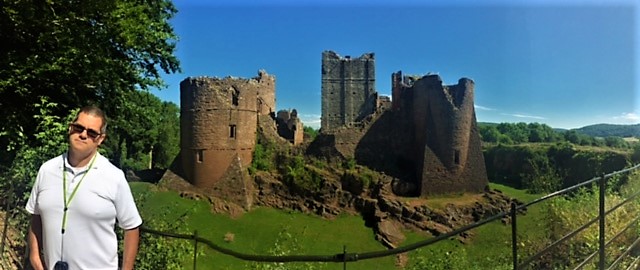
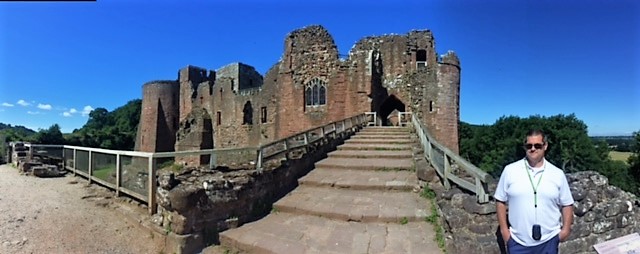
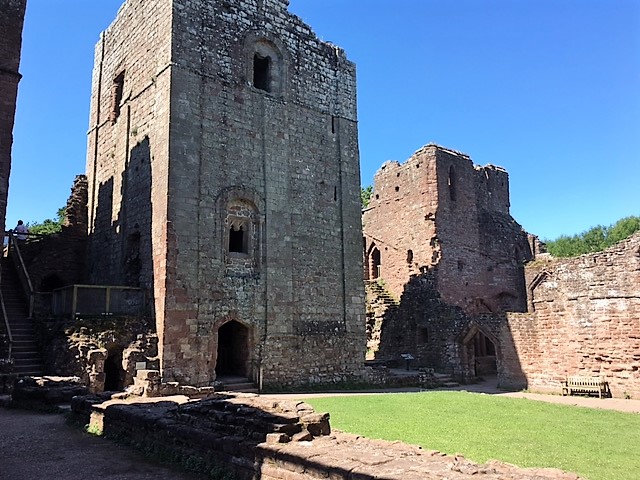
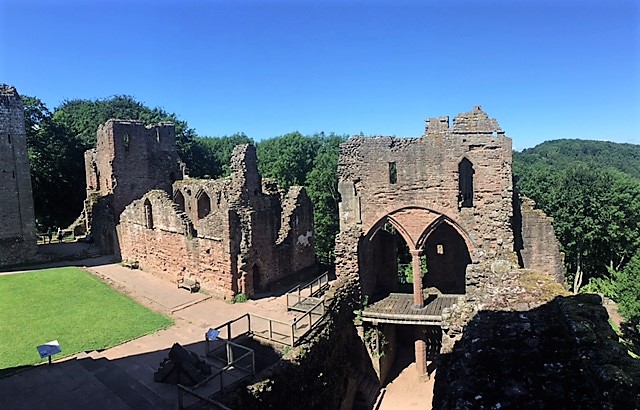
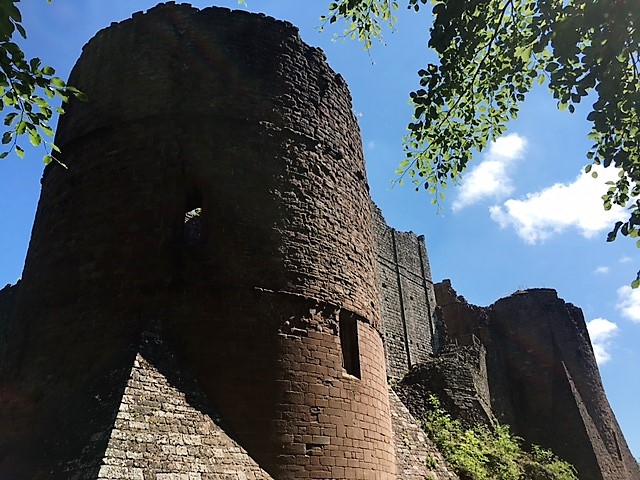
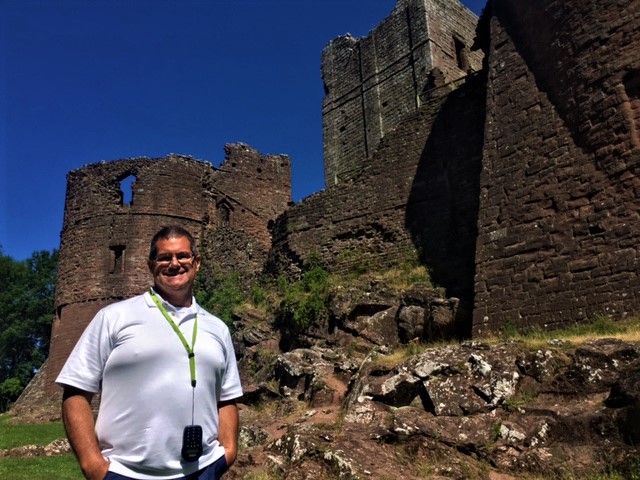
    Goodrich Castle was our first stop, a piece of the English Heritage collection on our way to Oxford. You won’t recognize any of the names of the owners so I won’t go into all those details beyond the first one: it gets it name from the first owner, Godric Mappeson, who first built a castle here, just a few miles from the Wales border, around 1100. The Great Tower, which still stands today, was built later that century by the next owner. The rest added on over the next several hundred years, and it descended into ruin in the last 1600’s after being badly damaged in a war.

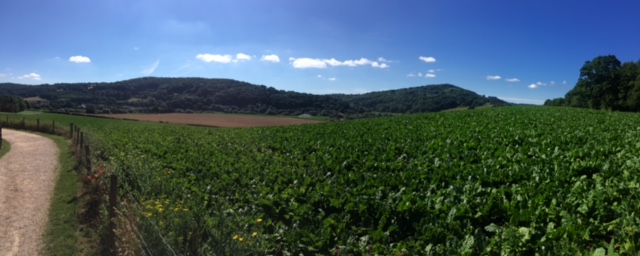
     The castle was about a 5 minute walk from the visitors center, but you got a great view of it as you approached it. Below: lots of hills and farmland all around it made for great views, especially from the top.


    It’s in much better shape than Wardour Castle, which we saw a couple of days ago, but you still had to careful where you walked.


     This is the Great Tower I mentioned earlier, the oldest part of the castle, dating back to the 1200’s.
     There were two busloads of students sharing the space with us It was great to see them enjoying this. We chatted with one of the teachers for awhile. His were 7 year students, so 11-12 years old. They also do a ski-trip every year, trading off between Europe and USA. They’ve been to Heavenly and Squaw Valley.


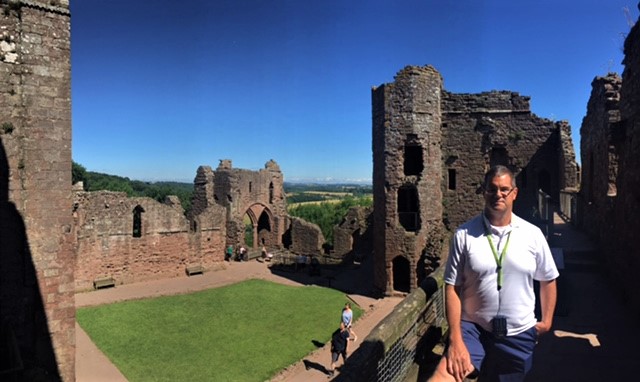
    This was pretty funny: I accidentally ended up in this twice, on the left and the right, because of the way the panoramic gets shot.


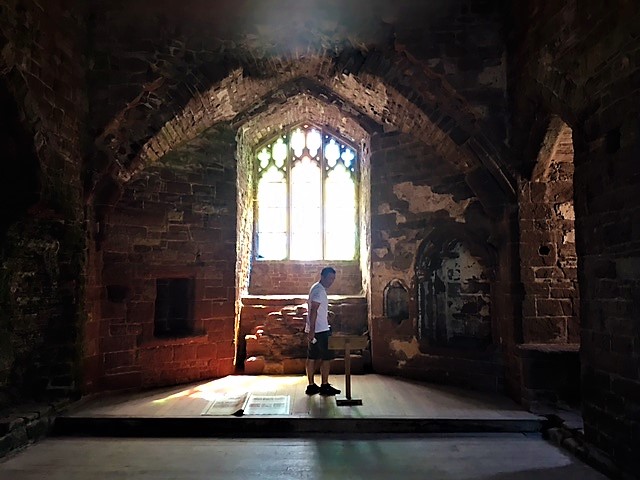
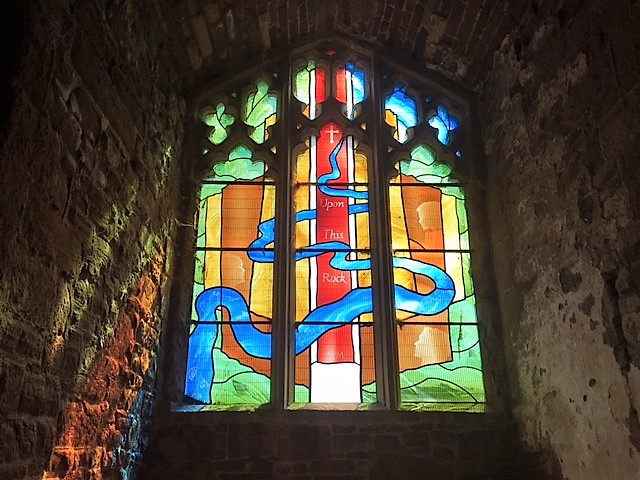
    It ain’t no castle without a chapel. The stained glass window was replaced in 2000.


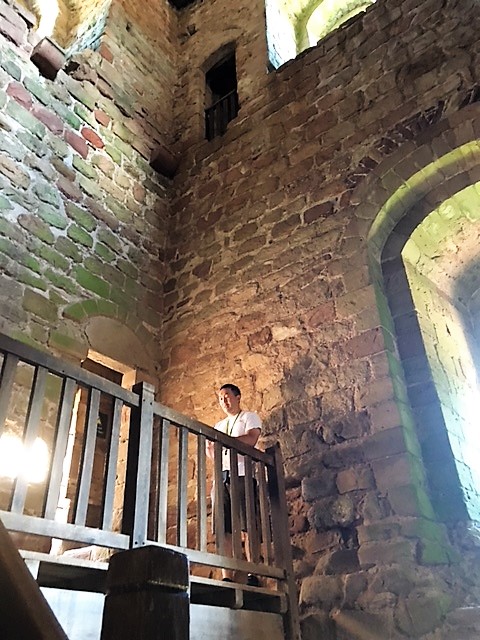
     Heading up to the top. Through that door to Dan’s right were probably in the top 3 of the narrowest staircases we’ve ever encountered. Dan says #1 but I like to give us some wiggle room.


    Above and below were taken from the moat. This is the first time we’ve walked through a moat. The only other time the possibility was even there was at Walmer Castle on Saturday, we just didn’t.

    We were there only about 45 minutes, leaving just after 11. From there we experienced a frustrating drive into Oxford. It was only 75 miles but took nearly 3 hours today. Yesterday when we’d mapped it, it was only 1.5 hours. So we missed the Walking Tour we had scheduled for 2pm. We will revisit in the morning and see if there are other options. Dan was really bummed, he was so looking forward to it. The traffic in Oxford proper was the worst part, and then every parking garage (“car park” here) we encountered was full. If it wasn’t for that we might’ve been able to squeeze in on time. We were finally able to find some street parking and sought out lunch instead.

    We found a little French place that was #7 on TripAdvisor. It was pretty good. They were closing for lunch at 2:30 and we got in just under the wire. We went for the 2 course set menu.

     Dan had a salad with couscous and salmon; mine was oranges, asparagus, sprouts, Italian parsley, chives.
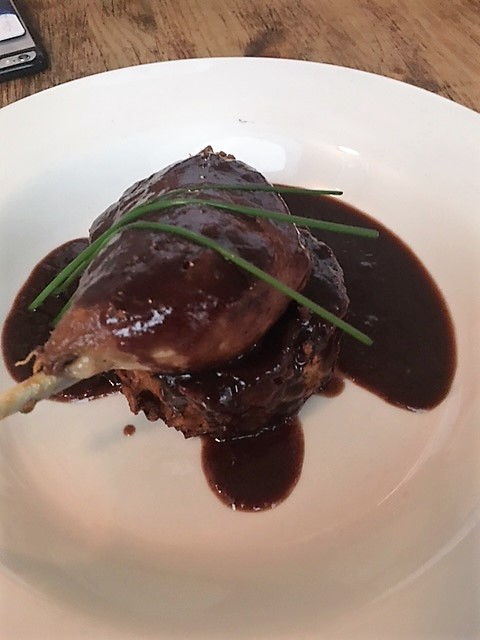
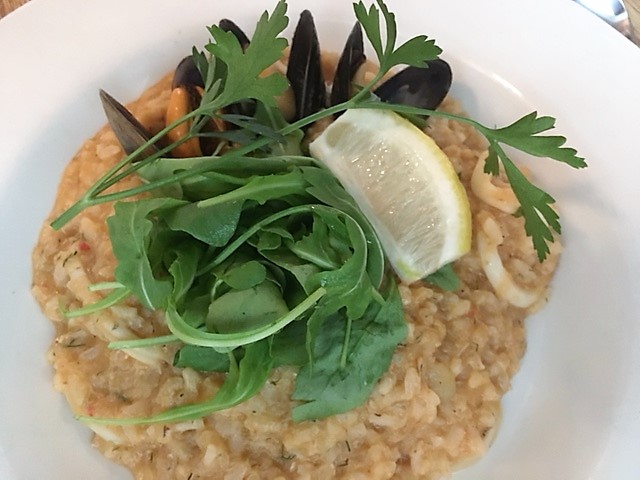
     Dan had the roasted duck, I had  a seafood risotto (but gave my mussels to Dan!).


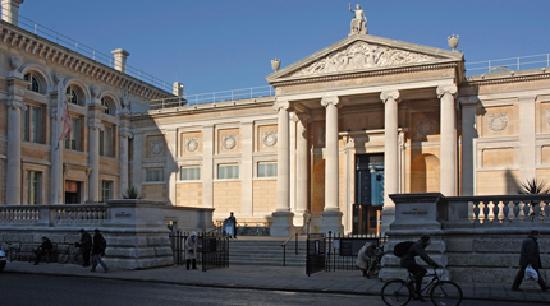
     We went to the Ashmolean Museum of Art and Archeology, the world’s first university museum, built between 1678-1683. We got there at 4pm and they closed at 5pm so did a pretty quick walk through, didn’t cover everything, but stayed the whole hour. (If the people look dressed for cold, it’s because I lifted this off the internet.)


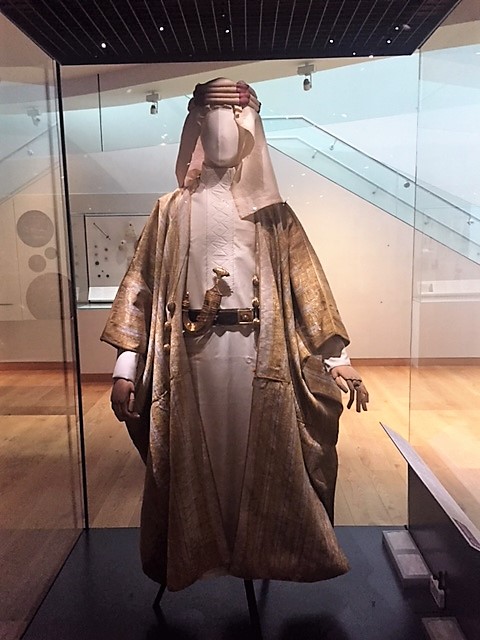
     Clothing that belonged to the real Lawrence of Arabia.


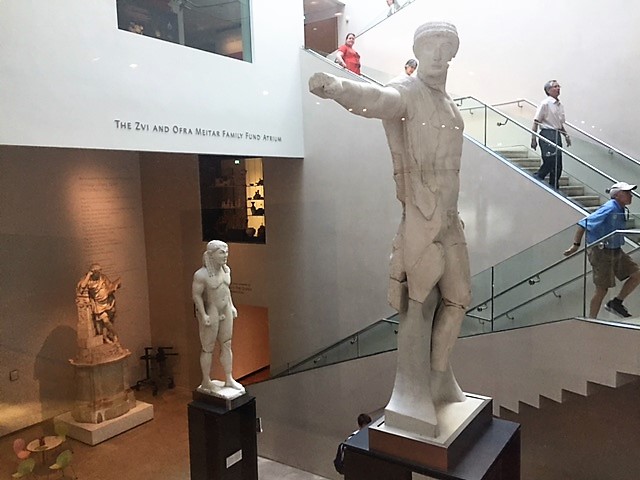
     These were in the ground floor foyer once you got past the ticket counter. They are much bigger than they look here; if you see the person sanding just behind the first statue you’ll get a sense of size, even though that’s probably a kid. The first was Apollo, the 2nd was an ideal of a young male athlete; we don’t remember the last one.
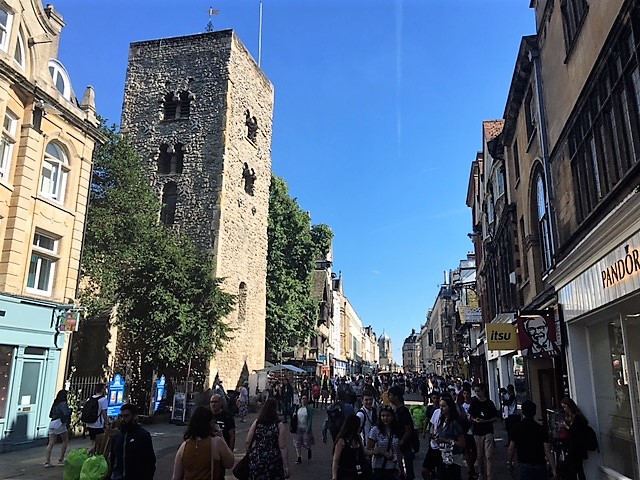
     From there we just walked around town a bit. This was a pedestrian mall and it was crazy full at 5pm.


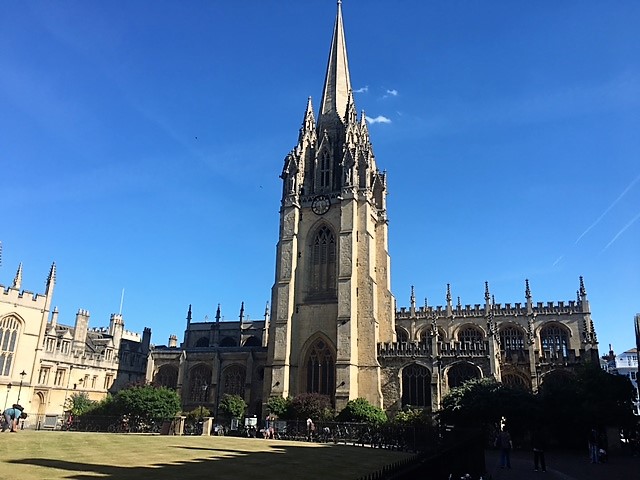
     This was St. Mary’s. You know we can’t resist. Especially when we are allowed to get to the 2nd floor! This version built in the 1400s, a church has been on this site for over 1000 years.


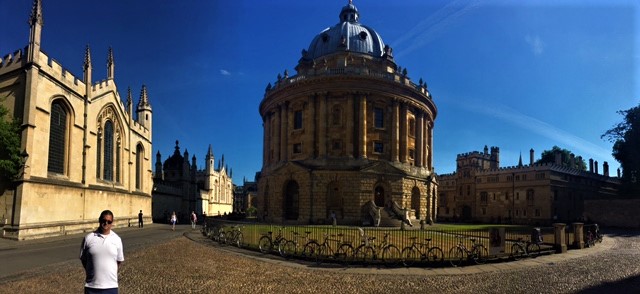
     We had entered from a backstreet entrance, and exited through the front, which also had a little café in front of it operated by the church, and it was pretty busy. It opened up into a courtyard with a university building in the middle, Radcliffe Camera, which is the Radcliffe Science Library.


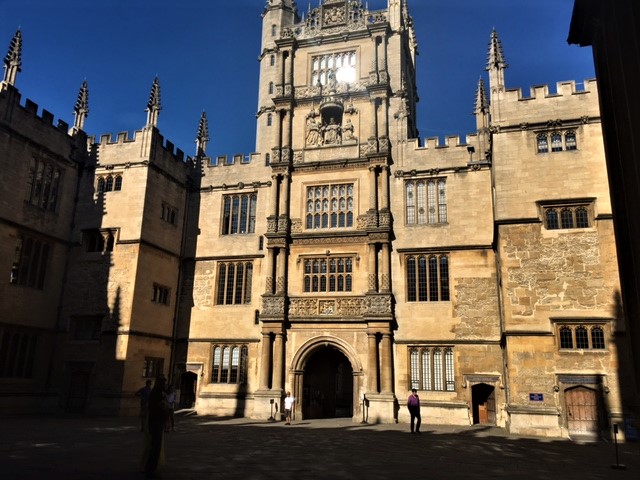
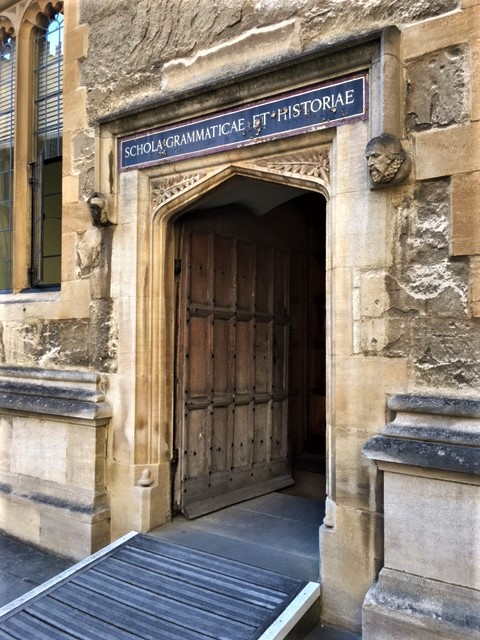
    This is the Bodleian Library, the main research Library at Oxford, with over 12 million volumes. We caught the very end of a tour that was wrapping up and are hoping to snag one in the morning. It is one of the oldest libraries in Europe and the 2nd largest in Britain. Each of the major sections of the library has it’s own entrance from the courtyard, as shown below.

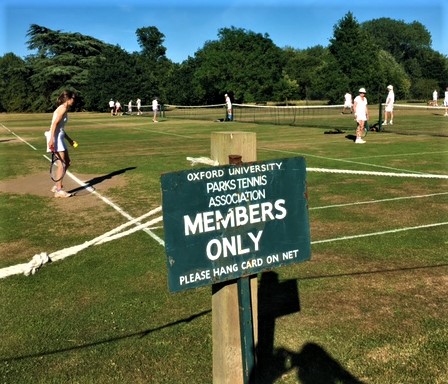
    From there we took the long way back to the car and walked through Oxford University Park which is huge. We came across this quaint sighting of a group of young men playing croquet, nicely dressed in dockers and polo shirts. I said to Dan “that may be the most British thing I’ve ever seen.” Couldn’t get a decent photo of it because it was too shady. We walk a little further and come across the scene in the photos above and below: a tennis club playing on grass courts, in mostly white tennis outfits. That surpassed croquet boys on the British scale in my opinion.


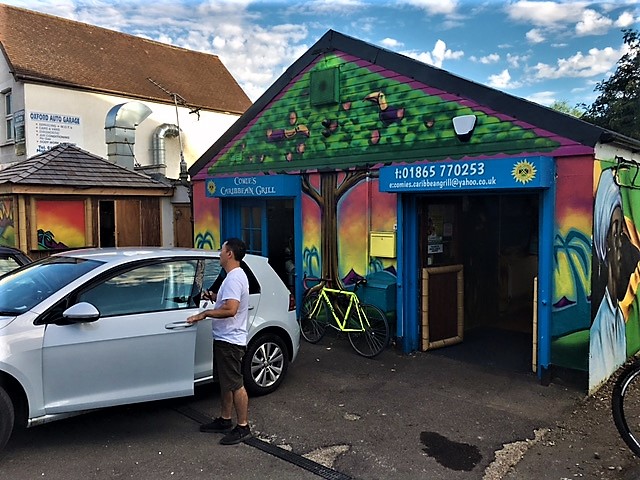
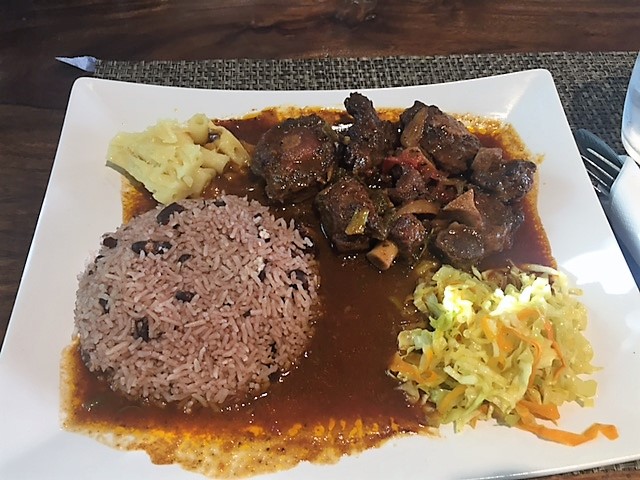
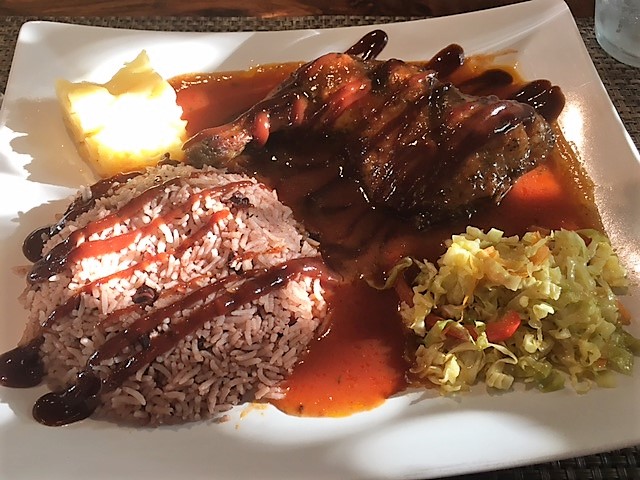
    We found a little Caribbean place for dinner that was pretty close to our hotel. It was #4 on TripAdvisor’s restaurant list overall and #1 on their “Cheap Eats” list. Can’t be that. The food was great.

    Oxtails above, jerk chicken below, both with beans and rice, steamed shredded vegetables and a macaroni and cheese pie.


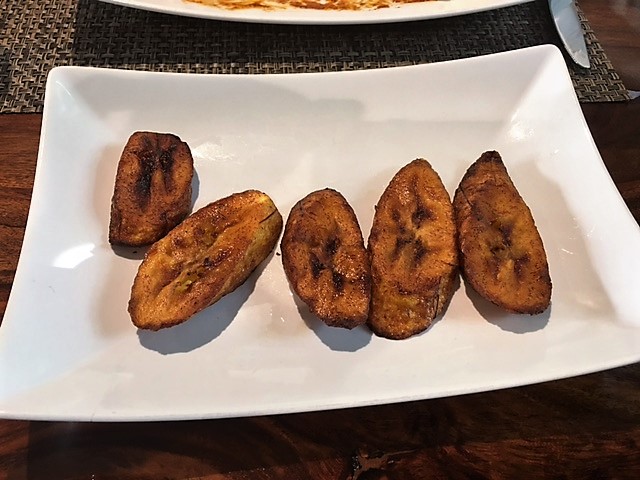
    Plantains for dessert of course.
    We didn’t do much but the day went by fast. We will see more of Oxford tomorrow but need to get to Heathrow mid-afternoon for a 6pm flight to NYC, where we will stay for 2 nights before heading home.
    PS: How are you liking the panoramic photos Dan has been playing with? The ones that are longer than others are panoramic.


  • Day 9, Jul 4: Cardiff, Wales

    Day 9, Jul 4: Cardiff, Wales

    We both slept about 8 hours, waking up at 7am, definitely sleeping in for us. We went down for breakfast and figured out how to approach the day. In terms of things being open – typically 10-5, 9-6 if you’re extremely lucky – you’re really limited to about 3 or 4 things at the most. So we focused on things that we wouldn’t really be able to do anywhere else and would help us get to know the area a bit. We had walked around last night around an hour and were surprised that so much of the town had shut down already, this was about 7:30pm. We’re staying close to a central shopping district and most of the retail was closed already. Today, not having paid close enough attention to planning this morning, two of the things we’d hoped to do quick hits on were closed by 3pm (St. John’s church) and 4pm (Cardiff Museum). It’s definitely an early city. Oh well.

    We were happy with what we picked and actually decided to skip the castle. Surprising decision for a castle-hop trip, eh? The reviews were mixed and there were other things we wanted to focus on. We left about 9:15am.

    Here’s a little summary of “bits and bobs” we learned throughout the day to orient you to where you are. Cardiff is the capital of Wales, which has been part of the United Kingdom since 1536. Wales is on the west side of the island, bordered on the west by the Irish Sea. It’s population is around 3million, and it’s people speak Welsh and English. The UK tried to essentially outlaw Welsh in the 1900’s; that has both been very effective and not gone over so well. Today only about 500k people speak Welsh, but Wales has plans in place to get that up to 1million by 2050. Welsh sounds something like Gaelic. We ran into a lot of school children at one museum and the teachers were speaking to them in Welsh, but they could switch to English on a dime. Wales as a population is poorer than England; a majority of its residents voted for Brexit.

    Cardiff is the capital and the largest city in Wales, population around 350k. It was only made a city in 1905, and the capital in 1955. But it’s been around a long time. It’s believed to have gotten it’s name from a Roman settlement, Caer Dyf which is essentially Welsh for Fort Taf.

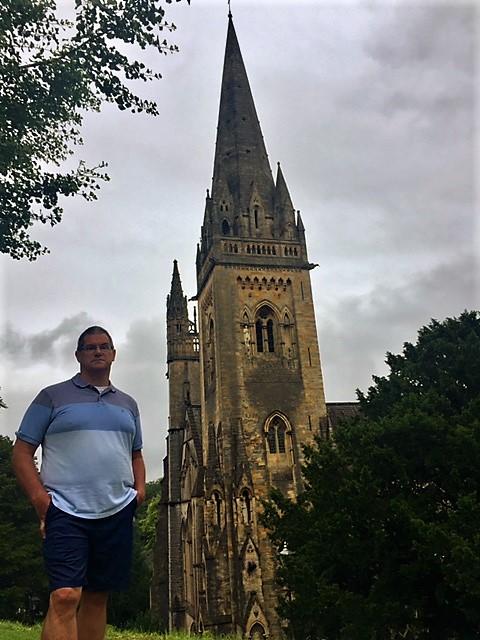
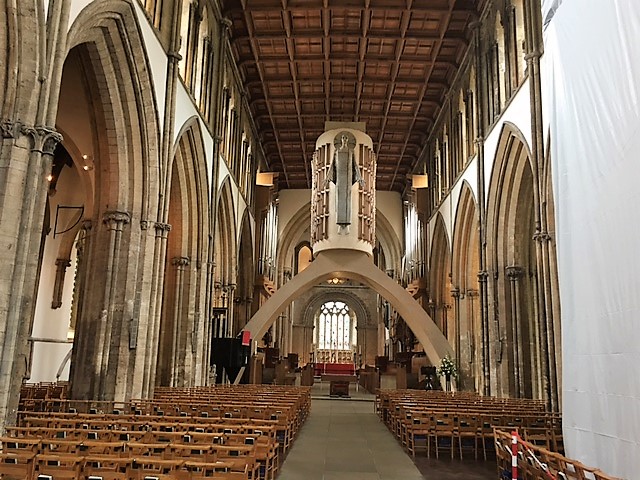
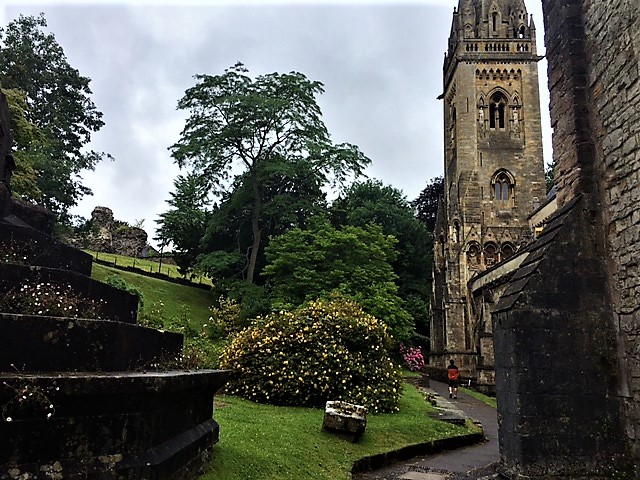
    First stop was the LLandaff Cathedral, and Anglican Church dedicated to Saints Peter and Paul. Some of it dating back to the 1100’s, it’s been damaged by various wars over the centuries, including WWII, and is somehow still standing. The church was tucked away in a sort of valley; it was difficult to get good pictures of the outside. 

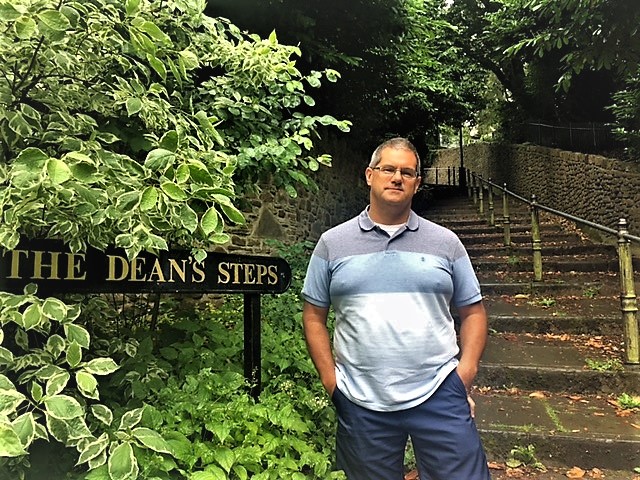
     These steps led from the parking lot down to the church. We never did figure out who the dean was.
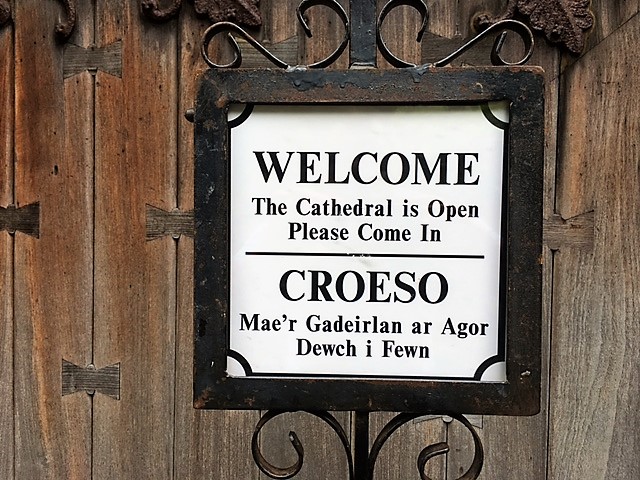
     Just so you could see the Welsh language.
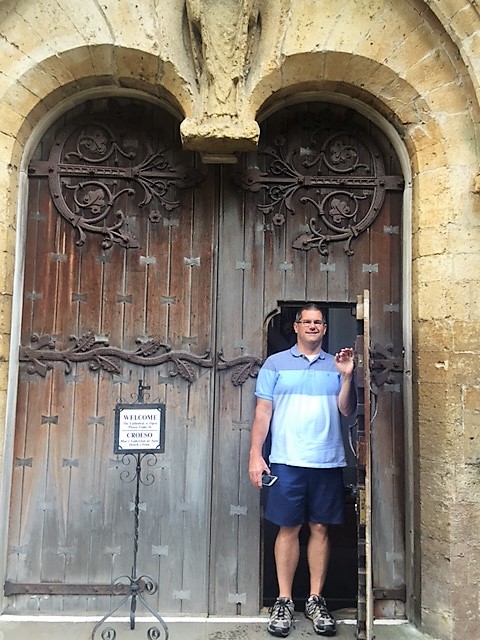
     This door cracked me up; it’s practically a Hobbit door.
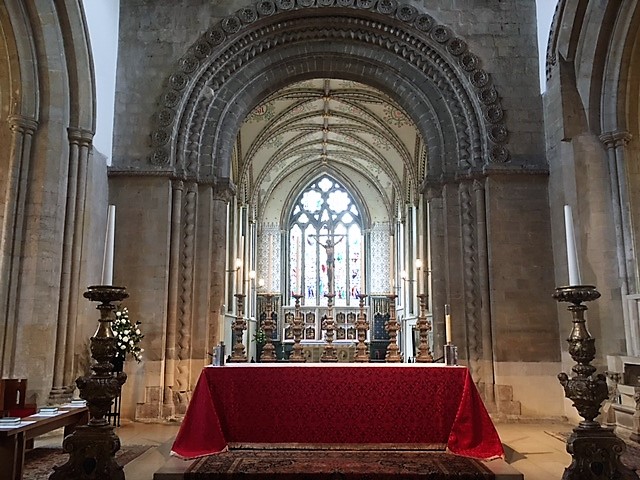
     The nave and, below, a shot closer to the altar.


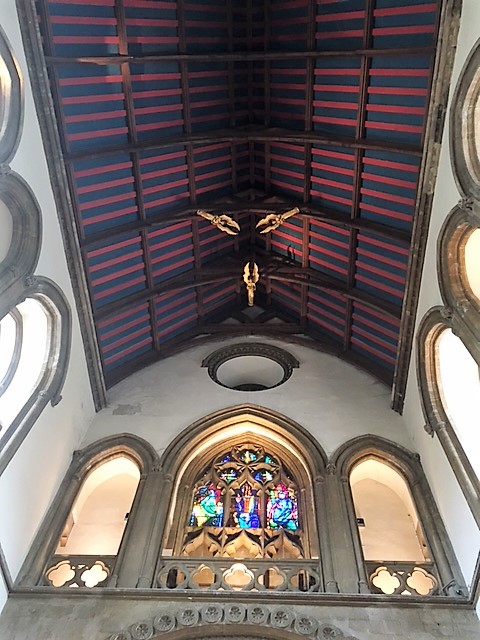
     Ceiling above the altar.
     You get a sense of the valley here.
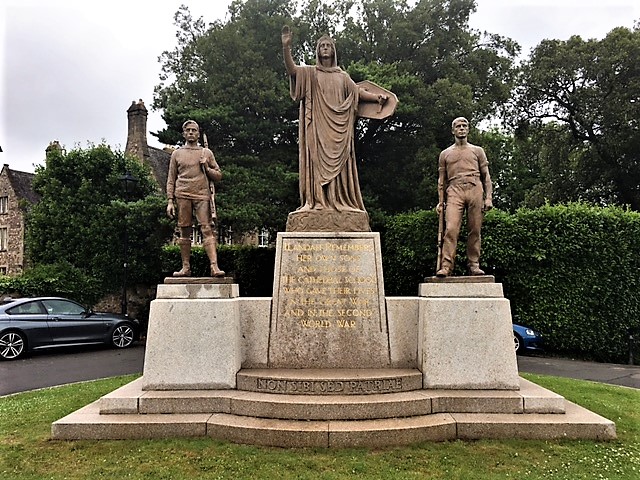
     WWI and WWII War Memorial.
    Next we went to St. Fagan’s National Museum. From the description we thought this would be similar to something we did in Helsinki, Finland, in 2015, but this was actually better. It’s an open-air museum that recreates a significant timeline in Wales’s history. The Earl of Plymouth used to own all this land; the family manor – St. Fagan’s Castle – is still here and where the museum gets it’s name. It’s been in operation since 1946 when he donated it to build this kind of exhibit. This was the #1 thing to do in Cardiff on TripAdvisor, and it was free. Just had to pay 5 pounds to park.
    It’s very smartly done. Everything here was either recreated based on archaeological or historical records, or literally moved here from wherever it was, with touches added to replicate items as necessary upon arrival. Each stop provides a timeline for when and where it originated, a little map of Wales showing where it was, details about original owners, etc,. where available, and information about what like was like then. Each stop was staffed with a docent, most of them teenagers or young adults, and all of the ones we talked to were incredibly informed. One of them had actually visited Davis before!
    The insides of everything were pretty dark, and much of the land was under lots of trees so, between that and the clouds, we didn’t take that many photos. But you’ll get the idea.
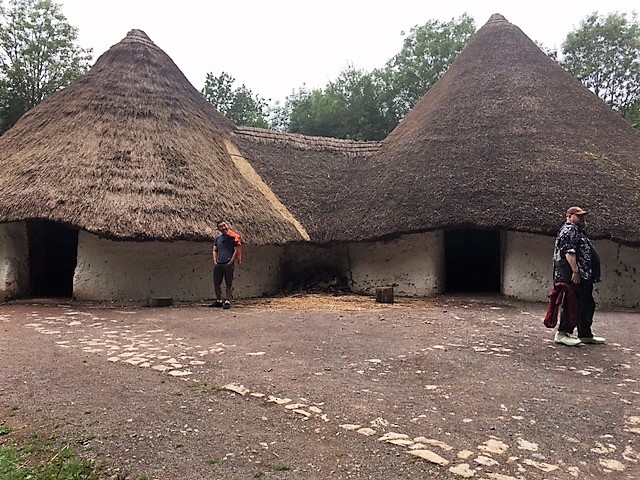
     Houses from the Iron Age.


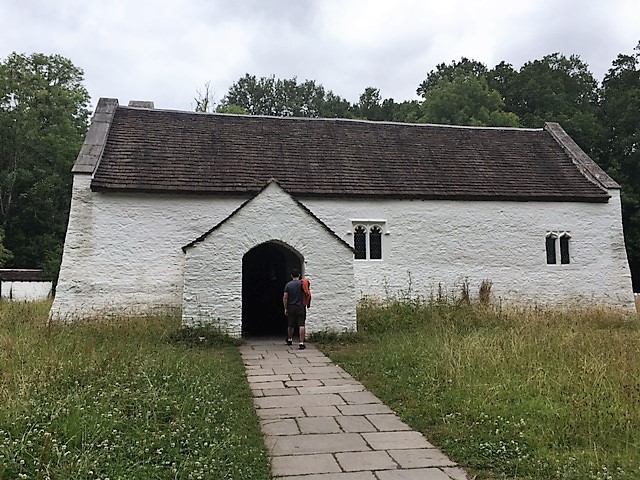
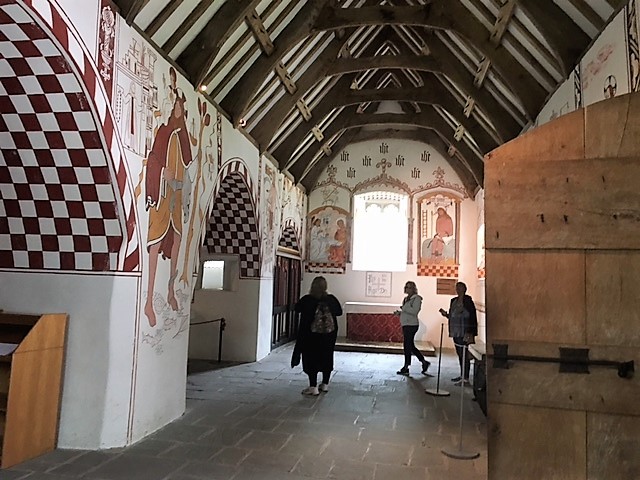
    This was a church that dates back to 1100 and had only stopped being used in 1973. St. Telio was named after a 6th century Welsh saint. It was deconstructed piece by piece from it’s home new Pontarddulais, about 50 miles away, and took over 20 years to get rebuilt here.


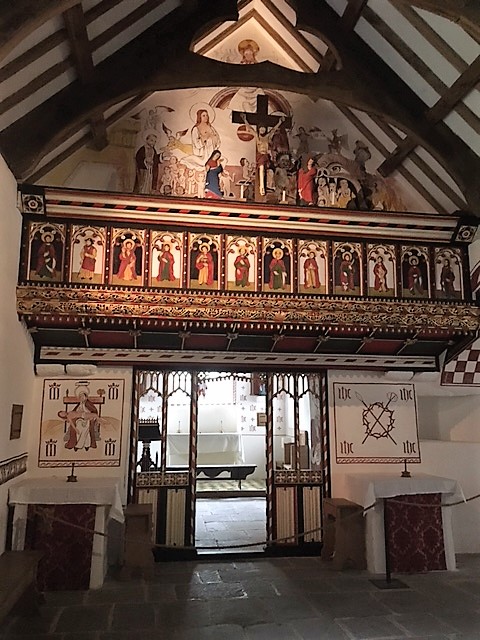
     The painting on the inside was all done using medieval techniques.
     There was a whole section separate from all the reconstructed things that had the gardens and castle of St. Fagan’s. It’s not really a castle but an Elizabethan manor built in 1580. There was a Norman castle built on this same spot in 1091 and the name just stuck.


     Not much to look at from the outside, and it was closed to touring today. Oh well.
     The gardens were undergoing weed control treatment so there were big empty beds.
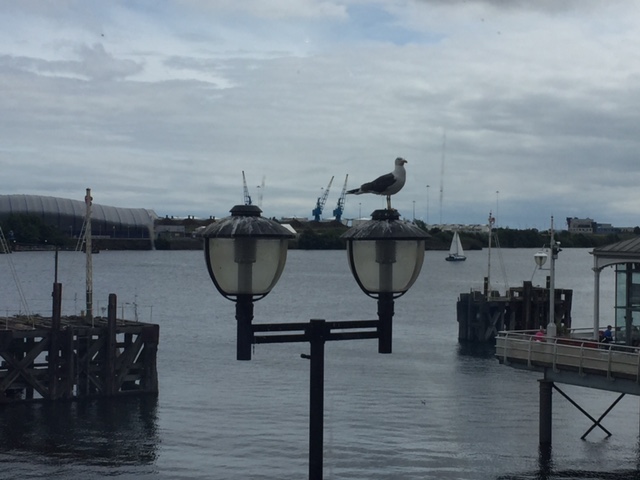
    We were there over 2 hours and enjoyed it. It was about 4 miles out of the city center so we moved back in that direction. As I said earlier, St. Fagan’s was #1 on TripAdvisor. Numbers 2 and 3 were sports and entertainment venues (which we found odd) which we had no interest in. #4 was Cardiff Bay, and that’s where we headed for lunch. This area used to be quite industrial. We learned while we were down there that Wales was the largest coal exporting country in the world for a long while. (And as an aside, if you’ve never seen the movie Pride, we highly recommend it.) The docks here fell into dis-use in the 90’s and for the last 10 years or so they’ve been trying to transform this area into something different, and it shows.
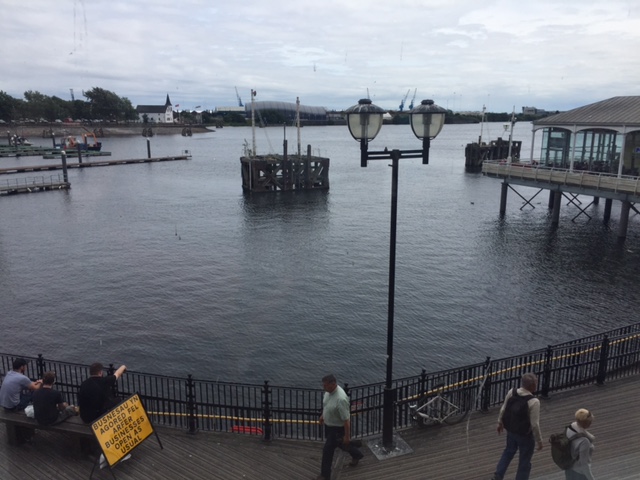
    We ate at a restaurant called The Dock. There were lots to chose from, but this looked the most interesting and also had the least expense 3 course set menu option. We are very glad we took the chance. It’s likely going to be the most interesting meal we’ve had on the trip. Dan took the above shot from where we were sitting. It was a great place to people watch as we were sitting.

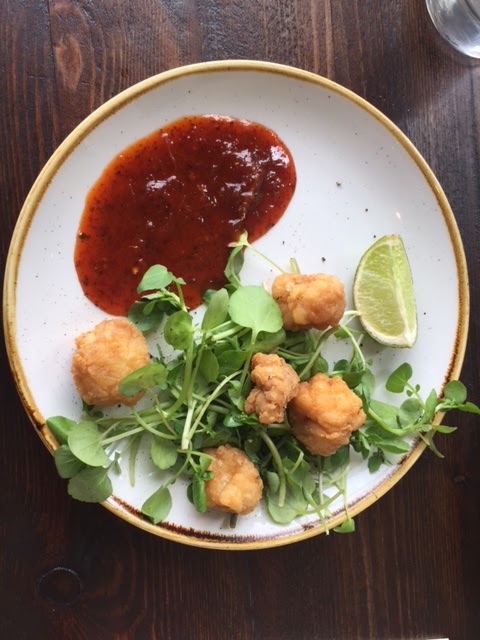
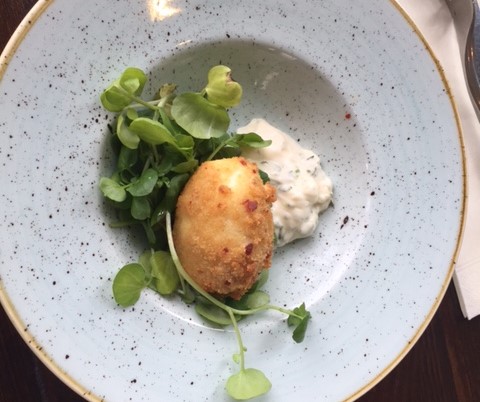
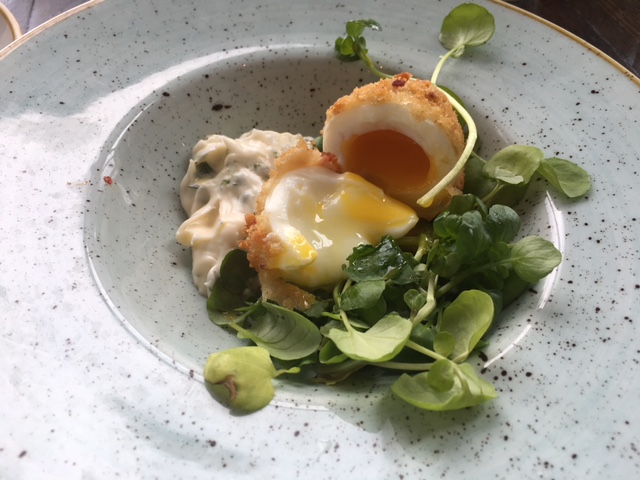
    First course. Dan’s above, fried squid with a nice hot sauce. The squid was perfectly cooked. Mine is below, a hen’s egg deep fried in a batter with bacon pieces in it. We had no idea what it would look like but when they set it down, we assumed that would be a hard boiled egg. Next photo please.


    So imagine our surprise when I cut it open to find a perfectly cooked soft-boiled egg. We were like “how the heck did they do that?” It’s got to be very tricky to peel a soft-boiled egg then deep fry it without overcooking it. We asked the waitress who had no clue. She went back and asked and reported that, yes, it’s very tricky. And it was delicious to boot.

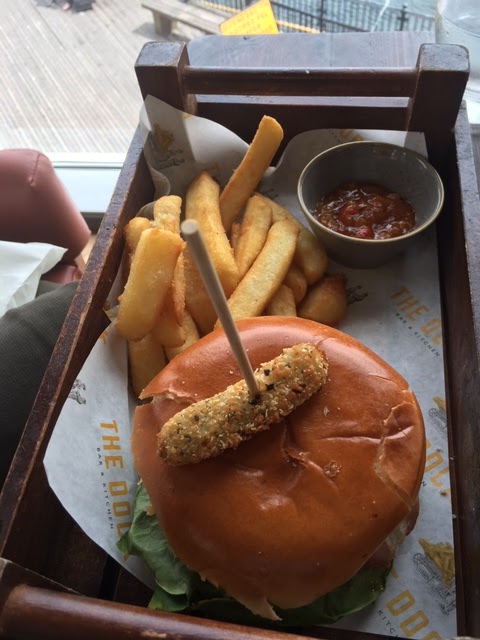
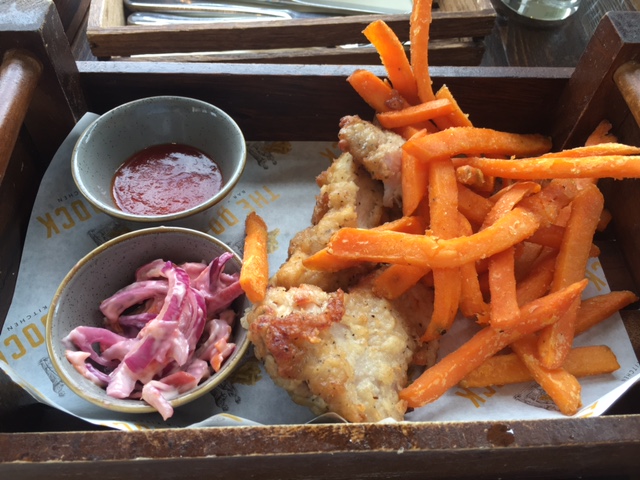
    Dan’s main course was a hamburger, with a deep fried pickle!, and a nice hot sauce for the superb fries. Mine was boneless buttermilk fried chicken with sweet potato fries. the fries weren’t that great, but the catchup was more like a cocktail sauce so that worked, and the chicken was excellent. The batter was light and very peppery. And the slaw: you bit into it thinking it’s going to be red cabbage, but it’s mostly red onions instead. I loved it.


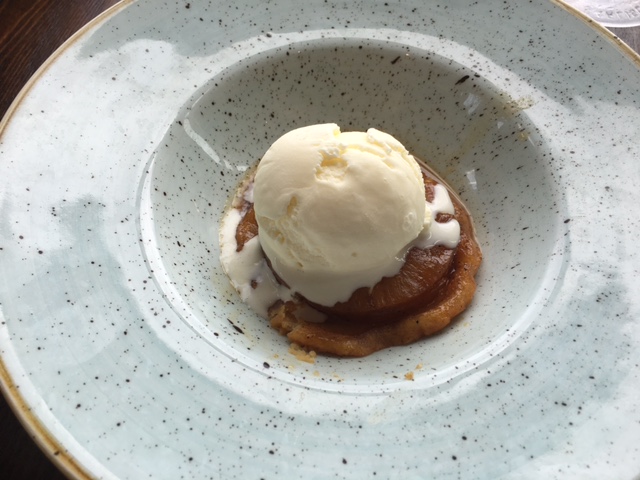
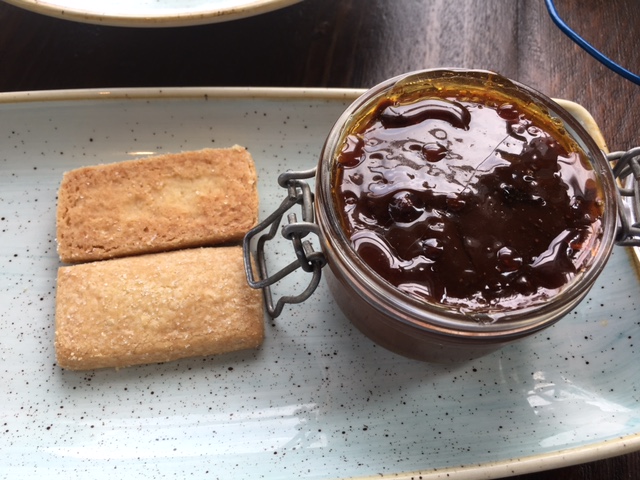
    Both desserts were great. Dan’s was pineapple in a pina colada liqueur on some kind of warm pancake to soak it up, and vanilla ice cream. Mine was called chocolate crème brulee. The sugar crust was the hardest I’ve ever had, and that’s not a bad thing in this case, it worked. The chocolate was really a pudding, not custardy like a brulee would be, and that’s not a bad thing either. The big surprise was the caramel once you got to the bottom. If that was in the description on the menu I didn’t remember it. And the shortbread cookies to cut all that sugar at the end were perfect :)


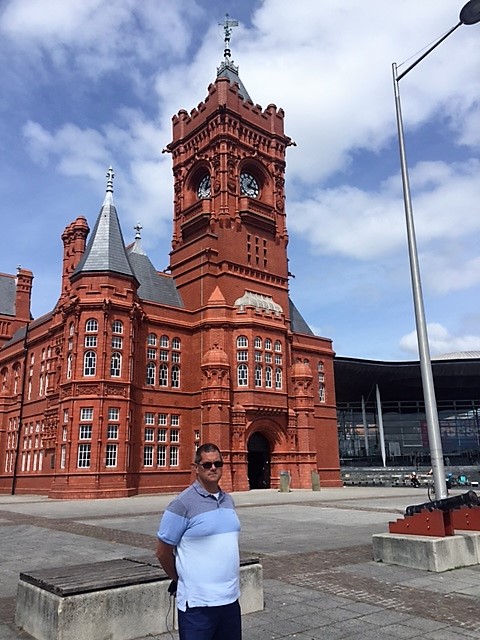
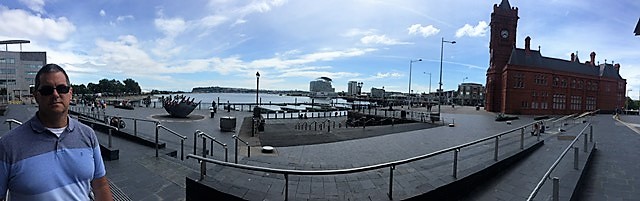
    We did some general walking around after lunch just checking out the area. The building below was built in the 1890s, used to the administration offices for dock management when things were really rocking here. In 1897 it was the world’s largest port in export-tonnage, with coal it’s #1 product. This building, the Pierhead, is now a visitors, events and conference center.

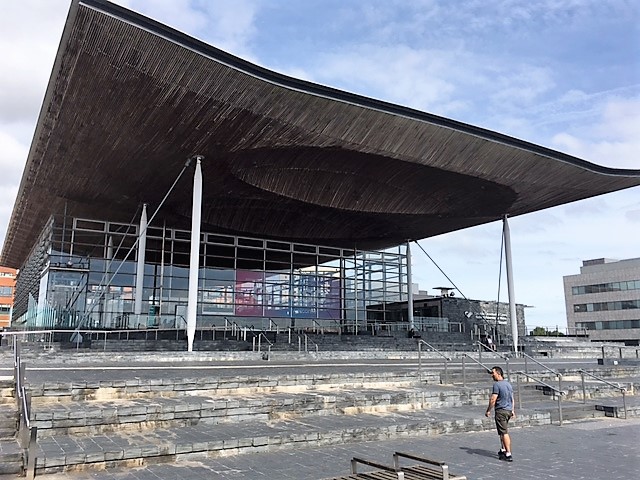
    Below is the National Assembly building, essentially next door to the building above on the bay, completed in 2006.

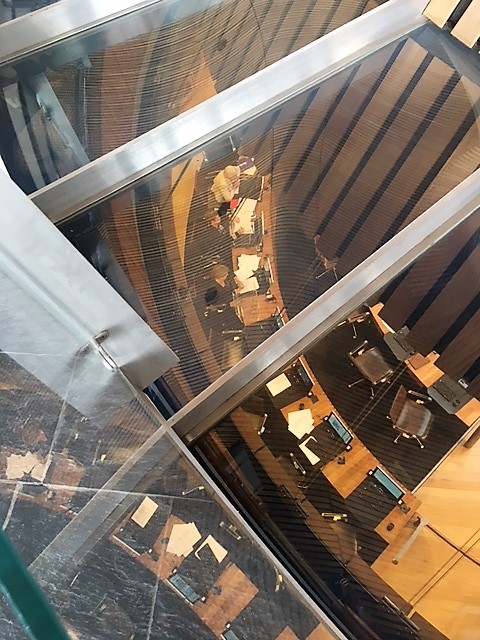
    The Assembly itself has only been in existence since 1999 and met at the Pierhead prior to this being built. Prior to 1999, the Welsh had no mechanism for making local decisions outside of the UK governing system. Below, you can see some of the Assembly meeting from the 3rd floor. It’s open to the public, and you can go listen at any time.


     A panoramic taken from the steps of the Assembly.
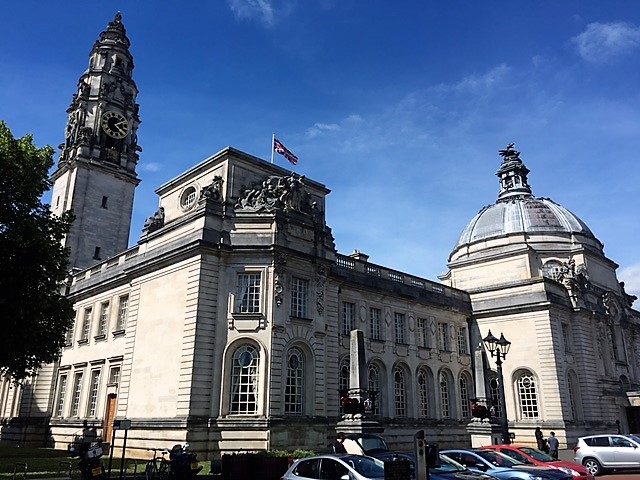
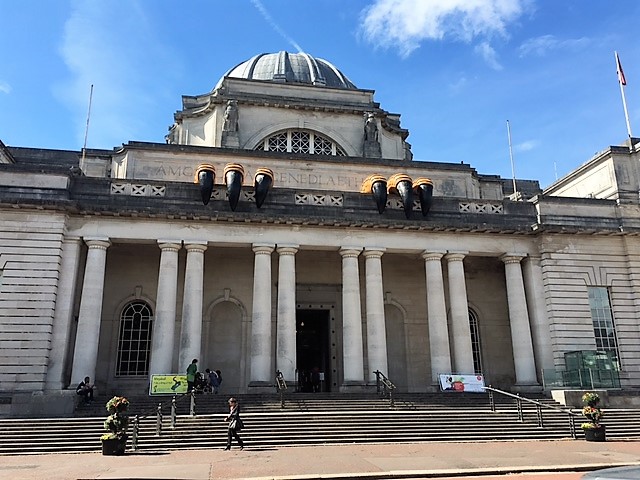
    From there we dropped the car off at the hotel, and walked over to City Hall and the National Museum across the street.
     City Hall
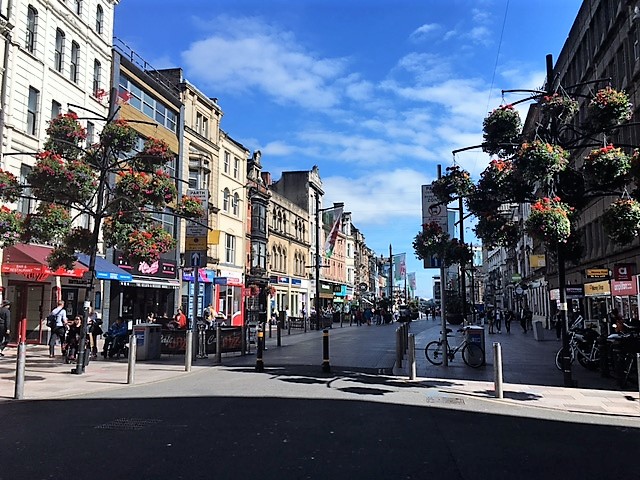
    The National Museum, also free. We went in to see if there was anything related to Welsh history, but it was all natural history and art, so we only stayed a few minutes. Instead we went back to the area we were in last night. It was much more lively with people out and about. For several blocks behind our hotel, the area is mostly closed to vehicles so it makes it easy to walk around.
     

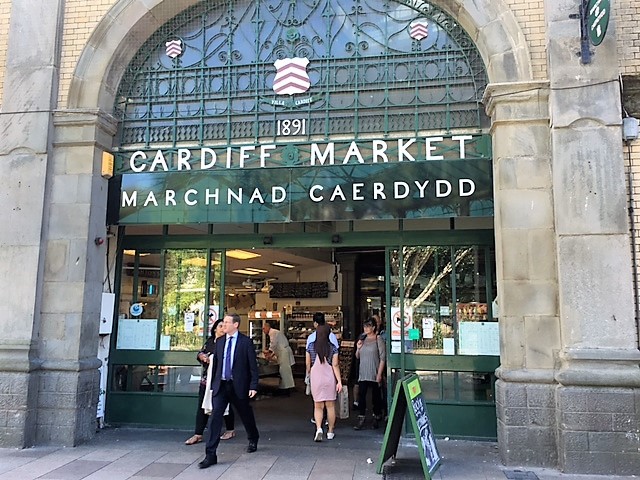
    We went by the Cardiff Museum which was focused on history of the city, but it had closed at 4 and it was now 4:30. We went into the Cardiff Market which was right next door, but many of the stalls there were also in the process of closing. Just like we experienced yesterday, this city shuts down early.

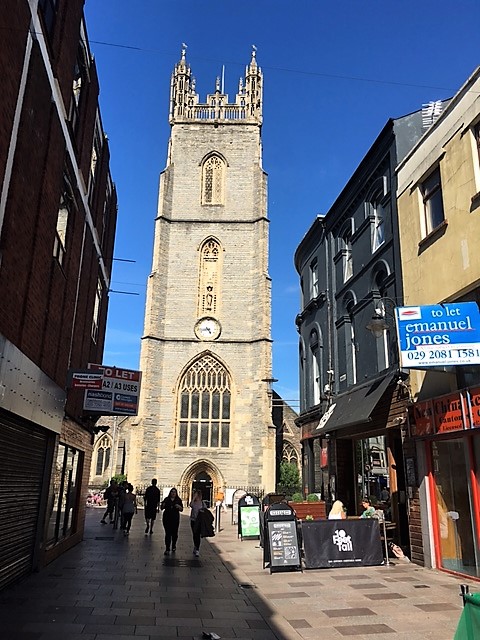
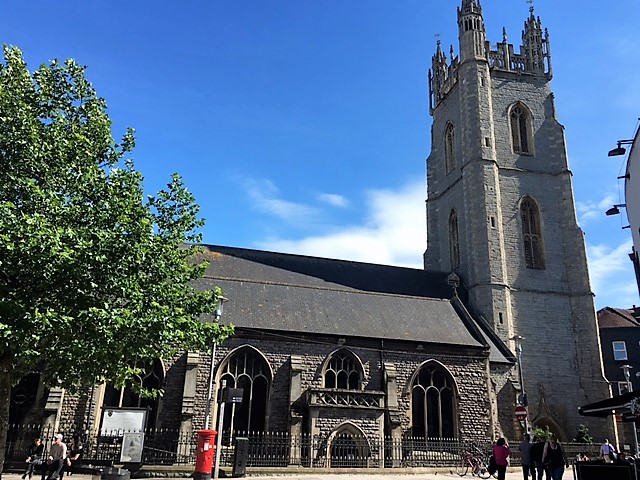
     This is St. John the Baptist, essentially in the same block as the two mentioned above; it closed at 3pm. What the heck?


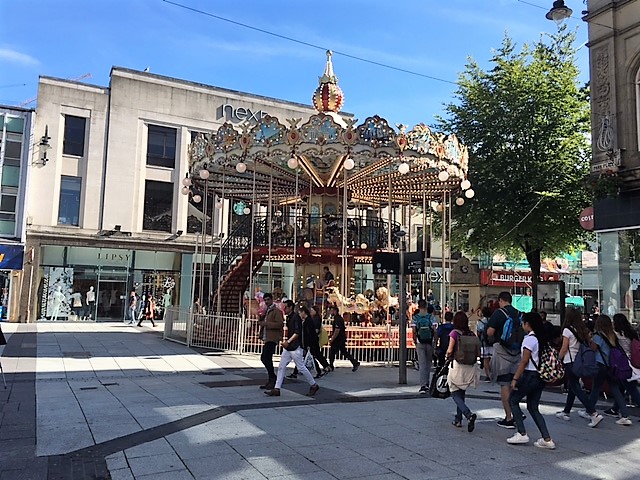
     A pretty carousel in the middle of everything.
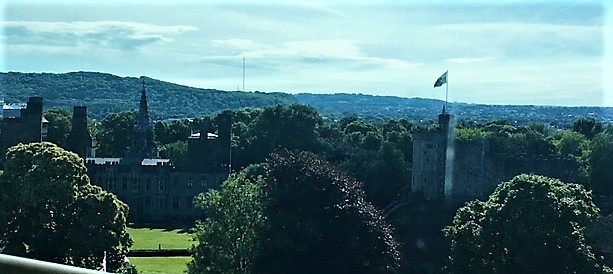
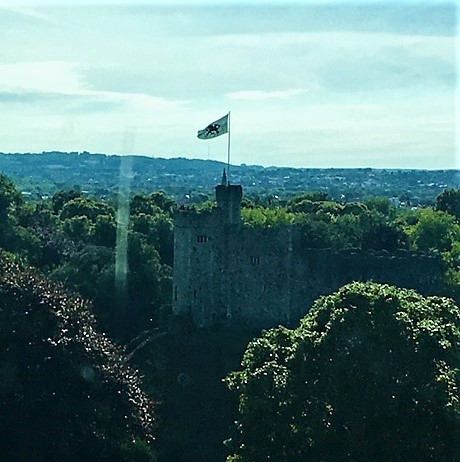
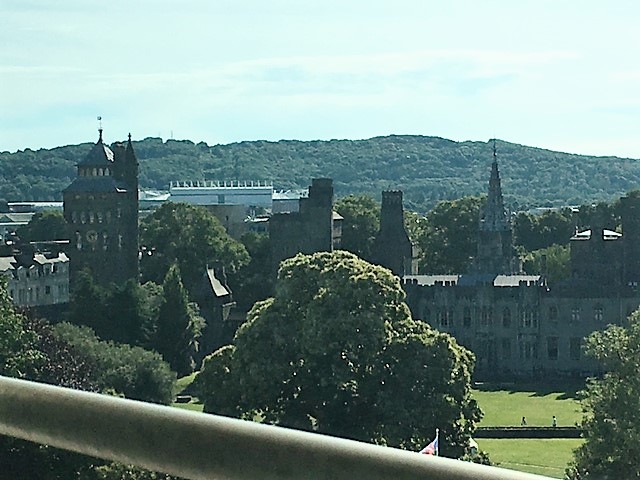
    Since nothing was cooperating with us, we decided it must be time to go back to the hotel. So that’s what we did. We hung out in the lounge for a bit and nibbled for dinner when they brought food out at 6pm. From the 7th floor window, you got a pretty good view of Cardiff Castle across the street. I’m not sure these photos show it properly but it will have to do for now :)


    That’s all we were able to do in Cardiff. Tomorrow we leave for Oxford. And since we had an early day, it’s only 9pm. Time to make it to the hot tub downstairs before they close at 10pm…

    PS: I’m not sure why but I really love that there’s a dragon on the Wales flag. (Maybe a little GoT-ish? Daenerys Targaryen anyone?) And they are everywhere – the Welsh are proud of their country and not afraid to show it. I kept trying to get a good shot of one today but the wind wouldn’t cooperate. You can sort of see it in the 3rd photo from the end atop the castle.

  • Day 8, Jul 3: Bath & Bristol

    Day 8, Jul 3: Bath & Bristol

    Dan was asleep early last night, like 8:30, and was up by 4am and stayed up. I went to bed about 10:30 and slept through until 6:30am. It felt like sleeping in but I needed it. Had breakfast in the hotel and got the blog up from Sunday. We left the hotel about 9:15am to check out Bath.

    Bath has a population of about 90,000 and tourism is a major industry here. Bath is one of those places that many people who’ve been here before said we were going to love. That might’ve been our first clue; we typically don’t do so well with small towns that are heavily recommended. It’s charming for sure, but that only works for so long with us (kinda like Bruges and Venice). This was one of those times. We’d decided to stay here primarily because it made sense based on timing, but hadn’t invested a bunch of energy into figuring out what we were going to do. With all the recommendations we’d gotten about coming here we figured it wouldn’t be hard. Turns out there’s not much to do, or at least not much we were interested in doing. Are we that picky? I think we just gravitate towards bigger towns, and/or more history related things. So we settled on the Bath Abbey – which turned out to be closed for a graduation – and the Roman Baths, which we really enjoyed. (The gal at the ticket counter of the Baths tried to sell us on the Fashion Museum. Dan says something like “you did a really nice job of explaining that and now you’ve really convinced me I don’t want to go.” Or something to that effect. It was pretty funny :)

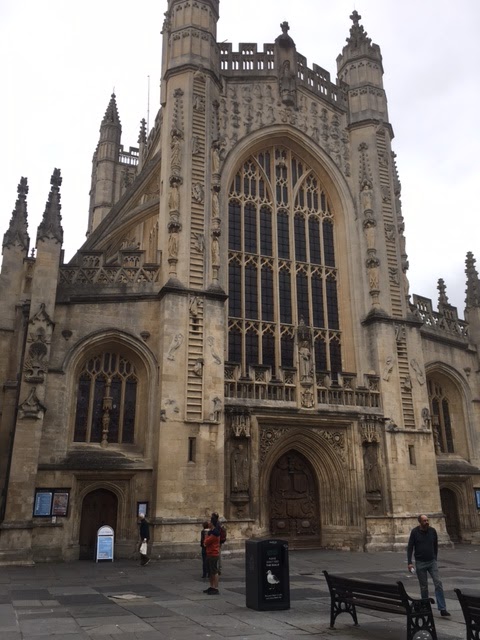
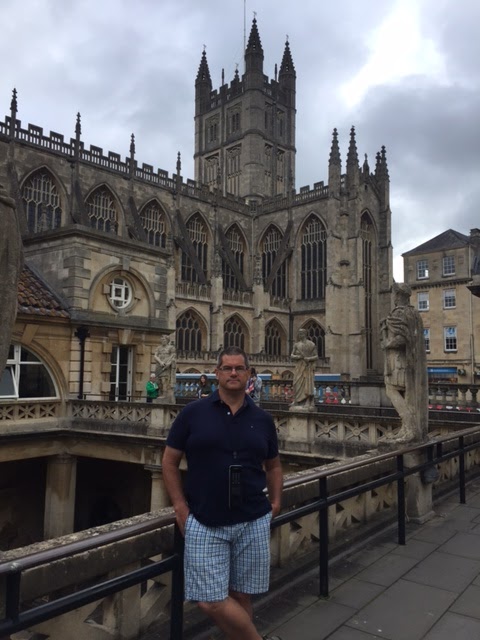
    Above: the back of Bath Abbey as we approached it from our hotel. Below: the front of it, taken from the same spot the photo of the Roman Baths was taken, which is essentially next door.


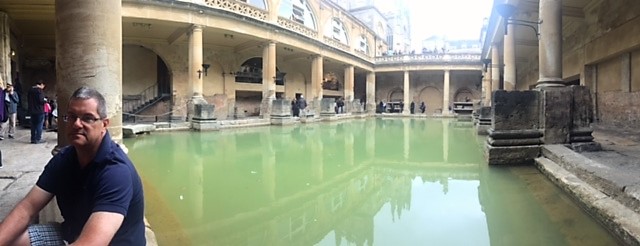
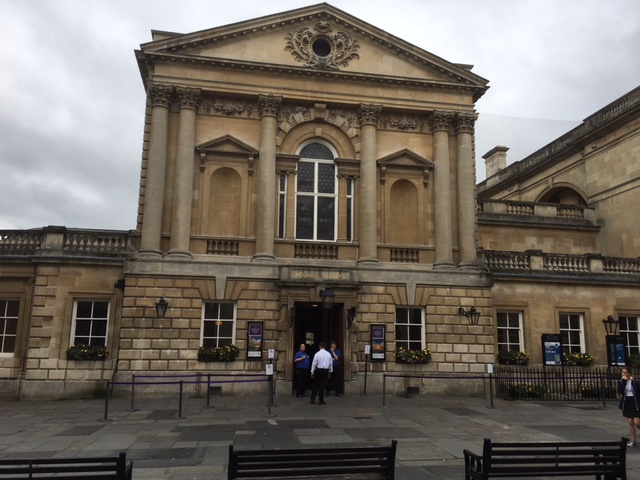
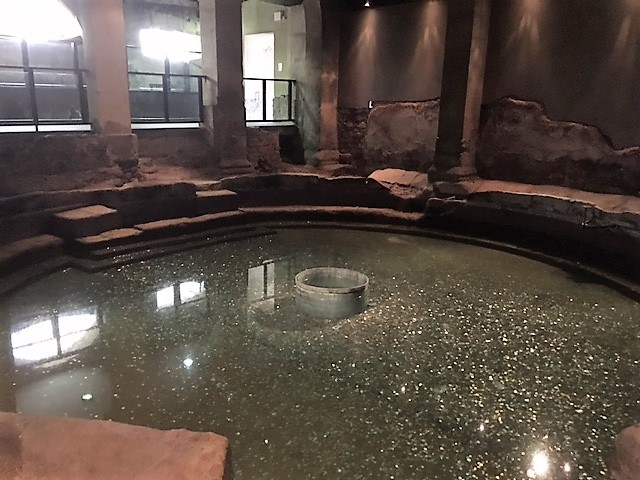
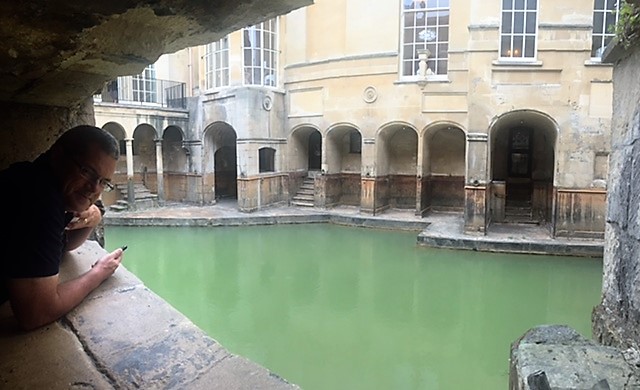
    This is the entrance to the Roman Baths. I have to say I was prepared to be bored – Dan likes Roman stuff much more than I do and for some reason I thought this was going to be ruins, like the kind we’ve seen the last couple of days. But it’s an extremely well put together presentation and I found it fascinating. Archeologists uncovered this first in 1727 and there is still work to be done. It opened to the public in 1897. The baths themselves were originally constructed they believe in the 60’s AD, and probably operated for about 400 years.

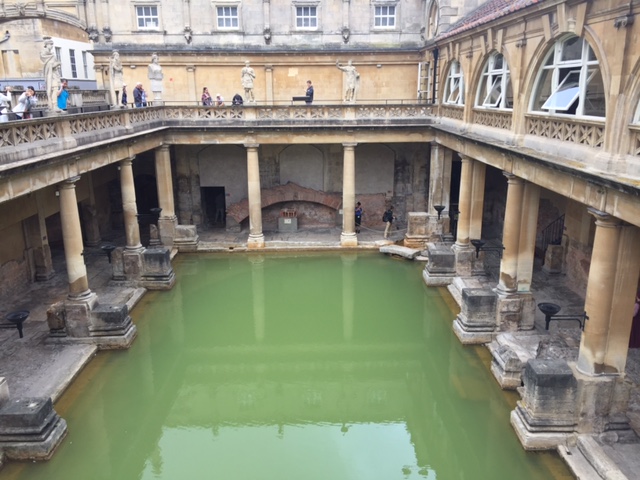
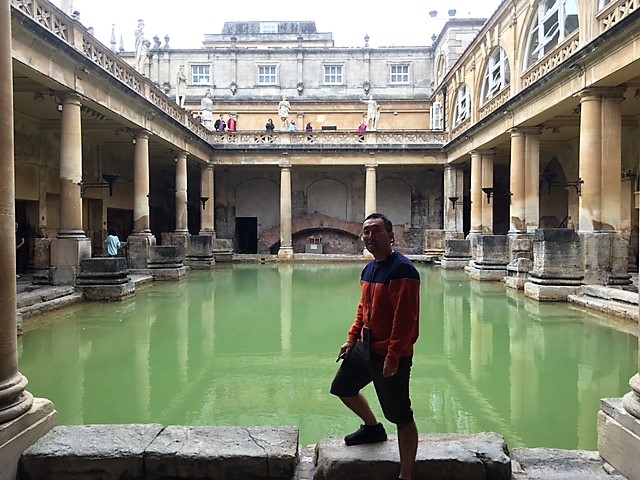
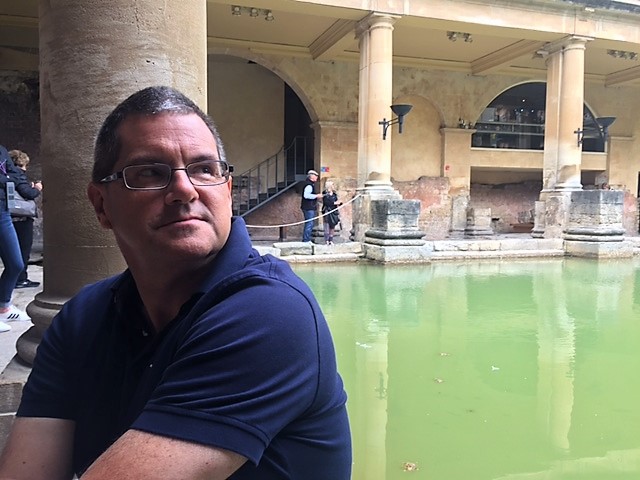
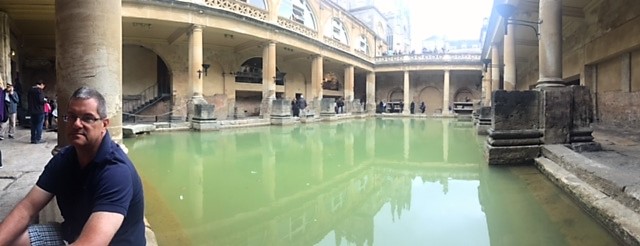
    The pool, floors, walls, and column bases are part of what’s been excavated, but much of what you see above it, including the columns, the terrace and the statues were built as part of the presentation.

    Looking back at Bath Abbey from the terrace.


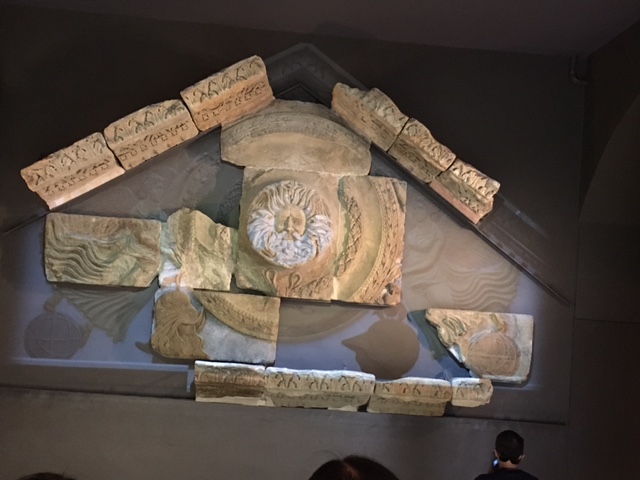
    Within this bath complex was a temple to the goddess Sulis Minerva, and this at the top of the entry, some 45 feet above the ground. What was cool about the face was the details of it shifted as light was shown on it, at this moment highlighting different aspects of his beard. The sun would’ve had a similar effect.

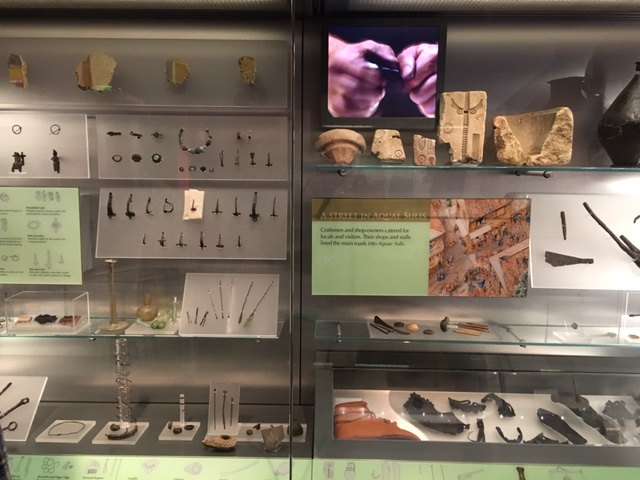
    Probably the thing I appreciated the most about this museum was how much they have been able to reconstruct about day-to-day life at the time because of what they’ve uncovered here. So there were lots of details about tools, coins, jewelry, etc., and from those items details constructed about who had that stuff and why. It was impressive and believable story-telling.

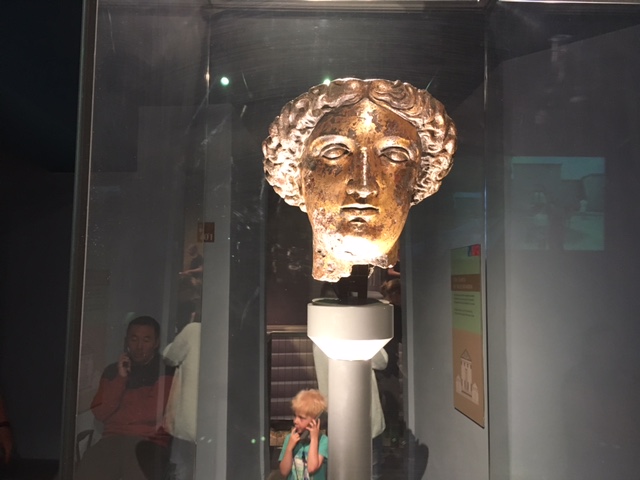
    The head of a gold statue of Sulis Minvera which they were thrilled to find. It’s pretty rare to find something of this quality in such excellent condition. Very few people during the Roman period would have seen this, because of where it was placed in the temple, only the priests would have had access to it.

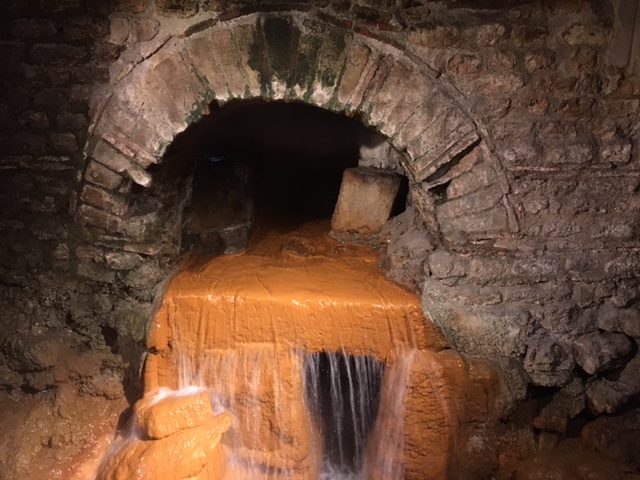
    2000 year old drains underneath still managing overflow from the hot spring. It was warm and humid in this area from the steam that was rising.


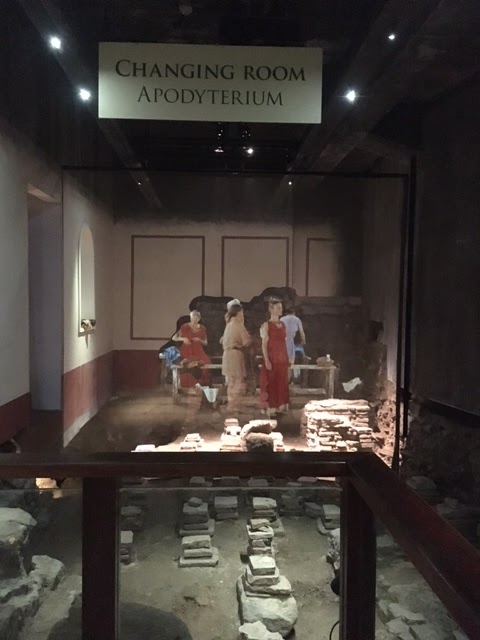
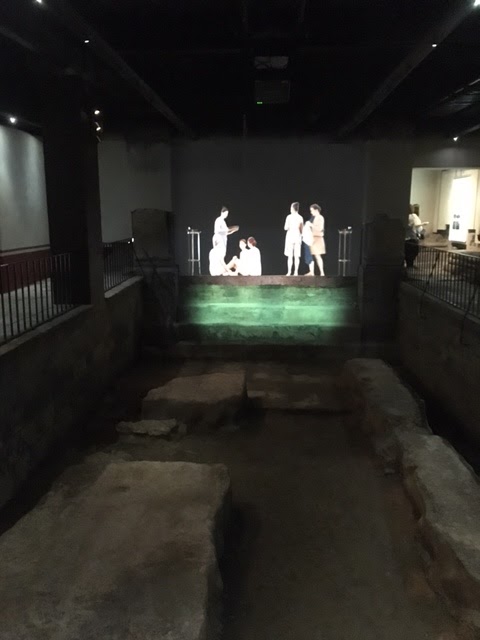
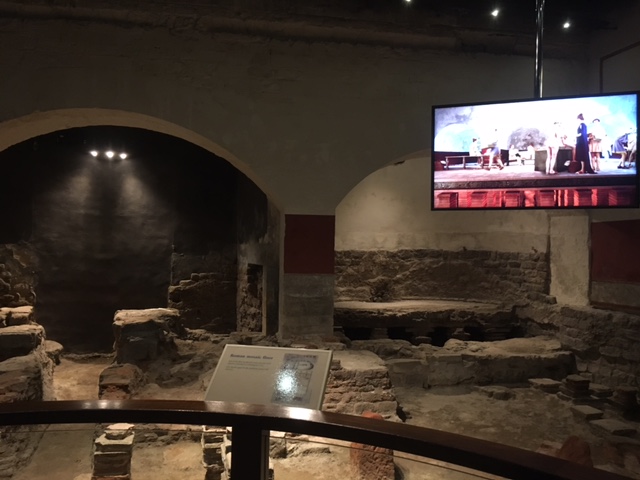
    This bath complex had East and West wings where woman and men were separated. The East wing was in tact enough to show in pretty clear detail how functional it was, with some video overlays to assist. This is where people would have left their clothes. Most people would have used the facilities naked.

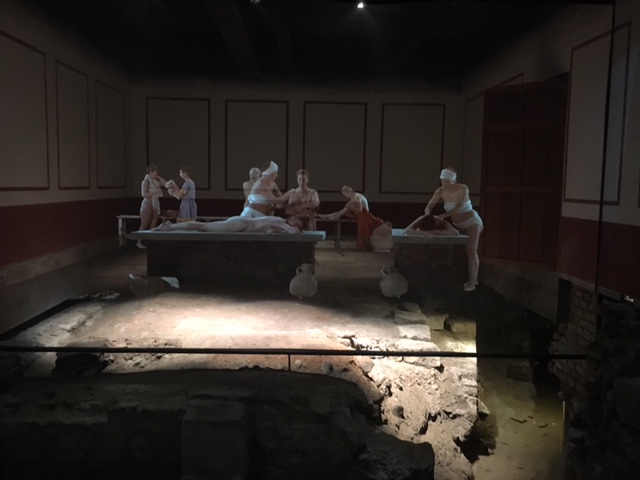
    A massage room.
    A soaking pool, probably lukewarm water.


    The original floor is missing, but it would have been heated so much the people would have needed sandals, probably provided by the facility. This would have been a hot room, like a sauna.


    A panoramic shot that turned out pretty well.
    The cold plunge pool to close the pores after being in the heat. All of this reminded me of Harbin!
    Water still comes up from this hot spring to the tune of about 1million liters a day, and has now for a couple of thousands of years.
    Sounds like some of the guys in the hot tub at the gym. It’s nice to know some things never change.
    We spent about 2 hours there and thoroughly enjoyed it. We walked around town a bit and it was pretty cute, but not cute enough to change our minds about moving on.

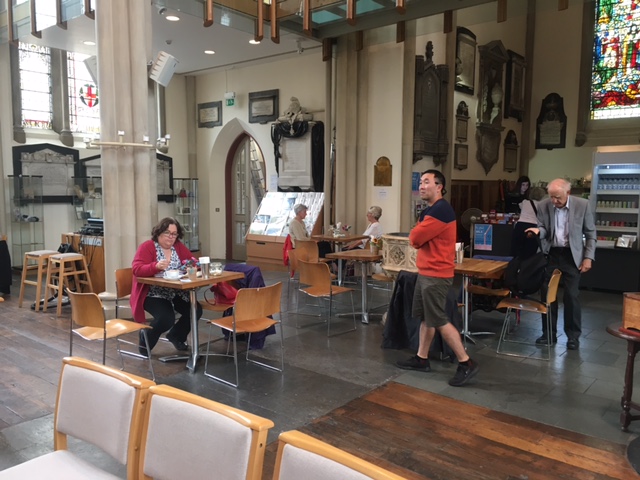
    This was a little church we ran into on our way back to the hotel. We were so surprised to see they had turned the back of it into a café to help raise money. Dan asked the gal at the register how people responded to that. She said sometimes they were angry about it but seemed to calm down once they explained it helps them stay afloat. Diversification is a good thing.


    We checked out of the hotel around Noon and made our way to Bristol, about a 45 minute drive. Bristol’s population is about 450,000, and has a wide range of industries, including aerospace, software, shipping and media, and two universities. More our kind of city, and we found it more interesting right away. .

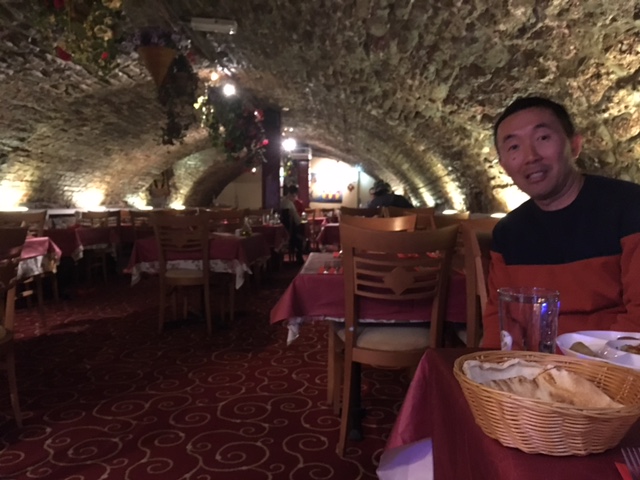
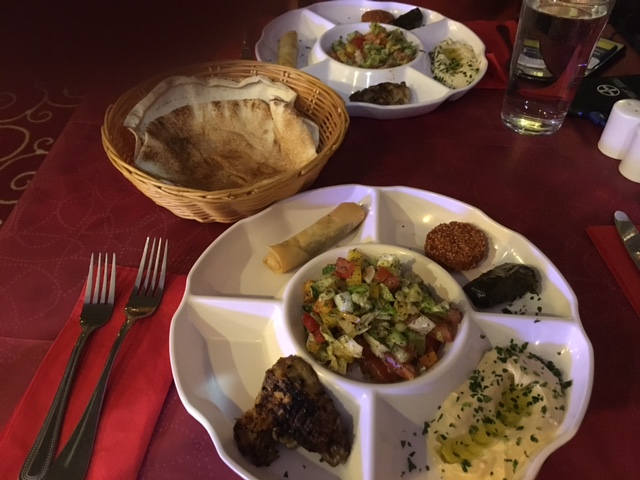
    The first order of business was lunch and we found a Lebanese place.


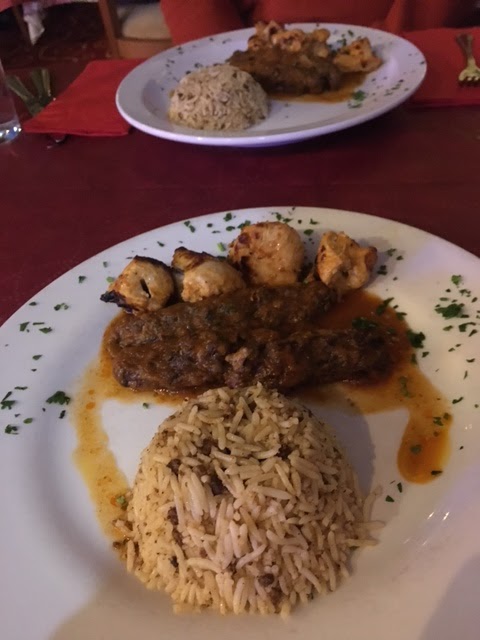
    They had this great starter sample for 4.99 pounds so we got that. When they put the tray above down in front of us, we thought it was the perfect amount of food, all excellent. We didn’t realize there were meat courses coming, too, shown below. That’s a lot of food for a very small price.


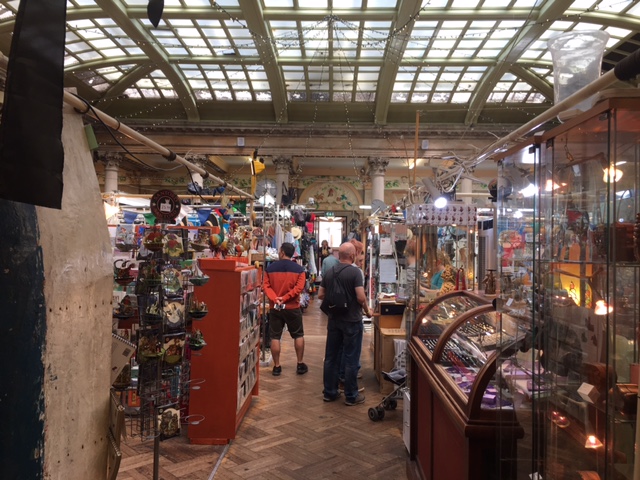
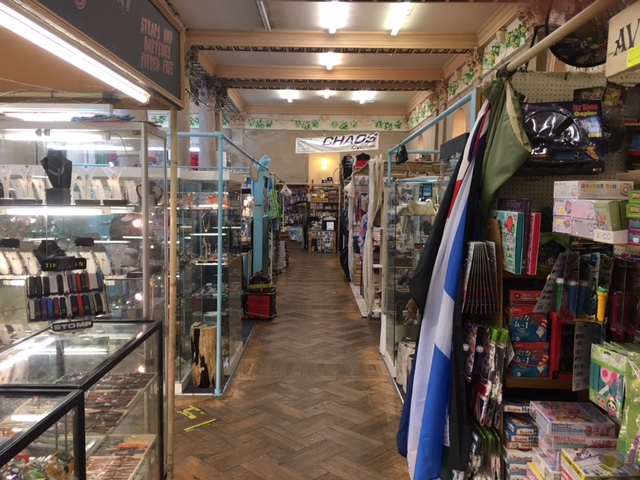
    The Corner Exchange is Bristol’s answer to the Grand Bazaar. Maybe 30 merchants in all but all seemed different. And no choking smells :) We enjoyed it.


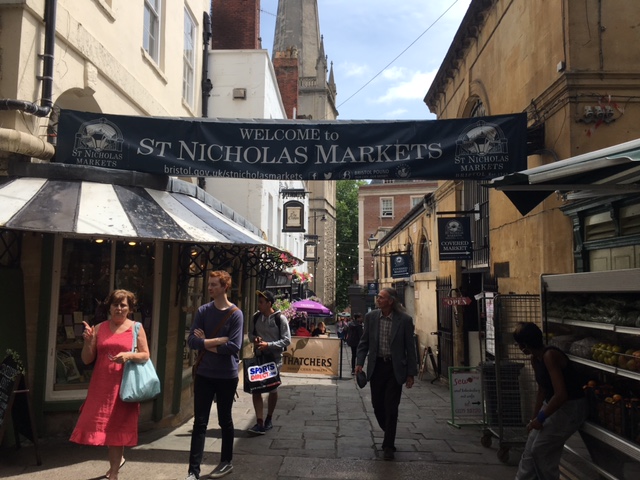
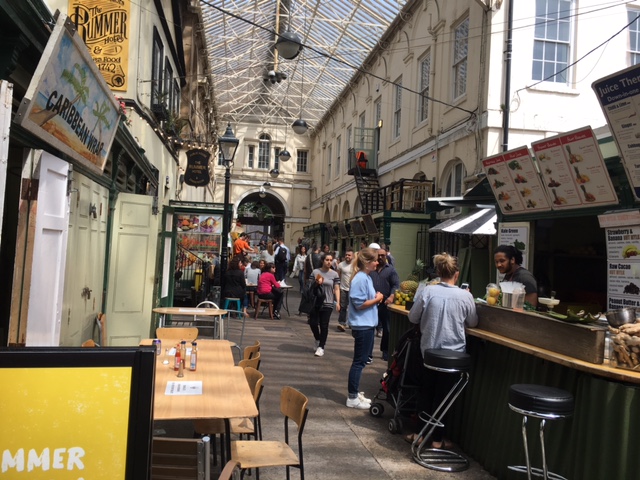
    Just outside of the Corn Exchange is St. Nicholas Markets, a collection of adorable shops. We loved the vibe here, too.

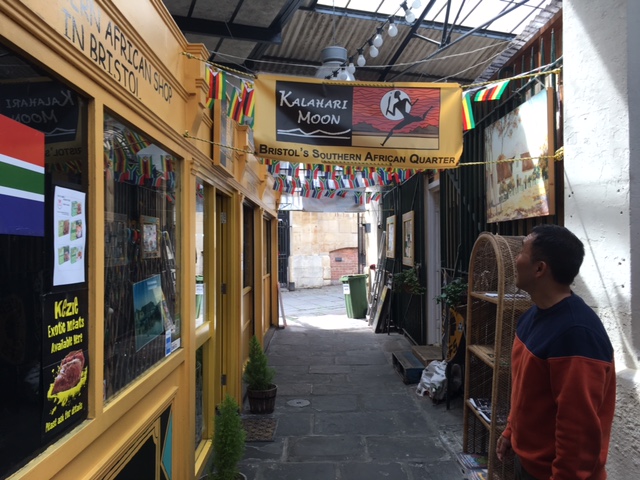
    “Bristol’s Southern African Quarter” that banner says. Don’t see that everyday. We did notice the town was very diverse. It also had a pretty young vibe to it as well, which made sense when we came across one of the universities in the area.

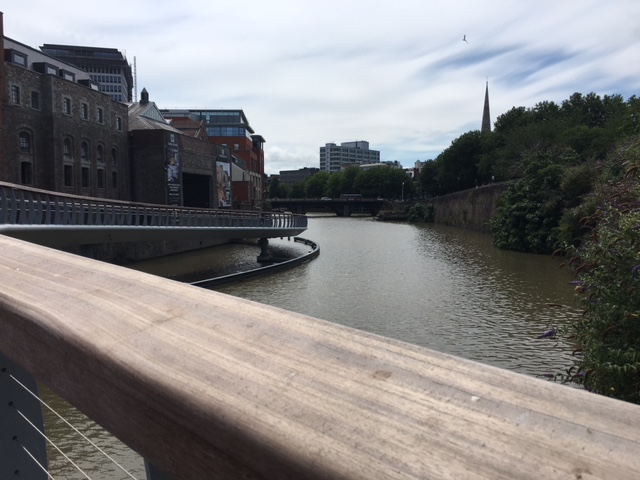
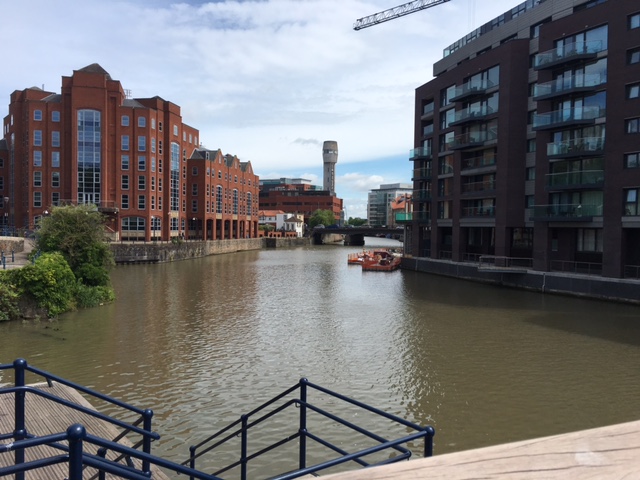
    Like Bath, the River Avon runs through Bristol. They’re trying to build up some living space and mixed used buildings around it; there are pieces of a river walk here and there.


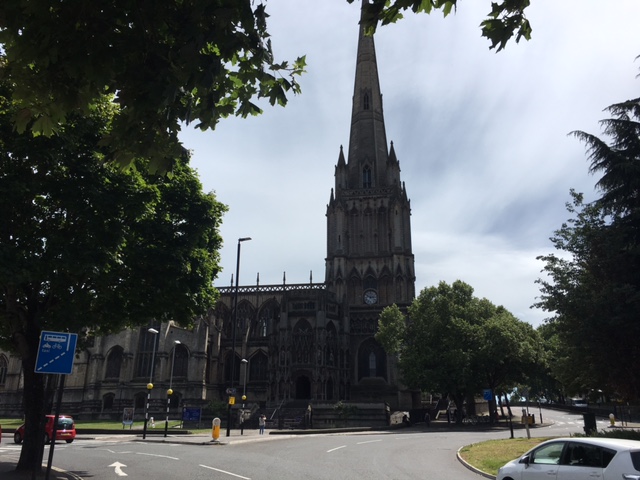
    A church that was abandoned after being heavily damaged during bombing raids of WWII, now turned into a war memorial.
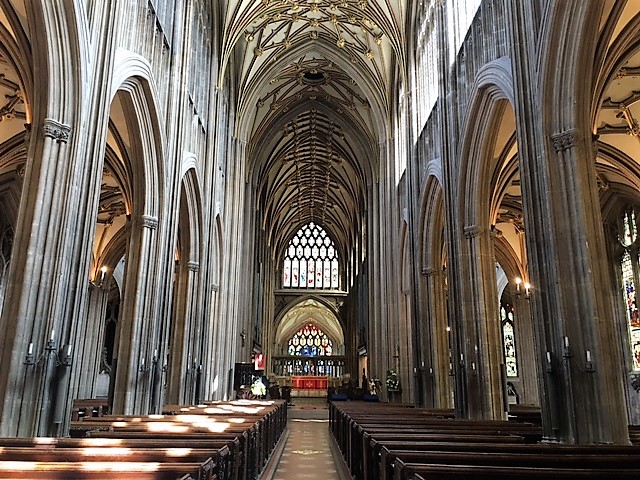
    St. Mary Redcliffe, and Anglican church around 700 years old. Quite pretty with a couple of interesting things in it.
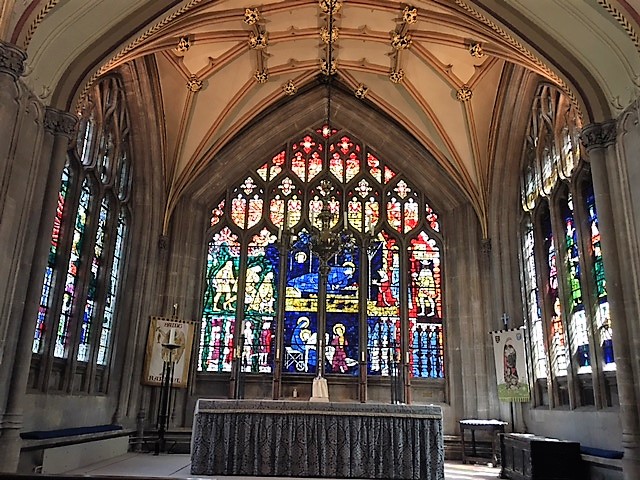
    The second altar up the center aisle in the back.
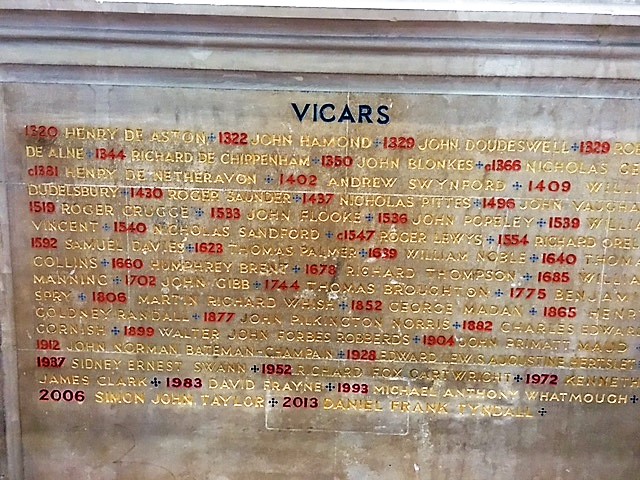
    Every vicar for the last 700 years. Pretty cool. Haven’t seen that before.
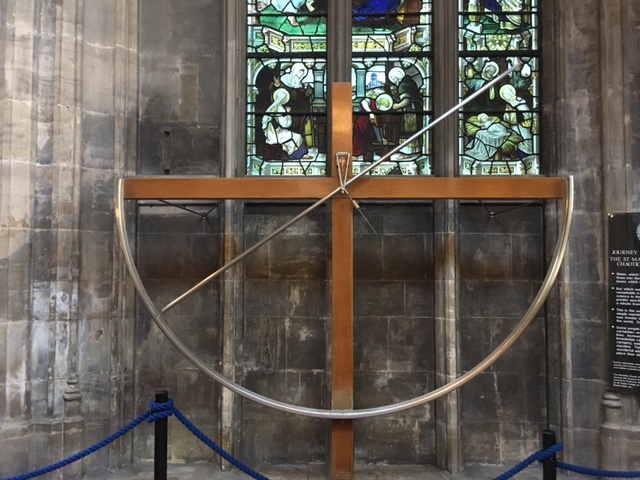
    An interesting pendulum with a very nice message attached to it, below. It matches my philosophy very closely: science is a great thing, but there are some things that just can’t be explained. Plus there’s often an x factor.


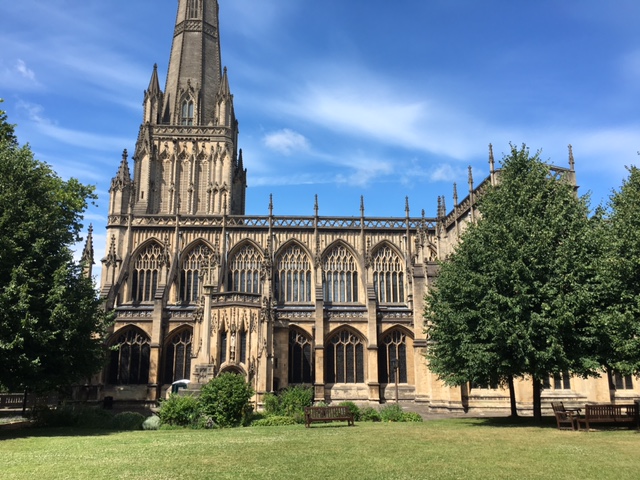
    The same church from the other side where the sun was hitting it directly.
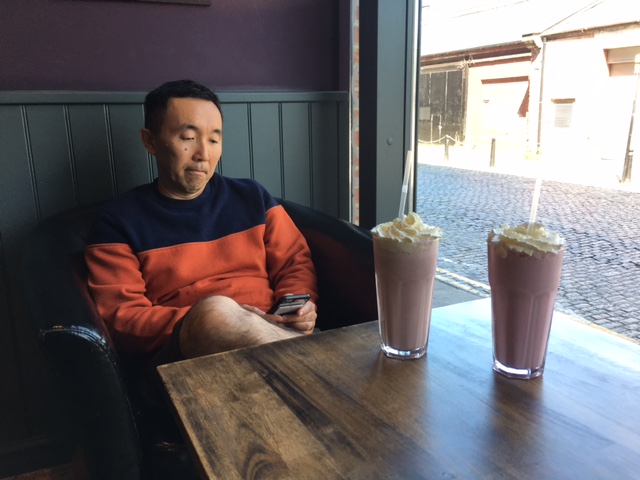
    This place was called #1 Coffee and it had a “2 for 1 Frappes” sign out front. Why not? It was a comfortable place to take a break.


    We got strawberry. They weren’t super sweet which we really liked.
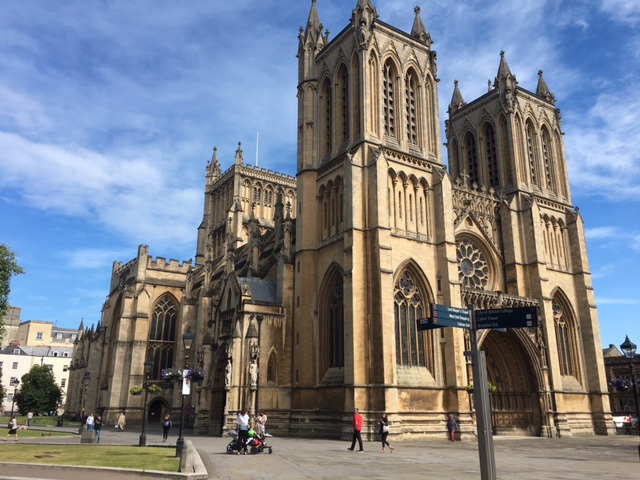
    The Bristol Cathedral. Built in sections starting from the 1100’s to the 1500’s. It was open but they didn’t allow photos. Below: City Hall, across the street. Both photos taken from the same spot.
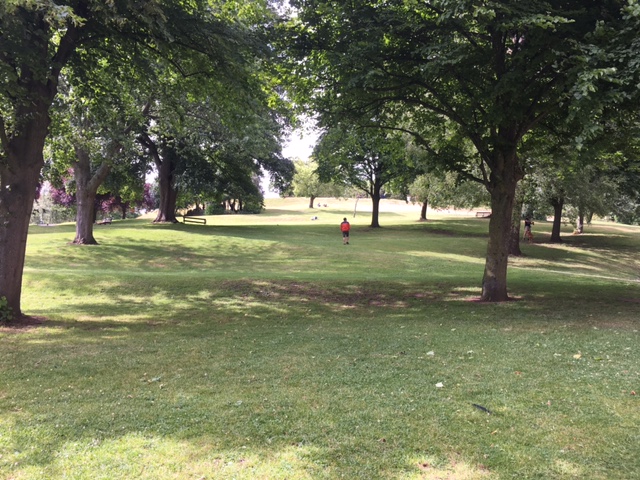
    This is Brandon Hill Park, aptly named. I was hoping this photo would show the steepness of that hill but it’s lacking. Let’s put it this way: our iPhones indicated we’d climbed about 20 floors when we were done with the hill and the tower at the top of it.

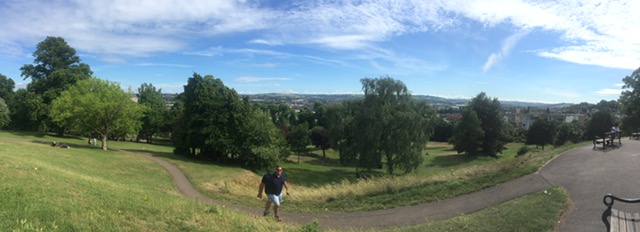
    Dan’s panorama again, making me a little hunched since I was moving while it was moving. (If you’ve never done it, it’s almost like taking a video.)

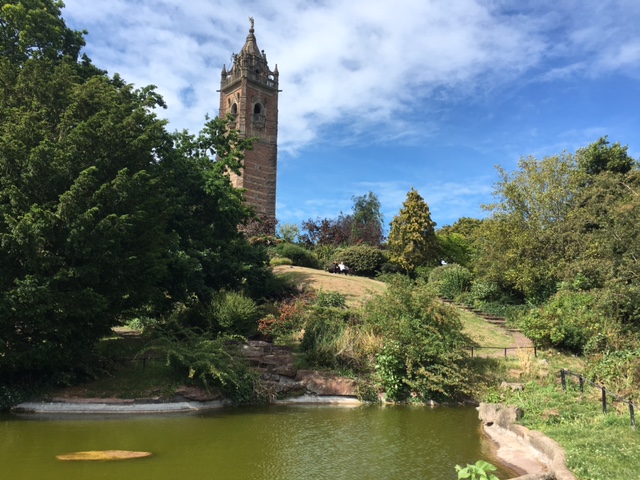
    Cabot Tower, built around 1890. We counted 110 steps. Nice views from the top.
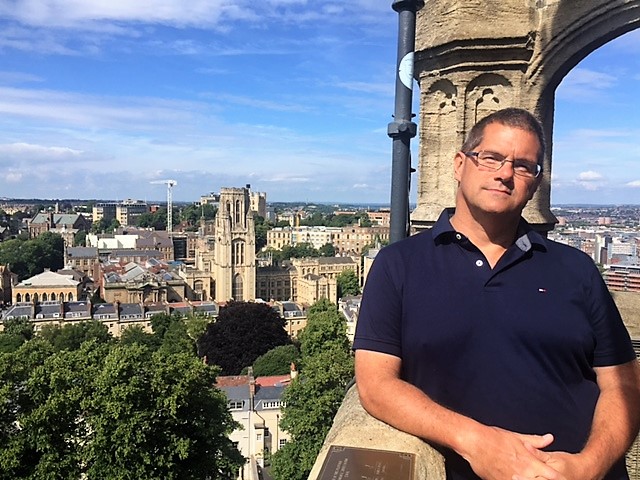
    To the left is Wills Tower which houses the schools of science and law at Bristol University. They give tours to the public but not today.
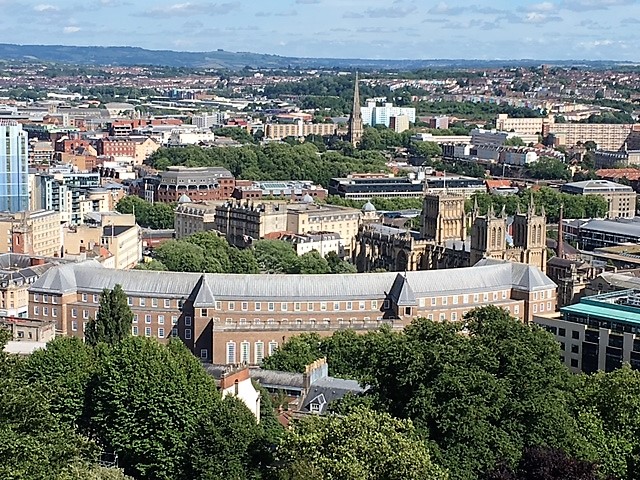
    The curved building is the back of City Hall, with the cathedral across the street, which you saw from street level.
    We enjoyed Bristol a lot. We left right during rush hour, about 5:15, and made it to Cardiff, Wales, about 6:30. We had snacks in the Hilton lounge for dinner and walked around a bit after, getting back to the room about 8pm. It’s now 11:30 and bedtime. All about Cardiff tomorrow.


  • Day 7, Jul 2: Stonehenge, Salisbury, Old Wardour Castle

    Day 7, Jul 2: Stonehenge, Salisbury, Old Wardour Castle

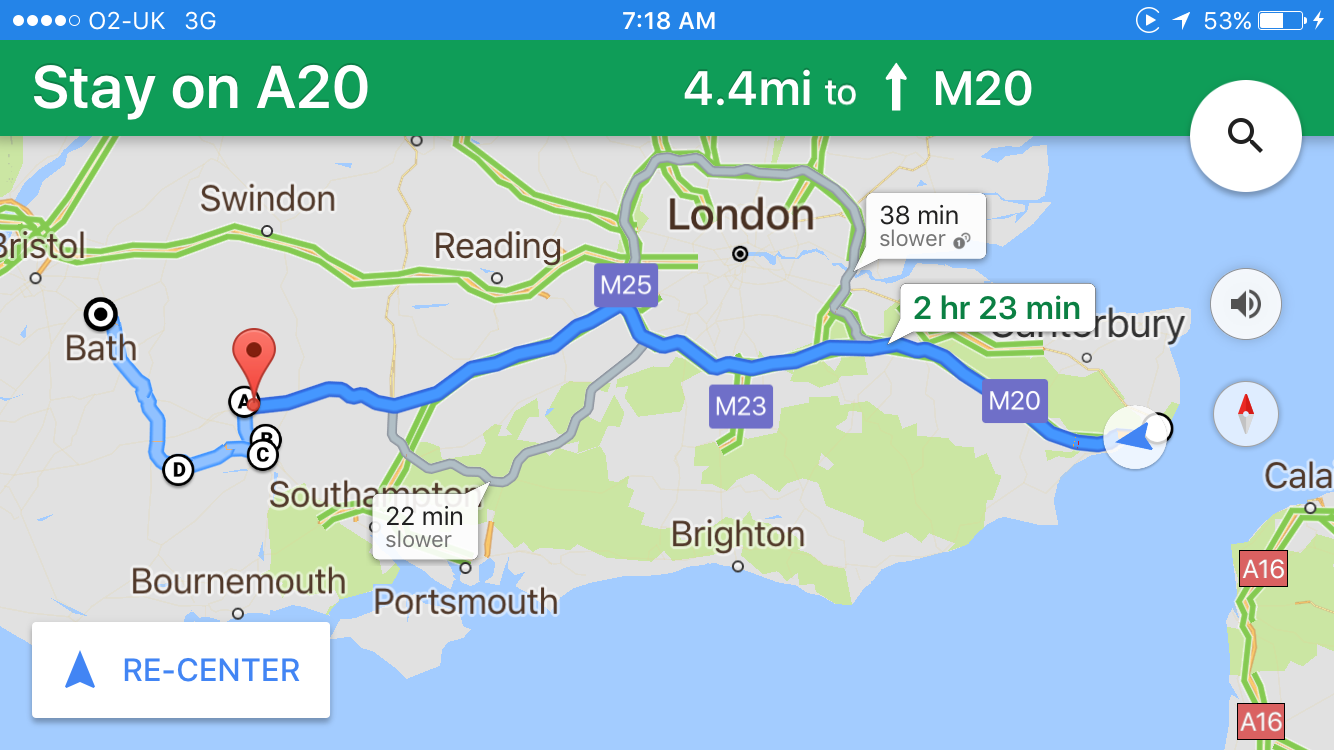
    I got up about 4am after 5 hours of pretty good sleep. I wrote Saturday’s blog and Dan was up right as I posted it. We finished packing and got going around 7:20am. We had an ambitious agenda for the day, outlined in the map below: A) Stonehenge, B) Old Sarum Castle, C) Salisbury, D) Old Wardour Castle, ending up in Bath. Before we got the English Heritage pass, the only items on the agenda today would have been Salisbury and Bath.

    The drive to Stonehenge was the longest driving stretch we’ll have all week, and we made good time. The weather was schizo, moments of raining pretty hard to drizzle to sunshine and through the cycle again. Traffic was pretty light and we were glad about that. Google said the drive would be 2.5 hours, we beat that by about 10 minutes, parking at about 9:35.

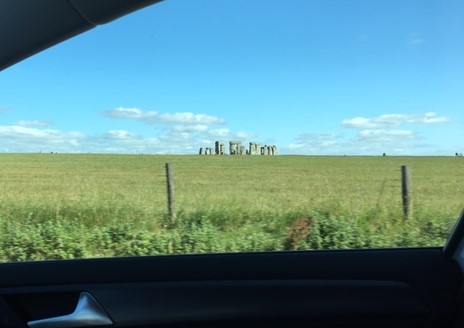
    This is a bad shot and I almost didn’t post it, but decided to leave it in to make a point. Some time before this, perhaps as much as a mile, we’d seen a sign cautioning about the possibility of long lines. This gave credence to the awful reviews we’d read about horrible crowds and traffic and don’t bother. At 9:30 on a Sunday morning, not bad at all. But the point of the picture is you can easily see Stonehenge from the road. As we were leaving almost 2 hours later we got it: rubberneckers. The traffic was already bad, and we were so thankful we weren’t going back in this direction, but moving on.

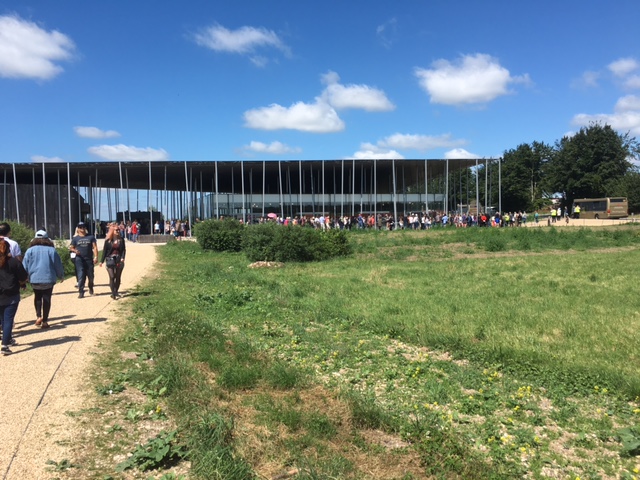
    We were there early for a 10am appointment we’d made. We parked in the first row of the lot and walked right in, they didn’t make us wait. There’s a little museum off the ticket office which we decided we’d do later, and took the shuttle the 1.5 miles to the site. This time we took the audio guide and found it quite informative. It was designed to be able to get deeper information if you wanted it, but it wasn’t built in to the primary flow, which is my preference. I probably listened to 80% of it.

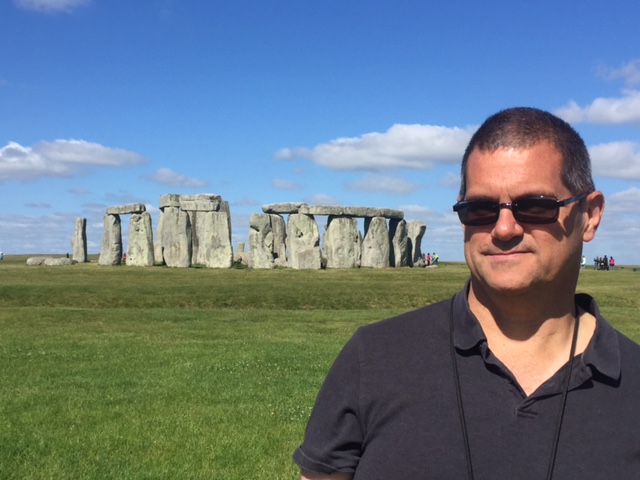
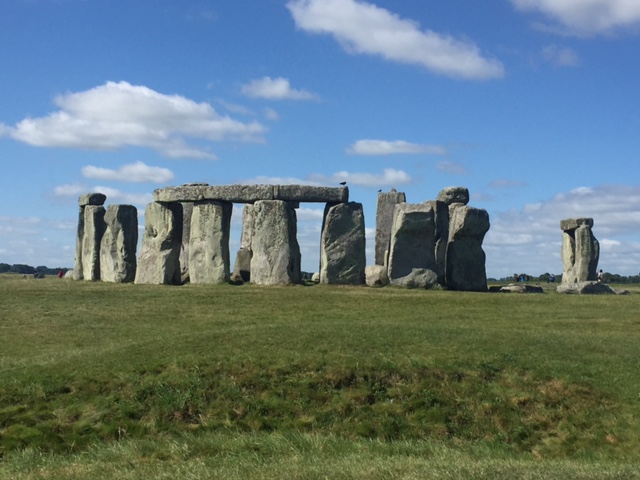
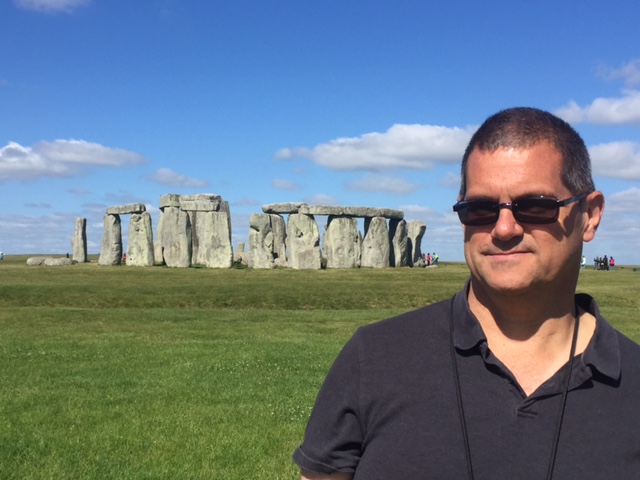
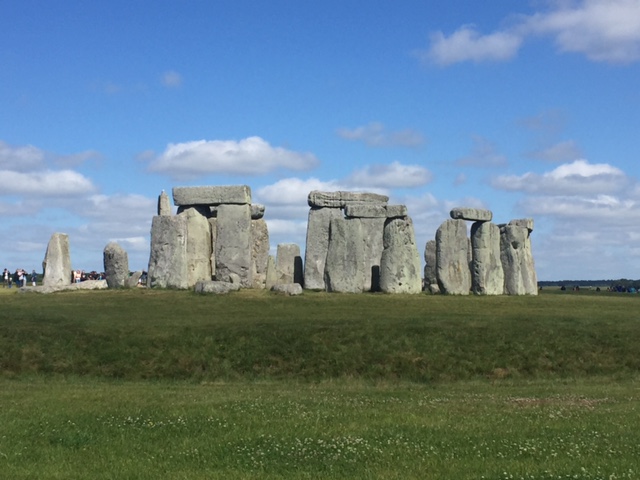
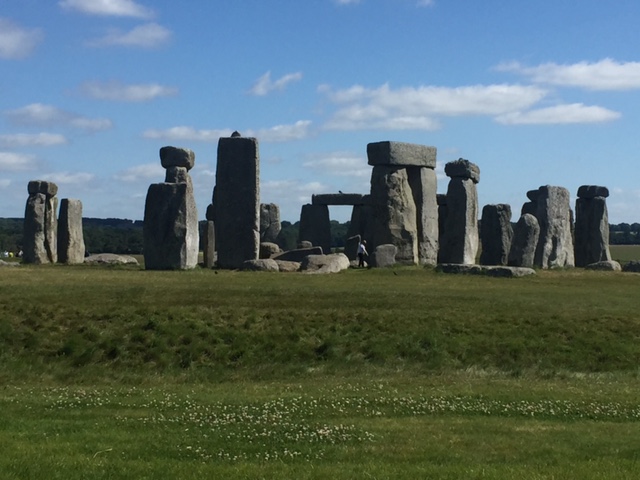
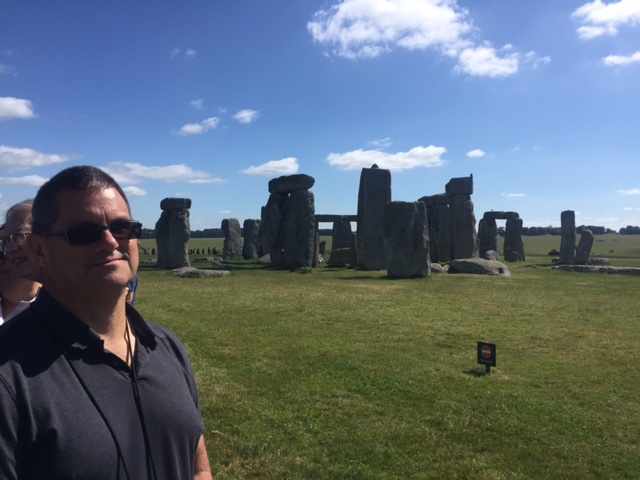
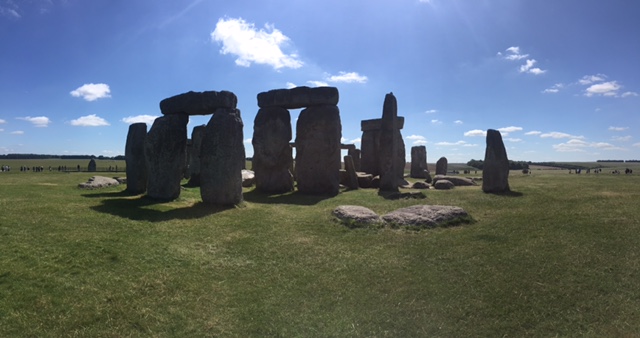
    I’m assuming most readers know at least a little about this. Perhaps the most iconic prehistoric monument on the planet, certainly in the Western world, we were musing later that, dating back to 2500 BC, it is in fact a contemporary of the Egyptian pyramids, which are arguably more impressive. I think part of what makes this so fascinating is there may be more mystery around it than the pyramids. Archeologists have figured out quite a bit about this; sort of everything but “why.” They don’t know what it all means. They know where the stones came from – the larger ones about 33 miles away, the smaller “blue stones” came from an area of Wales 240 miles away that was rumored by the locals then to have magical properties. They don’t know exactly how they got them across those distances, and can only guess how they got them up. They know it took probably hundreds of people to do it. The larger stones weigh 24 tons, the smaller ones 8. These stones have stayed standing because they are sunk into the ground several feet. These stones were all shaped to look a particular way, they didn’t come off the ground this way; and the lentils, the ones across the top, have remained there due to a sophisticated tongue & groove function which wasn’t to become a standard in woodworking for several thousand more years. You’d need lots of different kinds of manual labors managing the movement of the stones – across land, down rivers, up the standing rocks to the top. You’d need mason folks to chip at the stones with unsophisticated tools – this was before the Iron Age; you’d need folks to make the equipment; folks to house, cloth and feed all the workers. You get the idea. It’s a large number of people who worked these lands for hundreds if not thousands of years. And those people just disappeared, leaving behind only a few clues.

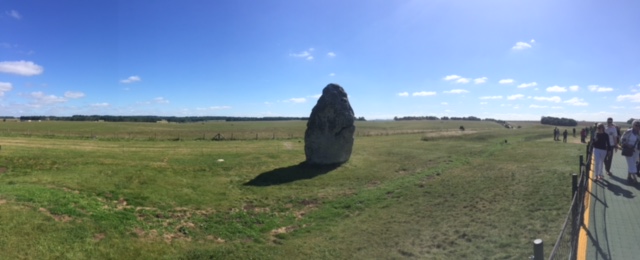
    This is a heel stone, which stands along the “avenue” which we’ve figured out connected Stonehenge to the Avon river in somewhat of a semi-circle. There are some theories that it was a site for healing, and/or religious observance and/or celebration. The placement of the stones suggest an understanding of the seasons, as they line up for the summer solstice sun to rise and shine directly down the avenue, with the sunset effect during winter solstice on the opposite side of the circle.


    It was interesting to see how different it would look as you walked around it depending on the placement of the sun. There was definitely a “back” so it, opposite side of the avenue, where it’s clear not as much attention was paid to the look and placement of the stones.


    If you look really closely you see a dot o white in the middle, which is actually a worker. That was one thing that really surprised me – overall it’s much bigger than I imagined. The diameter is 264 feet; the tallest stones are 30 feet high.


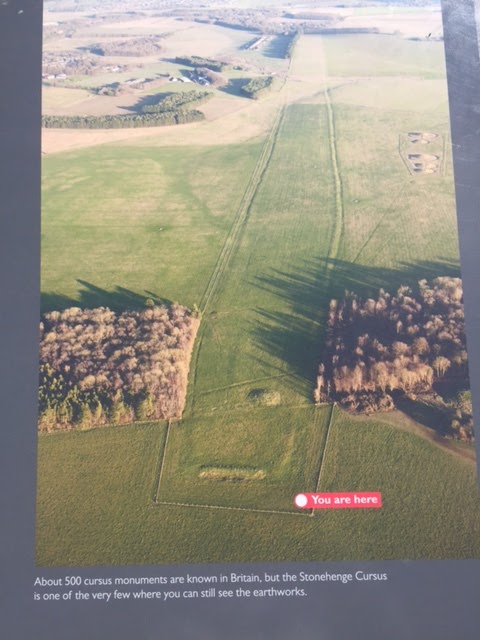
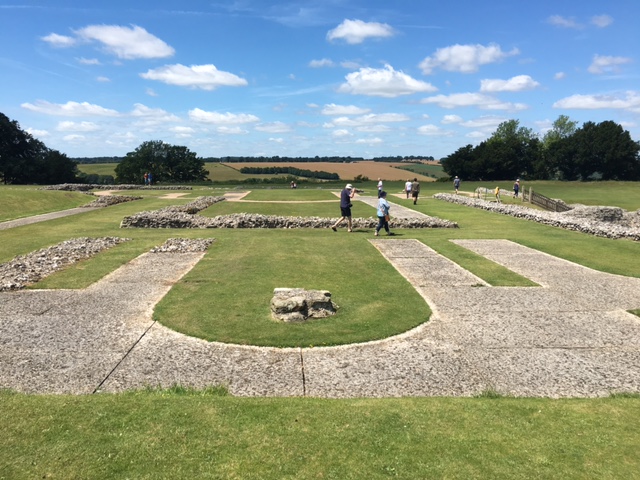
    We decided to walk back to the visitor center, and the path took us from Stonehenge just to the right corner of this photo past those mounds, through some other monuments that are best seen from the air. This whole area of England has lots of indicators of a large prehistoric existence, and little has been figured out about what it all means.

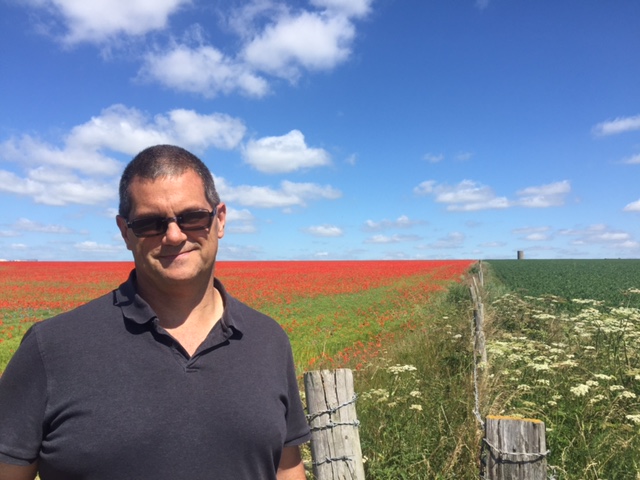
    The scenery on this 1.5 mile walk back was gorgeous. This was right as we got back to the center, the beginning of this huge field with beautiful orange flowers. Below: notice the line that has formed just to get on the shuttle. Just under 2 hours earlier we’d walked right on.


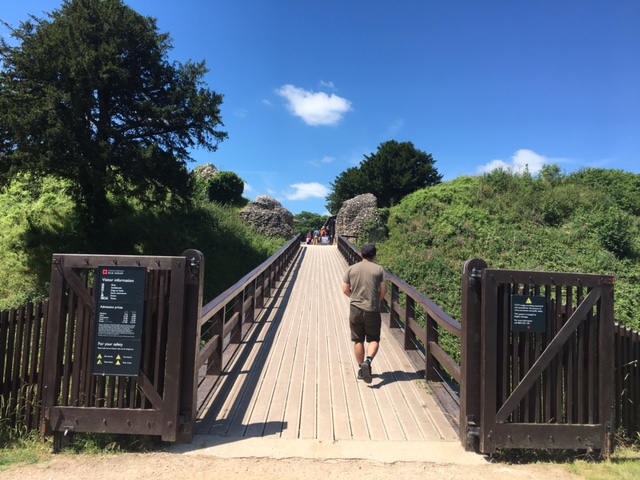
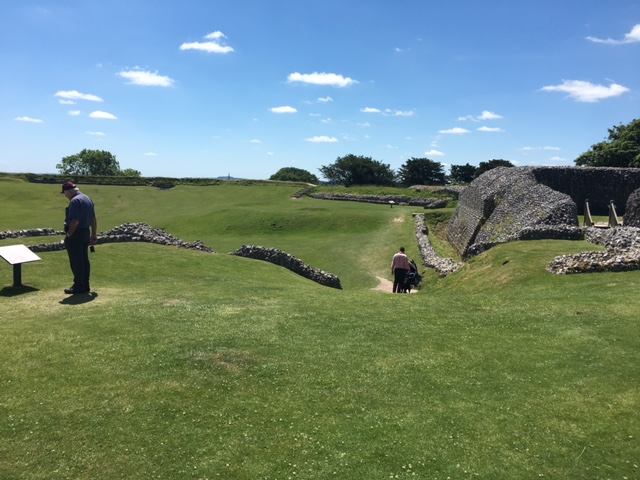
    Next we went to Old Sarum Castle, which was about a 15 minute drive. There is still a little town of Sarum, but there’s not much to it. It was at this site that William the conqueror called together all the major land-owners in England to pledge their allegiance to him in 1086. William inherited Old Sarum from the last Saxon king of England. The castle is in ruins so not a ton to see but it was still interesting, at least to us. The bridge below goes over a moat; it was a draw bridge at one time that worked a like a see-saw.


    It was a pretty big place. You could get a sense of where things were and what life was like at the time, but that was about it.


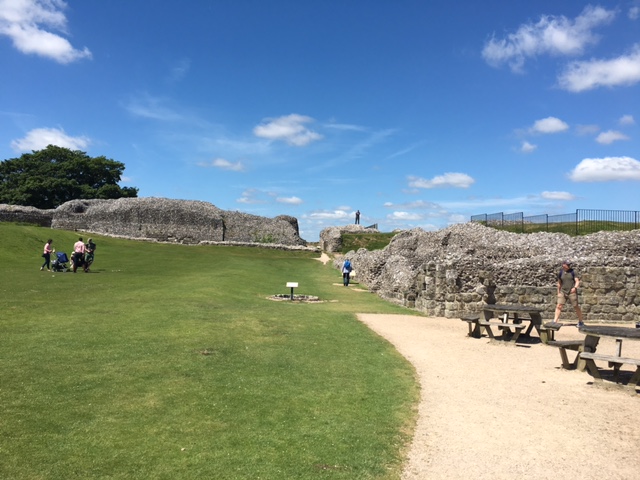
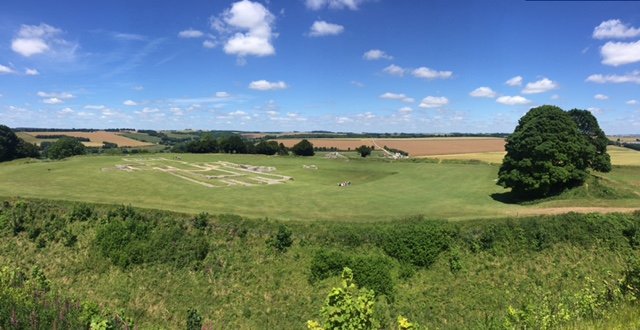
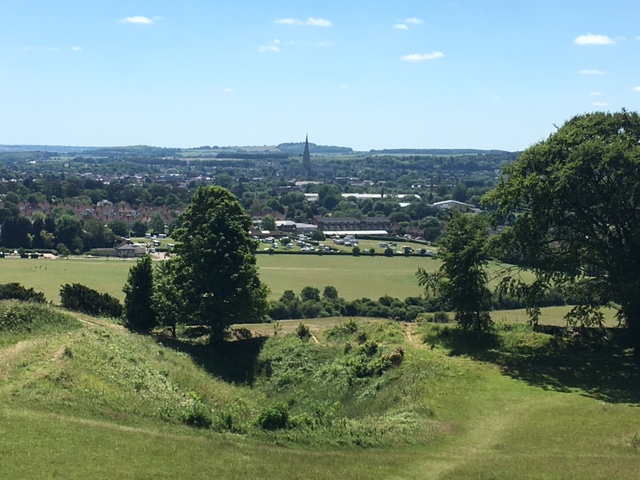
    The views from the castle would have been amazing. This is a panoramic shot Dan took from the castle hill. On the left is what remains of a cathedral that stood there. See the people in the ditch? Like Walmer, we saw lots of people, somewhat local we imagine, picnicking, walking their dogs, or in the ditch people case, just laying in the grass looking up at the clouds. The vista below looks into the town of Salisbury. The cathedral built there in 1220, whose spire you’re seeing, replaced the one here as it was bigger (WAY bigger you’ll see), King John at the time had been excommunicated by the Pope so having the church close to the castle was no longer important. The markets and villages grew up around the new cathedral and the little town that has been built around this church was eventually deserted. Prior to that, there had been various forts and settlements on this hill dating back 5000 years.


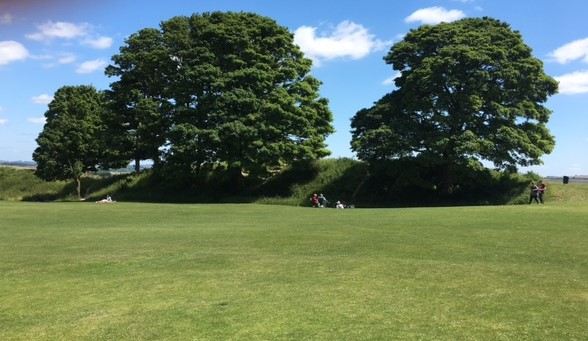
    Above: the cathedral ruins closer up. Below: turned around from the photo above to see people picnicking under the trees.


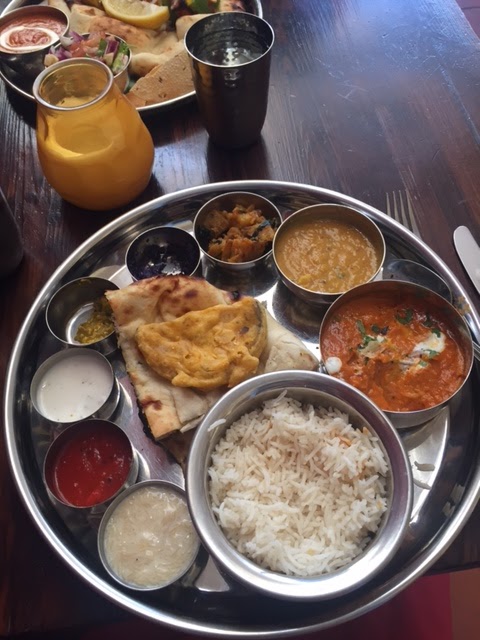
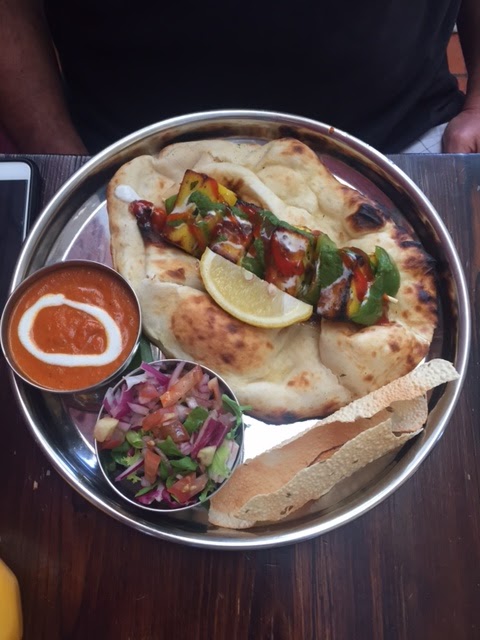
    From there we went to the city of Salisbury, just a few minutes away. We stopped for Indian food at Café Diwali which was rated #1 place to eat in TripAdvisor. It was excellent.

    Dan got a chicken dish served thali style, above. I had a paneer kabob which was really amazing. Paneer is a cheese if you haven’t had it, so imagine a grilled cheese sandwich with the best naan we’ve ever had. TripAdvisor got it right.


    After lunch we walked around Salisbury a bit. We’d parked initially on the street but had a limit on how long we could stay there. We figured out where else to park while we were at lunch and moved the car to a free parking garage after walking around a bit.


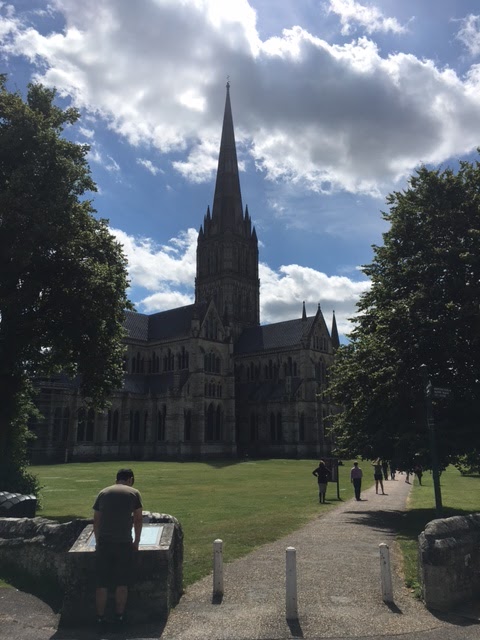
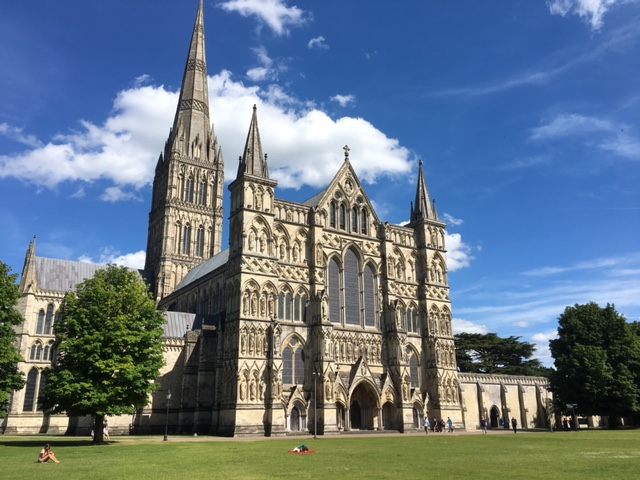
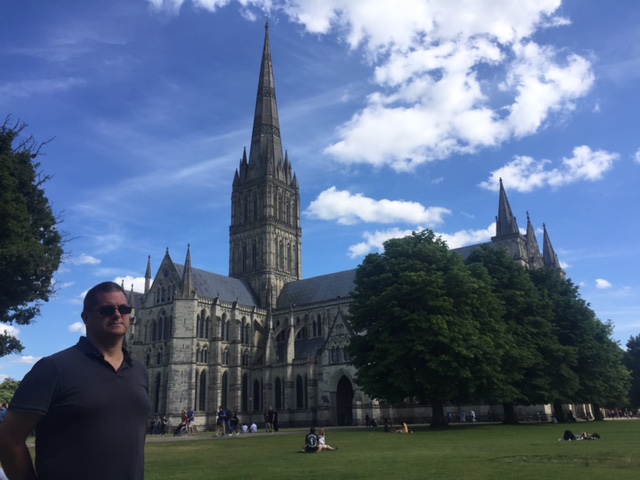
    This was our first siting of the cathedral and it was breathtaking. We weren’t expecting it to be this big. One of only 4 copies of the Magna Carta is housed here. If you’re not familiar with the document, you owe the very beginnings of democracy to it. Signed in 1215 by King John and his barons, it for the first time established rights and concepts still in place today, such as “innocent until proven guilty” and, especially important during the time of tyrannical John, the idea that the monarchy is not above the law. The copy here at Salisbury has never been moved. so it is in incredible shape, although photos were not allowed.
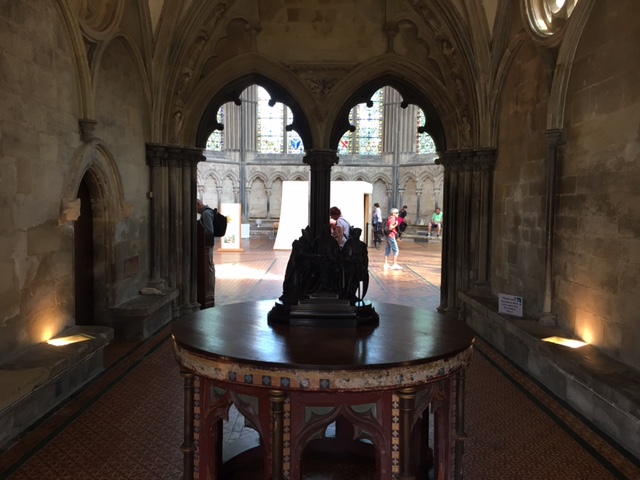
    Above: the entry into the Charter room where it is kept, and the Charter room below.


    A
    Above: the spire from the inner courtyard. Below: the nave as you first enter the cathedral.
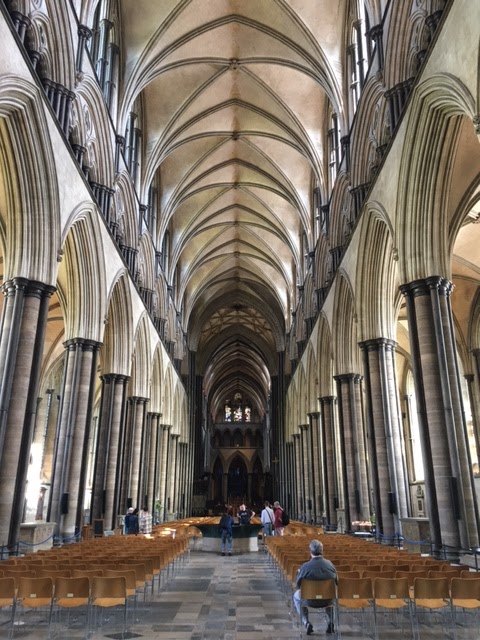
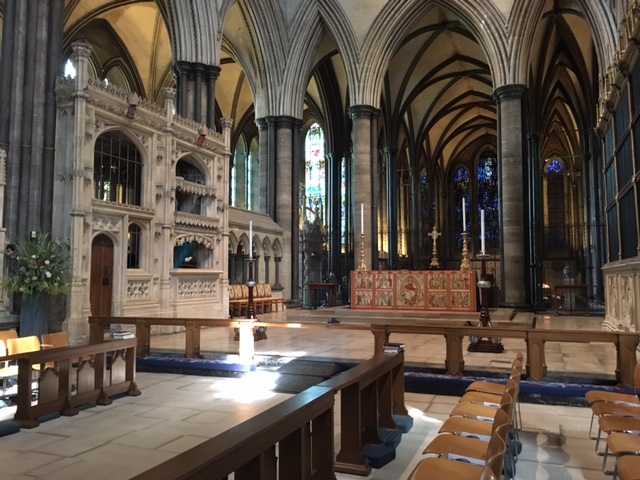
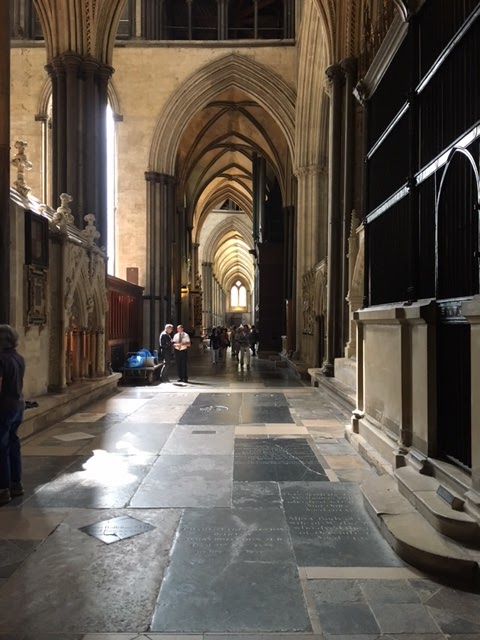
    Above: the choir, or 2nd altar area. Like Canterbury, there was a 3rd altar area but thee wasn’t much too it. Below: Looking back one of the side hallways from the front.


    The grounds surrounding it were beautiful and there were lots of people laying about in perfect 70 degree weather.

    Our final stop was Old Wardour Castle. This was about 40 minutes away, tucked into the hills and ended with a 5 mile drive up a single lane road.

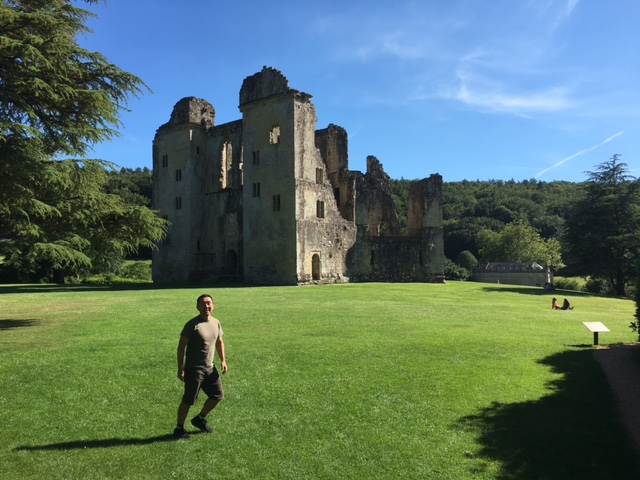
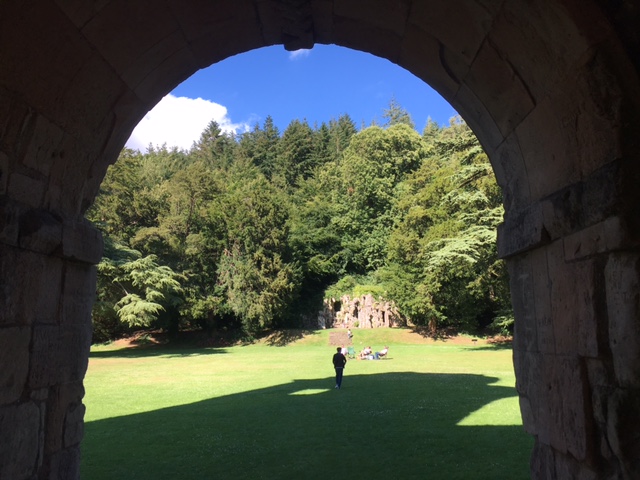
    We were shocked to find a small but full parking lot when we got there 45 minutes before closing at 5:15. And again we found lots of people just hanging about, one guy doing intense training with his puppy, Rosie. We really love that people just come to old, and in this case ruinous, castles, just to hang out. This castle had a short life: Built in the 1390’s and destroyed during the English Civil War in 1644. It’s been in ruins ever since. But what was left was fun and charming, especially the landscape around it. Below: looking back from the entrance at people lounging about on the lawn, and an old grotto behind that.


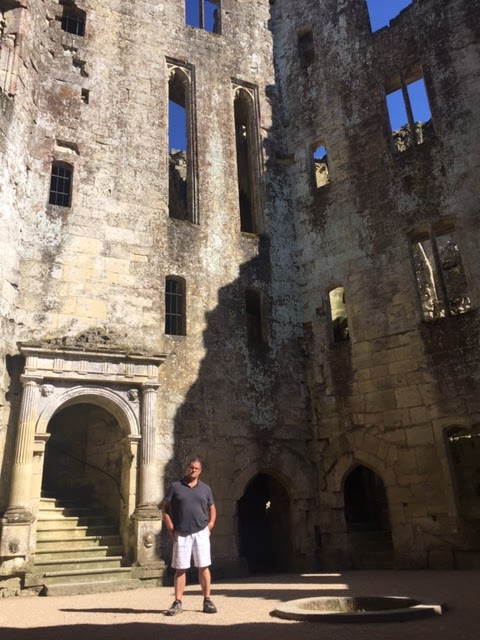
    Above: the courtyard off the entrance. Below: a lovely pond in the back. I was surprised how freely they let you roam around this thing. While it wasn’t dangerous by any stretch, I could see someone not careful hurting themselves pretty easily. Steps were very uneven and the landings as you went up not always intuitive.
    I’d hoped having people in the courtyard would give you a sense of height.
    You can barely see me standing in the middle up against the castle.
    Some scenes from Kevin Costner’s 1991 movie Robin Hood were filmed here.
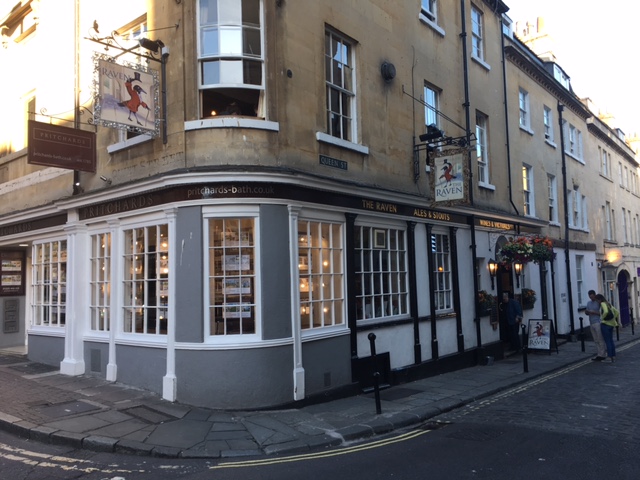
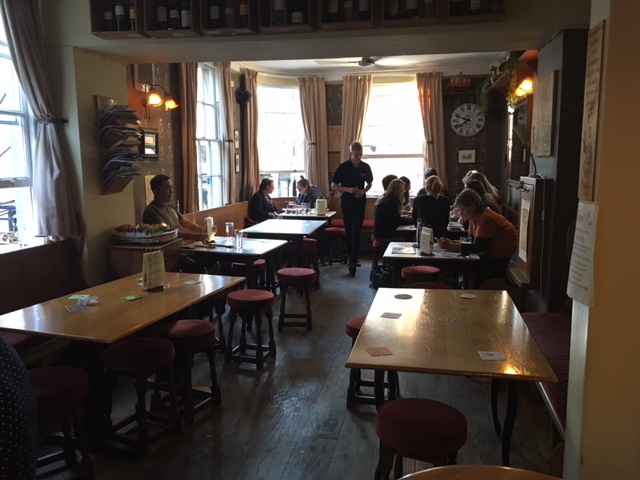
    Bath was about an hour drive from there. We got to our hotel around 6:50pm, got settled a bit, and went out again for dinner. We ended up at a pub called the Raven, which had an upstairs dining room. It had a classic British menu including meat pies, which sold me. I had been thinking at lunch we were at 2 out of 3 of the things I was planning on eating in England: fish and chips, Indian food, meat pies. Box now fully checked.


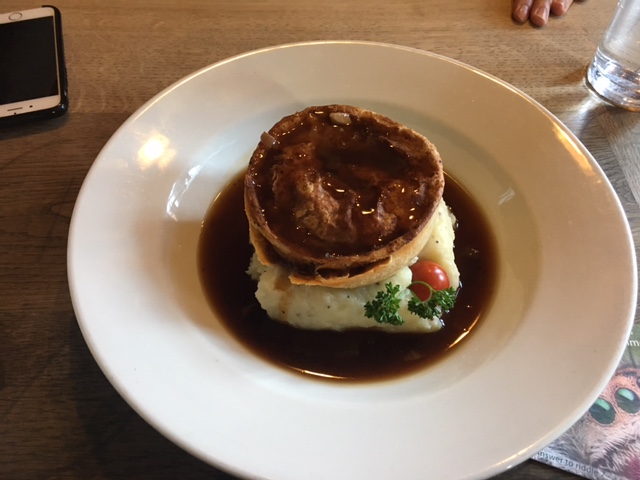
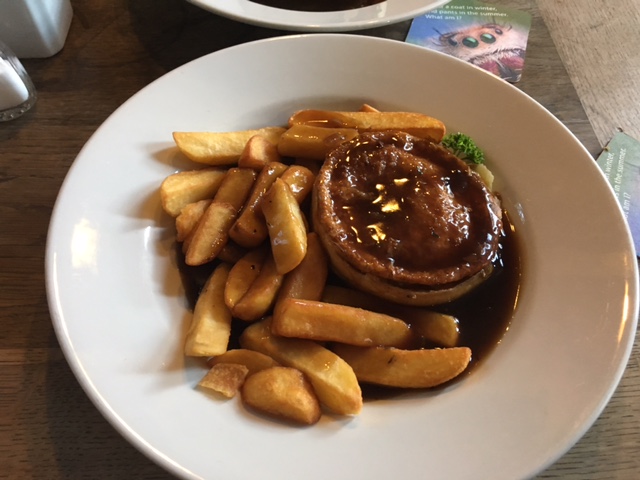
    Dan had a Matador pie with Spanish flavorings and mashed potatoes underneath, above. Mine was chicken with fries. Both had gravy dumped all over it. It totally worked.
    A very full but fun day. Today (I’m writing this the next morning again, becoming a habit) we explore Bath and move on to Cardiff this evening.
  • Day 6, Jul 1: Dover, Walmer & Deal Castles

    Day 6, Jul 1: Dover, Walmer & Deal Castles

    We were both incredibly tired last night – probably from the 26 hour day since we picked up 2 extra hours between Istanbul and England, so were grateful to have slept well. I got up about 5am to finish writing Friday’s blog. Dan got up about 6. We left about 7:30 to go out for breakfast.

     This is the VW Golf we rented. The white house behind that is where we are staying.

    We walked around the center of town a bit to scope out a good breakfast spot. This is St. Mary’s church, part of it built in the 1100’s.

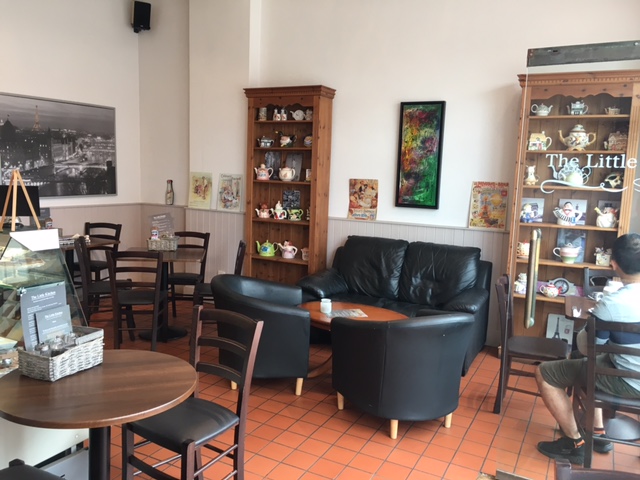
    We ended up here and it was pretty good.
     That’s Dan at the far right; we were the first customers so snagged the table by the window.
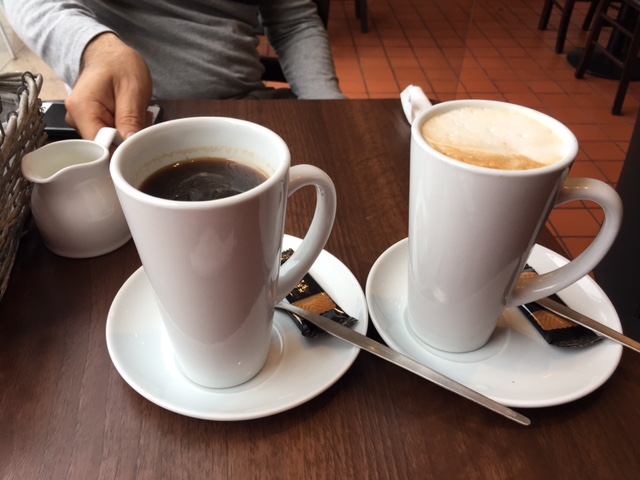
     Dan had the latte, me the Americano. And I had another. As I said to the waitress on our way out: it was the most satisfying coffee I’ve had in a week. Truth.
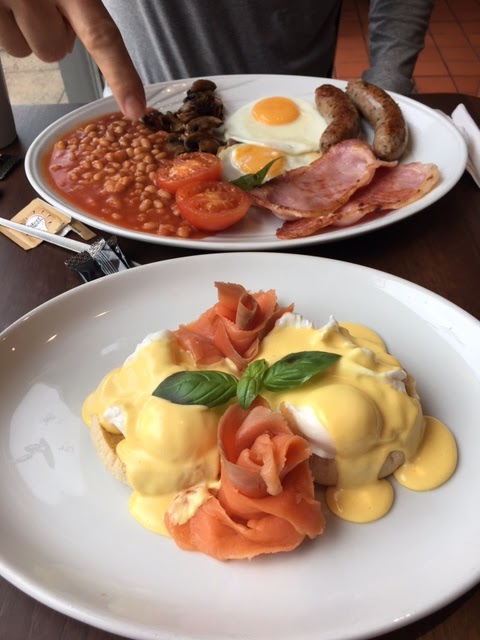
     Dan had the plate called the English Breakfast, at the top of the photo. It was gratifying to see it really did include mushrooms and pork-n-beans. I have that for breakfast nearly every day when we’re in Europe – and I’ve said in previous blogs I don’t believe I eat pork-n-beans at any other time – but I’d always wondered if it was just a Hilton thing. Apparently it isn’t. I had the eggs Benedict with smoked salmon (the roses).
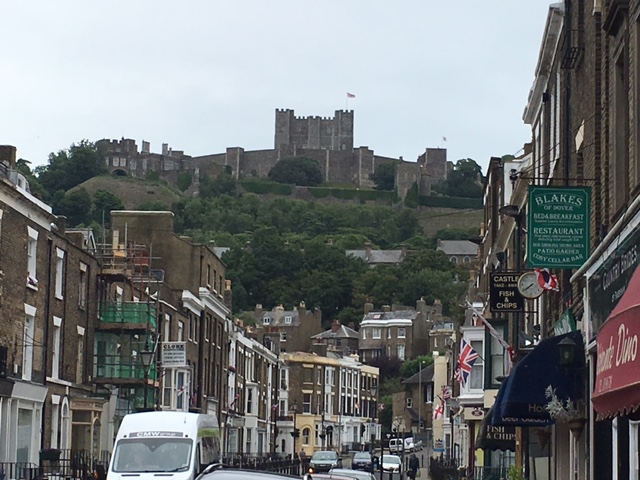
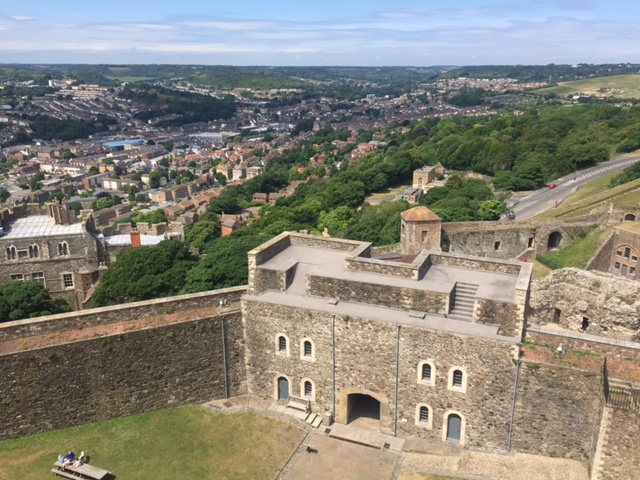
     This might be my favorite photo of the trip so far: Dover Castle hovering over the town.
    Of everything we had planned for this trip, going to Dover Castle was the item I was the most excited about. It combines two things I love about traveling: castles and World War II history. It exceeded expectations on both counts. Historically it is arguably the most significant castle in England. Built originally in the 11th century, it is the largest castle in England and strategically the most important as a matter of defense. That last part was never more true than during World War II.
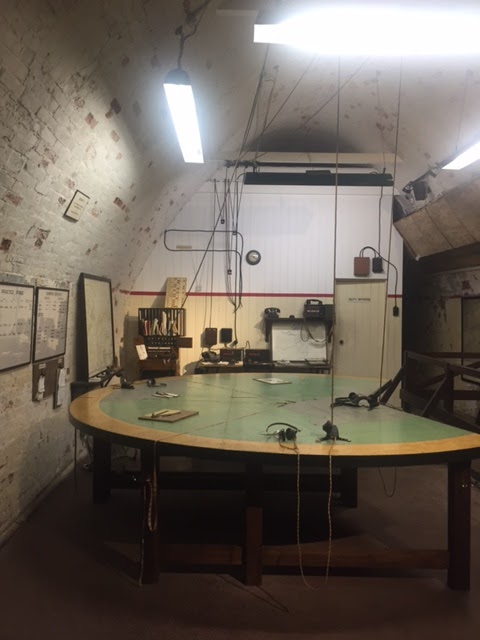
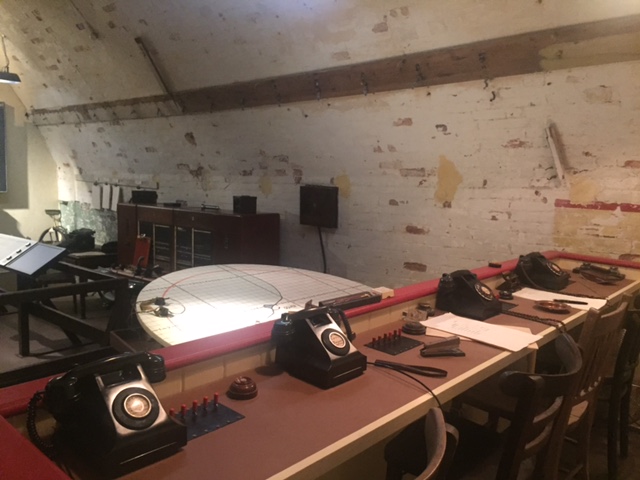
    The first thing we did was go on their tour of the casements or tunnels, specifically the ones that were used during WWII. The presentation was focused on the Dunkirk rescue and it was excellent. I’m not going to go into all of the details here; we already knew quite a bit about Dunkirk so it was amazing to be where it all happened. The Dover connection is the tunnels served as the headquarters for “Operation Dynamo”, which is the code used for the plan to evacuate Allied troops who were trapped by the German army at Dunkirk in France, late May and early June of 1940. Over 330k ended up being rescued across the English Channel and brought to Dover, about 100K of them ferried from the beaches in small private vessels because the water was too shallow for bigger ships to get to them. Later this month, a movie comes out on the subject and the trailer looks amazing. You can learn more about it then if you’re interested :)
    Although militarily Dunkirk was a disaster, psychologically it galvanized Britain as an example of what could be accomplished when you work together. It was after Dunkirk that Churchill, who had been Prime Minister only about a month at the time, gave one of his most famous speeches. It included the famous lines “wars are not won by evacuations” and “we shall fight on the beaches, we shall fight on the landing grounds, we shall fight in the fields and in the streets, we shall fight in the hills; we shall never surrender…” I can hear his voice as I read that; it gives me chills. (I’m a bit of a Churchill geek, one of those who believe he was uniquely qualified to face off with Hitler, and the world would be a very different place today if he hadn’t been Prime Minister at the time. From the time France fell just after Dunkirk, until the Americans joined in late 1941, the English were in it alone, about 18 months. I don’t think most people realize that, including me until a couple of years ago.)
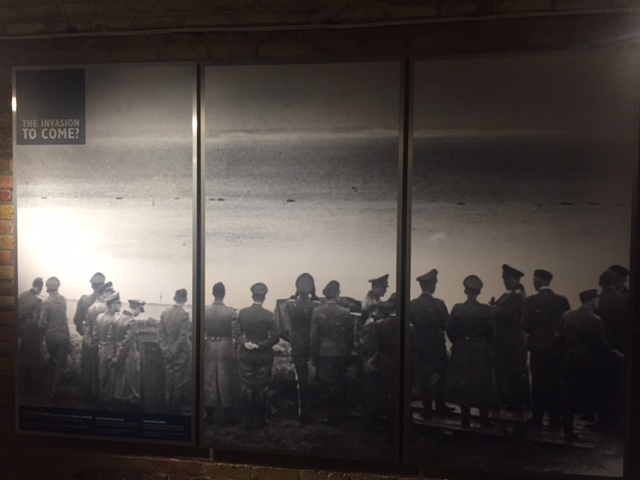
    After Dunkirk, Dover Castle continued to play a role in WWII. It remained important defensively. The distance between Dover, England and Calais, France is the shortest distance across the English Channel. The Germans were convinced of 2 things: 1) if they were to invade Britain with ground troops, it would be through Dover and 2) if the Allies decided to send ground troops to the continent, it would be from Dover. From 1942, Dover served as the Combined Headquarters to assist with the Allied liberation of Europe. It was the workers in the tunnels of Dover in charge of a very successful misinformation campaign to make #2 very plausible, which is why the Germans were so surprised when D-Day happened at Normandy.


     A photo of German officers at Calais eyeing Dover across the English Channel.
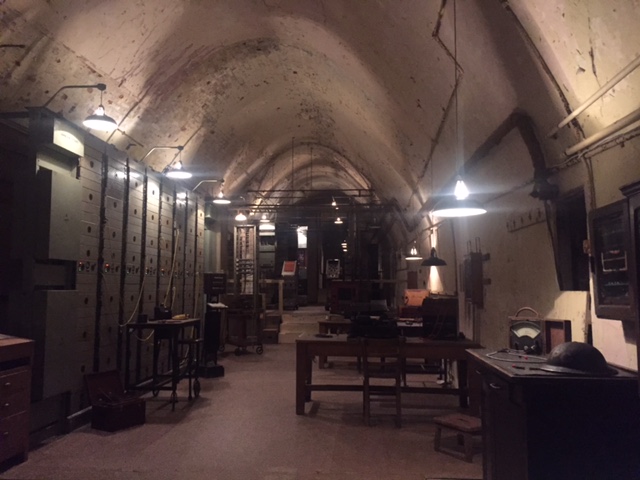
     The photo above and the two below show significant communication and other operations during WWII.


      These tunnels were old, too. They were originally built in 1797 for the Napoleonic Wars and refortified for WWII.
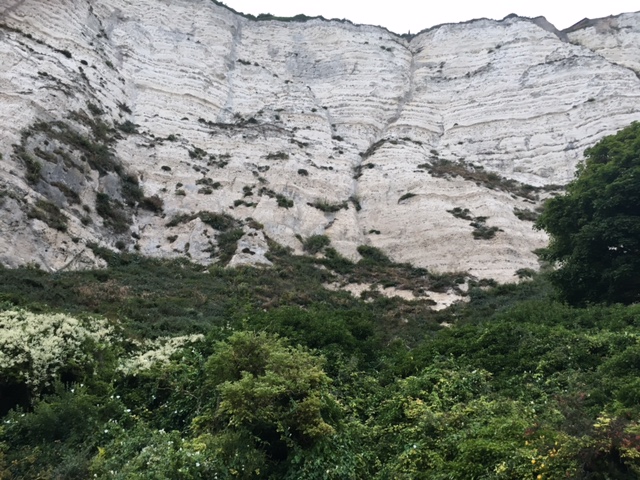
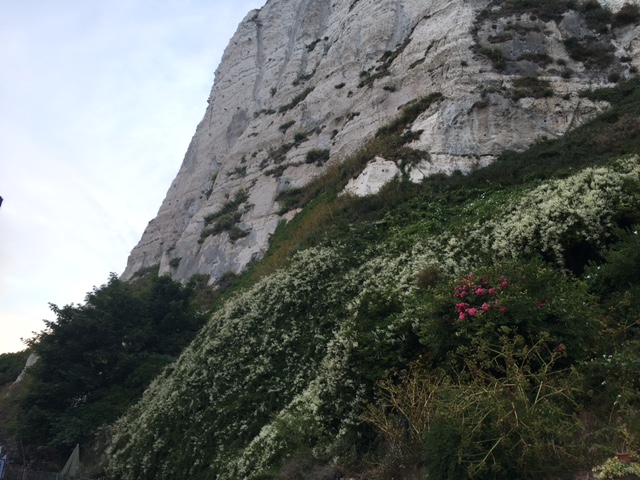
     The White Cliffs of Dover from the tunnels.
    After this tour, we went up the hill to the tower where the actual castle was. As a castle goes, it’s pretty classic looking, including an outside wall and the tower in the middle, very similar to the design of Tower of London which was built about the same time.


     We caught a very entertaining minstrel show reviewing history from William the Conqueror through Henry II.
    Henry II was largely responsible for making the castle what it is today back in the 1200’s. Much of his motivation was to impress guests he housed who came into Dover from the continent during their pilgrimage to the Thomas Becket shrine in Canterbury. He was largely believed to have ordered Becket’s murder so Henry felt he needed to do something lavish to turn the negative situation around. Much of what he did with the castle was the result of that motivation. Henry was the first of the Plantagenets dynasty, which produced a total of 14 kings ending with Richard III.


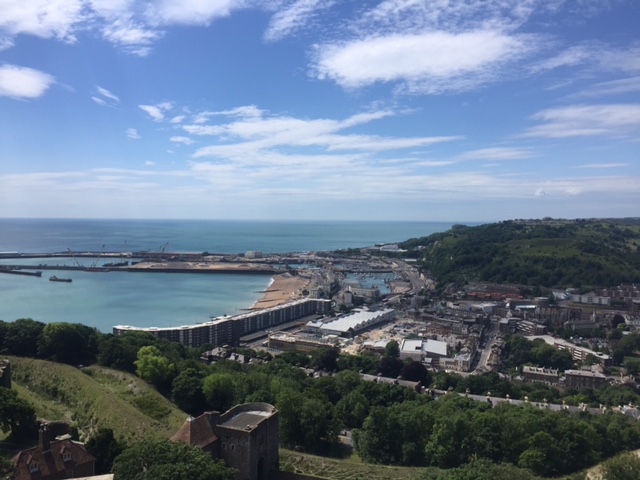
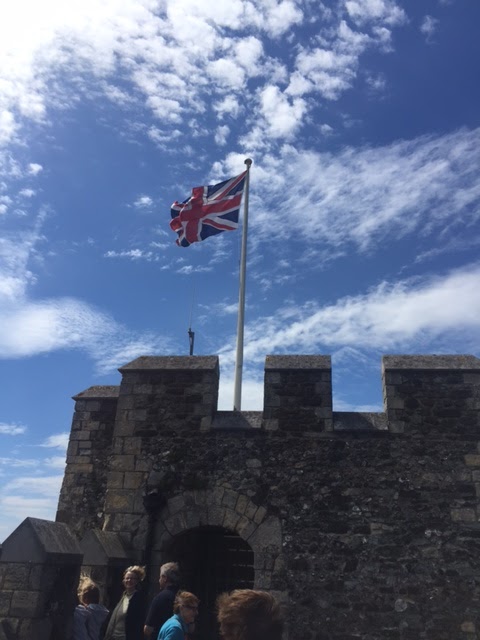
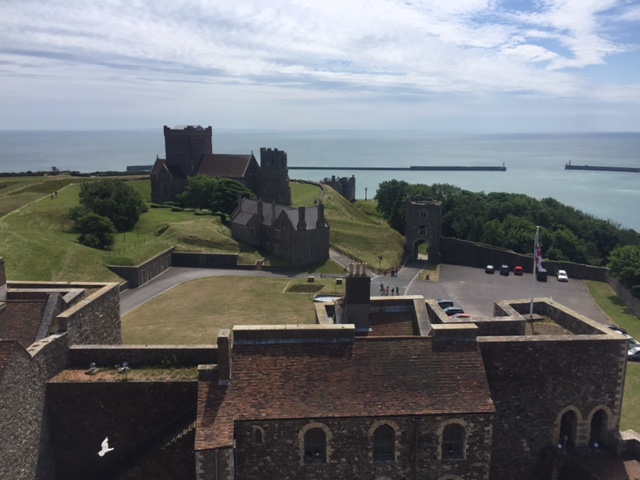
     Above and below: views from the top of the tower. It’s remarkable to think how high they built this in the 1200’s. See the people at the picnic table bottom left.


    We stayed at Dover Castle about 2 hours. Next was Walmer Castle and Gardens, about a minute 15 drive away. Walmer was built by Henry VIII around 1538. It is occupied by the Lord Warden of the Cinque Ports, anymore a largely ceremonial position, with roots back to the 1200’s when it was called “Keeper of the Coast.” The Lord Warden was originally in charge of 5 port towns on the southeast coast, including Dover. The current Lord Warden is Admiral of the Fleet Michael Boyce, and he lives here.

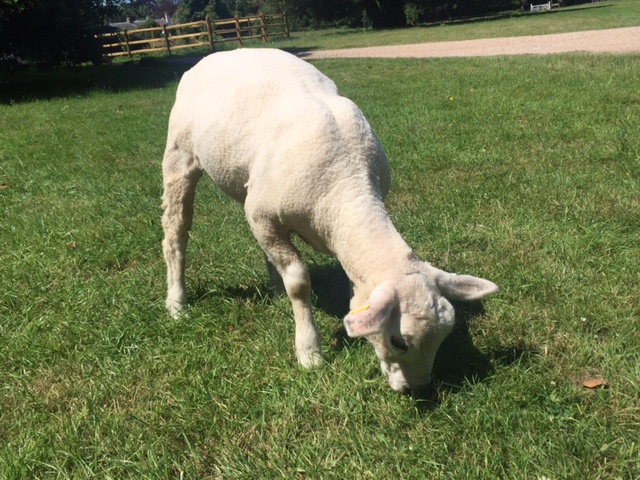
     We were greeted by this adorable lamb in the grass parking lot.


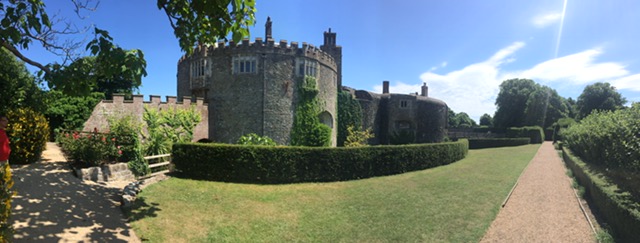
    This was very different from any castle we’ve ever been in. It’s shorter, first of all, which we learned later was part of the design strategy at the time – made it a harder target to hit. Also rounder – for a similar reason, easier for things to sort of bounce off. And while they wouldn’t allow any photos inside, it looked very much like a house, furnished the way any house would be furnished. Of all the castles we’ve been in, it was the easiest to imagine what it might be like to live here. This photo, by the way, is a panoramic shot that Dan started playing with today. There are several more in this blog.
     It had a beautiful lawn in the moat.
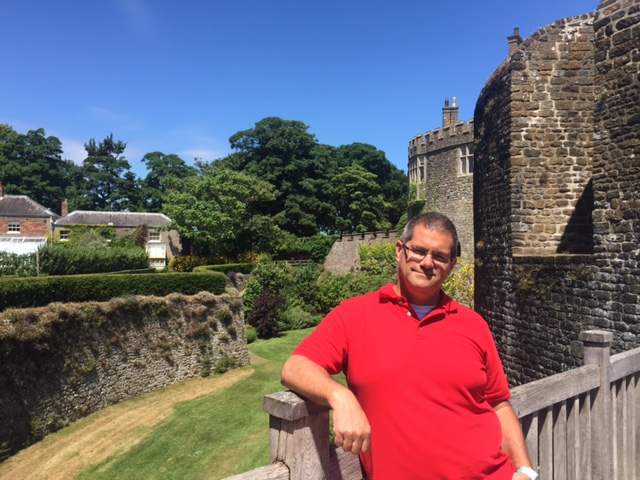
     You weren’t supposed to take photos; Dan breaking the rules anyway.
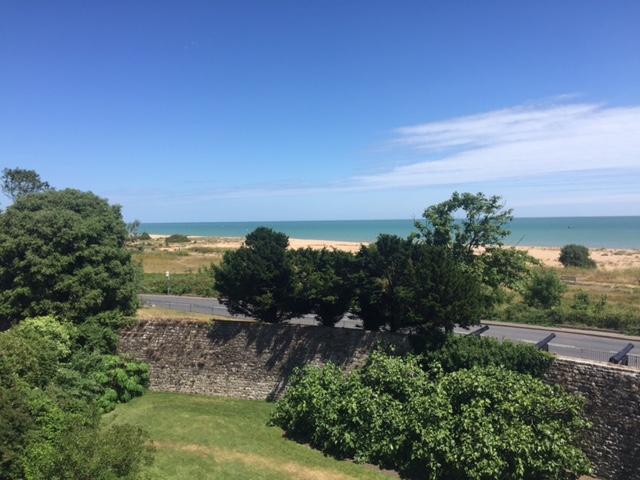
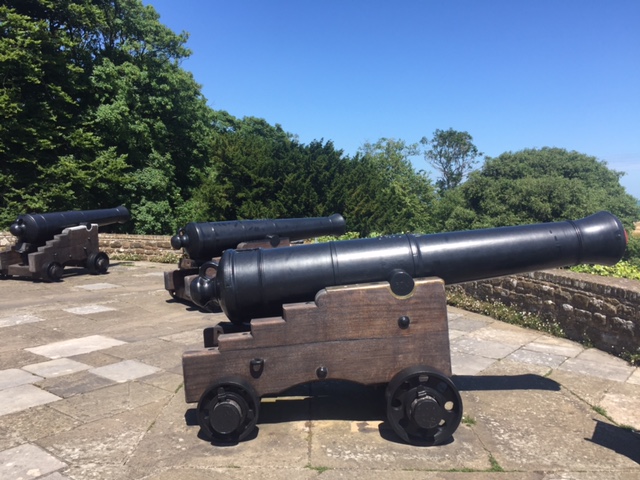
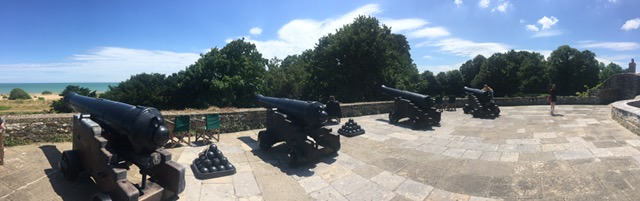
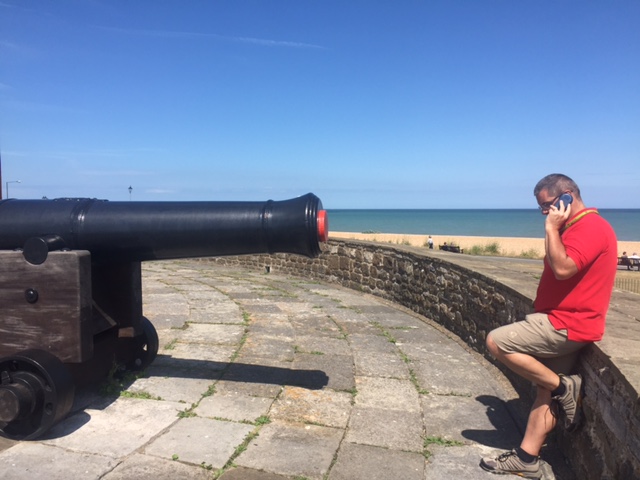
     The North Sea from the terrace, still armed with cannons.


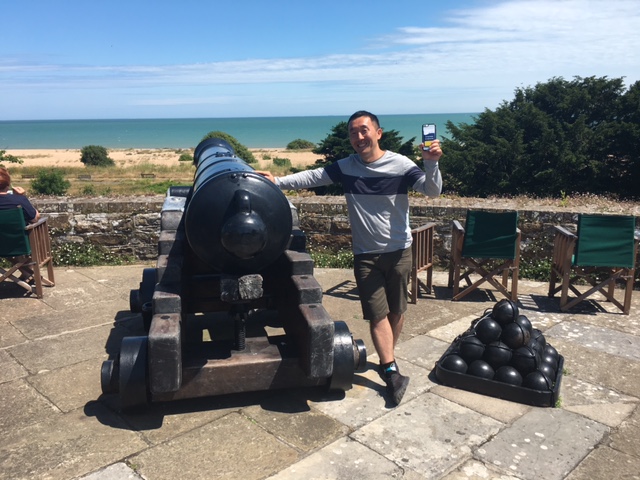
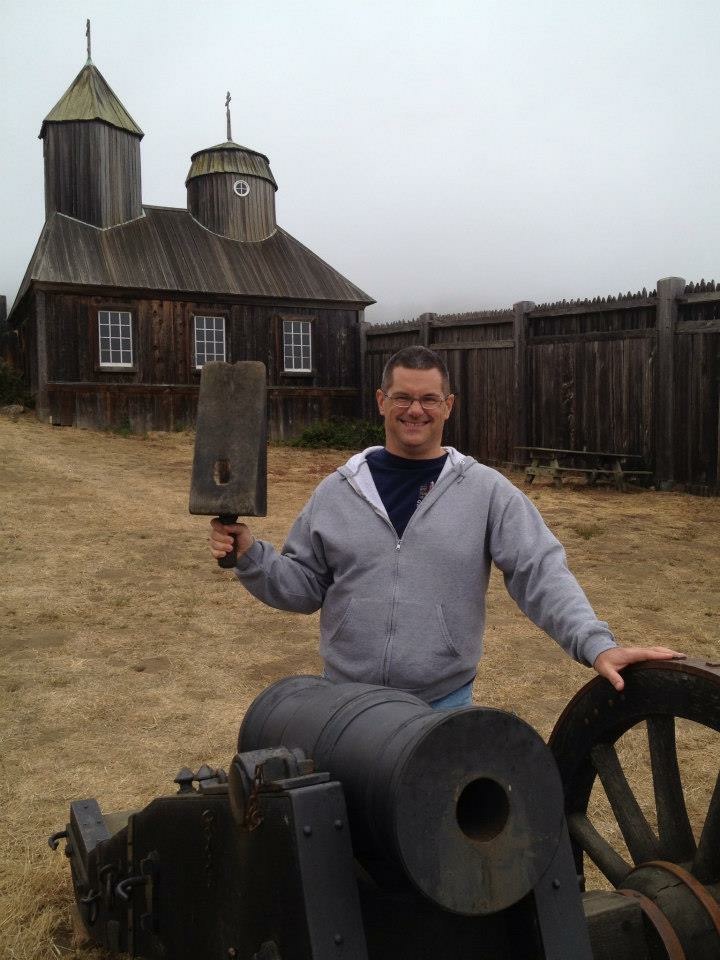
     A cheeky pose from Dan, attempting to mimic a photo he took of me (which he really likes for some reason) at Fort Ross in Northern California, August 2012, below.
     

    This is probably my favorite of Dan’s panoramic shots.
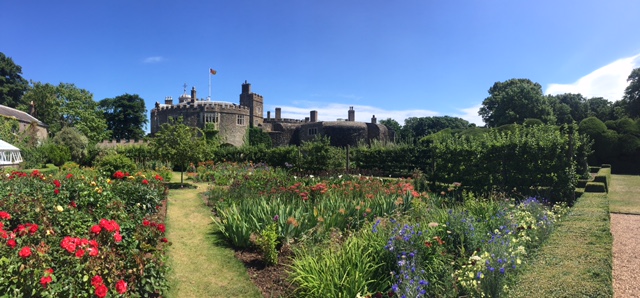
    The gardens were extensive but not really elaborate as in say Versailles. What was so unusual about them is that they were so active. It wasn’t just for show. Not shown is a green house that had a wide variety of plants in it. Below is a part of a vegetable garden, some of which had clearly just been planted. There were also lots of fruit trees as we entered this section. 

    Above: The gardens of Queen Elizabeth the Queen Mother. She was Lord Warden from 1978-2002. Below: a large lawn where families were gathering for picnics.

    We were there about an hour and really enjoyed this castle. There was something incredibly understated about the whole thing – almost humble if that’s a word you can apply to a castle – yet very elegant at the same time. We went up a mile to the town of Deal for lunch. One guess what we had.


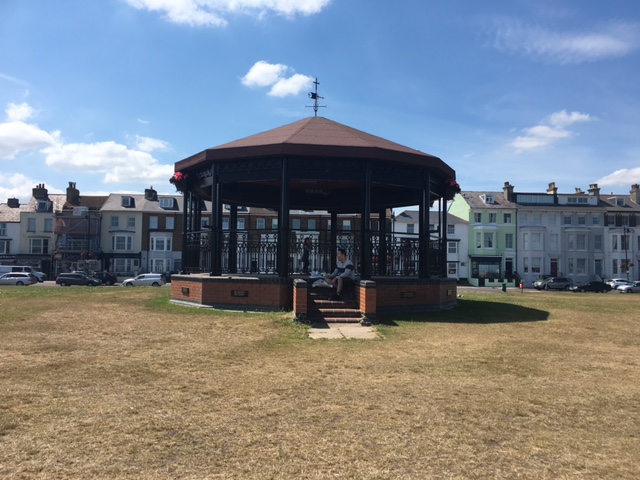
    We ate at this bandstand in a park between the shops on the street and the beach of the North Sea. This bandstand was also a memorial for 11 members of the Royal Marine Band who were killed here by IRA terrorists in 1989.
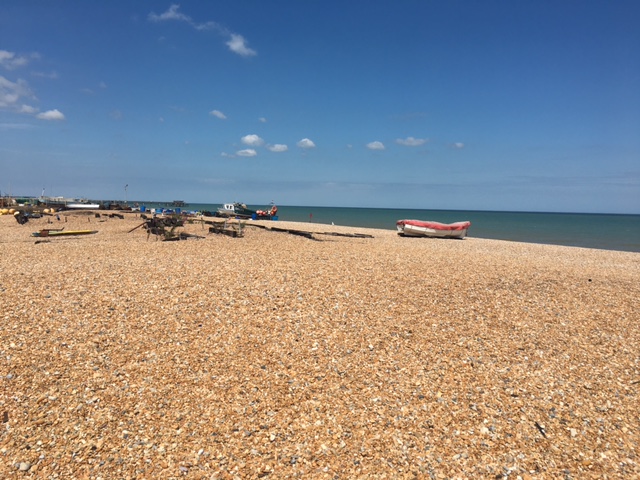
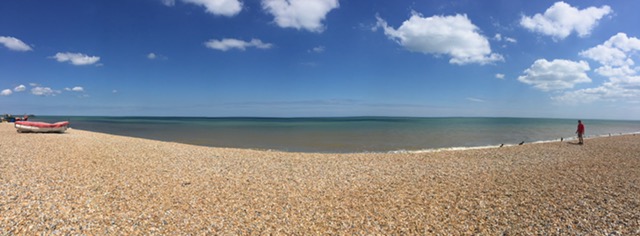
    This is a literal pebble beach. Not just at the beginning, all the way to the water. There’s no sand. It actually made it extremely easy to walk on. And no cleaning up after! Below is another of Dan’s panoramas.


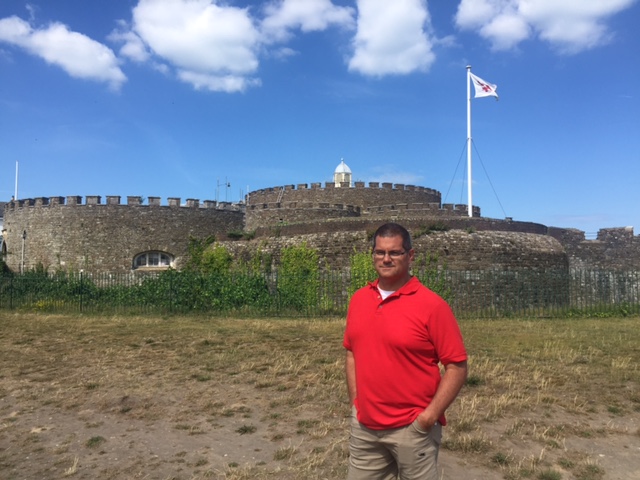
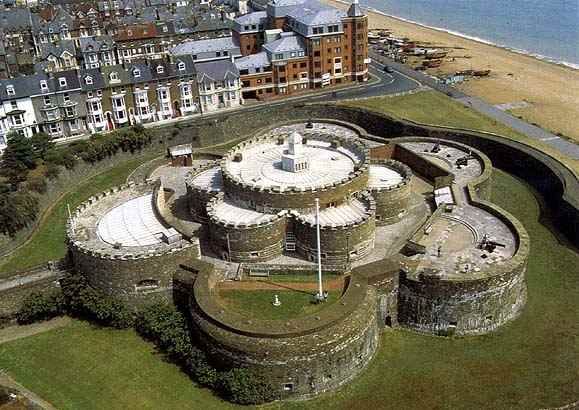
    Next we went up to Deal Castle, which was not even half a mile up the same road. Walmer and Deal were part of a series of castles that Henry VIII built after his break with the Catholic Church and he was constantly afraid of invasion by the French, who were being encouraged by the Pope to bring England back into the fold. As you see below, another low lying castle, only 2 stories and rounded like Walmer, not an easy target from the sea.


    Everything we did today was part of the English Heritage pass we bought yesterday. We typically don’t do audio guides – the last one we did I think was St. Peter’s in Rome and that one was amazing – but typically they’re full of details that we’re not all that interested in. We decided to get this one because it was free. It was typical :) I stopped listening about halfway through.

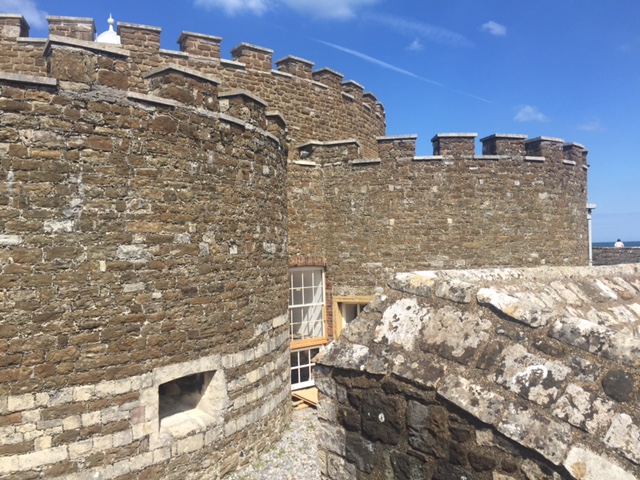
    It was difficult to get good photos of this castle because it was so compact, so I got the photo below from the internet. There was an outer wall and a moat and the design was somewhat a flower. The outer petals were all for defense, from above and below. If you look carefully you can see little windows where soldiers could shoot from. Cannons are still on display above. The inner petals were both defense and living quarters. Anne of Cleves, Henry VIII’s fourth and favorite wife, stayed here on her way over from Calais on her way to meet Henry to marry him. That was 1539 and it was barely completed, having gone up in just 9 months.

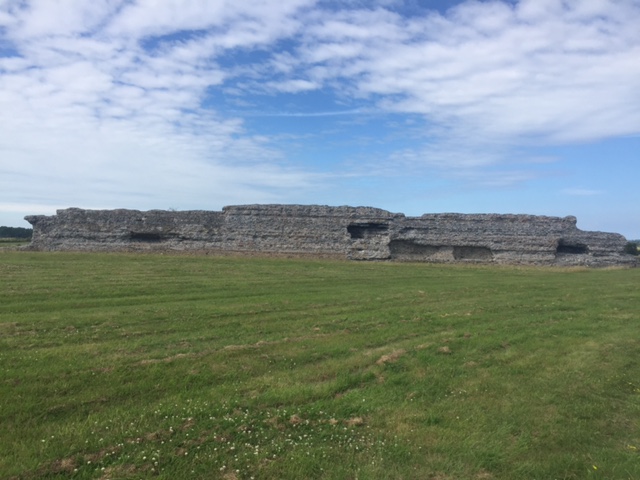
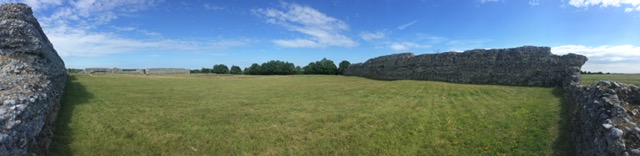
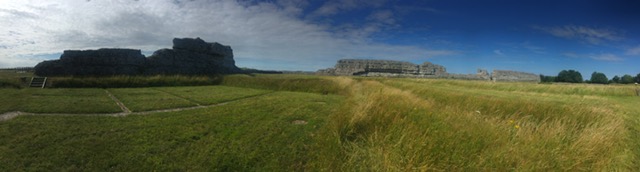
    We were only here about 40 minutes. The next stop was about a 20 minute drive away, the Richborough Roman Fort. This is the Roman ruins from a period that started in 43 when the Romans first invaded these islands, and lasted through about the 400’s, abandoned after the fall of the Roman Empire. It was an extensive fort and some civilian settlements in the surrounding area. It claimed to have an amphitheater that hadn’t yet been excavated but whose outline could be seen from ground level; we attempted to find that but it remained elusive.

    The above shot is a normal view, the next two more panoramas. What was impressive about the space was the size.


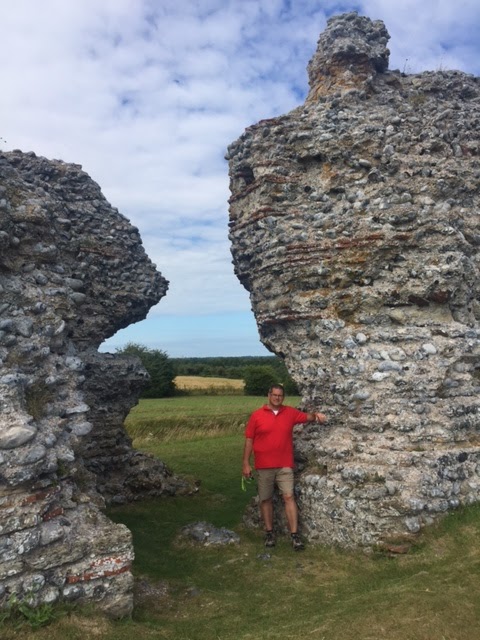
    These walls were very high and very thick. It made me wonder who they were afraid of.
    We stayed about 40 minutes I guess. There was a little museum that was interesting as well. The shot below as taken on our way out. Much of the final road we took to get here was one lane.


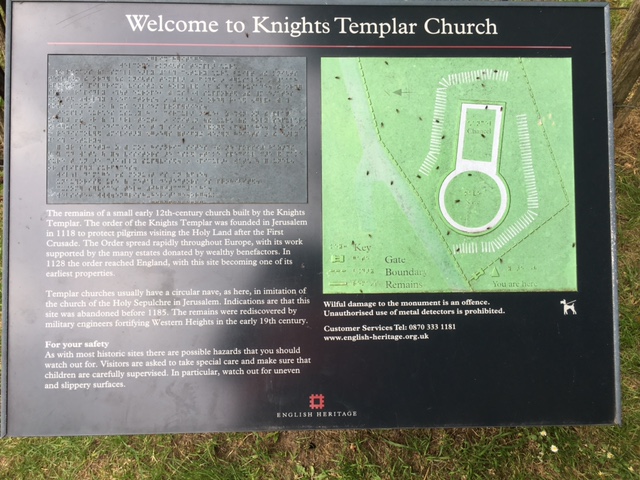
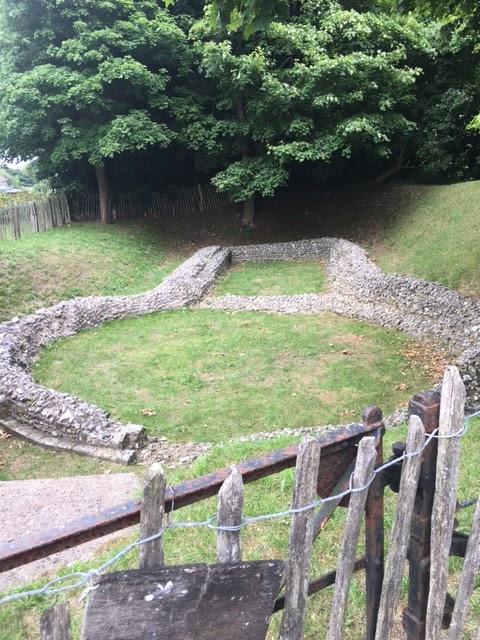
    We had one final stop we were going to make if there was still time. According to the English Heritage map there was a Knights Templar Church in Dover. I’ve always found the Knights story fascinating and wanted to check it out. We found it interesting that a couple of people we mentioned it to didn’t know about it. When we mapped it on Google from Richborough we got a message from Google that said something like: this attraction closes at 5pm; you will arrive at 5:10. Do you still want to go? We of course said yes – we’d said all along we just wanted to see the outside of it so even if we couldn’t go in it would be fine.

    We followed the instructions and got to the area. We saw a sign that said Knights Templar on our right, but the map was showing the church was up ahead on our left. We kept going but there was nothing there – it turned into a private road. So we backed up and took the right where the sign was. Only to figure out that it was the street name for what we had turned into. We got out of there and I said to Dan “let’s try that road one more time.” We went back and went farther. Still saw nothing and yet the map was saying there was a Knights Templar Church Right There! We turned around and headed back and I finally saw it. We couldn’t believe it.

    This was it. A sign and the footprint remains of the church from the 1100s. No wonder no one had ever heard of it. Cracked us up that Google says it closes at 5. Does it disappear, and return at 9am? We won’t be back to find out.


    We went back to the house. Dan’s parking karma struck again and we were able to park right in front. The owner says even she’s never able to do that. We walked into town, and were going to have dinner at a place she recommended, but they were hosting a private party and closed otherwise. So we meandered around town a bit and Dan found another place for us to go on TripAdvisor.

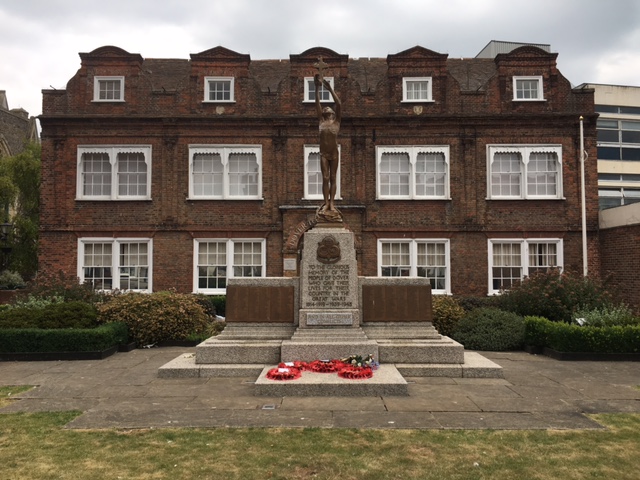
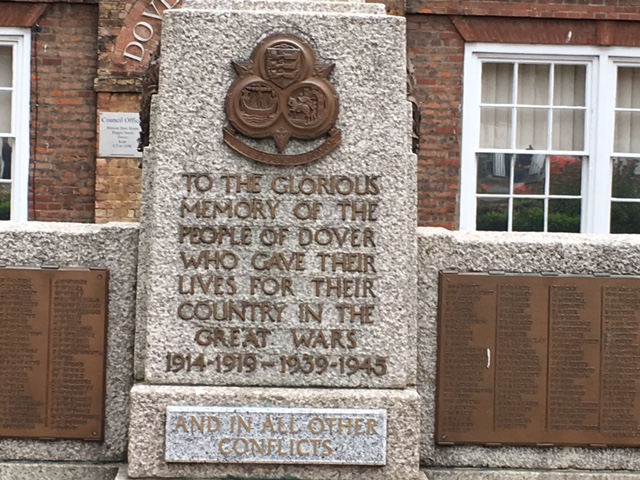
    A war memorial. The building behind it are administrative offices for the City Council.
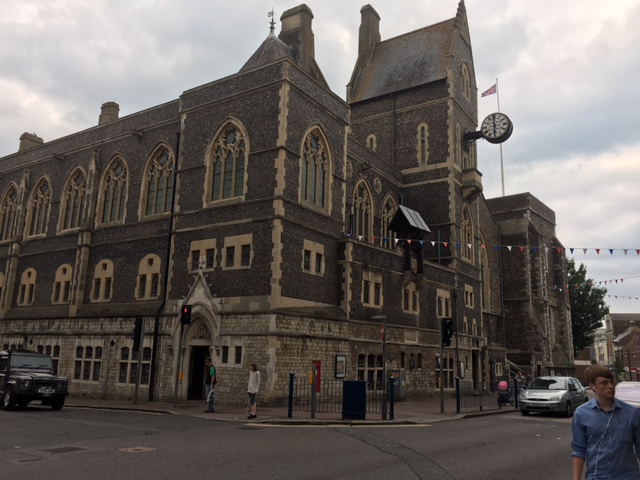
    This is the Maison Dieu, meaning “House of God” founded in 1203. It serves as the town hall and is also rentable for parties, which was happening this evening as well. Lots of parties in Dover last night!


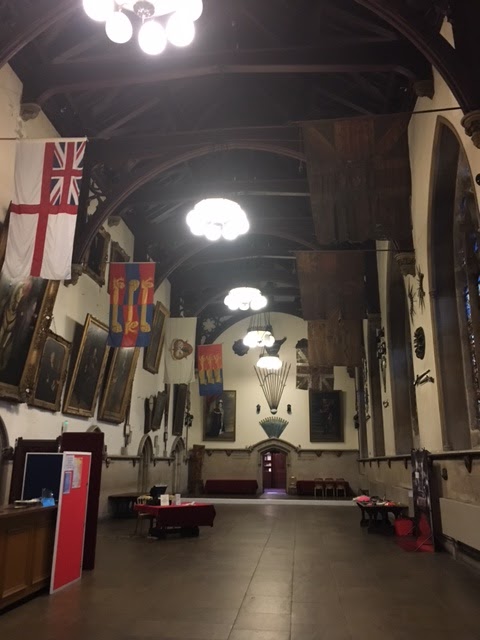
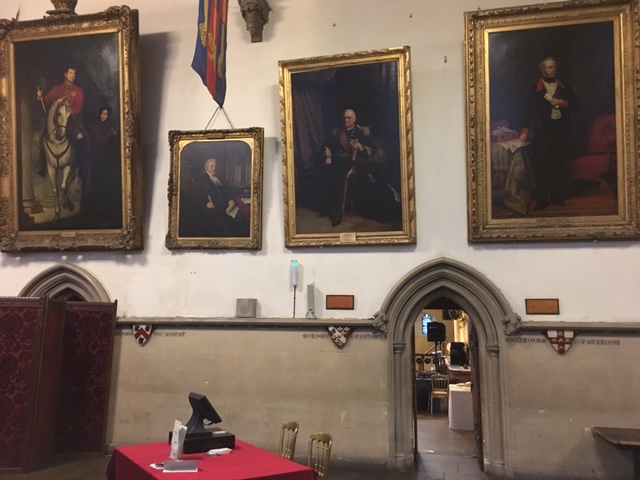
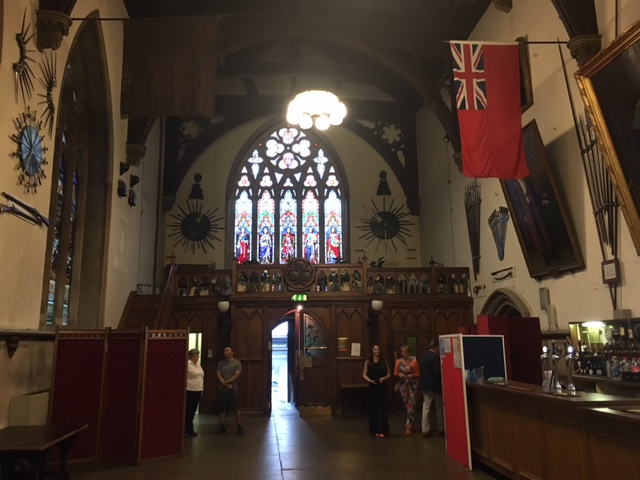
    They let us inside anyway to take a couple of photos. That’s Dan bottom left talking to one of the workers.

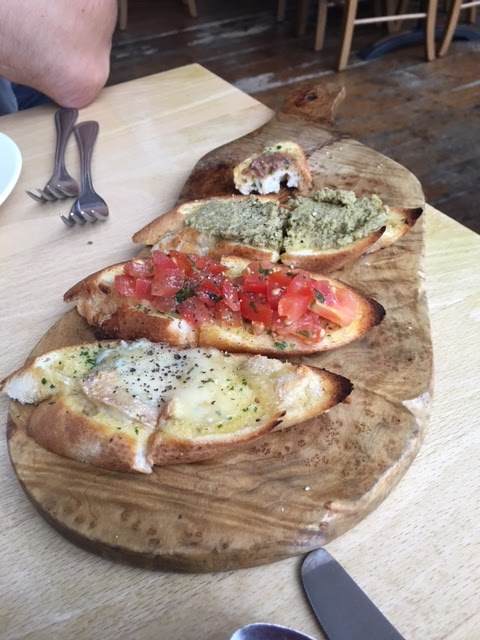
    The restaurant we decided on was across the street from here, La Scala, an Italian place. It was ranked #2 in TripAdvisor. It was OK :) We started with bruschetta which was actually pretty good.


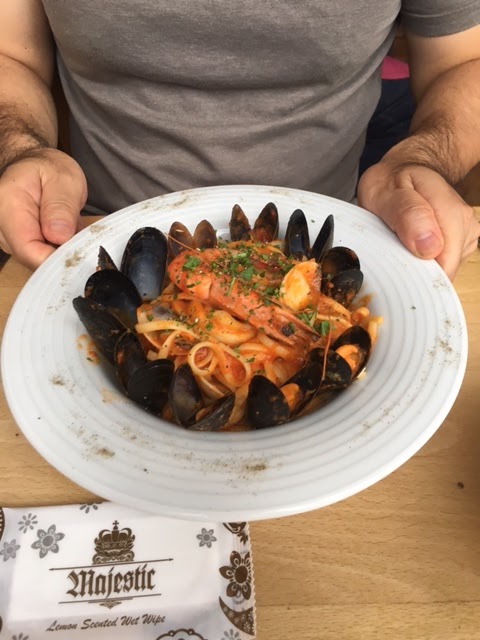
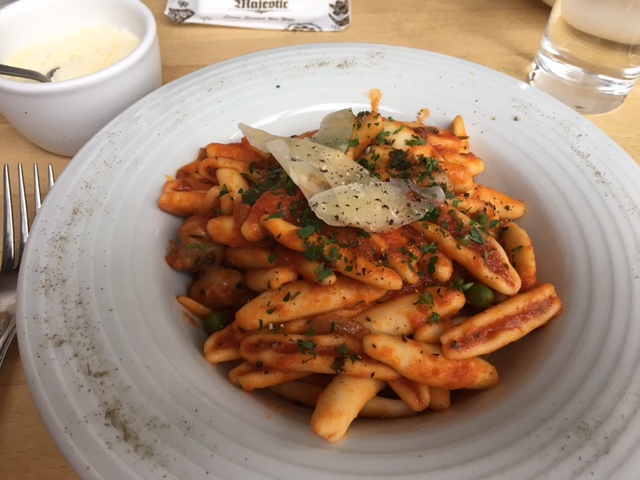
    Dan had a seafood linguine dish, mine was pasta and sausage. The sauces were identical. We passed on dessert for a number of reasons, including they seated us with the understanding we’d be out of there by 7:45 (it was only 7:15) and we just wanted to get going.

    While we ate we had a fun conversation about our favorite days during all of our travels. It’s difficult to come up with a top 5 because there are so many, but if you forced me to this would likely be one of them. Dover Castle was everything I’d imagined it would be. I was choked up much of the first hour as we were going through the WWII stuff. The rest of the history and scope of the complex is just breathtaking and, while I didn’t write a lot about it, we also appreciated the effort they go into to make it interesting and entertaining. We love a well planned museum with a wide range of media deployed and Dover certainly had that. Walmer was very special, in a completely different way. And I loved that we were able to have a solid agenda but be able to take our time somehow, all while driving through lovely English countryside in amazing weather. If our remaining 5 days here are half as good it will be an incredible trip.

    I am writing this Sunday morning. Today we head towards Bath where we will be spending two nights. We will be stopping at English Heritage sites along the way, including Stonehenge. We knew we were going to be in the neighborhood of Stonehenge when we were planning this trip but nixed the idea of going because the reviews are So Mixed and we didn’t want to spend the extra money to deal with crowds and be disappointed. But now that it’s essentially free to us – the cost of the pass was justified by the time we did Dover Castle and St. Augustine Abbey the day before – we figured why not? So we’ll see.

  • Day 5, Jun 30: Canterbury, England

    Day 5, Jun 30: Canterbury, England

    We got up at 5:30, had a quick breakfast downstairs then took the taxi to the airport. We go there at 6:50 for an 8:50 flight so hoped that would be enough time, not having any idea of how crowded this airport was. Dan’s status allowed us to jump lines and that helped, but even without that we probably would have been fine.

    A couple of things about this airport experience that were different for us:

    1. We had to check a bag. When we’d checked in to get our boarding passes on Thursday, we were notified by British Airlines that anyone flying into UK from a list of countries, of which Turkey was one, would not be able to carry on laptops and tablets, among other things. We had 4 of them between us. So Thursday night we had to change our packing strategy, move a bunch of stuff around the 2-each carry-on bags we usually have, so that one of the roller bags would be checked with all the technology in it. We hate checking baggage and have never done it before on one of these trips. Because of Dan’s status, we were taken right away at the British Airlines counter to check it in, so that was good. And coming out the other end, it didn’t take all that long to get it either in Heathrow.
    2. Three security checks: one when we first got there, right at the entrance to the airport, a second standard one to get into the gate area, and a 3rd very detailed one at the gate.
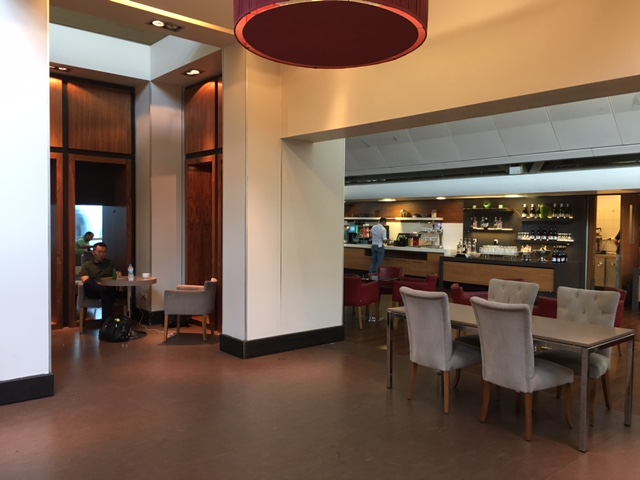
    We stopped at the lounge for a bit since we had some time to kill. It was pretty basic, but they had coffee so that was good. A few things to eat but we didn’t.
    British Airways doesn’t have a huge presence here so there wasn’t a jetway at the gate. We were instead shuttled to our plane out in the middle of the tarmac. The flight was fine – less than half full – we landed early and rented a car. That’s something else we’ve never done before. We got a VW golf and left the airport about 12:20.
    It was about a 90 minute drive to Canterbury, which is east of London. Dan drove and had to adjust to driving on the left. It will probably take him a few days to adjust to that. We’ll see if I take my turn sometime on this trip. Dan’s planning on doing the driving, but we got an automatic just in case I need to at some point. I haven’t driven a stick in 25 years and have never done well with them.
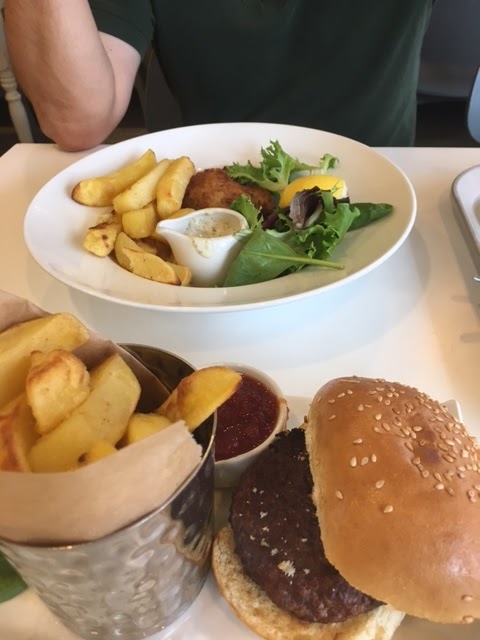
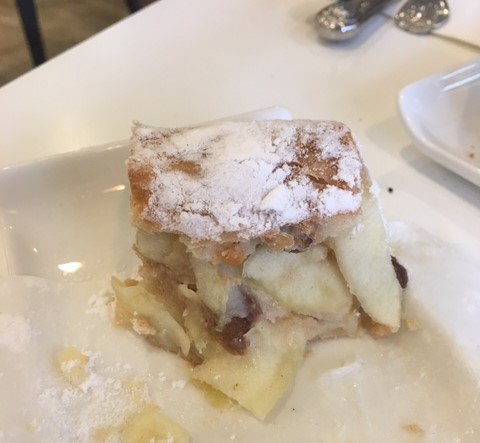
    We found a place to park and only upon getting out of the car did we realize it was a grocery store. They had a café and we were pretty hungry at that point to decided to just eat there. We were using their parking lot after all! The food turned out pretty good. Dan had fish and chips, I had a hamburger, and we split an apple strudel, below, that was one of the best we’ve had ever.


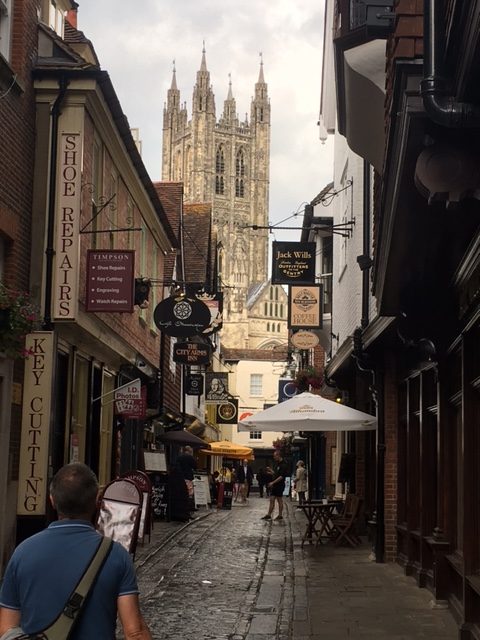
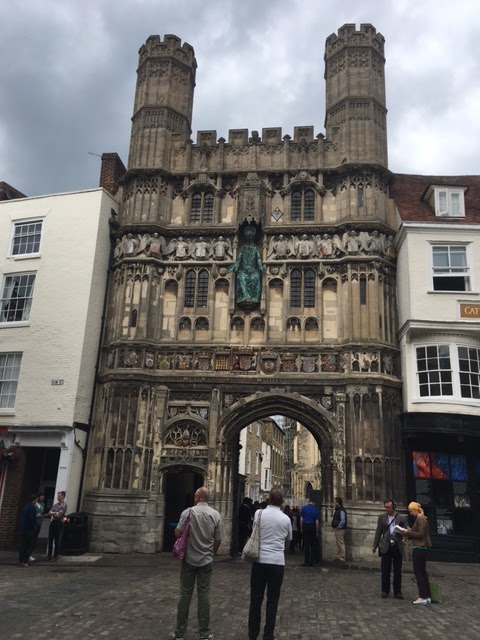
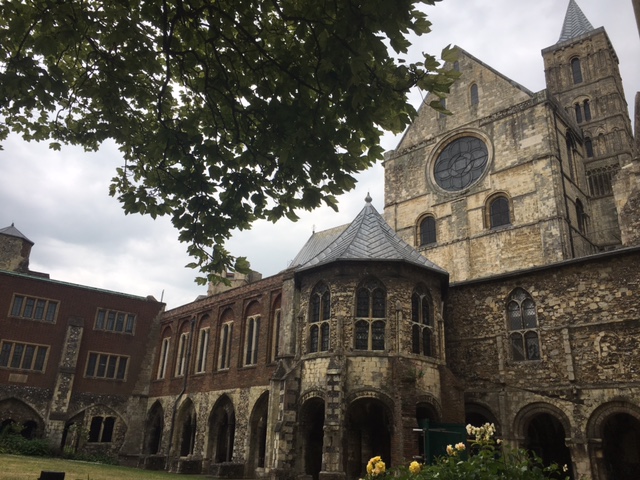
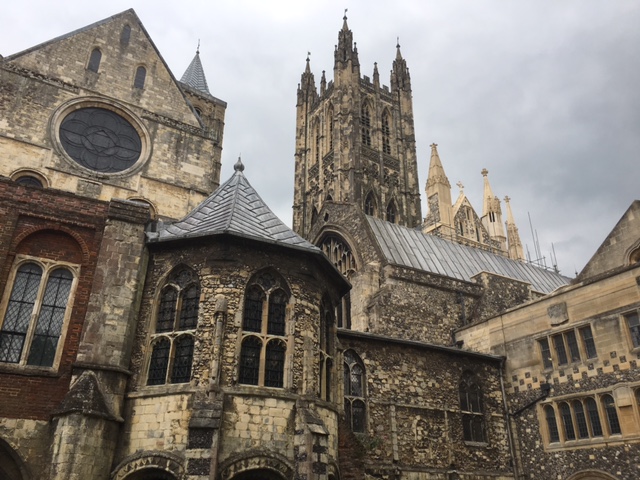
    After lunch we made or way to the old center of town. Canterbury’s roots predate Christ, and there was a Roman settlement here back in the day, but they abandoned it in the early 400’s. It came to life again in 597 when Pope Gregory sent who was to become St. Augustine to these islands to convert the Anglo-Saxons who at the time we pagans. Christianity for the English was born here, and it remains one of the most popular cities of the country for English tourists. We noticed that as soon as we got there on a random Friday afternoon – lots of people. Canterbury Cathedral, shown above at the end of a cute street, is where the Archbishop of Canterbury presides, the head of the Church of England. Augustine was the first Archbishop of Canterbury. (But of course then there wasn’t a Church of England and he reported to the Pope.) Below is a gate in the wall around the cathedral grounds that separates it from the city.


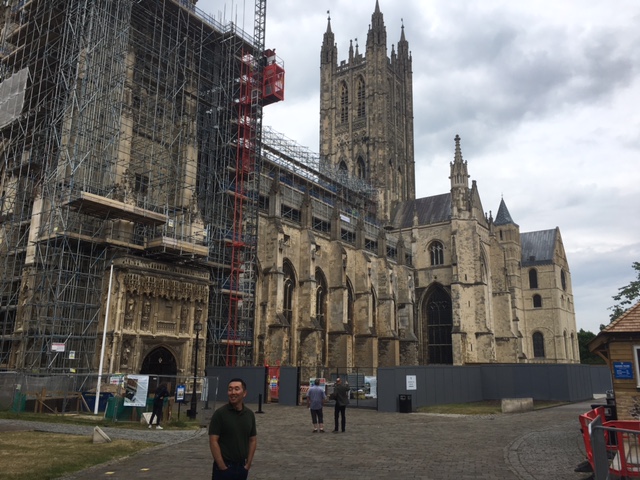
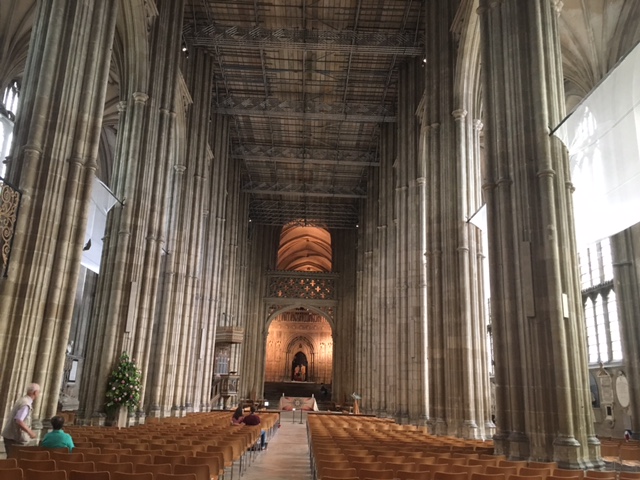
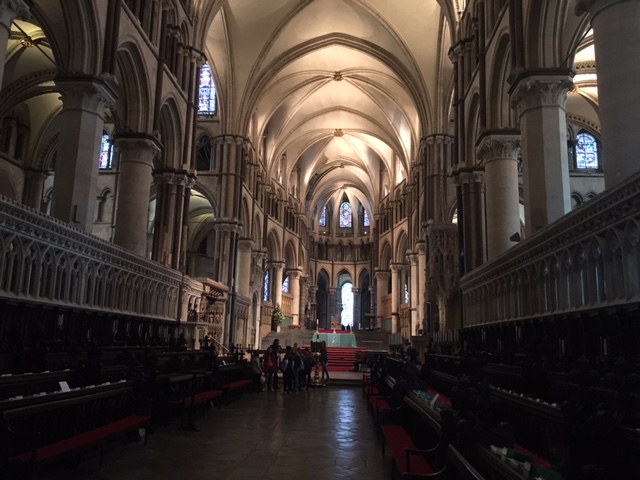
    The main section of this cathedral has been standing since around 1050. The rest of it has been rebuilt or added on to, with the last construction in the 1200’s. So it’s in need of a little work and that doesn’t make for great photographs. But you get the idea. The main entrance above, the nave as you enter below.
    Note the door behind the altar. I will reference it again below.

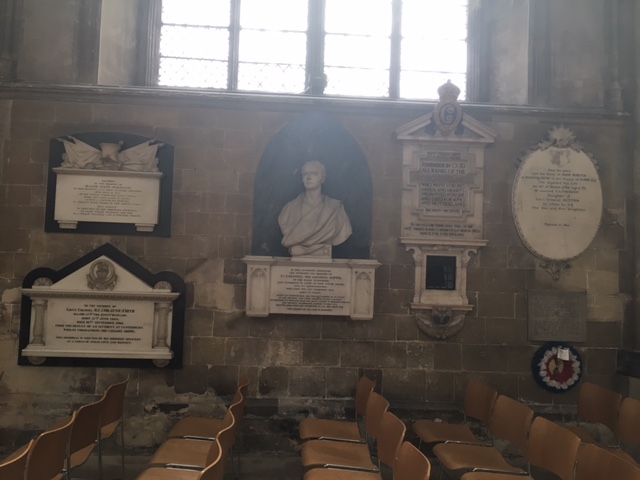
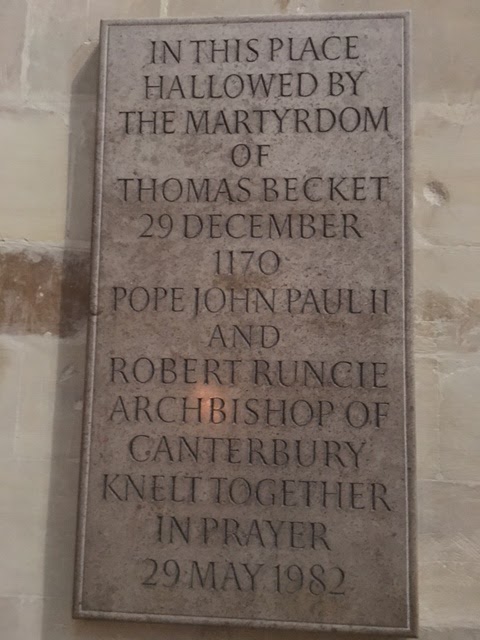
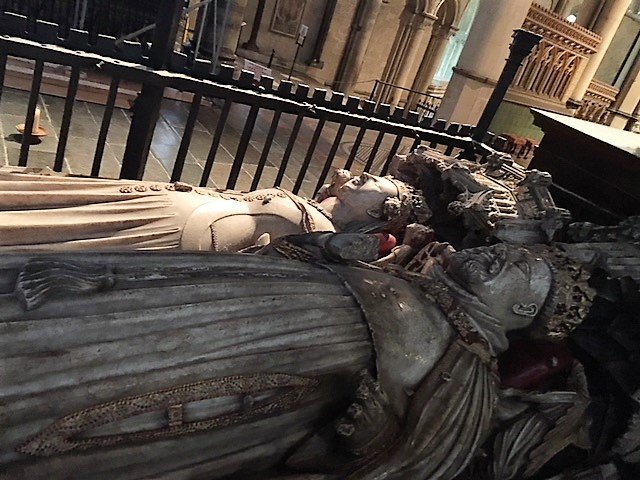
    Lots of people are buried here, just like in Westminster Abbey, although that has many more big names. We recognized very few here. However, Canterbury is most famous for being the place where Thomas Becket was murdered in 1170 by followers of Henry II who believed that’s what the King intended. Thomas was Archbishop of Canterbury at the time, and he and the King were in conflict over the rights and privileges of the Church. Thomas as canonized soon after his death, and the Cathedral became a pilgrimage spot immediately after, and remains one today.

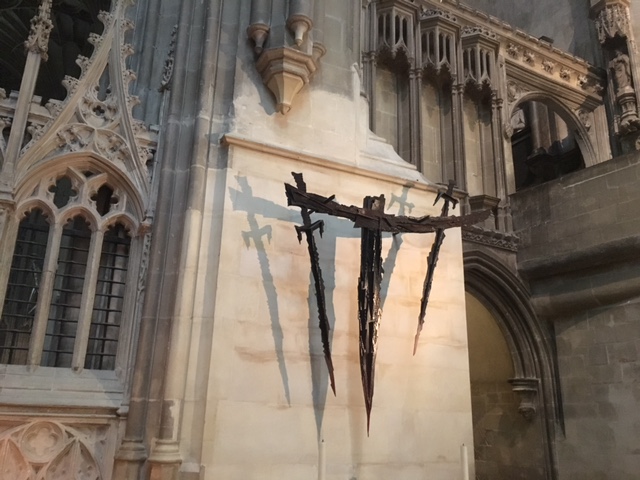
    This is in the martyrdom chapel where Thomas was killed. The swords represent the 3 swords used by the men who killed him. As we were standing there, the docent in the room couldn’t resist pointing out that the reflection looks like a crucifix. We were glad he did, and we chatted with him for a little while.
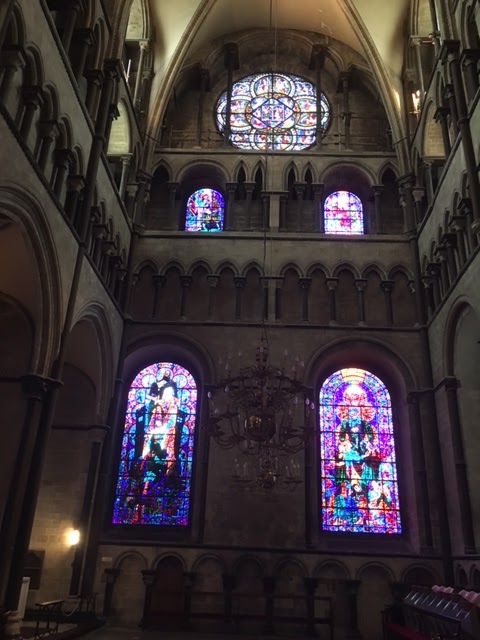
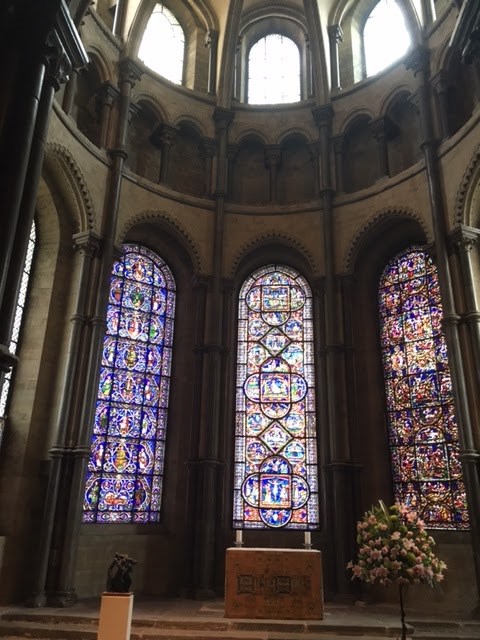
    The windows in this cathedral were damaged heavily during bomb raids in 1942. Luckily, in 1939 all of the medieval windows had been removed and stored in the cathedral crypt so none of them were actually damaged. They had all been replaced by about 1955.
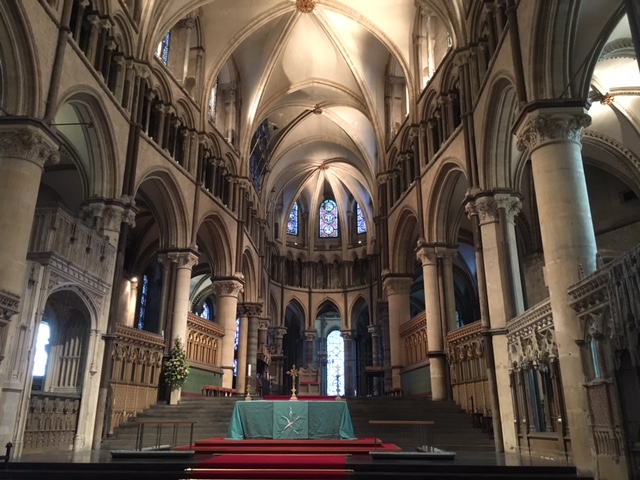
    I’ve just walked through the door behind the altar in the nave. It keeps going :) This is the choir, with it’s own altar again, with a closer shot of the same below.


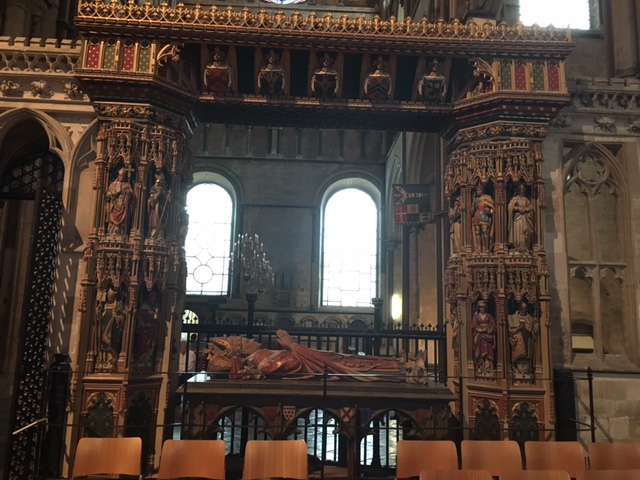
    There were lots of tombs here, not all of them clearly marked; the docent mentioned above who we spent some time with said there’s a definite lack in information and they are working on that. It’s still a working church with regular services. At any rate, I liked the columns on the sides of this one.


    Thomas Becket was originally enshrined here in an elaborate tombstone which that same docent showed us a drawing of. Henry II was devastated that his followers had interpreted his words as a hit, and originally Thomas was buried in the crypt below, and Henry knelt before him and had his own guards whip him there as punishment. Thomas was later moved here and an elaborate shrine built. Henry VIII was so irritated by the whole story he had it removed and used the gold in his castles. He ordered Thomas’s remains be destroyed. Legend has it that the monks secretly disobeyed those orders and his bones are still somewhere on the Cathedral grounds. The candle in the middle of the floor represents the shrine that used to be here.


    This is the final “main” altar – by my count 3 of them that run up the middle of the church, not including any of the many side altars.
    Tomb of Henry IV and Queen Joan of Navarre.


    Interior corridors where a choir concert was being prepared for, with some rehearsing going on in the courtyard outside the corridors, below.


    The next 3 shots were all of the grounds around the back of the cathedral.


    We left here around 4pm. We walked around the city a bit (at this point I would normally refer to it as a town, but I was schooled that it was a city because there’s a cathedral; a town doesn’t have one, so I’m self-correcting…) and it was adorable. There were several good places to eat so we decided to stay a bit longer and have dinner here. We went back to the grocery store and picked up some bottled water to have in the car as we drive around this week, then went in search of a place to park since we were 45 minutes over the 90 minute maximum stated on the signs. More adventures in driving on the left took us to a side road where there was free and unlimited street parking, about .5 mile out. As we walked back to the city center, we walked by St. Augustine’s Abbey, the ruins from his original post built in 597. We were just going to look from the outside, which is the photo I took below, until we saw a sign referencing English Heritage, whose membership could get you into many things for one price. A huge museum pass. We went in to see if we could find out more, and the woman there was extremely informative (including being the one who taught me the distinction between a town and a city). Short version: Dover Castle, where we would be going the next day, was on the list, and she mapped out many others that we could check out easily on our path throughout the week. It made complete sense to do it, so we bought the membership there and went on into the Abbey, which we were otherwise going to pass. My joke that this trip was a “castle-hop” is going to manifest in a very real way. We were oddly grateful to learn the Cathedral wasn’t on it since we’d just paid 30 pounds to get into that!

    There was quite a complex here over a period of time, complete with church, crypts, schools, residence for the monks. All of it was destroyed in the 1500’s when Henry VII had all of the monasteries in England destroyed because he believe they were corrupt institutions which represented much of what was wrong with the Catholics, as he created his own Church, which of course is the Church of England or Anglican Church today.


    We stayed about 30 minutes and continued our walk back into the city. We meandered the adorable streets for awhile before heading to dinner.

    We came across this and it just struck me as funny. Dan thinks I have a strange sense of humor and certainly in this case it’s true. Trying to explain why I think this is funny will only make it worse, so I’ll just leave it right there. Either you’ll get it or you won’t :)


    This place claimed to have “authentic British food” and was #9 of 247 places to eat in Canterbury on TripAdvisor. They also had a very reasonably priced tasting menu, but in the end we decided to order off the regular menu and are glad we did.

    Deep fried whitebait. You had me at deep fried. I figured whitebait was a kind of fish and it was. The batter was really salty and ended up tasting a little like anchovy. It worked.
    What’s essentially fried pork rinds – and very good ones – in the background. In the jar, what I can only describe as a tuna salad except it was pork. Along with some jam and bread. All very good.
    This was from the “sharing” section of the menu: a whole roasted chicken, with potatoes and vegetables that were all incredible. The boat contained a simple au jus like gravy. The white-ish stuff with bacon on type was a thick flour based gravy. It all worked well. We were saying as we sat down we weren’t very hungry, but we managed to eat it all somehow.
    From there we made our way to Dover, about a 30 minute drive. We are staying in a room in a woman’s home via Airbnb. It’s adequate. Our room is upstairs and has a little deck, and right there are the famous White Cliffs of Dover, two photos below.


    I was very tired by the time we got in and settled, got the photos organized and we went to bed. I got up about 5am this morning and have been writing this over coffee. It’s now almost 7am and we’ll be heading out for breakfast in a few minutes. The big item today is Dover Castle. We’ll probably throw in at least one more since we now have this handy dandy pass. Should be a fun day!

    Oh yea, and June 30 was our wedding anniversary :)

  • Day 4, Jun 29: 4th & Final for Istanbul

    Day 4, Jun 29: 4th & Final for Istanbul

    We both got decent sleep, had breakfast in the hotel and went out for our last day in Istanbul just before 9am. It was a simple day with what felt like not a lot planned; still we managed to make a pretty full day of it.

    We took a bus/tram to the same stop, Sultanahmet. We had a couple of other things that we wanted to use the museum pass for and they were both in the same area as Blue Mosque/Hagia Sofia where we started on Monday.

    On our way to the first stop we walked through the Hippodrome area – an ancient chariot race track no longer visible with the exception of remnants from the center of it which helped form the track. Three items in succession in various levels of preservation, all erected in the late 300’s, and some older than that even because they came from somewhere else. You can see two obelisks above. The photo below shows a 3rd smaller item in between them, a serpent something. It’s in pretty bad shape, roughly half the height it should be.

    Our first stop was the Museum of Turkish and Islamic art, and the first display was on the hippodrome which is just outside of it, with an image, below, of what it might have looked like back in the day.


     Most of the museum was on a 2nd level and you got an amazing view of the Blue Mosque from there.
    This was a terrace on the 2nd level.


    We realized way too late that we started from the end, having completely missed the entrance sign once we got upstairs, and did the whole thing in reverse. Oh well. At any rate, Dan always likes these old books which are works of art themselves so we took some shots. Most of them were of the Quran.


    This was a really rich piece of tapestry that the photo doesn’t capture well.


     A footprint of Muhammed.
     Qurans.


    The museum itself was set in a former palace. I’ve lost count now of how many times we’ve been in a museum/palace combo but it always makes it more interesting because the building itself becomes part of the display. I enjoyed this particular view from an exterior corridor and thought how much whoever lived here would have, too.
     Dan loves this calligraphy.


     A piece of pottery circa 900 AD.
     We passed the Hagia Sophia again on our way to the next stop. I got a different appreciation for both this and the Blue Mosque today, seeing them from the outside again and after we’ve been in other mosques. Somehow they both seemed larger and more spectacular than I remembered on Monday. Not sure why that is.

    The entrance to Topkapi Palace. This is less palace, more complex. It was built in the 1400’s after the first conqueror took Istanbul for the Ottomans. It started out as the sultan’s residence but over several hundred years additional buildings were added as other sultans needed more space and as administrative functions grew, since it was also the seat of the Ottoman Empire. While not exactly the same, coming here for a Muslim is at least adjacent to the Catholics or even other Christians going to the Vatican. It provides a sense of history to how it all happened if you come from that particular branch of religion. One of the things I’d forgotten was that Muhammed was visited by the Angel Gabriel – same archangel as in Christian writings – and asked, among other things, to take his people back to basic via the God of Abraham. I’d forgotten about the connections between Judaism, Islam and Christianity, all connecting to the same tree. It’s so weird and ironic to me that so much war and strife gets created under the name of God – and certainly historically Christians and Muslims have done their share. Doesn’t make any sense when everyone’s really starting in the same place attempting to get to the same place, does it? But I’ll leave that rabbit hole right there for now.

    There is this odd thing that happens with palaces after you’ve seen a few, and that’s that they all start to look alike. So I was trying to focus on things that looked different from what we’ve seen before. Not quite sure I met that bar. The styles and colors may be different, but the sense of extravagance all very much the same.


     Here are a couple of things that looked different: above in the clock room, below in the amour room. In both cases you were not supposed to take photos but we managed to sneak them in.


    One corner of the grounds was a series of gardens and we tried to capture that above and below.


     Dan being silly with a nice view of the Galata Bridge (and Tower) in the background, above. Below: from the right of where Dan is standing was a balcony that provided even better views. I was able to zoom in a little and get the same mosque we were at yesterday that we liked so much, Suleymaniye.


     The arches and tile were here were unique. Actually, in general this palace had lots of tile work which you don’t see too often. Most of it came from Delphi which is in the Netherlands.

    What I was really interested in capturing above and below was the walkway. It felt like a runner in a way when you were walking on it, but its made up completely of rocks and pebbles. It felt good to walk on with shoes and I wondered if it would still be true barefoot. Looked like it could, but some of those rocks may have had sharp edges.


     This was the Queen’s room in the section know as the Harem. In this context, it refers to the private quarters of the palace, not the wives.
     The receiving room of the harem. This was probably the prettiest room in the complex.

    We left the palace complex and went on to Hagia Irene, an Eastern Orthodox church from the time of Constantine that predates Hagia Sophia. It was never converted to a Mosque and was used as an armory for much of the years that followed the change in power. It’s in pretty bad shape today, and they are just now taking preservation steps. It was on the museum pass otherwise we probably wouldn’t have stopped.


     There’s a net above your head to keep pigeon poo from dropping to the floor. You could hear the pigeons while you were visiting, And as an aside, the acoustics in this place were incredible.

    And that ends our museum visits for this trip. It was about 1:30pm and we sought out lunch, finding it eventually at the end of this block.

     Dan got their specialty which was a lamb dish. I ordered the pizza like item below as an appetizer thinking it was much smaller than it was, and not realizing the spicy meat that was in it would also be lamb. Not my favorite. It was OK.


     I had this which was essentially a pizza but in pita bread. It was pretty good.

    Our last official stop for our visit to Istanbul was Gulhane Park. This is just outside of the Topkapi Palace and some of it at least used to be part of the palace gardens. We sat here for a bit to rest and people watch. Parks are universal. You can go anywhere and see people doing the same things they do in parks at home: hanging out on the grass, sitting by the water, taking walks, visiting friends and family. That’s pretty much what we saw. Something comforting in that in a “people are people” sort of way. (Depeche Mode anyone?)


     Art, this is strictly for you…as many schlocky lamps as you want! And from Harrod’s this time even :)


     We passed this on the way to the bus stop and thought: why not? If they’ve been doing dessert and coffee for over a 150 years they must be pretty good. And it was.


     There was a seating area upstairs that wasn’t air-conditioned, as so little of Istanbul is we’ve discovered, despite it being 91 and humid today. The window were open to the street though and that helped.


     A chocolate sourcherry cake above, and a chocolate chestnut cake below. The chestnut cake was like Dan’s 4th order, he kept picking things they were out of!
    We got back to the hotel about 4:30. We both rested and started getting ready to leave. We noticed when checking in that because we are flying in from Turkey, there are restrictions to what we can take on the plane so may have to check some baggage. That was unexpected and took some sorting out between Dan and British Airlines (he originally bought discounted tickets that didn’t allow for checked luggage, because we never do) but all that’s taken care of. We hope. Will find out tomorrow morning I guess.
    We weren’t really hungry but felt compelled to go out for a nice meal; we’ve had better Turkish food in Cologne than we’ve had here and we know it’s because we just haven’t chosen right. The lunch stuff has been decent enough but not great, just a notch or 3 above fast food really. For dinner, laziness and frugality kicks in: the free food in the lounge was good enough so why go out and pay if you don’t have to and are already tired? That logic played out tonight most of all, and we ended up staying in again.
    We have really enjoyed our stay in Istanbul. The hotel we stayed at was amazing. They deserve every one of their 5 stars in their rating. We have not stayed at a hotel this nice before and likely won’t again for awhile, it was just such a good deal this time around if would have been foolish to pass it up. The location turned out to be great, despite some reviews saying it was bit far away from everything. It wasn’t for us. 20 minutes away by easy-to-use public transportation was perfect. Plus it put us closer to 3 great neighborhoods we got to explore and we love doing that. The best part, however, may have been the steam room. Probably the best steam room I’ve ever used, with a nice bucket of cold water right outside it to cool down quickly. Everything about it has been very top notch.
    We loved visiting the mosques and learning more about Islam. One of the reasons we wanted to come here was to get a better understanding of how another part of the planet developed. We’re well versed on the Christian impact of the Western world. It was valuable to get another perspective. At each mosque we went into was very open and accommodating to visitors, as long as you were willing to follow some simple rules. (Like take your shoes off, no big deal.) We also really appreciated seeing multiple churches-turned-mosques and were impressed that the conquerors didn’t feel the need to destroy, simply repurpose. The Hagia Sophia is the greatest example of that.
    Thanks largely to Ataturk, Turkey as a republic has developed since the 20’s as a progressive, secular country, despite being 98% Muslim. Their current leader, Erdogan, is trying to undo that and there’s a lot of unrest because of it. It will be interesting to see which direction it goes over time.
    This is the first place we’ve visited where we saw hardly any other Americans around. Yes, the state department issued a warning to visitors early this year, but it was geared specifically to a region in the southeast portion of the country; Istanbul is essentially on the opposite side, both geographically and from an ideology perspective. But Americans have stayed away, and it’s been interesting to have the locals actually thank us for being here in a very sincere way; more like “thanks for not being afraid.”
    It’s also been highly amusing to watch people’s reactions to Dan. Apparently, there aren’t many Asians traveling here – although we’ve seen more than Americans for sure – or maybe it’s Asians who speak perfect English they’re not use to. They don’t know what to make of him at any rate. He’s gotten asked a lot: You’re from China? Japan? They never get it right, and are probably wondering where the rest of the clan is. The Chinese in particular hardly ever travel alone we’ve noticed, so Dan running around with another white guy – they just don’t know what to make of that. So that’s been entertaining all by itself.

    It’s been a great stay but we are ready to go. We’ve done everything we wanted to, and the temperature got hotter each day we were here. I think the high on Monday was 82; today was 92. Pretty humid, too. We’re ready to get out of that and to lovely highs of 69 in England. Tomorrow night I will be writing from Dover. Will see you then.

  • Day 3, Jun 28: Istanbul, Part 3

    Day 3, Jun 28: Istanbul, Part 3

    Thankfully, I slept about 7 hours last night with only a couple of interruptions. Dan slept well, too, so we were glad to be ready for another full day. We noticed as we were getting ready to go down for breakfast that there was a submarine in the Bosphorous Strait, shown below, taken from our hotel room window. Not something you see everyday for sure.


    We left about 8:40 and took the same bus/tram combo into Old Town that we did on Monday, only this time we knew exactly what we were doing. Even got off at the same stop. We used Rick Steves guide which has a section called Old Town Back Streets Walk to make our way around this morning.

    The big thing on the agenda was the Grand Bazaar. We’re not big shoppers and were prepared to be disappointed, and in that our expectations were exceeded. But it’s something you sort of have to do. It’s the oldest shopping center in the world, been around since the 1400’s and has over 4000 merchants. Rick’s guide had warned that it had unfortunately been overtaken by tourism and that was obvious the moment we walked in. We would have loved to have been there 100 years ago when there were, I’d imagine, a much wider variety of goods than we saw today. If you aren’t interested in jewelry, carpets, tea sets, scarves, or schlocky lamps, there’s probably not much for you here. And the smells. Smoking is allowed there and lots of merchants do. So between the cigarettes, mothballs, spices, soaps and colognes, it was a bit much for the two of us who have increasingly gotten more sensitive to strong scents over the years. I also get overwhelmed when there’s that many small things in one place. Didn’t help that it was so repetitive. The merchants were aggressive but mostly polite, some funny (“just give me your money!”). But hearing “excuse me, please, come see” over and over again wears on you after awhile. Are we just getting old? We ended up staying about an hour out of some weird sense of “maybe it will get better” but it never did. We only took a few photos below, and I added a couple from the internet.

     One of many entrances like this.
     Above and below are ours, taken when we first walked in. We were so disenchanted so early it never really occurred to us to take anymore.


     Above and below I stole, but very representative. Just rinse and repeat, over and over again.

    We kept wondering how all these folks stay in business with so many selling the same things? We don’t understand. I surmised that the people who do the best are the tea runners. Turks drink more tea than any other country, including UK or China, and that’s on full display in the Bazaar. Since the merchants can’t leave, there are guys running around everywhere delivering them their tea. Our guess is they do pretty well! Here’s a glass of Turkish hot tea if you’ve never seen one. They all look just like this.


    We left around 11am and kept moving through town. The walk took us by Istanbul University, below.

    Next we went to Suleymaniye Mosque. Depending on the source you read, it’s either the largest or 2nd largest mosque in Istanbul. It was completed in 1558, making it older than the Blue Mosque by about 100 years. It’s also #5 of TripAdvisor’s Things To Do list, but you’d never know it by the lack of crowds. Maybe because of that, we enjoyed this much more than the Blue Mosque. Seemed similar in size, the inner courtyard was creepily similar, and there was a simple charm about this one that we liked right away. It’s also on a hill – one of Istanbul’s “7 hills” which make up the city – and provides some great views.

     As we approached from behind, above, and the side, below.


     That’s the Galata Bridge in the background. If you read yesterday’s blog I made a comment about this being the mosque in the background of a photo we took there.


     Dan washed his hands and face here.


     Like we’d been here before. Must be a standard design for large mosques. We were in 2 smaller ones that didn’t have one, at least not like this.


     Dan got a kick of these kids running around. That’s me taking a photo of its history so I’d have background when I wrote this :)
     We started a trend. We were the first to sit on the floor and then suddenly everyone did.
     This and another directly opposite were just behind the “please do not pass” line. Oddly out of place.
     They must call this a side entrance but it feels like front to me. Whichever, it was pretty, especially the detail above the door.
     Below: the first shot just inside that door.

    We left here probably about Noon, maybe some before. For the next hour or so, we just walked around, again following the Rick Steves walk I mentioned earlier, and enjoyed this much more than the Grand Bazaar. Much of what we encountered felt more like where the locals shopped, a much wider variety of goods, and very little schlock. Dan bought a belt – just your every day plain black belt – at one place that he likes a lot, cost only about $6.


     Dan got some cherries which were very cheap. At 8 lira a kilogram, that’s about $1 per pound. They were pretty good, too.
     While this is not the one we ate at, this is pretty much what we ate for lunch: rotisserie chicken and onions.
    We loved how lively it was, and the sales people weren’t after you like they were in the Grand Bazaar.
     Meet Turkish Delight (of “The Lion, the Witch and the Wardrobe” fame if you read that). It’s everywhere. It’s essentially a jelly kind of candy in a number of variations. Finally tried some today. It’s OK :)


    An entrance to the Spice Bazaar above,. On the right side of that photo, and in the one below, is the coffee shop where the locals buy their fresh ground coffee. They were lined up for it.


     Above and below: Spice Bazaar, much like the Grand Bazaar, only with emphasis on, uh, spices, and candy.


     We looked around for something to eat but ended up backtracking to something we’d seen earlier.
     Chicken rotisserie with salad, barley cooked like rice, and bread. It was OK, at least very cheap! Less than $8 for both of us. Worked.


    Next was a bus ride to a place about 20 minutes away. Next stop was Kariye Museum, or Chora Church. The outside of it is undergoing serious renovation and was essentially covered, so I stole the photo below from the internet. This is #13 overall on the Trip Advisor Things To Do list, and was on the museum pass we bought. We’re actually surprised it’s only #13, but understand why: it wasn’t the easiest thing to get to and is definitely not with the rest of the touristy stuff. You had to really want to get here and know where you’re going – there’s no stumbling into this.

    The photo above I found on the internet. Today, it’s essentially covered while undergoing restoration. In the photo below, you can see the same minaret (added when it was a mosque; the minarets are where guys used to do the call to prayer from, its why all mosques had them; now it’s mostly tradition since the call is done electronically). I took this on our way out frankly because I didn’t know we were here when we got here so wouldn’t have known to take it then! See how the rest of the building is covered? It’s just at the end of some random residential street.


    Above and below, also taken on the way out: the view from the intersection right before it. You can see Dan walking back towards the bus stop in the one below. Just a regular old neighborhood. This reminded me of the church in Milan where the Last Supper is, in that you’d never know there was something to look for.


    Back to the church. It was built in the 400’s outside the first wall of Constantinople. “Chora” means “countryside” – so this was considered the boonies then. It’s one of the best examples on the planet of Byzantine mosaic art. The mosaics here reminded me of some we saw in the Hagia Sofia, and in the gift shop there’s a book that’s about those two churches-turned-mosque-now-museums, so I wasn’t imagining that.

    All of the art is high on the wall or on the ceiling. The photo above is the more focused shot of the image on the right side of the ceiling in the photo below.


     I thought both of these were just amazing. Mosaics, remember, not paintings.


     Lots of intricate work covering those ceilings.
     Some of the walls also reminded me of Hagia Sofia, with a wide variety of marble used.


    On our way back to the bus stop, we passed the Wall of Constantinople. We’d seen it earlier but didn’t have a frame of reference for it until we got to the church and read about its history. There aren’t any signs anywhere indicating what it is. It was pretty big although I just kept this one shot of it.

    It was pretty early at this point, maybe only 2:30. We decided to head back to the hotel and rest a bit and then go out again. We took a bus ride through parts of the city we hadn’t seen yet, much of it very modern.

     Crossing the Horn on a different bridge finally – we’d only been over it on the Galata before.


     There is a central business district that has a fair number of decent sized buildings. This is the very end of it, just captured a few shots as we were transferring busses.


    This was a pedestrian bridge over the busy street our hotel is essentially on. That’s it in the background along with the Bosphorus Strait.

    The park in front of the hotel.
    We got some water in the lounge and had a late dessert with some items they had out. I took about a 15 minute nap and then started working on the photos for the blog. Dan relaxed a bit and also got a quick workout in at the gym in the hotel, which is pretty nice.
    We went out again about 4:20 for a special treat: a Turkish bath and massage. We got the idea when we saw the one from yesterday, but Dan found some that were much better. The one we decided on is #2 on TripAdvisor’s list of spas, and was one of four Rick Steves wrote about in his section on this subject. We figured we were pretty safe.
     It was about a 20 minute bus ride from our hotel. It’s been around over 400 years. Kılıç Ali Paşa Hamamı


     The entrance area where you start. They bring you juice, below, and some cold towels infused with mint to wipe your face with which were simple and amazing. Those couches in the back are where you hang out between the bath and the massage.

    The baths were good and we’re glad we did them. My attendant in particular had taught himself some English by practicing on the internet so he could communicate with guests better. He did pretty good. And even figured out that we were a couple. “He your partner?” he asked. And seemed very OK with it. Dan and I both agreed the best part of the bath was the bubbles. Luxurious is the only word that works. Except bath is really the wrong word, it’s really more of a scrub and a wash because you’re sitting against a wall but the area in front of you is open, you’re not in a tub. And they’re literally pouring bowls of water on you, warm and cold depending on where they are in the process. It was a good experience but we wouldn’t need to do it again. The massages were excellent and of course I’ll do those any time. We were there total over 2.5 hours. Reasonably priced, too.

    We walked back to the Beskitas neighborhood we were in last night to eat at a restaurant we’d scoped out then, about 2 miles. Again, fairly traditional Turkish food, but we like it. What they call meatballs but are really little beef patties. The big round thing they call sausage; was more like a very rich salami. Dan had chicken instead of the sausage. And a weird dessert of warm semolina not shown. Dessert aside, this is the best meal we’ve had out.

    Tomorrow we may do something nicer for dinner. Or we may just try one of the Balkan cafeteria’s we saw this evening…because we’ve never seen Balkan food before is good enough reason for us…